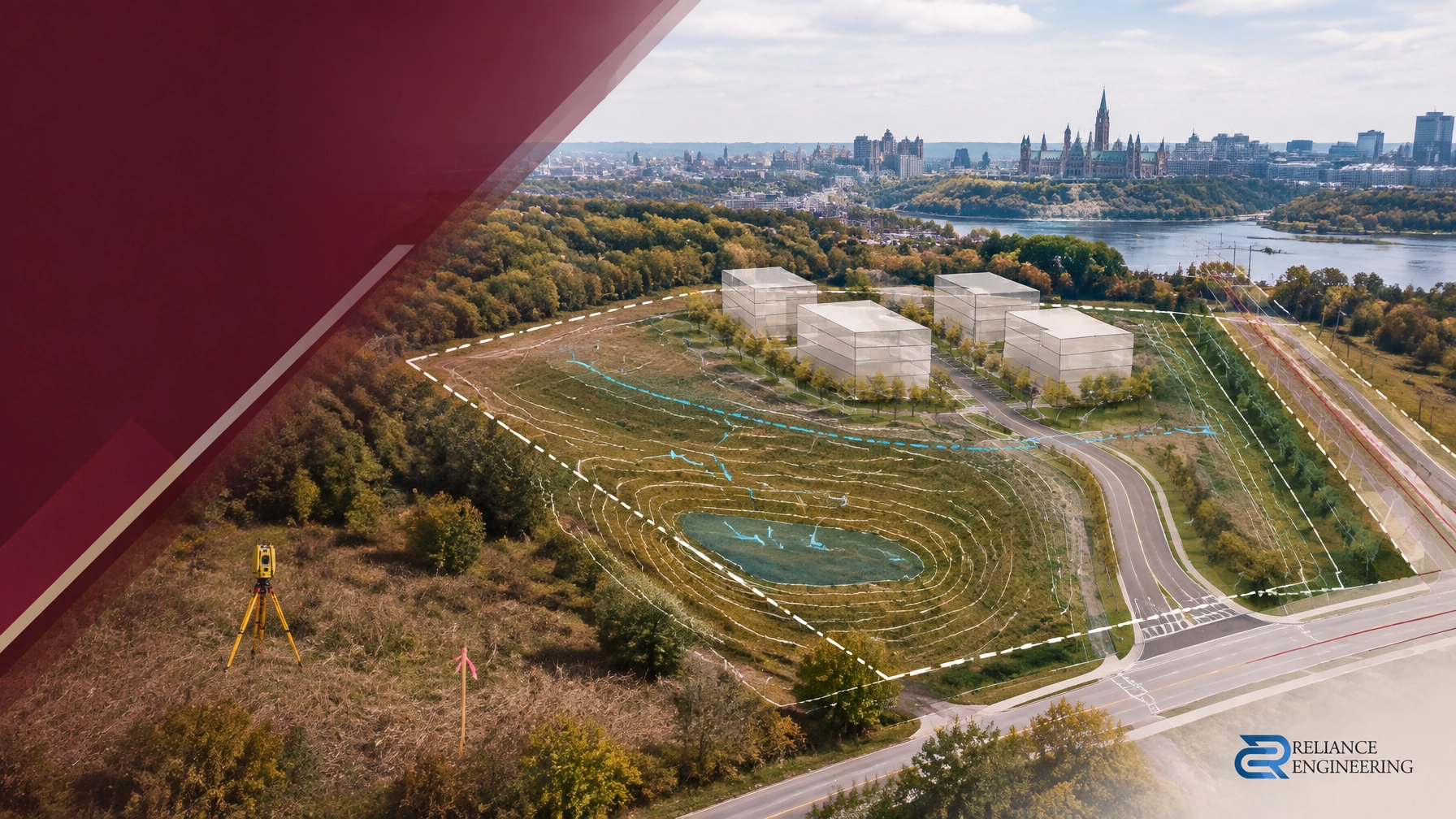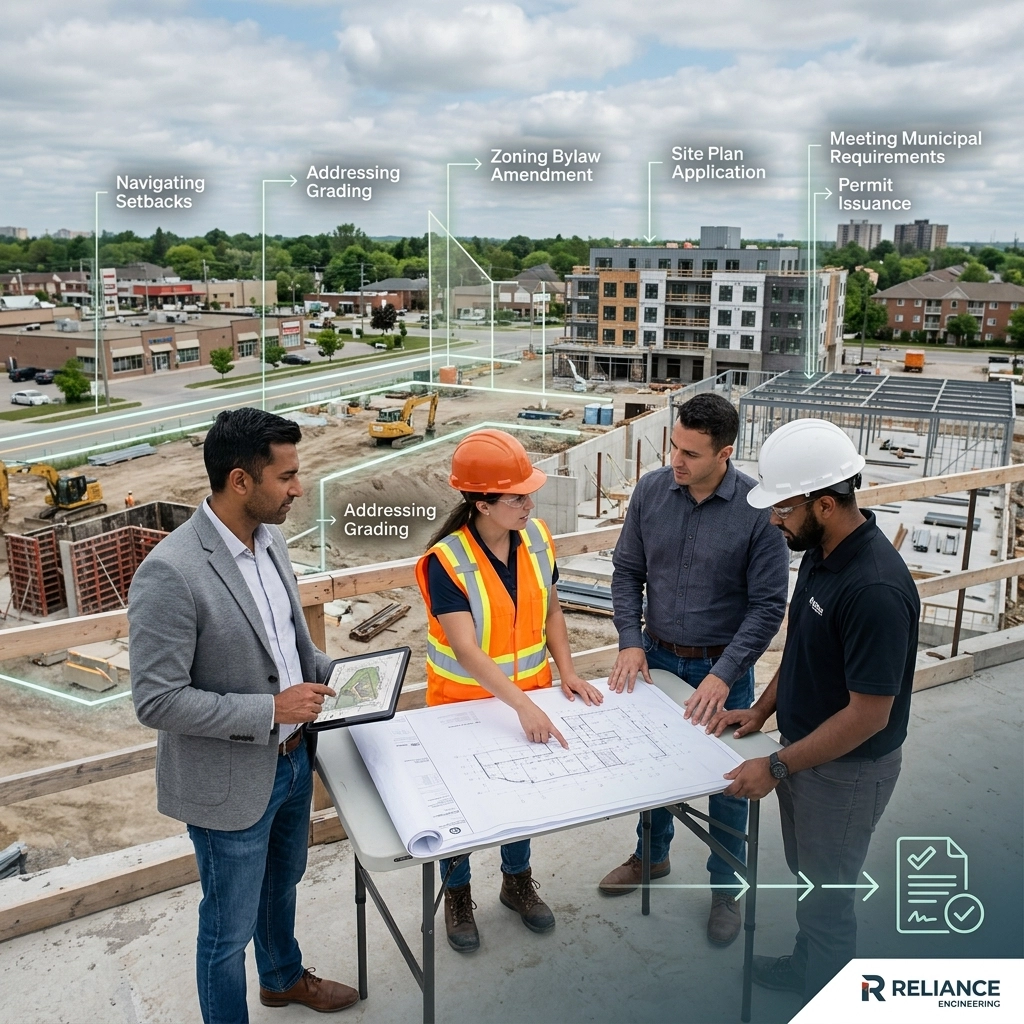
Site Plan Approval (SPA) is the most significant regulatory hurdle for land development projects across Ontario. Whether you are developing a 6-plex in Toronto, a commercial plaza in Mississauga, or an industrial warehouse in Vaughan, the SPA process determines your timeline, your budget, and ultimately, your success.
Statistics show that as of 2024, the average Site Plan Approval process in Ontario takes roughly 23 months. This is a staggering delay when the Planning Act technically sets a 60-day decision period. Why the gap? The answer lies in the pitfalls: incomplete submissions, technical errors in engineering reports, and a lack of coordination between consultants.
At Reliance Engineering, we’ve spent over 20 years navigating these waters. We know that getting your building permit faster isn't about luck; it is about precision.
1. The Trap of the Incomplete Submission
The single biggest reason for delays in Ontario is the "First Submission" failure. Approximately 50% of all site plan applications require three or more resubmission cycles. Every time a municipality sends back a "Notice of Incomplete Application," you lose weeks, if not months.
Planners are not just looking for a drawing of a building. They are looking for a comprehensive package where the architectural, landscape, and civil engineering plans are in perfect harmony. If your architectural plan shows a catch basin in one spot, but your site grading plan shows it three meters away, the application is dead on arrival.
How to avoid this:
- Conduct a full internal audit of all documents before hitting the "submit" button.
- Ensure all required professional reports: including the Functional Servicing Report (FSR) and Stormwater Management Report (SWMR): are included and signed by a P.Eng.
2. Mistaking Zoning Compliance for Planning Approval
A common pitfall for developers is assuming that because a project meets the local zoning bylaws (setbacks, height, density), the Site Plan Approval is guaranteed. This is a dangerous assumption.
Zoning tells you what you can build; Site Plan Control tells you how that building interacts with the environment and the public realm. Ontario municipalities frequently flag projects for "contextual incompatibility." Even if your building is the correct height, if your driveway placement creates a safety hazard or your landscaping doesn't meet the city’s aesthetic guidelines, you will face rejection.
To understand how new zoning changes impact this, especially for multi-unit projects, read our guide on Ontario’s new zoning and multi-unit conversions.

3. Treating Pre-Consultation as an Informal Meeting
In Ontario, the Pre-Consultation (Pre-Con) meeting is a formal requirement for most SPA applications. Some developers treat this as a casual chat to "feel out" the city’s mood. This is a massive mistake.
The Pre-Con is where the municipality issues the "Checklist of Requirements." If you go in unprepared, you might miss the opportunity to negotiate down unnecessary studies, saving thousands of dollars and months of work. Conversely, if you don't take the Pre-Con comments seriously, your first formal submission will be rejected instantly.
The Professional Approach:
- Bring your lead Civil Engineer and Architect to the meeting.
- Have a preliminary Functional Servicing Report ready to address any immediate concerns about water pressure or sanitary capacity.
4. The "Siloed Consultant" Disaster
When the Architect, the Civil Engineer, and the Landscape Architect work in silos, the project suffers. In Ontario, municipal planners often receive contradictory comments from their own internal departments (Engineering vs. Urban Design). If your own team is also providing contradictory information, the project will stall indefinitely.
For example, the Landscape Architect might want to plant a large oak tree directly over where the Civil Engineer has placed the underground water service. This conflict will be flagged by the city’s engineering department, forcing a redesign of both the landscape and site servicing plan.
The Solution:
Hire a lead consultant who understands the intersection of all disciplines. At Reliance Engineering, we prioritize the coordination of grading, servicing, and stormwater management to ensure they fit the architectural vision without compromising municipal standards.
5. Underestimating the Stormwater Management Report (SWMR)
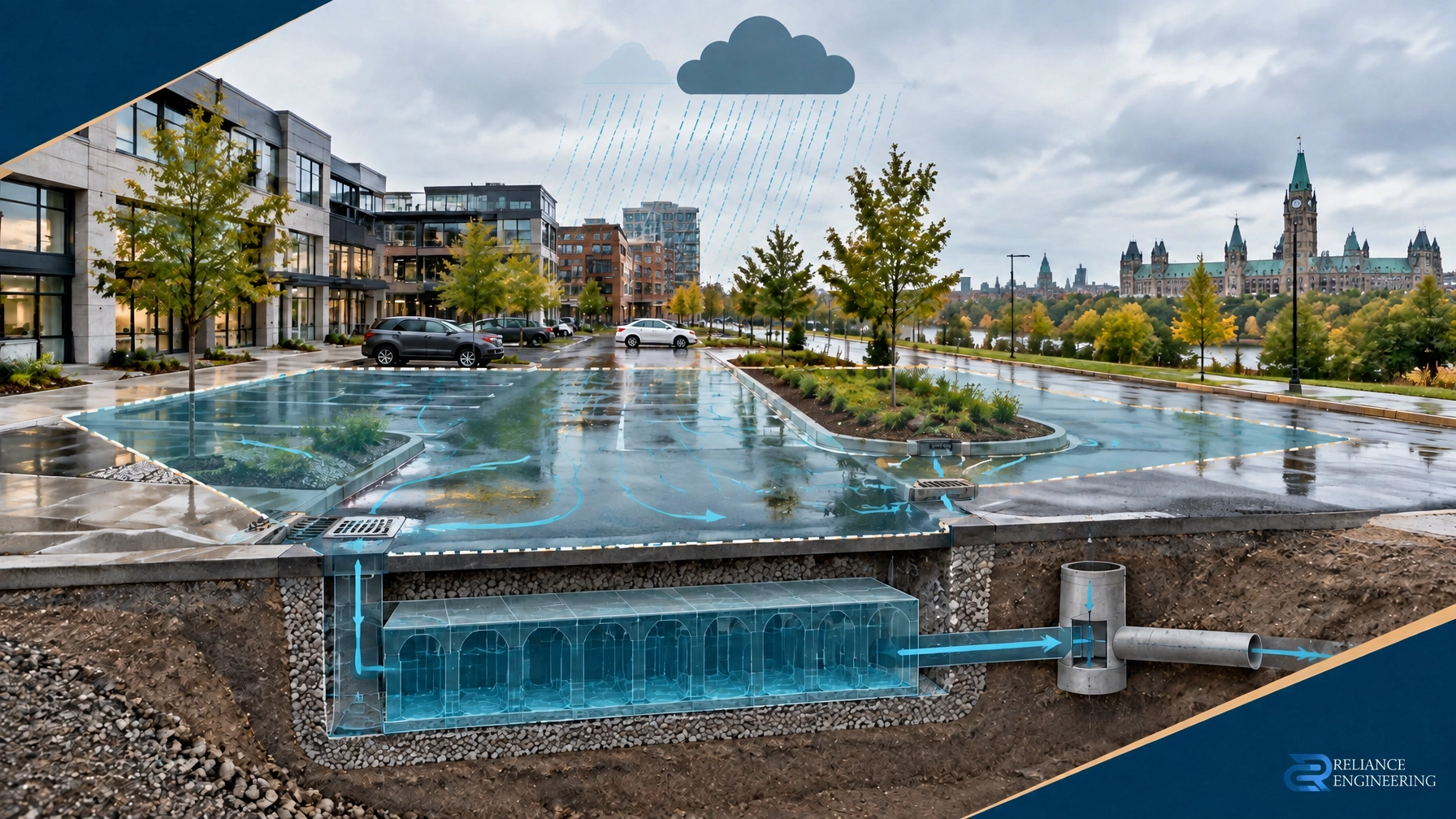
Stormwater is no longer an afterthought in Ontario. With the 2024 PPS changes and increasing flood risks, municipalities are stricter than ever about how water leaves your site. A weak SWMR is a guaranteed way to get your site plan rejected.
Many developers try to use "cookie-cutter" stormwater solutions that don't account for the specific soil conditions or the capacity of the municipal sewer system. Whether you need detention tanks, infiltration galleries, or Low Impact Development (LID) features, your report must be precise.
Check out our deep dive on whether a precise SWMR really matters in 2026 to see how the regulatory landscape has shifted.

6. Poor Erosion and Sediment Control (ESC) Planning
While it might seem like a minor detail compared to the building design, the Erosion and Sediment Control Plan is a frequent cause of submission kick-backs. Ontario municipalities, especially those near conservation authorities (like the TRCA or CVC), are incredibly protective of their watersheds.
If your ESC plan is generic and doesn't show specific silt fence locations, mud mats, and catch basin protection, the Conservation Authority will block your SPA.
Pro-Tip: Make sure your ESC plan is dynamic. It should account for different stages of construction, from initial clearing to final paving. See our list of 10 reasons ESC plans get kicked back for more details.
7. Ignoring the Public Realm and Right-of-Way (ROW)
Site Plan Approval doesn't stop at your property line. It extends to the "Public Realm." This includes sidewalks, street lighting, and how your site grading interacts with the municipal road.
If your lot grading plan causes water to pool on the public sidewalk or creates a steep slope that makes the sidewalk non-compliant with the Accessibility for Ontarians with Disabilities Act (AODA), you will not get approval. Engineering precision at the property boundary is where most projects succeed or fail.
How to Get Your Permit Faster: The Reliance Engineering Checklist
To bypass the 23-month average and move toward a faster building permit, follow this professional checklist:
- Early Feasibility: Before buying land or committing to a design, have a Civil Engineer perform a servicing and grading feasibility study.
- Integrated Design: Ensure your Architect and Engineer are talking weekly, not monthly.
- High-Quality Reports: Don't cut corners on the FSR or SWMR. These are the technical foundations of your application.
- Responsive Revisions: When municipal comments come in, address them immediately and comprehensively. Partial responses to comments lead to "ping-pong" rounds of revisions that waste months.
Why Experience Matters in Ontario
The regulatory landscape in Ontario is shifting. From the removal of certain residential developments from Site Plan Control to new density rules for garden suites and multi-unit conversions, you need an expert who stays ahead of the curve.
At Reliance Engineering, we provide more than just drawings; we provide a roadmap to approval. We specialize in Site Grading, Site Servicing, SWMR, FSR, and navigating the complexities of Site Plan Approval across the province.
Professional Contact Information
Reliance Engineering
Naresh Ochani, P.Eng. M.Eng.
Founder and Principal
Address: 6850 Millcreek Dr, Mississauga, ON L5N 2H4
Phone: 647-385-6418
Email: [email protected]
Website: www.relianceengineering.ca
Office Hours:
- Saturday: 12:00 PM – 2:00 PM
- Sunday: Closed
- Monday – Friday: By Appointment
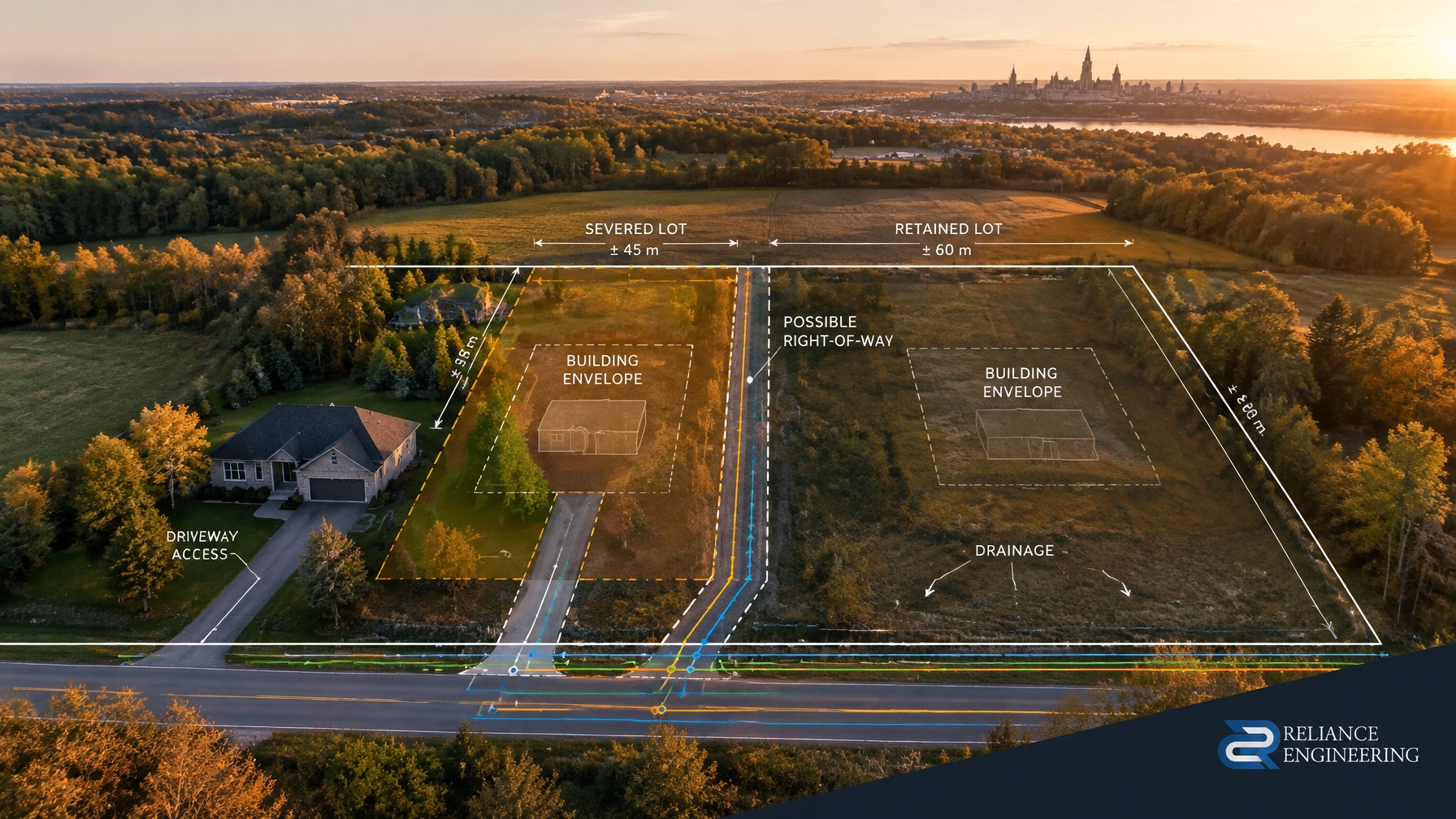
Ready to move your project forward? Whether you are dealing with a complex severance application, a zoning amendment, or simply need a permit-ready grading plan, contact us today. Let’s get your Ontario development approved in record time.