In the competitive landscape of the Greater Toronto Area (GTA) real estate and land development, the difference between a project that breaks ground and one that lingers in "Permit Purgatory" often comes down to a few millimetres on a site grading plan.
For homeowners and builders, lot grading is frequently viewed as a box to be checked. However, municipal reviewers in cities like Toronto, Mississauga, and Vaughan view it as a critical piece of infrastructure. A poorly designed grading plan doesn’t just result in a rejected permit; it leads to catastrophic basement flooding, structural foundation damage, and costly litigation with neighboring property owners.
At Reliance Engineering, led by our Founder and Principal, Naresh Ochani, we have spent over 20 years navigating the complexities of Ontario’s civil engineering requirements. Our reputation is built on technical precision: often securing municipal approvals in a single submission.
Below, we outline the seven most common mistakes we see in lot grading submissions and how professional oversight ensures your project avoids the common pitfalls of basement flooding and municipal rejection.
1. Inadequate Drainage Slopes (Ignoring the 2% Rule)
The most fundamental error in lot grading is failing to maintain a proper slope away from the building foundation. While some DIY-ers or inexperienced designers "eyeball" the grade, municipal standards are rigid.
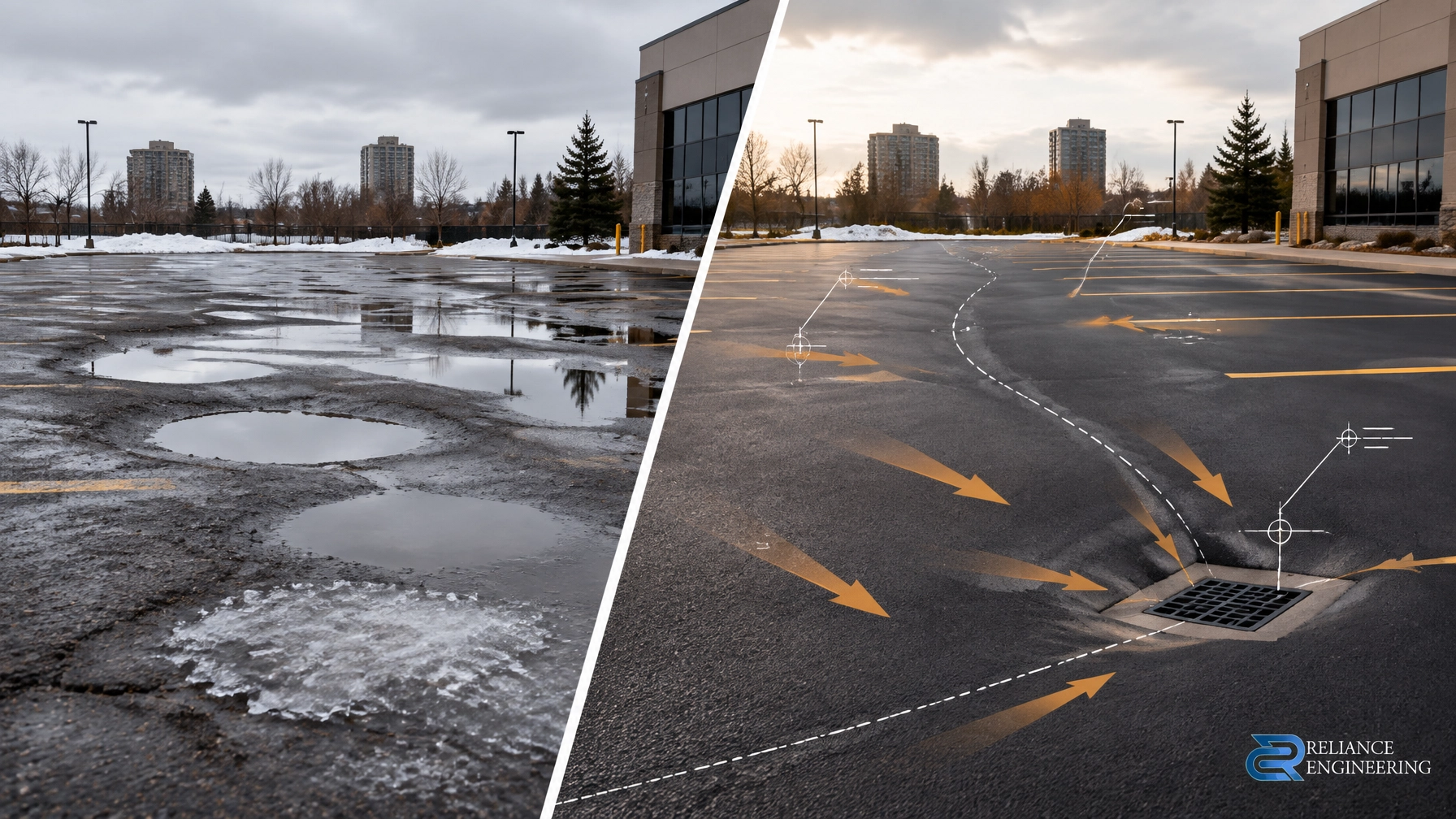
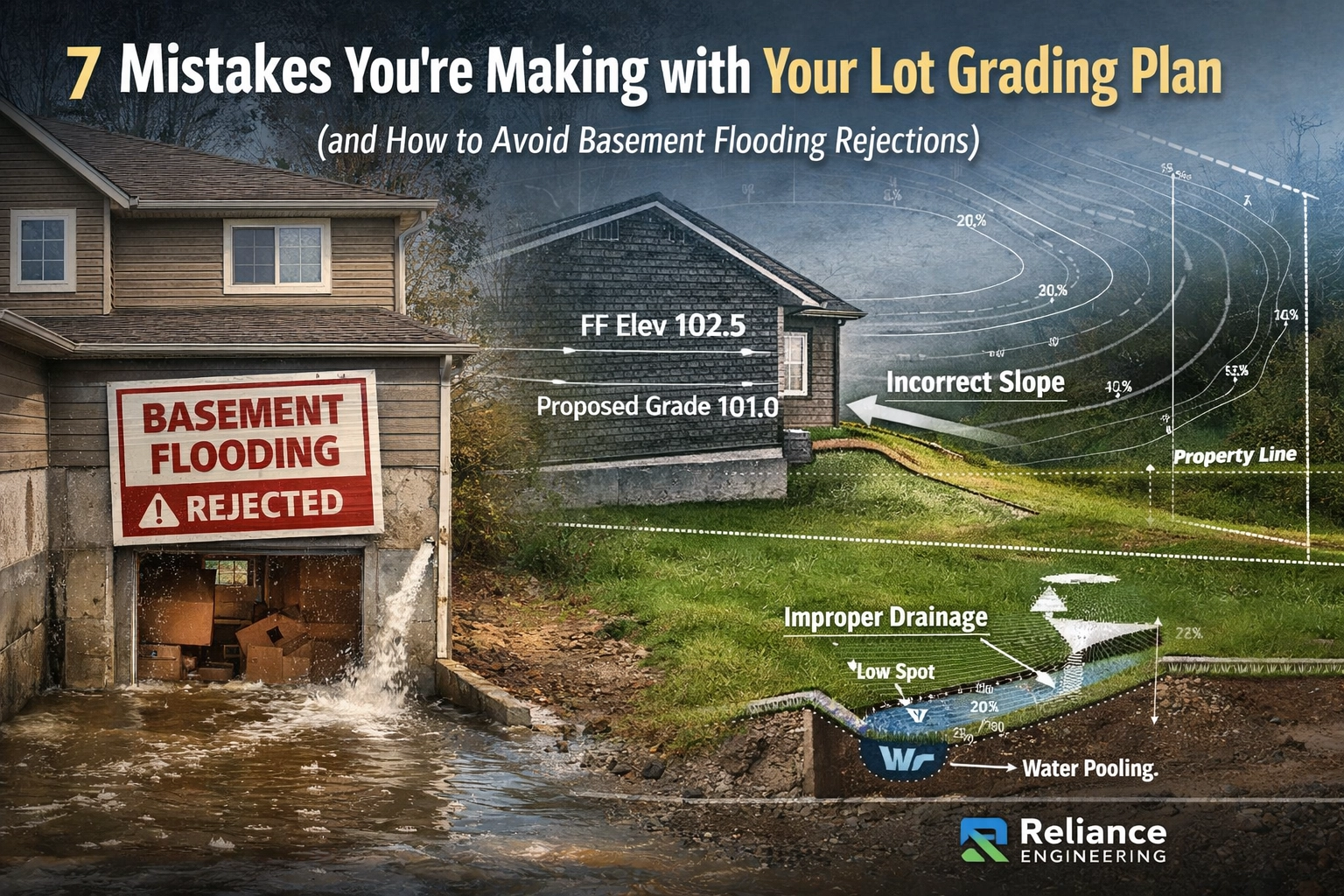
In most GTA jurisdictions, a minimum 2% slope is required for the first 10 feet (3 metres) away from the foundation. This equates to a 6-inch drop over that distance. Without this fall, water pools against the foundation walls. Over time, hydrostatic pressure forces moisture through concrete pores or cracks, leading to wet basements and mold growth.
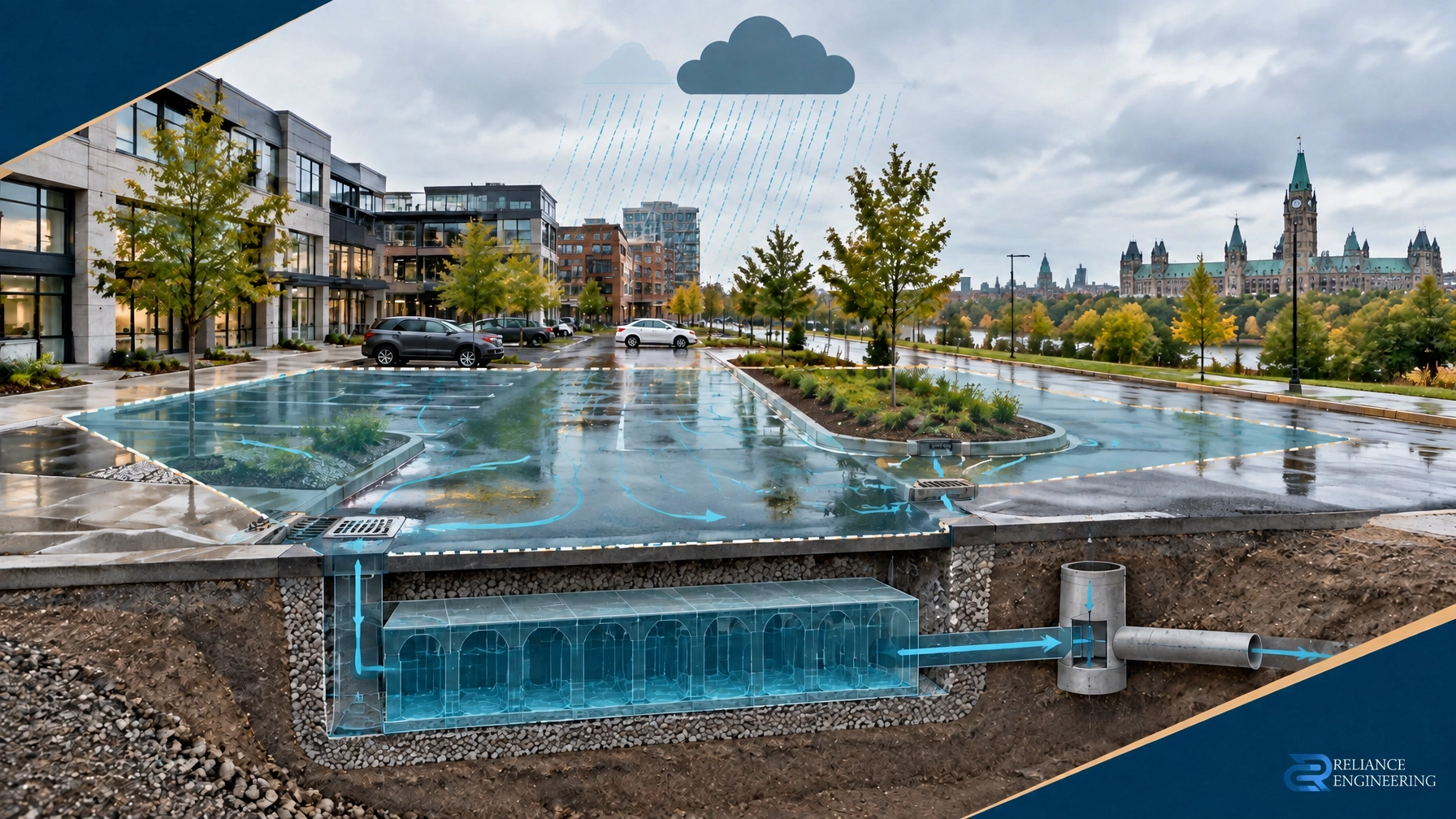
At Reliance Engineering, our storm system design ensures that these slopes are integrated into the overall site topography, accounting for local soil conditions that might affect drainage performance.
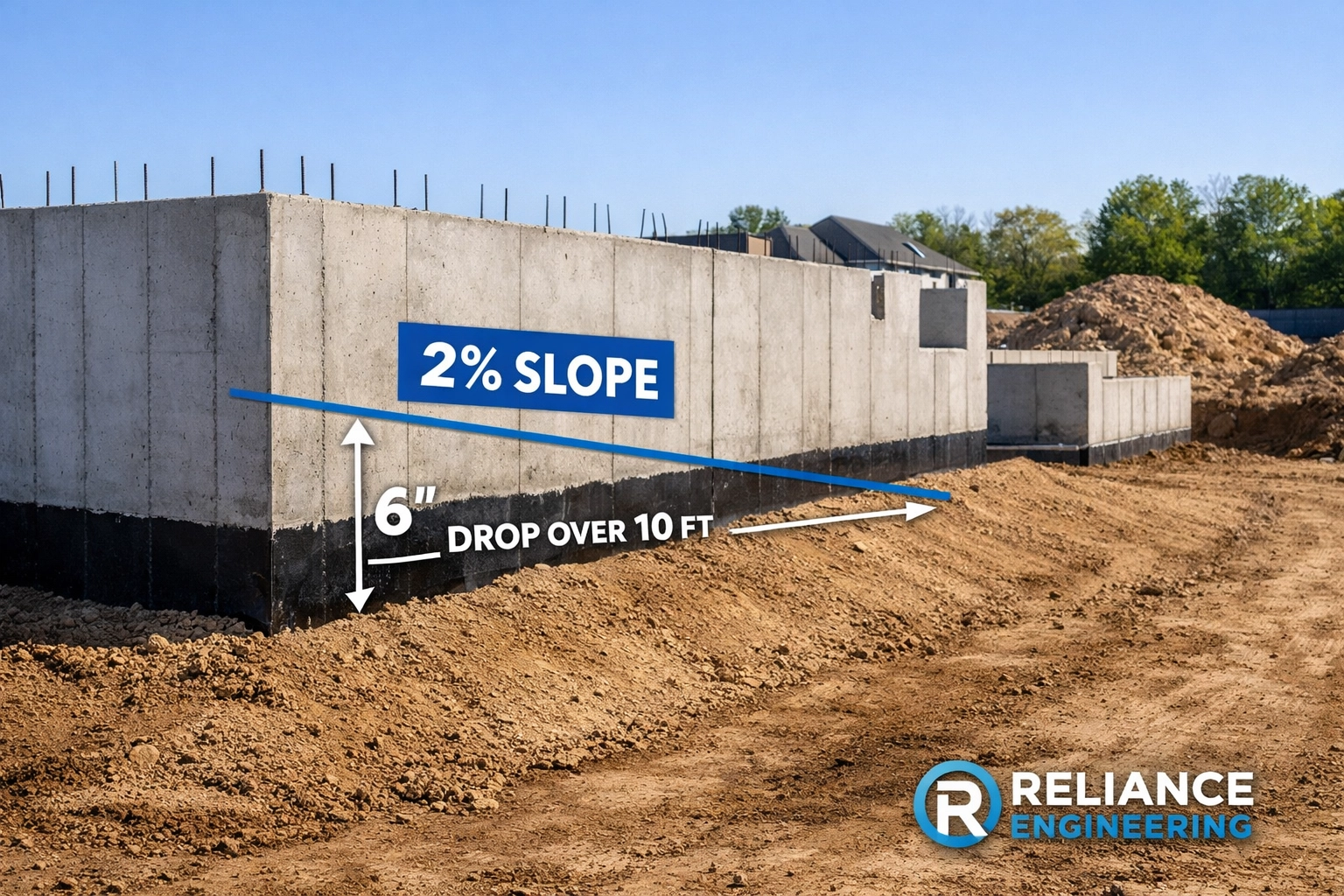
A technical cross-section diagram showing optimal 2% lot grading slopes and foundation protection, featuring the Reliance Engineering logo.
2. Failure to Account for Soil Settlement
Freshly excavated soil is naturally aerated and loose. One of the most common reasons for grading failure years after a project is completed is the failure to account for soil settlement. As the soil around a new foundation compacts over time, it can create a "bowl" effect where the grade eventually slopes toward the house rather than away from it.
Professional grading plans must specify soil compaction requirements in 4-8 inch lifts using mechanical equipment. Our construction administration services ensure that what is designed on paper is actually executed on-site, preventing the settlement issues that lead to long-term flooding risks.
3. Creating "Spite Drainage" on Neighboring Properties
You cannot solve your water problem by making it your neighbor’s problem. This is a primary reason for municipal rejection. A lot grading plan must demonstrate that the proposed changes do not adversely affect the drainage patterns of adjacent properties.
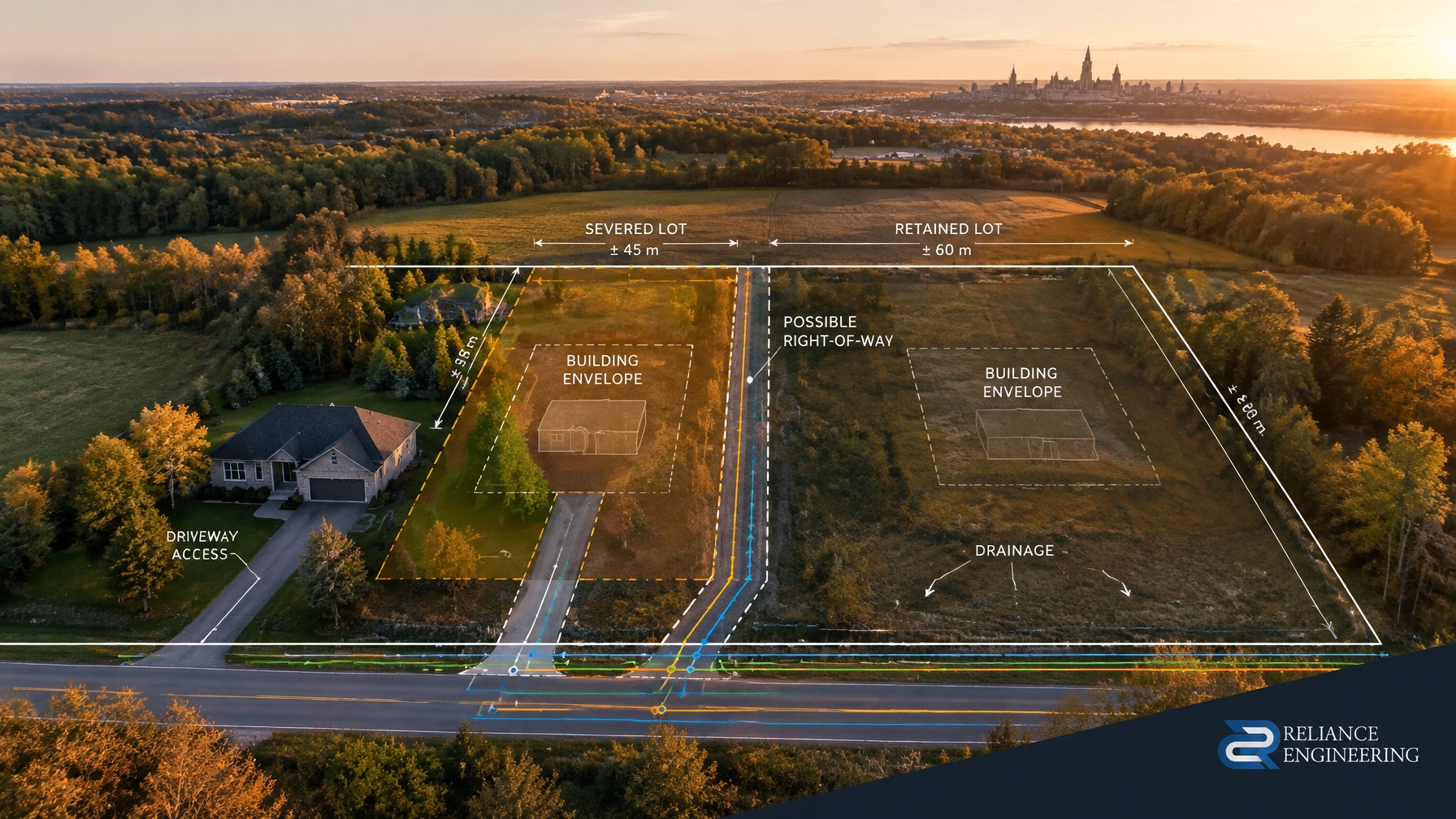
If your plan directs a concentrated flow of water onto a neighbor's lawn or toward their foundation, the municipality will reject the submission immediately. We utilize advanced stormwater management techniques to ensure water is directed toward the municipal right-of-way or designated drainage easements, protecting you from both city fines and civil lawsuits.
4. Relying on Inaccurate or Outdated Surveys
A lot grading plan is only as good as the topographical survey it is based on. Many builders attempt to save costs by using old surveys or simple sketches. This is a high-risk strategy. In the GTA, the landscape is constantly shifting due to neighboring developments, road work, and natural erosion.
Using a licensed professional to establish accurate contour lines and elevation stakes is non-negotiable. Reliance Engineering works closely with top-tier surveyors to ensure our site servicing plans are built on a foundation of "ground truth" data.

A professional engineer using high-precision laser leveling equipment on a GTA construction site, featuring the Reliance Engineering logo.
5. Neglecting Erosion and Sediment Control (ESC)
Before the final grading is even approved, your site must have an Erosion and Sediment Control plan. Mistake number five is treating ESC as an afterthought. If silt and sediment from your construction site wash into the municipal storm sewer system, you face heavy fines and immediate work-stoppage orders.
A professional plan includes silt fences, mud mats, and catch basin protection. This is particularly critical for projects like the 35 Wabash Avenue Townhomes or the redevelopment of Etobicoke General Hospital, where large-scale disturbance requires rigorous environmental oversight.
6. Misunderstanding Municipal Specifics and Bill 60
In 2026, the regulatory environment in Ontario is more complex than ever. With the implementation of updates related to Bill 60, the "Faster" Site Plan Approval process has changed how municipalities review submissions. However, "faster" does not mean "less strict."
Each municipality: whether it’s the City of Toronto, Peel Region, or York: has its own specific design criteria for sanitary sewer design and lot grading. Applying a "one-size-fits-all" approach to your grading plan is a guaranteed way to receive a Request for Revision.
7. The "Cheap Plan" Trap: Hiring Based on Price over Experience
The most expensive grading plan is the one that is rejected three times. Many homeowners and small-scale builders hire low-cost draftsmen who lack the engineering credentials or the local experience to handle complex GTA terrain.
When you work with a firm like Reliance Engineering, you are benefiting from over two decades of principal-level expertise. Naresh Ochani personally oversees the engineering integrity of our projects. This level of seniority ensures that we anticipate the concerns of municipal reviewers before they even see the plan.

How to Secure Your Approval in One Submission
Securing a permit for your lot grading shouldn’t be a back-and-forth battle with the city. By avoiding the mistakes listed above, you save months of delays and thousands of dollars in re-design fees.
At Reliance Engineering, we specialize in:
- Precision Grading: Ensuring perfect 2% slopes and positive drainage.
- Integrated Servicing: Connecting your grading with water distribution design and sewer systems.
- Municipal Liaison: Leveraging our 20+ years of experience to speak the language of city reviewers.
Whether you are working on a custom home in Oakville or a commercial redevelopment in Newmarket, our goal is to provide a Functional Servicing Report and grading plan that is permit-ready from day one.
Don't Risk Your Foundation
A wet basement is a financial drain. A rejected permit is a project killer. Ensure your site is engineered for success by partnering with a firm that understands the GTA’s unique challenges.
Ready to get your project moving?
Reliance Engineering
Founder & Principal: Naresh Ochani
Expertise: 20+ Years of Civil Engineering Excellence
Specialization: Land Development, Grading, Servicing, and Stormwater.
Contact Us Today for a Consultation
Office Hours:
Monday – Friday: 9:00 AM – 5:00 PM
Toronto, Ontario, Canada
Explore Our Past Successes: