Land development in Ontario is a high-stakes game. The rules change fast, the costs are rising, and municipal red tape can stall a project for years if you aren't prepared. Whether you are looking to build a high-density condo in Toronto or a multi-unit conversion in a growing suburb, understanding the approval roadmap is the difference between a profitable venture and a financial nightmare.
At Reliance Engineering, we don't just draft plans; we navigate the bureaucracy so you don't have to. Here is your definitive guide to mastering land development approvals across Ontario in 2026.
1. The Power Shift: Who Actually Controls Your Development?
In the past, developers had to jump through hoops at both the regional level (Peel, York, Durham) and the local municipal level. Thanks to recent legislative shifts like Bill 185 (Cutting Red Tape to Build More Homes Act), the hierarchy has flattened.
Upper-tier municipalities are losing their planning roles. This means for most projects in Ontario, your primary point of contact is now the local city or town hall. While this should theoretically speed things up, it has created a transition period of confusion. You need an engineering partner who knows exactly which office holds the keys to your permits.
The Planning "Gatekeepers"
Even with a simpler hierarchy, you still face these agencies:
- Conservation Authorities (TRCA, CVC): If your land is near a creek, slope, or wetland, they have veto power.
- MTO: Any project near a provincial highway requires their blessing.
- Utilities & Railways: Hydro easements and rail setbacks can kill a project before it starts.

2. Core Approvals You Cannot Skip
You can’t just start digging. You need a sequence of approvals that build on each other.
Official Plan & Zoning By-law Amendments (OPA/ZBA)
If your vision doesn't match what the city intended for that plot of land (e.g., building a 4-plex in a single-family zone), you need an amendment. These are the longest and most expensive approvals. However, with the push for density, many municipalities are now more open to multi-unit conversions and zoning changes.
Site Plan Approval (SPA)
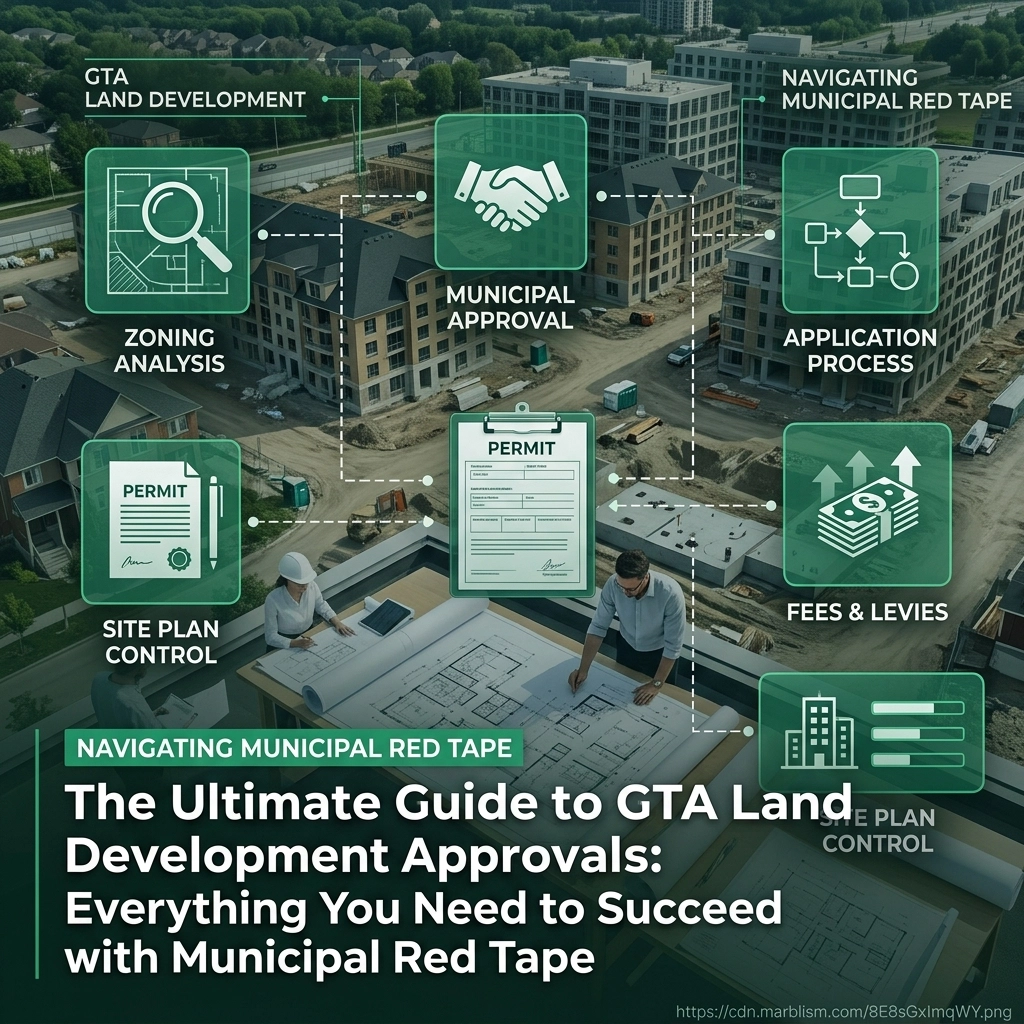
This is where the "red tape" gets thick. The city examines your site layout, access, landscaping, and: most importantly: your engineering. You cannot get a building permit without Site Plan Approval. We’ve mastered this process to help you succeed with SPA in Ontario.
Minor Variances
If you only need small deviations (like a slightly smaller setback or a bit more height), you go to the Committee of Adjustment. It’s faster than a full rezoning but still requires professional representation and solid engineering logic.
3. The 7-Step Roadmap to Approval
Success in Ontario land development follows a strict sequence. Skipping steps leads to "kicked back" applications and wasted fees.
Step 1: Pre-Acquisition Due Diligence
Never buy land without a "fatality check." We look for red flags: Is there a hidden floodplain? Is the sewer capacity maxed out? This stage determines if the project is even viable.
Step 2: Pre-Consultation Strategy
While Bill 185 made pre-consultation "voluntary," skipping it is a mistake. It is your chance to get the city’s requirements in writing. This prevents them from moving the goalposts later.
Step 3: The Technical Submission
This is the heart of your application. You need a coordinated package:
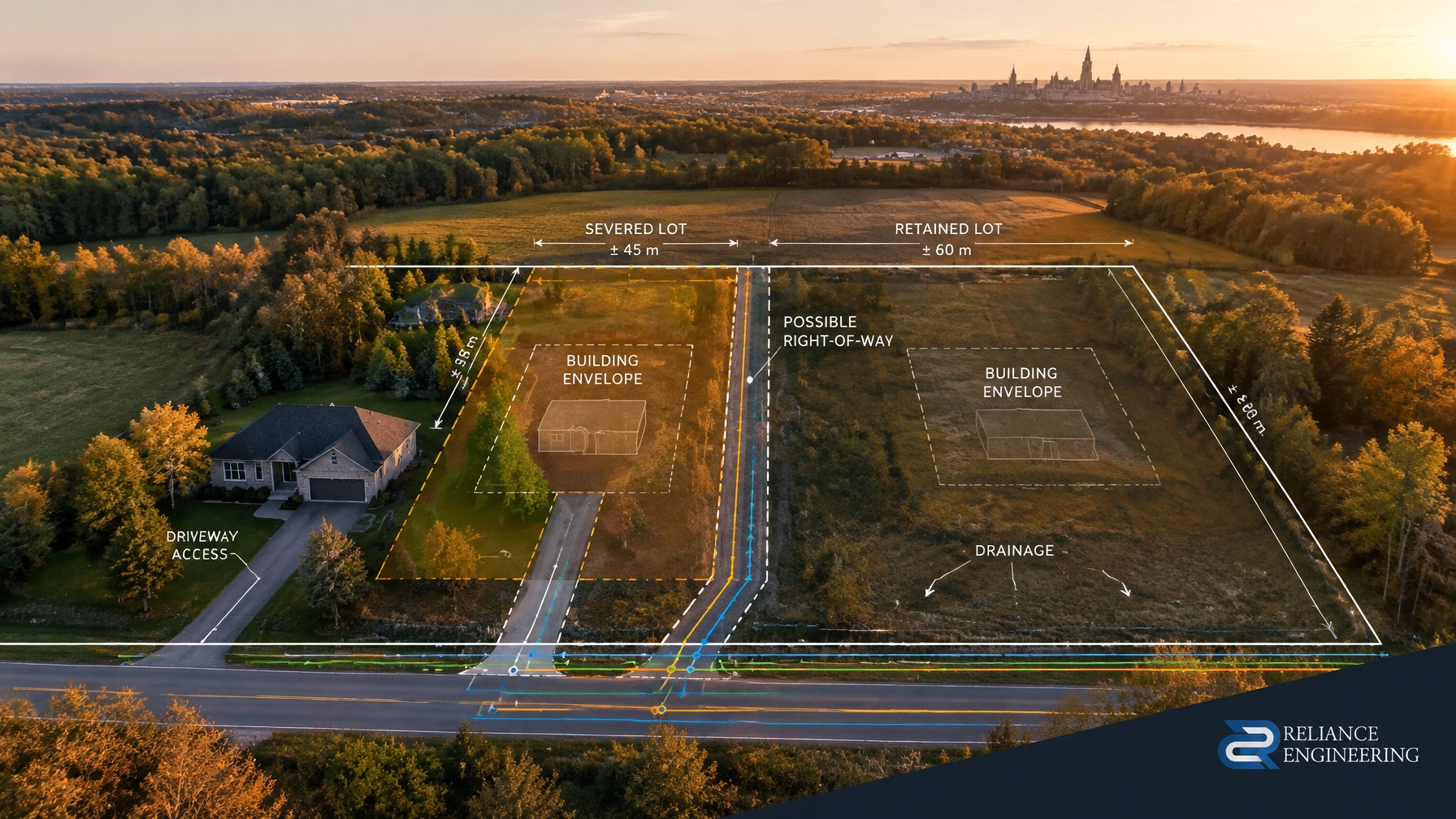
- Site Grading Plans: Precision is non-negotiable. See our guide on how to get approved in one submission.
- Functional Servicing Reports (FSR): Proving you can hook up to water and sewer. Avoid Toronto submission delays with a clean FSR.
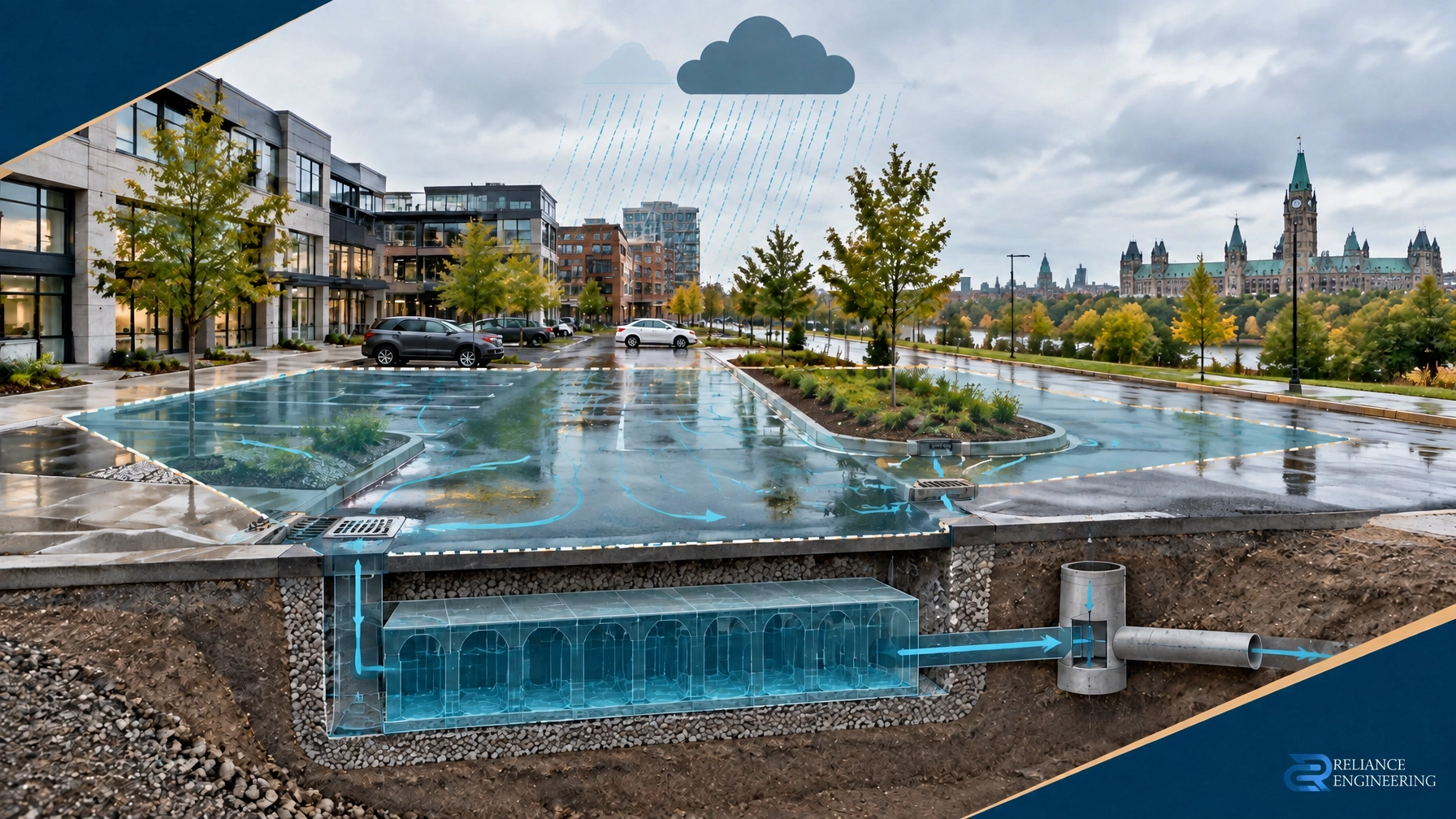
- Stormwater Management (SWM) Reports: With 2024 and 2026 regulatory changes, SWM reports matter more than ever.
Step 4: Circulation & Revisions
The city sends your plans to internal departments (Fire, Parks, Engineering). Expect comments. The key here is speed: responding to comments in days, not months, keeps the momentum.
Step 5: The Decision
Once the planning department is satisfied, you get your "Notice of Approval in Principle."
Step 6: Agreements & Securities
You’ll sign a Site Plan Agreement and post financial securities (letters of credit). This ensures you actually build the landscaping and drainage you promised.
Step 7: Building Permit
The final hurdle. This is where your architectural drawings and our detailed site servicing plans come together for the "green stamp."
4. Beating the Red Tape: Professional Tactics
To win in 2026, you need to be aggressive. Here is how we help our clients skip the line:
- "Use It or Lose It" Awareness: Bill 185 introduced lapsing conditions. If you don't start building within a set timeframe (usually 3 years), your approval can be revoked. We help you stay on schedule.
- Servicing Allocation: Water and sewer capacity are finite resources. If you stall, the city can take your "spots" and give them to another developer. We ensure your servicing plans are permit-ready to lock in your capacity.
- Concurrent Applications: Don't wait for zoning to be 100% finished before starting your Site Plan drawings. Running these in parallel can save 6 months.

5. Why Engineering is the Foundation of Your Approval
Most developers focus on the architecture, but it’s the civil engineering that gets rejected by the city. A "pretty" building doesn't matter if the stormwater management plan doesn't work or the lot grading causes flooding.
At Reliance Engineering, we specialize in high-speed, high-accuracy civil engineering across Ontario. We know what the reviewers in Mississauga, Toronto, Vaughan, and Brampton are looking for because we are in the trenches with them every day.
6. Checklist: Are You Ready for Submission?
Before you hit "submit" on the municipal portal, check these three things:
- Do you have an ESC Plan? Every project needs an Erosion and Sediment Control plan or the city will kick it back instantly.
- Is your SWM strategy cost-effective? Don't overspend on massive underground tanks if budget-friendly LID measures could work.
- Is your grading plan precise? Even a 10cm error can lead to a rejection from the city.
Conclusion: Stop Waiting, Start Building
Municipal red tape is a hurdle, not a wall. With the right engineering strategy and a clear understanding of the Ontario planning framework, you can move from "Proposed" to "Occupied" faster than the competition.
Stop letting delays eat your ROI. Let’s get your project approved.
Contact Information
Naresh Ochani, P.Eng. M.Eng.
Reliance Engineering
Address: 6850 Millcreek Dr, Mississauga, ON L5N 2H4
Phone: 647-385-6418
Email: [email protected]
Website: www.relianceengineering.ca
Office Hours:
- Saturday: 12:00 PM – 2:00 PM
- Sunday: Closed
- Monday – Friday: 9:00 AM – 6:00 PM