In the high-stakes world of Greater Toronto Area (GTA) land development, project managers and builders often view the erosion and sediment control plan as another line item on a long list of regulatory requirements. When you are focused on structural integrity, architectural aesthetics, and tight delivery schedules, it is easy to assume that "controlling a little bit of dirt" is a secondary concern.
However, the reality is quite different. In 2026, the regulatory environment in Ontario: and specifically within the jurisdictions of the Toronto and Region Conservation Authority (TRCA) and the Greater Golden Horseshoe Area (GGHA): is stricter than ever. An overlooked or poorly designed erosion and sediment control plan is one of the fastest ways to see a multi-million dollar project grind to a halt.
At Reliance Engineering, we have spent over 20 years navigating the complexities of Ontario’s civil engineering requirements. We’ve seen firsthand how a proactive approach to sediment control doesn’t just satisfy a checklist: it protects your bottom line.
Is an Erosion and Sediment Control Plan Mandatory?
To put it bluntly: Yes.
If you are disturbing the soil in the GTA, you are legally required to manage the consequences of that disturbance. This requirement is mandated by a combination of the Ontario Building Code, municipal by-laws, and local Conservation Authority requirements.
The Thresholds You Need to Know
While small-scale landscaping might fly under the radar, professional builders are almost always subject to these rules. In Ontario, the general guidelines are:
- Disturbances over 5,000 square feet: A written erosion and sediment control plan is typically required for any dwelling or structure construction of this size.
- Disturbances exceeding 1 acre: For larger sites, a professional design is mandatory. This includes technical drawings featuring sediment traps, silt fences, and collection channels. These must be stamped by a registered professional engineer.
Failure to provide these documents during the Site Plan Approval process will result in immediate rejection, pushing your timelines back by months.

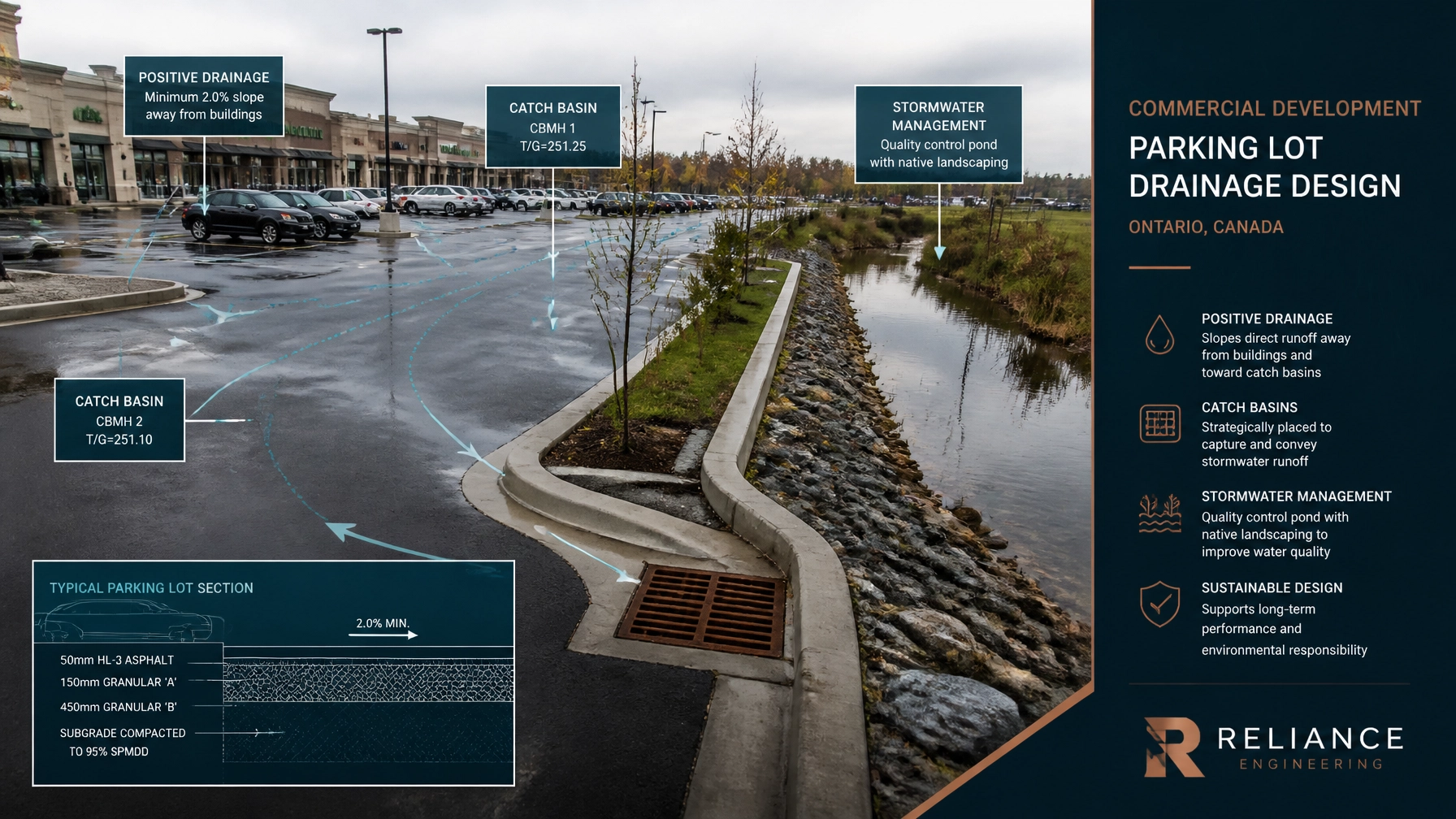
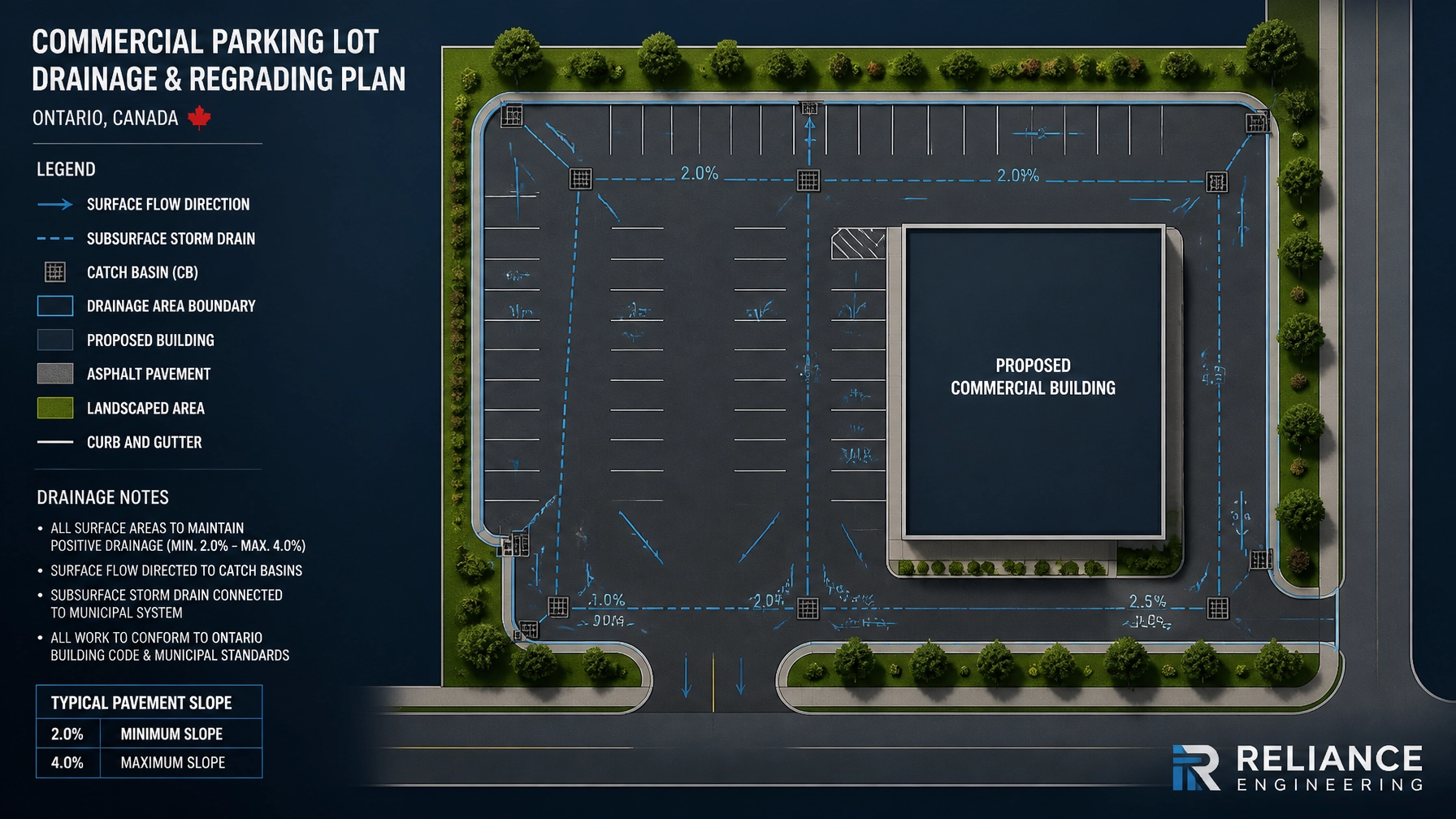
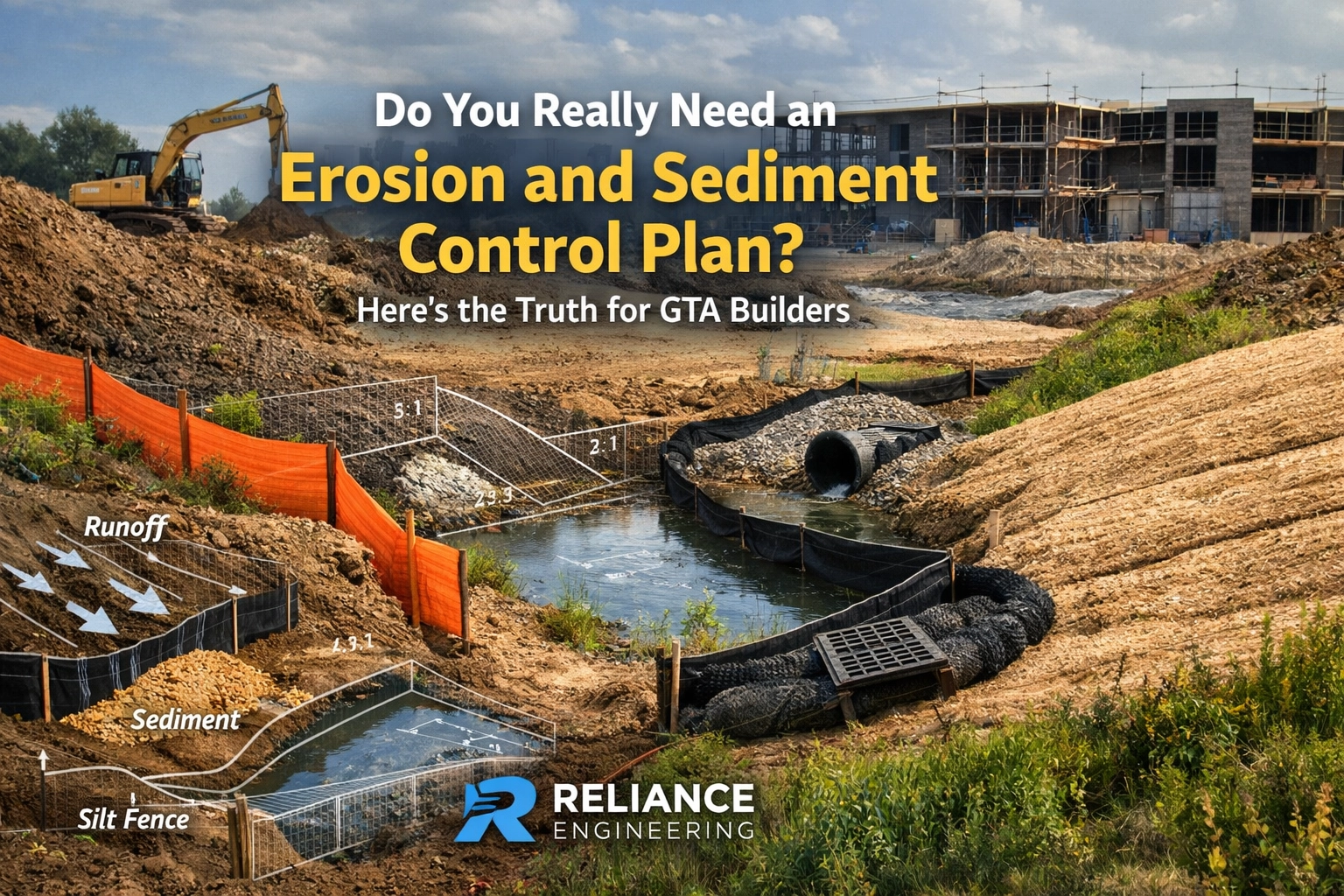
Caption: A professional civil engineering site plan highlighting erosion control measures, designed to meet TRCA standards with the Reliance Engineering logo visible.
Why GTA Regulators Are So Strict
The Greater Toronto Area is home to some of the most sensitive watersheds in North America. Construction activity, by its nature, strips away vegetation and exposes raw soil. When it rains, that loose soil turns into sediment-laden runoff.
This runoff doesn't just "go away." It flows into municipal storm sewers, clogging expensive infrastructure and leading to localized flooding. More importantly, it eventually reaches our rivers and Lake Ontario, destroying fish habitats and polluting the region's drinking water source.
The Role of the TRCA and GGHA
The Toronto and Region Conservation Authority (TRCA) has released updated guides, such as the Erosion and Sediment Control Guide for Urban Construction, which set the benchmark for the region. Furthermore, the Greater Golden Horseshoe Area (GGHA) guidelines are developed in coordination with Fisheries and Oceans Canada and Environment Canada.
When you submit your plans, the reviewers are looking for more than just a "silt fence" notation. They are looking for a comprehensive strategy that proves you understand the topography of your site and the potential impact of a 100-year storm event.
The Financial Risk of Getting It Wrong
For a builder, the environmental impact is a moral concern, but the financial impact is an immediate business concern. In the GTA, the "Truth" about ESC plans is that they are your primary insurance policy against municipal intervention.
1. Stop-Work Orders
If an inspector visits your site and finds sediment flowing into the street or a nearby creek, they have the authority to issue a stop-work order. In the GTA, where every day of delay costs thousands in labor, equipment rentals, and interest, a two-week shutdown can be catastrophic.
2. Massive Fines
Municipalities like Toronto, Vaughan, and Mississauga have become increasingly aggressive with fines. Violations of the Ontario Water Resources Act or the Federal Fisheries Act can lead to penalties that far exceed the cost of hiring a civil engineer to design a proper plan in the first place.
3. Remediation Costs
If sediment clogs a neighbor’s driveway or a municipal culvert, the builder is responsible for the cleanup. Vacuuming out storm sewers and restoring damaged landscapes is a specialized, high-cost endeavor.
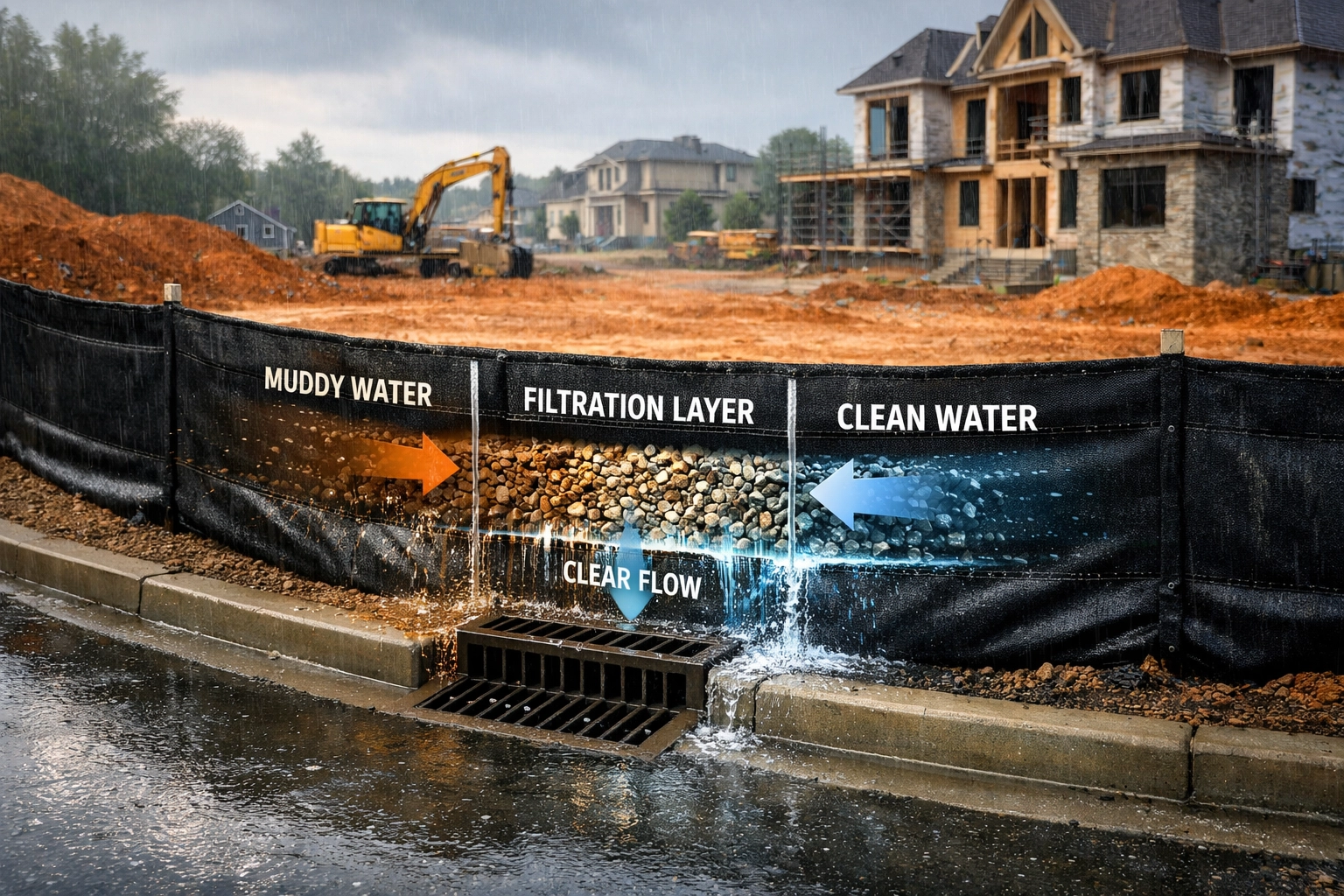
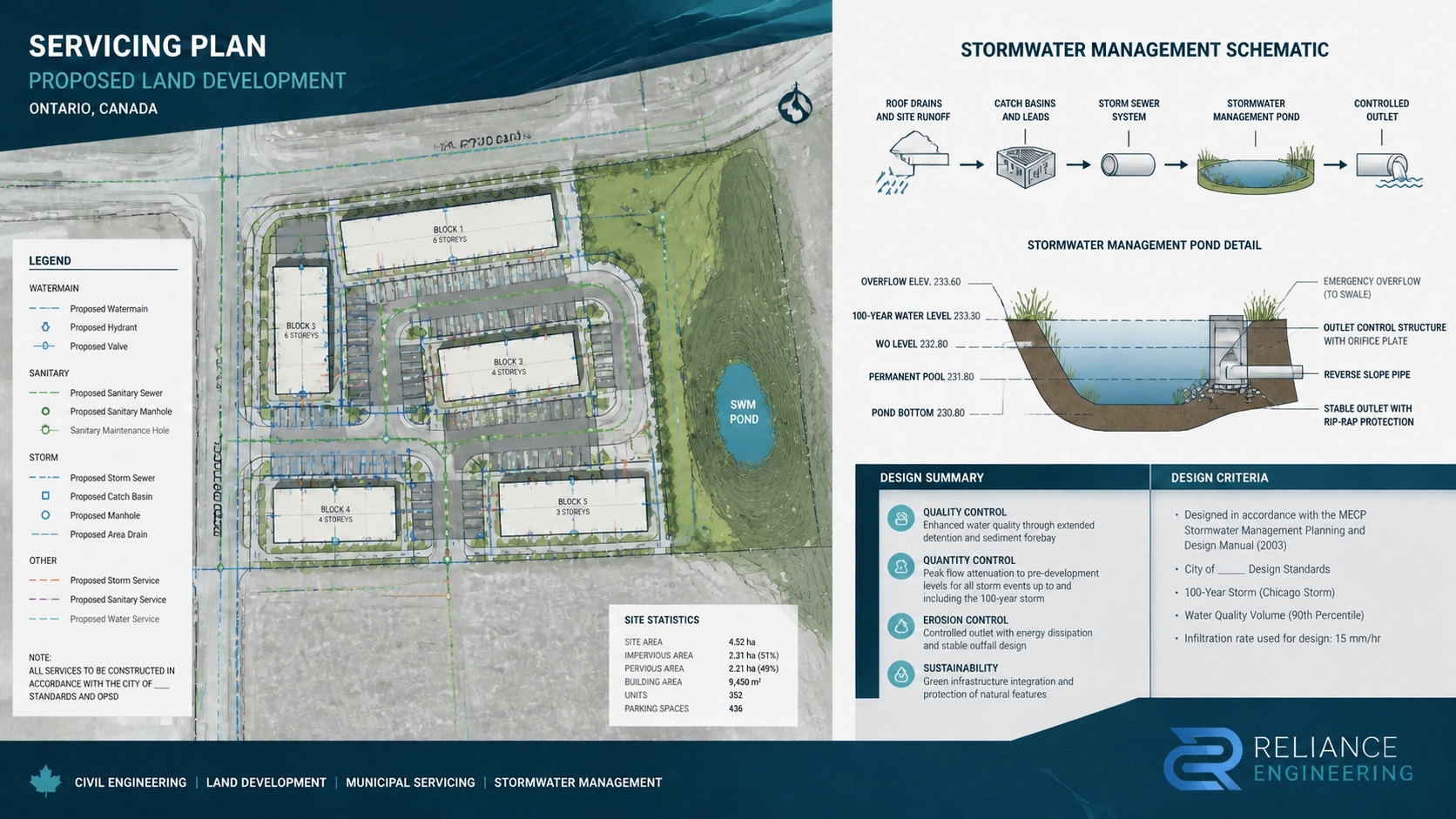
Caption: A construction site utilizing professional sediment control barriers to prevent runoff into the local GTA sewer system, featuring the Reliance Engineering logo.
What a Professional ESC Plan Actually Looks Like
At Reliance Engineering, our approach to an erosion and sediment control plan is rooted in "One-Submission Approval." We don't just put lines on a page; we design systems that work for the specific constraints of your site.
A robust plan typically includes three stages of defense:
Primary Defense: Stabilization
We look for ways to keep the soil in place before it even moves. This includes preserving existing vegetation where possible and utilizing temporary seeding or mulching for areas that will remain idle for more than 30 days.
Secondary Defense: Perimeter Controls
This is where the standard "silt fence" comes in, but we go further. We strategically place "heavy-duty" silt fences, straw wattles, and rock check dams to slow down water flow and trap sediment before it leaves the property line.
Tertiary Defense: Sediment Traps and Basins
For larger GTA projects, we design temporary sediment basins. These are engineered ponds that allow water to sit long enough for the dirt particles to settle at the bottom before the "clean" water is discharged into the municipal system.
For more technical details on how these integrate with your broader site design, see our guide on Site Grading Plan Precision.
The Reliance Engineering Advantage: 20+ Years of GTA Expertise
Why do GTA builders consistently choose Reliance Engineering for their civil engineering services?
It comes down to our track record. We understand the specific "personality" of each municipality’s planning department. We know what a reviewer in Brampton wants to see versus a reviewer in the City of Toronto.
- One-Submission Approval: Our goal is always to get your permit approved the first time. We anticipate the questions the Conservation Authorities will ask and answer them in our initial design.
- Cost-Effective Solutions: We don't over-engineer. We find the most affordable way to keep your site compliant while ensuring you don't spend more than necessary on temporary materials.
- Rapid Turnaround: We know that "time is money" isn't just a cliché in land development. We provide draft plans in days, not weeks.
Do You Need a Professional ESC Plan Right Now?
If you are in the planning stages of a new build, a multi-unit conversion, or even a large garden suite project, you need to address your sediment control strategy today. Waiting until the municipality asks for it will only delay your building permit.
The GTA is becoming a "zero-tolerance" zone for sediment discharge. Don't let a simple oversight turn into a legal and financial nightmare.
Ready to secure your approval in one submission?
Contact Naresh Ochani and the team at Reliance Engineering. With 20+ years of experience in Land Development, Grading, Servicing, and Stormwater management, we provide the permit-ready plans you need to keep your project moving forward.
Contact Information
- Name: Reliance Engineering
- Founder: Naresh Ochani, P.Eng.
- Address: 3180 Emerald Gate, Milton, ON L9T 0W9, Canada
- Phone: +1 416-836-5743
- Website: www.relianceengineering.ca
- Operational Hours:
- Monday – Friday: 9:00 AM – 5:00 PM
- Saturday – Sunday: Closed
Get your Erosion and Sediment Control Plan started today. Contact us for a consultation.

Caption: A professional consultant from Reliance Engineering reviewing site plans for a GTA development project.