A Functional Servicing Report (FSR) is the technical backbone of any significant land development project in Ontario. If you are a developer, architect, or property owner, you know that the path to a shovel-ready site is paved with regulatory hurdles. The FSR is the document that proves to municipal reviewers that your project won’t break the city’s existing infrastructure.
At Reliance Engineering, we have seen far too many projects stall because of poorly prepared reports. In the high-stakes environment of Ontario real estate development, delays are not just an inconvenience: they are a massive financial drain. This guide provides a comprehensive breakdown of what an FSR entails, why you need one, and how to ensure your submission moves through the system without the dreaded "Request for Revision."
What Exactly is a Functional Servicing Report?
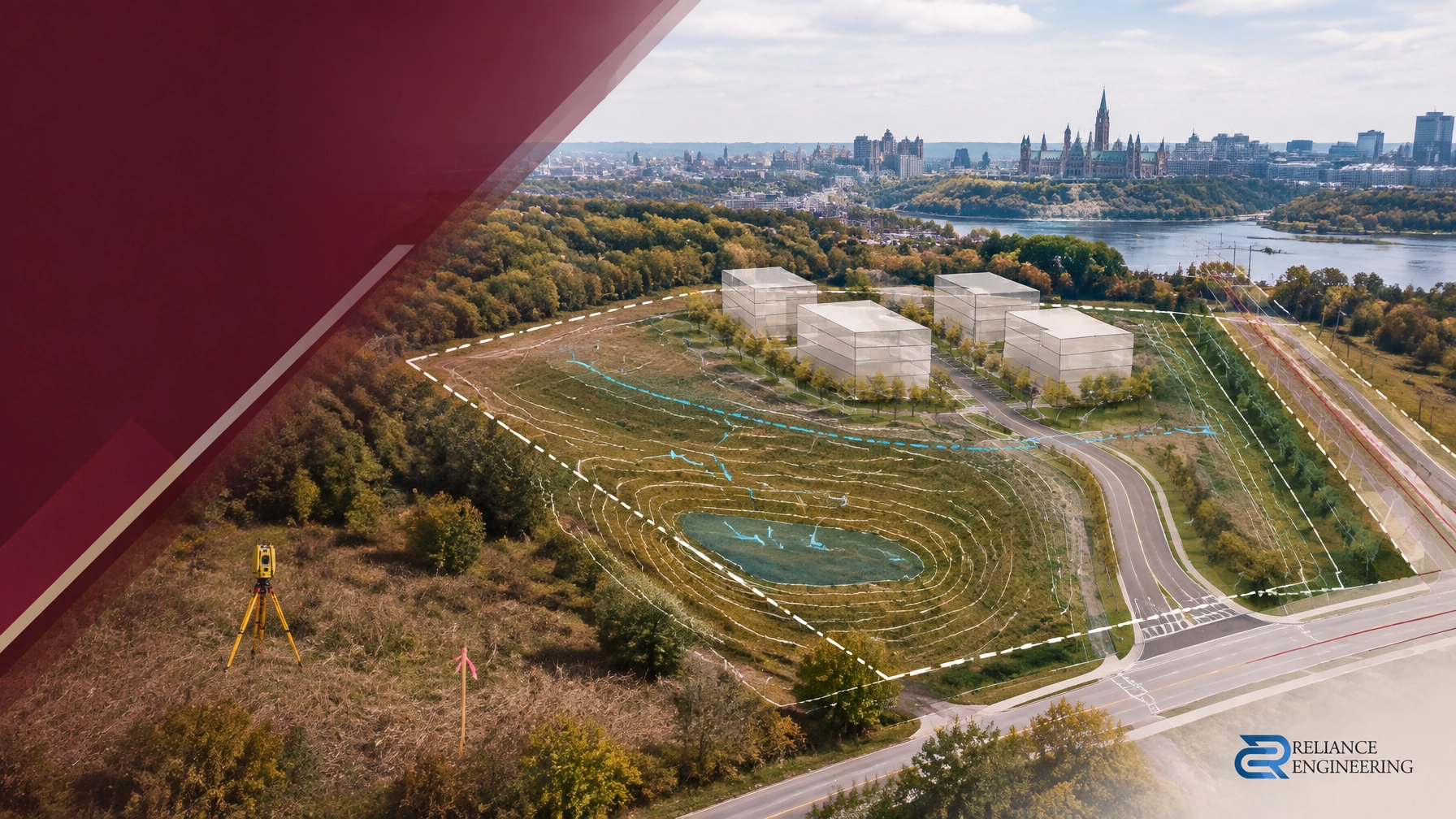
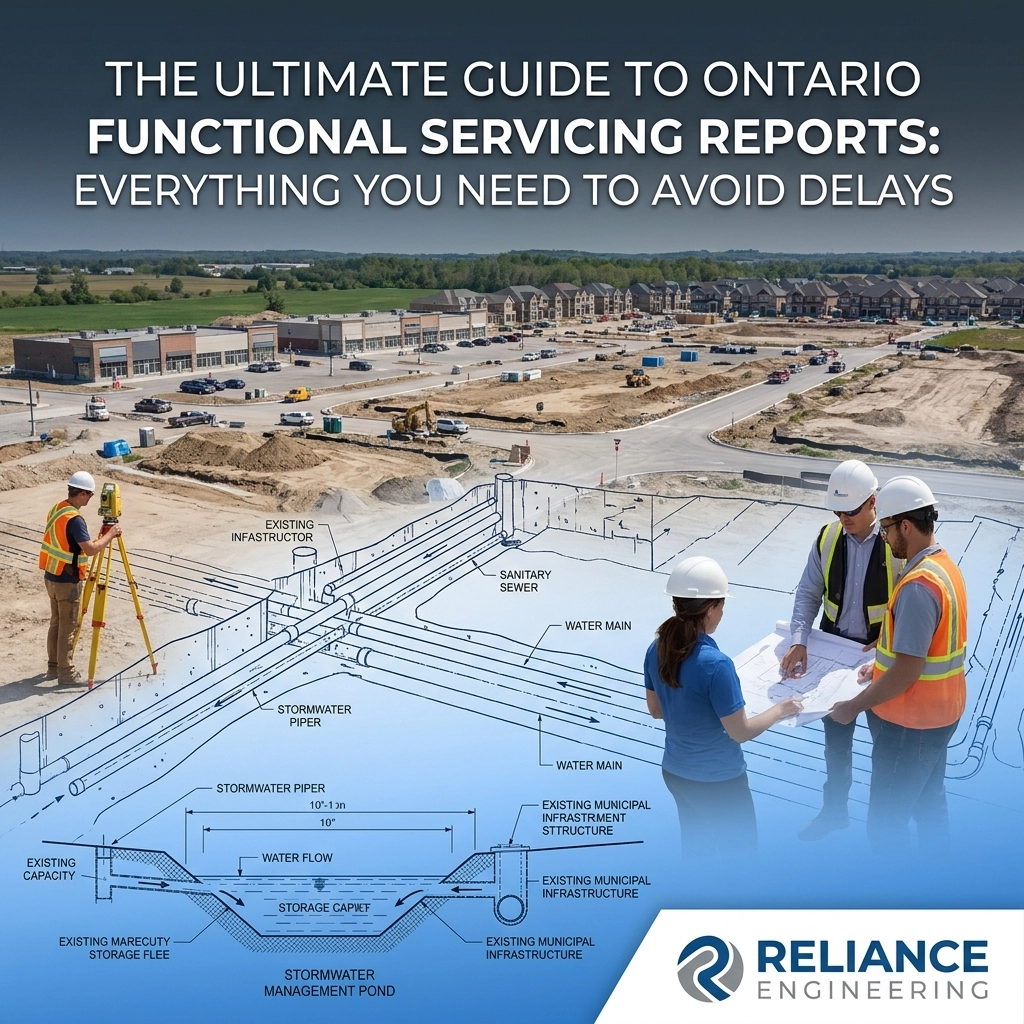
In simple terms, an FSR is a planning-level technical document. It evaluates whether the existing municipal water, sanitary, and storm systems have the capacity to support your proposed development. It isn't just a "check the box" exercise; it is a rigorous engineering analysis that determines the feasibility of your land use changes.
The FSR examines the overall impact on trunk and local municipal service capacities, including:
- Water treatment plants and distribution systems.
- Wastewater treatment plants and trunk sewers.
- Site grading and drainage patterns.
- Stormwater management facilities.
In Ontario, this report must be prepared and stamped by a licensed Professional Engineer (P.Eng.). Without that seal, your application will not even be reviewed. For a deeper look at the initial steps, check out Your Quick Start Guide to a Functional Servicing Report.
When is an FSR Required in Ontario?
Municipalities across Ontario: from Ottawa to Windsor and everywhere in the GTA: demand an FSR when a development proposal significantly alters the current land use. If your project increases the demand on municipal services beyond what was originally planned for that lot, you need an FSR.
Common triggers include:
- Official Plan Amendments (OPA): When you are changing the intended use of the land.
- Zoning By-law Amendments (ZBA): When you are increasing density or changing the building type.
- Plans of Subdivision: Essential for large-scale residential or industrial developments.
- Site Plan Control Applications: Required for commercial, industrial, and multi-unit residential projects where new servicing connections are needed.
If you are working on a multi-unit project, you should also understand how to get your Site Plan Approval for multi-unit conversions.

The Core Components of a Robust FSR
A professional FSR is a multi-disciplinary document. It doesn't exist in a vacuum; it integrates data from various engineering niches. Here is what every high-quality report must include:
1. Water Distribution Analysis
The municipality needs to know if there is enough pressure and volume to supply your building’s daily needs and, more importantly, fire protection. We conduct hydraulic modeling and fire flow tests to ensure your project meets the Fire Underwriters Survey (FUS) requirements. If the municipal watermain is too small, the FSR will outline the necessary upgrades.
2. Sanitary Sewer Capacity Analysis
How much wastewater will your development generate? We calculate the "peak flow" based on the number of units or the floor area. This is compared against the capacity of the existing sewers. If the pipes downstream are already at 90% capacity, your project could be forced to pay for downstream reinforcements.
3. Stormwater Management (SWM)
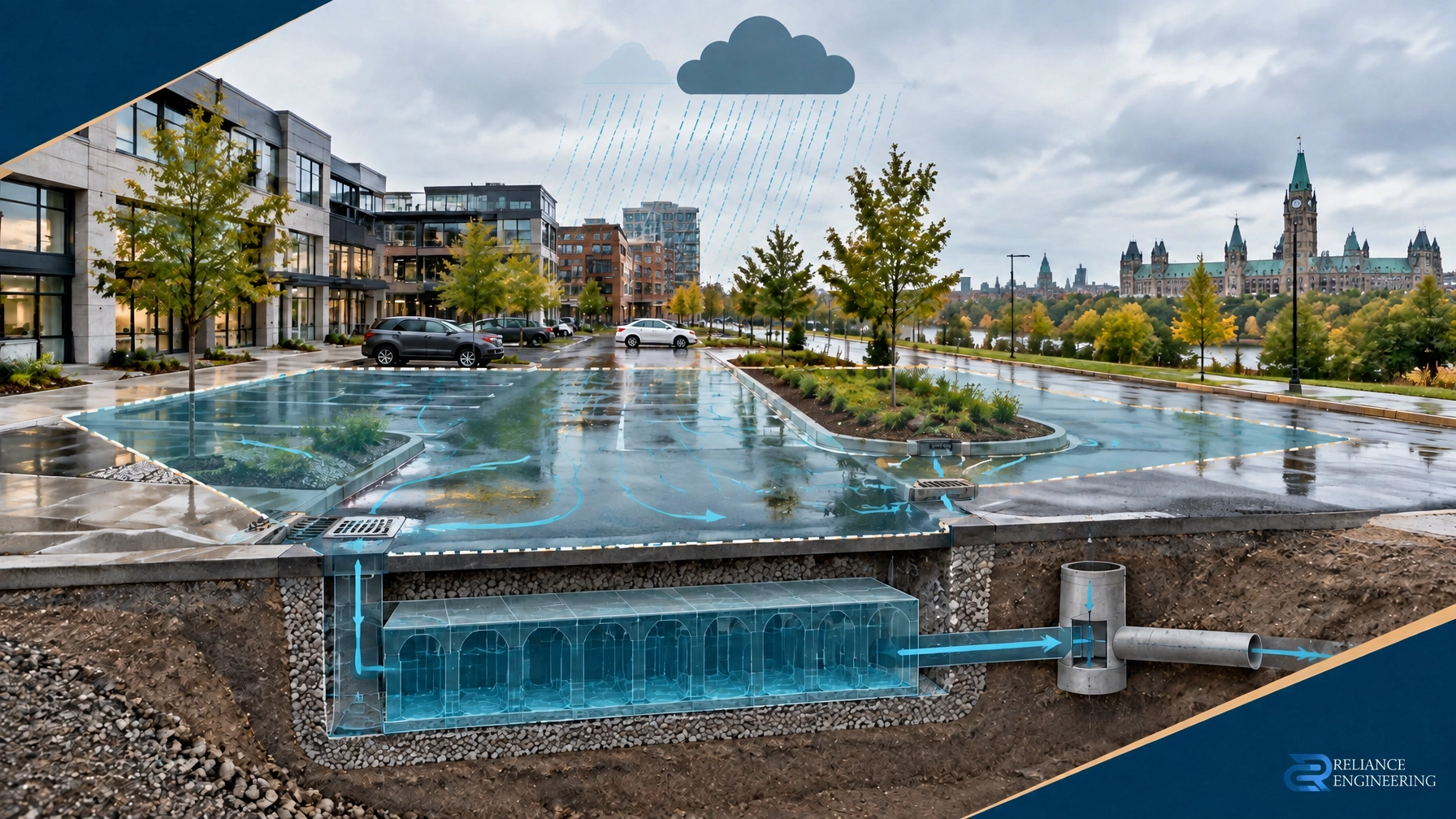
Stormwater is perhaps the most scrutinized section of any Ontario FSR. With the increase in extreme weather events, municipalities are stricter than ever. Your report must detail how you will control the quantity and quality of runoff. This often involves detention tanks, oil-grit separators, or Low Impact Development (LID) features. For more on this, see Does a Precise Stormwater Management Report Really Matter in 2026?.
4. Site Grading and Erosion Control
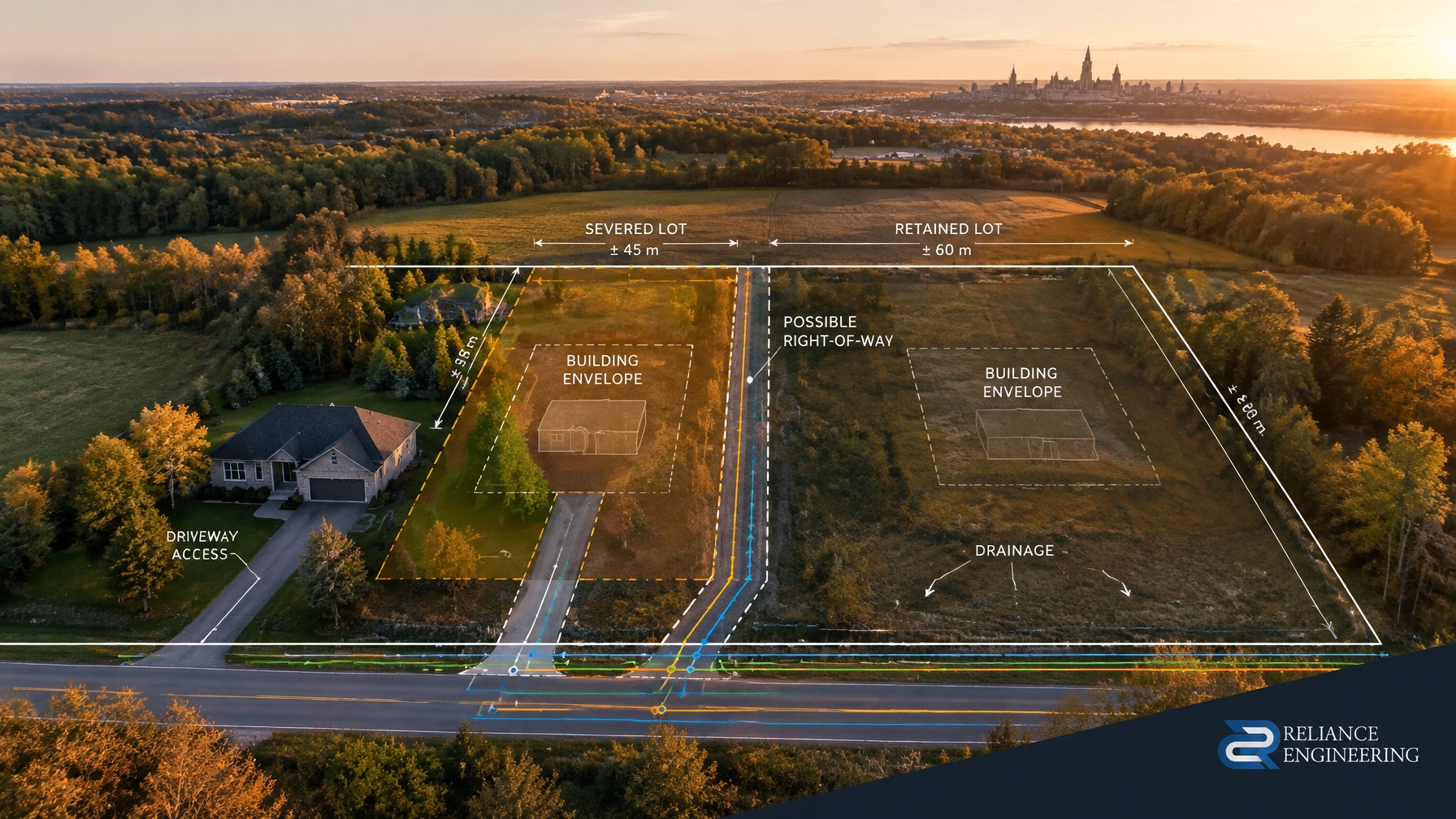
How will the land be shaped? An FSR must provide a preliminary grading plan to ensure that water flows away from buildings and toward the appropriate outlets without flooding neighboring properties. This works hand-in-hand with precision site grading plans.
The 2024 PPS Changes and What They Mean for Your FSR
The Ontario Provincial Planning Statement (PPS) underwent significant updates in 2024. These changes emphasize density and streamlined approvals, but they also place a higher burden of proof on developers regarding infrastructure capacity. You cannot simply assume the services are there. You must prove they are functional. Understanding what the 2024 PPS changes mean for you is vital for any submission made in 2026.

How to Avoid Delays: Lessons from 20+ Years of Experience
At Reliance Engineering, we’ve seen every reason for a report to be kicked back. Here is how to avoid the "Submission Death Loop":
- Early Consultation is Key: Don't guess what the municipality wants. Meet with municipal staff early to confirm the scope. This prevents you from doing work that isn't required or missing a critical local standard.
- Use Verified Data: Don't rely on 20-year-old GIS maps. We always recommend fresh hydrant flow tests and up-to-date topographical surveys.
- Coordinate with All Studies: Your FSR must be consistent with your Environmental Impact Study (EIS), your Geotechnical Report, and your Hydrogeological Study. If the Hydrogeological report says the water table is high, but your FSR proposes deep underground storage tanks, the city will flag the contradiction immediately.
- Detailed Calculations: Don't just provide the results; show the work. Transparent hydraulic modeling results and assumptions reduce the time a municipal reviewer spends questioning your numbers.
For more tips on navigating the broader approval landscape, read The Ultimate Guide to the Site Plan Approval Process in Ontario.
The Importance of Professional Engineering Certification
A Functional Servicing Report is a legal document. It must be prepared by a registered Professional Engineer (P.Eng.) in Ontario. The engineer’s seal isn't just a stamp; it is an assertion of professional liability and technical integrity. Municipalities trust reports from firms with a proven track record.
When you work with Reliance Engineering, you are leveraging over two decades of expertise. We don't just write reports; we solve infrastructure puzzles. Whether it’s finding a way to manage runoff on a tight urban lot or negotiating sanitary capacity for a large subdivision, we focus on practical, cost-effective solutions.
Why Choose Reliance Engineering?
Navigating the Ontario regulatory landscape is complex. Requirements change from one municipality to the next: what works in Mississauga might not fly in Vaughan or London. We specialize in:
- Speed: We understand that time is money. We provide draft plans in days, not weeks.
- Compliance: Our reports are designed to meet all local and provincial standards on the first submission.
- Value Engineering: We don't just find a solution; we find the most cost-effective solution for your budget.
If you are struggling with a complex site, or if you’ve had a report rejected in the past, we can help. From Erosion and Sediment Control to complex Site Servicing Plans, our goal is to get your project approved.
Ready to Get Your Project Moving?
Don't let a missing or poorly prepared Functional Servicing Report stop your development in its tracks. Contact us today for a consultation. We provide civil engineering and land development consulting across Ontario, ensuring your project is compliant, cost-effective, and ready for permit.
Reliance Engineering
Professional. Practical. Proven.
Contact Information:
- Principal: Naresh Ochani, P.Eng. M.Eng.
- Address: 6850 Millcreek Dr, Mississauga, ON L5N 2H4
- Phone: 647-385-6418
- Email: [email protected]
Office Hours:
- Saturday: 12:00 PM – 2:00 PM
- Sunday: Closed
Expertise in Site Grading, Site Servicing, Stormwater Management, Functional Servicing Reports, and Site Plan Approvals across Ontario.