Site grading isn’t just about moving dirt around. It’s the invisible backbone of your entire development project. In Ontario, where we deal with heavy freeze-thaw cycles and intense seasonal rainfall, a minor error in your grading plan can lead to catastrophic foundation failure, basement flooding, and costly municipal rejections.
At Reliance Engineering, we’ve spent over 20 years fixing botched grading designs that were "eyeballed" by contractors or designed by firms without a deep understanding of Ontario's municipal standards. Whether you are building a garden suite or a multi-unit subdivision, getting the water away from your building is your first line of defense.
Here are the 7 most common mistakes we see on Ontario sites and exactly how to fix them before they drain your budget.
1. The "Flat Lot" Fallacy: Inadequate Positive Slope
The most common mistake is assuming a lot that "looks flat" is safe. Water is relentless. If your ground doesn't have a definitive, engineered slope away from the foundation, gravity will eventually pull that water into your basement.
The Mistake: Grading the ground too flat or, worse, toward the building. Even a 1% slope can be insufficient during a typical Ontario spring thaw.
The Fix: Municipalities across Ontario typically require a minimum 2% positive slope for the first 2 to 3 meters away from the foundation. This ensures that surface water sheds quickly before it can saturate the soil and increase hydrostatic pressure against your basement walls.
Why it matters: Proper slope prevents "frost heave": where wet soil expands as it freezes, potentially cracking your foundation or lifting your walkways.

2. Ignoring the Neighbors: Drainage Encroachment
In Ontario, you are legally and regulatorily responsible for the water that leaves your property. You cannot simply "push" your drainage problems onto the adjacent lot.
The Mistake: Raising the elevation of your lot to solve your own ponding issues without considering where that water will go. If your new grading plan causes flooding on a neighbor’s property, you will face municipal orders to remediate and potentially civil litigation.
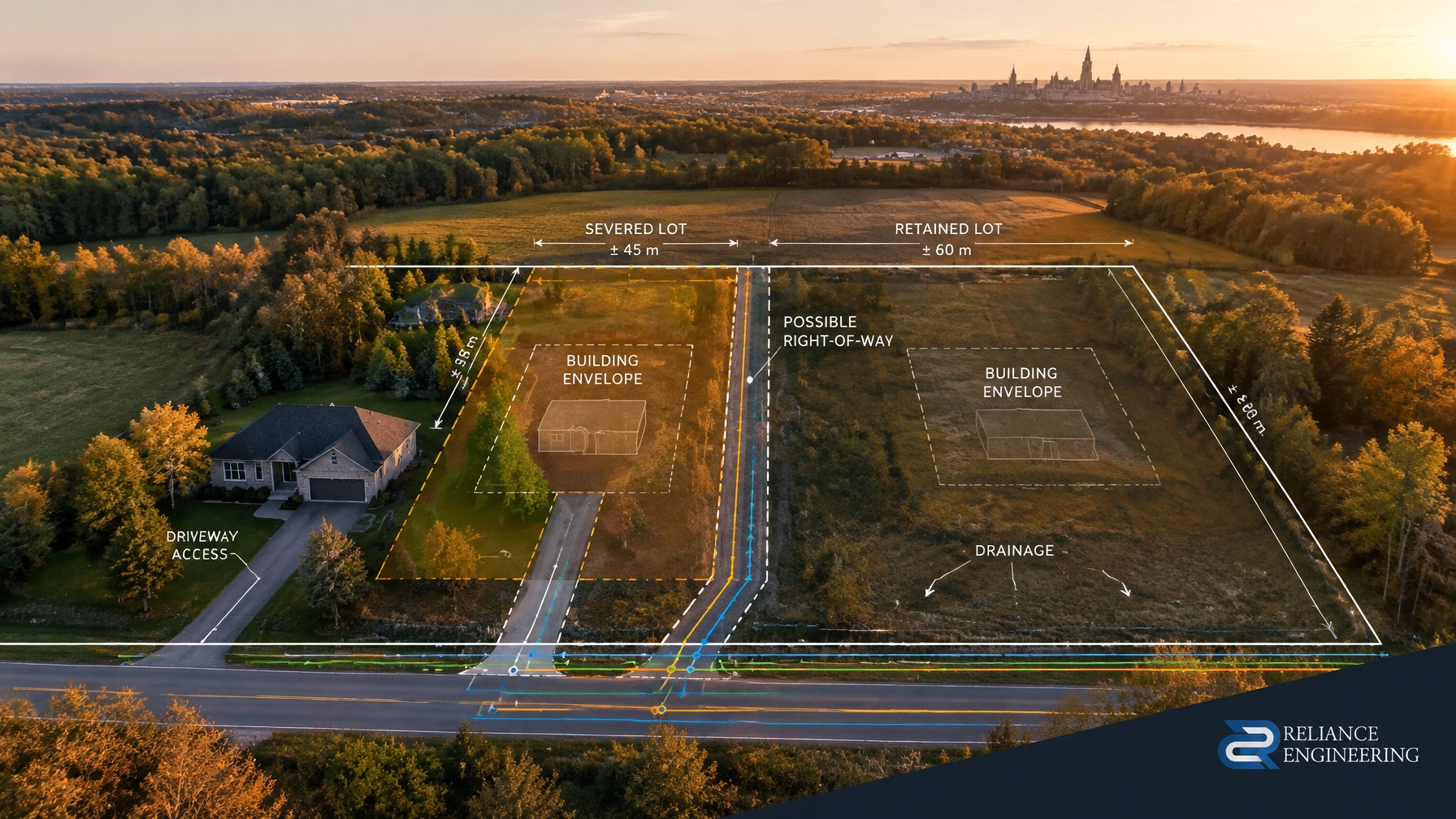
The Fix: Your Site Grading Plan must demonstrate "Lot Grading Harmony." This means matching the existing elevations at the property line and ensuring that your swales direct water to an approved municipal outlet, like a street gutter or a storm sewer, rather than onto the neighbor's lawn.
3. The "Bathtub" Backyard: Dead-End Swales
A swale is an engineered channel designed to move water. However, many DIY or poorly planned sites treat swales like aesthetic features rather than hydraulic infrastructure.
The Mistake: Creating a swale that leads to a "dead end" or a low spot in the middle of the yard. This creates a "bathtub effect," where water pools and sits for days, killing your grass and creating a breeding ground for insects.
The Fix: Every swale must have a clearly defined longitudinal slope (usually 1.5% to 2%) and a clear point of discharge. We design these to ensure that even during a major storm event, the "major overland flow" has a path to exit the site without entering any buildings.

4. Poor Downspout and Sump Pump Placement
You can have the best grading in the world, but if your mechanical systems are dumping water into the wrong spot, it’s all for nothing.
The Mistake: Placing downspouts or sump pump discharge lines in areas where the water immediately flows back toward the foundation or directly into a neighbor’s window well.
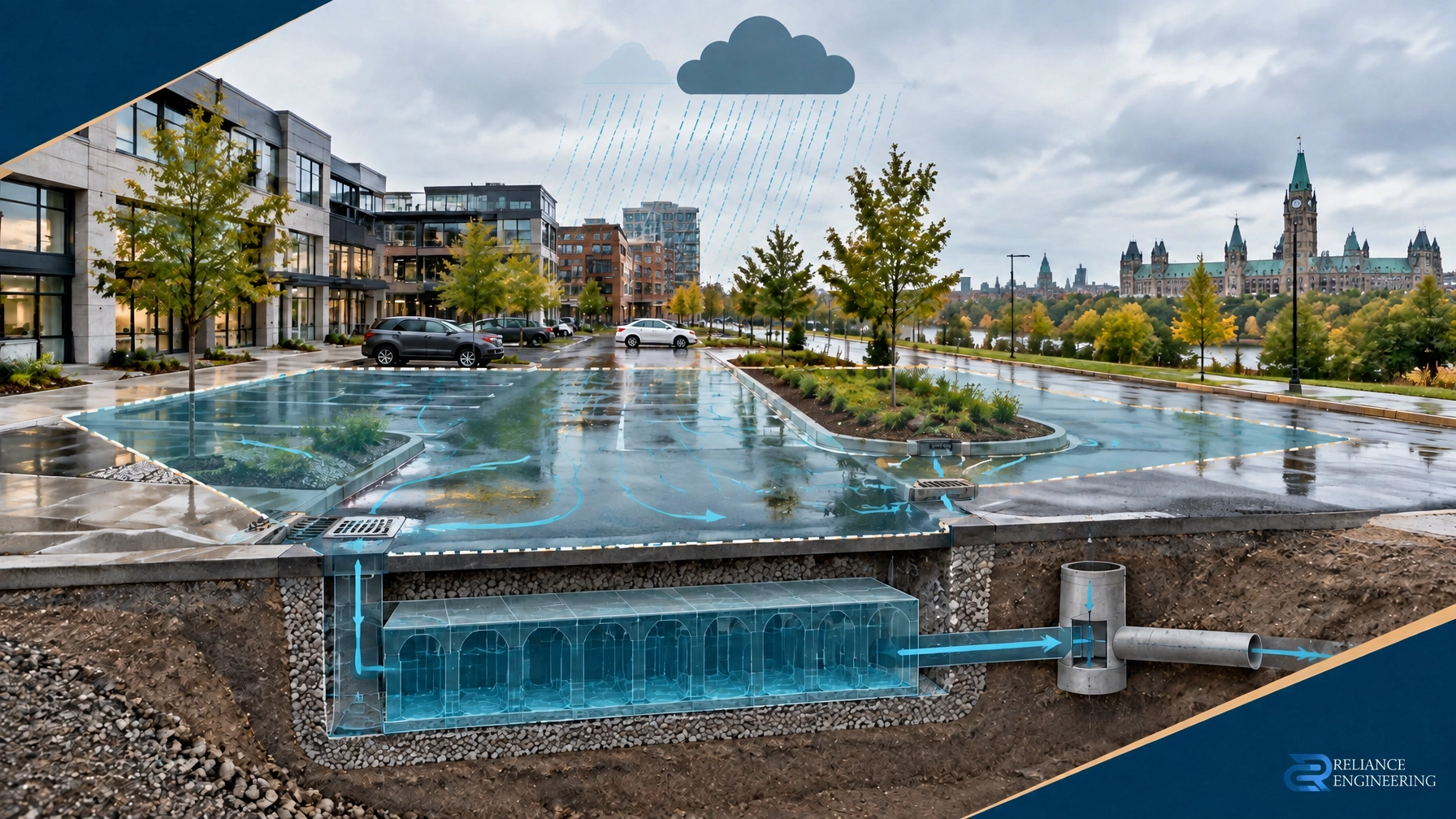
The Fix: Coordinate your mechanical plumbing with your grading plan. Downspouts should discharge at least 1.5 meters away from the foundation onto a splash pad, directed toward a swale or the street. In many Ontario municipalities, it is illegal to connect downspouts directly to the sanitary sewer; they must discharge to the surface as per the current stormwater management reports.
5. Soil Sabotage: Poor Compaction and Organic Fill
What you put under the grass is just as important as the angle of the grass itself.
The Mistake: Using "dirty" fill: soil mixed with organic debris, wood, or trash: under areas that need to support grading. Over time, these organics rot, the soil collapses, and your perfectly graded 2% slope turns into a 0% pond.
The Fix: Use clean, non-organic structural fill. On larger projects, we recommend standard Proctor density testing to ensure the soil is compacted enough to hold its shape over the decades. Only the top 4-6 inches should be topsoil for landscaping; everything beneath must be stable.
6. The Missing Professional Plan: "Eyeballing" the Grades
Many builders try to save money by skipping a professional civil engineering firm and letting the excavator "eyeball" the levels.
The Mistake: Thinking a surveyor’s boundary map is the same as a grading plan. It isn't. Without a stamped Building Permit Drawing, you have no legal protection and no guarantee of municipal approval.
The Fix: Hire a licensed Professional Engineer (P.Eng.). Reliance Engineering provides precise, stamped grading plans that factor in local zoning, the Ontario Building Code, and Conservation Authority requirements. This is the only way to ensure your design is approved in one submission, saving you months of back-and-forth with the city.
7. Neglecting Erosion and Sediment Control (ESC)
Grading happens during construction, which is when your site is most vulnerable to the elements.
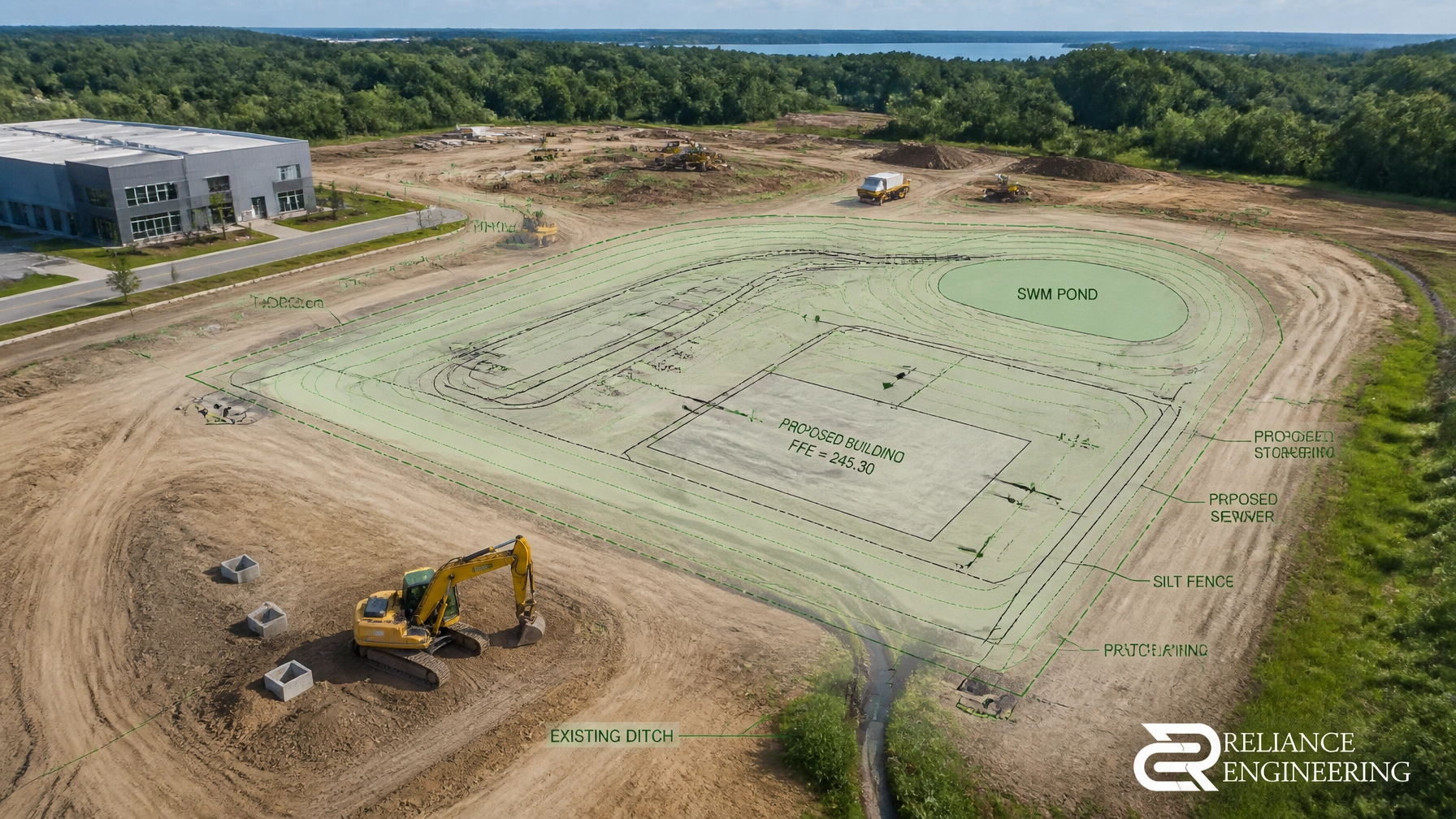
The Mistake: Failing to install silt fences or catch basin protection. When rain hits an un-stabilized, graded site, it washes sediment into the municipal storm system. This can lead to massive fines from the Ministry of the Environment or the local municipality.
The Fix: Every professional grading plan must include an Erosion and Sediment Control Plan. This includes silt fencing at the property perimeter and "mud mats" at site entrances to prevent tracking soil onto public roads.

Get Your Site Right the First Time
Site grading is the foundation of a successful project. Don't let a simple drainage error turn into a six-figure repair bill. At Reliance Engineering, we take full ownership of your municipal approvals, providing responsive, professional service across Ontario.
Stop guessing and start building. Contact us today for a consultation on your next project.
Reliance Engineering
6850 Millcreek Dr, Mississauga, ON L5N 2H4
Phone: 647-385-6418
Email: [email protected]
Principal: Naresh Ochani, P.Eng. M.Eng.
Office Hours:
- Saturday: 12:00 PM – 2:00 PM
- Sunday: Closed
- Monday – Friday: By Appointment