Time is the one thing you can’t make more of in the construction business. In Ontario’s competitive land development market, every week your project sits in the "Site Plan Approval" (SPA) queue is a week of burning capital. Whether you are building a custom home, a multi-unit conversion, or a commercial site, the goal is the same: get the permit, break ground, and move on.
At Reliance Engineering, we’ve spent over 20 years navigating the bureaucratic maze of Ontario municipalities. We know that the difference between a six-month approval and a two-year nightmare usually comes down to the quality of your initial submission.
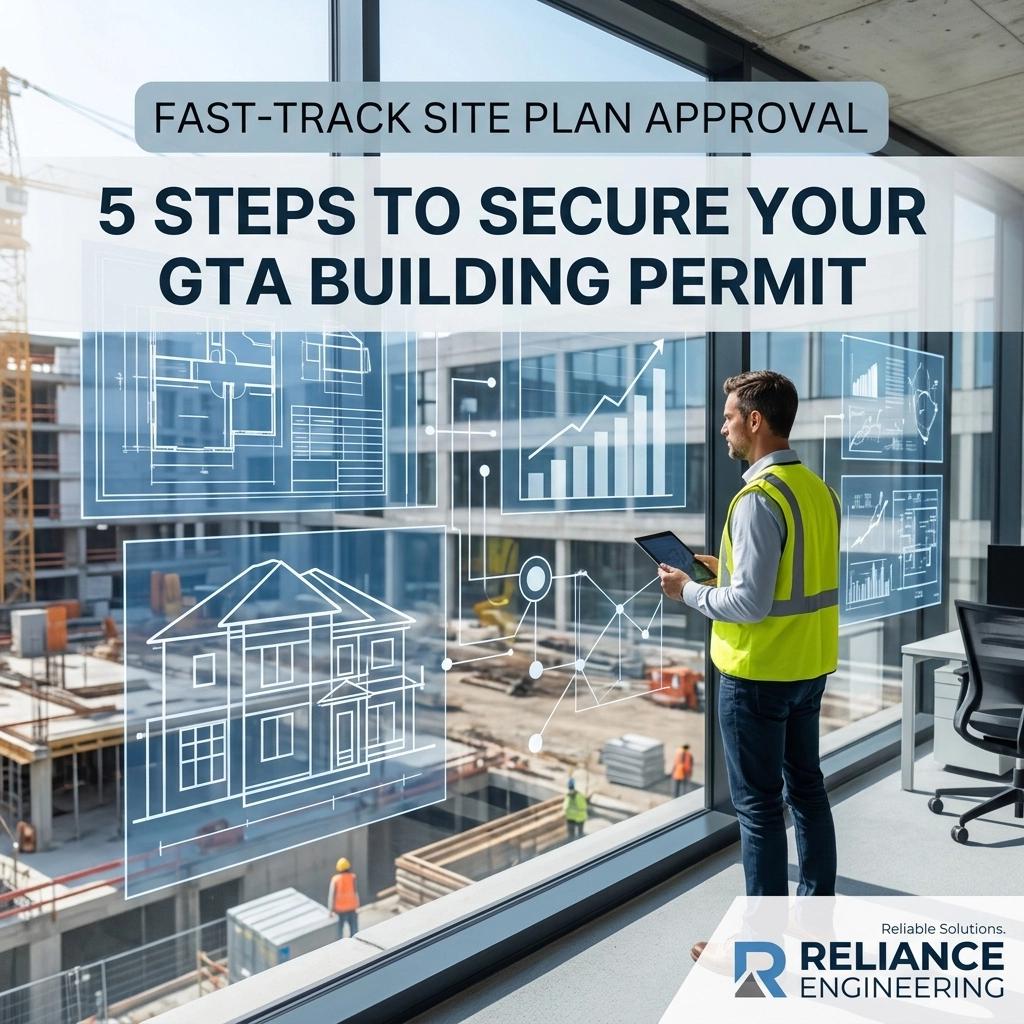
If you’re a developer or builder tired of endless "redline" comments from city staff, follow this 5-step guide to fast-tracking your site plan approval.
Step 1: The Site Plan Pre-Consultation (SPC) – Your Secret Weapon
Do not skip this. Many builders try to save time by jumping straight to a formal submission. This is a massive mistake. The Site Plan Pre-Consultation is essentially a "forced feasibility study" that tells you exactly what the city wants before you spend thousands on final drawings.
During the SPC, you’ll submit a preliminary application. City staff from planning, engineering, and landscaping will review your basic concept. They will give you a customized checklist of every study and plan required for your specific property.
By engaging early, you identify "deal-breakers" like environmental constraints or capacity issues in the city sewers before they become expensive problems. For more on navigating this initial phase, check out The Ultimate Guide to the Site Plan Approval Process in Ontario.
Step 2: Master Your Local Zoning and Regulations
Zoning is the law of the land. If your design doesn’t meet the setbacks, height restrictions, or lot coverage limits defined in the local bylaw, your application will hit a wall.
In 2026, we are seeing massive shifts in Ontario's zoning landscape, particularly regarding multi-unit conversions and garden suites. If you are looking at turning a single-family home into a four-plex, you need to be aware of the specific "as-of-right" permissions.
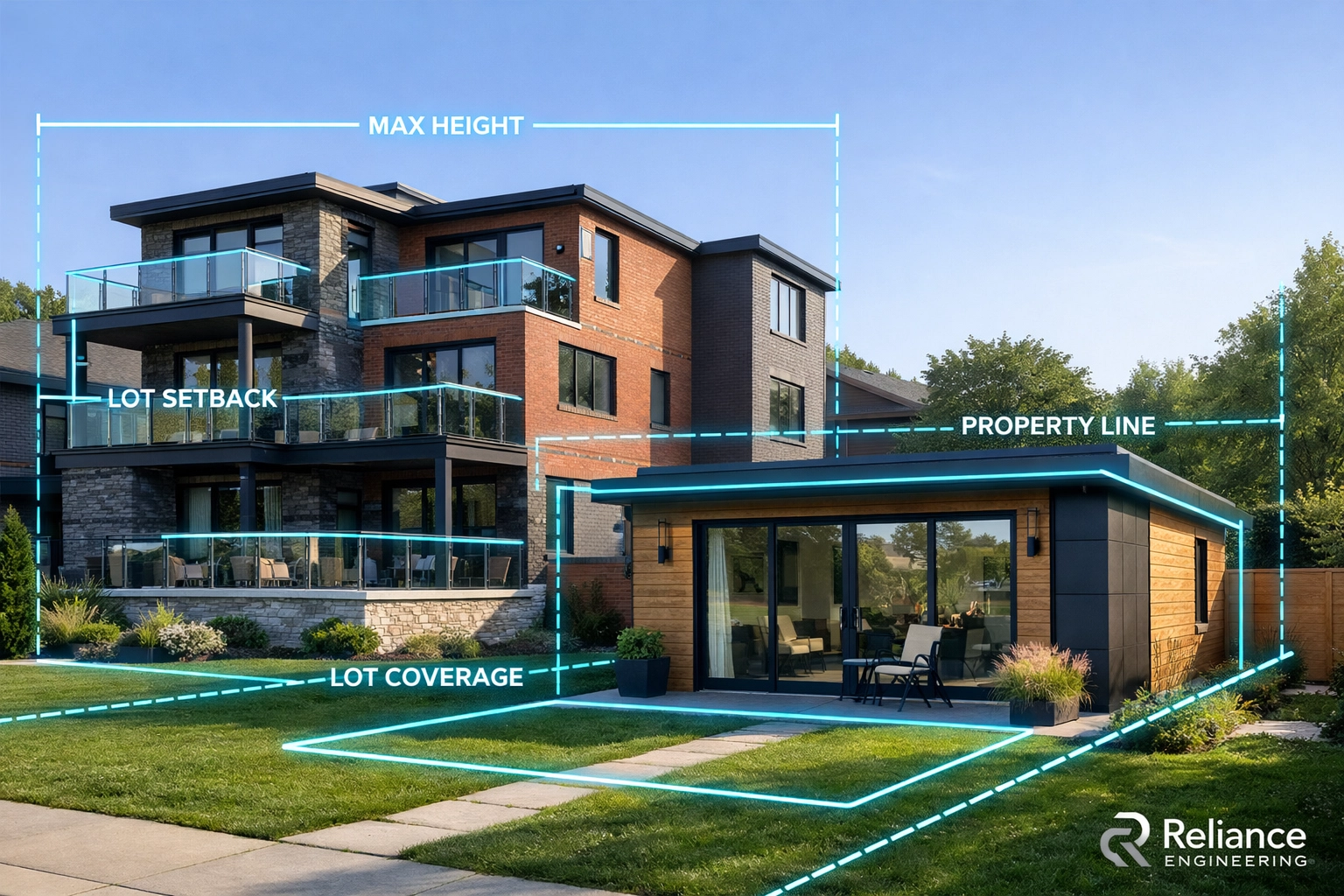
Trying to force a design that requires a Minor Variance or a Zoning Bylaw Amendment will add at least 4–8 months to your timeline. If speed is your priority, design within the existing envelope. If you are doing a conversion, read our guide on Ontario’s New Zoning and Multi-Unit Site Plan Approval.
Step 3: Engage Qualified Civil Engineers Early
The biggest reason permits get stuck? Poorly coordinated engineering drawings. You need a team that doesn't just draw lines but understands how the city thinks.
At Reliance Engineering, we focus on three core areas that municipalities scrutinize most:
- Site Grading Plans: Ensuring water flows away from buildings and doesn't flood the neighbors.
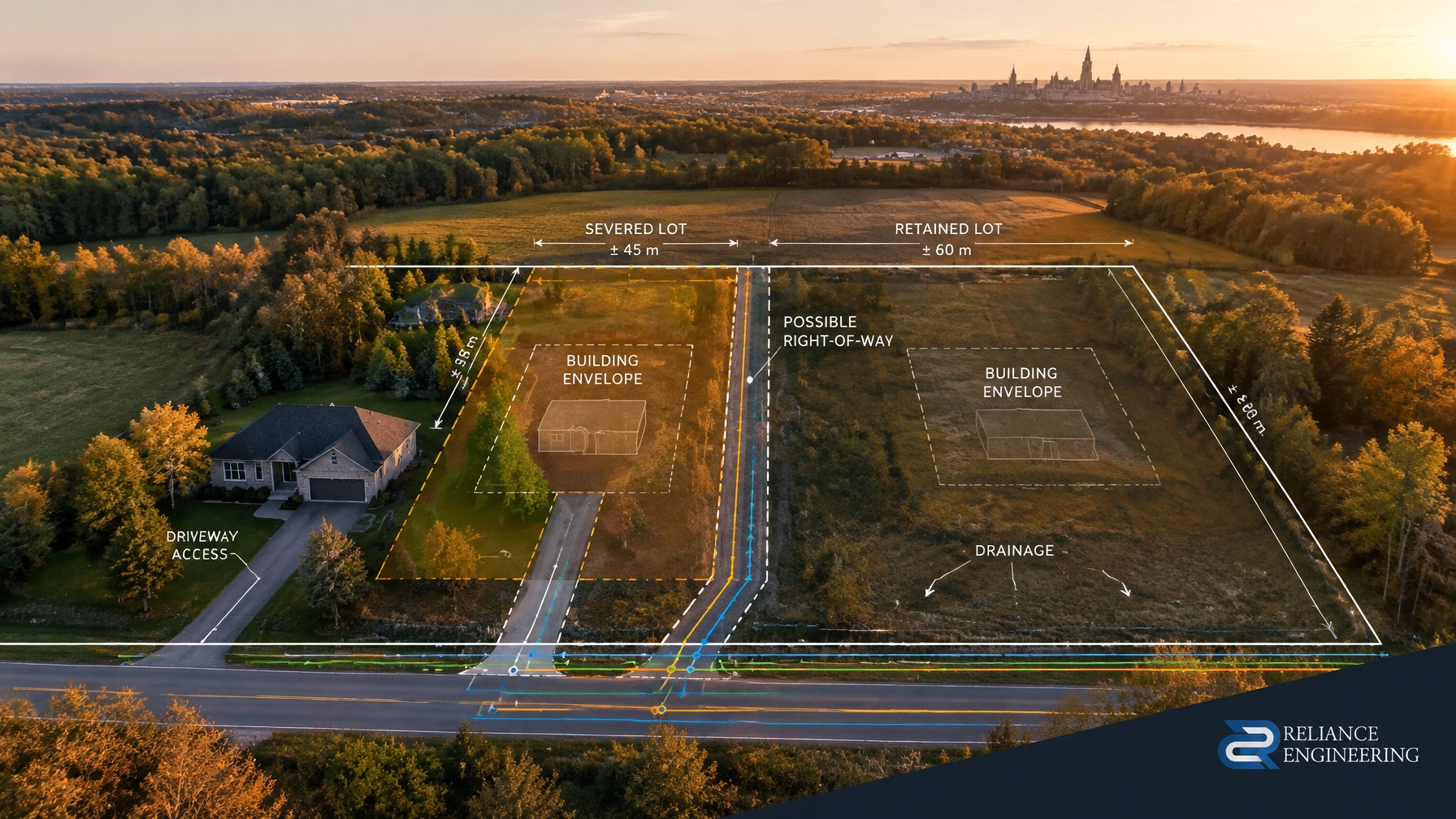
- Site Servicing Plans: Getting your water, sanitary, and storm connections right the first time.
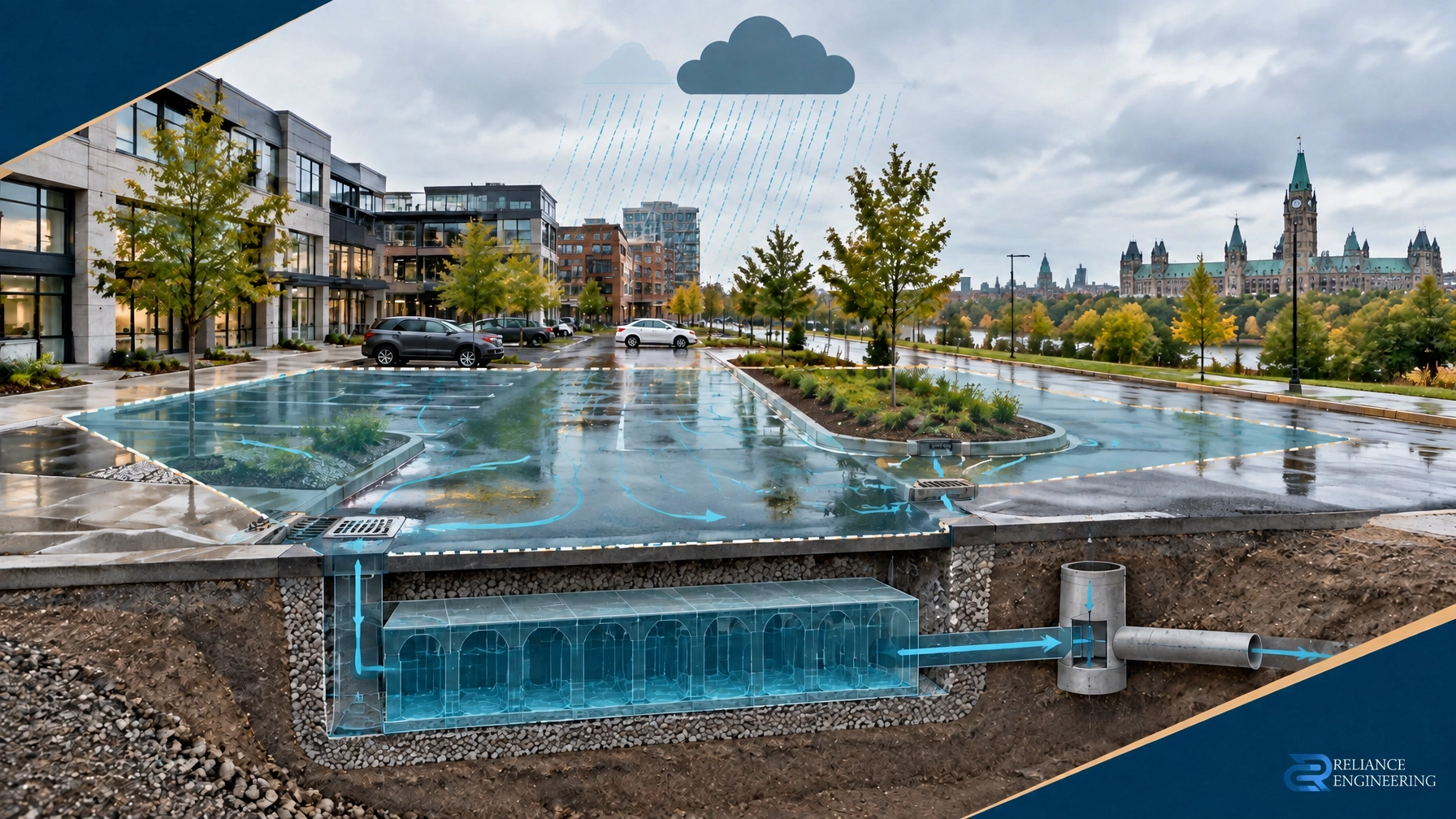
- Stormwater Management (SWM) Reports: Managing runoff in compliance with the latest 2024 PPS changes.
A lot of builders treat the civil engineer as an afterthought. But without a solid Functional Servicing Report, your project isn't going anywhere. We provide draft plans in days, not weeks, to keep your momentum high.
Step 4: Prepare a Comprehensive, Error-Free Package
The "shotgun approach", sending in half-finished drawings to "get in the system", will backfire. Municipal reviewers are overworked. If they see a messy, incomplete package, they will put it at the bottom of the pile or reject it outright for being "incomplete."
Your submission package should be a "turn-key" solution for the reviewer. It must include:
- Detailed Site Grading Plan: Precision is key. A small error in a curb elevation can cause a basement to flood. See why Precision Matters in Lot Grading.
- Site Servicing Plan: Showing all utility connections and technical specs.
- Stormwater Management Report: Addressing quality and quantity control. Does a detailed SWM report really matter? (Spoiler: Yes, it’s often the #1 cause of delays).
- Erosion and Sediment Control Plan: Protecting the city’s infrastructure during construction.

Step 5: Manage the Review Process with Aggression
Once the application is in, the work isn't over. You need to be proactive.
In Ontario, you should expect 2–3 rounds of revisions. The goal is to make each round as fast as possible. When the city sends back comments, don’t wait. We pride ourselves on turning around engineering revisions in record time.
Stay in constant communication with your planning lead. If a specific department (like Toronto Water or a Conservation Authority) is holding things up, your engineer should be on the phone with them to find a technical compromise.

Why Reliance Engineering?
We aren't just consultants; we are your partners in development. We understand that for a builder, "Approved" is the only word that matters.
With 20+ years of experience across Ontario, we’ve seen every possible municipal hurdle. We know how to design Site Servicing and Grading Plans that sail through the approval process because we’ve already anticipated the reviewer’s questions.
We offer:
- Speed: Draft plans delivered in days.
- Precision: Minimizing redlines and costly field changes.
- Experience: 20+ years of local expertise in Ontario.
Don’t let your project get bogged down in red tape. Let’s get your building permit secured.
Contact Information
Naresh Ochani, P.Eng. M.Eng.
Reliance Engineering
Address: 6850 Millcreek Dr, Mississauga, ON L5N 2H4
Phone: 647-385-6418
Email: [email protected]
Website: www.relianceengineering.ca
Office Hours
- Saturday: 12:00 PM – 2:00 PM
- Sunday: Closed
- Monday – Friday: Professional Consulting by Appointment
Common FAQ for Ontario Builders
How long does Site Plan Approval actually take?
For a standard project in Ontario, expect 6 to 9 months if your plans are solid. If you require rezoning, expect 12 to 18 months.
Can I start construction before SPA is finalized?
Usually, no. You need your Site Plan Agreement registered on title and your Building Permit in hand. However, some municipalities allow for "Early Works" or "Footing and Foundation" permits in specific circumstances.
What is the most common reason for a grading plan rejection?
Failure to match existing property line elevations or creating "ponding" issues on neighboring lots. We specialize in fixing these common lot grading mistakes.