Author: Naresh Ochani, Founder and Principal, Reliance Engineering
Date: February 25, 2026
Operational Hours: Monday – Friday, 9:00 AM – 5:00 PM (EST)
Location: Serving the GTA and Ontario-wide
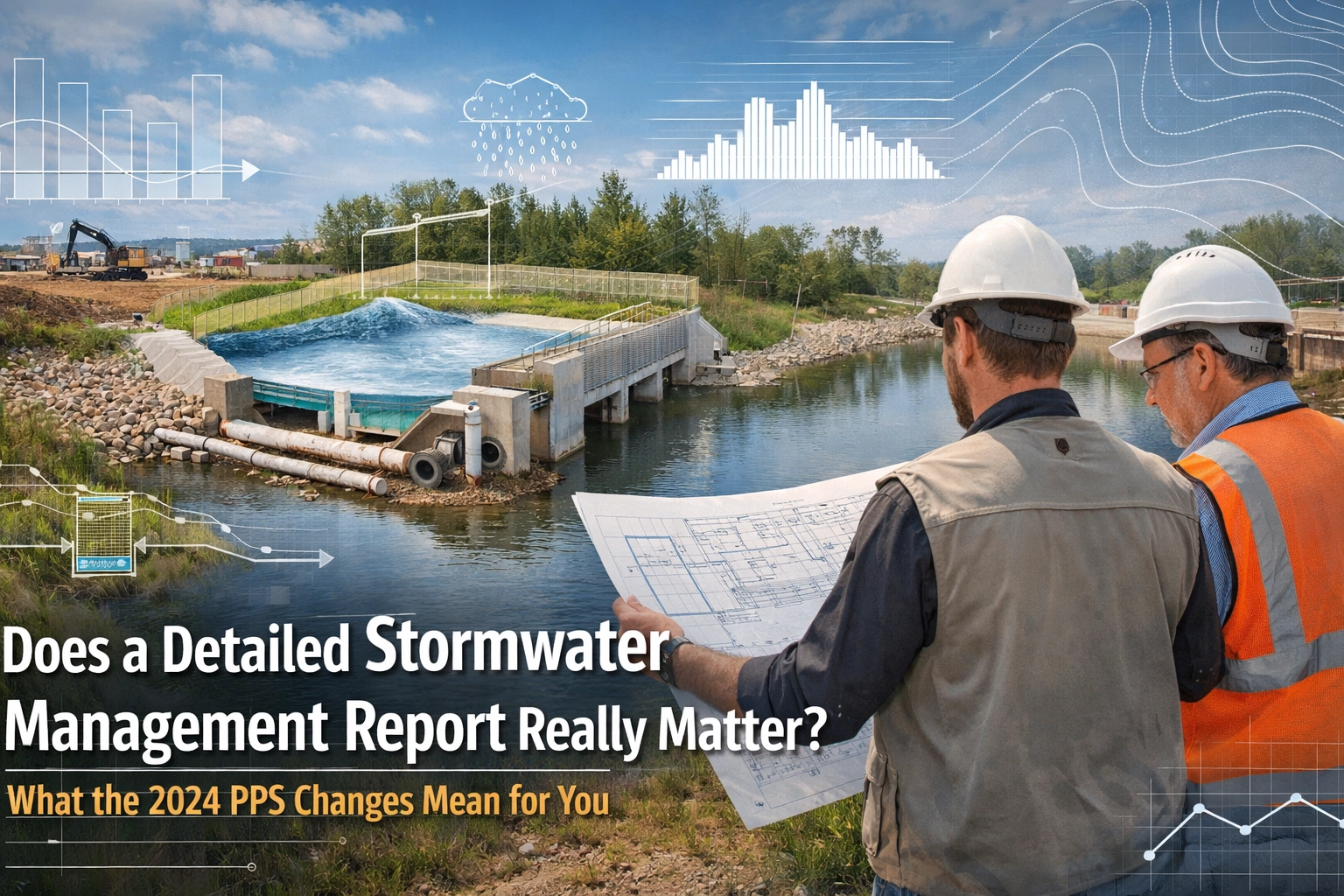
In the fast-paced world of Ontario land development, the regulatory landscape is shifting beneath our feet. For years, the Provincial Planning Statement (PPS) and the Growth Plan for the Greater Golden Horseshoe acted as the twin pillars of land use planning in the province. However, as of late 2024, the Ontario government consolidated these frameworks into a single, streamlined document: the Provincial Planning Statement (PPS) 2024.
For developers and builders, the primary objective is clear: build more homes, faster. But as red tape is cut, the technical requirements for infrastructure readiness, specifically regarding a stormwater management report, have become even more critical to project success.
At Reliance Engineering, we are frequently asked by clients if a detailed stormwater analysis is truly necessary or if it is just another box to check. The short answer is that under the 2024 PPS, a robust stormwater strategy is no longer just a regulatory requirement; it is your project’s insurance policy against "Use It or Lose It" legislation and infrastructure-related delays.
Understanding the 2024 PPS: A New Era for Land Development
The 2024 PPS was designed to support the provincial goal of building 1.5 million homes by 2031. To achieve this, the government has placed a heavy emphasis on "infrastructure-ready" land. This means that for a project to move forward, the developer must demonstrate that the site can be properly serviced without placing an undue burden on municipal systems or the environment.
Stormwater management (SWM) sits at the heart of this "readiness." The 2024 PPS explicitly directs municipalities and developers to prioritize integrated planning. This involves coordinating land use planning with infrastructure investment to ensure that systems like stormwater management are designed to handle both current needs and future climate-related stresses.
The Shift Toward Integrated Planning
Under the old framework, SWM reports were often treated as a secondary step in the Site Plan Approval process. The 2024 PPS changes the timeline. Municipalities are now encouraged to ensure that infrastructure is "at the right place at the right time." If your site servicing plan does not account for complex stormwater requirements early in the process, you risk losing your development allocations to other projects that are more technically prepared.

Why a Detailed Stormwater Management Report is Essential
A stormwater management report is a technical document that outlines how rainfall and snowmelt will be managed on a specific property. It ensures that the development does not increase the risk of flooding, compromise water quality, or cause erosion in downstream areas.
In the context of the 2024 PPS, a detailed report matters for three primary reasons:
1. Proving Servicing Capacity
The new PPS places a high priority on the efficient use of existing and planned infrastructure. To get your project approved, you must prove that the local storm sewer system can handle the runoff from your site. A detailed SWM report, often part of a larger functional servicing report, provides the hydrologic and hydraulic modeling necessary to satisfy municipal engineers that your project is viable.
2. Meeting Climate Change Resilience Standards
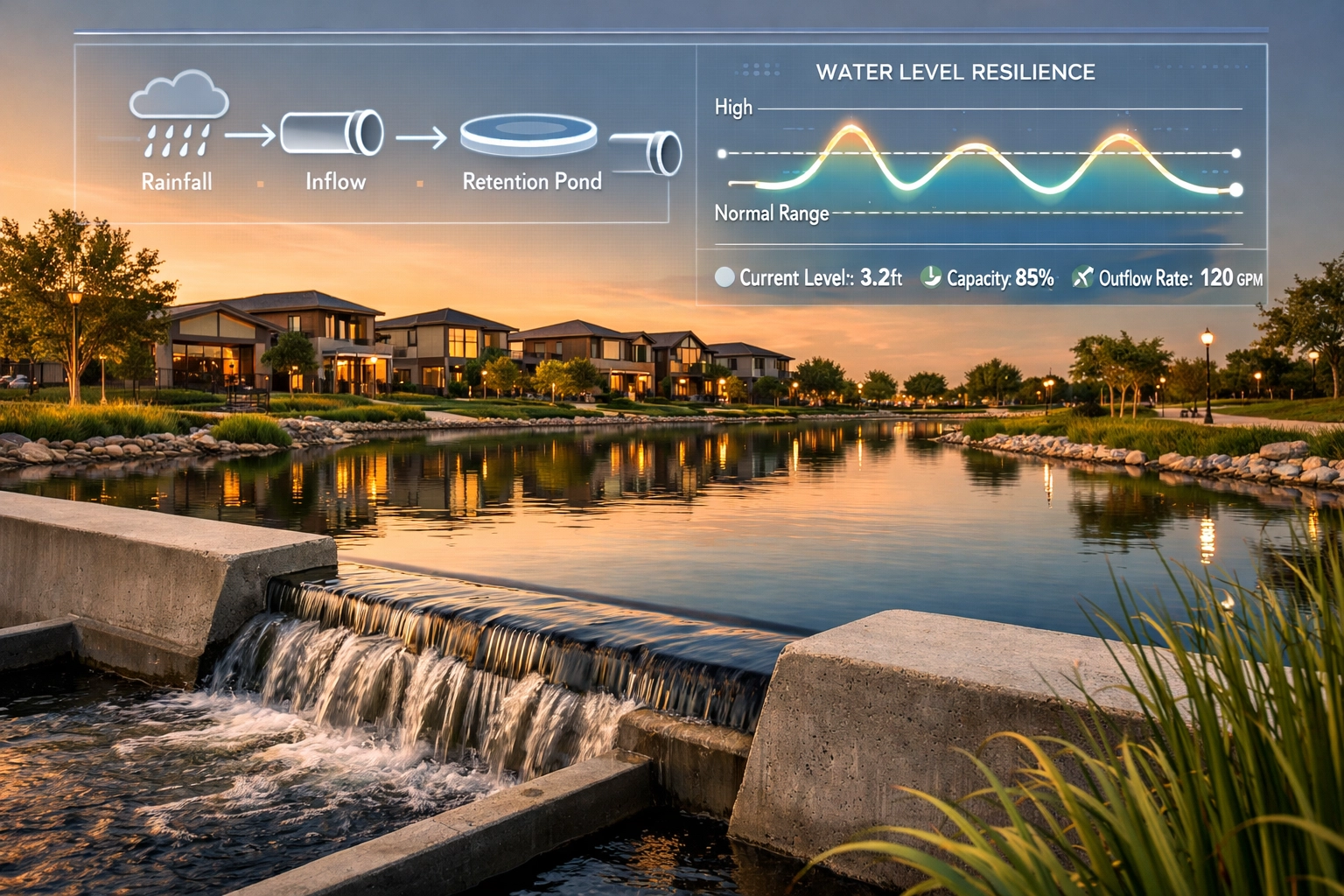
The 2024 PPS includes updated language regarding climate change. Development must be planned to increase "resilience" and "mitigate greenhouse gas emissions." From a civil engineering perspective, this translates to designing for more frequent and intense storm events. A generic report that uses outdated rainfall data will likely be rejected by Conservation Authorities or municipal reviewers, leading to costly redesigns and delays.
3. Integrating Low Impact Development (LID)
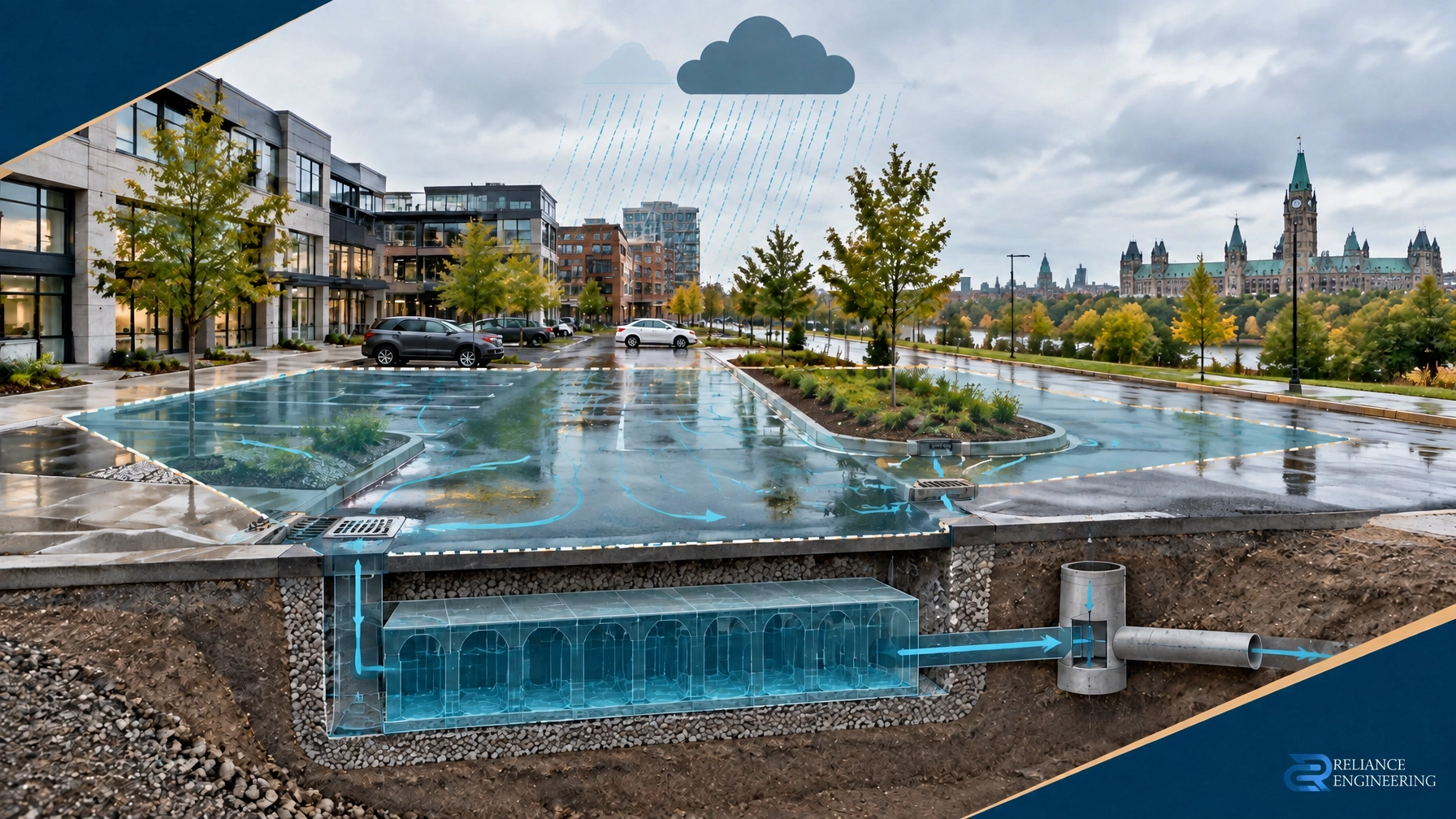
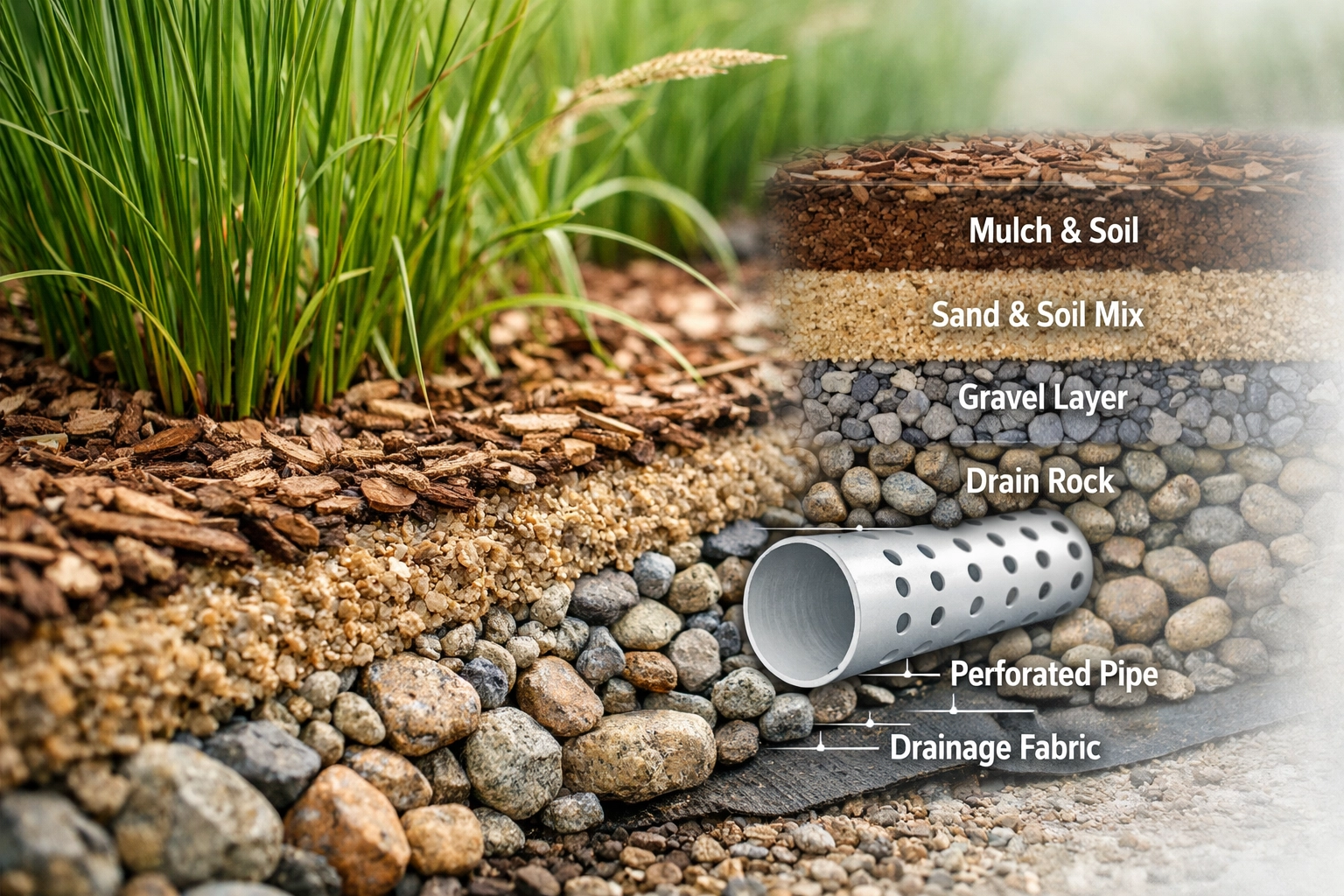
The province continues to push for Low Impact Development (LID) techniques. These include features like permeable pavement, bio-retention swales, and rainwater harvesting. The 2024 PPS encourages these green infrastructure solutions to manage stormwater at the source. A detailed report allows us to integrate these features into your site grading plan early, potentially saving you money on massive underground storage tanks.
The Components of a Professional SWM Report
When Reliance Engineering prepares a stormwater management report for a developer in the GTA, we look at four key pillars:
- Water Quantity Control: We calculate the peak flow rates from the site post-development and compare them to pre-development levels. The goal is to ensure the post-development runoff does not exceed the capacity of the receiving watercourse or sewer system.
- Water Quality Control: Urban runoff often carries pollutants. We design systems (like oil-grit separators or wet ponds) to treat the water to "Enhanced Protection" standards (80% Total Suspended Solids removal), as required by the Ministry of the Environment, Conservation and Parks (MECP).
- Erosion Control: We analyze how the duration of runoff impacts downstream banks to prevent habitat destruction and property damage.
- Water Balance: We look at how to maintain groundwater recharge levels, which is vital for sites near sensitive environmental features or those relying on well water.
Navigating the GTA Regulatory Maze
In Ontario, and particularly within the Greater Toronto Area (GTA), the 2024 PPS doesn’t exist in a vacuum. Developers must also satisfy the requirements of local Conservation Authorities (such as the TRCA, CVC, or LSRCA) and municipal engineering standards.
Each municipality has its own nuances. For example, the requirements for sanitary sewer design and storm system design in Brampton may differ significantly from those in Vaughan or Richmond Hill. The 2024 PPS aims to provide a more consistent provincial standard, but the local "implementation" still requires deep expertise.
Reliance Engineering specializes in bridging this gap. We ensure that our SWM reports are not just technically sound but are also tailored to the specific expectations of the local reviewers. This proactive approach is what allows our clients to secure approvals faster than their competitors.
The Economic Impact of "Use It or Lose It"
One of the most significant changes accompanying the 2024 PPS is the "Use It or Lose It" authority granted to municipalities. This allows cities to pull planning approvals or servicing allocations if a project is not progressing toward construction.
If your project is stalled because your stormwater management strategy is being questioned by a reviewer, you are now at risk of losing your right to build entirely. A detailed, professional SWM report is no longer a "nice to have", it is a critical tool for maintaining your project's timeline and protecting your capital investment.
Case Study: Optimizing Site Layout Through SWM
Consider a recent project where a developer was facing high costs for an oversized underground storage tank. By performing a more detailed hydrologic analysis and incorporating LID features into the site grading plan, Reliance Engineering was able to reduce the required storage volume by 25%. This not only saved the client hundreds of thousands of dollars in construction costs but also cleared the path for municipal approval under the new PPS guidelines.
How Reliance Engineering Can Help
Navigating the transition to the 2024 Provincial Planning Statement requires more than just a template-based approach to civil engineering. It requires a partner who understands the intersection of provincial policy, municipal requirements, and site-specific constraints.
At Reliance Engineering, we provide comprehensive land development consulting, including:
- Functional Servicing Reports
- Detailed Stormwater Management Reports
- Site Servicing Plans
- Full Coordination with Municipalities and Conservation Authorities
Our goal is to ensure that your project is "infrastructure-ready" the moment it hits the reviewer's desk.

Conclusion: Don't Let Stormwater Be Your Bottleneck
Does a detailed stormwater management report really matter? In the 2024 PPS era, it matters more than ever. It is the technical foundation that proves your project is viable, resilient, and ready for construction.
As Ontario moves toward a more streamlined planning process, the burden of proof is on the developer to show that their site is engineered for success. By investing in high-quality civil engineering and detailed SWM reporting, you aren't just meeting a requirement, you are ensuring your project's future.
Ready to move your project forward?
If you are planning a development in the GTA or across Ontario and need expert guidance on the new 2024 PPS requirements, contact Reliance Engineering today. Our team is ready to help you navigate the complexities of stormwater management and site servicing.
Reliance Engineering
Contact Us
Explore Our Services
View Our Recent Projects
Disclaimer: This blog post is for informational purposes only and does not constitute professional engineering advice. For specific guidance regarding your land development project, please consult with a licensed professional engineer.