Navigating the land development landscape in Ontario requires more than just a vision; it requires a deep understanding of the regulatory framework that governs how land is utilized, serviced, and developed. At the heart of this process is the Site Plan Approval (SPA). For developers, builders, and property owners across Ontario, obtaining this approval is a critical milestone that stands between a conceptual design and the issuance of a building permit.
At Reliance Engineering, with over 20 years of expertise in civil engineering and land development consulting, we have guided countless clients through the complexities of municipal requirements. This guide serves as a comprehensive resource for understanding the Ontario Site Plan Approval process, ensuring your project moves from the drawing board to the construction site without unnecessary delays.
What is Site Plan Approval?
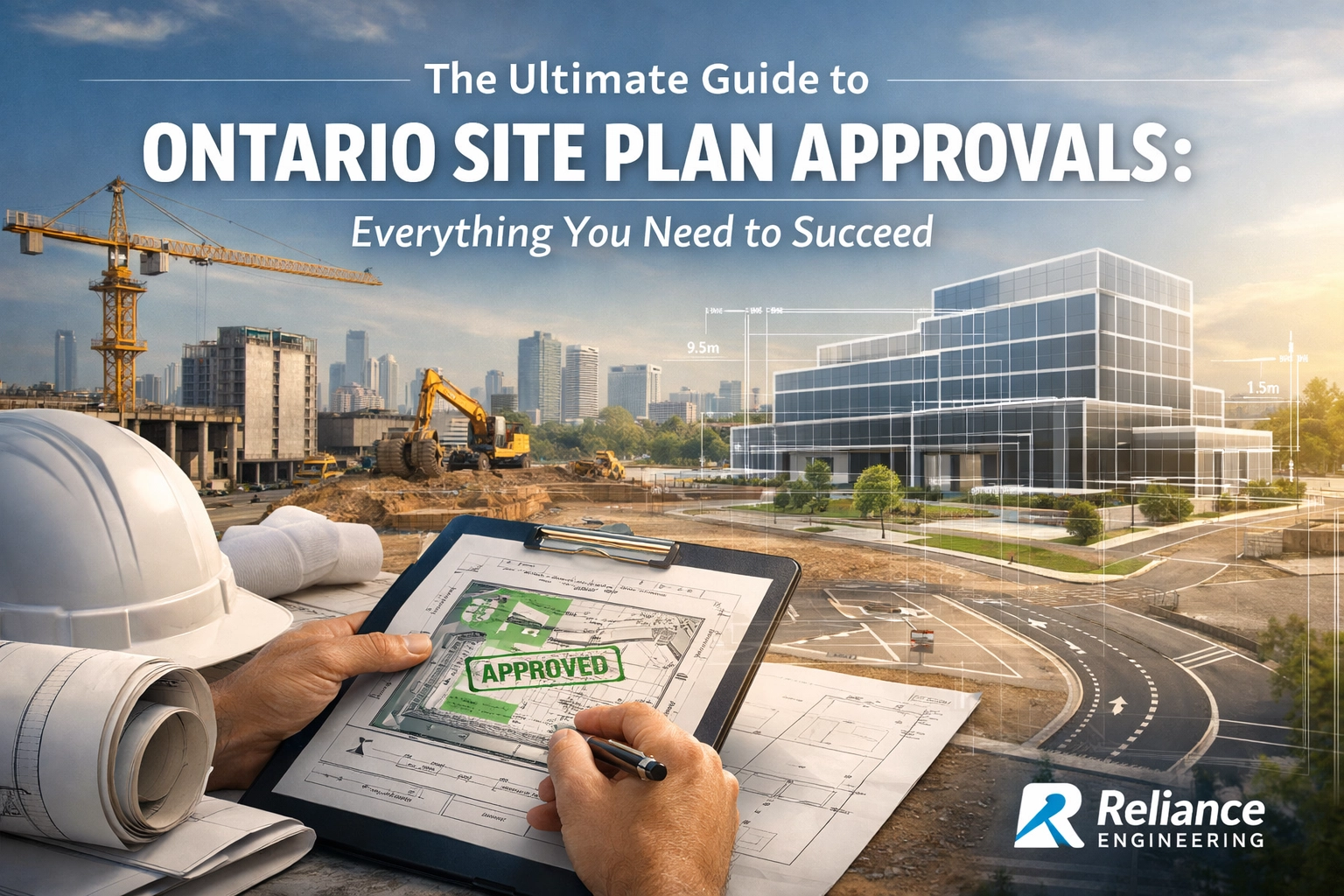
Site Plan Approval is a technical development review process authorized under Section 41 of the Ontario Planning Act. Unlike zoning amendments or Official Plan Amendments (OPA), which deal with land use and density, SPA focuses on the specific design and layout of a property. It ensures that the development is safe, functional, and minimizes impacts on neighboring properties and municipal infrastructure.
The process evaluates everything from the location of buildings and parking lots to more technical aspects like site grading, drainage, and utility connections. In Ontario, most multi-unit residential, commercial, industrial, and institutional developments are subject to site plan control.
The Statutory Foundation: Section 41 of the Planning Act
In Ontario, municipalities use Site Plan Control to implement high-quality urban design and ensure that the public interest is protected. Section 41 allows municipalities to require owners to provide plans and drawings for approval before any development occurs. This includes:
- The layout of all buildings and structures.
- Off-street parking and loading facilities.
- Pedestrian access and walkways.
- Landscaping and buffering.
- Grading, servicing, and stormwater management systems.
By law, the municipality can also require the owner to enter into a Site Plan Agreement, which is registered on the title of the property and remains binding on all future owners.
Step 1: The Pre-Consultation Phase
Before you spend thousands on detailed engineering drawings, the first step in any successful Ontario development is the pre-consultation meeting. This is a formal meeting with municipal planning and engineering staff to discuss the scope of your project.
During this phase, the municipality will provide a "Checklist of Requirements." This document outlines every study and plan you must submit. Missing even one item on this list can lead to a "deemed incomplete" status, stalling your project for weeks or months. Relying on an experienced firm like Reliance Engineering during pre-consultation ensures that the technical requirements: such as a Functional Servicing Report (FSR): are clearly defined from the start.

Step 2: Preparing the Technical Submission Package
Once the requirements are established, the technical preparation begins. A high-quality submission package is the most effective way to minimize comments and revisions. The core of your submission will include several key engineering components.
Site Grading and Drainage Plans
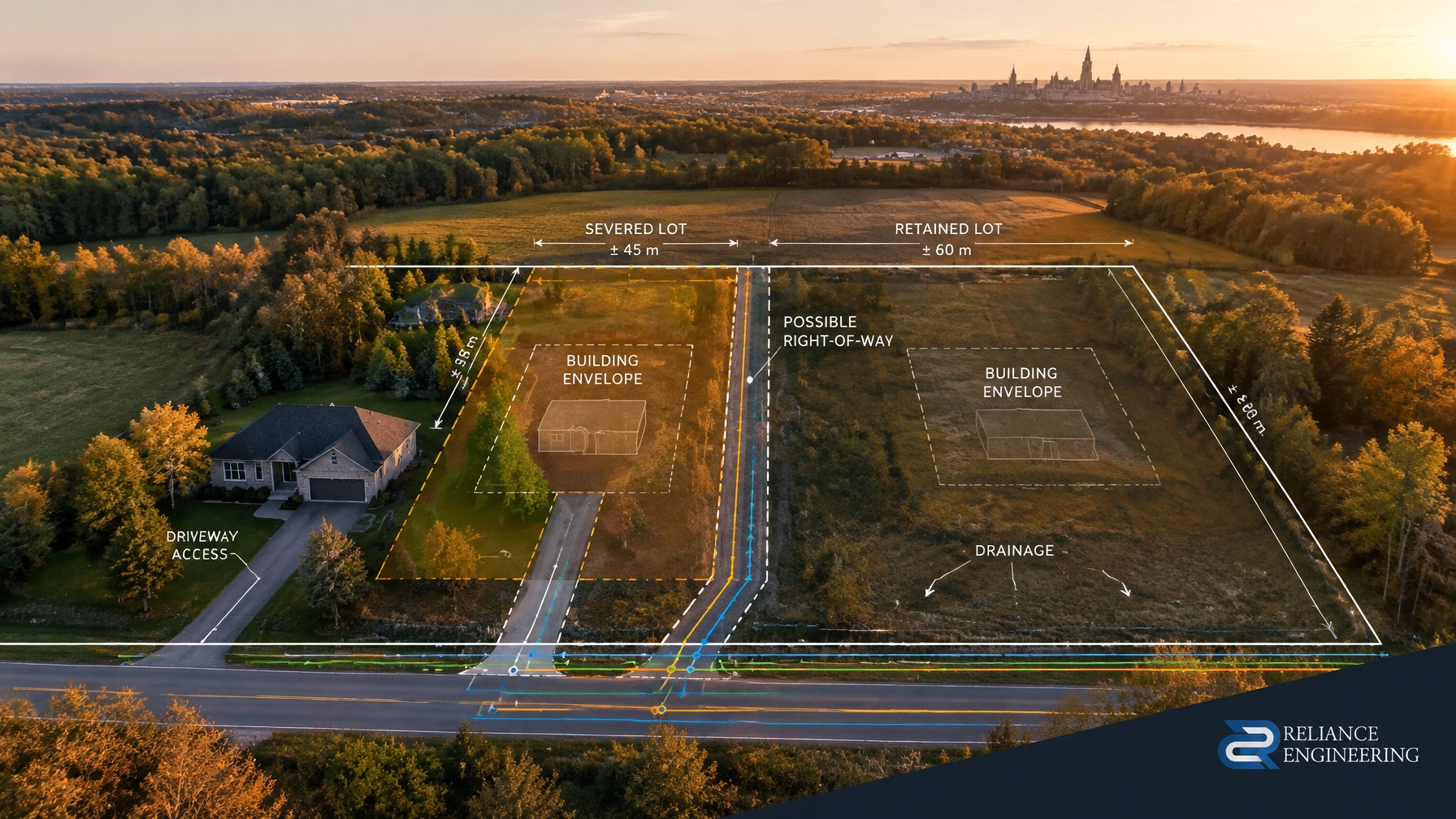
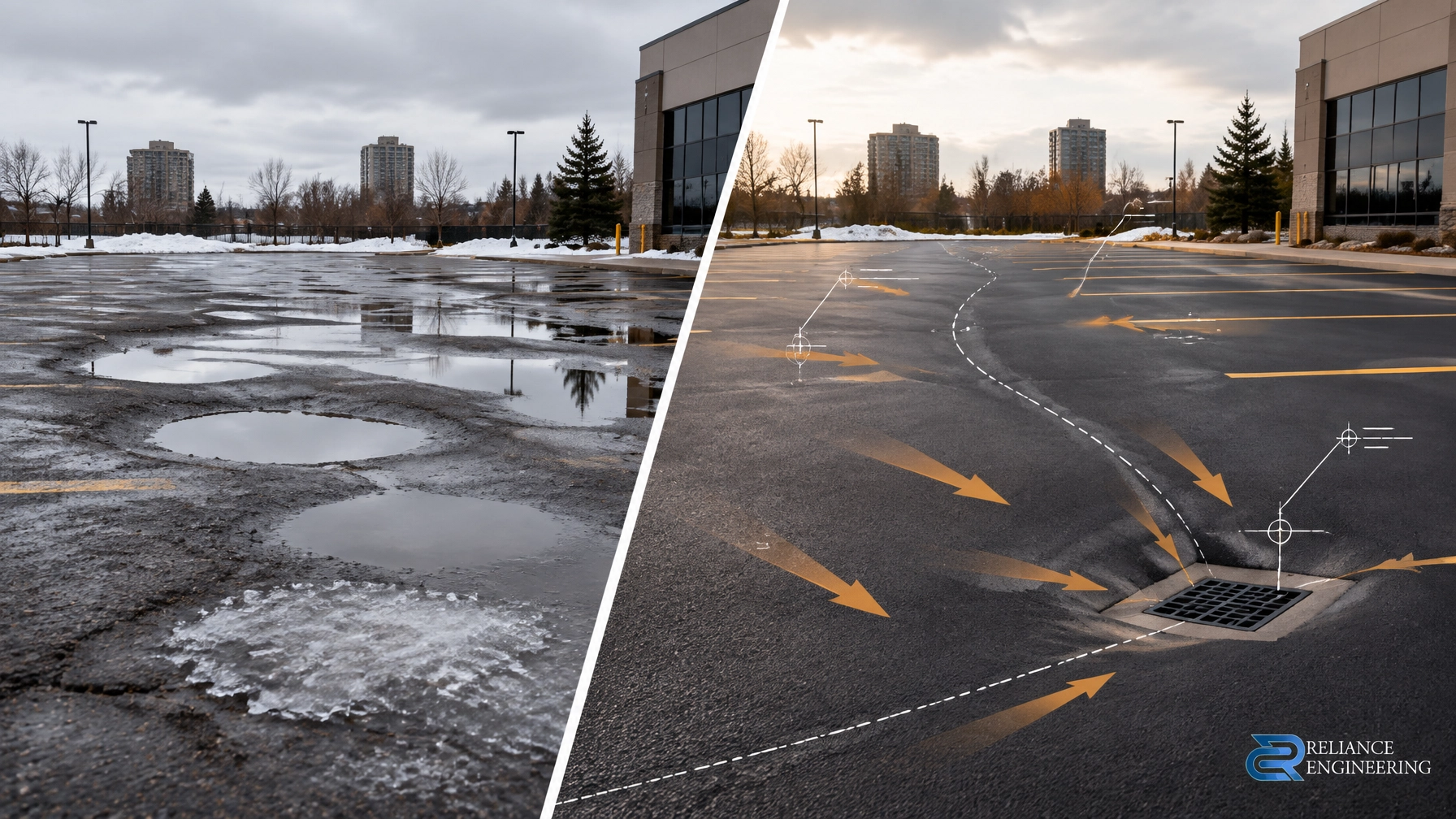
A site grading plan is more than just moving dirt. It is a precise design that ensures water flows away from structures and does not negatively impact adjacent properties. In Ontario, municipal reviewers are increasingly strict about grading, especially regarding the protection of existing trees and matching existing boundary elevations.
Site Servicing Plans
Your servicing plan dictates how the building will connect to municipal water, sanitary sewers, and storm sewers. This plan must comply with municipal standards for pipe sizing, materials, and separation distances. Errors in servicing design can lead to costly retrofits during the construction phase.
Stormwater Management Reports (SWMR)
With the changing climate and increasing urbanization in Ontario, Stormwater Management Reports have become one of the most scrutinized components of the SPA process. Municipalities require a detailed analysis of how the site will handle rainfall. This often involves onsite detention (such as underground tanks or rooftop storage) to ensure that post-development runoff does not exceed pre-development levels.

Step 3: Technical Review and Circulation
Once the application is submitted, it enters the "Circulation" phase. The municipality sends your package to various internal departments and external agencies, including:
- Engineering Department: Reviews grading, servicing, and stormwater.
- Transportation Services: Reviews traffic impact, parking, and fire routes.
- Fire Services: Ensures adequate fire hydrant coverage and truck turning radii.
- Conservation Authorities: (e.g., TRCA, CVC) Review impacts on natural heritage and floodplains.
In Ontario, the timeline for this review has been impacted by Bill 109, the More Homes Built Faster Act. Under current regulations, municipalities are pressured to make decisions within 60 days of a complete application, or they may be forced to refund application fees. While this has streamlined some processes, it has also made the initial quality of the submission even more critical, as reviewers are less likely to tolerate incomplete or subpar engineering work.
Step 4: Revisions and Resubmissions
It is rare to receive approval on the first submission. Most projects go through at least two or three rounds of comments. The key to navigating this stage is responsiveness. At Reliance Engineering, we prioritize addressing municipal comments with technical precision to ensure that the second submission resolves all outstanding issues.
Whether it is adjusting a lot grading plan to save a neighbor's retaining wall or redesigning a site servicing plan to avoid a utility conflict, our 20+ years of experience allows us to negotiate effectively with municipal engineers.
Step 5: Conditional Approval and the Site Plan Agreement
Once all technical issues are resolved, the municipality will issue a "Notice of Decision" or "Conditional Approval." This means they approve the plans in principle, provided certain conditions are met. These conditions usually include:
- Financial Securities: Posting a Letter of Credit or cash to ensure that the landscaping and engineering work is completed as shown on the plans.
- Site Plan Agreement: Signing a legal contract with the municipality.
- Payment of Levies: Ensuring all development charges and parkland dedication fees are paid.
The Site Plan Agreement is then registered on the property's title. Once this is complete, the "Site Plan Approval" is finalized, and you are eligible to receive your building permit.

Why Precision Matters in Ontario
The regulatory environment in Ontario is unforgiving. A single mistake in an Erosion and Sediment Control (ESC) plan can result in stop-work orders or significant fines from the Ministry of the Environment or local conservation authorities.
Furthermore, failing to account for the 2024 PPS changes or regional updates in places like Durham, Peel, or York Region can lead to lengthy delays. Success in Ontario land development is built on technical accuracy and a proactive approach to municipal standards.
The Reliance Engineering Advantage
Choosing the right consultant is the difference between a project that stalls and one that succeeds. At Reliance Engineering, we provide specialized services tailored to the Ontario market:
- Speed: We understand that time is money. We deliver draft plans in days, not weeks.
- Expertise: Led by Naresh Ochani, P.Eng. M.Eng., our team brings over two decades of experience to every project.
- Compliance: We stay updated on the latest changes to the Planning Act and Building Code to ensure your project is permit-ready.
- Versatility: From garden suites and residential severances to complex ICI (Industrial, Commercial, and Institutional) developments, we have the expertise to handle projects of all scales.
Contact Information
Ready to move forward with your Ontario development project? Contact us today to ensure your Site Plan Approval is handled with the professionalism and technical expertise it deserves.
Reliance Engineering
Naresh Ochani, P.Eng. M.Eng.
Founder and Principal
Address: 6850 Millcreek Dr, Mississauga, ON L5N 2H4
Phone: 647-385-6418
Email: [email protected]
Website: www.relianceengineering.ca
Operational Hours:
Monday – Friday: 9:00 AM – 5:00 PM
Saturday – Sunday: Closed
Providing expert Civil Engineering and Land Development Consulting across Ontario.