Building your dream home or launching a new commercial development in the Greater Toronto Area is an exciting milestone. You’ve got the architectural renderings, the vision, and the budget. But before a single shovel hits the dirt, there is a critical hurdle that stops most projects in their tracks: the Site Grading Plan.
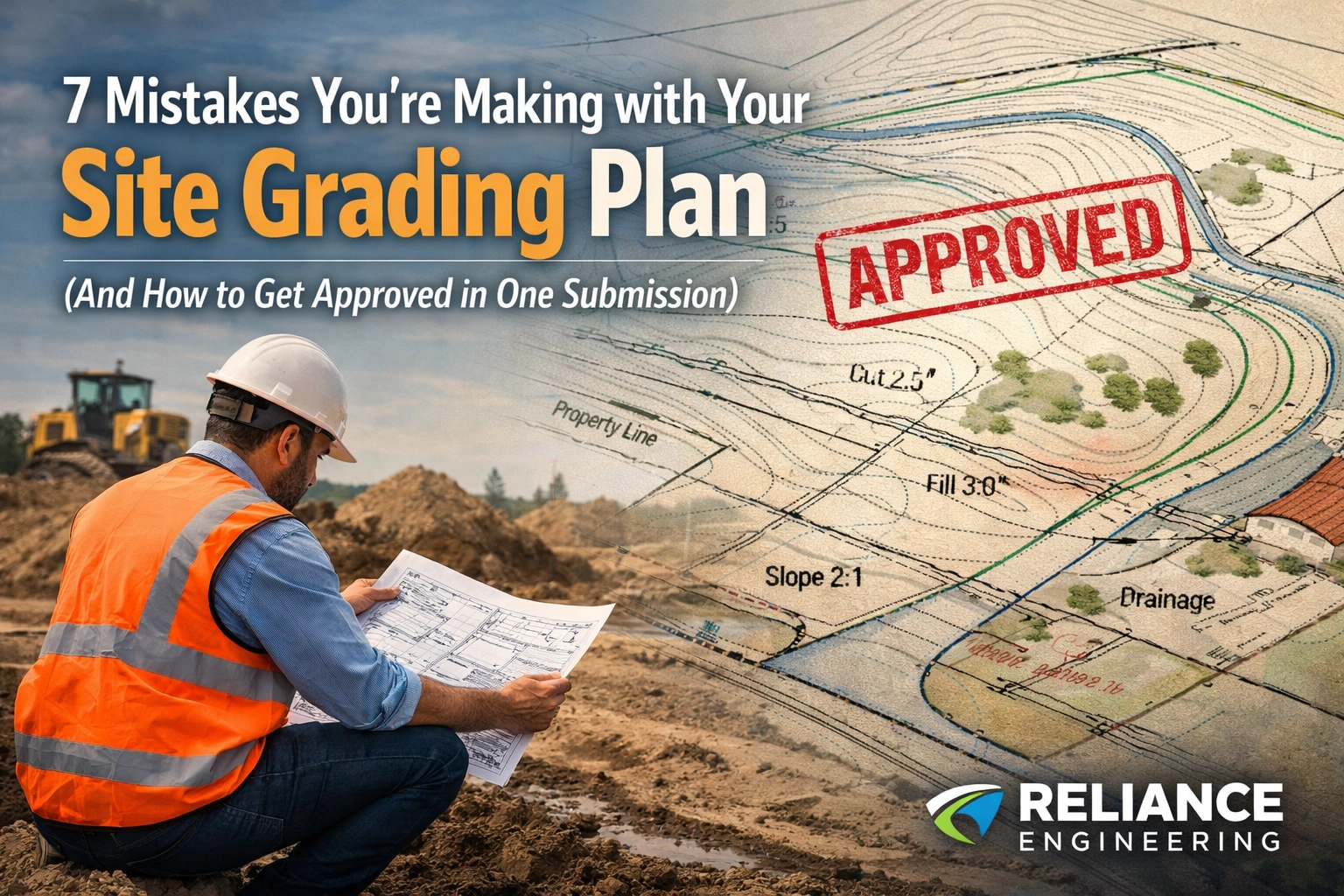
To a layperson, a grading plan might just look like a bunch of squiggly lines and numbers on a map. In reality, it is the most important document for ensuring your property doesn't flood, your neighbors stay happy, and: most importantly: the municipality grants you a building permit.
At Reliance Engineering, we have spent over 20 years navigating the complex web of municipal requirements in Toronto, Oakville, Vaughan, and beyond. Our goal is simple: One-Submission Approval. We know exactly what reviewers are looking for, and we know the common pitfalls that lead to "REJECTED" stamps.
Here are the 7 most common mistakes people make with their site grading plans and how you can avoid them to keep your project on schedule.
1. The "Bathtub" Effect: Poor Drainage Design
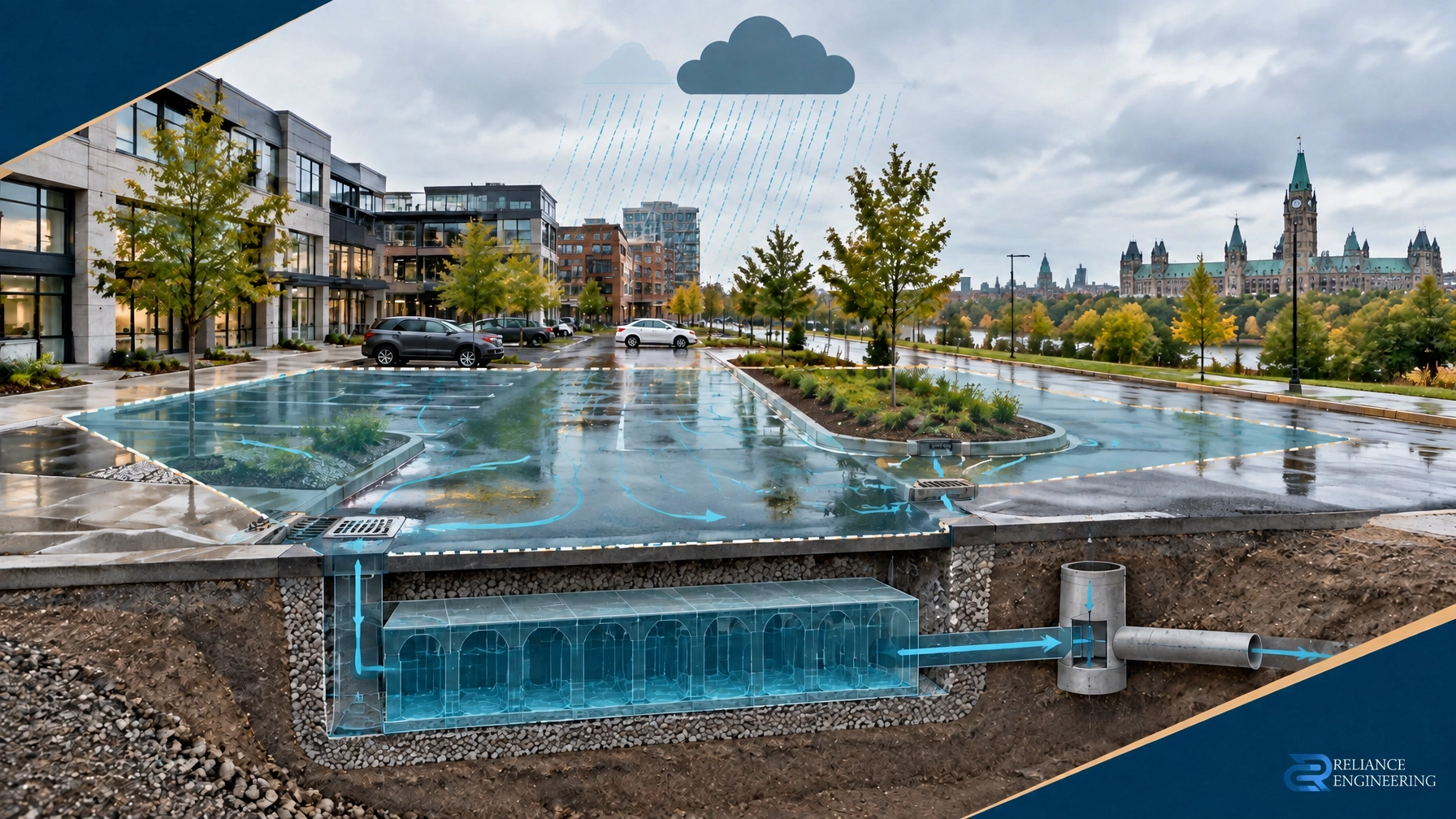
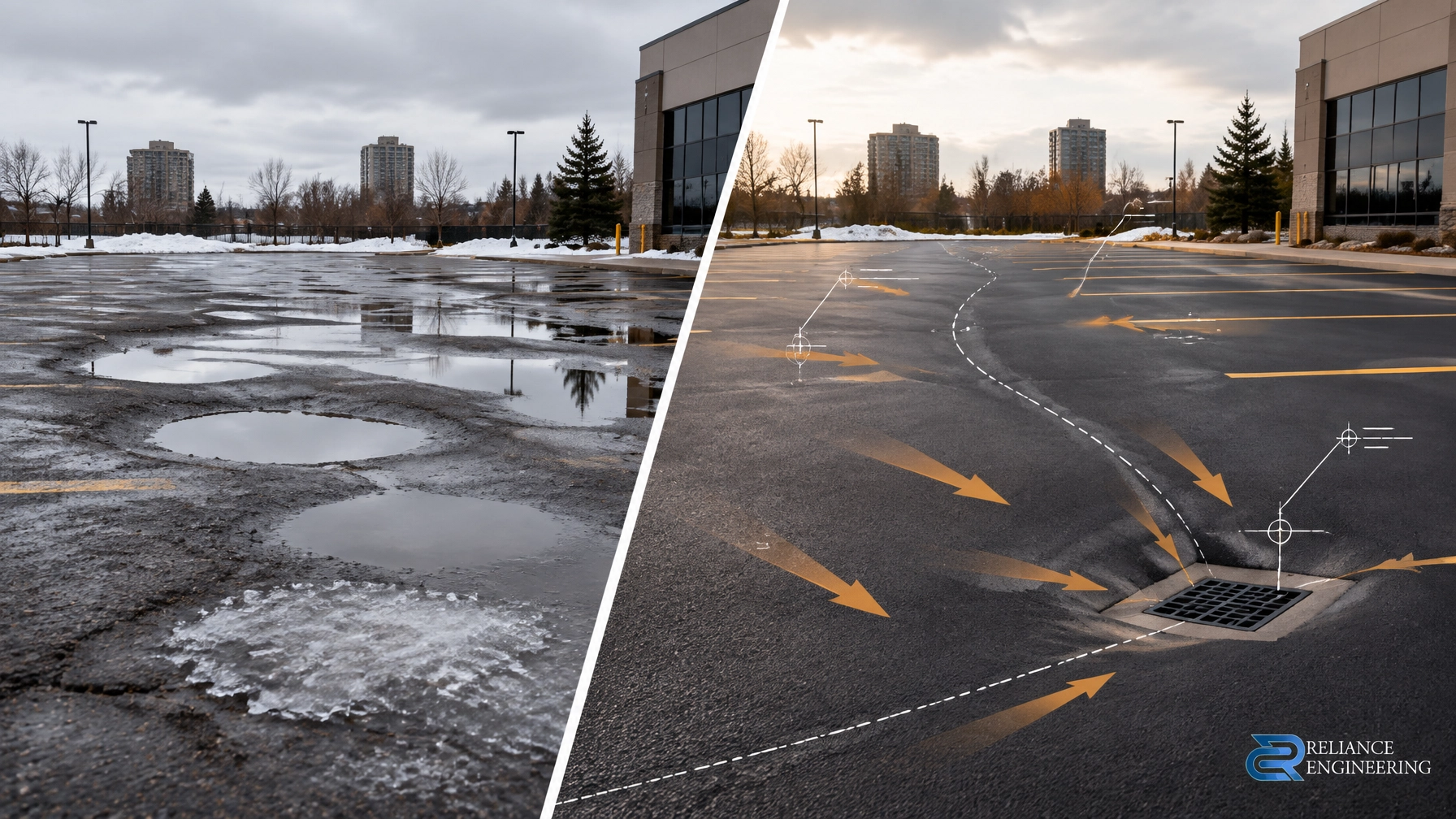
The primary job of a grading plan is to tell water where to go. One of the most common mistakes is designing a site that inadvertently traps water in low spots, creating what we call the "bathtub effect."
If your plan doesn't account for the natural slope of the land or fails to provide a clear path for rainwater to exit the property, you’re looking at foundation damage and basement flooding down the line. Municipalities are hyper-aware of this. If their reviewers see a spot where water might "pond," they will send your plan back immediately.
At Reliance Engineering, we integrate Stormwater Management principles into every grading plan we produce, ensuring water flows safely away from structures and toward the proper municipal catch basins.
2. Ignoring the Neighbors (A Recipe for Legal Trouble)
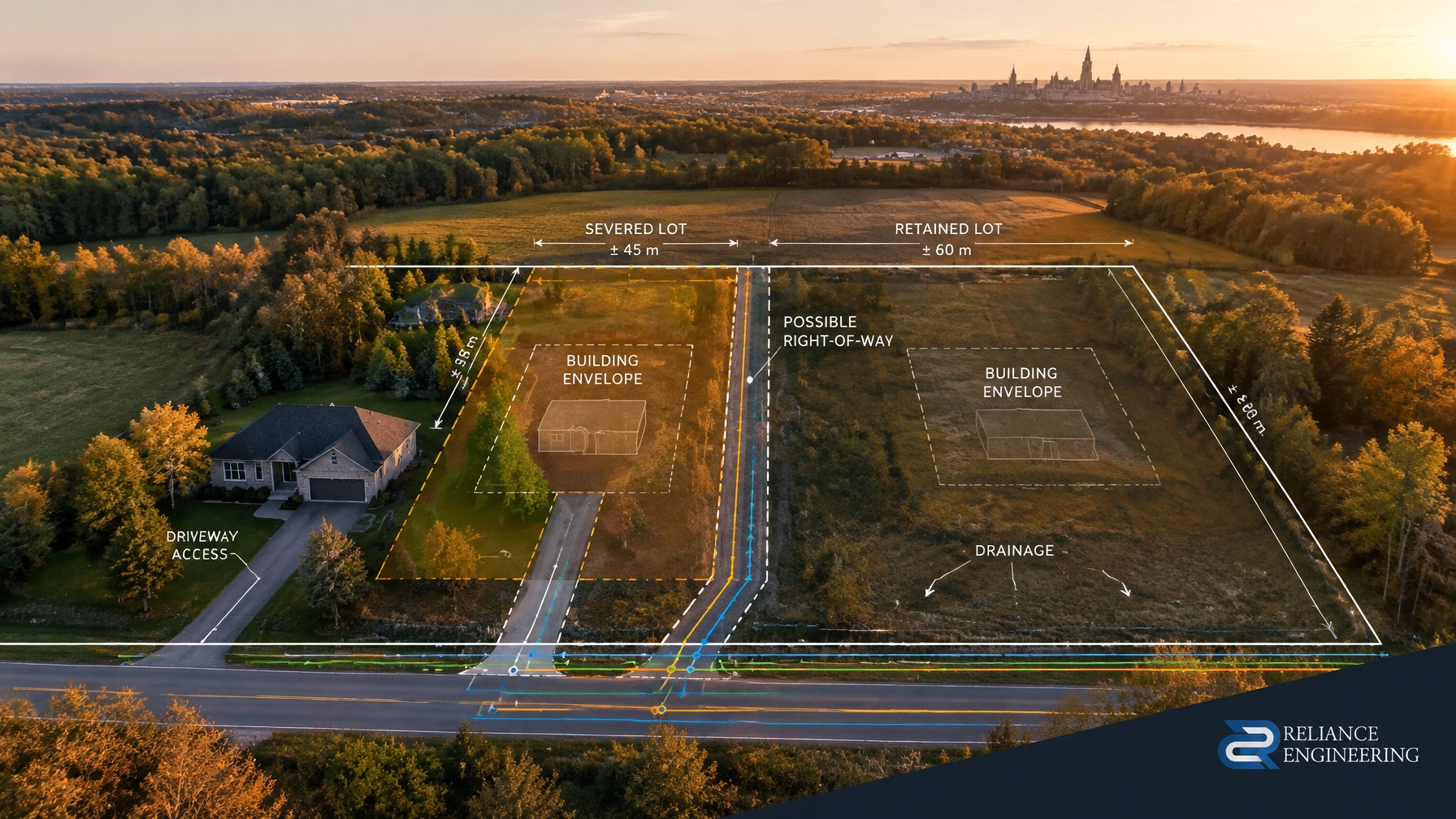
You cannot simply push all your water onto the property next door. This is one of the quickest ways to get a plan rejected and start a feud with your neighbors. Municipalities require that "existing drainage patterns" be respected. If you are raising the elevation of your land, you must ensure you aren't creating a flood risk for the people living beside you.
A professional Site Grading Plan uses "swales" (shallow channels) and specific slope percentages to manage water within your own boundaries. We’ve seen countless DIY or "budget" plans fail because they didn't properly "match" the grades at the property line.
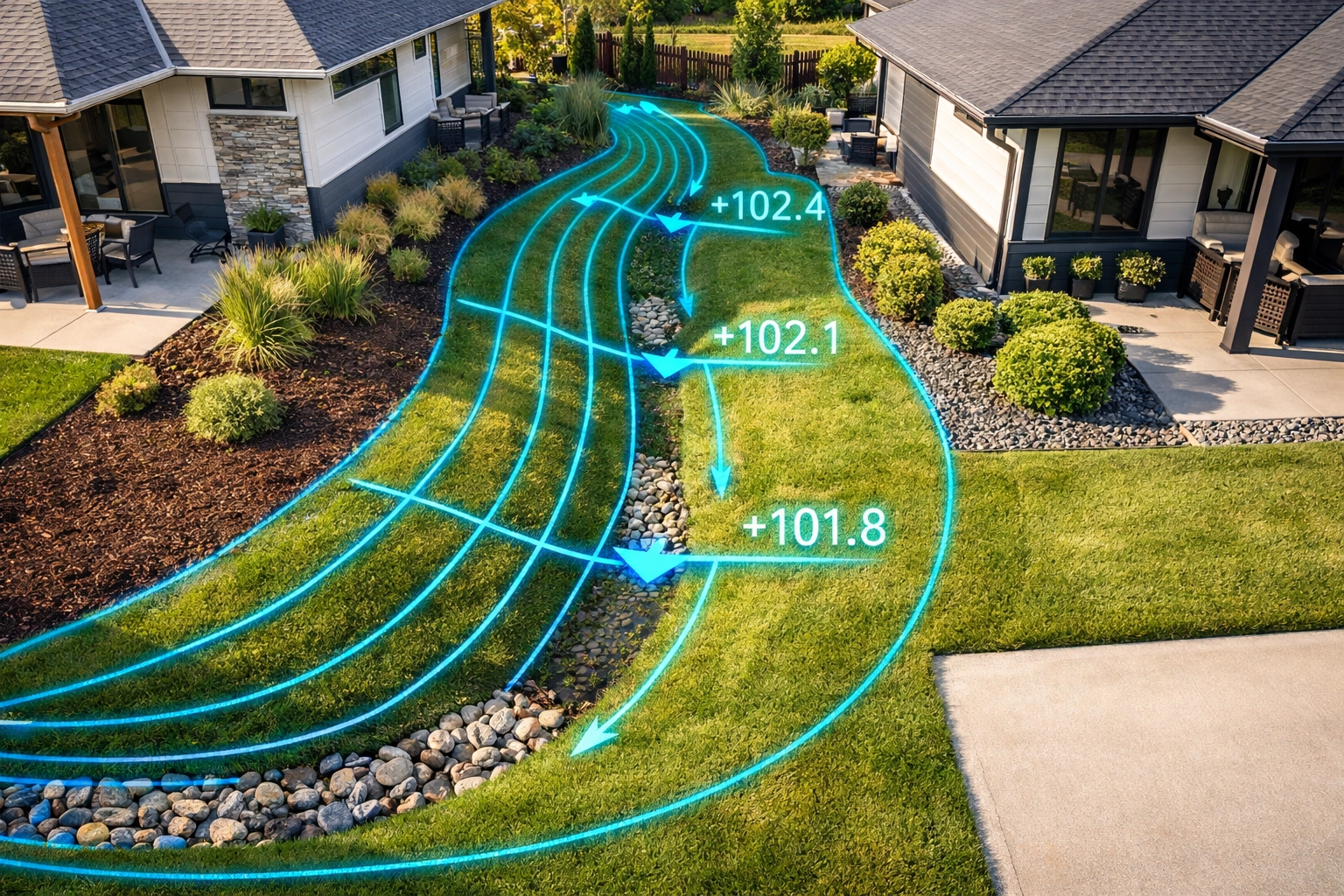
Caption: A professional grading plan showing seamless integration with neighboring property lines. (Includes Reliance Engineering Logo)
3. Incomplete Application Packages
Many homeowners and developers assume that a grading plan is a standalone document. In reality, it’s part of a larger ecosystem. To get that coveted one-submission approval, your grading plan often needs to be supported by:
- A Topographic Survey.
- A Functional Servicing Report.
- Soil/Geotechnical Reports.
If you submit your grading plan without the required supporting documents, the city won't even look at it. They will place it at the bottom of the pile until the package is complete. With 20+ years of experience, we provide a comprehensive checklist to our clients to ensure every "i" is dotted and every "t" is crossed before the first submission.
4. The "Cheap Engineering" Trap
It is tempting to hire the lowest bidder for your engineering needs. However, in the world of civil engineering, you truly get what you pay for. A "cheap" plan often lacks the detail required by modern municipal standards.
Common issues in low-quality plans include:
- Lines that are too thick or blurry to read.
- Incorrect scales.
- Missing "benchmark" elevations.
- Failure to show existing trees or utility poles.
When a city reviewer sees a messy plan, they lose confidence in the entire project. This leads to a microscopic review process that can drag on for months. Our plans are known for their clarity and precision, which is why we are often able to secure permits much faster than the competition.
5. Failing to Design for "The Big Storm"
Climate change has forced municipalities across Ontario to raise their standards. Plans that might have been approved ten years ago are no longer sufficient. You need to account for "100-year storm" events.
This involves complex Storm System Design and often requires on-site water retention. If your plan doesn't demonstrate how the site will handle an extreme downpour without overwhelming the city’s sewers, it will be rejected. We specialize in creating high-performance designs that satisfy even the most stringent environmental requirements.
6. Disconnect Between Grading and Servicing
Your grading plan and your Site Servicing Plan must work in perfect harmony. You cannot decide where the water goes without knowing where your pipes are.
A common mistake is designing a beautiful slope only to realize later that the sanitary sewer pipe needs to run through that exact spot at an impossible angle. By handling both grading and servicing under one roof, Reliance Engineering ensures that your Sanitary Sewer Design and Water Distribution Design are perfectly aligned with your land's topography.

Caption: An integrated view of grading and underground servicing for a residential project. (Includes Reliance Engineering Logo)
7. Not Knowing the Local "Flavor"
Every municipality has its own quirks. What works in the City of Toronto might not be acceptable in the Town of Oakville or St. Catharines. Each city has specific bylaws regarding:
- Maximum slope steepness.
- Retaining wall requirements.
- Driveway culvert specifications.
If your engineer doesn't have a deep history with the specific local reviewers, they are essentially guessing. With over two decades of experience, we’ve worked on everything from 35 Wabash Avenue in Toronto to major projects like the Redevelopment of Etobicoke General Hospital. We know the local standards because we helped set the standard for quality in these regions.
The Reliance Engineering Advantage: Why We Aim for One Submission
Time is money. Every week your project is stuck in the "revision loop" at City Hall is a week of extra carrying costs, contractor delays, and mounting frustration.
At Reliance Engineering, we don't just "draw lines." We act as your advocate and consultant. When you work with Naresh Ochani and our team, you are getting:
- 20+ Years of Expertise: We’ve seen every possible site challenge, from steep ravines to high water tables.
- Permit-Ready Plans: Our drawings are designed to be "plug and play" for municipal reviewers.
- Cost-Effective Solutions: We don't just solve the engineering problem; we find the most affordable way to build it.
- Full-Service Support: From Construction Administration to final inspections, we stay with you until the job is done.
Whether you are working on a small infill home or a large-scale project like 85 Bronte Road in Oakville, your site grading plan is the foundation of your success.
Ready to get your project moving?
Don't let a "simple" grading plan become a multi-month headache. Contact the experts who have been leading the GTA in civil engineering for two decades.
Reliance Engineering
Practical. Compliant. Cost-Effective.
- Visit our website: www.relianceengineering.ca
- Explore our services: View Services
- See our work: Project Portfolio
- Get a Quote: Contact Us Today
Business Hours:
Monday – Friday: 9:00 AM – 5:00 PM
Location: Serving Toronto and the Greater Toronto Area (GTA)
Stop worrying about municipal approvals and start building. Let Reliance Engineering handle the dirt work so you can focus on the vision.