Ontario Land Development, Zoning & Approvals | 6:00 PM post / Article type: Plan of subdivision guidance | Focus: Who designs, builds, owns and maintains the stormwater management pond block in an Ontario plan of subdivision, from draft plan design through construction to municipal assumption | Reading time: 6 minutes
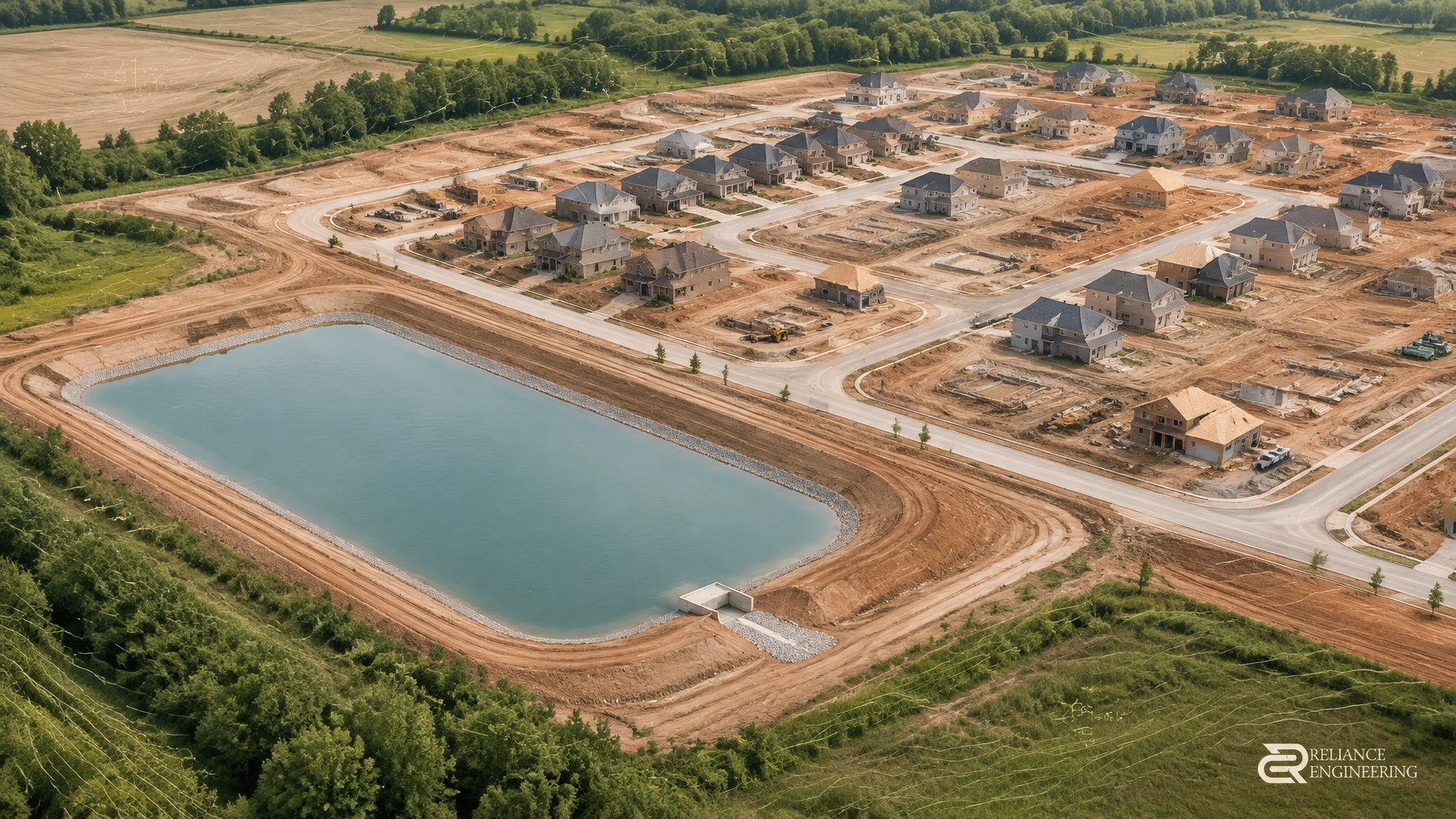
A stormwater management (SWM) pond block is not leftover land. It is engineered infrastructure, and its design affects the subdivision layout, grading, servicing, approvals and long-term maintenance.
For a typical Ontario subdivision, the developer’s consulting engineer designs the pond and the developer arranges and pays for its construction. The municipality and, where applicable, the Conservation Authority review or permit the work. After the required transfer and formal assumption, the municipality generally takes responsibility for the municipal asset. The exact arrangement depends on the approved plans, subdivision agreement and applicable approvals.
1. Why the pond block is on the plan
Many plans of subdivision show a dedicated block labelled “SWM Block” or “Block X, Stormwater Management.” It is reserved for a facility that manages runoff from some or all of the subdivision.
The block’s size and location follow from engineering analysis, not simply the space left after lots and roads are laid out. The design may need to control peak flows, provide water-quality treatment, route drainage and fit required access and grading. These requirements are assessed in the stormwater management report supporting the draft plan application.
That is why the pond block should be considered early. If the planned facility does not fit the land, the draft layout may need to change.
2. Who designs the pond?
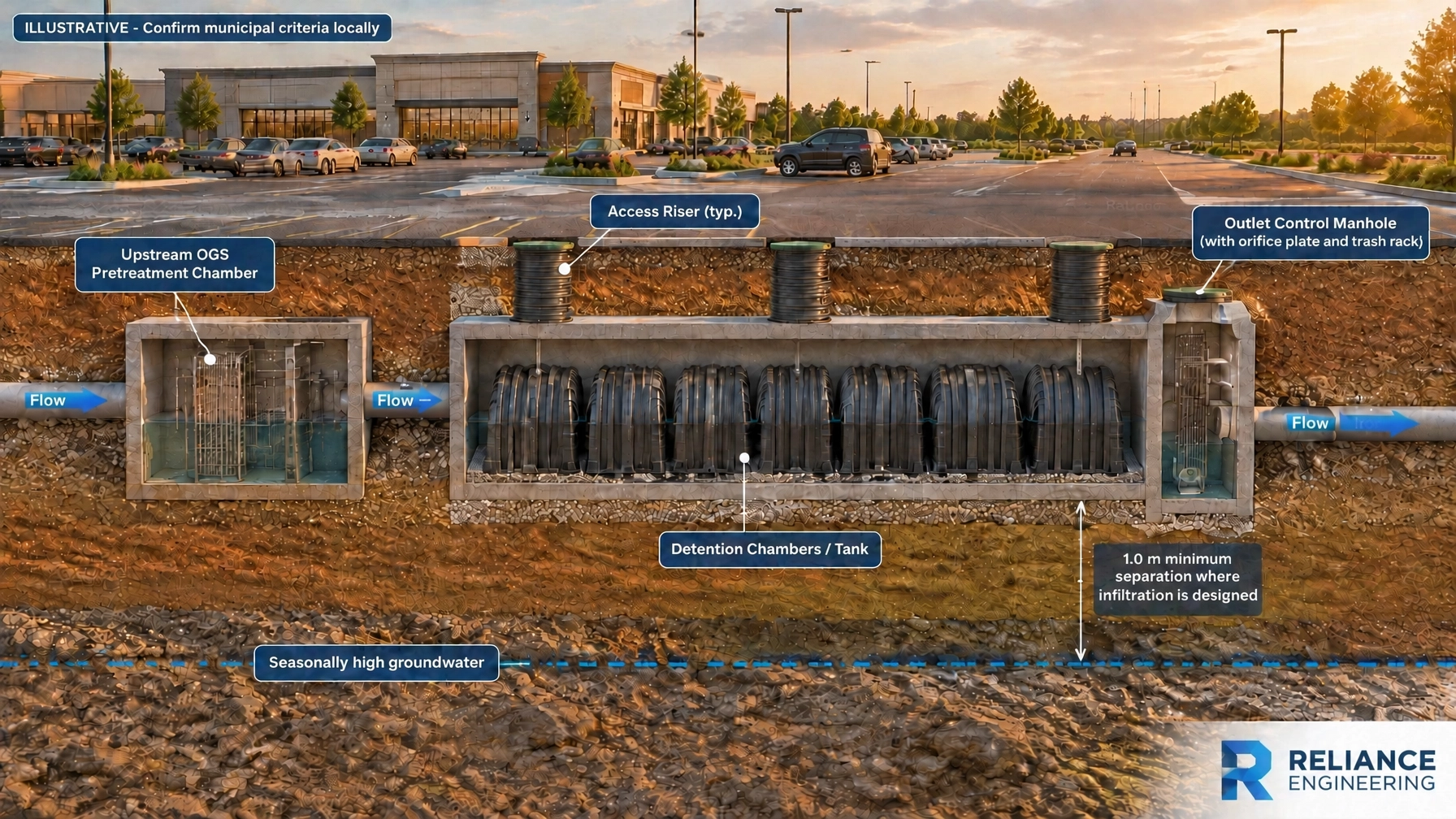
The developer normally retains a consulting engineer to design the SWM facility. The work can include quantity and quality control, storage, outlet controls, pond grading and an access route for inspection and maintenance.
The design must respond to municipal criteria and any applicable Conservation Authority requirements or permit. A Conservation Authority may review or authorize work in a regulated area; its role does not, by itself, make it the owner or future maintainer of the pond. Ontario’s Conservation Authorities Act permit regulation sets out activities that may require permission in regulated areas.
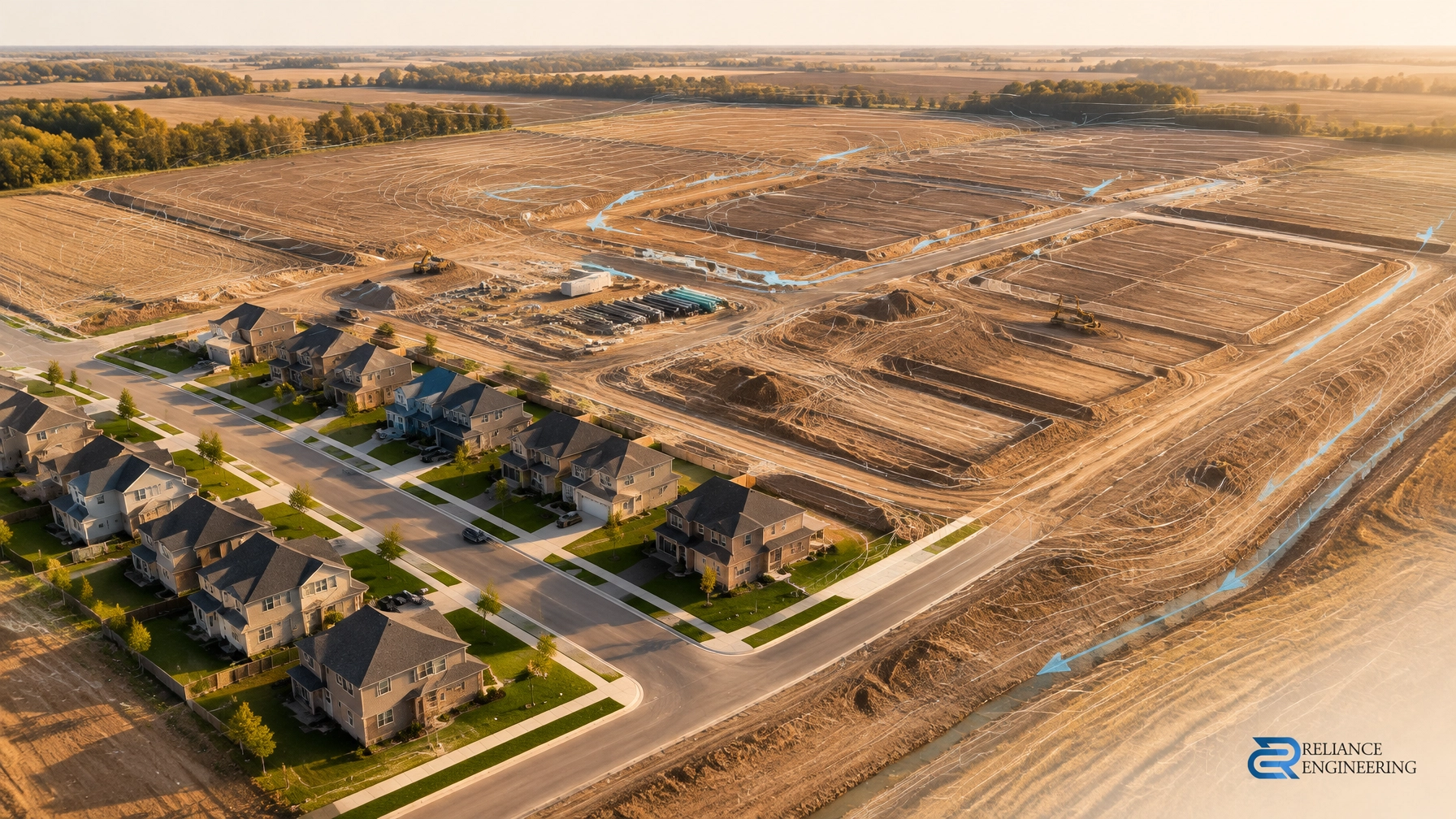
A stormwater management report needs to work with the whole subdivision design. Pond elevations and outlet levels influence the storm sewer network, road grades, overland flow routes and developable blocks. Late design can force changes to the plan, grading and servicing. Stormwater management reports provide the calculations and design basis for that coordination.

3. What the SWM block on the plan means
The draft plan identifies the block, but it does not by itself settle every question about ownership, construction or maintenance. Those details are established through the registered plan and the applicable subdivision agreement, conditions and other approvals.
The block may be conveyed or dedicated to the municipality on registration, or it may remain with a condominium corporation or another private owner. Check the agreement and land documents for the specific arrangement. Importantly, land transfer and assumption of the constructed works are not necessarily the same event.
Subdivision conditions and agreements typically set out requirements for design standards, construction, inspection, as-built documentation, maintenance and financial securities. The agreement may require the developer to provide securities and meet specified conditions before the municipality accepts the works.
4. Who builds it, and when does responsibility transfer?
The developer generally arranges for the pond to be built as part of the subdivision servicing works. The municipality inspects the work against approved plans and standards. The developer remains responsible for completing deficiencies and providing the required as-built information and certifications.
The pond is not automatically assumed as soon as it is built, or when homes are occupied. Assumption usually follows completion of the agreement’s requirements. These may include inspections, as-built surveys, maintenance or monitoring periods, correction of deficiencies and satisfaction of securities conditions. The precise steps and timing vary by municipality and project.
Once the municipality formally assumes the relevant works, it generally takes on ongoing maintenance of the municipal facility. Depending on the asset and agreement, that may include inspections, access maintenance, sediment removal, outlet repairs and erosion work. A pond that remains privately owned is not automatically a municipal maintenance responsibility.

5. Why access and maintenance details matter
A pond must be serviceable after construction. Reviewers therefore scrutinize the maintenance route, access width and grades, maintenance swales, and safe entry and exit slopes. A facility that meets its storage target but cannot be accessed safely for inspection or repair creates a long-term operational problem.
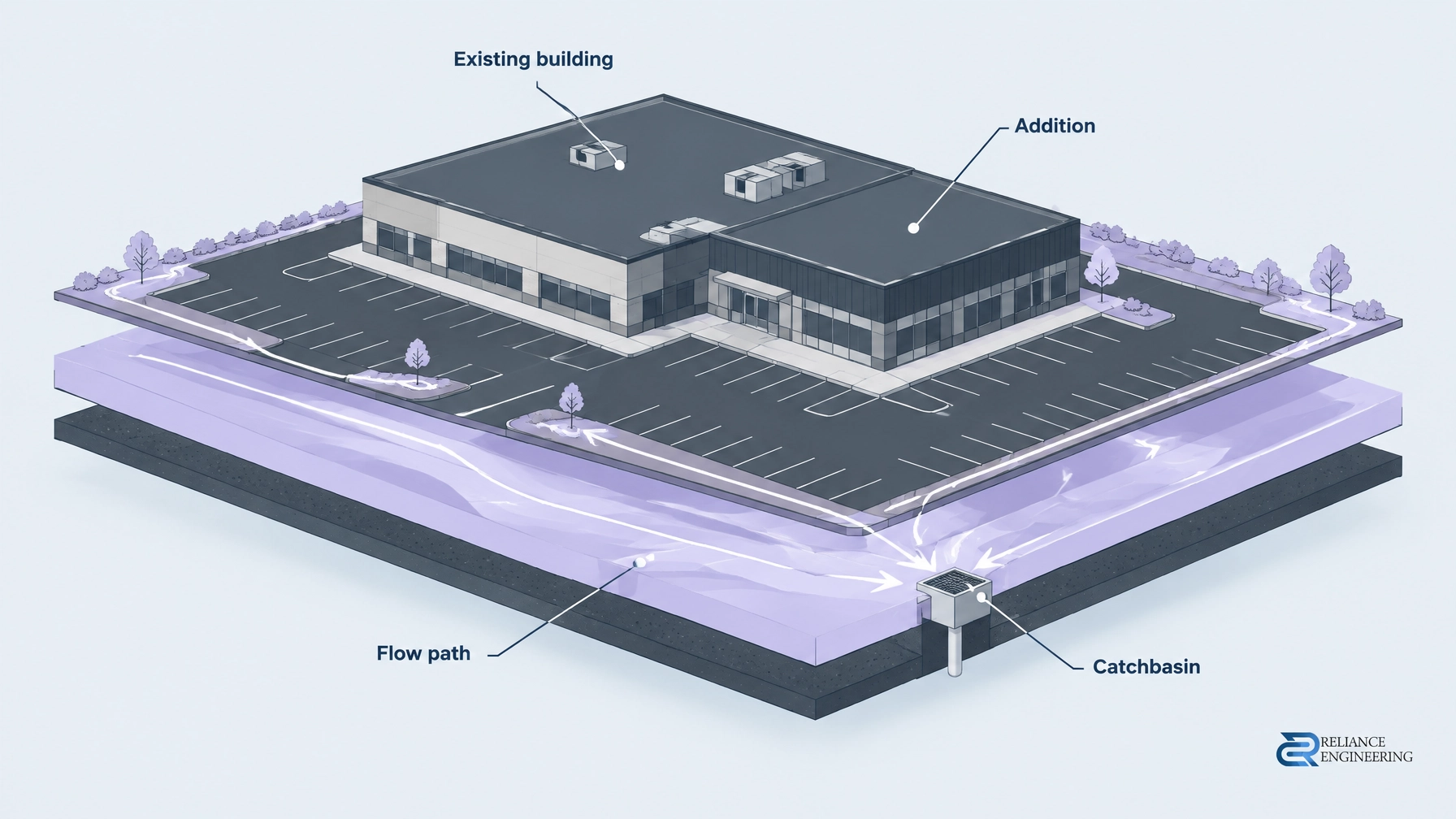
The design should also show how the pond works with the subdivision’s site servicing plans and site grading plans. Drainage routes, pipes, elevations and access need strong coordination across the civil package. Clear details help reviewers assess the design and contractors build it as intended.
6. Common developer mistakes
Treating the pond as leftover land. The pond is part of the infrastructure strategy. Its area, grading, access and outlet should be tested as the subdivision layout develops.
Waiting too long to engineer it. Late pond design can force regrading, move services or reduce the space available for lots and roads. Early engineering input helps expose constraints before they become redesign.
Showing no workable maintenance access. An access route that looks acceptable on a plan may fail once slopes, grades and construction details are checked. Design for safe, practical future access.
Assuming “the municipality takes it” means no responsibility before assumption. The developer’s obligations can continue through construction, inspection, maintenance and the period before formal acceptance. Confirm the agreement’s requirements rather than relying on assumptions.
Get the pond block right from day one
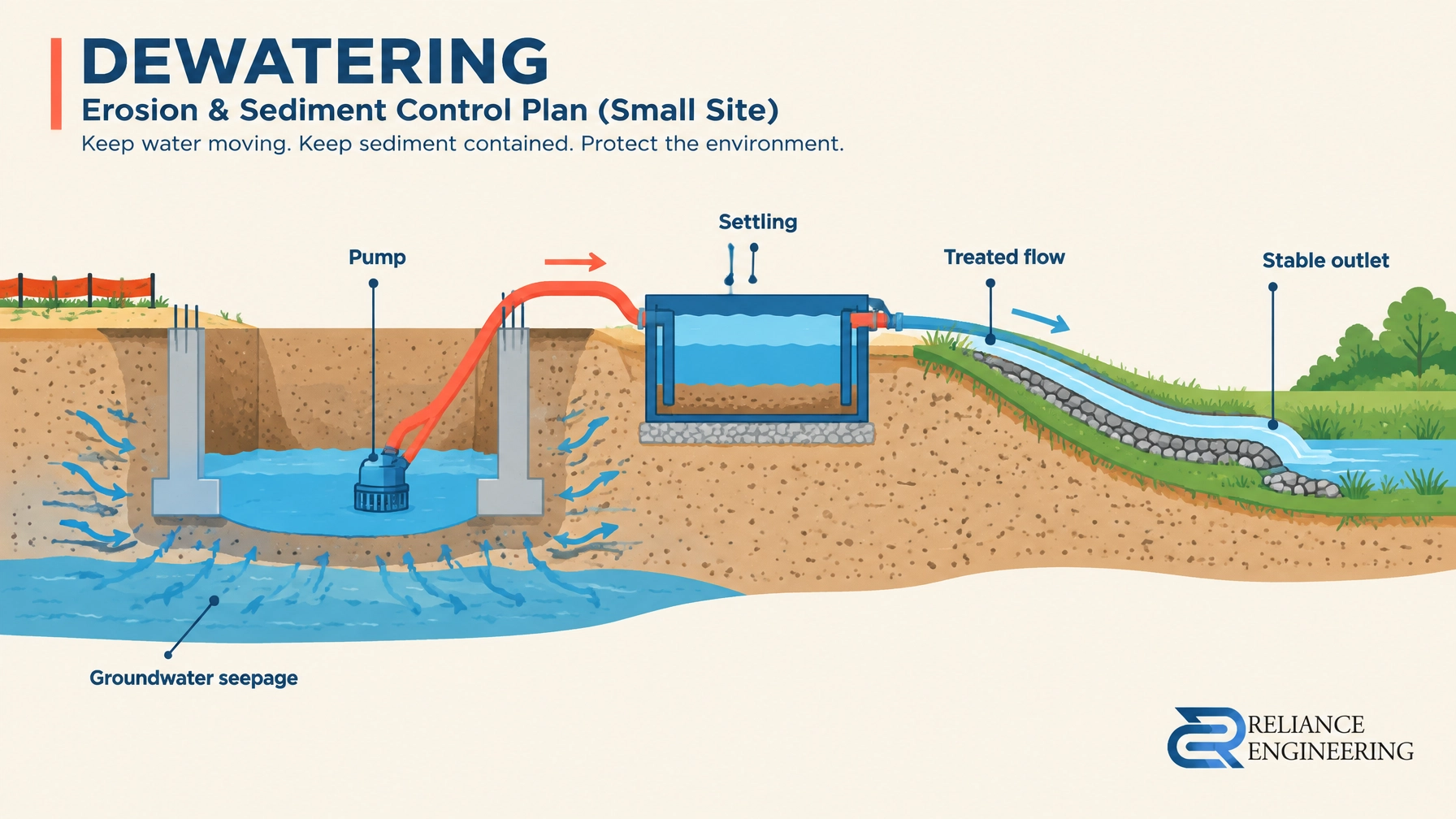
A well-planned SWM block supports a more coordinated subdivision design and a clearer review process. Bring the pond into the draft plan work early, then coordinate its design with grading, servicing, erosion and sediment control, and approval requirements. The result should be practical concepts, reviewer-friendly drawings and permit-ready civil drawings backed by approval support.
Reliance Engineering prepares a complete civil package for land development projects across Ontario. For project-specific advice or a consultation, contact Reliance Engineering.
Naresh Ochani, P.Eng., M.Eng., brings more than 20 years of principal engineering experience. Reliance Engineering Canada Limited is authorized by PEO to provide professional engineering services under Certificate of Authorization 100548882.
Contact
Naresh Ochani, P.Eng. M.Eng.; PEO Certificate of Authorization: 100548882; Reliance Engineering Canada Limited, 6850 Millcreek Dr, Mississauga, ON L5N 2H4; Phone: 647-385-6418; Email: [email protected]; Hours: Monday–Friday 9:00 AM–5:00 PM, Saturday 12:00 PM–2:00 PM, Sunday closed.