By Naresh Ochani, P.Eng., M.Eng.
Reliance Engineering Canada Limited
PEO Certificate of Authorization: 100548882
6850 Millcreek Dr, Mississauga, ON L5N 2H4
647-385-6418 | [email protected]
Office hours: Monday–Friday, 9:00 AM–5:00 PM; Saturday, 12:00 PM–2:00 PM; Sunday, Closed
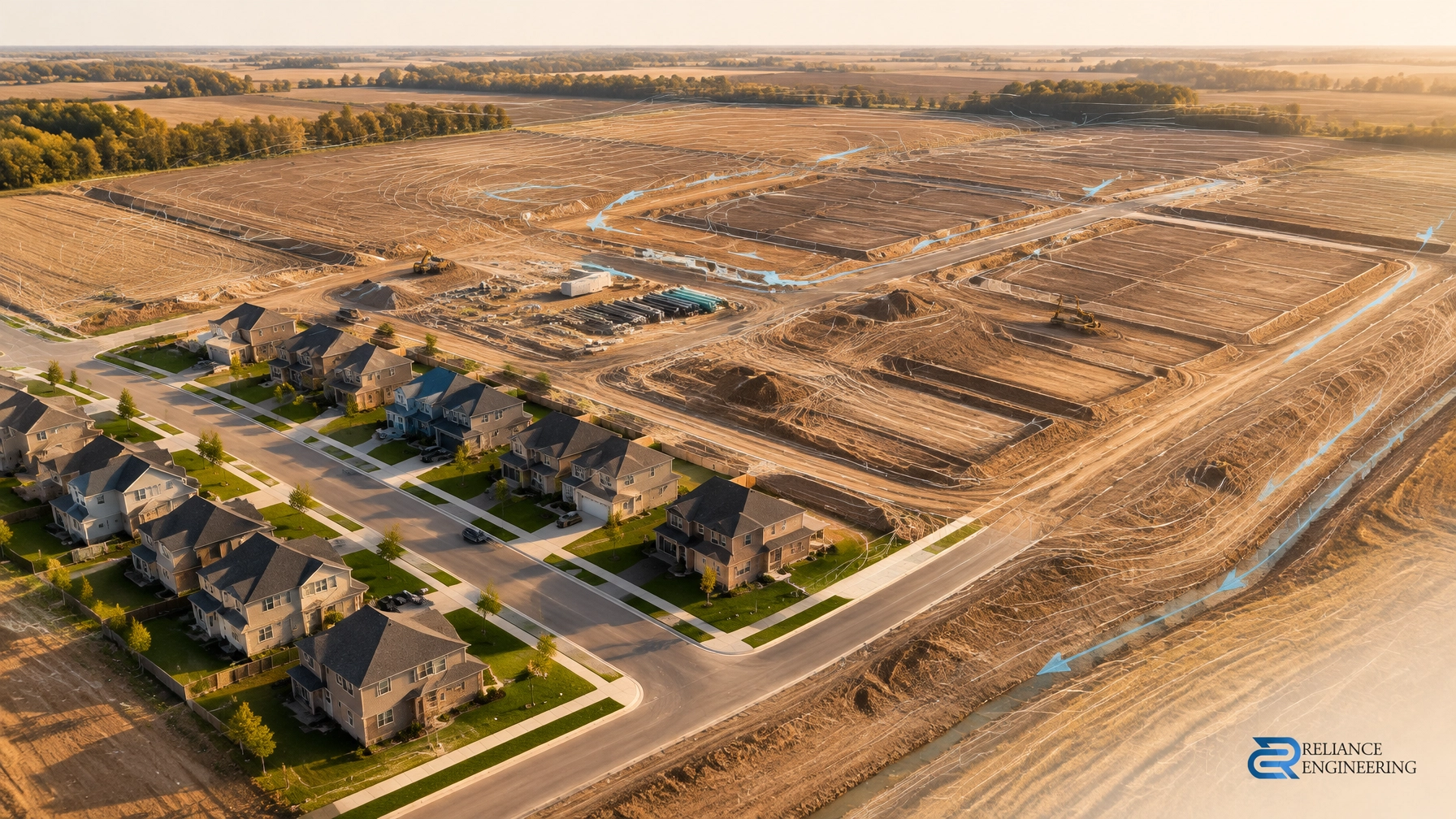
Parking-lot work may look minor compared with a new subdivision or building project. But once construction removes asphalt, excavates granular base, adjusts catchbasins, or changes grades, the site can send sediment-laden runoff to municipal storm systems and neighbouring properties.
That is why commercial property owners and contractors should not assume that “just resurfacing” means no erosion and sediment control (ESC) obligations. Requirements depend on the work scope, local rules, and site location. Confirm them before mobilizing.

Why parking-lot reconstruction can require ESC
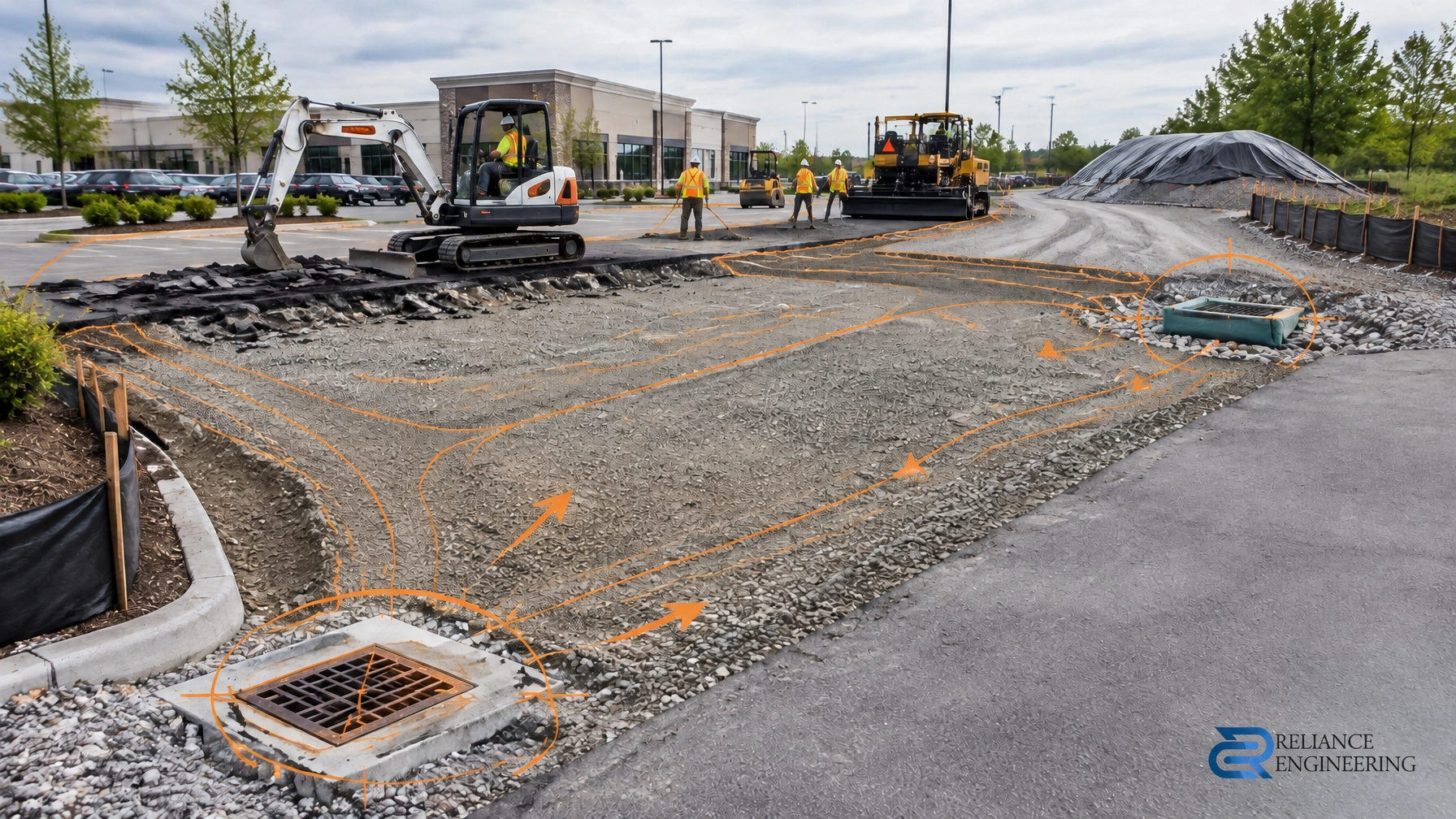
Milling and reconstructing asphalt exposes aggregate base and, in some areas, soil. Excavation for catchbasin adjustments or curb replacement can expose more. Stockpiled soil and millings can also be carried by rainwater or construction traffic.
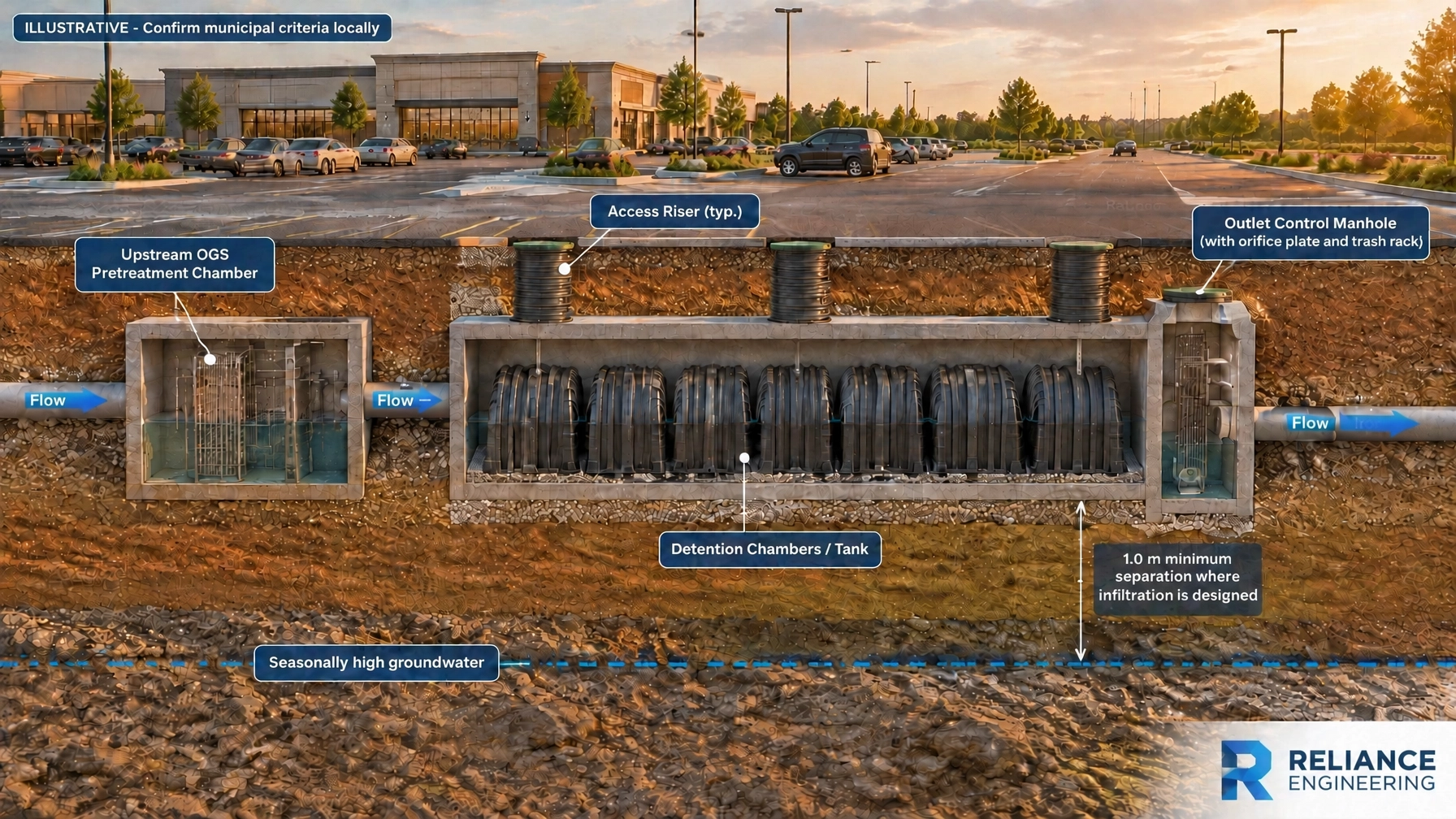
Parking lots often drain directly to catchbasins connected to municipal storm sewers. If sediment enters an inlet, it can obstruct drainage and be carried downstream. Mud tracked from the site can also accumulate on municipal roads and enter the storm system through nearby inlets.
A municipality may regulate the work through site-alteration, grading, drainage, stormwater, or sewer-protection requirements. An ESC plan may be required as part of a site-alteration permit, a site plan approval condition, or another municipal review. Building permit applications can also carry grading or ESC requirements where associated site work affects drainage or involves land disturbance.
Where a Conservation Authority regulates the property, a separate permit or other requirements may apply. Ontario Regulation 41/24 addresses regulated development activities, which can include grading and the placement or removal of material. Review the regulation and check the relevant Conservation Authority’s requirements.
A simple asphalt overlay that leaves grades and drainage unchanged may be treated differently from reconstruction involving excavation, regrading, curb work, or catchbasin changes. Ask the municipality whether the proposed scope requires approval. Requirements vary by municipality and site.
Right-size the controls to the work
A parking-lot project usually does not need the same control system as a large subdivision. It still needs controls that match the disturbed area, runoff paths, construction access, and nearby inlets.

A practical, right-sized ESC plan may show:
- Catchbasin protection for existing and new inlets that could receive runoff from the work. Select devices appropriate to the inlet and site drainage; they must not create unsafe ponding or uncontrolled bypass flow.
- A stabilized construction access or mud mat to reduce mud and loose aggregate tracked onto municipal roads.
- Silt fence or other sediment barriers along disturbed limits where runoff could reach adjacent areas.
- Stockpile protection for soil and millings, placed away from catchbasins and other drainage paths.
- Street sweeping when tracking or loose material reaches the road. Sweeping removes sediment before it enters the municipal storm system.
- Maintenance and inspection notes identifying who is responsible for keeping controls functional and removing accumulated sediment.
The plan should identify the construction limits and relevant drainage features, not simply attach generic notes. Controls must be installable and maintainable within the actual lot layout.
Connect ESC to grading and interim drainage
ESC is not separate from grading. The stripped or milled lot may remain exposed while new asphalt is pending. During that time, the temporary surface still needs to drain safely.
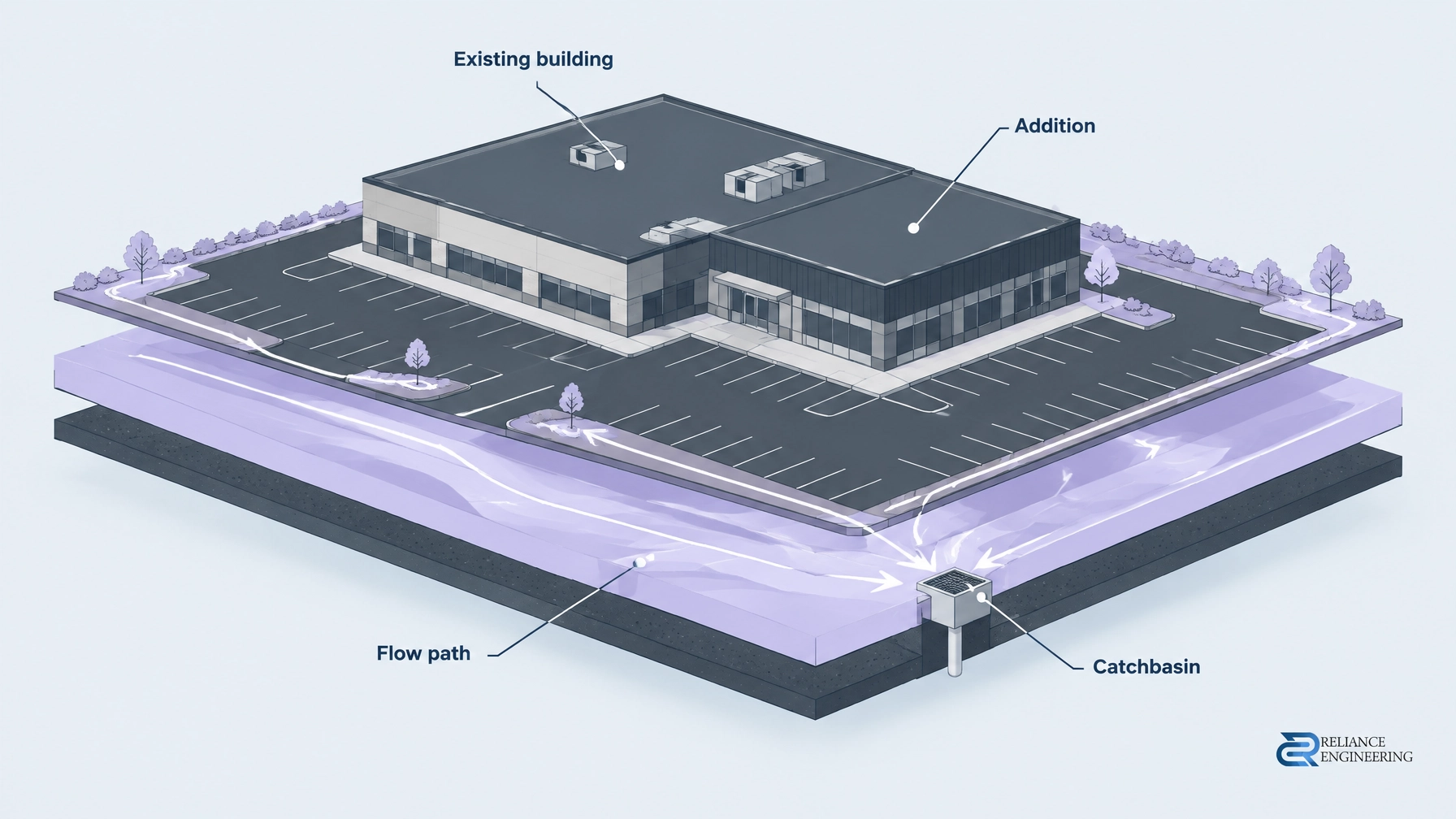
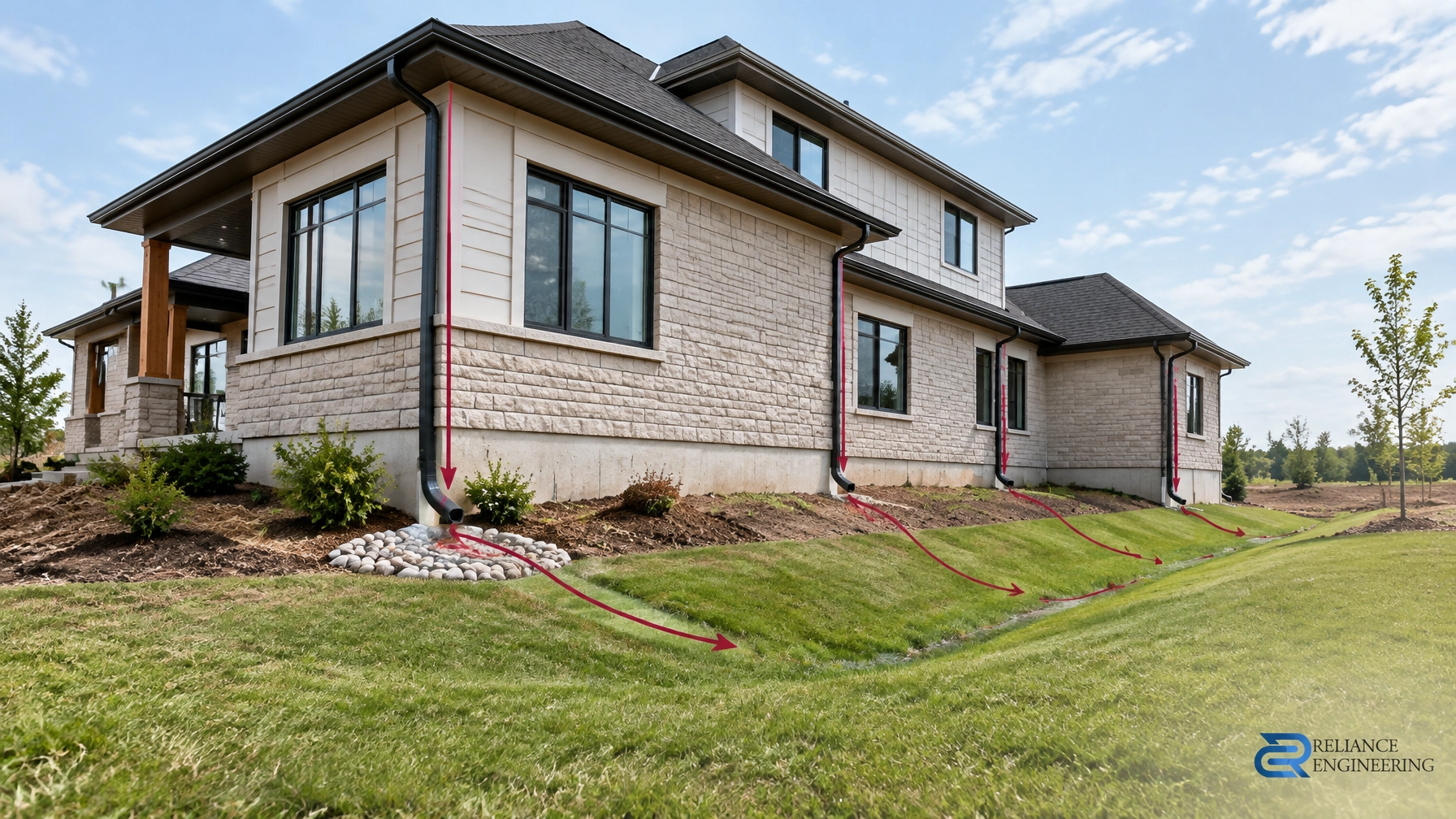
A drainage-focused approach considers both the finished lot and the interim condition. Grades should provide positive drainage without directing sediment-laden runoff toward buildings, neighbouring properties, public sidewalks, or unprotected inlets. The plan should show overland flow routes and explain how runoff is managed while the final pavement surface is not in place.
This coordination matters for commercial parking lot drainage in Ontario. A design that works only after paving is complete may leave the site vulnerable during reconstruction. Coordinating ESC with a Site Grading Plan helps support buildable grading, ponding solutions, and practical construction details.

Confirm submission requirements before work starts
Before tendering or mobilizing, describe the full scope to the municipality: milling, excavation depth, granular replacement, curb work, catchbasin adjustments, asphalt regrading, and any change to paved area or drainage. Ask whether a site-alteration approval, grading plan, ESC plan, road-occupancy approval, or other municipal authorization is required.
Also check whether the property falls within a Conservation Authority regulated area. TRCA provides permit application information; other authorities have their own processes and mapping.
Early confirmation helps owners and contractors include permit-ready drawings and appropriate controls in the project scope. It can also prevent avoidable rework if the proposed drainage or inlet protection does not meet local requirements.
What skipping ESC can cost
Without appropriate controls, sediment may block catchbasins, contribute to flooding, and require cleanup on municipal roads or neighbouring lands. A municipality may require corrective work or issue a stop-work direction where approvals or protections are missing. Cleanup, replacing damaged controls, and arranging unplanned work can add cost and disrupt construction.
Blocked catchbasins are a particular concern: they can leave water ponding on the newly reconstructed pavement, undermining the drainage outcome the project was meant to deliver. Appropriate controls are a modest part of a reconstruction budget compared with cleanup, delays, and damage caused by sediment leaving the site.
Get the plan right before construction
A parking lot may be small, but its drainage connections are direct. If the work exposes soil or changes grades, check municipal and Conservation Authority requirements before starting. A project-specific ESC plan should protect catchbasins and surrounding properties while remaining practical for the contractor to install and maintain.
Reliance Engineering prepares Erosion and Sediment Control Plans coordinated with grading, storm servicing, construction access, and overland drainage. Our work focuses on practical designs, clear drawings, and approval support.
Request a consultation: Contact Reliance Engineering
647-385-6418 | [email protected]
Professional credentials and contact
Naresh Ochani, P.Eng., M.Eng.
Reliance Engineering Canada Limited
PEO Certificate of Authorization: 100548882
6850 Millcreek Dr, Mississauga, ON L5N 2H4
647-385-6418 | [email protected]
Office hours: Monday–Friday, 9:00 AM–5:00 PM; Saturday, 12:00 PM–2:00 PM; Sunday, Closed
Municipal and Conservation Authority requirements vary by location and project scope. Confirm applicable approvals before work begins.