For developers, builders, and property owners across Ontario, the Site Plan Approval (SPA) process is often viewed as the most rigorous hurdle in the land development lifecycle. Governed by Section 41 of the Planning Act, SPA is the mechanism through which municipalities manage the design and technical aspects of a development. It ensures that the proposed project is safe, functional, and integrated seamlessly into the surrounding infrastructure.
Navigating this process requires more than just creative design; it demands technical precision and a strategic understanding of municipal requirements. At Reliance Engineering, we specialize in streamlining this journey, focusing on delivering high-quality engineering documents that facilitate approvals in as few submissions as possible.
This guide provides a comprehensive 5-step roadmap to successfully navigating the Site Plan Approval process in Ontario.
Step 1: Pre-Consultation – The Foundation of Success
Before a single line is drawn on a formal site plan, a pre-consultation meeting with the local municipality is essential: and in many jurisdictions, mandatory. This stage involves a preliminary review of your proposal by the planning, engineering, and transportation departments.
The primary goal of pre-consultation is to identify the specific requirements for your application. Municipalities will provide a "Checklist of Requirements," which details every study and drawing needed for a complete submission. This often includes:
- Site Plans and Elevations
- Functional Servicing Reports (FSR)
- Stormwater Management Reports
- Site Grading and Drainage Plans
- Landscape Plans
By engaging early, you can identify potential "deal-breakers": such as site access issues or servicing constraints: before investing heavily in detailed design. Reliance Engineering often represents clients during these meetings to ensure that the technical scope remains reasonable and cost-effective.

Step 2: Technical Preparation and Formal Submission
Once the requirements are established, the technical heavy lifting begins. This is the stage where the quality of your engineering firm directly impacts your timeline. A common reason for project delays in Ontario is "incomplete" or "substandard" submissions that fail to meet municipal technical standards.
A robust SPA submission package must include several critical civil engineering components:
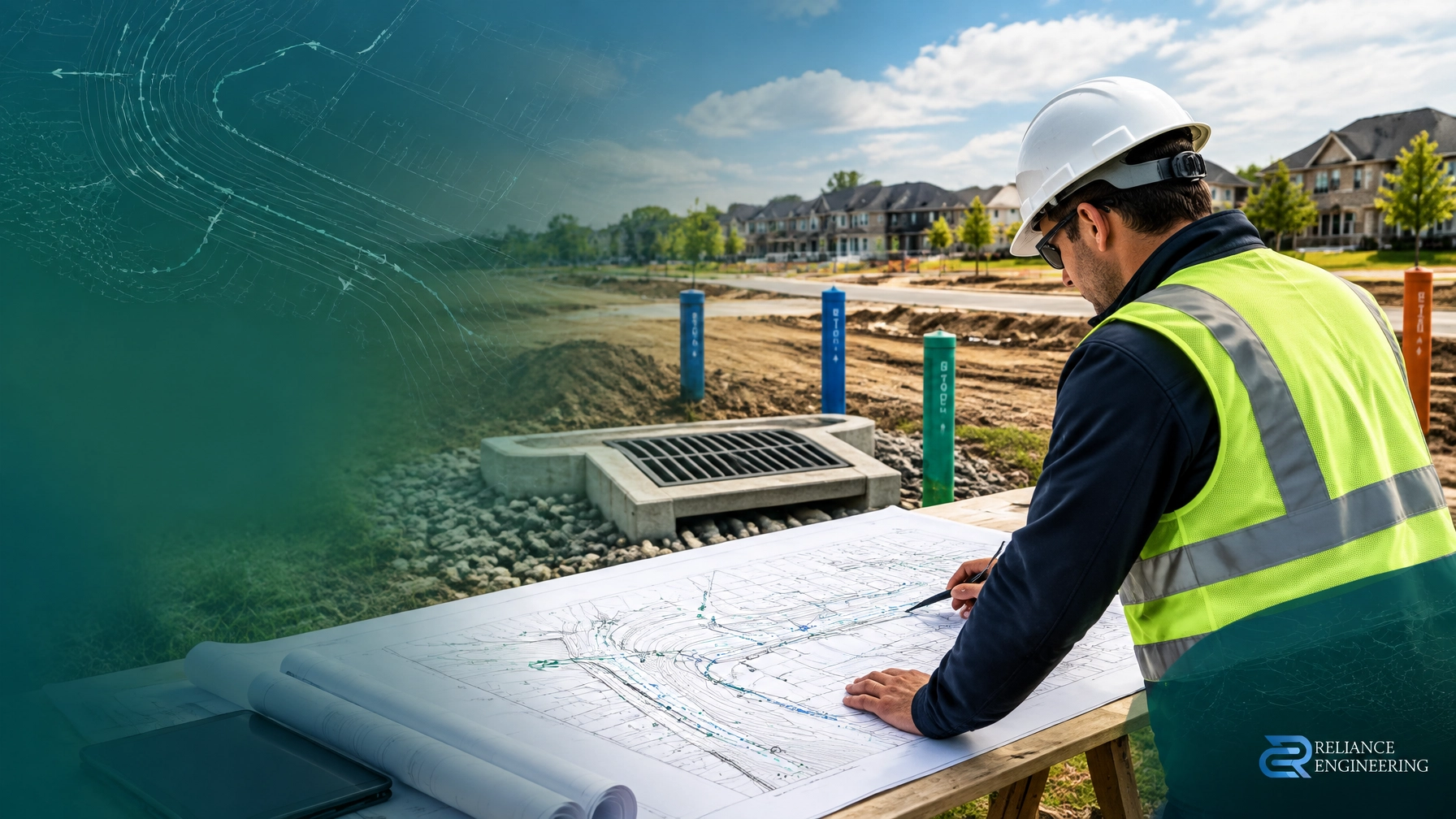
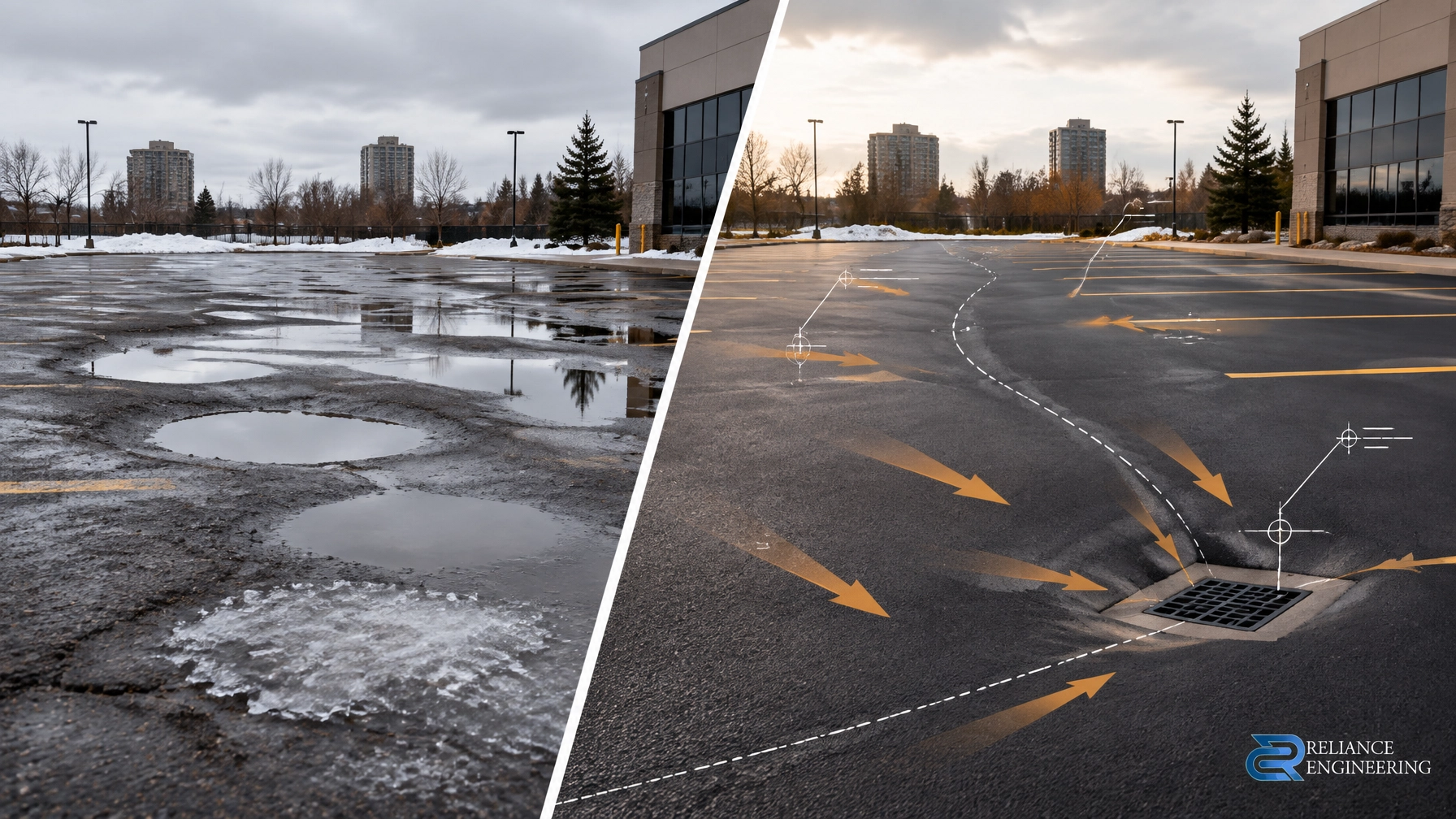
1. Site Grading and Drainage Plans
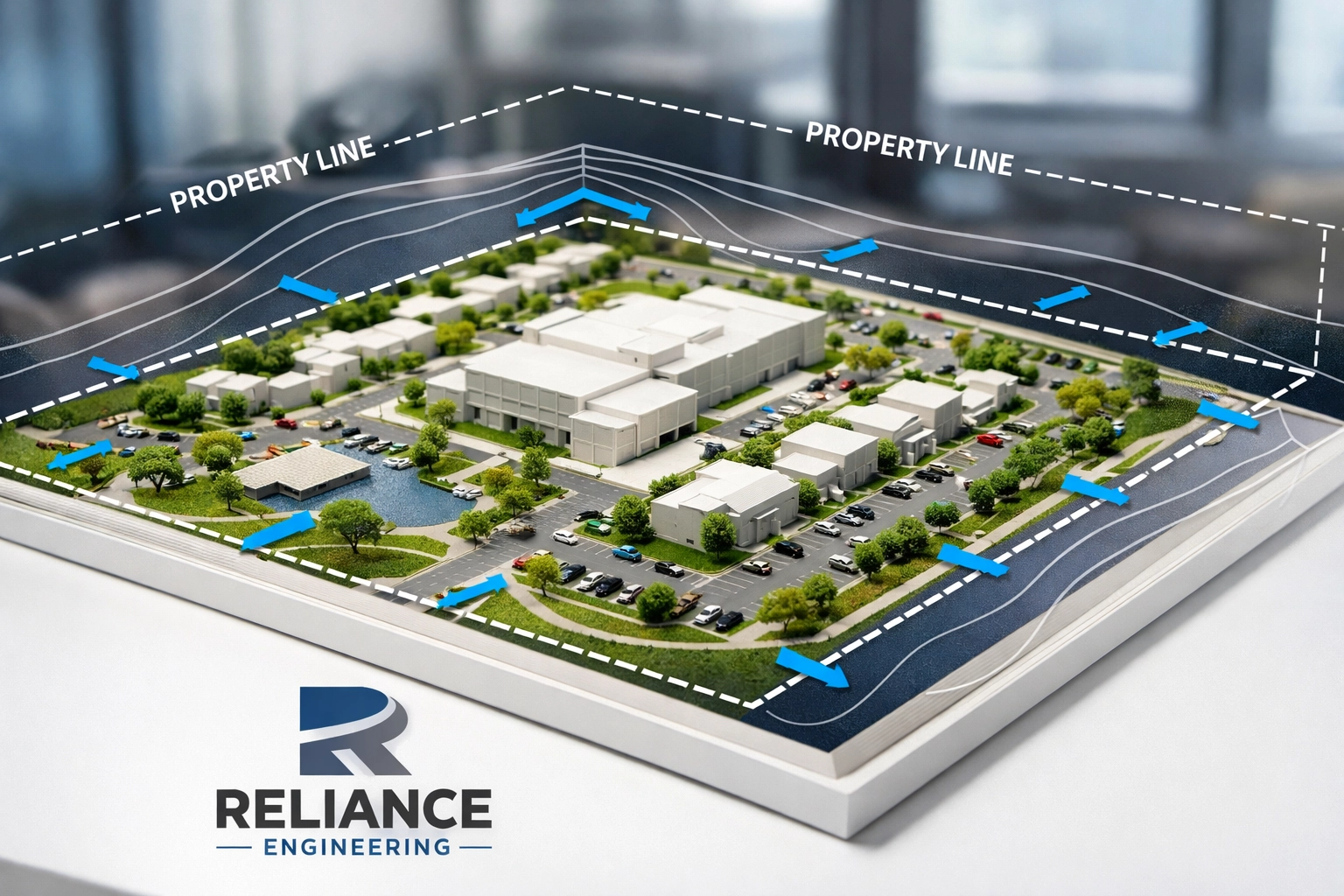
A precise grading plan is the backbone of site safety. It ensures that water flows away from building foundations and is directed toward appropriate discharge points without impacting neighboring properties. Precision here is non-negotiable. Learn more about why Site Grading Plan precision matters to avoid immediate rejections.
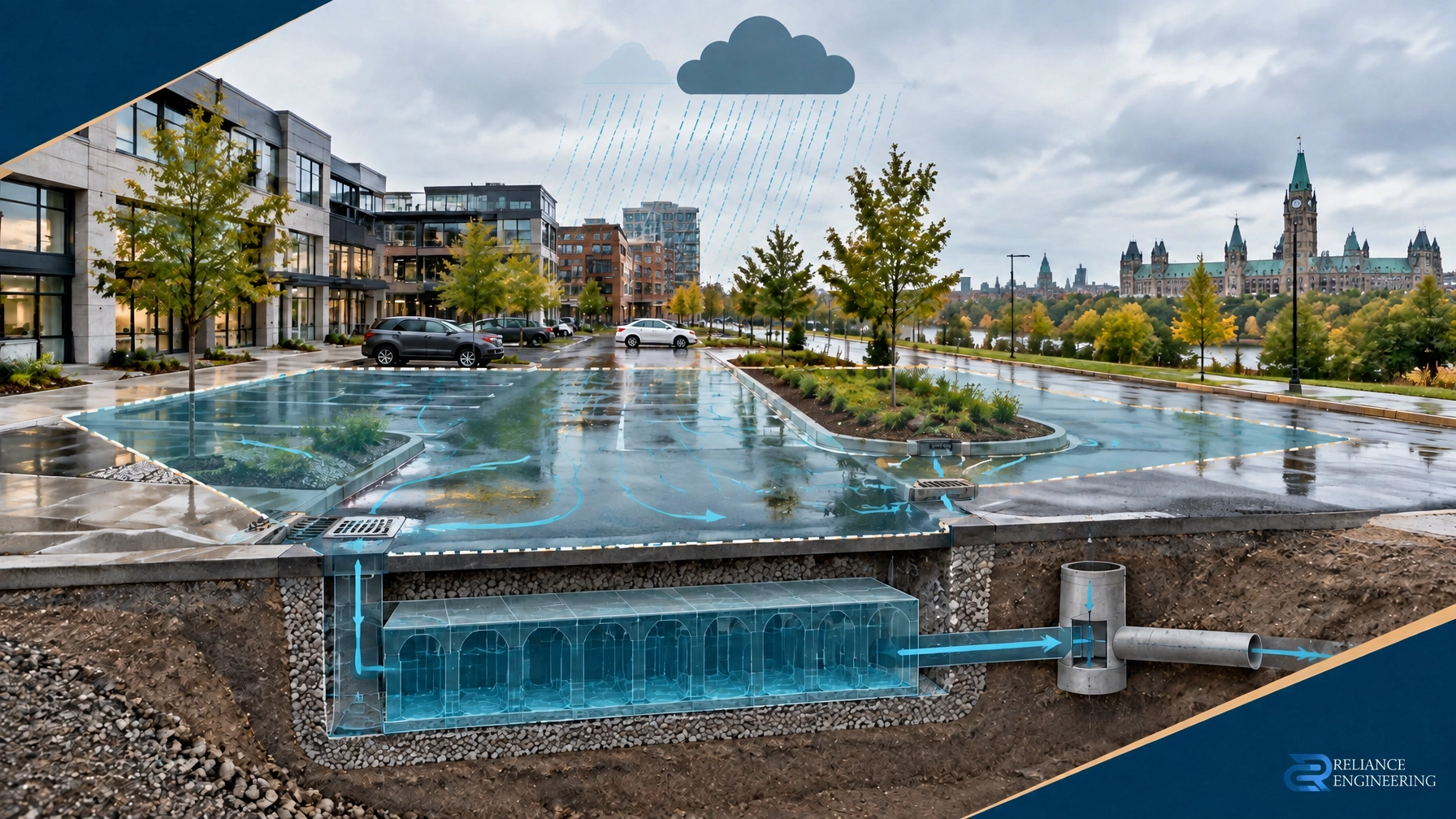
2. Stormwater Management (SWM) Reports
With the 2024 Provincial Planning Statement (PPS) changes and evolving climate standards, SWM reports have become more complex. You must demonstrate how your site will handle peak flow rates and water quality. Reliance Engineering prides itself on developing detailed Stormwater Management reports that align with both municipal and conservation authority mandates.
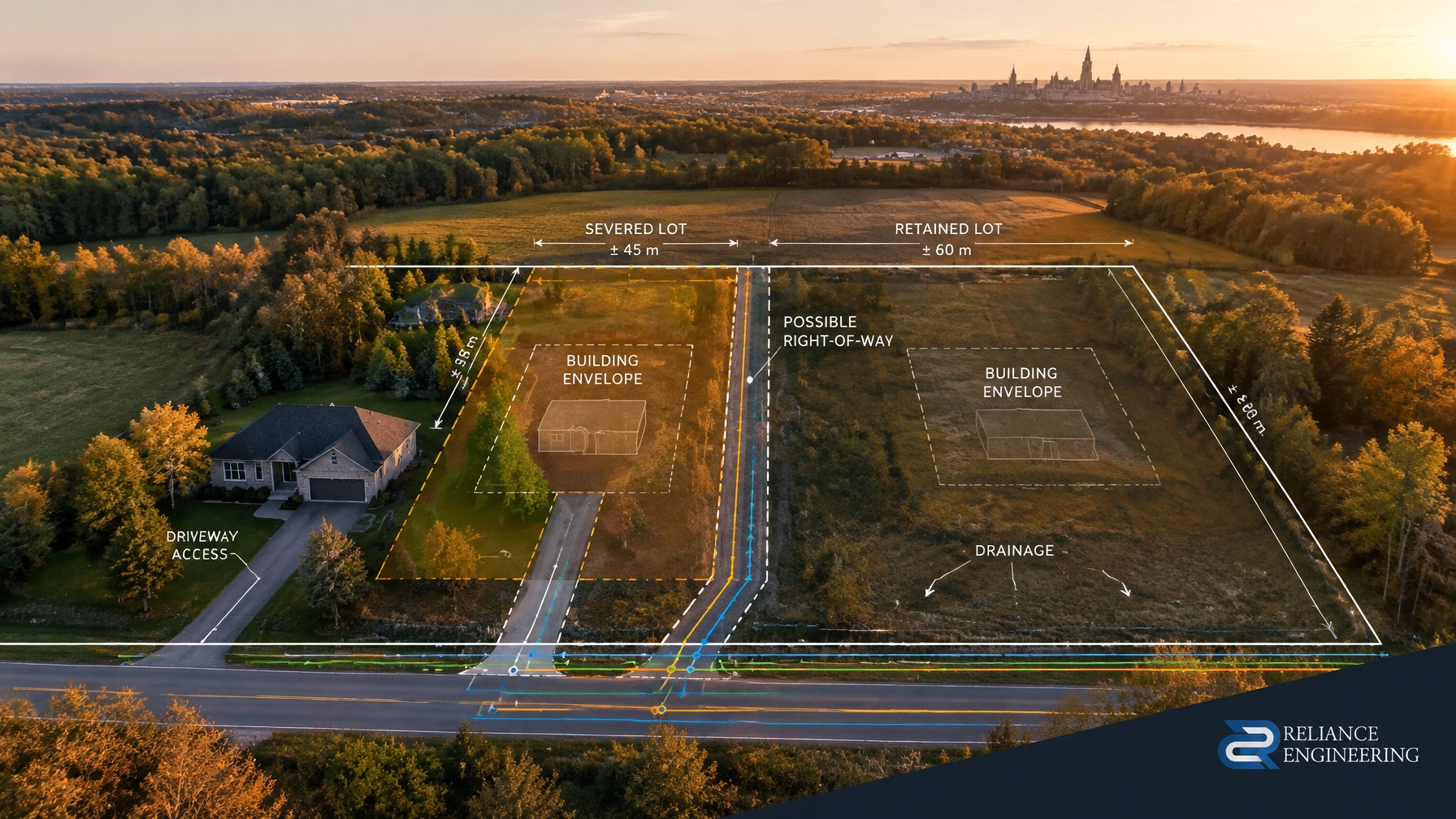
3. Site Servicing Plans
This document outlines how the development will connect to municipal water, sanitary, and storm sewers. It must account for pipe capacity, slopes, and utility coordination.
At Reliance Engineering, our philosophy is "Right the First Time." We aim to provide designs that are permit-ready from the start, significantly reducing the back-and-forth typical of the Ontario development landscape.
Step 3: Municipal Review and Agency Circulation
After the formal submission and payment of fees, the municipality "circulates" the application. This means your plans are sent to various internal departments (Fire, Parks, Public Works) and external agencies (Conservation Authorities, MTO, Utility Providers).
Under Bill 109 (the More Homes Built Faster Act), Ontario has implemented stricter timelines for municipal decisions. If a municipality fails to make a decision on a Site Plan application within 60 days, they may be required to refund a portion of the application fees. While this has pressured municipalities to work faster, it has also led to "pre-screening" processes where applications are rejected before they are even officially filed if they aren't perfect.
During this stage, you will receive "redlines" or comments. This is where professional advocacy is vital. Reliance Engineering reviews these comments to distinguish between mandatory technical corrections and discretionary "nice-to-have" requests that may unnecessarily inflate your construction costs.
Step 4: Site Plan Agreement and Financial Securities
Once the technical plans are approved "in principle," the municipality will draft a Site Plan Agreement. This is a legally binding document registered on the property's title. It outlines the owner's obligations regarding the maintenance and construction of the site as shown on the approved plans.
Key components of this stage include:
- Financial Securities: Developers are usually required to provide a Letter of Credit (LC) or cash deposit (typically 50% to 100% of the estimated cost of on-site works like paving, landscaping, and SWM infrastructure). This ensures the municipality has the funds to complete the work if the developer defaults.
- Conditions of Approval: These may include requirements for road widenings, easements for utilities, or specific environmental mitigation measures.
- Final Sign-off: Once the agreement is signed and the securities are posted, the Site Plan Approval is formally granted.
Step 5: Post-Approval, Permitting, and Compliance
Approval is a major milestone, but it is not the end of the road. With SPA in hand, you can proceed to apply for Building Permits. However, the site must be constructed exactly as approved.
Throughout construction, the municipality and the civil engineer of record (Reliance Engineering) will conduct inspections. We ensure that:
- The grading matches the approved benchmarks.
- The Erosion and Sediment Control (ESC) measures are maintained during construction.
- The SWM facilities are built to specification.
Once construction is complete, a "Certificate of Completion" or "As-Built" drawings are typically required to trigger the release of your financial securities. Failure to follow the approved site plan can result in the municipality withholding these funds or refusing to grant occupancy permits.
Why Professional Civil Engineering is the Deciding Factor
The difference between a project that breaks ground in six months and one that languishes for two years often comes down to the quality of the engineering submission. In the current Ontario regulatory environment, "good enough" drawings are no longer sufficient.
The Reliance Engineering Advantage
At Reliance Engineering, we understand the nuances of Ontario’s municipal requirements. Whether you are working on a multi-unit residential conversion or a commercial development, our approach is designed to mitigate risk:
- Precision in Design: We focus on the details of lot grading and servicing to prevent technical rejections.
- One-Submission Focus: Our goal is to receive approval on the first round by anticipating municipal comments before they happen.
- Ontario-Wide Expertise: We provide land development consulting across the province, ensuring compliance with local bylaws and the latest Provincial Planning Statements.

Expert Consultation for Your Next Project
Navigating Site Plan Approval in Ontario is a complex, multi-disciplinary effort. By following this 5-step roadmap and partnering with experienced professionals, you can avoid the common pitfalls that lead to delays and budget overruns.
If you are planning a development project in Ontario and need expert guidance on Site Plan Approval, Grading Plans, or Stormwater Management, Reliance Engineering is ready to assist.
Contact Us Today
- Name: Naresh Ochani, Founder and Principal
- Company: Reliance Engineering
- Website: www.relianceengineering.ca
- Service Area: Across Ontario (Civil Engineering & Land Development Consulting)
- Hours: Monday – Friday, 9:00 AM – 5:00 PM ET
Our mission is to provide practical, compliant, and cost-effective engineering solutions that get your project from the drawing board to the construction site without the headache.