Article type: Property risk and engineering guidance
Audience: Commercial property owners, property managers, and asset managers in Ontario
Focus: Ponding risk, winter safety, and grading-based drainage improvements
Professional credentials
Naresh Ochani, P.Eng. M.Eng.
PEO Certificate of Authorization: 100548882
Reliance Engineering Canada Limited
Office hours: Monday to Friday 9:00 AM–5:00 PM; Saturday 12:00 PM–2:00 PM; Sunday Closed
Address: 6850 Millcreek Dr, Mississauga, ON L5N 2H4
Phone: 647-385-6418
Email: [email protected]
Ponding is an operational risk
Water that repeatedly collects in a commercial parking lot, walkway, accessible route, driveway, or entrance is more than an appearance issue. It can affect how people move through the property, how vehicles use parking and access areas, and how a building’s entrances and surrounding surfaces perform.
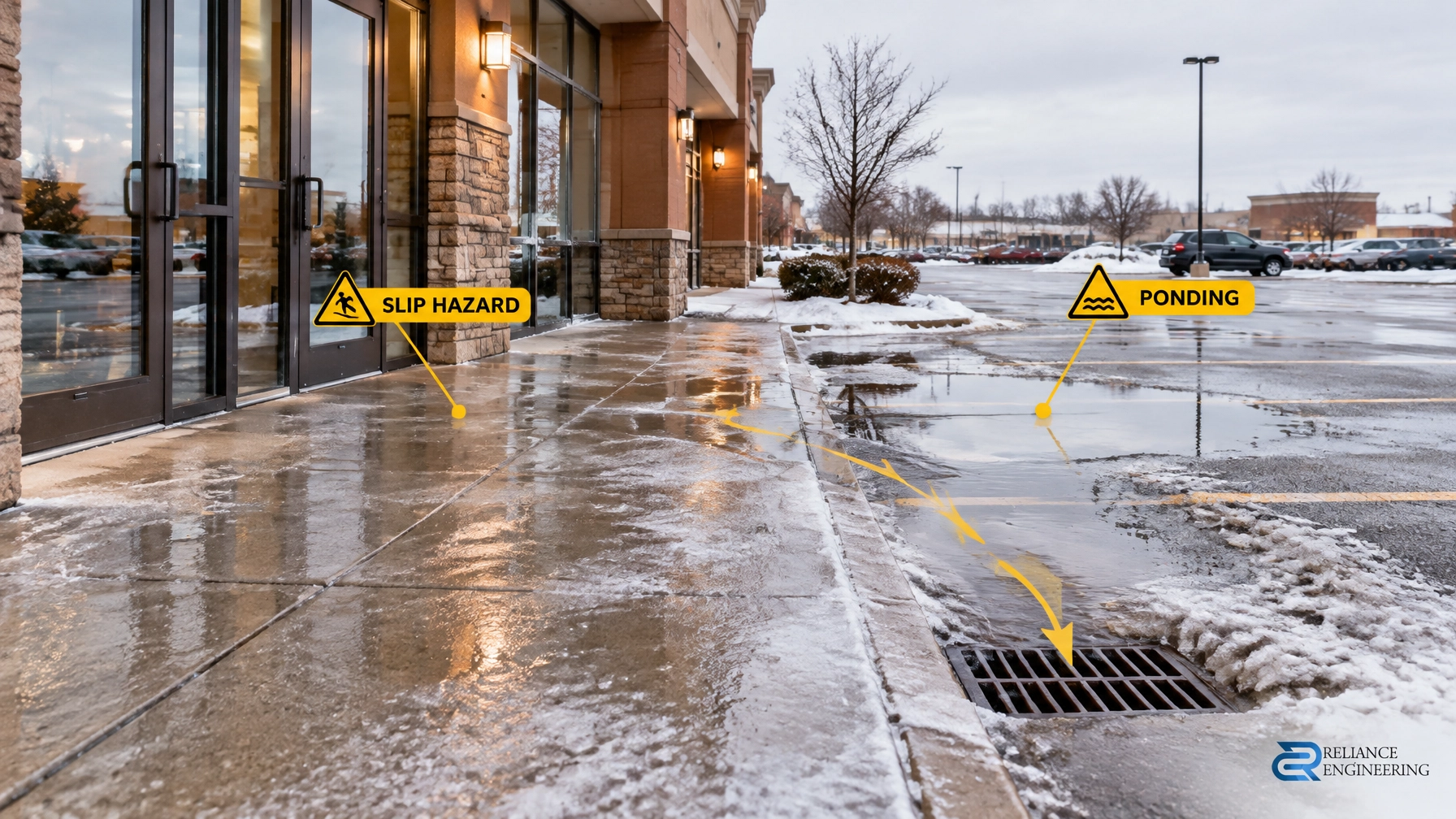
The risk becomes more urgent in winter. Water that remains on a walking route can freeze or refreeze as temperatures change. An ice patch may form where pedestrians cross between parking areas and storefronts, near an entrance, or along an accessible route. A drainage deficiency that appears minor in warmer weather can become a recurring winter hazard.
For commercial property owners and managers, addressing ponding is a practical part of managing the site. Temporary maintenance measures may be necessary, but recurring water accumulation should also prompt consideration of a lasting engineering solution.

The exposure can extend beyond a slip hazard
Standing water can affect different parts of a commercial property:
- Pedestrian areas: Water and refrozen ice can make walkways, ramps, crossings, and entrances hazardous.
- Parking and drive aisles: Ponding can inconvenience drivers and interfere with regular movement through the lot.
- Storefronts and entrances: Water that persists near doors or building edges can create maintenance concerns and affect customer access.
- Property operations: Repeated calls, complaints, inspections, cleanup, and temporary controls can consume staff time and complicate site management.
These are potential exposures, not automatic outcomes. The impact depends on the site, the location and persistence of the water, weather, maintenance, and other circumstances. Still, a documented recurring problem should not be treated as a cosmetic issue to revisit only when someone complains.
Documentation is a signal to act
When ponding is recorded in work orders, inspection notes, photographs, tenant communications, or maintenance logs, the record can help managers understand where and when the issue occurs. It can also make clear that the condition needs a response beyond routine surface cleanup.
In Ontario, owners and managers should take property safety concerns seriously and seek appropriate professional advice where required. This article is general information, not legal or insurance advice. Potential liability and insurance implications depend on the specific facts, applicable policies, and professional advice.
A useful management response is to keep a clear record of recurring locations and actions taken, arrange interim safety measures as appropriate, and obtain a qualified assessment of the grading condition. Addressing a known drainage deficiency promptly is more constructive than allowing it to remain unresolved while relying only on repeated temporary responses.
Complaints, inspections, and property records
Ponding may draw attention through tenant concerns, customer complaints, maintenance reviews, or municipal inspections. Depending on the property and local requirements, a drainage concern may lead to requests for clarification or corrective action. Requirements and processes vary by municipality; no particular enforcement outcome should be assumed.
Drainage records can also matter during a property transaction or leasing due diligence. Prospective purchasers, tenants, or their representatives may ask about recurring water problems, site maintenance, and completed repairs. A documented grading deficiency may prompt questions about its cause, proposed correction, and coordination with site infrastructure. Clear records and an engineering response can help owners explain how the issue is being addressed.

Grading is the long-term risk control
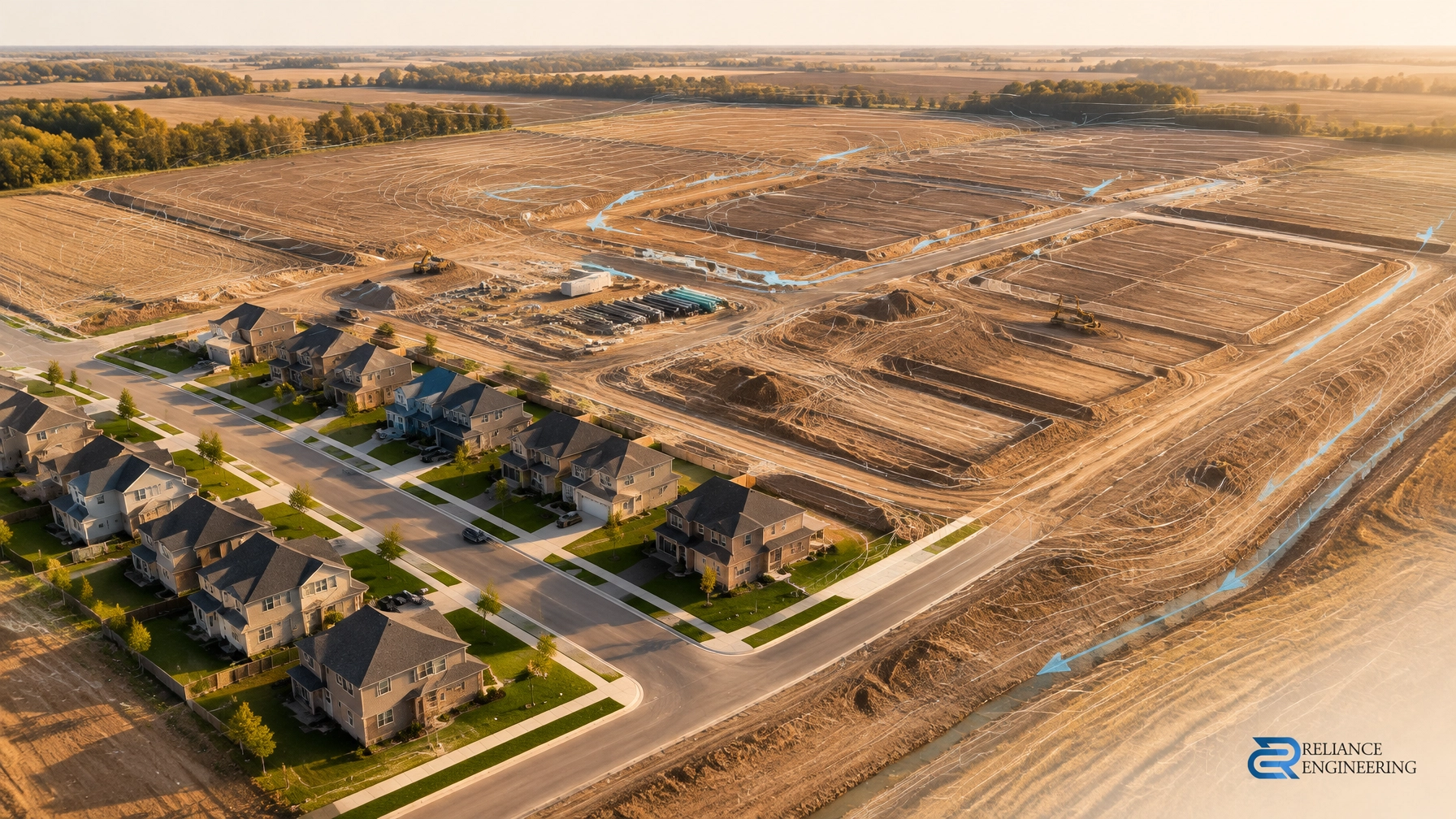
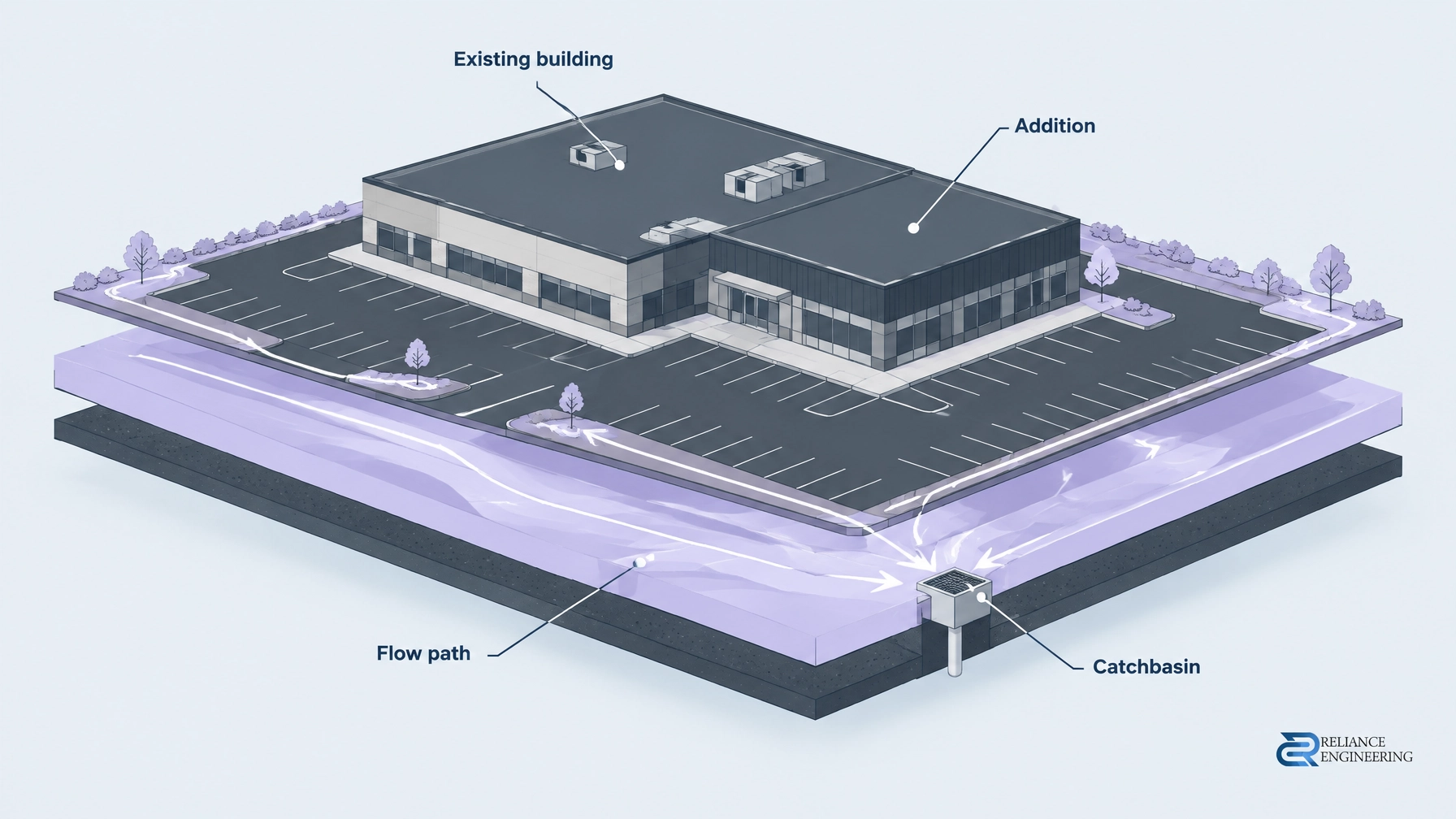
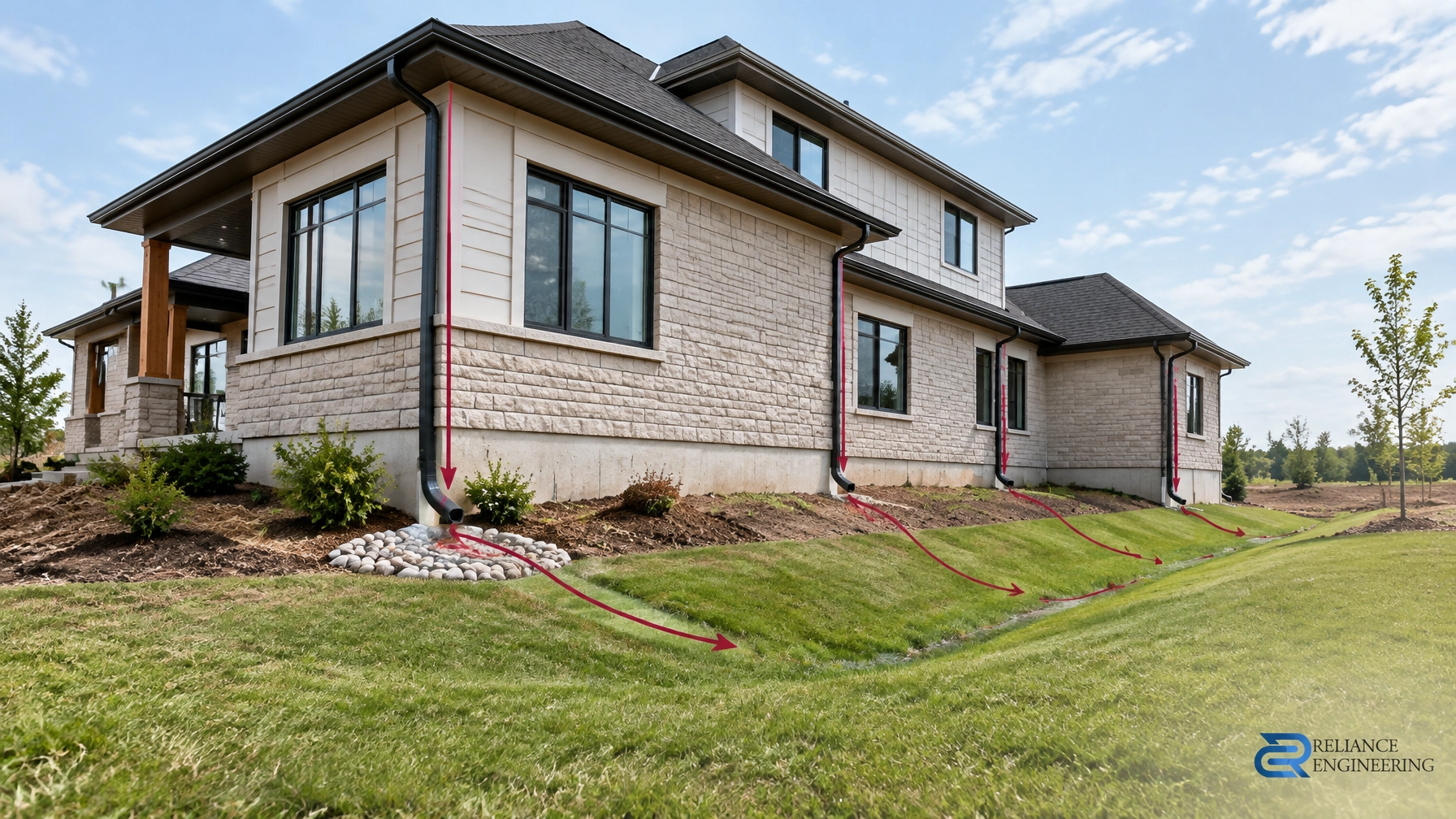
A drainage-focused approach looks at how the site is intended to move water, including paved areas, pedestrian routes, building entrances, catchbasins, swales, and overland flow routes. Where existing grades are not directing water as intended, a grading redesign can establish positive drainage and provide a coordinated basis for repairs.
For commercial property grading fixes, the solution may involve asphalt regrading or other coordinated changes to paved areas and drainage features. The design should be practical and buildable: it needs to work with existing site conditions and be clear enough for construction and review. The appropriate scope depends on the property and should be developed through site-specific engineering.
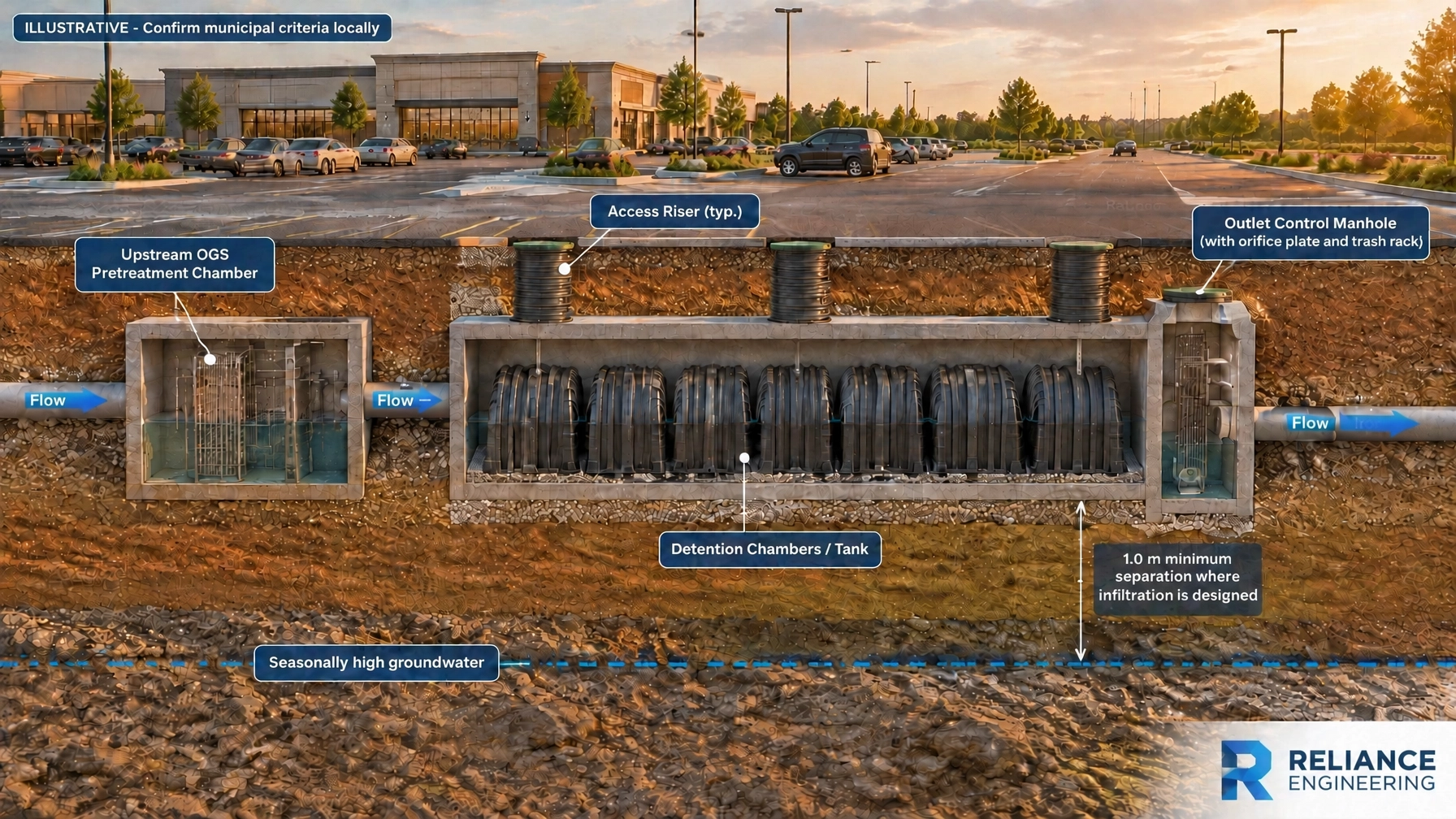
A professional Site Grading Plan can show proposed elevations, flow directions, and drainage routes. Where the correction affects storm infrastructure, the design may also need coordination with site servicing plans, a functional servicing report, or stormwater management reports in Ontario. The need for municipal approvals depends on the proposed work and local requirements.
For active construction, erosion and sediment controls may also be relevant to protect catchbasins and drainage systems. See our Erosion and Sediment Control Plans for information about practical controls coordinated with grading and site drainage.
Temporary response and permanent correction serve different purposes
Property teams may need to mark, restrict, or manage an affected area while a lasting correction is being assessed. Winter maintenance also remains important. But repeated ponding requires attention to the underlying grading and drainage performance; ongoing surface treatment alone does not establish positive drainage.
A coordinated engineering review can help define a buildable grading solution, identify related servicing considerations, and prepare permit-ready drawings where required. The objective is not simply to move water away from one spot, but to provide a clear, workable drainage route that fits the site and applicable review requirements.

Address commercial ponding before it becomes routine
If standing water regularly appears near parking stalls, pedestrian crossings, accessible routes, or storefront entrances, treat it as a property-management concern and an engineering issue. Record the location and recurrence, take appropriate interim safety steps, and seek a site-specific grading assessment.
Reliance Engineering provides practical designs, clear drawings, and approval support for commercial drainage and land development projects across Ontario. Contact us to discuss ponding solutions and commercial parking lot drainage in Ontario.
Professional credentials
Naresh Ochani, P.Eng. M.Eng.
PEO Certificate of Authorization: 100548882
Reliance Engineering Canada Limited
6850 Millcreek Dr, Mississauga, ON L5N 2H4
Phone: 647-385-6418
Email: [email protected]
Office hours: Monday to Friday 9:00 AM–5:00 PM; Saturday 12:00 PM–2:00 PM; Sunday Closed