
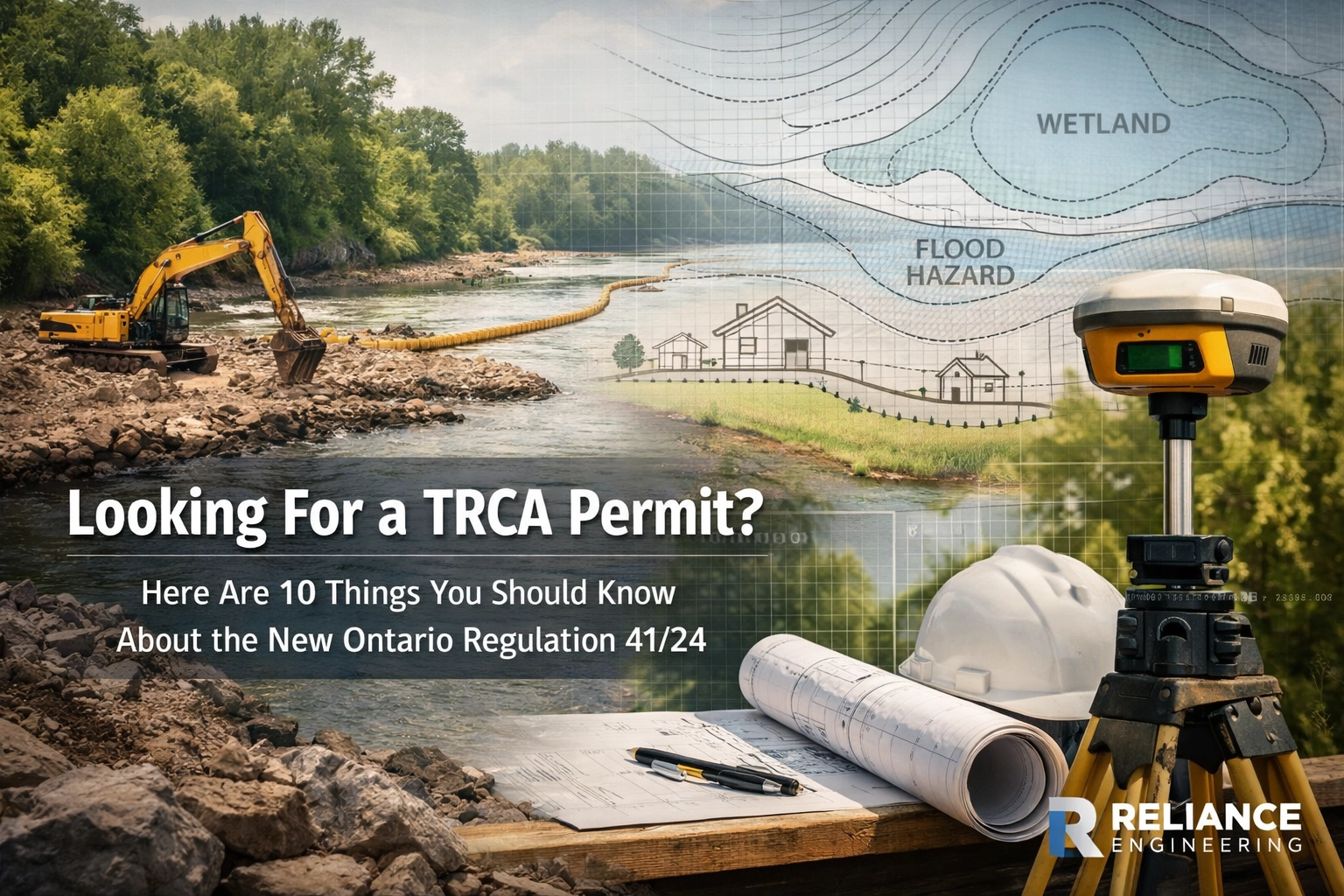
If you have been in the land development game in Ontario for more than a minute, you know that dealing with Conservation Authorities is less of a "walk in the park" and more of a "meticulous hike through a regulated floodplain." On April 1, 2024, the landscape shifted significantly. The old regime, specifically Ontario Regulation 166/06 for the Toronto and Region Conservation Authority (TRCA), was retired, making way for the new, streamlined, but arguably more rigid Ontario Regulation 41/24.
At Reliance Engineering, we spend our days (and occasionally our nights) navigating the intersection of municipal requirements and environmental constraints. Whether you are building a custom home near a ravine or developing a multi-unit complex, understanding these changes is the difference between a shovel in the ground and a stack of rejection letters on your desk.
Here are the 10 essential things you need to know about O. Reg. 41/24 and how it affects your TRCA permit process.
1. The Effective Date: April 1, 2024
This wasn’t an April Fool’s joke, though many developers wished it were. As of April 1, 2024, O. Reg. 41/24 is the law of the land for all 36 Conservation Authorities across Ontario. If your application was submitted on March 31, 2024, you are likely being assessed under the old rules. If you submitted on April 2, you are in the new world. This "Prohibited Activities, Exemptions and Permits" regulation is now the standard playbook for any interference with wetlands, shorelines, and watercourses.
2. The 21-Day "Complete Application" Clock
One of the most significant changes is the introduction of strict timelines for administrative review. Once you submit your application and pay the (not insignificant) fees, the TRCA has exactly 21 days to notify you in writing whether your application is "complete."
In the past, applications could sit in a bureaucratic limbo for weeks. Now, the clock is ticking. However, "complete" is a high bar. It means your Functional Servicing Report and Stormwater Management Plan must be airtight from day one.
3. Permit Validity: The 60-Month Rule
Under the new regulation, the maximum validity for a standard permit is 60 months (5 years). While this sounds like a long time, seasoned developers know that site conditions and municipal delays can eat through five years faster than a backhoe through soft clay. Extensions are possible, but only if the total period does not exceed that 60-month cap. Planning your construction phases is now more critical than ever to ensure you don’t end up with an expired permit mid-build.
4. Defined "Regulated Areas" and the "Prohibited Activities"
O. Reg. 41/24 is very specific about what constitutes a "prohibited activity." Essentially, if you are changing the signal of the land, grading, filling, or excavating, within a regulated area, you need permission. The regulation focuses on:
- Hazardous lands (flooding, erosion, dynamic beaches).
- Wetlands.
- Areas adjacent to watercourses.
If your project involves site grading plan precision, you must ensure your elevations respect the newly defined limits of these regulated zones.

5. Mandatory Programs and Services
Before this update, some argued that Conservation Authorities were overstepping their bounds. The new Act clarifies that administering these permits is a mandatory program. This means the TRCA is legally obligated to enforce these standards to ensure the control of flooding, erosion, and the conservation of land. From a developer's perspective, this means there is less "grey area" for negotiation; the rules are the rules.
6. The $50,000 Penalty Box
Compliance isn’t just a good idea; it’s a financial necessity. Under the new regulation, individuals undertaking work in regulated areas without a permit can face fines of up to $50,000. Corporations can face even steeper penalties. Beyond the fine, the TRCA has the power to issue a "stop work" order and require you to restore the land to its original state at your own expense. This is why having a robust Erosion and Sediment Control Plan is non-negotiable.
7. The Hierarchy of Legislation
Even if the TRCA says "yes," you aren't in the clear yet. O. Reg. 41/24 explicitly states that a permit from a Conservation Authority does not override other legislation. You still need to comply with:
- The Ontario Building Code.
- The Planning Act.
- The Lakes and Rivers Improvement Act.
This "regulatory lasagna" requires a coordinated approach. Your Site Plan Approval process must happen in lockstep with your TRCA submission to avoid conflicting requirements.

8. Minister’s Zoning Orders (MZOs) and the Greenbelt
There is a specific provision for developments authorized by a Minister’s Zoning Order (MZO). If your project is outside the Greenbelt and has an MZO, the Conservation Authority must issue the permit. However, they can still attach conditions to that permit to mitigate impacts on flooding or erosion. It’s a bit of a "forced marriage" between the province and the CAs, but it can accelerate timelines for priority projects.
9. Technical Excellence: SWM and LID
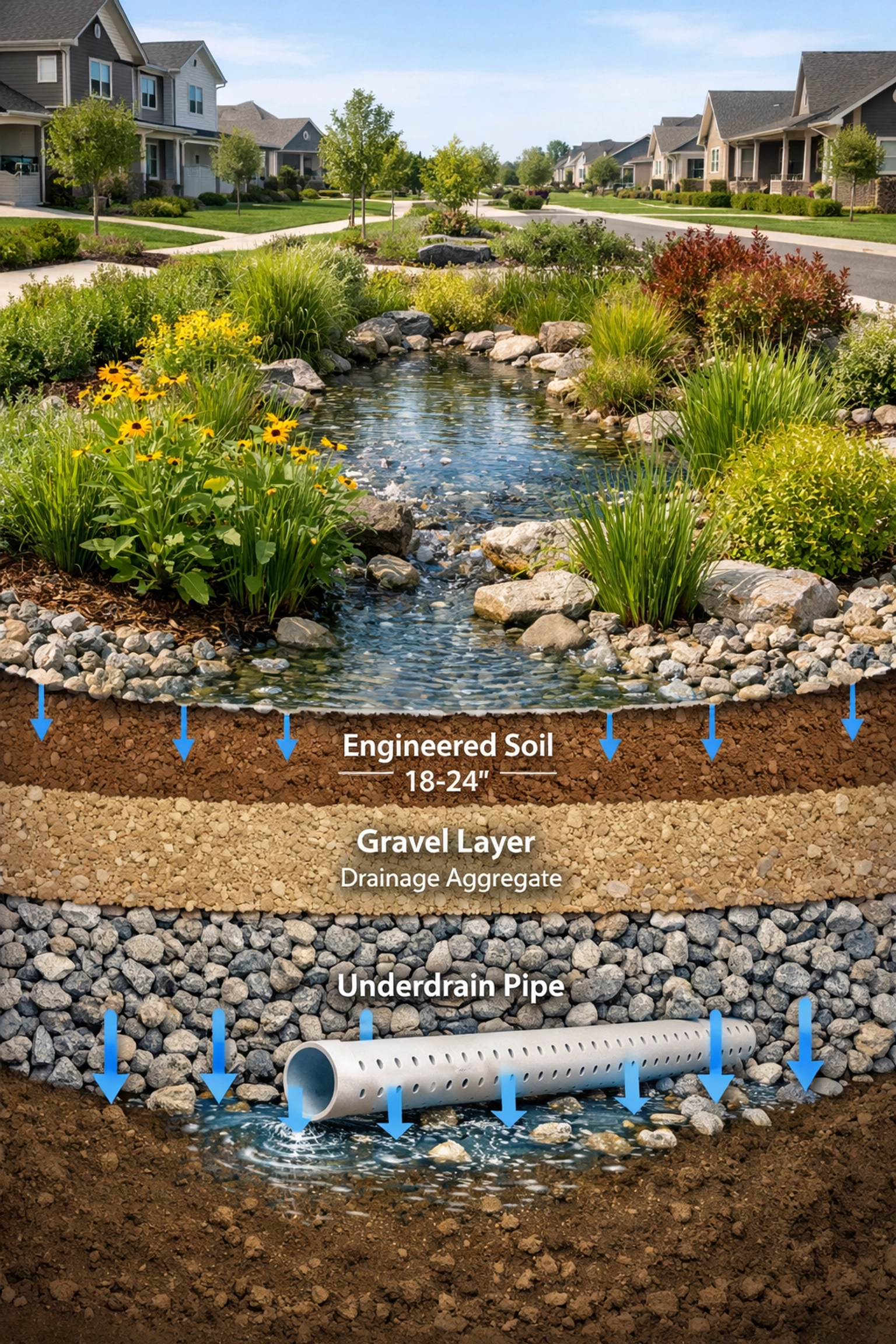
One of the key drivers for permit approval under 41/24 is the quality of your technical submissions. The TRCA is particularly focused on how your project manages water. This is where Low Impact Development (LID) and Stormwater Management come into play.
The new regulation places a heavier emphasis on the "conservation of land," which translates to: "don't let your runoff wash away the neighbour’s yard or the local creek bed." If your SWM report isn't precise, your 21-day "complete application" clock will never even start.
10. The Necessity of Pre-Consultation
While technically always recommended, pre-consultation is now practically mandatory for success under O. Reg. 41/24. Because the timelines are tighter and the standards more rigid, walking into a submission "cold" is a recipe for disaster. At Reliance Engineering, we use pre-consultation meetings to identify the "red line" limits and flood plain elevations before we even draw the first line of a lot grading plan.
Why Professional Oversight Matters in 2026
The shift to Ontario Regulation 41/24 represents a move toward greater accountability and faster administrative processing, but it also leaves very little room for error. If your engineering firm isn't up to speed on the technical nuances of these provincial changes, your project could face months of avoidable delays.
At Reliance Engineering, we specialize in making the complex simple. We provide:
- Rapid Turnaround: Draft plans in days, not weeks.
- Precision Engineering: Grading and servicing plans that meet TRCA and municipal standards on the first try.
- Compliance Expertise: Navigating the specific requirements of the new O. Reg. 41/24 across Ontario.
Don't let a permit application become a permanent roadblock. Whether you are dealing with multi-unit conversions or a complex industrial site, our team has the experience to get your project approved and moving.
Reliance Engineering: Your Partners in Land Development
Operational Hours: Monday – Friday: 9:00 AM – 5:00 PM
Service Area: Providing professional civil engineering services across Ontario.
Credentials: Licensed Professional Engineers (P.Eng) specializing in Land Development, Grading, Servicing, and Stormwater Management.
Contact us today to schedule a consultation regarding your TRCA permit or to review your current site plans.

Frequently Asked Questions
Q: Does O. Reg. 41/24 apply to small projects like garden suites?
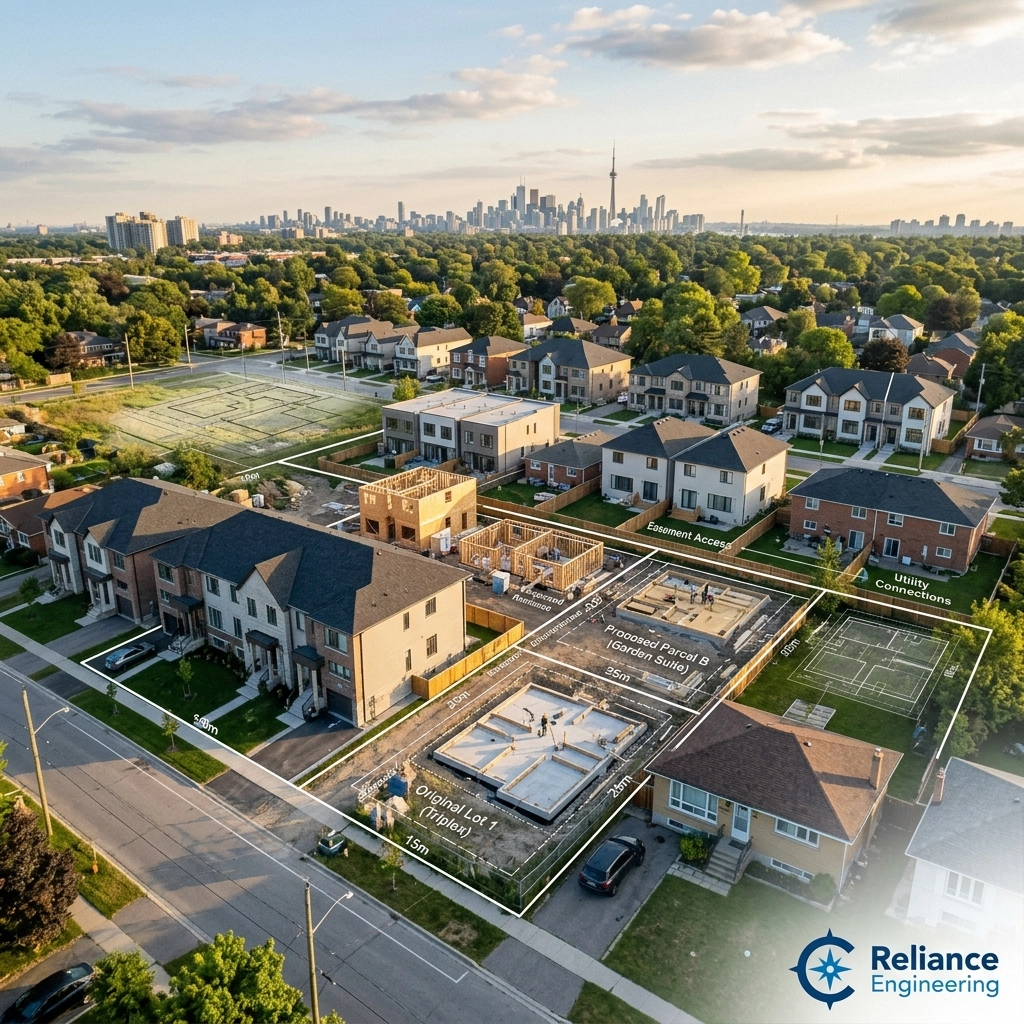
A: Yes, if the property is located within a TRCA regulated area (e.g., near a ravine or shoreline). You can learn more about garden suite approvals here.
Q: Can I appeal a TRCA decision under the new regulation?
A: Yes, if the authority refuses a permit or imposes conditions you find unacceptable, there is a process for a hearing before the Authority's Board and potentially an appeal to the Ontario Land Tribunal (OLT).
Q: How do I know if my property is "regulated"?
A: The TRCA provides online mapping tools, but these are for guidance only. A professional review of your property’s topography and proximity to natural features is the only way to be sure. Check our guide on site grading for more details on land assessment.




Leave A Comment