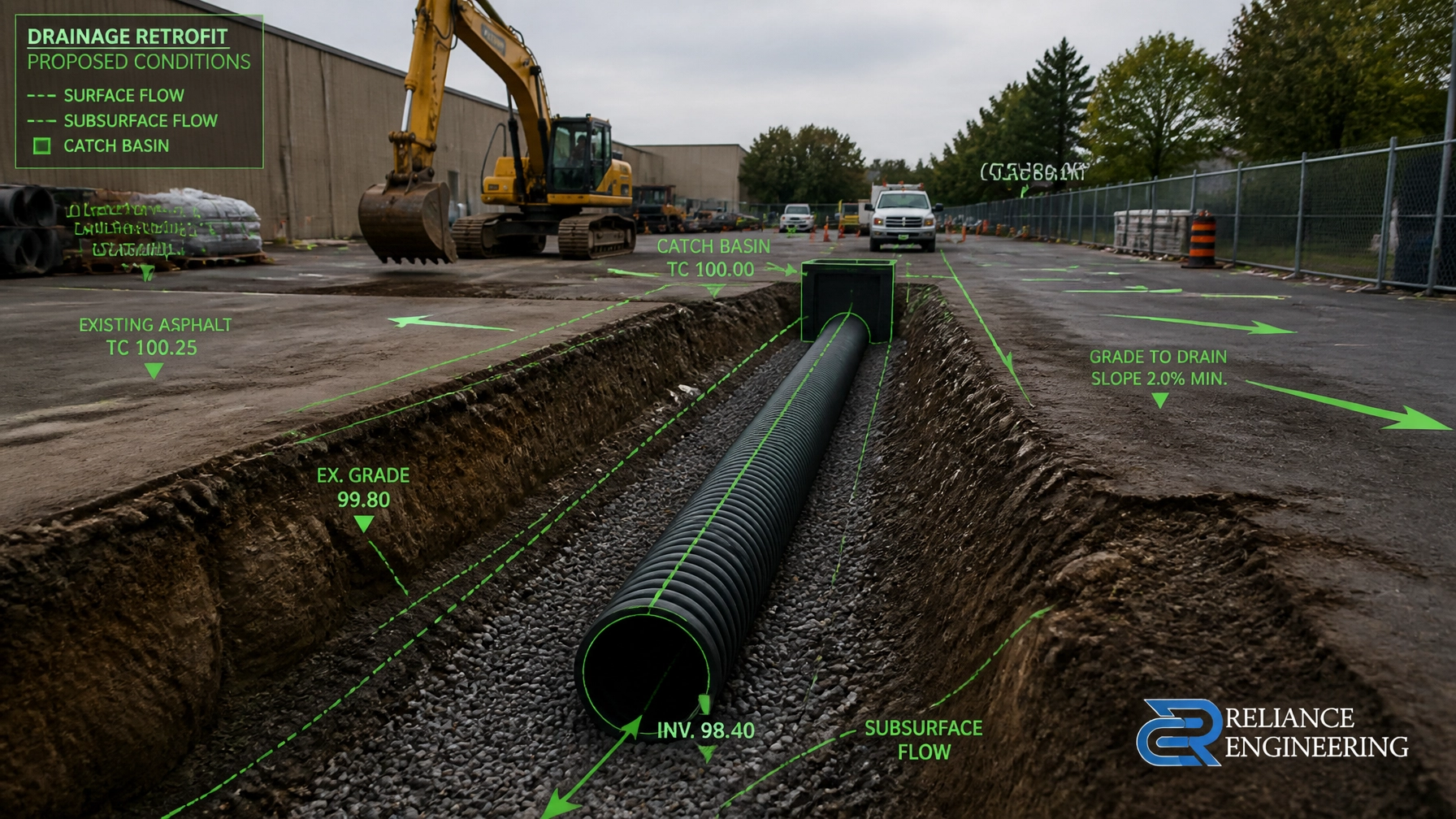
If you own or manage commercial property in Ontario, water is either your best friend or your most expensive enemy. A poorly executed drainage retrofit doesn't just cause puddles; it eats through asphalt, triggers municipal fines, and creates massive liability risks.
At Reliance Engineering, we’ve seen it all. With over 20 years of experience, we know that many "quick fixes" for parking lot ponding or basement dampness end up costing three times as much in the long run.
Stop throwing money at temporary patches. Here are the 7 most common mistakes we see in commercial site drainage retrofits: and exactly how to fix them.
1. Ignoring Current Municipal Standards
Municipalities across Ontario constantly update their stormwater bylaws. If you are retrofitting an older site, you cannot simply replace what was there in the 1990s.
The Mistake: Designing a retrofit based on outdated discharge rates or generic assumptions. This leads to rejected permits and expensive re-designs during Site Plan Approval.
The Fix: Always start with a review of local standards. Whether it’s Mississauga, Toronto, or Brampton, each city has specific criteria for peak flow control and water quality. Ensure your engineering team coordinates with the city early.
2. Treating a Retrofit Like a "Greenfield" Project
A "greenfield" (new build) starts with a blank slate. A retrofit does not.
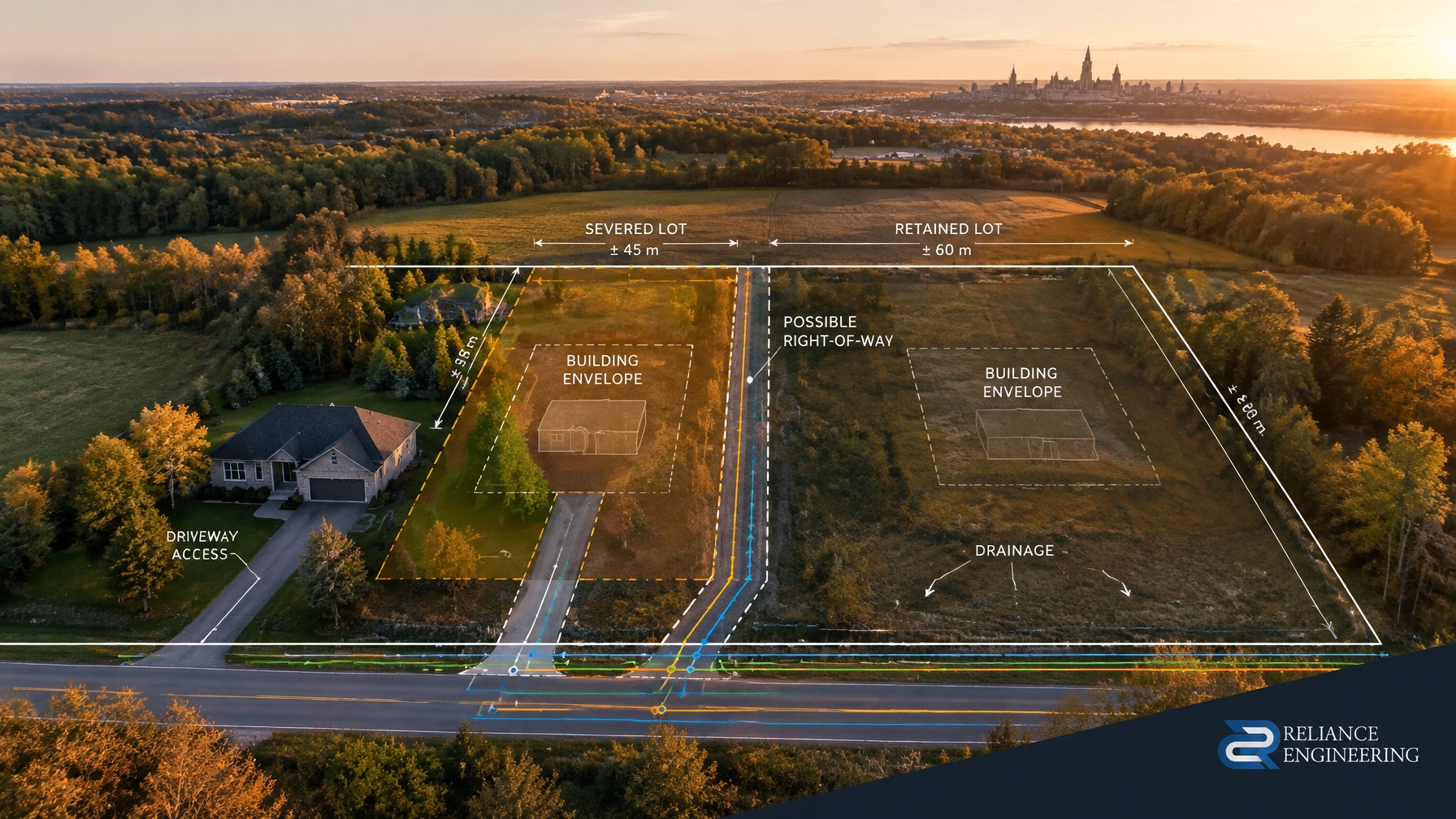
The Mistake: Failing to map existing underground utilities, compacted subgrades, or historical high-water tables. We’ve seen new catch basins installed directly over existing high-voltage lines because the designer didn't verify the site conditions first.
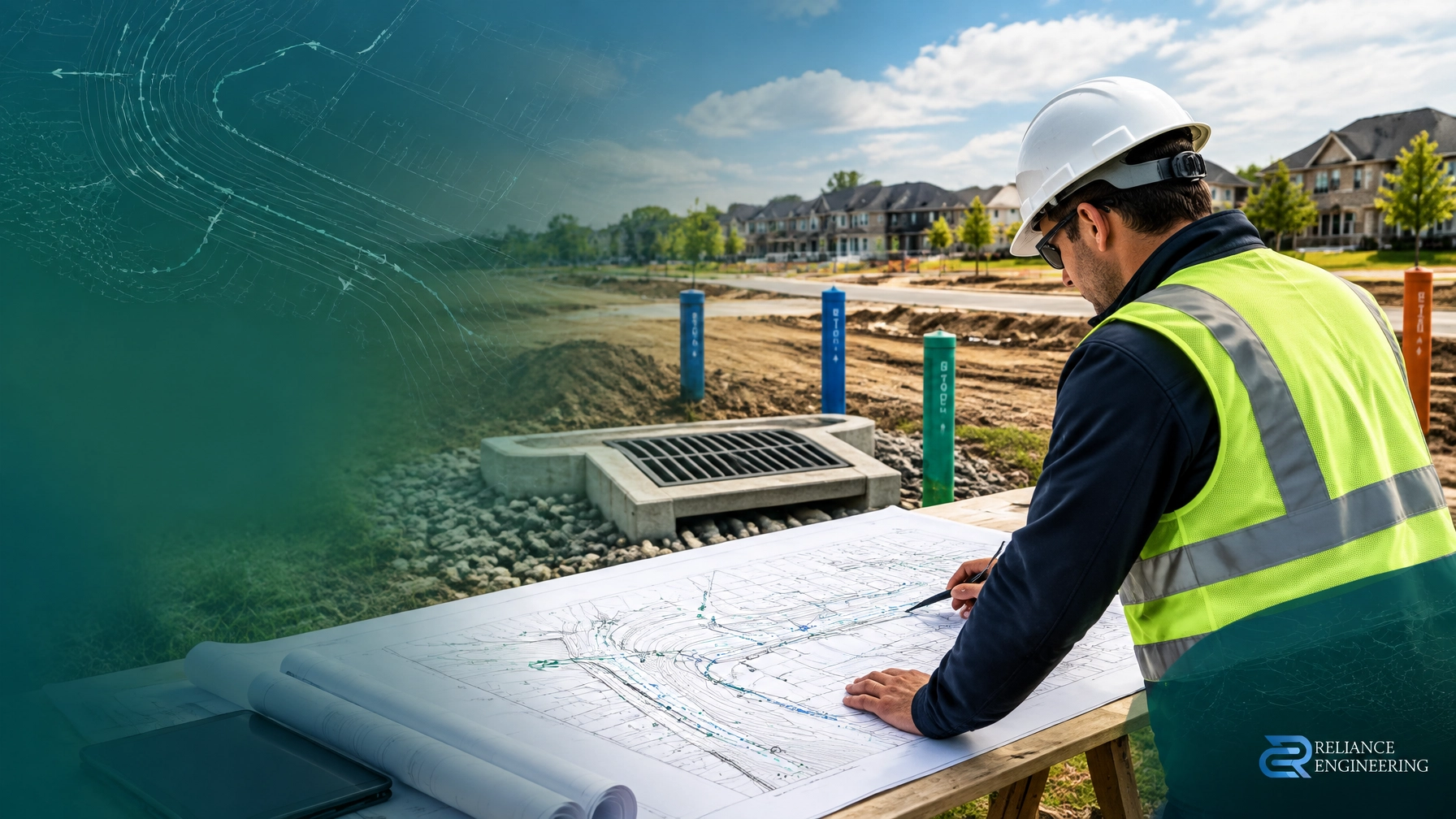
The Fix: Invest in a proper topographic survey and a Functional Servicing Report (FSR). You need to know what’s under the pavement before you start digging.

3. "Flat" Lot Syndrome: Inadequate Surface Grading
Gravity is the cheapest pump you’ll ever buy, but it only works if your slopes are correct.
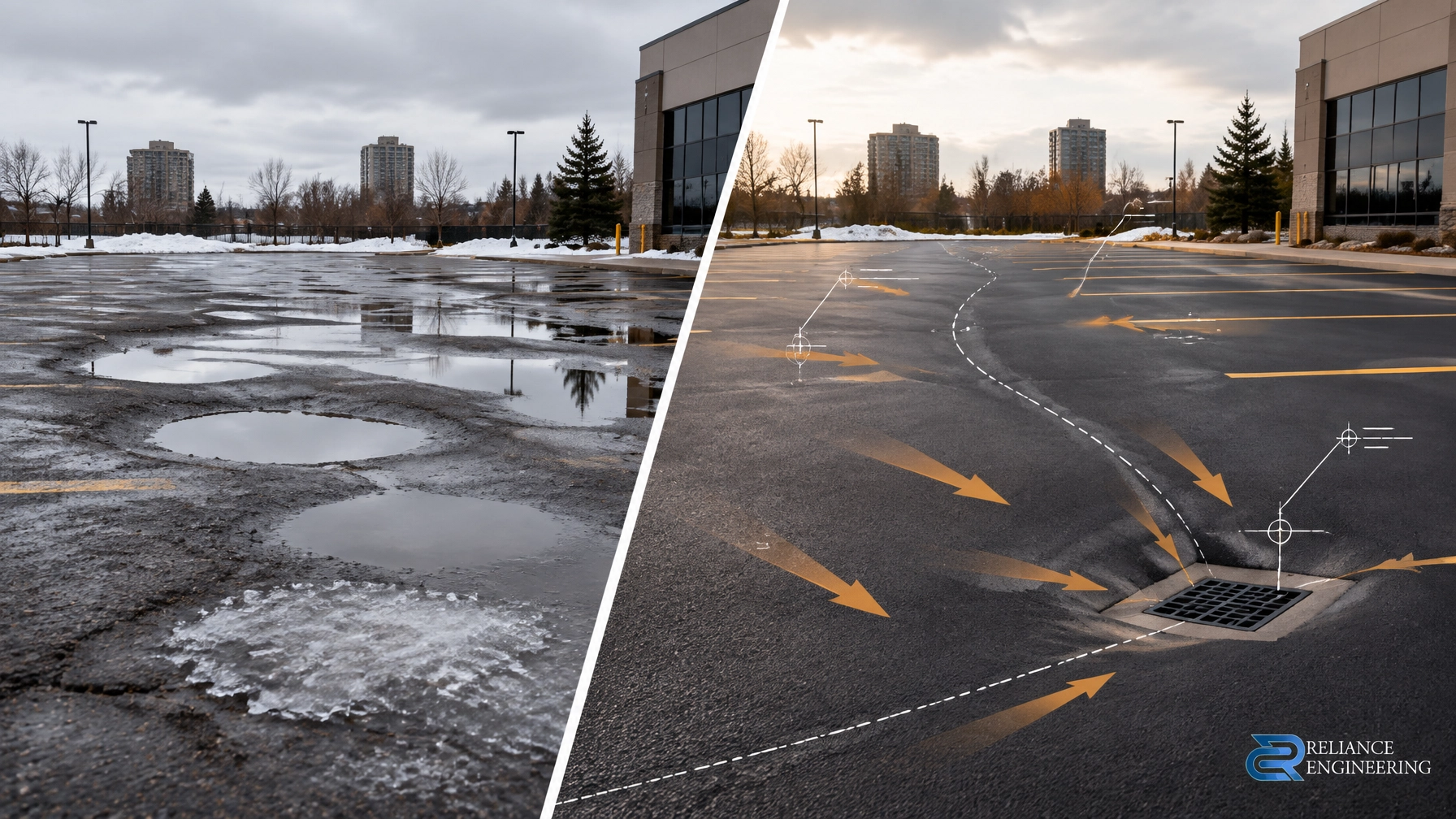
The Mistake: Many commercial parking lots are paved too flat. Anything less than a 1.5% to 2% slope often leads to ponding, which turns into ice sheets in the Ontario winter. This isn't just a nuisance; it’s a "slip and fall" lawsuit waiting to happen.
The Fix: Precision site grading plans are non-negotiable. If your asphalt is failing, don't just resurface it. Re-grade it to ensure water moves aggressively toward catch basins and away from building foundations.
4. Sizing for "Average" Storms (Instead of 100-Year Events)
Climate change has made Ontario’s rainfall patterns more intense. The "10-year storm" of the past is now happening every three years.
The Mistake: Using outdated Intensity-Duration-Frequency (IDF) curves. If your system is sized for "average" rain, it will fail during the next major downpour, flooding your loading docks or ground-floor retail units.
The Fix: Design for the "Major System." Ensure your Stormwater Management Report accounts for emergency overland flow routes. If the pipes get overwhelmed, where does the water go? It should go to the street, not your lobby.

5. Poor Inlet and Catch Basin Placement
It doesn't matter how big your pipes are if the water can't get into them.
The Mistake: Placing catch basins in "logical" geometric patterns rather than at the actual low points of the site. High-traffic areas, like delivery truck routes, often sink over time, creating new low points that existing inlets can't reach.
The Fix: Identify the natural "sags" in your topography. In a retrofit, you might need to add "trench drains" or additional catch basins to capture runoff from newly developed depressions. Check out our guide on fixing lot grading plans for more detail.
6. Overlooking Subsurface Water Management
Sometimes the problem isn't the water on top; it's the water underneath.
The Mistake: Only focusing on surface runoff. In many parts of Ontario, high groundwater or poor soil drainage can saturate the sub-base of your parking lot, causing the pavement to heave and crack regardless of how well the surface is graded.
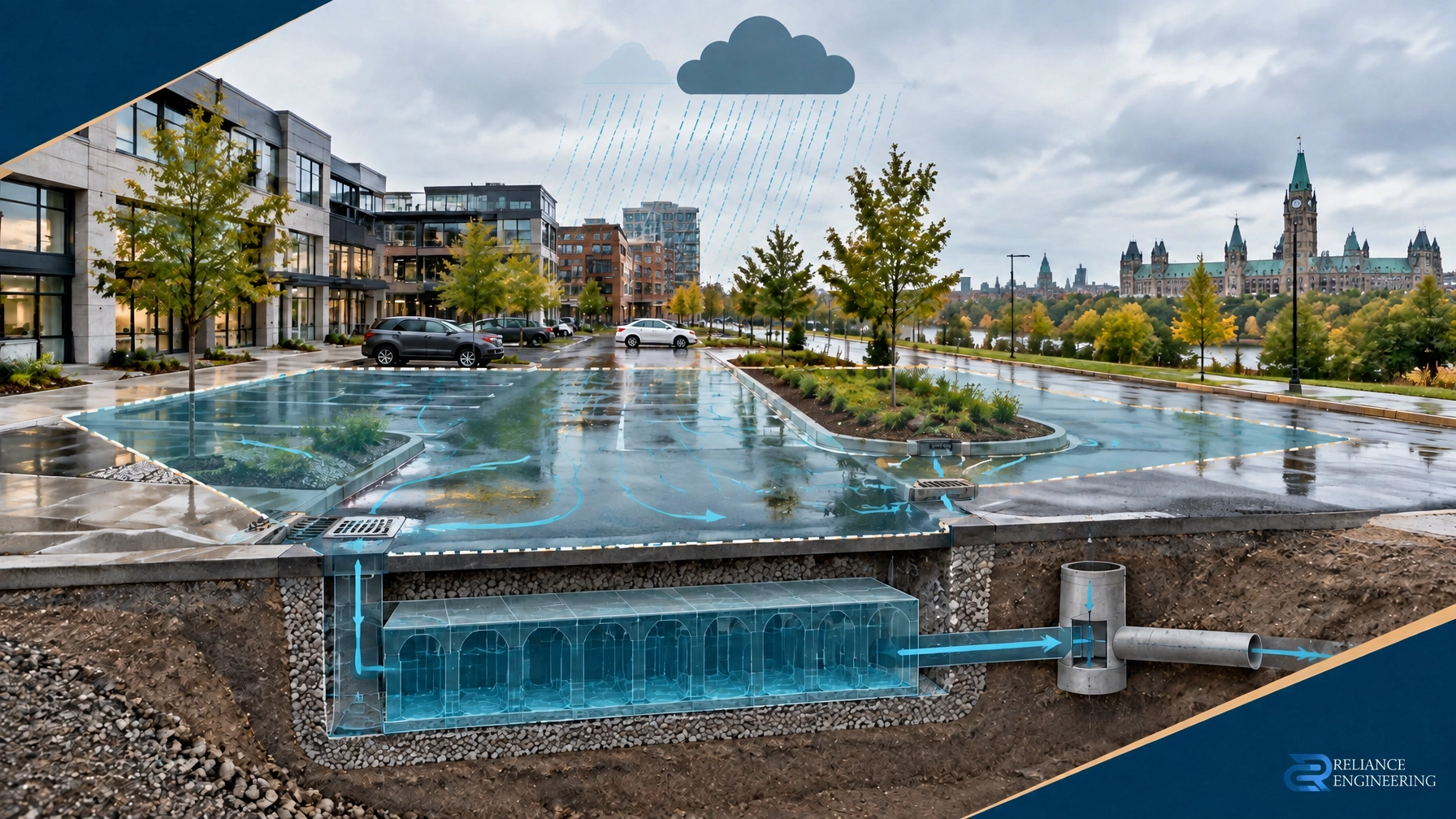
The Fix: Consider subsurface solutions like perforated sub-drains or French drains. In urban environments with limited space, underground detention tanks can manage massive volumes of water without sacrificing valuable parking spots.

7. Skipping the Maintenance Plan (O&M)
A drainage system is a machine. If you don't maintain it, it breaks.
The Mistake: Assuming the job is done once the asphalt is dry. Leaves, silt, and trash quickly clog commercial catch basins. If you have an Oil-Grit Separator (OGS) or an LID (Low Impact Development) feature, it requires regular cleaning to remain compliant with municipal permits.
The Fix: Create a formal Operations and Maintenance (O&M) plan. At Reliance Engineering, we provide the documentation you need to ensure your site remains functional and compliant for decades, not just months.
Why Choose Reliance Engineering?
Retrofitting a commercial site is a high-stakes game. You need a partner who understands the friction between municipal regulations and construction costs.
We provide:
- 20+ Years of Expertise: Led by Naresh Ochani, P.Eng. M.Eng.
- Rapid Approvals: We know exactly what Ontario municipalities want to see, often getting designs approved in just one submission.
- Full-Service Support: From Site Servicing Plans to building permit drawings.
Don't let a bad drainage plan sink your investment. Get it done right the first time.
Contact Information
Naresh Ochani, P.Eng. M.Eng.
Reliance Engineering
6850 Millcreek Dr, Mississauga, ON L5N 2H4
Phone: 647-385-6418
Email: [email protected]
Office Hours:
- Saturday: 12:00 PM – 2:00 PM
- Sunday: Closed
- Monday – Friday: By Appointment