In the competitive landscape of Ontario land development, time is your most expensive commodity. Whether you are working on a residential severance in Mississauga, a multi-unit conversion in Ottawa, or an industrial site plan in London, a rejected site grading plan is more than just a minor inconvenience. It is a full stop on your project timeline.
At Reliance Engineering, we have spent over 20 years navigating the shifting regulatory environment of Ontario. Since the 2026 updates to Bill 60 and the Provincial Planning Statement (PPS), municipal scrutiny has reached an all-time high. A "near-perfect" plan is no longer enough. Your grading design must be flawless, compliant, and integrated with broader engineering requirements.
Here are the top 10 reasons your Ontario site grading plan is getting rejected: and how you can fix it before your next submission.
1. The "Neighbor Effect": Improper Drainage Direction
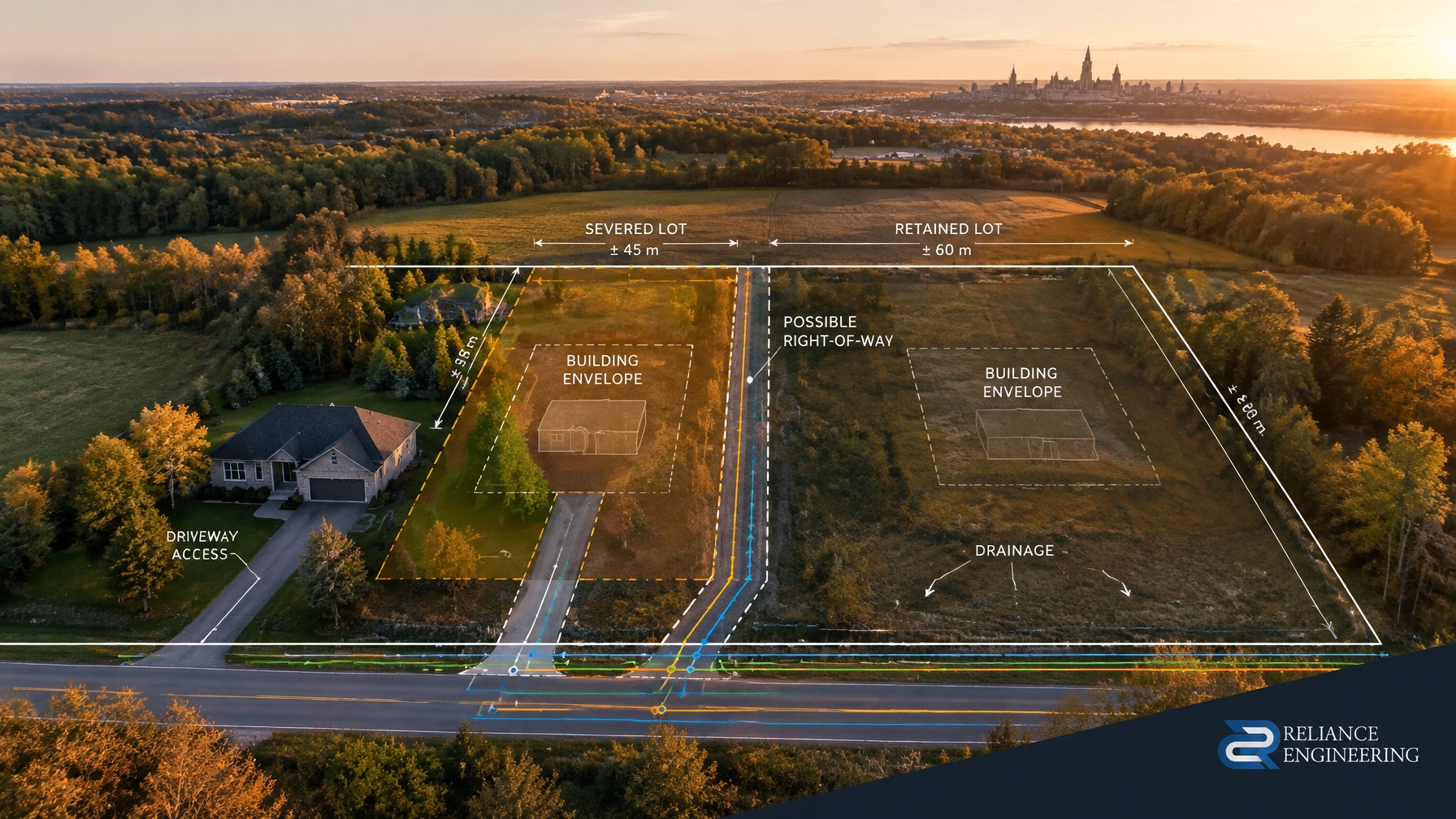
The most fundamental rule in Ontario civil engineering is simple: you cannot adversely affect your neighbor. If your grading plan shows a swale terminating at a property line or directs concentrated runoff toward an adjacent foundation, the municipality will issue an immediate rejection.
The Fix: Every grading plan must demonstrate that water is being directed toward a legal outlet: typically the municipal right-of-way (the street) or a registered drainage easement. We cross-reference your site elevations with adjacent property data to ensure the proposed drainage pattern maintains or improves existing conditions.
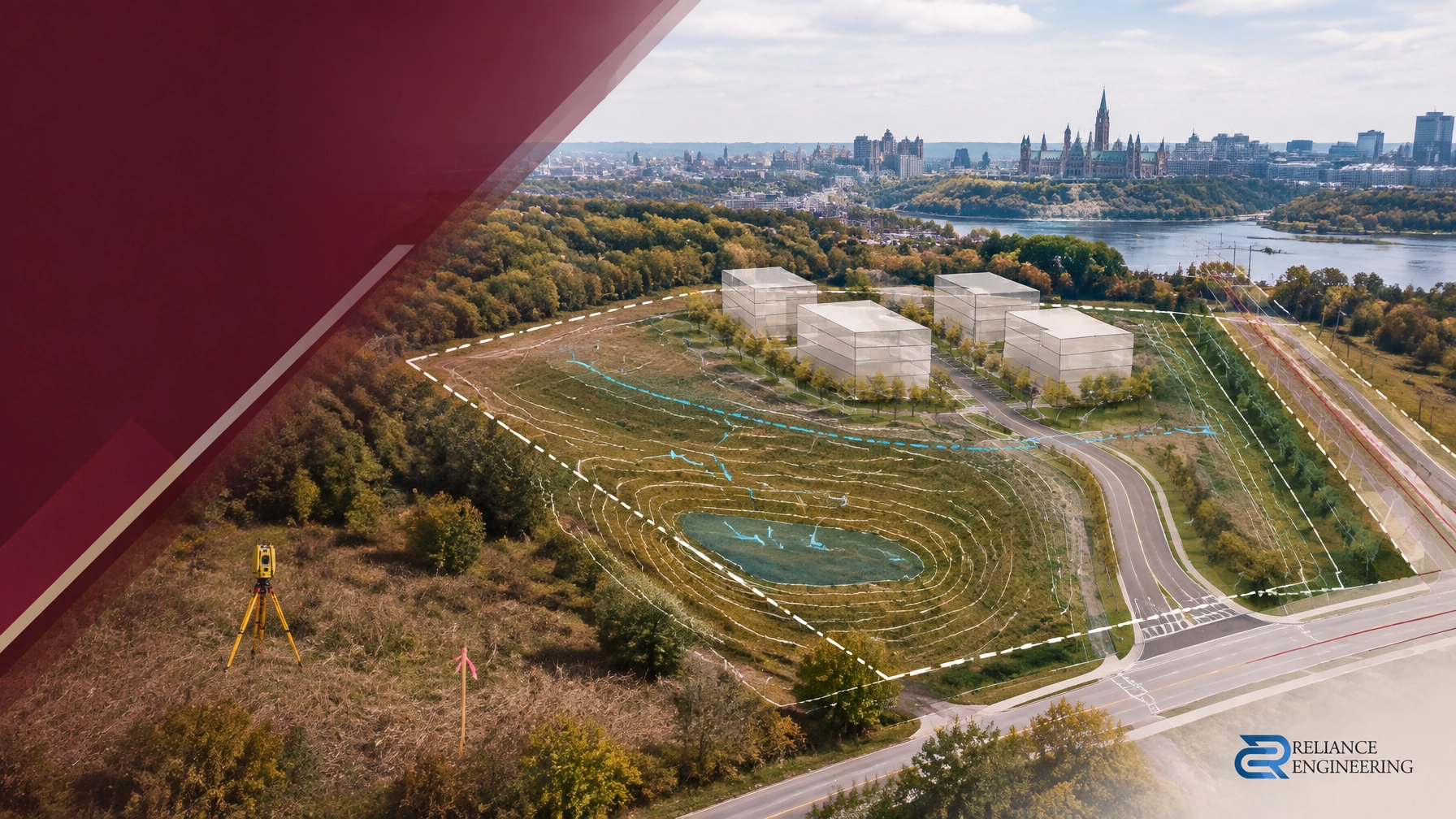
2. Using Outdated or Inaccurate Topographical Surveys
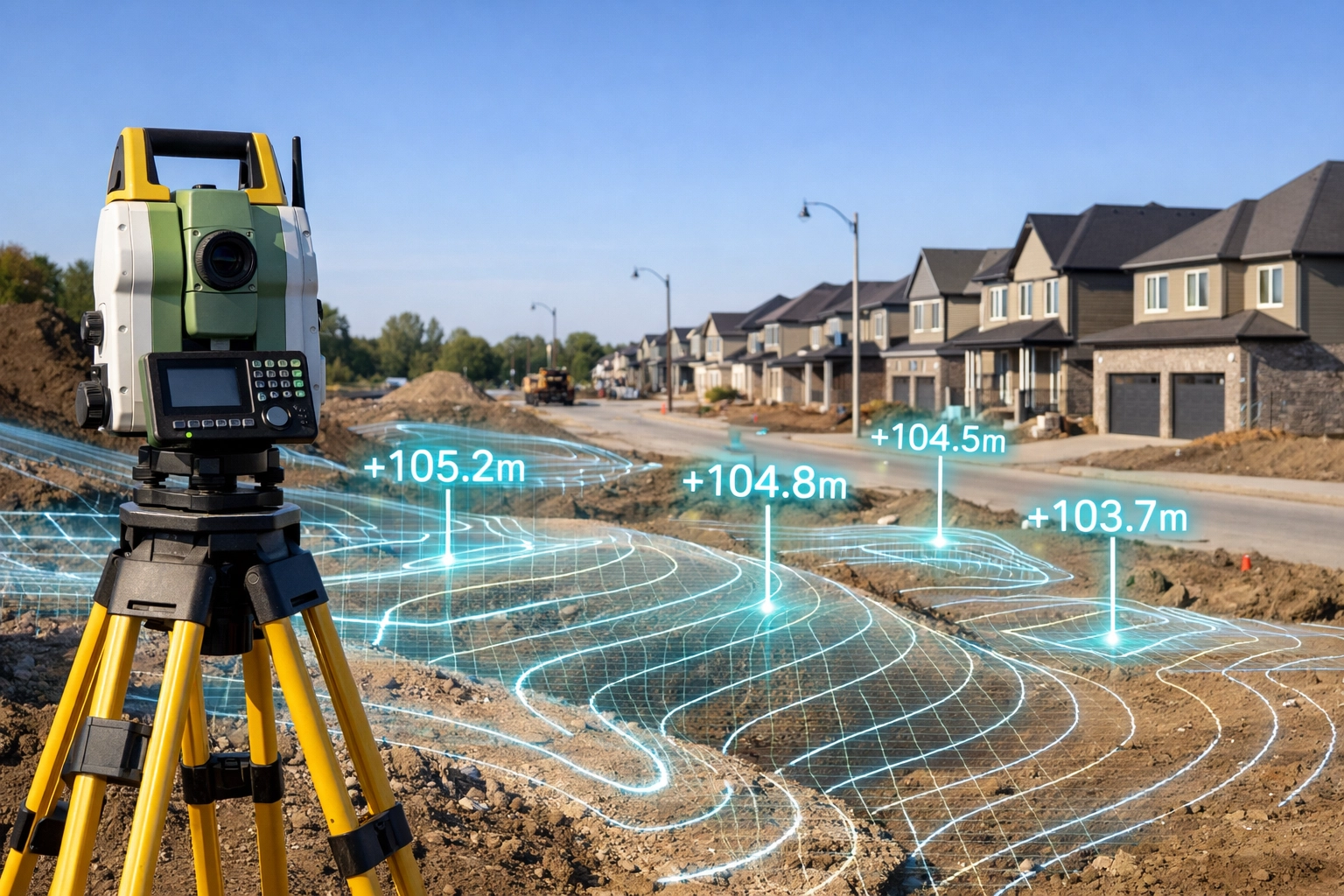
A site grading plan is a mathematical model built on survey data. If that data is old, your plan is flawed. We often see developers try to save costs by using surveys from five or ten years ago. In that time, neighbors may have built new structures, roads may have been repaved, and natural settlement has occurred.
The Fix: In 2026, precision is mandatory. Invest in a fresh topographical survey that captures current catch basin rim elevations, existing tree locations, and finished floor elevations of neighboring houses. At Reliance Engineering, we refuse to work on stale data because we know it leads to basement flooding and permit denials.
3. Inadequate Slopes (The 2% Minimum Rule)
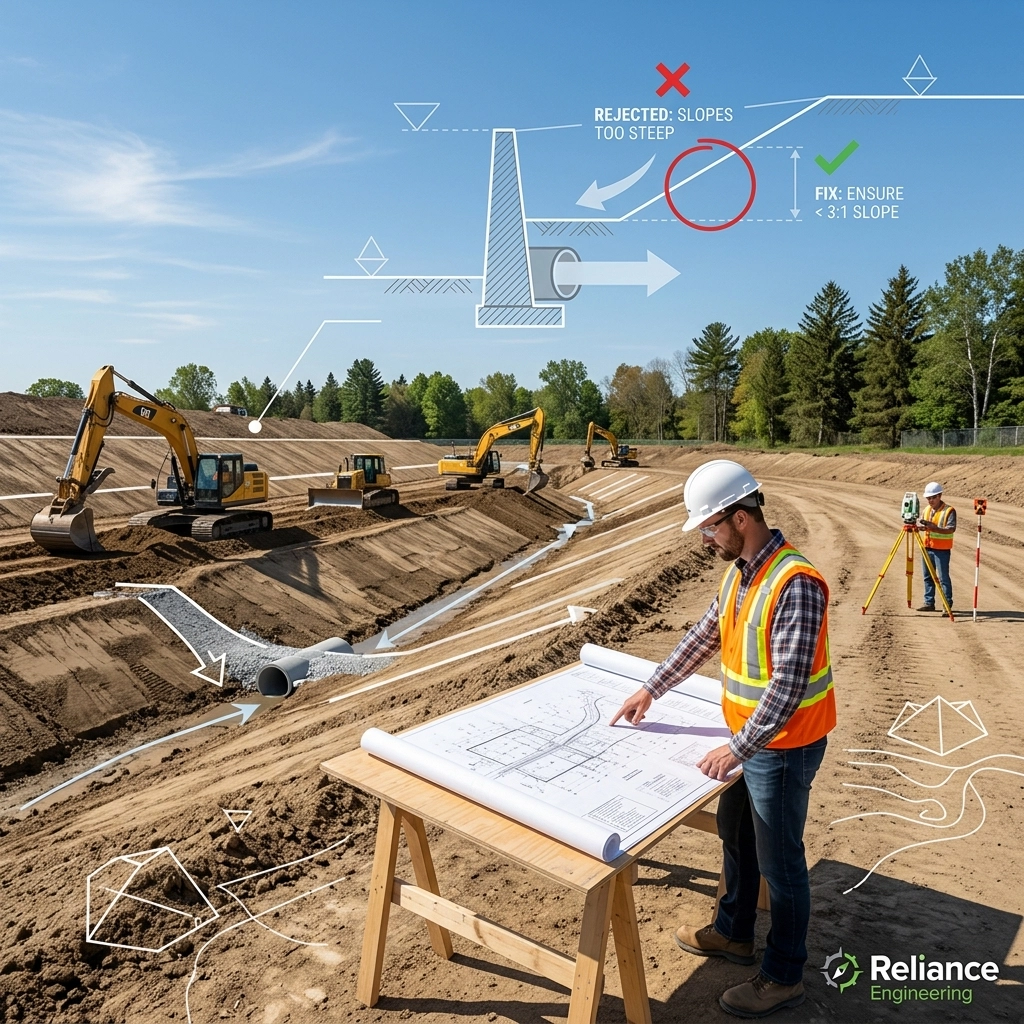
Municipalities across Ontario generally require a minimum 2% slope for grassed areas to ensure water actually moves. If your plan shows 1% or 1.5% because you are trying to minimize fill costs, the reviewer will flag it for potential ponding. Conversely, slopes exceeding 3:1 (33%) are often rejected for being too steep to maintain or prone to erosion.
The Fix: Precision matters. We calculate slopes to the decimal point to ensure they meet the sweet spot: steep enough to drain, but gentle enough for Ontario’s erosion and sediment control standards. Read more on how site grading plan precision matters to avoid these common pitfalls.
4. Failure to Integrate with Stormwater Management (SWM)
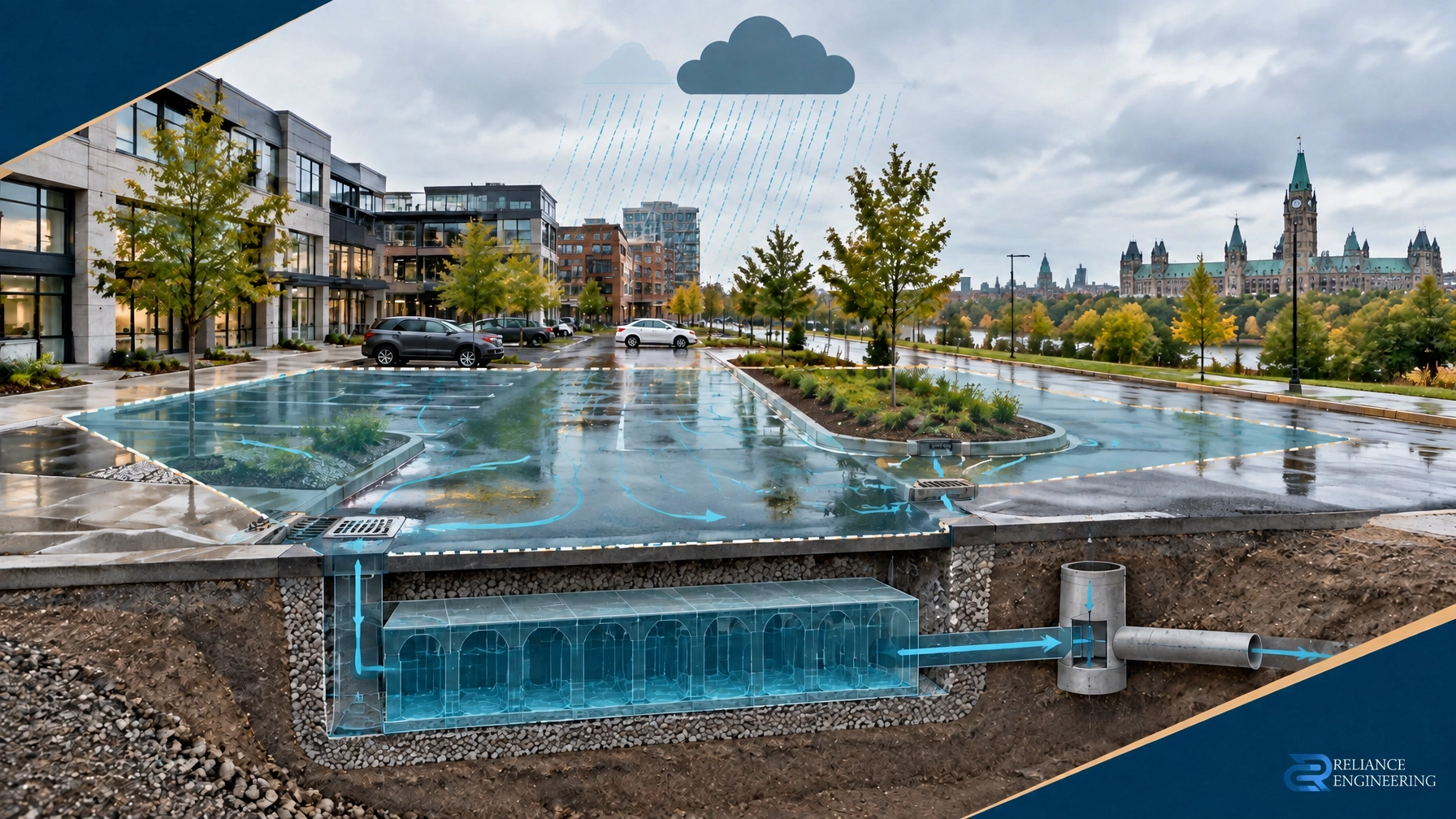
A site grading plan does not exist in a vacuum. It is the physical manifestation of your Stormwater Management Report (SWMR). If your grading plan shows water flowing one way, but your SWM report assumes it is being captured by a rain garden or infiltration trench elsewhere, the inconsistency will trigger a rejection.
The Fix: Ensure your grading design is synchronized with your Stormwater Management Report. This is especially critical in 2026, as Ontario municipalities now mandate Low Impact Development (LID) features like permeable pavers and bio-swales that require very specific inlet elevations.
5. Non-Compliant Walkways and Accessibility Issues
In Ontario, a walkway with a slope greater than 5% is technically a ramp. This triggers a cascading list of requirements under the Ontario Building Code, including handrails, landings, and specific surface textures. Many plans are rejected because the designer failed to account for the "rise and run" of the pedestrian path from the street to the front door.
The Fix: If the natural grade is too steep, we incorporate retaining walls or stepped landings. We verify that every path of travel meets municipal accessibility standards before the plan leaves our desk.
6. Retaining Wall Triggers and Structural Conflicts
If your site has significant elevation changes, you likely need a retaining wall. However, most Ontario municipalities require any wall over 0.6m (roughly 2 feet) or 1.0m to be designed and stamped by a structural engineer. If your grading plan relies on a 1.5m wall but doesn’t include structural details or a separate permit application, your submission is incomplete.
The Fix: Identify retaining wall needs early. We coordinate the grading design with structural requirements to ensure the wall doesn't encroach on property lines or interfere with underground site servicing.

7. Encroaching on Tree Protection Zones (TPZ)
Ontario municipalities: from Toronto to Ottawa: are increasingly protective of their tree canopies. If your grading plan requires a "cut" (removing soil) or "fill" (adding soil) within the Tree Protection Zone of a municipal or neighbor's tree, it will be rejected. Changing the grade around a tree's root system essentially suffocates it.
The Fix: Work with an arborist to establish the TPZ. We then design the grading to "feather" into the existing elevations outside the protection zone, often using specialized techniques or retaining walls to keep the grade stable without harming the root system.
8. Ignoring the Functional Servicing Report (FSR)
Your grading plan must align with your Functional Servicing Report (FSR). A common reason for rejection is showing a finished basement floor elevation that is too low to allow for gravity-fed sanitary connections to the municipal main.
The Fix: We perform a "servicing check" during the grading phase. If the municipal sewer is shallow, we must set the house higher, which in turn changes the entire grading profile of the lot. Getting this wrong leads to expensive sewage pump systems or, worse, a complete redesign after the foundation is poured.
9. Failure to Account for Bill 60 and Municipal Specifics
A grading plan for a garden suite in Toronto has different requirements than a subdivision lot in Peel Region. With the 2026 updates following Bill 60, many municipalities have streamlined their processes but tightened their technical standards. Using a generic template is the fastest way to get a "Request for Revision."
The Fix: We stay updated on the specific design criteria of every Ontario municipality. Whether it's the specific "Lot Grading Certificate" wording or the required scale of the drawing, we tailor every submission to the local reviewer's expectations. This is vital for Site Plan Approval success.

10. Working with Inexperienced Consultants
The "cheapest" engineering firm often ends up being the most expensive. Inexperienced consultants often miss the nuances of Ontario's Erosion and Sediment Control requirements or fail to account for how soil settlement will impact drainage over time.
The Fix: Partner with a firm that understands the intersection of civil engineering and land development. At Reliance Engineering, we don't just draw lines; we design buildable, compliant solutions that get approved the first time.
Why Choose Reliance Engineering?
With over two decades of experience across Ontario, Reliance Engineering provides more than just plans: we provide certainty. Our deep understanding of Site Grading, Site Servicing, and Stormwater Management ensures your project moves from the drawing board to the construction site without unnecessary delays.
If you are facing a rejection or starting a new project, don't leave your approvals to chance. Contact us today for a consultation.
Reliance Engineering
6850 Millcreek Dr,
Mississauga, ON L5N 2H4
Phone: 647-385-6418
Email: [email protected]
Contact Person:
Naresh Ochani, P.Eng. M.Eng.
Founder and Principal
Office Hours:
- Monday – Friday: 9:00 AM – 5:00 PM
- Saturday: 12:00 PM – 2:00 PM
- Sunday: Closed