If you have ever tried to get a building permit in the Greater Toronto Area (GTA), you know the "Stormwater Management" talk. It usually happens right after you submit your initial plans and the municipal reviewer comes back with a list of requirements that feel like they were written for a hydro-electric dam, not a single-family home or a mid-rise development.
At Reliance Engineering, we’ve spent over 20 years navigating the shifting sands of Ontario’s building codes and conservation authority requirements. One thing has become crystal clear: the days of just "piping it away" are over. Whether you are working in Toronto, Mississauga, or Vaughan, the focus has shifted toward Low Impact Development (LID).
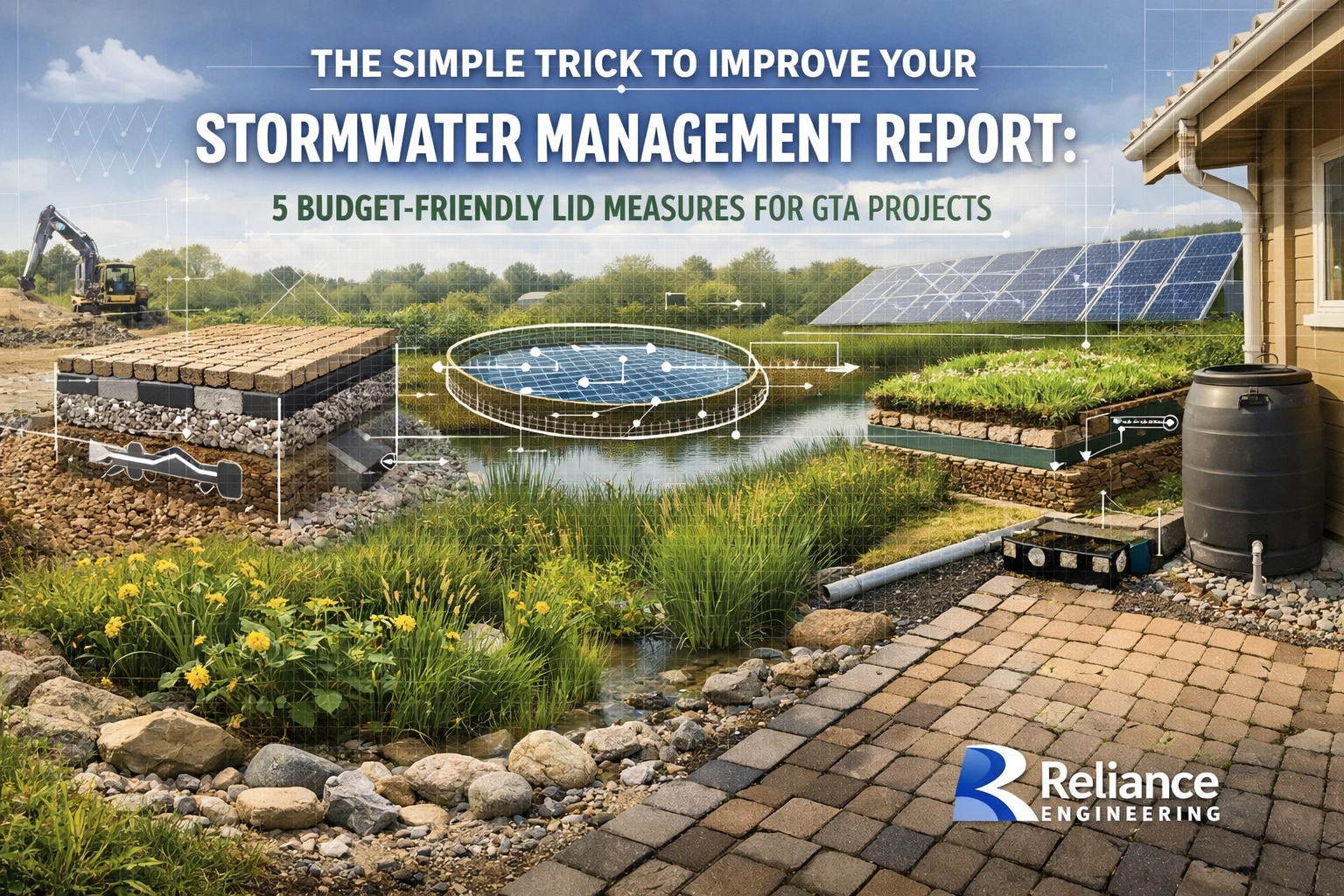
But here’s the secret: LID doesn’t have to be a budget-killer. In fact, if you use the right measures, you can actually save money on traditional infrastructure while making your Stormwater Management report look like a masterpiece to a municipal reviewer.
Our goal is always the "one-submission approval." Here is how you can use budget-friendly LID measures to get there.
Why Municipalities in the GTA Love LID
Before we dive into the "how," let’s talk about the "why." Agencies like the Toronto and Region Conservation Authority (TRCA) and Credit Valley Conservation (CVC) are obsessed with "Water Balance." They want the post-development site to act as much like the pre-development site as possible.
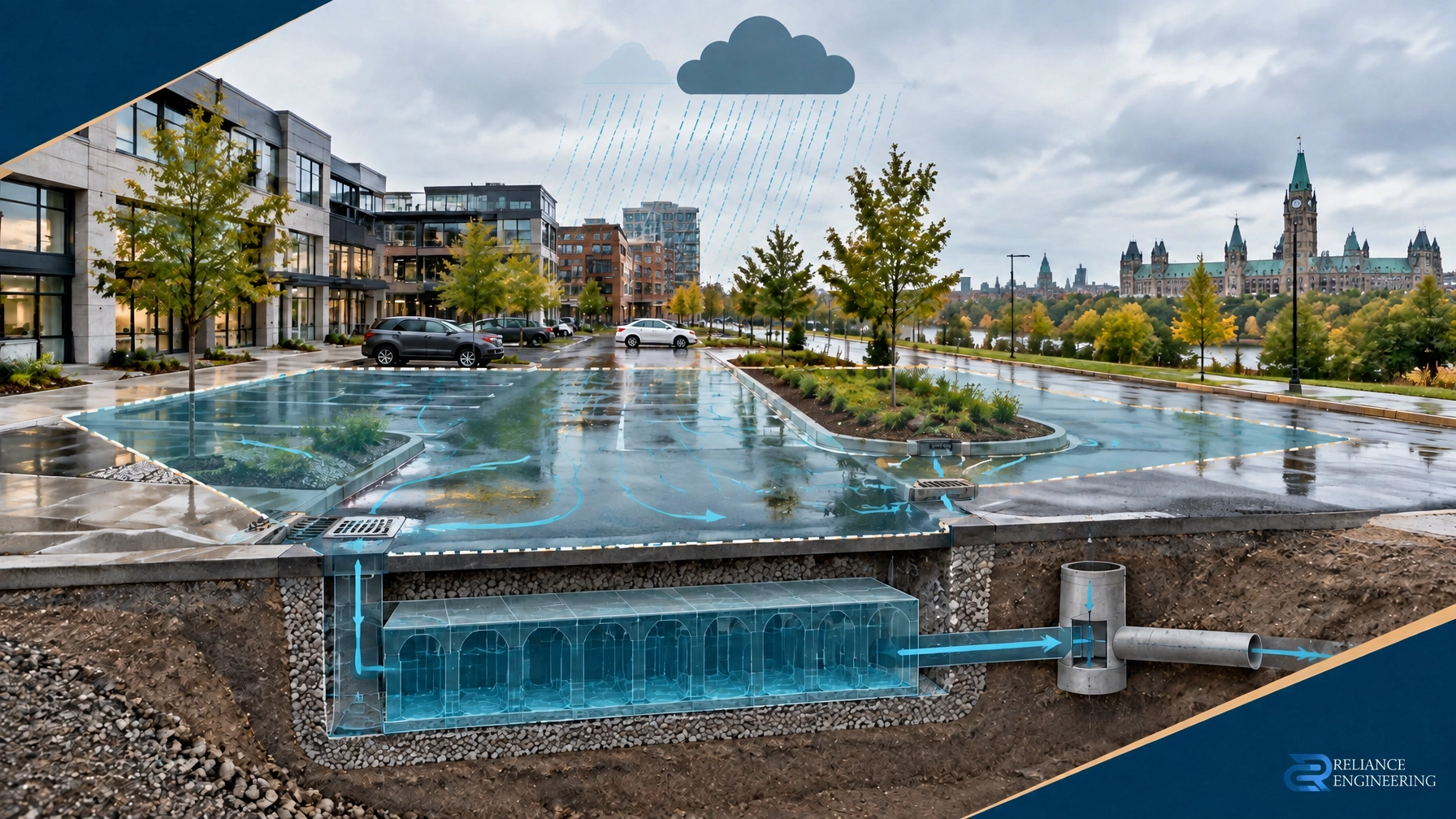
Traditional methods involve big concrete pipes and massive underground storage tanks. These are expensive, take up valuable real estate, and are a nightmare to maintain. LID measures, on the other hand, manage rain where it falls. By mimicking natural processes, you reduce the "peak flow" of water leaving your site.
When a reviewer sees a Functional Servicing Report that includes smart LID measures, it signals that the developer is proactive. It makes the approval process smoother, faster, and significantly less painful.
1. Permeable Pavement: The "Invisible" Infrastructure
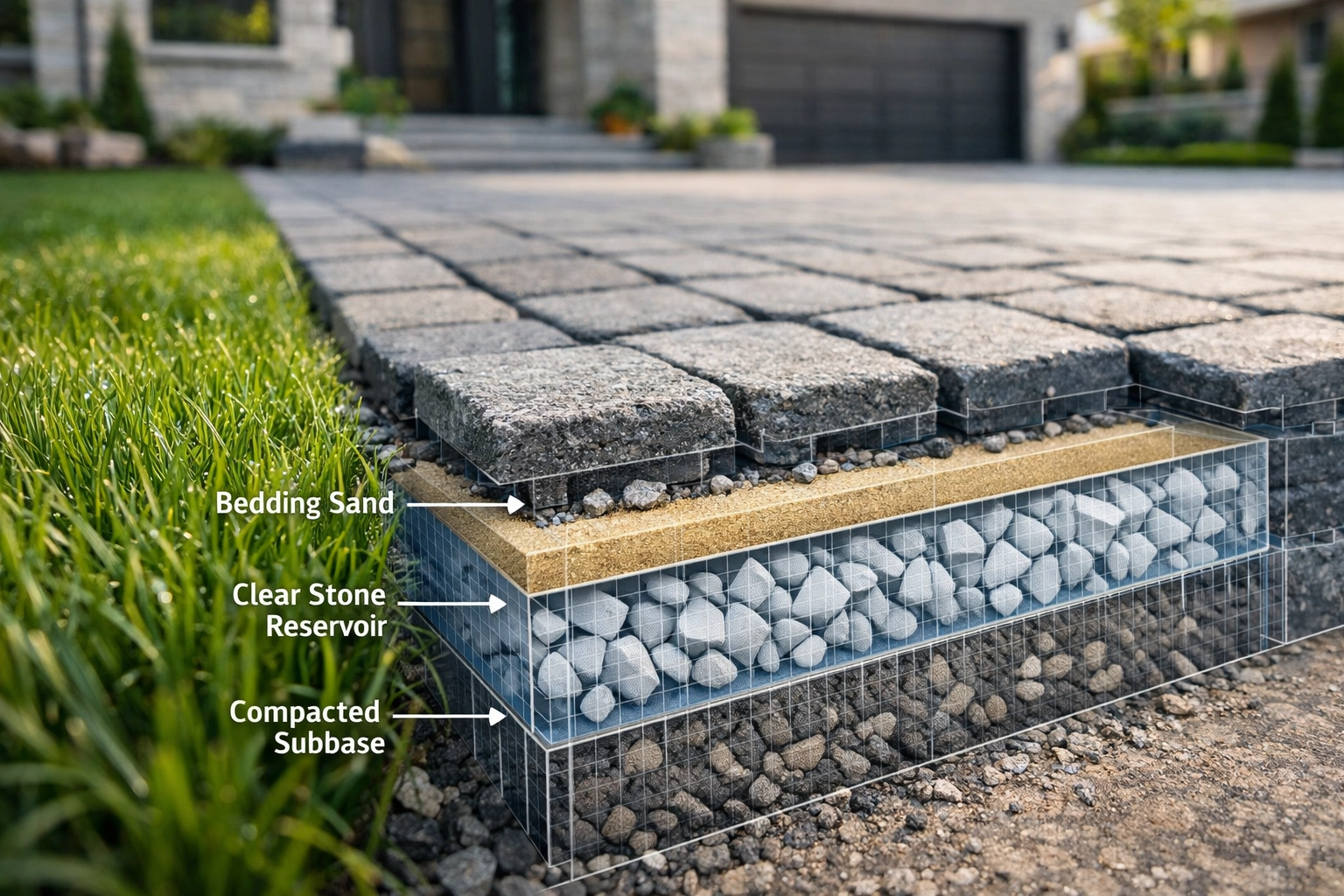
One of the easiest ways to improve your site’s water balance without sacrificing space is permeable pavement. Instead of a standard asphalt driveway or concrete walkway that acts like a slide for rainwater, permeable surfaces allow water to soak through into a stone reservoir below.
Why it’s budget-friendly:
While the initial material cost might be slightly higher than standard asphalt, you save a fortune on catch basins and storm piping. By reducing the amount of "impervious" surface area in your calculations, you can often downsize other, more expensive storage requirements.
For projects like the 35 Wabash Avenue Townhomes, every square inch of surface counts. Using permeable solutions allows for higher density without the need for massive underground vaults.
2. Enhanced Grass Swales: The Old-School Hero
If you have a bit of space on the property: typical for residential lot grading or suburban developments: the humble grass swale is your best friend. But we aren’t just talking about a ditch. We are talking about "Enhanced Grass Swales."
These are specially engineered channels designed to slow down water, filter out pollutants, and encourage infiltration.
The Simple Trick:
Add a "check dam" (a small mound of stones or wood) every few meters in the swale. This forces the water to pool slightly and soak in rather than racing toward the street. In your Site Grading Plan, these swales can drastically reduce the required size of your downstream storm system.
3. Rain Gardens and Bioretention Cells
A rain garden is essentially a shallow depression planted with native, water-tolerant plants. It’s designed to capture runoff from roofs or driveways and let it soak into the ground within 24 to 48 hours.
How it helps your SWM Report:
Bioretention is the "Gold Standard" for GTA reviewers. It handles both quantity (volume) and quality (filtering out grit and oil). If you include a well-designed bioretention cell in your Storm System Design, you are essentially checking every box the municipality has.
Budget Tip:
Don’t over-engineer the plants. Use local, hardy species that don’t require a specialized landscape architect. A simple, functional rain garden is often enough to satisfy the "Quality Control" requirements of your permit.
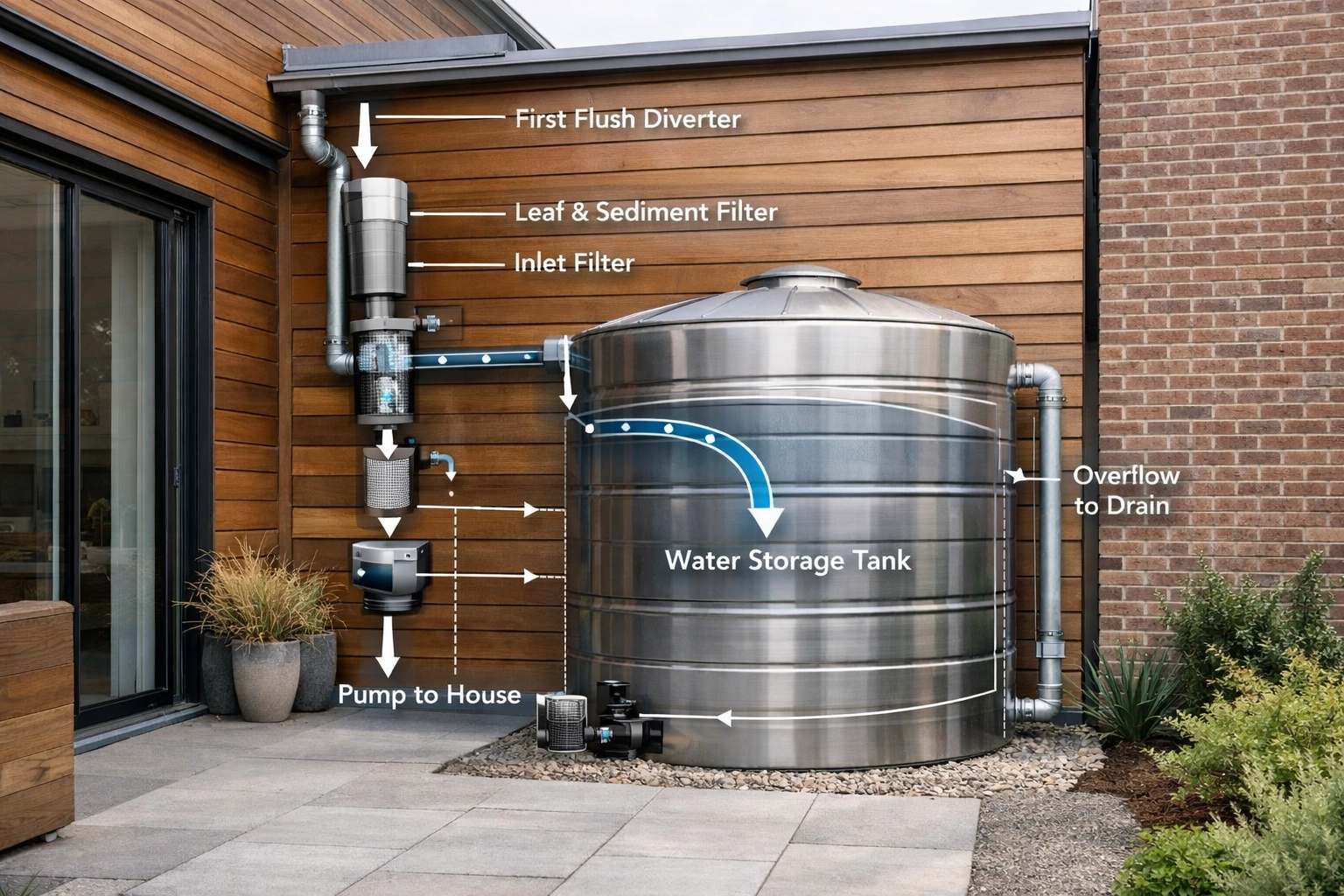
4. Rain Barrels and Cisterns: Simple but Effective
For smaller residential projects or tight urban infills, you might not have room for a swale or a garden. This is where rainwater harvesting comes in.
A rain barrel is the "homeowner version," but for developers, we look at larger cisterns. These can be connected to the building’s irrigation system or even used for "greywater" (like flushing toilets).
Why it works for approvals:
By capturing the first 5mm to 10mm of a rainfall event, you are removing that volume entirely from the municipal storm sewer system. This is a huge win in your Stormwater Management Report. It shows you are reducing the load on city infrastructure, which is exactly what the City of Toronto wants to see for projects like the 24 Howard Park Avenue redevelopment.
5. Perforated Pipe Infiltration Trenches
This is the "secret weapon" for budget-conscious developers. Imagine a standard PVC storm pipe, but it has holes in it and is wrapped in a "sock" of geotextile fabric, surrounded by clear stone.
As water travels through your Sanitary Sewer Design and storm systems, these perforated sections allow a portion of the clean rooftop runoff to leak back into the ground.
The Budget Advantage:
This happens underground, so it doesn’t take up any surface land. You can run these trenches under your lawn or even under a parking lot. It’s one of the most cost-effective ways to meet "Infiltration" targets without building a standalone pond.
The Reliance Engineering Advantage: 20 Years of "One-Submission" Goals
Designing an LID measure is easy. Designing one that is cost-effective, easy to build, and actually gets approved by the municipality on the first try? That’s where the experience comes in.
At Reliance Engineering, we don’t just draw lines on a page. We look at the topography, the soil conditions (which vary wildly across the GTA from the clay of Milton to the sand of Scarborough), and the specific quirks of each local municipality.
When we put together your Grading Plans, we aren't just looking for a permit; we are looking for a buildable solution that doesn't blow your budget. We’ve done this for massive hospital redevelopments, like the Etobicoke General Hospital, and for private residential homeowners.
The "One-Submission" Strategy
The longest part of any land development project is the "Back and Forth" with the city.
- Submission 1: Reviewer finds a flaw.
- Wait 6 weeks.
- Submission 2: Reviewer finds a new flaw.
- Wait 6 weeks.
Our goal is to eliminate that loop. By using proven, budget-friendly LID measures and backing them up with rigorous engineering calculations, we aim to get your Site Servicing Plan approved the first time.
Summary: How to Win Your Next Permit
If you are planning a project in the GTA, don't look at Stormwater Management as a hurdle. Look at it as an opportunity to simplify your site design.
- Start Early: Don't leave the SWM report to the last minute.
- Think "Green" to Save "Gold": LID measures like swales and perforated pipes are often cheaper than concrete tanks.
- Choose the Right Partner: Work with a firm that knows the local GTA landscape inside and out.
Are you ready to get your project moving without the headache of endless municipal revisions? Whether you need a simple grading plan or a complex functional servicing report, we are here to help.
Contact Naresh Ochani and the team at Reliance Engineering today. Let’s get your project approved, on time and on budget.
Reliance Engineering
Specializing in Land Development, Grading, Servicing, and Stormwater (Ontario).
Contact Us | Our Services | About Us
Office Hours:
Monday – Friday: 9:00 AM – 5:00 PM
Saturday – Sunday: Closed
20+ Years of Experience in the GTA. Your Partner in Civil Engineering Excellence.