Getting a building permit in the Greater Toronto Area (GTA) can sometimes feel like trying to solve a puzzle where the pieces keep changing shape. You’ve got your architectural visions ready, your contractor is on standby, and then the municipality hits you with a request for a "Low Impact Development" (LID) design or a comprehensive Stormwater Management report.
For many homeowners, this is where the stress begins. LID sounds complicated, expensive, and like another layer of red tape. But here’s the secret: when done correctly, LID is actually your best friend. It manages water runoff naturally, protects your property from flooding, and satisfies the city’s environmental requirements.
At Reliance Engineering, our goal is simple: we want you to get your approval on the very first submission. With over 20 years of experience led by our founder and Principal Engineer, Naresh Ochani, we’ve learned exactly what municipal reviewers in Toronto, Markham, Mississauga, and Vaughan are looking for.
Here is how you can navigate the LID process without breaking the bank or losing your mind.
What Exactly is LID (And Why Does the City Care?)
In the old days of civil engineering, the goal was to get water off a property as fast as possible through pipes and sewers. Today, because our cities are getting denser and storms are getting more intense, the GTA's infrastructure can’t keep up.
LID (Low Impact Development) is a design strategy that mimics the natural water cycle. Instead of sending all that rain into the city’s overburdened pipes, we design systems that allow the water to soak into the ground, filter through soil, or evaporate.
If you are building an extension, a garden suite, or a new custom home, the city wants to ensure your project doesn’t contribute to downstream flooding. That is why they require an LID plan as part of your site-servicing plan.
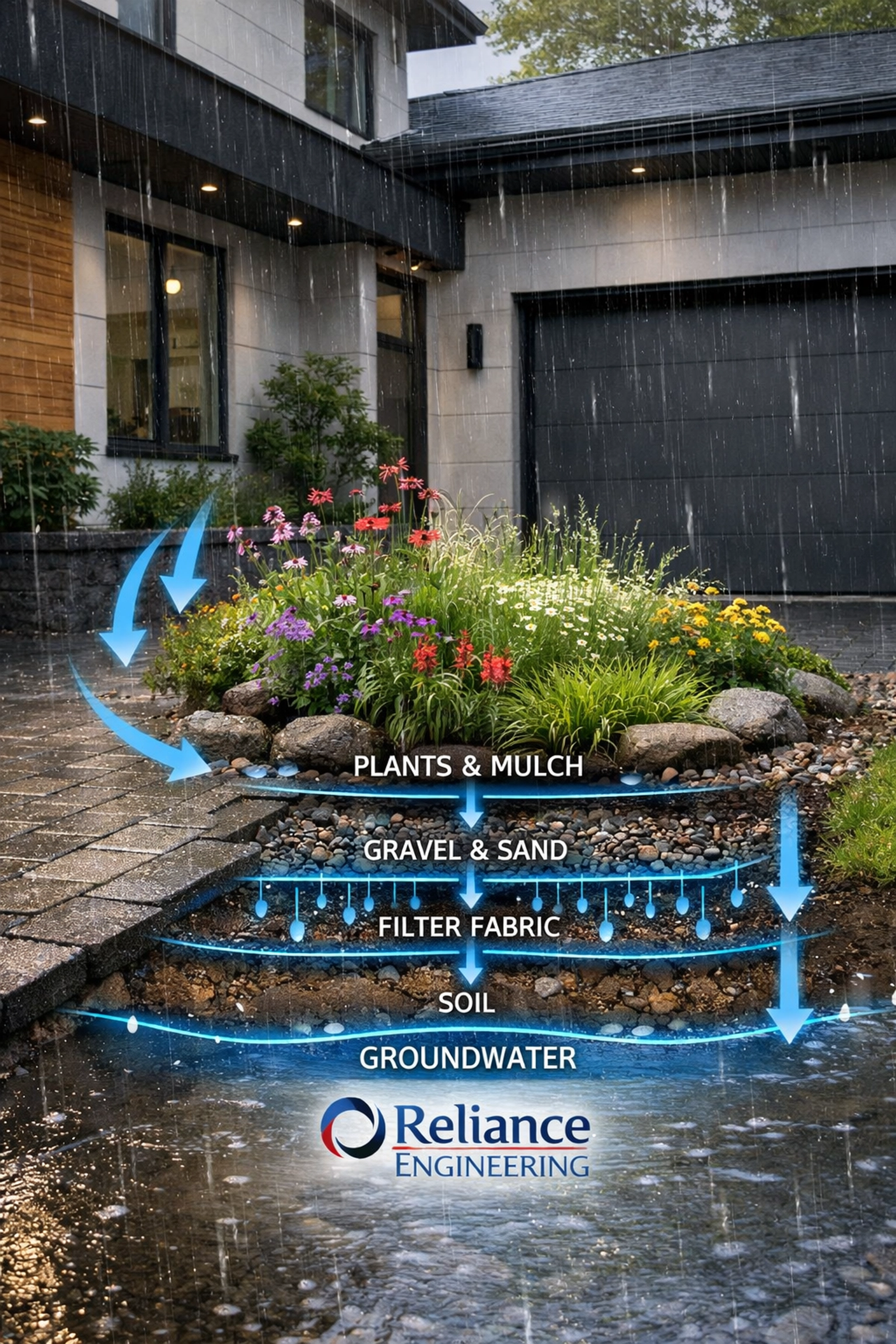
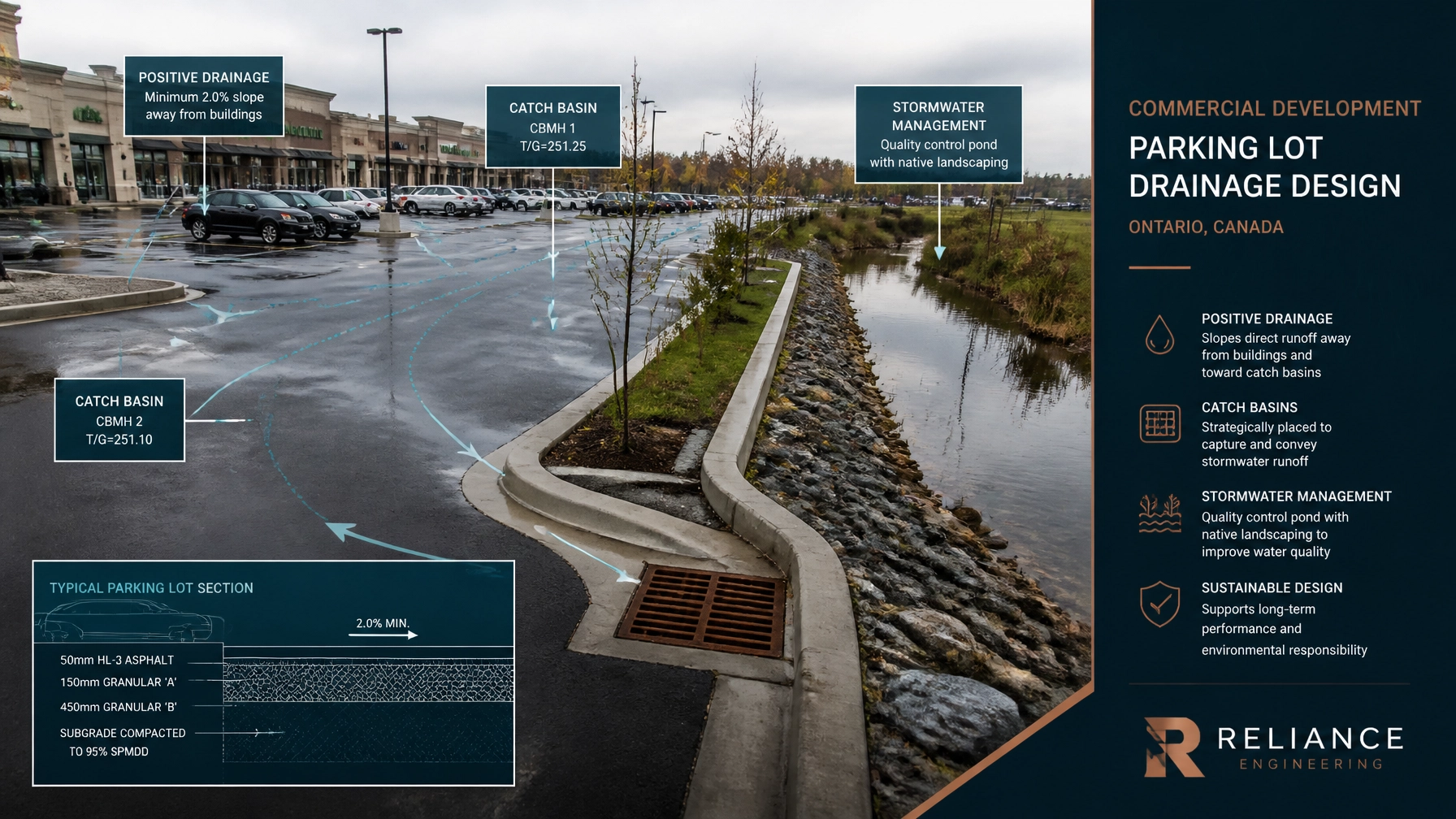
Caption: A simple diagram showing how LID measures like rain gardens and permeable pavers filter water back into the ground. (Reliance Engineering Logo included)
The "One-Submission" Goal: How to Avoid Costly Resubmissions
The biggest drain on your budget isn’t the construction of the LID measure: it’s the back-and-forth with the city. Every time a reviewer sends back comments, your engineer has to bill for revisions, and your permit is delayed by weeks or even months.
To get approved in one go, you need three things:
- Deep Knowledge of Municipal Guidelines: Every municipality has a "rulebook." Toronto’s Wet Weather Flow Management Guidelines are different from Markham’s LID requirements. We design specifically to the standards of your local building department.
- Accurate Data: You can’t guess how fast water soaks into your ground. A proper site-grading plan and geotechnical data are essential.
- Principal-Level Oversight: At Reliance Engineering, our principal engineer reviews every design. We don’t just pass it off to a junior. We use 20+ years of experience to "pre-approve" the design in our office before the city even sees it.
5 Budget-Friendly LID Measures for Homeowners
You don’t need a million-dollar underground filtration tank to satisfy the city. Often, the simplest solutions are the most effective. Here are five ways to keep costs down:
1. Infiltration Trenches (The Invisible Hero)
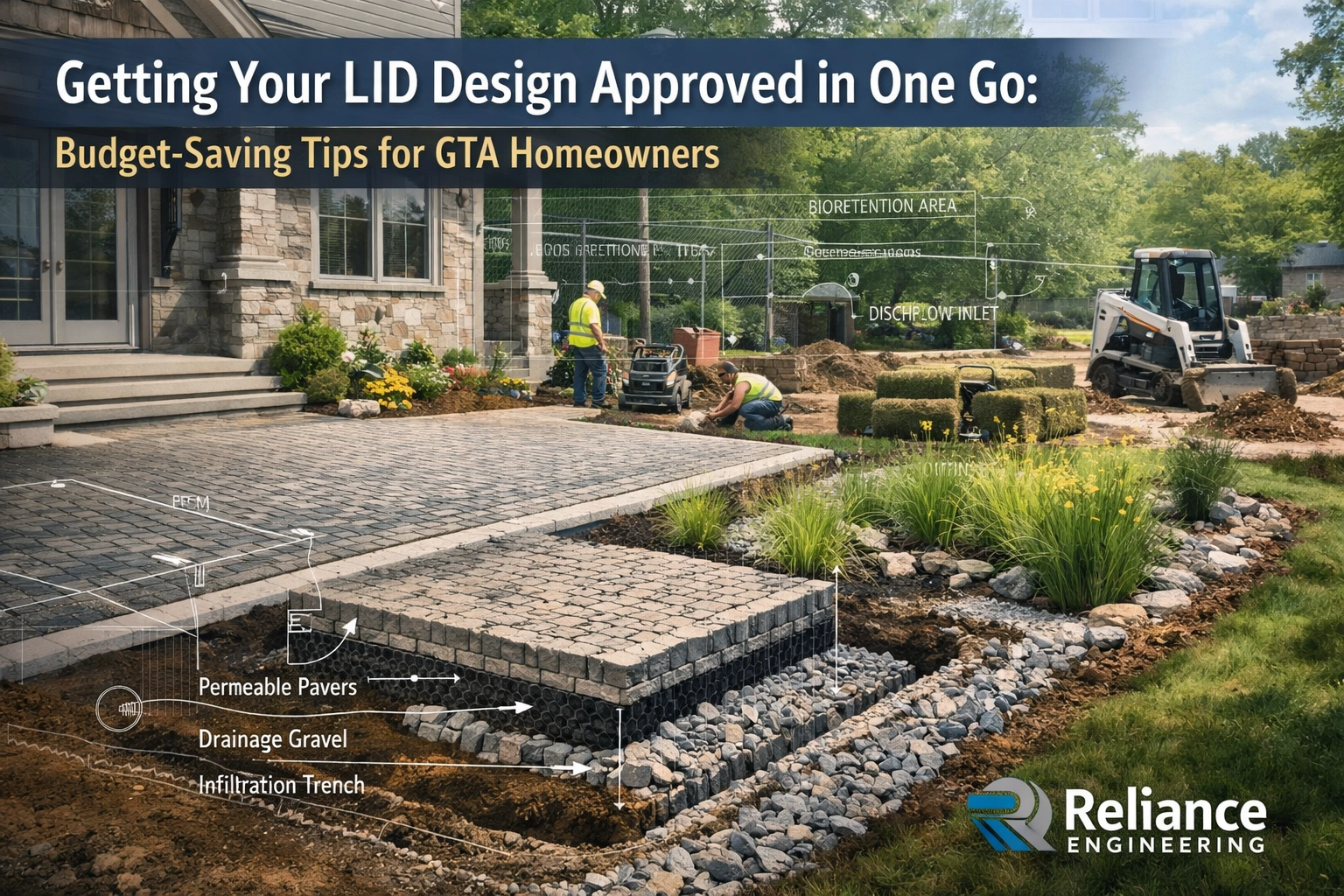
If you have decent soil, an infiltration trench is one of the most cost-effective ways to manage runoff. It’s essentially a pit filled with clear stone, wrapped in filter fabric. It sits underground, out of sight, and slowly releases water into the earth. It’s much cheaper than mechanical storage systems and satisfies most residential SWM requirements.
2. Permeable Pavers Done Right
Many homeowners want a new driveway anyway. By using permeable pavers, you turn your driveway into an LID measure. The key to keeping this budget-friendly is the sub-base. You don’t always need to pave the entire driveway with expensive materials; sometimes, a strategic strip or a specific parking area is enough to meet the city’s infiltration targets.
3. Grass Swales and Vegetated Strips
If you have the space in your yard, a swale is just a fancy word for a shallow, sloped channel planted with grass or native plants. It directs water where you want it to go while allowing it to soak in along the way. This is significantly cheaper than laying storm system design pipes.
4. Rain Gardens
A rain garden is a depressed area in the landscape that collects rain water from a roof, driveway or street and allows it to soak into the ground. Planted with native grasses and flowering perennials, rain gardens can be a cost-effective way to improve your property’s curb appeal while checking off an engineering requirement.
5. Downspout Disconnection and Rain Barrels
While often not enough on their own for a major permit, disconnecting your downspouts and directing them to a splash pad or a rain barrel is the cheapest possible "win." It reduces the volume of water hitting the sewers and is a great "Tier 1" measure in many GTA municipal checklists.

Why Soil Testing is the Best Investment You’ll Make
We often see homeowners try to skip the geotechnical or soil report to save $1,500. This is usually a mistake.
If we don’t know your soil’s "percolation rate" (how fast it absorbs water), we have to assume the worst-case scenario. That means we have to design a much larger, more expensive LID system. By spending a little bit upfront on a soil test, we can often prove that your ground is more absorbent than the city's default maps suggest, allowing us to design a smaller, cheaper system.
Integrating LID with Your Overall Design
LID shouldn't be an afterthought. It needs to work in harmony with your water distribution design and your sanitary sewer design.
When we look at a project, we don't just look at the rain. We look at the whole picture. How does the grading affect your neighbor? Where are the utility lines? By integrating the LID design into the initial building permit drawings, we ensure that the contractor doesn't run into surprises once the shovel hits the ground.
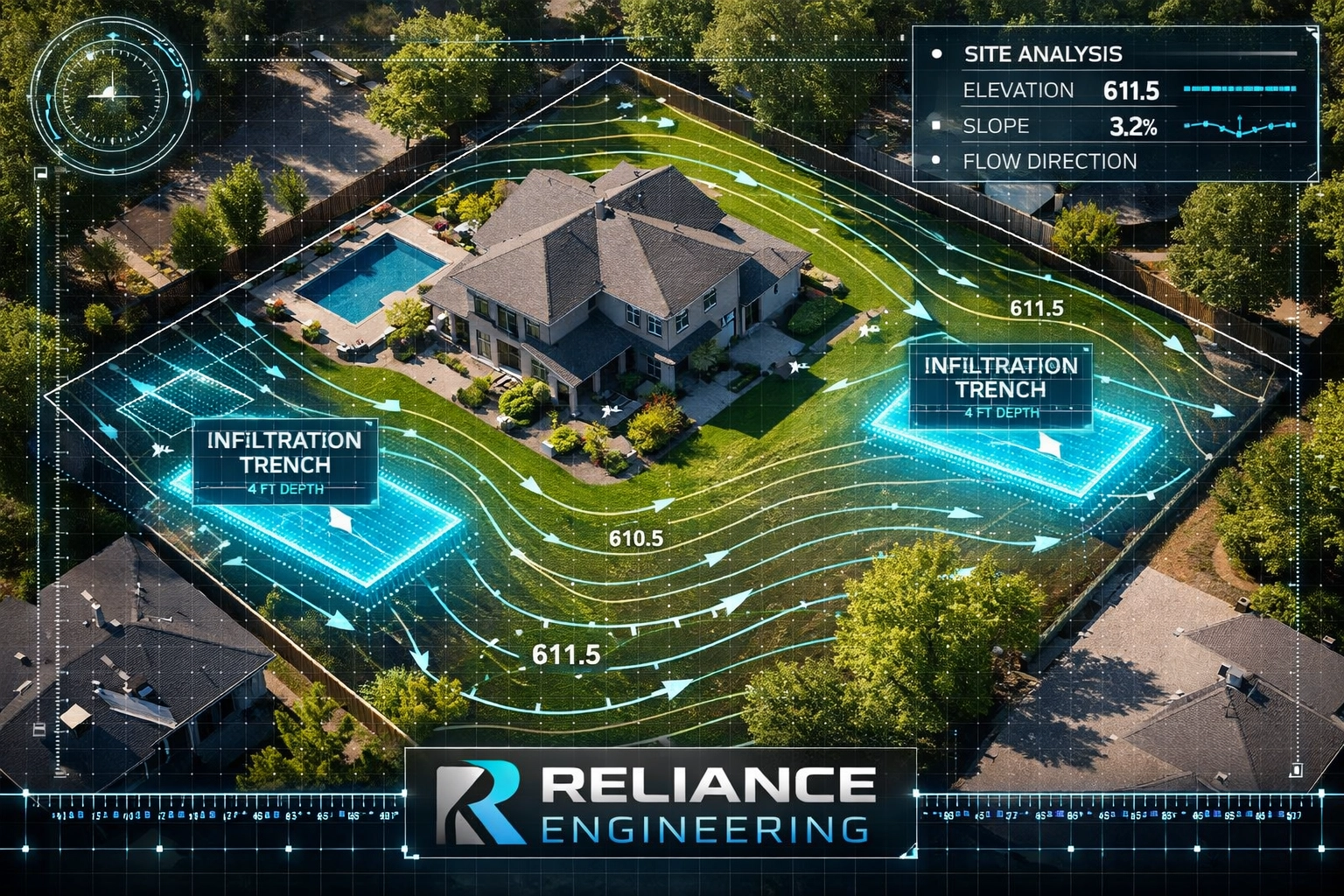
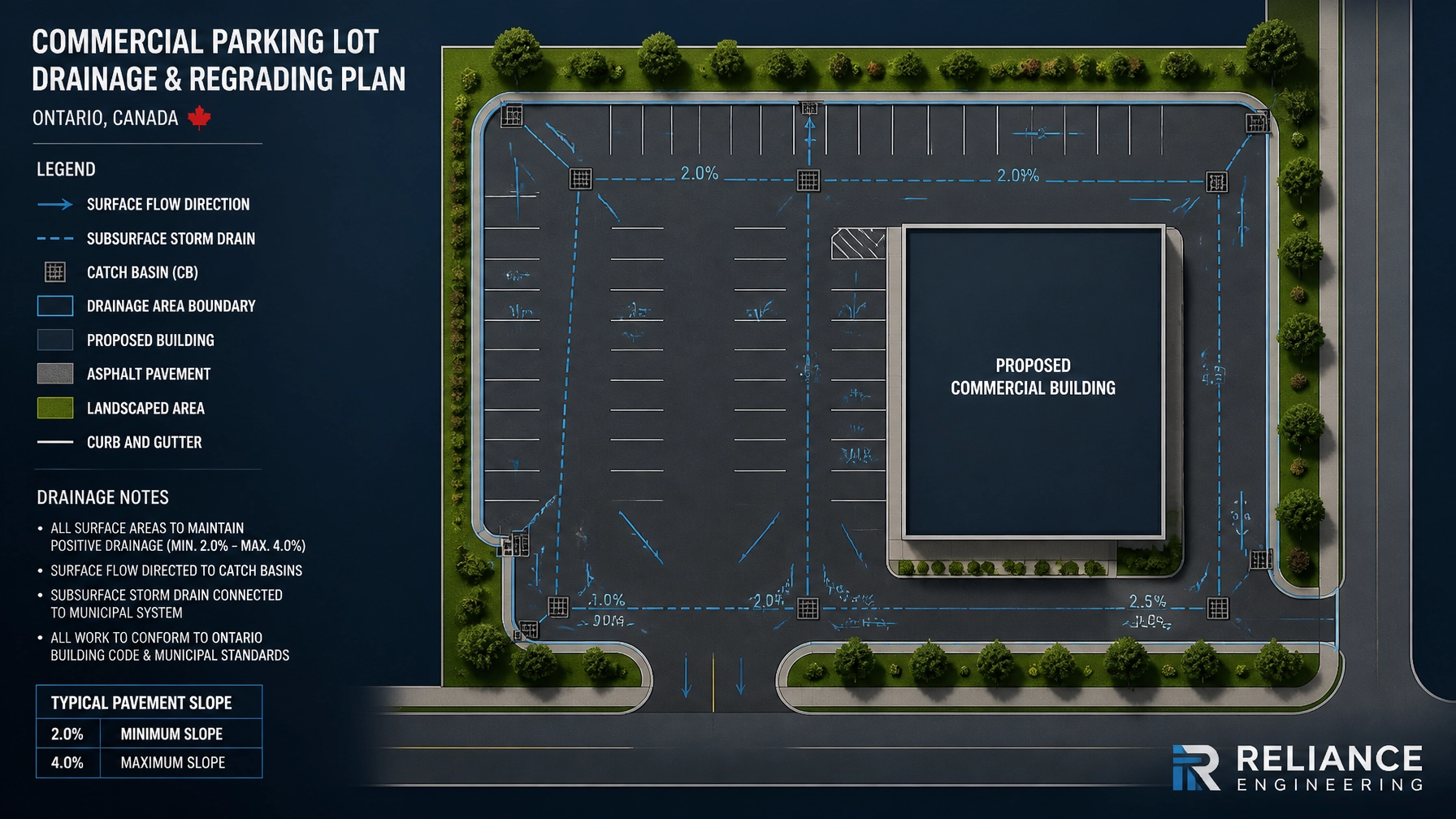
Caption: A detailed site-grading plan showing the integration of LID measures with traditional site servicing. (Reliance Engineering Logo included)
Navigating the GTA Municipalities
Working in the GTA means dealing with various Conservation Authorities (like the TRCA or CVC). These agencies have a lot of say over what you can build near ravines or floodplains.
Because we’ve been doing this for over two decades, we have a shorthand with these agencies. We know what they will reject and what they will applaud. This professional relationship is what allows us to push for that "one-submission approval." Whether it's a complex redevelopment project or a residential addition, the principles of clear communication with the city remain the same.
The Reliance Engineering Advantage
We know that for a homeowner, an engineering report is just a means to an end: you want your permit so you can start building.
We pride ourselves on being:
- Fast: We aim to provide draft plans in days, not weeks.
- Compliant: We stay up-to-date on every change in Ontario's building codes and municipal bylaws.
- Cost-Effective: We don't over-engineer. We find the most practical solution that satisfies the law and your wallet.
If you’re feeling overwhelmed by LID requirements, don't worry. We’ve seen it all, from small urban lots in Toronto to larger developments in Oakville.

Caption: Professional engineers reviewing a site plan to ensure LID compliance. (Reliance Engineering Logo included)
Ready to Get Your Permit?
Don't let stormwater management be the thing that stalls your dream home project. Whether you need a simple grading plan or a complex LID strategy, we’re here to help you clear the hurdle.
With Reliance Engineering, you aren't just getting a drawing; you're getting 20 years of principal-level expertise and a partner dedicated to getting your project approved.
Contact us today to discuss your project and let's get that permit approved in one go.
- Website: www.relianceengineering.ca
- Contact Us: Get a Quote
- Learn More About Our Services: Our Engineering Services
Reliance Engineering
Professional. Practical. Permit-Ready.