The landscape for Ontario developers shifted significantly with the passing of Bill 185, also known as the Cutting Red Tape to Build More Homes Act, 2024. If you are holding onto land with aging site plan approvals or draft plans of subdivision, you are sitting on a ticking time bomb. The "Use It or Lose It" era has arrived, and for many, the year 2026 represents the final warning before approvals: and millions in frozen fees: simply vanish.
At Reliance Engineering, we specialize in navigating these regulatory shifts. As experts in site servicing plans and municipal approvals across Ontario, we see the panic setting in. Here is the reality of the 2026 deadlines and what you must do to protect your investment.
The 3-Year Lapse Trap: Your Approval Is Not Forever
Historically, once you secured a site plan approval in Ontario, it stayed active for a considerable period, often indefinitely unless the municipality specifically attached a sunset clause. Bill 185 has changed the game.
Under the new legislation, municipalities are now empowered: and in many cases, required: to set mandatory lapse dates for site plan approvals and draft plans of subdivision. The default period is now a tight three-year window. If you haven’t secured a building permit within that timeframe, your approval lapses.
Why 2026 is the Danger Zone
For any project that received a "green light" or was in the final stages of approval in late 2023 or 2024, the three-year clock is already halfway through. By 2026, many of these projects will reach their expiration date. If your civil engineering documentation: specifically your site plan approval drawings: is sitting on a shelf, you are at risk of losing your development rights entirely.

The 18-Month DC Freeze: The Hidden Cost of Delay
Perhaps more urgent than the lapse of the approval itself is the financial hit of the Development Charge (DC) rate freeze. Previously, developers could freeze DC rates for two years from the date of certain planning approvals.
Bill 185 has slashed that window to just 18 months.
If you do not obtain your first building permit within 18 months of your planning approval, you lose that frozen rate. In many Ontario municipalities, DC rates are skyrocketing. Missing this window by even a single day could cost a developer hundreds of thousands: if not millions: of dollars in additional fees.
To beat this 18-month cliff, your Functional Servicing Report (FSR) and site servicing designs must be flawless. Municipalities will not grant building permits based on incomplete or poorly designed water, sanitary, and storm sewer layouts.
Site Servicing: The Bottleneck in the Race to 2026
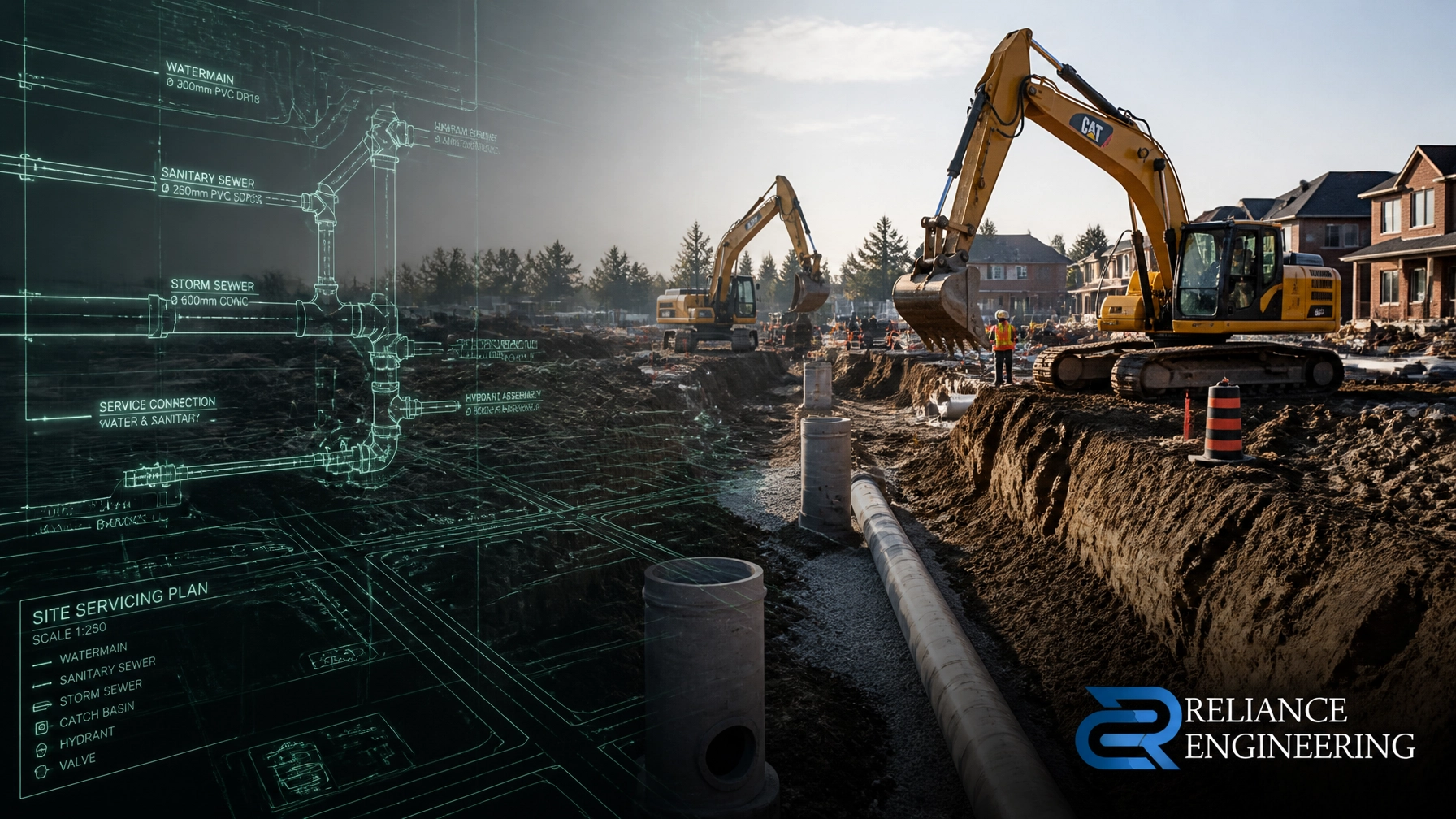
The building permit is the "golden ticket" that stops the clock on the "Use It or Lose It" policy. However, you cannot get a building permit without a complete and approved Site Servicing Plan.
This is where many projects stall. Designing underground infrastructure is not just about drawing pipes; it is about:
- Hydraulic Capacity: Proving the existing municipal system can handle your new density.
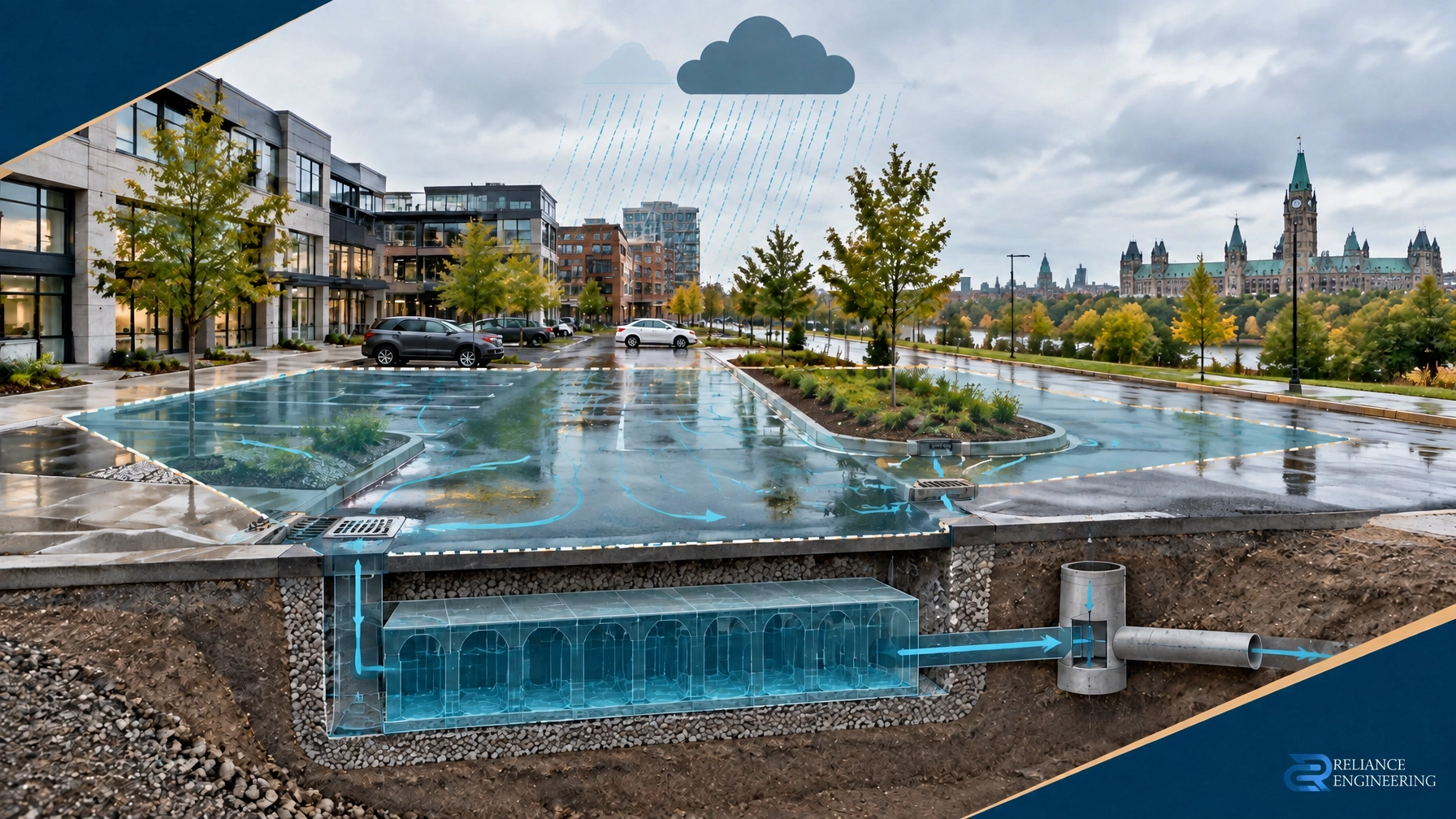
- Stormwater Management (SWM): Meeting increasingly strict SWM criteria to prevent flooding.
- Conflict Resolution: Ensuring water mains, gas lines, and sanitary sewers don't occupy the same physical space.
If your engineering firm is taking 6-8 months just to get through a single round of municipal comments, you are burning through your 18-month DC freeze and your 3-year lapse window.

Why "Wait and See" Is a Failed Strategy
Some developers believe they can wait for a market shift or lower interest rates before breaking ground. While the economic climate is challenging, the regulatory climate is now unforgiving.
If your approval lapses, you don't just "renew" it. You often have to start the entire process over, adhering to current standards, which are almost always more expensive and technically demanding than the standards of three years ago. New requirements for erosion and sediment control and updated SWM reports can add significant costs to a project that was once "permit-ready."
How Reliance Engineering Accelerates Your Approval
At Reliance Engineering, we don't just produce drawings; we secure permits. Our principal, Naresh Ochani, P.Eng. M.Eng., brings over 20 years of experience to every project. We understand the specific municipal requirements across Ontario that cause rejections.
Our approach to beating the 2026 deadlines includes:
- Precision Engineering: We aim for approval in a single submission. Our site grading plans and servicing designs are detailed enough to leave municipal reviewers with no questions.
- Proactive Coordination: We interface directly with municipal engineers to resolve bottlenecks before they lead to formal rejections.
- Comprehensive Documentation: From building permit drawings to complex subdivision layouts, we provide the full technical stack required to move your project to the construction phase immediately.

Conclusion: Take Action Before the Clock Stops
The 2026 deadlines are not a suggestion: they are a statutory requirement under Ontario law. If you have a project that is currently stalled or an approval that is nearing its 18-month or 3-year anniversary, the time to act is now.
Don't let your investment evaporate due to administrative expiry. Ensure your site servicing is finalized, your permits are applied for, and your costs are locked in.
Contact Information
For expert civil engineering consulting and to fast-track your site servicing approvals across Ontario, contact us today.
Naresh Ochani, P.Eng. M.Eng.
Reliance Engineering
Address: 6850 Millcreek Dr, Mississauga, ON L5N 2H4
Phone: 647-385-6418
Email: [email protected]
Website: www.relianceengineering.ca
Office Hours:
- Saturday: 12:00 PM – 2:00 PM
- Sunday: Closed