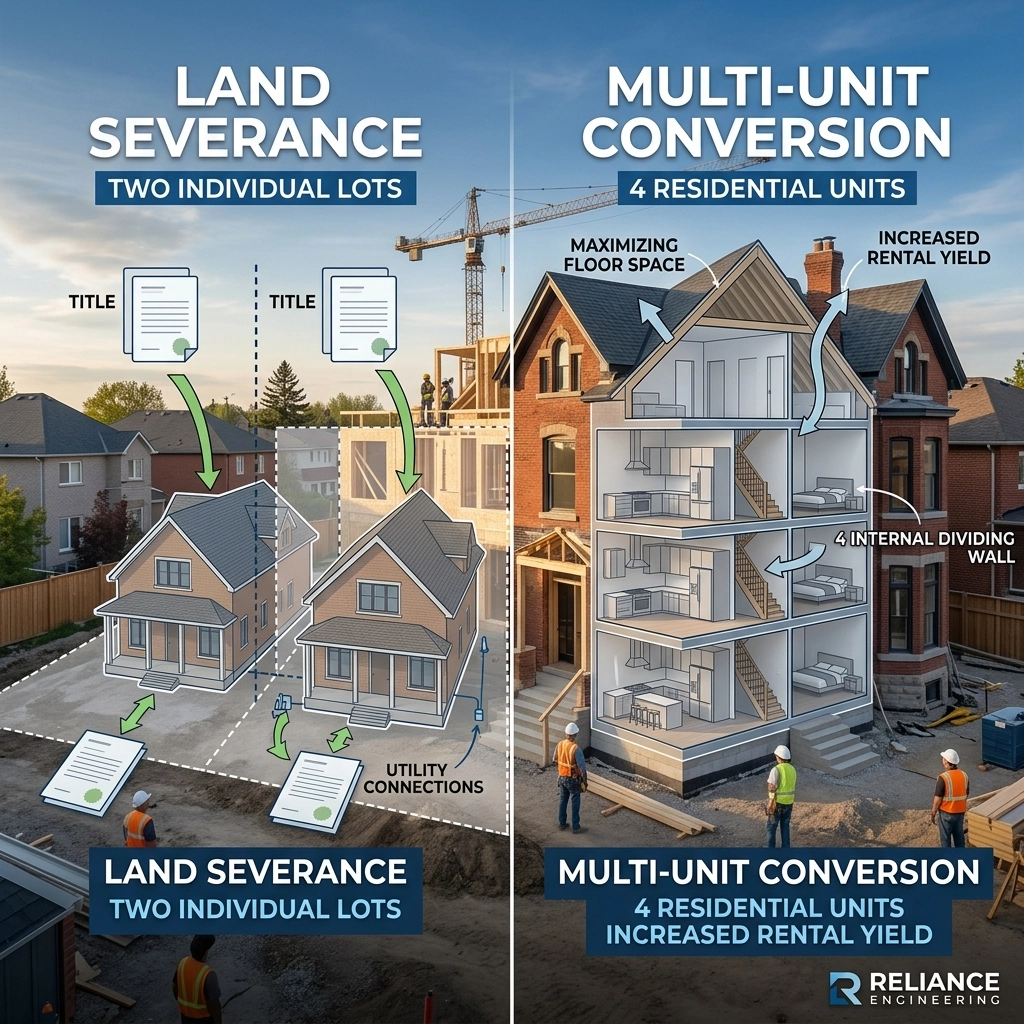
Ontario’s housing market is undergoing a seismic shift. Between the provincial mandate to build 1.5 million homes and the "as-of-right" zoning changes sweeping through municipalities, real estate investors are standing at a crossroads. The goal is simple: maximize Return on Investment (ROI) by increasing density.
However, the path to achieving that density isn’t always clear. Should you sever your lot and build two separate houses, or should you convert your existing single-family home into a 4-plex or 5-plex?
Both strategies tap into the "Missing Middle": the high-demand, low-supply housing tier that sits between high-rise condos and single-family mansions. But one strategy might be a goldmine while the other is a money pit, depending entirely on your site's engineering constraints.
At Reliance Engineering, we see these projects every day. Here is the straight-to-the-point breakdown of Severance vs. Multi-Unit Conversion to help you decide which play maximizes your property's value.
Strategy 1: The Multi-Unit Conversion (The 4-Plex & 5-Plex Play)
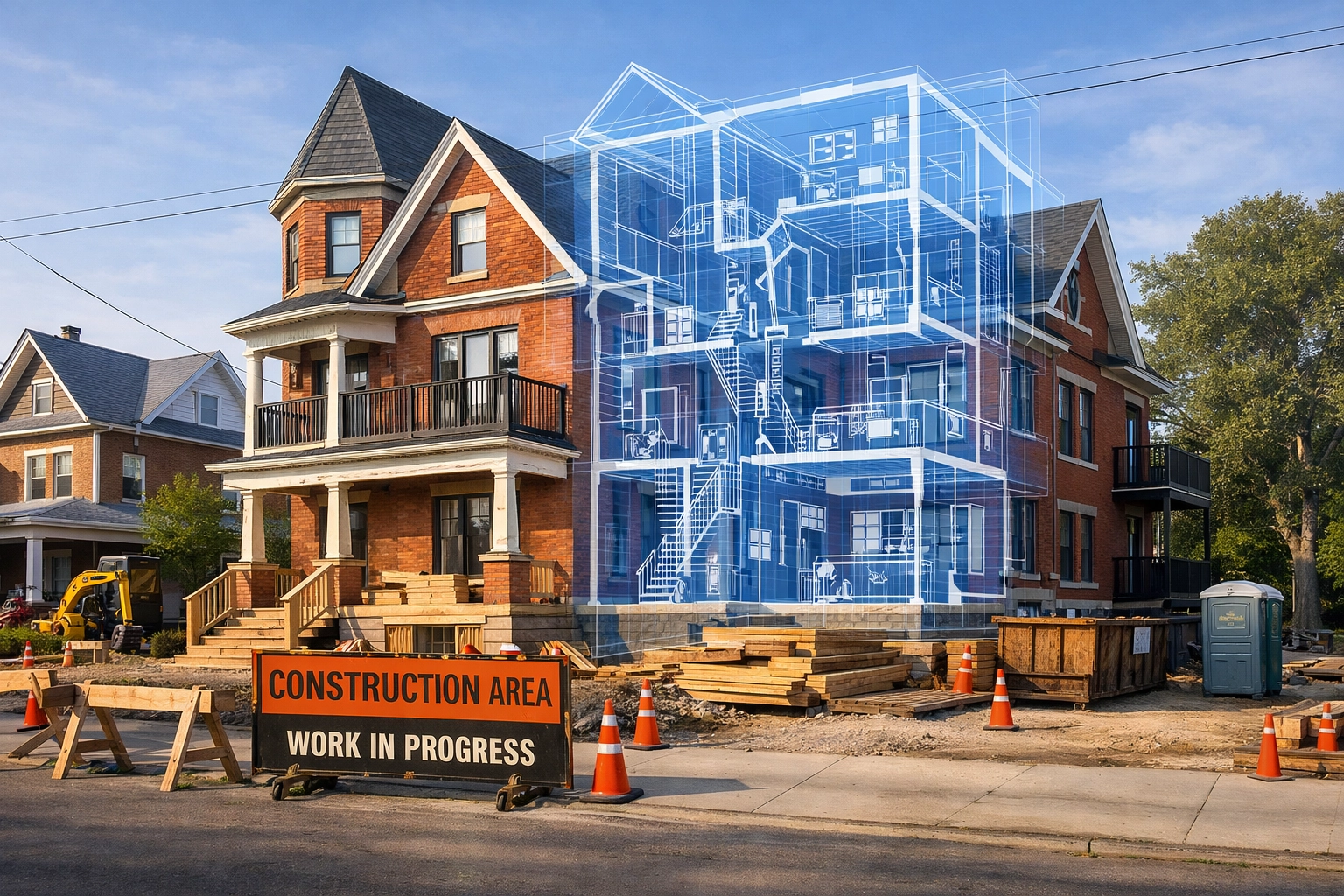
Converting a single-family dwelling into a multi-unit residential building is the fastest way to turn a "standard" rental into a high-yield cash-flow machine. With recent legislative changes across Ontario, the "as-of-right" permissions for up to four units on a single residential lot have lowered the barriers to entry.
Why Investors Love Conversions:
- Lower Capital Requirements: Generally, converting an existing shell is cheaper than a full teardown and rebuild.
- Speed to Market: You skip the lengthy Committee of Adjustment process required for a severance. If you stay within the existing building footprint, your timeline is significantly shorter.
- Income Stability: Moving from one tenant to four or five diversifies your risk. If one unit is vacant, you still have 75-80% of your income coming in.
The ROI Reality:
Conversions can double or triple your gross rental income. In many parts of Ontario, a 4-plex can generate enough revenue to qualify for CMHC's MLI Select financing program, which offers lower interest rates and longer amortization periods based on affordability and energy efficiency scores.
The Engineering "Make-or-Break":
Don’t let the "as-of-right" labels fool you. The city will not grant a building permit if your existing infrastructure cannot handle the load. This is where a Functional Servicing Report becomes your most valuable document. You need to prove that the existing water and sanitary lines can support five kitchens and five bathrooms instead of one. If the street-side connection is too small, your ROI disappears into the cost of digging up the road.
Strategy 2: The Lot Severance (The Double-Asset Play)
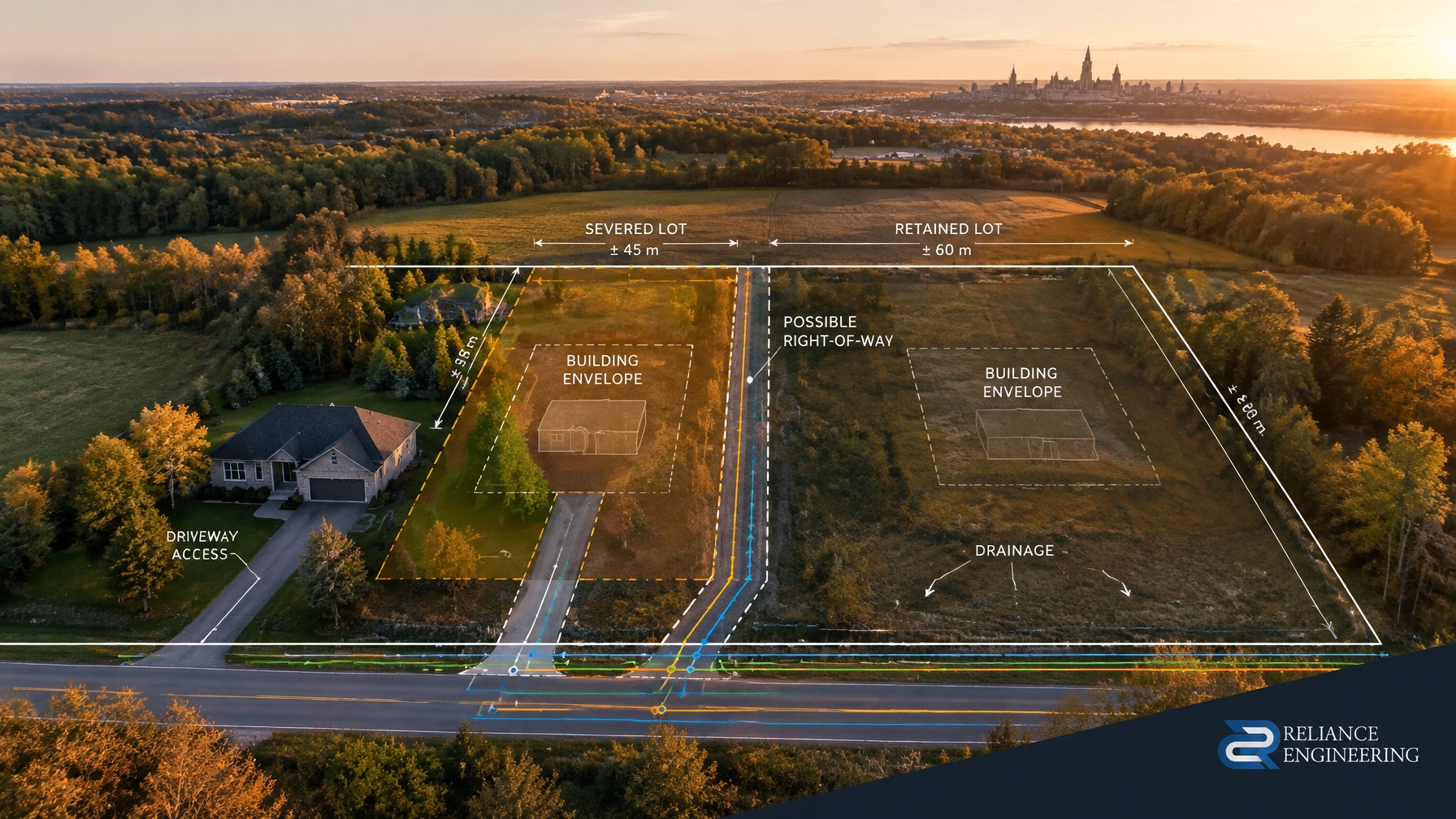
Severance is the process of legally splitting one property into two or more independent parcels. This is the "high-stakes, high-reward" play of land development.
Why Investors Love Severance:
- Asset Flexibility: You aren't just creating units; you are creating deeds. You can sell one lot to recoup your initial investment and keep the other for long-term cash flow.
- Scale: A 60-foot lot in a prime Ontario neighborhood can often be split into two 30-foot lots. If zoning allows for 6-plexes on each (as seen in some Toronto residential zones), you have turned one house into 12 rentable units.
- Maximum Equity Gain: The "highest and best use" of land is almost always separate titles. The combined value of two severed lots is significantly higher than one large lot.
The ROI Reality:
While the upfront costs are higher: including parkland dedication fees, development charges, and extensive legal/engineering fees: the exit value is unmatched. A successful severance can instantly add hundreds of thousands of dollars in "paper wealth" to your portfolio before you even break ground.
The Engineering "Make-or-Break":
Severance is an engineering-heavy lift. You are creating a new property that needs its own independent services. You will require a comprehensive Site Servicing Plan and a Site Grading Plan to satisfy the municipality.
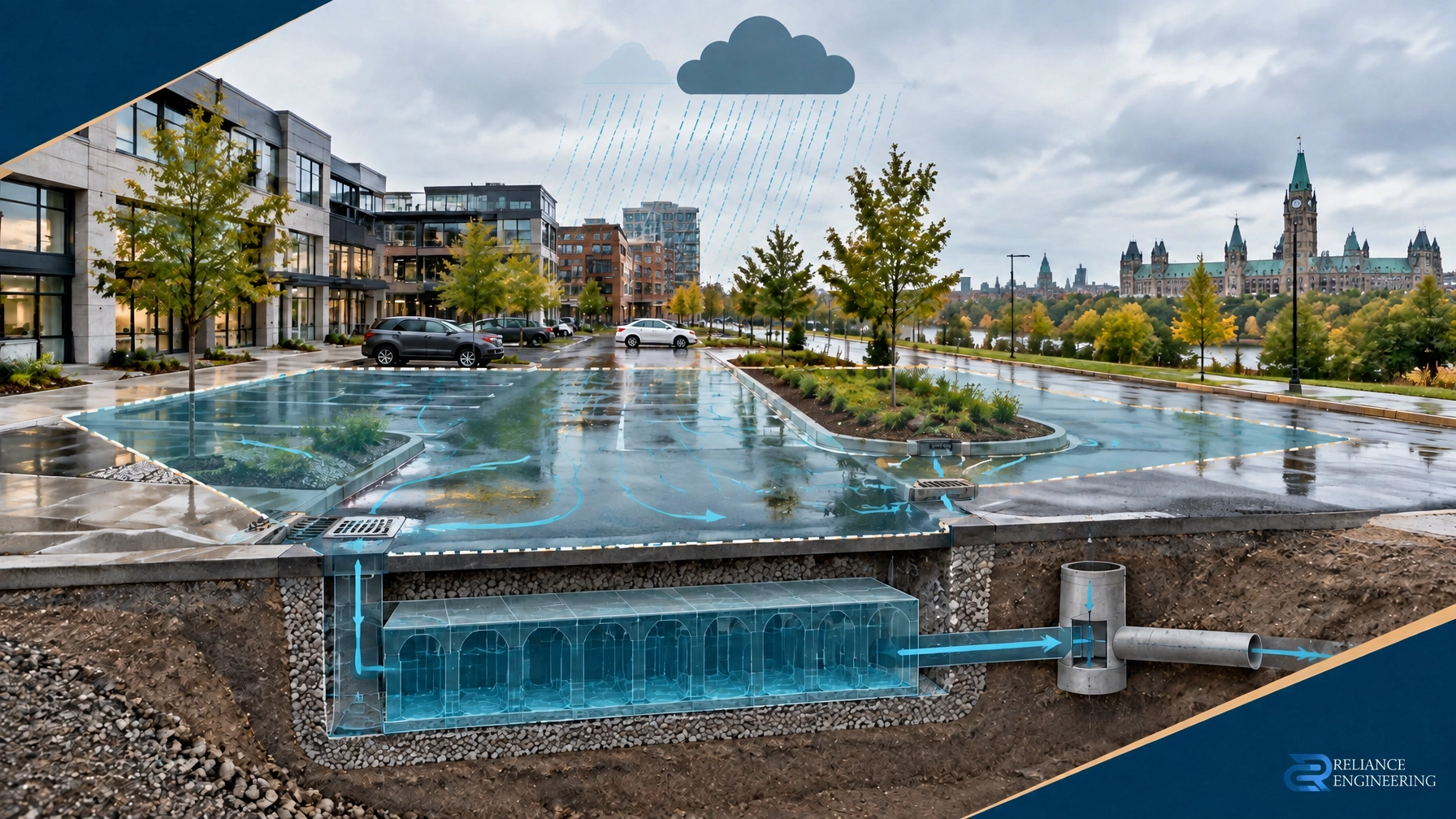
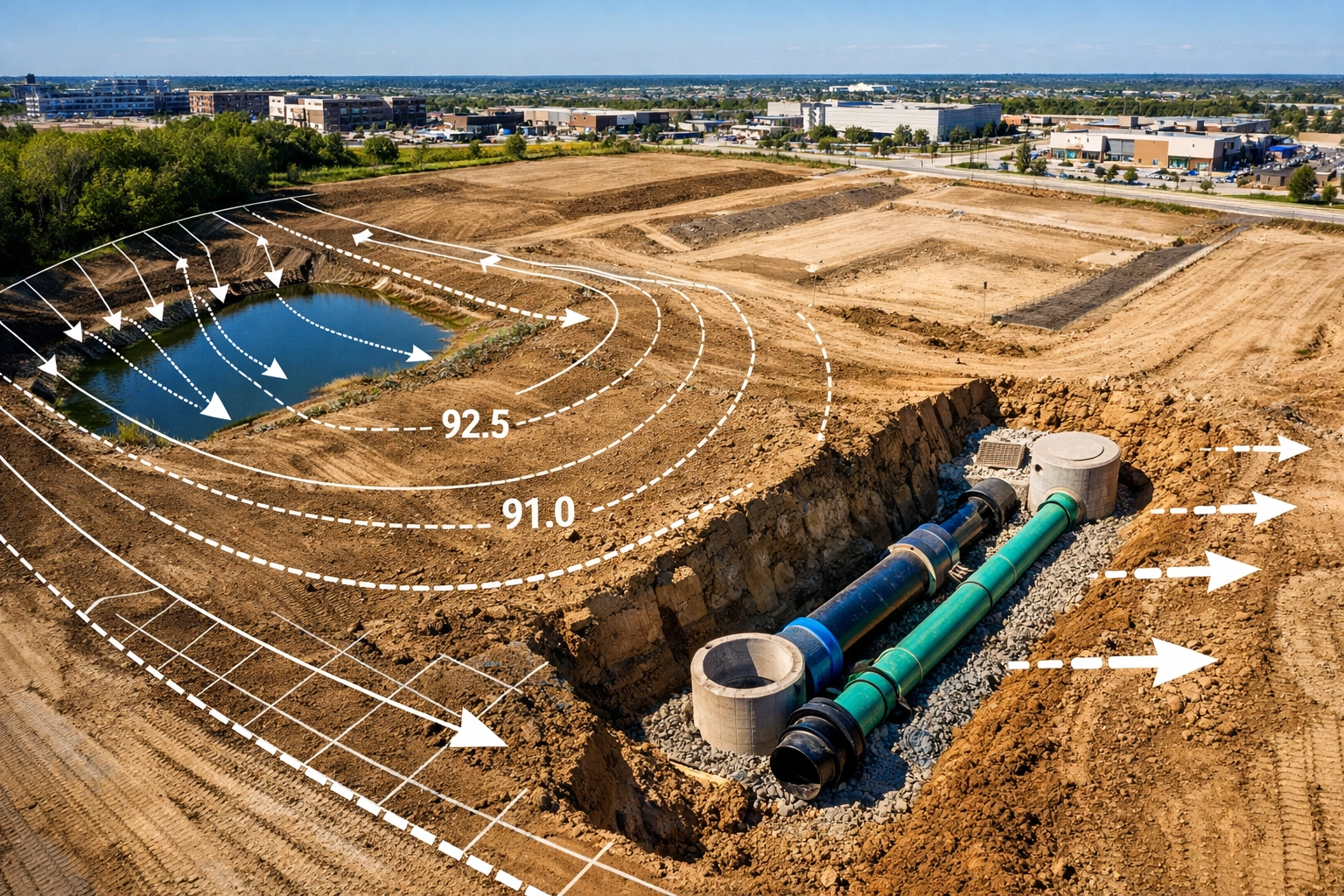
The biggest killer of severance deals? Stormwater Management. When you turn a grassy backyard into two buildings and two driveways, you increase "impermeable" surfaces. The city requires you to manage that runoff on-site. Without a solid Stormwater Management strategy, your application will be dead on arrival at the Committee of Adjustment.
Comparison: Conversion vs. Severance
| Feature | Multi-Unit Conversion | Lot Severance |
|---|---|---|
| Complexity | Moderate | High |
| Timeline | 6–12 Months | 12–24 Months |
| Upfront Cost | Lower | Higher |
| Financing | Residential/Commercial Mix | Construction/Land Loan |
| Primary Goal | Immediate Cash Flow | Capital Appreciation / Exit Value |
| Engineering Needs | Servicing Capacity Checks | FSR, Grading, SWM, New Connections |
Why Engineering is the Pivot Point
Whether you choose to convert or sever, your project lives or dies by what’s happening underground.
Many investors get excited about architectural floor plans but forget that the city cares most about Servicing and Grading.
- Water Distribution: Will five units have enough pressure? You need a Water Distribution Design.
- Sanitary Sewer: Can the city’s current line handle the increased flow? Our Sanitary Sewer Design team ensures you don't run into capacity issues.
- Grading: How will water flow away from the new structures without flooding the neighbors? A professional Grading Plan is non-negotiable for permit approval.
At Reliance Engineering, we specialize in the "Missing Middle." We’ve helped investors navigate complex urban infill projects across Ontario, from 35 Wabash Avenue to high-density redevelopments in Newmarket. We provide the technical backbone that turns a "good idea" into a "permitted project."
Which Strategy is Right for You?
Choose Multi-Unit Conversion if:
- You want to start generating cash flow within a year.
- You have an existing large-footprint home with a solid foundation.
- You want to take advantage of CMHC’s MLI Select incentives.
Choose Lot Severance if:
- Your lot is wider than the neighborhood average.
- You have the capital to weather a 2-year development cycle.
- You want to create two separate, salable assets to maximize equity.
Get Your Engineering Strategy Right the First Time
Don't spend thousands on architects and lawyers until you know the land can support your vision. At Reliance Engineering, we offer land development consulting that prioritizes your ROI. We provide draft plans in days, not weeks, ensuring your project is permit-ready and cost-effective.
Stop guessing and start building.
Contact Information
Naresh Ochani, P.Eng. M.Eng.
Founder and Principal, Reliance Engineering
Address: 6850 Millcreek Dr, Mississauga, ON L5N 2H4
Phone: 647-385-6418
Email: [email protected]
Website: www.relianceengineering.ca
Office Hours:
- Saturday: 12:00 PM – 2:00 PM
- Sunday: Closed
Ready to see how we can maximize your property's potential? View our services or contact us for a consultation today.