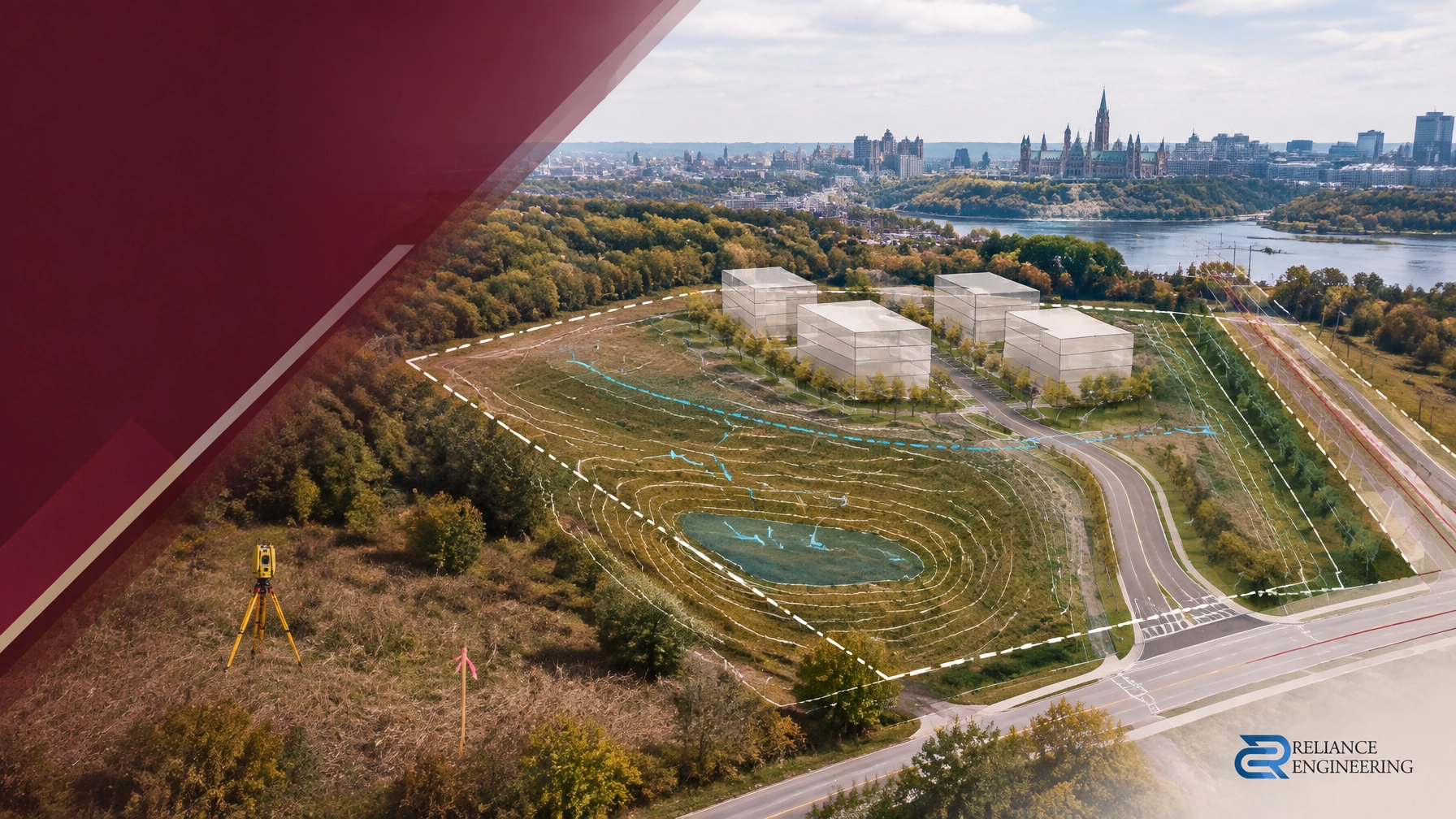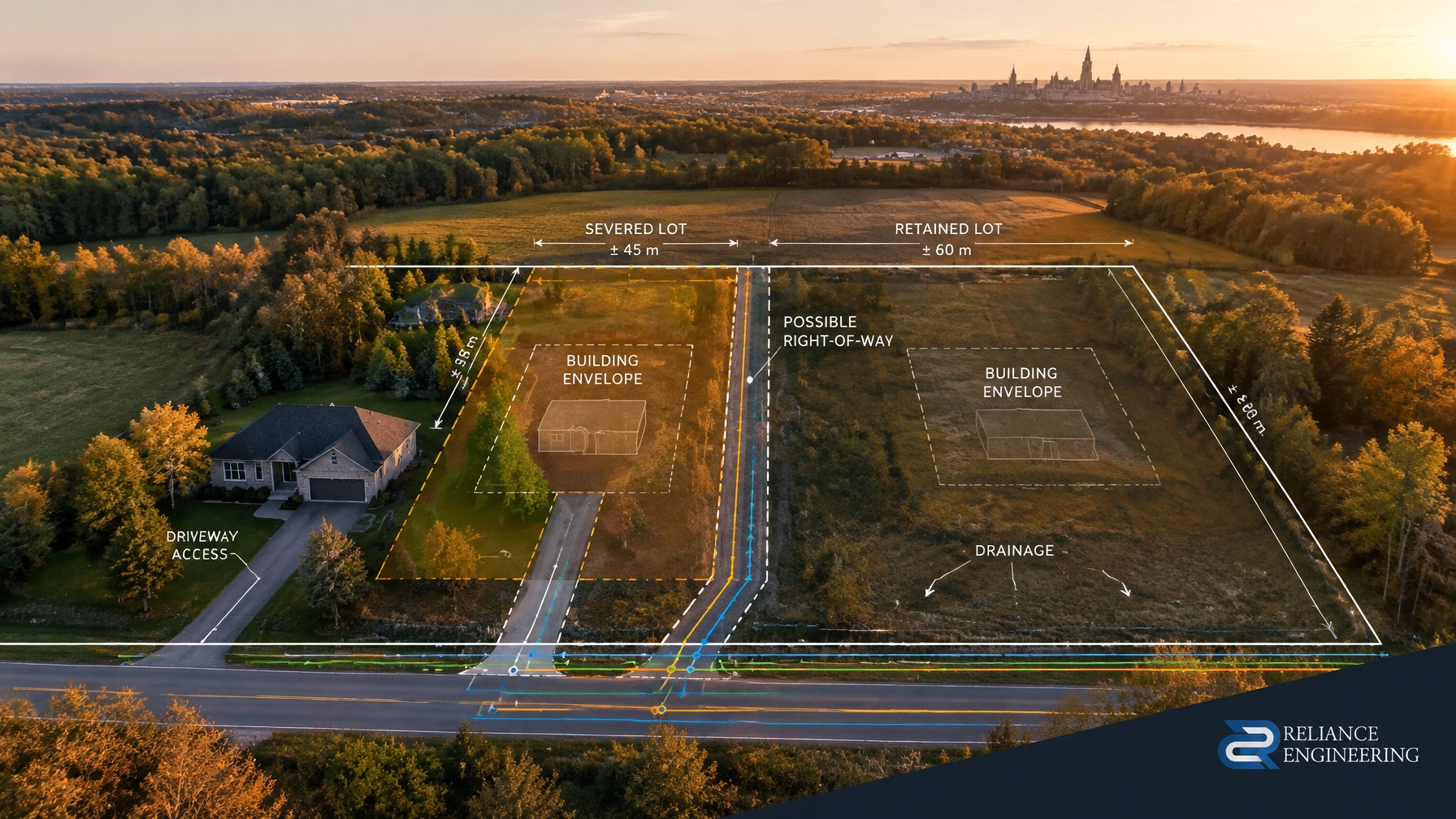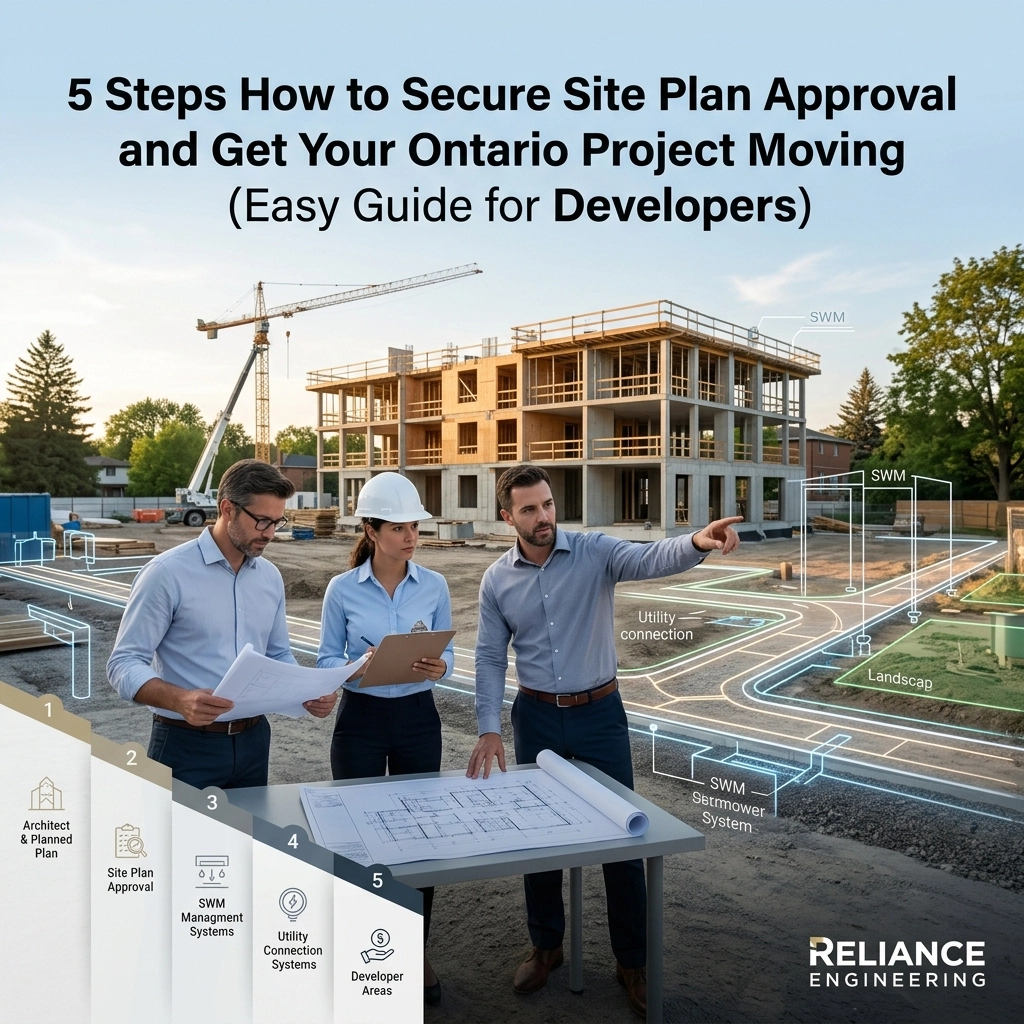
Site Plan Approval (SPA) is often the most significant hurdle between a developer’s vision and a shovel in the ground. In Ontario, the regulatory landscape is rigorous, and for good reason. Municipalities want to ensure that every new development: be it a residential townhouse complex or a large-scale industrial facility: integrates seamlessly into the existing infrastructure, respects the environment, and adheres to safety standards.
At Reliance Engineering, we have spent over 20 years navigating these waters. We know that the difference between a project that stalls and one that moves forward is a strategic approach to engineering and planning. If you are looking to get your Ontario project moving, here is the essential 5-step guide to securing your Site Plan Approval.
1. The Pre-Consultation: Your First Line of Defense
Before you spend a single dollar on detailed architectural designs or advanced engineering models, you must meet with the municipality. This is known as the Pre-Consultation meeting. In most Ontario jurisdictions, this step is mandatory.
During this session, municipal planning and engineering staff will review your preliminary proposal. They will provide you with a customized checklist of every study, report, and drawing required for a "complete" application. This stage is critical because it identifies potential "deal-breakers" early on: such as zoning conflicts, heritage constraints, or capacity issues in the local sewer system.
By engaging early, you can clarify expectations regarding site grading, stormwater management, and urban design guidelines. A well-organized pre-consultation can shave months off your timeline by ensuring your first submission is actually what the municipality wants to see.
2. Assembling a Technical Powerhouse
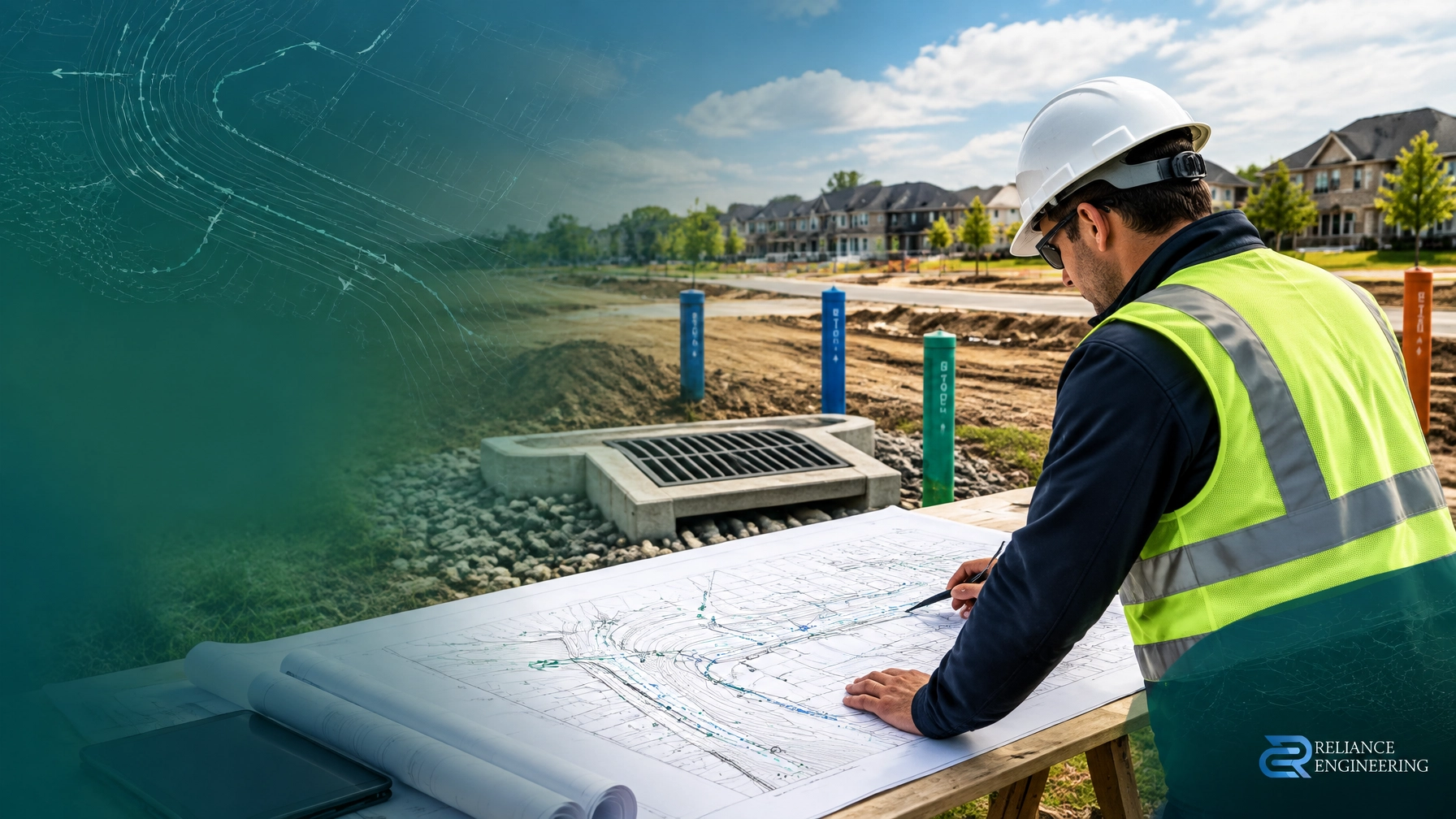
Once you have your checklist, the real work begins. A Site Plan Approval application is only as strong as the technical data backing it up. For developers in Ontario, this means coordinating a multi-disciplinary team of professionals, with civil engineering at the core.
Your submission package will typically require:
- Site Servicing Plans: Detailing how your project will connect to municipal water, sanitary, and storm systems. You can learn more about our approach to this at Site Servicing Plans.
- Site Grading Plans: Ensuring the land is shaped to facilitate proper drainage and accessibility.
- Functional Servicing Reports (FSR): This is often the "make or break" document. It proves to the municipality that the existing infrastructure can handle the new demand your project will create. Detailed info can be found here: Functional Servicing Reports.
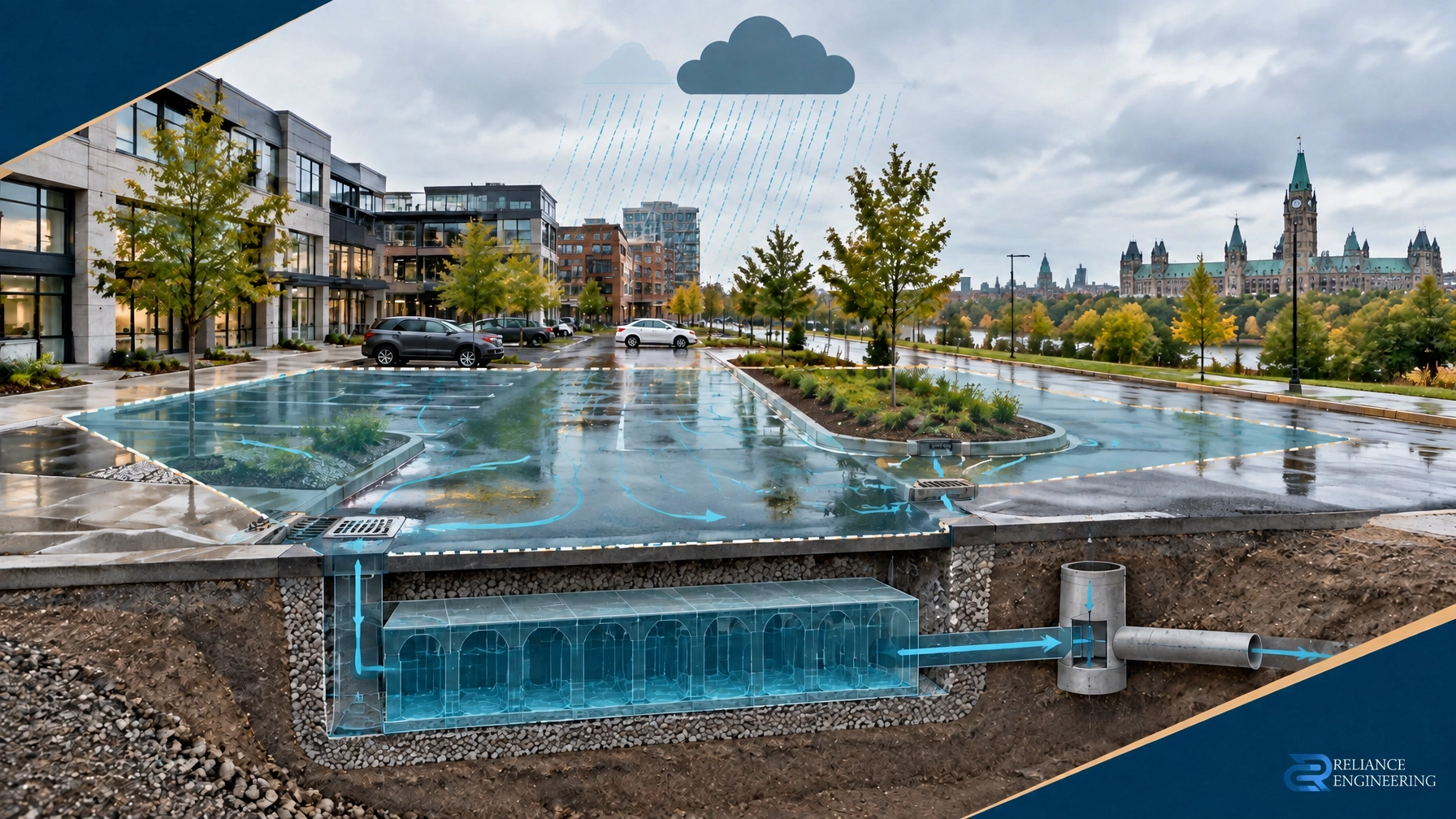
- Stormwater Management Reports (SWMR): With increasing climate volatility, Ontario municipalities are stricter than ever on how runoff is managed on-site.
At Reliance Engineering, we specialize in turning these complex requirements into permit-ready documents. Whether it's a sanitary sewer design or a complex storm system design, our goal is to provide cost-effective solutions that meet provincial and municipal standards without over-engineering your budget.
3. Navigating the Technical Review and Iteration Loop
Once you submit your application, it enters the municipal "black box." It is circulated to various departments: Planning, Engineering, Transportation, Fire Services, and often external agencies like the local Conservation Authority (e.g., TRCA, CVC) or the Ministry of Transportation (MTO).
Expect comments. In the Ontario development world, the first round of review almost always comes back with "redlines." This is where the expertise of your consultant matters most. You need a team that can defend the design while being flexible enough to incorporate necessary changes without compromising the project’s ROI.

Common review topics include:
- Erosion and Sediment Control: How will you protect neighboring lands during construction?
- Traffic Impacts: Will the new entrance cause a bottleneck?
- Water Distribution: Is there enough pressure for fire protection? Check out our water distribution design services.
Speed is of the essence here. The longer you take to respond to municipal comments, the longer your capital is tied up in the land without a permit.
4. Conditional Approval (The Notice of Decision)
After the technical departments are satisfied, the municipality will issue a "Notice of Decision" or "Conditional Approval." This means they agree with your plan in principle, provided you meet a final set of conditions.
These conditions might include:
- Minor design tweaks to the site plan.
- Finalizing a Stormwater Management Report.
- Paying the necessary development charges and parkland dedication fees.
- Posting financial securities (usually a Letter of Credit) to ensure the site work is completed according to the approved plans.
This is the phase where you finalize the "nuts and bolts." It’s also the time to ensure your construction administration strategy is in place so that when you do break ground, you stay compliant with the approved drawings.
5. The Site Plan Agreement and Registration
The final step is the legal one. The municipality will draft a Site Plan Agreement. This is a legally binding contract between the developer and the City/Town, registered on the title of the property. It outlines exactly what you are going to build and how you are going to maintain it.
Once the agreement is signed by both parties and the financial securities are in place, the Site Plan is officially "Approved."
This is the green light you need to apply for Building Permits. Without the SPA stamp, your building permit application for a multi-unit or commercial project will go nowhere.

Why Experience Matters in Ontario Land Development
Navigating the Planning Act and local bylaws is not a task for the inexperienced. We have seen projects delayed for years because of a poorly designed Site Grading Plan or a Functional Servicing Report that didn't account for downstream constraints.
Reliance Engineering has a proven track record across Ontario. From the 35 Wabash Avenue Townhomes in Toronto to complex redevelopments like the Etobicoke General Hospital, we understand the local nuances that get projects through the finish line.
Common Pitfalls to Avoid:
- Ignoring the Pre-Con: Thinking you know the requirements better than the City.
- Underestimating Stormwater: Modern Ontario standards for SWMR are extremely high; don't leave this to the last minute.
- Fragmented Teams: Ensure your architect, civil engineer, and landscape architect are talking to each other. Inconsistencies between plans cause major delays during the technical review.
Get Your Project Moving Today
If you are a developer looking to break ground in Ontario, don't let the Site Plan Approval process stall your progress. You need a partner who can provide fast, compliant, and cost-effective engineering solutions.
At Reliance Engineering, we provide the technical expertise required to navigate Site Servicing, Grading, and Stormwater Management with ease. Let’s get your project from the drawing board to the construction site.
Contact Us:
Reliance Engineering
Naresh Ochani, P.Eng. M.Eng.
Founder and Principal
Address: 6850 Millcreek Dr, Mississauga, ON L5N 2H4
Phone: 647-385-6418
Email: [email protected]
Website: www.relianceengineering.ca
Office Hours:
- Saturday: 12:00 PM – 2:00 PM
- Sunday: Closed
- Monday – Friday: By Appointment
Explore our previous successes and see how we help developers win: Our Projects | About Us | Contact Us