Article type: Practical how-to
Focus: Municipal review and comment resolution for servicing and stormwater submissions across Ontario
Prepared by: Reliance Engineering
Professional lead: Naresh Ochani, P.Eng., M.Eng.
PEO Certificate of Authorization: 100548882
Municipal engineering comments are part of the review process. They help confirm that a proposed development can be serviced, drained, and constructed in accordance with the applicable requirements. Delays often occur when submissions are incomplete, technical assumptions are unclear, or revised drawings and calculations do not tell the same story.
A clear response package makes it easier for reviewers to verify what changed and whether each concern has been resolved. This guide explains how to prepare for review, respond to comments, and support municipal approvals.
Start with the right review framework
Before submission, confirm the municipality’s application checklist, engineering standards, regional and local servicing criteria, and any relevant pre-consultation direction. Requirements can vary between municipalities and may also depend on master servicing plans, watershed studies, available infrastructure, and site-specific conditions.
Pre-consultation is an opportunity to identify required reports, servicing constraints, agency involvement, and submission expectations early. Record the advice received and confirm how it applies to the current design. A pre-consultation meeting does not replace a complete application or guarantee that no further comments will be issued.
Check that the package includes the required application materials and coordinated technical documents. Depending on the project, that may include a Functional Servicing Report, Stormwater Management Report, site servicing plans, grading and erosion and sediment control drawings, and supporting survey or background information.
Ontario’s Site Plan Control Guide explains the municipal role in site plan control. Provincial stormwater direction is set out in the Stormwater Management Planning and Design Manual. These resources inform review, but project requirements must still be checked against the applicable municipality, region, and other review agencies.
Know which agency is commenting
Municipal engineering comments and Conservation Authority comments may address related parts of a design, but they are not interchangeable.
Municipal engineering reviewers commonly assess servicing connections, water and sanitary capacity, storm sewer design, allowable release rates, grading, drainage, road interfaces, easements, and whether proposed infrastructure can be built and maintained. Regional and local requirements may both apply, for example, where one authority oversees a service and another reviews local site design.
Conservation Authority comments generally relate to matters within the Authority’s mandate and jurisdiction. Depending on the property, these may include regulated hazards or features, watercourses, wetlands, flood or erosion risks, buffers, and permit requirements. A municipal engineering acceptance does not by itself resolve Conservation Authority requirements, and the reverse is also true. Confirm the applicable Authority, its review requirements, and whether a separate permit or clearance is needed.
Other requirements may also apply. MECP stormwater guidance informs design and reporting; its applicability should be checked alongside municipal criteria and any relevant environmental permissions. The Ontario Building Code applies to matters within its scope, but does not replace municipal engineering review. Submissions requiring professional engineering should be prepared and sealed by an appropriately licensed professional, as applicable.
What reviewers test in the technical submission
Reviewers need to understand not only what is proposed, but also how it works with the site and municipal systems.
For water servicing, an FSR may need to explain proposed demand, the connection strategy, available system information, and fire-flow considerations where required. For sanitary servicing, the report should state the proposed flows, connection point, supporting assumptions, and any available capacity information or analysis. The relevant criteria and level of supporting evidence depend on the municipality and project.
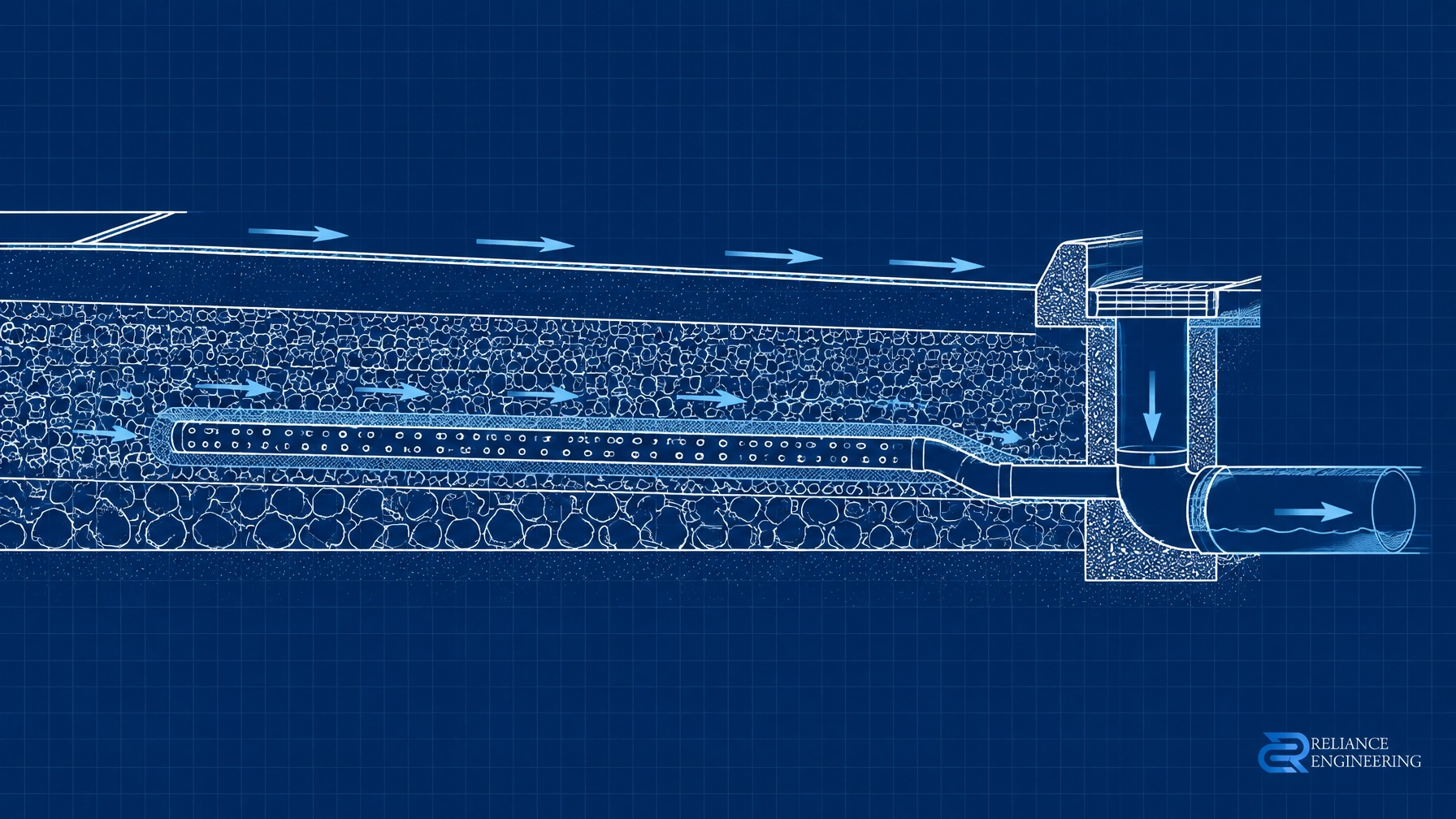
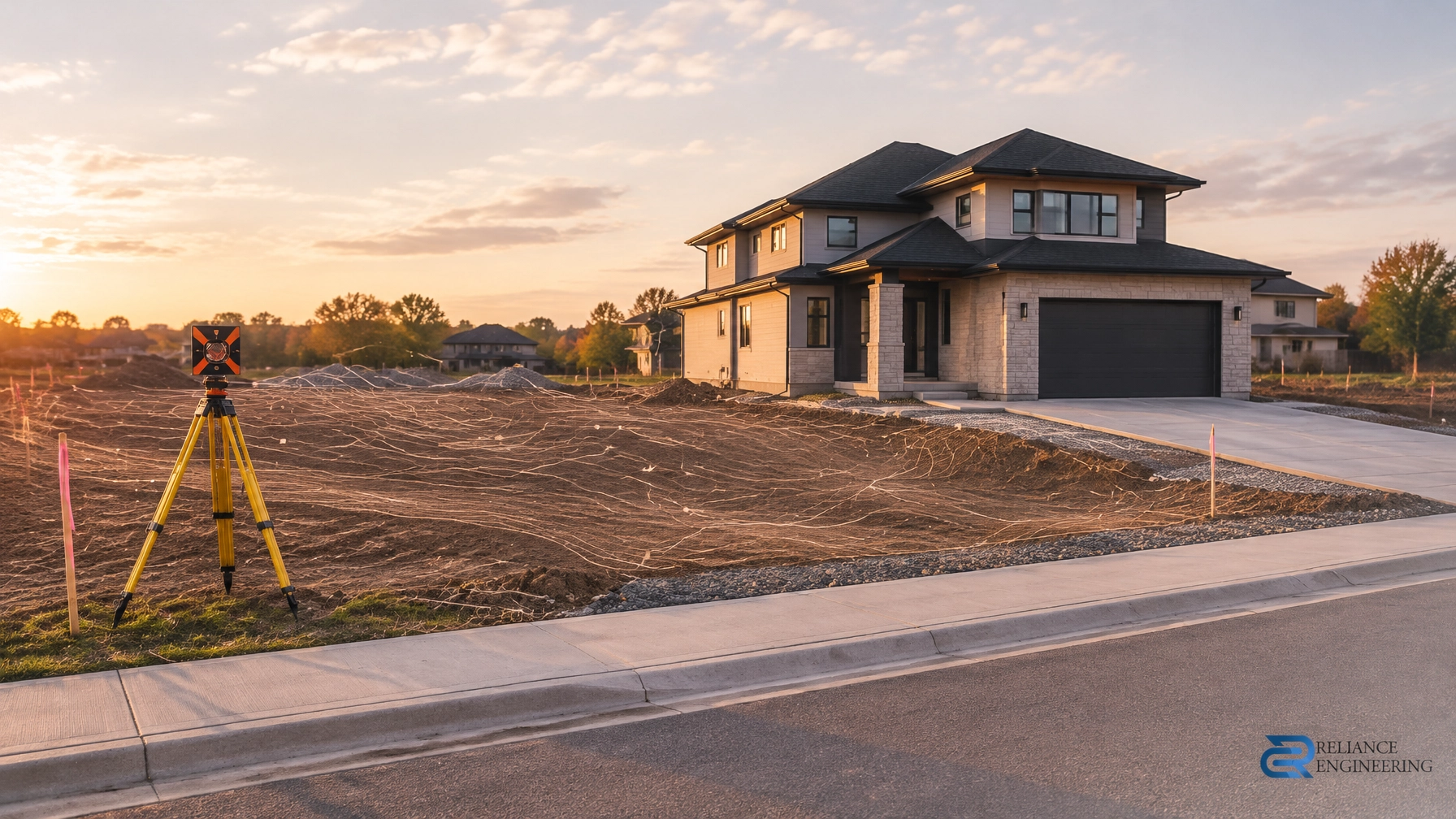
Stormwater review commonly checks pre- and post-development drainage, design criteria, allowable release rates, storage and outlet control, water quality, downstream impacts, and safe major-system flow routes. The calculations and drawings should agree on drainage areas, elevations, connections, and design assumptions. A report that states a release rate without showing how the proposed outlet achieves it may prompt clarification.
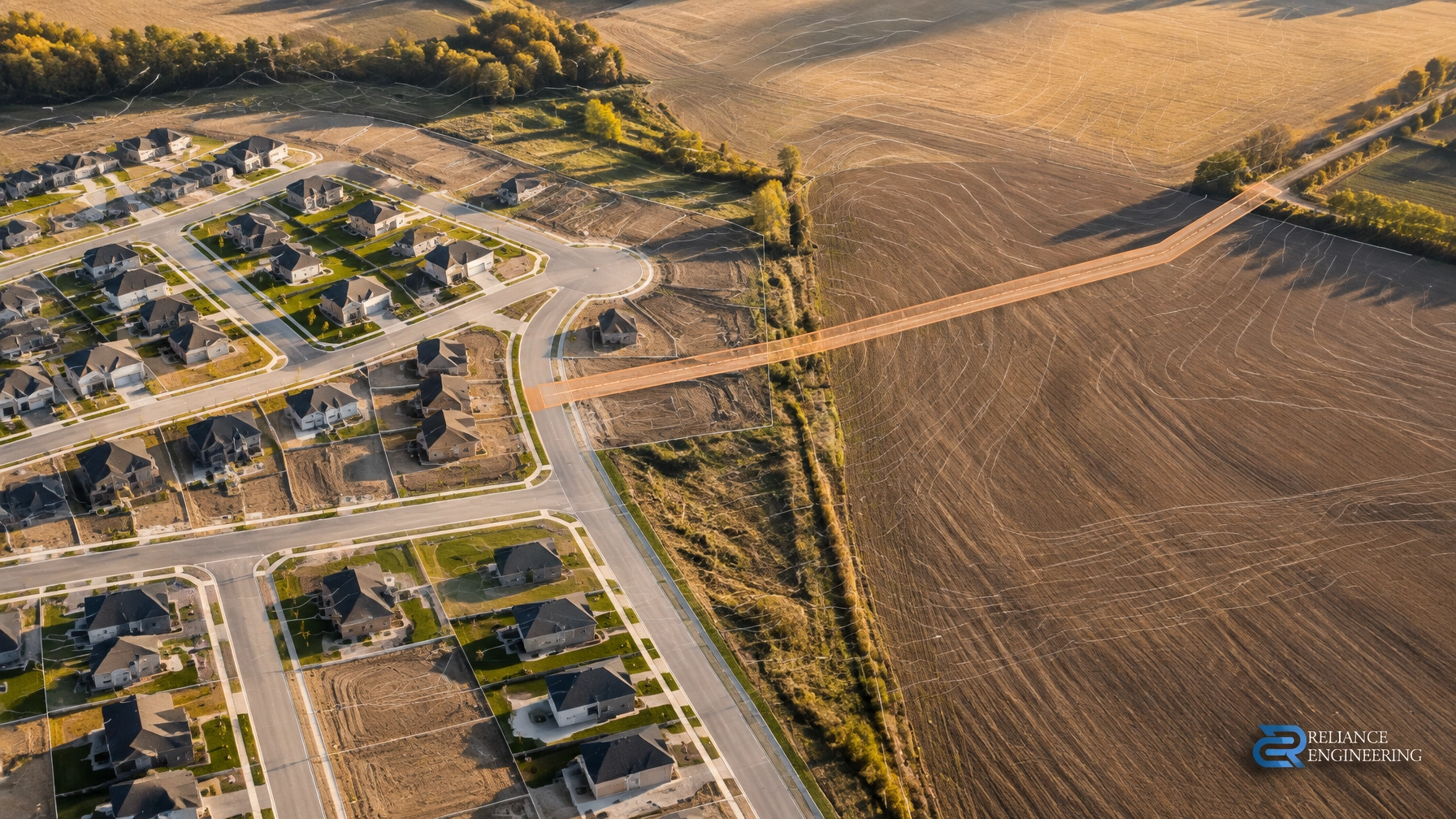
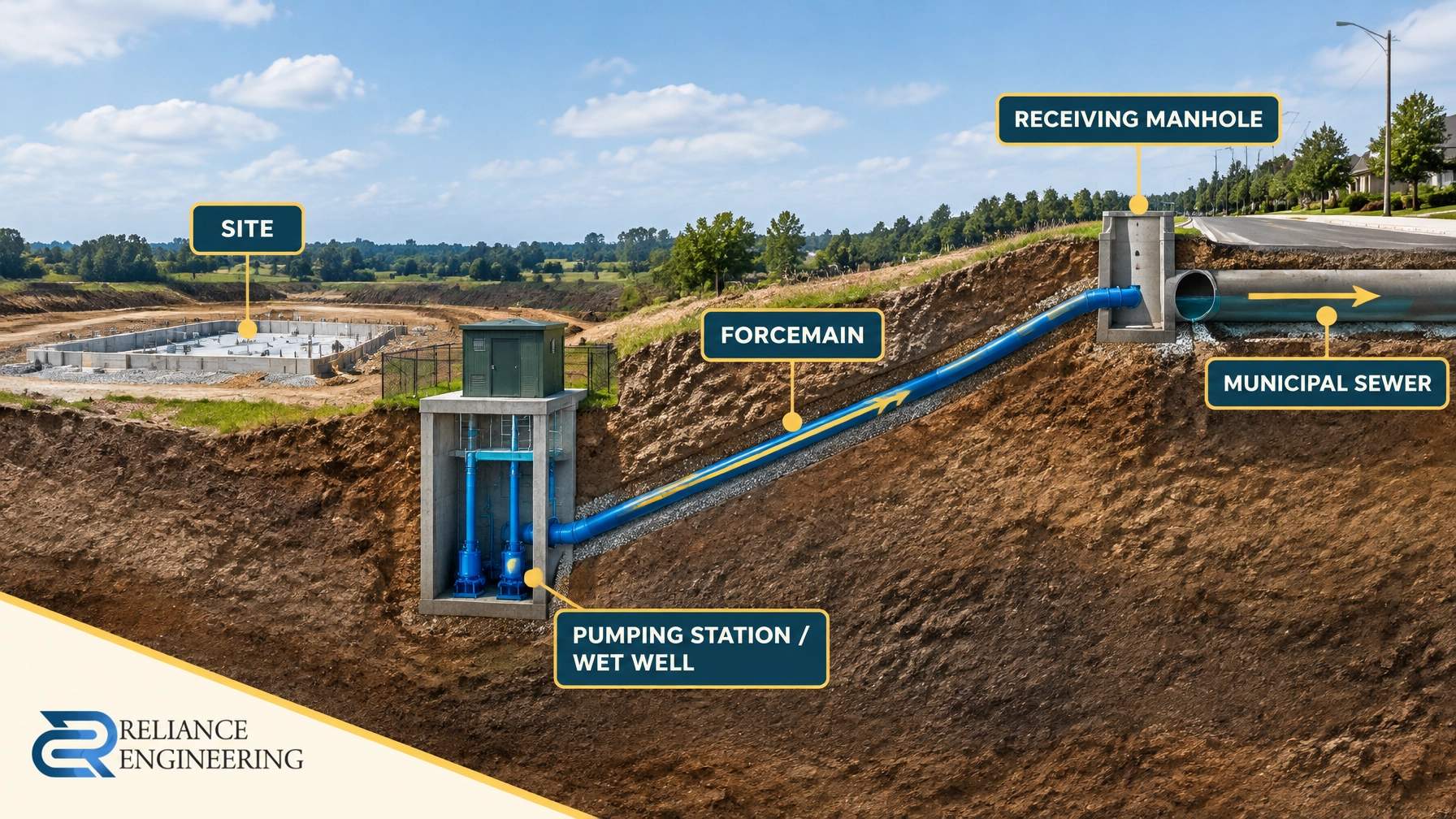
Reviewers also look for workable connections and constructible routing. Storm, sanitary, and water services should be coordinated with grading, buildings, utilities, access, and maintenance needs. Clean layouts and clearly identified pipe sizes, slopes, inverts, manholes, and connection points help reviewers understand the design. Conflicts, inadequate separation, unclear tie-ins, or unexplained changes in grade can lead to follow-up comments.

Respond with a traceable package
When comments arrive, first identify their source, date, and exact wording. Separate municipal engineering comments from Conservation Authority or other agency comments. Then assign a response to each item and coordinate the changes across drawings and reports.
A practical response package includes:
- A comment-response matrix. List each comment verbatim, identify the reviewer, and provide a direct response. Point to the revised sheet, report section, calculation, or appendix.
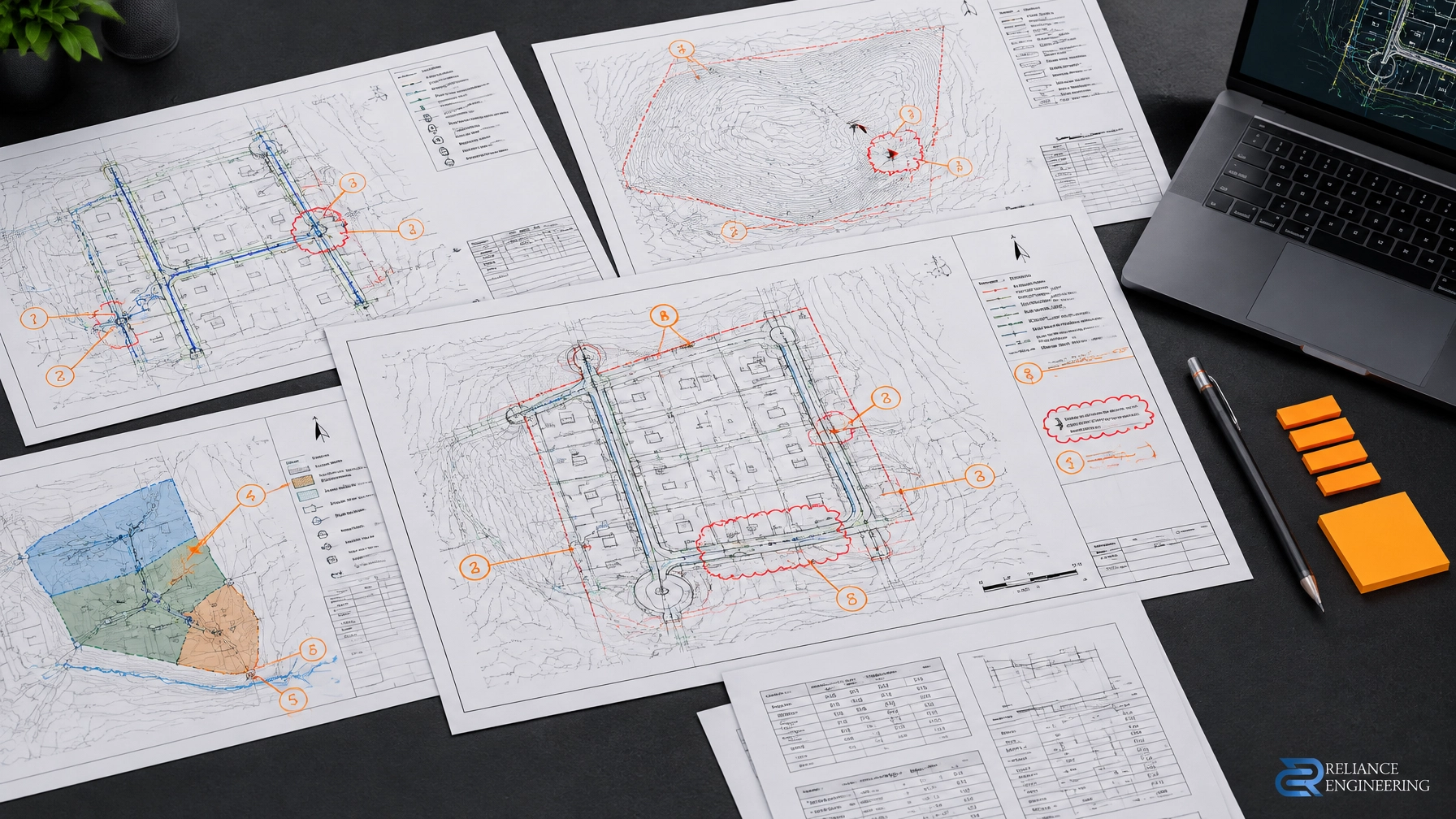
- Marked-up drawings. Use revision clouds, clear revision identifiers, or redlines to show what changed. Keep markups legible and consistent with the submitted drawing set.
- Revised calculations and reports. Update the supporting analysis where a design change affects demand, flows, drainage areas, storage, outlet control, or other assumptions. State the revised inputs and conclusions.
- A concise cover letter. Summarize the resubmission, identify the revised documents and their dates or revision numbers, and note any items that remain outstanding or require agency confirmation.
Avoid responses such as “addressed” without a location or explanation. Instead, direct the reviewer to the exact revision and state the technical resolution. If a comment is not applicable or needs clarification, explain why and provide the relevant supporting information. If the issue cannot yet be resolved, state what information is needed and propose a specific follow-up rather than leaving it unanswered.

Reduce avoidable review cycles
Many repeat comments result from coordination gaps rather than new design issues. Before resubmission, check that:
- Report figures, calculation tables, and drawing labels use the same design assumptions.
- Revised service routes are reflected in the grading and stormwater design.
- Comment responses identify the specific revision that resolves each concern.
- All required documents are included and carry consistent revision information.
- Any unresolved capacity, easement, permit, or agency item is clearly identified.
A coordinated design helps prevent one response from creating a new conflict elsewhere. For example, moving a storm connection may affect grading, pipe cover, outlet levels, and storage calculations. Reviewing the full civil package before resubmission helps catch these linked changes.
Understand site plan control and clearance conditions
Site plan control review may result in conditions that must be satisfied before final approval, execution or registration of an agreement, or permission to proceed with particular work. Conditions can refer to accepted engineering drawings and reports, required easements, permits, securities, construction details, or inspection and maintenance obligations.
Treat each condition as a tracked approval item. Confirm who is responsible, what document or action is required, which authority must accept it, and when it is due. Some matters may be addressed at detailed design or before construction, but they should remain explicit and be completed in accordance with the municipality’s process. Do not assume that an initial site plan decision means all engineering or agency clearances are complete.

Get support with municipal engineering comments
Reliance Engineering prepares site servicing plans, stormwater management reports, functional servicing reports, and coordinated civil submissions for projects across Ontario. We provide practical designs, clear calculations, and approval support through municipal review.
For help reviewing engineering comments or preparing a coordinated resubmission, contact Reliance Engineering to discuss your project.
Naresh Ochani, P.Eng., M.Eng.
PEO Certificate of Authorization: 100548882
Address: 6850 Millcreek Dr, Mississauga, ON L5N 2H4
Phone: 647-385-6418
Email: [email protected]
Office hours: Saturday 12:00 PM–2:00 PM; Sunday Closed.