Article type: Engineering guidance
Audience: Commercial property owners, developers, builders and project teams across Ontario
Focus: Commercial parking lot drainage Ontario; asphalt regrading; ponding solutions; commercial property grading fixes
Naresh Ochani, P.Eng., M.Eng.
PEO Certificate of Authorization: 100548882
Reliance Engineering Canada Limited
6850 Millcreek Dr, Mississauga, ON L5N 2H4
647-385-6418 | [email protected]
Hours: Mon–Fri 9:00 AM–5:00 PM; Sat 12:00 PM–2:00 PM; Sun Closed
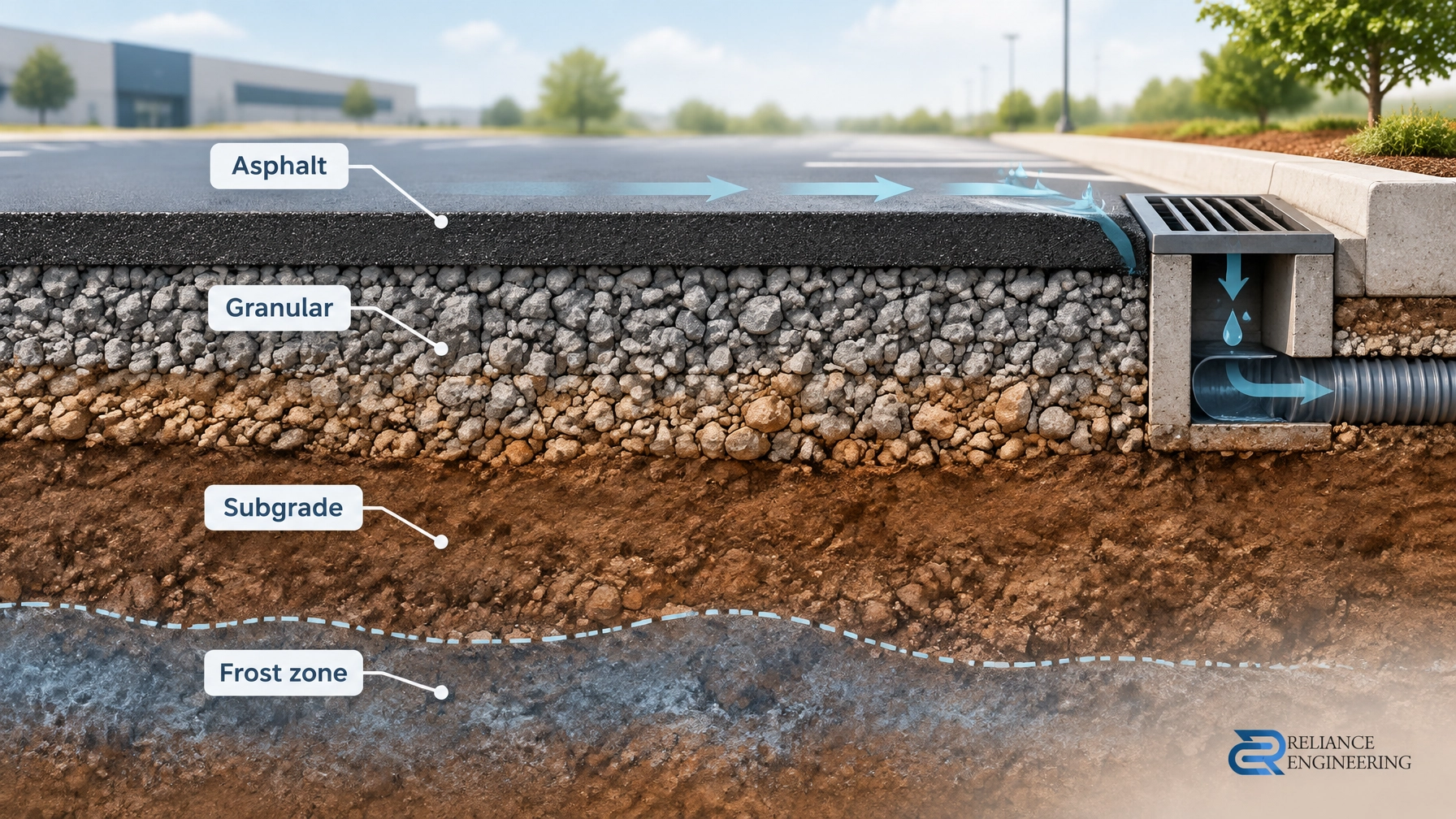
A parking lot can appear to need only a new surface slope. But changing the asphalt grade also changes the pavement profile, and may affect the layers that support it. If water is ponding because the underlying granular material is weak, wet or uneven, reshaping the surface alone may provide only a short-term fix.
A lasting asphalt regrade starts with two connected questions: What grades will move water safely, and can the pavement structure support those grades and expected traffic?
Regrading is more than changing surface elevations
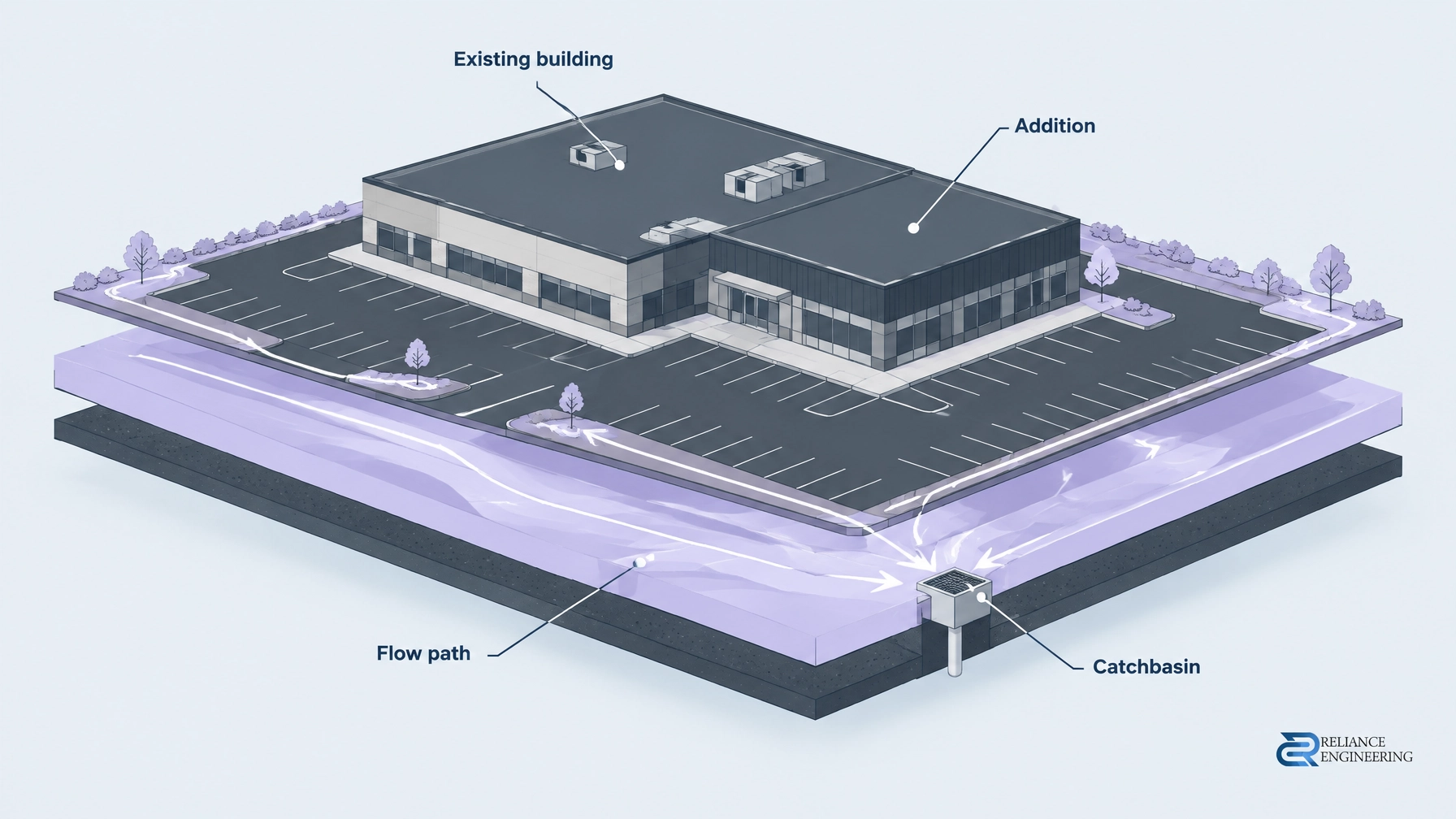
A grading plan sets proposed elevations and slopes. For a parking lot, it also considers driveways, walkways, tie-ins to roads and storm systems, catchbasins, area drains, swales and overland flow routes. These elements need to work together to provide positive drainage and protect buildings and adjacent lands.
But a proposed surface grade must fit the pavement structure beneath it. Raising a low spot can add asphalt depth; lowering a high spot may require milling or excavation. If an area has settled because its supporting layers are inadequate, covering it with a thick asphalt levelling course does not correct the cause. The pavement beneath the new profile still needs to be sound and properly prepared.
The result can be a smooth-looking surface that settles, cracks or ponds again. Effective ponding solutions depend on identifying why the low area formed, not just filling it.

Ontario freeze-thaw conditions affect the layers below
Ontario winters and spring thaws can put stress on a parking lot’s pavement structure. Where frost-susceptible soil, water and freezing conditions coincide, frost heave can lift or distort pavement. During thaw, water in the ground can weaken support beneath the pavement, particularly where moisture is trapped or drainage is poor. Repeated freeze-thaw cycling may worsen existing movement and cracking.
Ontario’s spring load restrictions are intended to protect roads during a period when thawing conditions can reduce support. Commercial parking lots are not the same as public roads, but they can face a similar seasonal weakness: a saturated or softened subgrade may not support traffic as reliably as it does when dry and stable. This is relevant when planning work and considering how the lot will be used during spring conditions. Ontario Ministry of Transportation: Road Talk 2024
That is why surface drainage and pavement drainage should be reviewed together. Water that runs off the surface is only part of the picture. Water that enters or remains within the pavement layers can also affect performance.
Verify the pavement before setting the final grades
Before choosing a new profile, review the existing conditions and gather enough information to understand the pavement structure. The appropriate investigation depends on the site, the condition of the lot and the project scope. It may include reviewing past drawings and repair records, surveying existing elevations, inspecting catchbasins and drains, and opening selected areas to examine pavement and granular materials. Where conditions warrant, geotechnical input can help assess the subgrade.
The review should consider:
- Existing surface elevations, depressions and drainage patterns.
- Asphalt condition and signs of cracking, rutting or settlement.
- Granular thickness and condition, including whether it appears wet or disturbed.
- Subgrade condition and any signs of soft or yielding areas.
- Catchbasin and area-drain locations, elevations and connections.
- Traffic demands, including areas used by delivery or service vehicles.
- Building entrances, accessibility needs and drainage impacts on neighbouring properties.
These findings help determine whether the proposed grading can be achieved within the existing pavement structure or whether parts of the pavement need reconstruction.

Choose the repair scope based on what the investigation finds
An elevation-only correction may be suitable where the pavement structure is in sound condition and the drainage problem is limited to surface shape. In that case, milling, resurfacing or localized asphalt work may be part of a practical design: provided the resulting profile creates positive drainage, ties into surrounding surfaces properly and does not leave isolated low points.
Partial-depth reconstruction may be needed where specific areas show localized settlement, poor support or damaged pavement layers. Rebuilding those areas can address the weak spot before the final surface grades are placed.
Full-depth reconstruction may be appropriate where poor support or moisture-related distress is widespread, or where the existing pavement section cannot support the intended use and profile. The scope should be based on site conditions and engineering review, not on a generic section applied to every property.
In all cases, the aim is buildable grading: grades and details that can be constructed in the field and perform as intended. A site grading plan can show existing and proposed elevations, parking lot grades, drainage routes, catchbasins and tie-ins, as well as overland flow routes where required.
Coordinate catchbasins and surface details with the new profile
A regrade can change how water reaches a catchbasin, and how the structure meets the finished asphalt. Catchbasin rims may need adjustment to suit the new grades. The design should also confirm that low points, swales and area drains are coordinated, and that runoff has a safe route if the collection system cannot accept all surface flow.
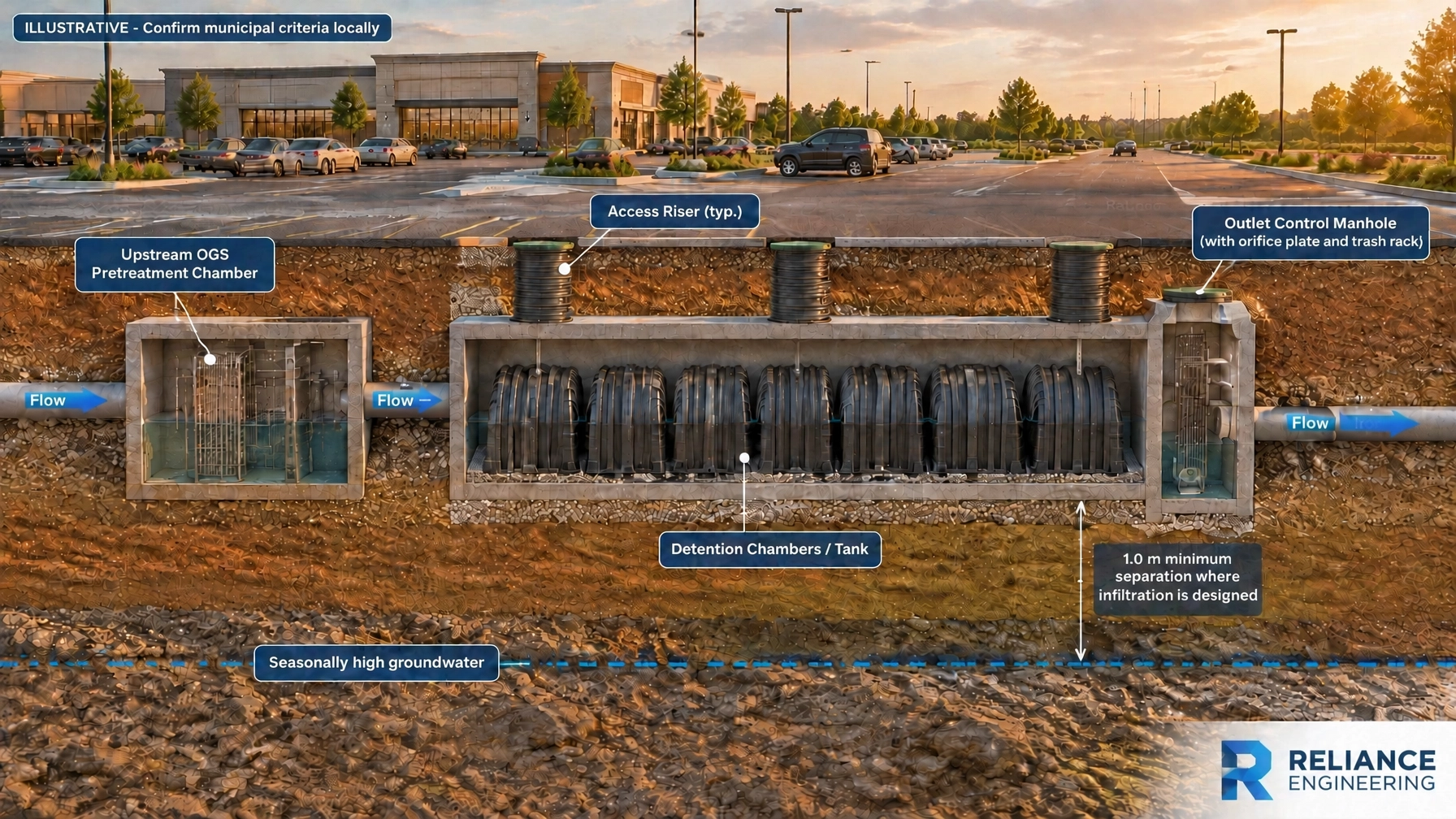
Reviewing only the pavement surface can miss these connections. A drainage-focused approach considers the complete path: how water moves across the lot, where it is collected, and where it goes next. Depending on the project, that may involve coordination with site servicing or stormwater management requirements. Municipal standards, lot grading criteria and Conservation Authority requirements may also apply.
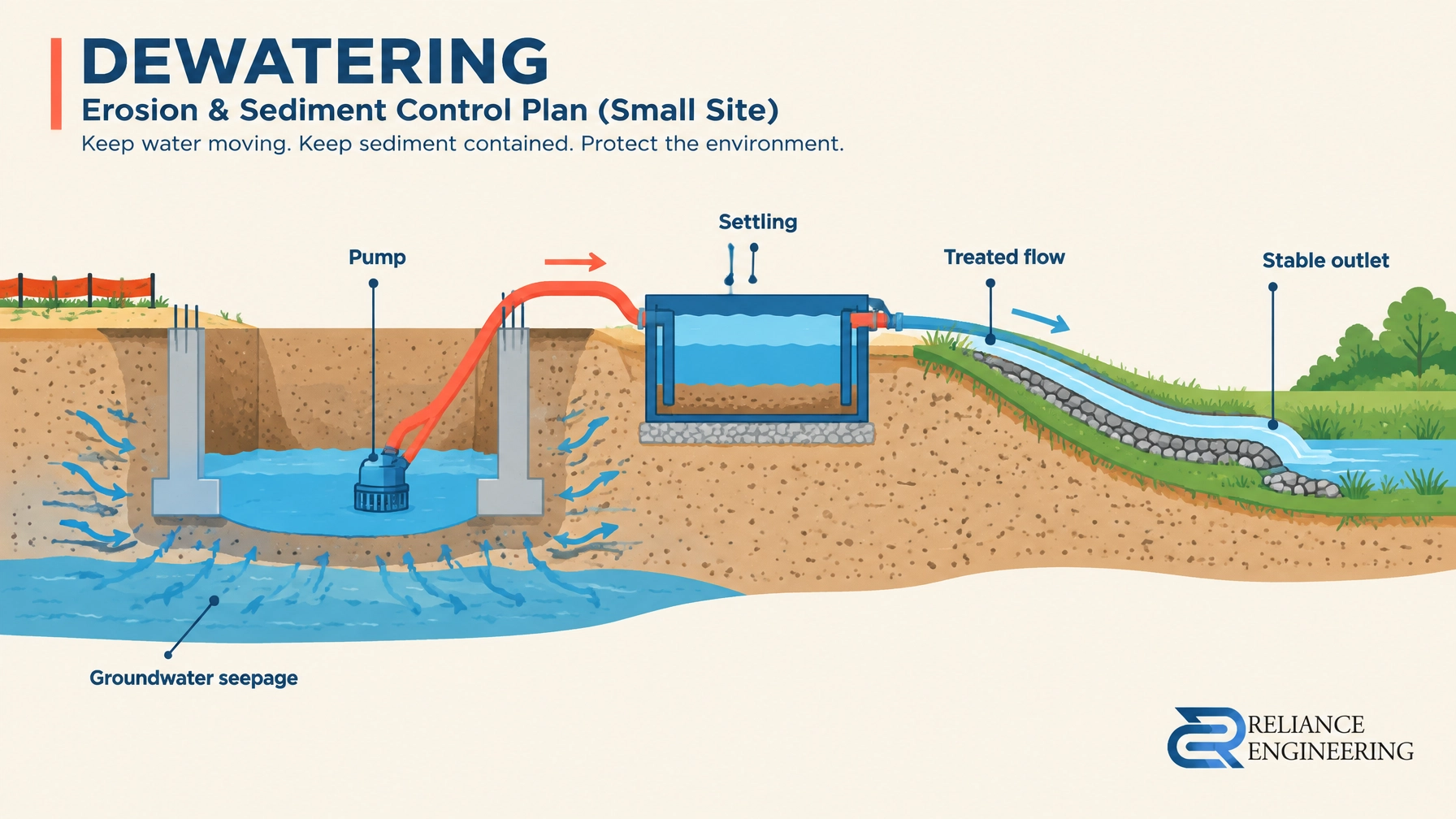
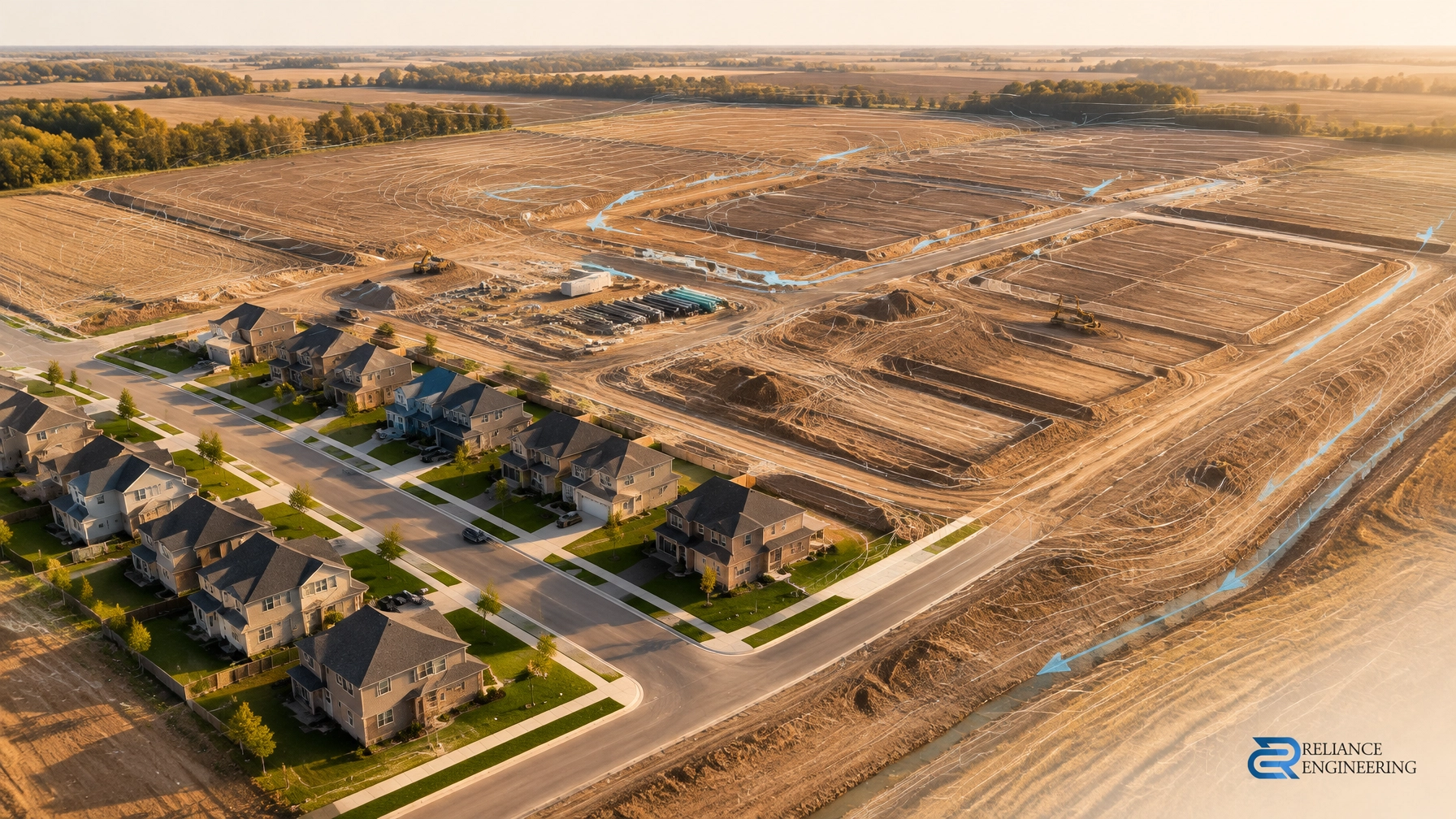
Where regrading disturbs soil, construction controls matter too. Erosion and sediment control measures can protect catchbasins, storm sewers, roads and neighbouring properties during the work. Reliance Engineering prepares Erosion and Sediment Control Plans coordinated with site grading and drainage.

Review grading and pavement structure as one project
A surface-only estimate can seem less costly at first. But if a new asphalt layer is placed over weak or saturated support, the underlying problem remains. Rebuilding after the new surface fails can mean paying for paving twice, along with additional site disruption.
Reviewing pavement condition and grading together helps define a suitable scope before construction. It also supports coordinated design and permit-ready drawings that address elevations, drainage details and connections to existing site infrastructure. For projects requiring municipal review, approval needs and technical requirements should be confirmed for the specific municipality and site.
The applicable requirements may include the Ontario Building Code, municipal engineering standards, lot grading criteria, stormwater management requirements and Conservation Authority requirements where applicable. These should be considered alongside the physical condition of the pavement, not treated as a substitute for checking it.
Get engineering advice before resurfacing
If a commercial lot has recurring ponding, spring movement or settled areas, confirm what lies beneath the surface before choosing an asphalt regrade. A site-specific review can help distinguish a grade correction from a repair that also needs work below the asphalt.
Reliance Engineering provides practical designs, clear drawings, approval support and a drainage-focused approach for projects across Ontario. To discuss commercial property grading fixes or request a consultation, contact Reliance Engineering.
Naresh Ochani, P.Eng., M.Eng.
PEO Certificate of Authorization: 100548882
Reliance Engineering Canada Limited
6850 Millcreek Dr, Mississauga, ON L5N 2H4
647-385-6418 | [email protected]
Hours: Mon–Fri 9:00 AM–5:00 PM; Sat 12:00 PM–2:00 PM; Sun Closed