Every ambitious development project in Ontario begins with a fundamental tension between what is currently permitted and what is visionary. For developers, builders, and land owners, the "highest and best use" of a property often requires a departure from existing municipal regulations. This is where the Zoning By-law Amendment (ZBA) process: commonly known as rezoning: becomes the most critical bridge between a conceptual site plan and a tangible, high-value asset.
Navigating the complexities of Ontario’s Planning Act requires more than just a vision; it requires a rigorous, evidence-based approach to land development consulting. At Reliance Engineering, we specialize in providing the technical backbone necessary to justify these amendments, ensuring that your proposed density, use, or built form is supported by sound civil engineering principles.
The Strategic Importance of Zoning Amendments
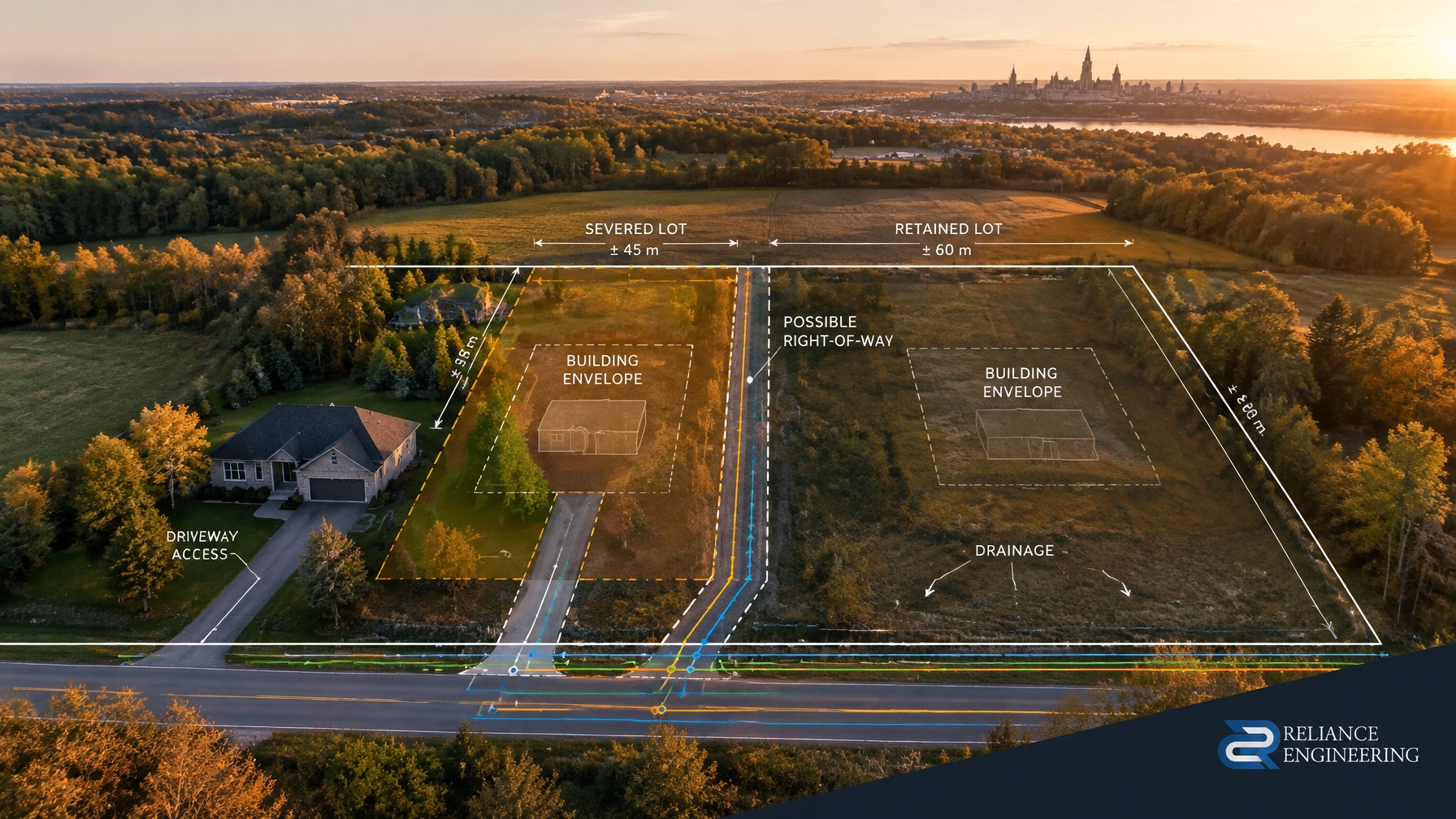
A Zoning By-law governs exactly how land may be used, where buildings can be located, the types of buildings permitted, and statutory requirements such as lot sizes, parking, and building heights. When your development vision exceeds these parameters: such as converting a single-family lot into a multi-unit residential complex or changing a commercial space into mixed-use: a Zoning Amendment is required.
Across Ontario, from the rapidly expanding urban centers to growing rural municipalities, the ZBA process is the mechanism for growth. However, it is not a guaranteed right. It is a discretionary process where the burden of proof lies with the applicant to demonstrate that the change is "good planning" and is supported by adequate infrastructure.
Step 1: Pre-Consultation and Policy Alignment
The journey to a successful rezoning begins long before a formal application is filed. In most Ontario municipalities, a formal pre-consultation meeting with the planning department is a mandatory first step.
During this phase, municipal staff review the preliminary proposal to determine its alignment with the Official Plan. If the proposal deviates significantly from the Official Plan, you may also require an Official Plan Amendment (OPA), which adds layers of complexity and time.
For developers, this is the stage where Reliance Engineering adds immediate value. By reviewing the site’s existing constraints early, we help determine if the proposed density is physically and technically viable. This prevents the costly mistake of pursuing a rezoning for a density that the local water or sewer infrastructure simply cannot support.

Caption: A professional consultation between a developer and a civil engineer reviewing site constraints.
Step 2: The Technical Submission – More Than Just Forms
Once the municipality provides the "Record of Pre-Consultation," the applicant receives a list of required studies. A complete application is the only way to trigger the statutory timelines under the Planning Act. Missing a single report can lead to months of delays.
In Ontario, a Zoning Amendment application typically requires:
- Planning Rationale: A document explaining why the proposal makes sense in the context of provincial and local policies.
- Functional Servicing Report (FSR): This is perhaps the most critical technical document. It proves that the site can be serviced by water, sanitary, and storm infrastructure. Learn more about how to avoid submission delays with an FSR.
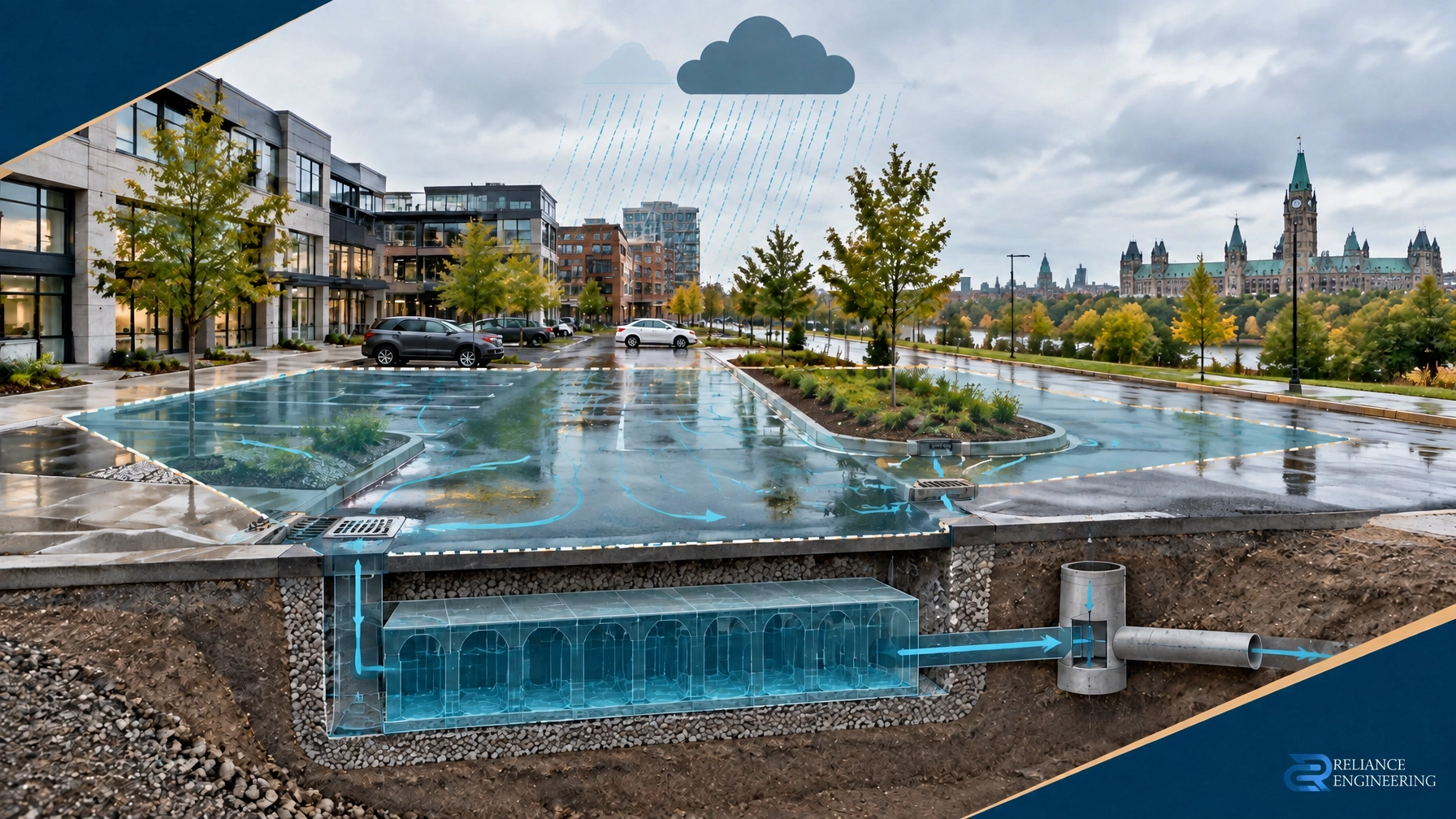
- Stormwater Management (SWM) Report: With climate change and urban flooding becoming a priority for Ontario regulators, a detailed SWM report is non-negotiable. You can read about why SWM precision matters in 2026.
- Site Grading and Servicing Plans: These plans provide the visual and mathematical proof that the land can be developed without adversely affecting neighboring properties.
Step 3: Municipal Review and Public Notification
After the application is submitted and deemed "complete" (usually within 15 days), the municipality begins its formal circulation. The application is sent to internal departments (Engineering, Parks, Fire) and external agencies (Conservation Authorities, School Boards, and Utility providers).
Simultaneously, the public notification process begins. Signs are posted on the property, and notices are mailed to every property owner within 120 meters. This is often the most sensitive stage of the process. Neighbors may raise concerns regarding increased traffic, shadows, or "neighborhood character."
Expert engineering acts as a shield during this phase. When a neighbor expresses concern about drainage or increased runoff, having a professionally sealed Stormwater Management Report allows the developer to respond with facts rather than conjectures, de-escalating potential opposition.
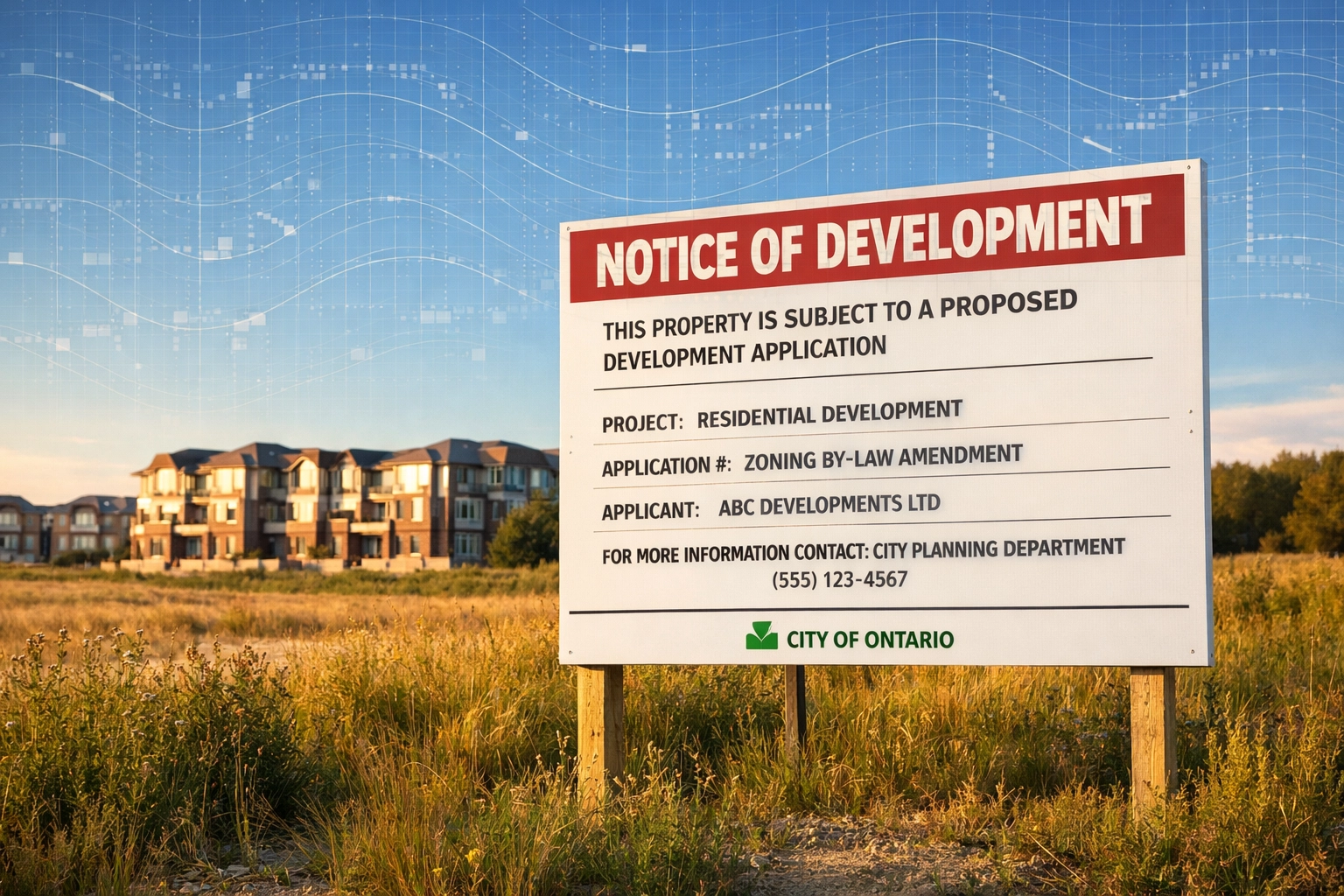
Caption: A municipal public notice sign for a Zoning By-law Amendment standing on a development site.
Step 4: The Public Meeting and Council Decision
The Planning Act requires at least one public meeting where the Planning Committee or Council hears from the applicant and the public. Following this meeting, and after all agency comments have been addressed, municipal planning staff will draft a "Recommendation Report."
This report is the climax of the process. If the staff recommends approval, the Council will vote on the proposed Zoning By-law. If approved, the municipality will pass the amending by-law.
It is important to note that a Zoning Amendment is often processed concurrently with a Site Plan Approval. While rezoning handles the "use" and "density," Site Plan Approval handles the "fine details" of how the building sits on the land.
Step 5: The Appeal Period and Finalization
Once the by-law is passed, a mandatory 20-day appeal period follows. During this time, anyone who made an oral or written submission during the process can appeal the decision to the Ontario Land Tribunal (OLT).
If no appeals are filed within those 20 days, the Zoning Amendment becomes "in force and effect." The vision is now legally permitted. If an appeal is filed, the project may face a hearing at the OLT, a process that can add months or even years to the timeline. This is why "getting it right the first time" with precise engineering and thorough planning is so vital; a bulletproof application is far less likely to be successfully challenged at the Tribunal.
Realistic Timelines for Ontario Developers
One of the most frequent questions we receive at Reliance Engineering is: "How long will this take?"
While the Planning Act sets out certain statutory timelines, the reality on the ground in Ontario varies:
- Straightforward Amendments: 3 to 6 months. These usually involve minor changes to setbacks or height that align perfectly with the Official Plan.
- Standard Rezoning: 6 to 9 months. This is the typical timeframe for residential infill or small-scale commercial changes.
- Complex Applications: 9 to 18+ months. Large-scale subdivisions or projects requiring an Official Plan Amendment and extensive technical studies often fall into this category.

Caption: A high-level timeline chart showing the various stages of the Ontario rezoning process.
Why Engineering Precision is the Key to Approval
At Reliance Engineering, we have seen countless projects stall not because the "vision" was wrong, but because the technical details were flawed. A municipality will not approve a rezoning if the civil engineering doesn't work.
If your lot grading plan shows that you are pushing water onto a neighbor's yard, or if your site servicing plan fails to meet the capacity requirements of the local water main, your application will be sent back for revisions. Each revision cycle can add 4-8 weeks to your timeline.
By partnering with an experienced firm like Reliance Engineering, you ensure that:
- Draft Plans are Ready in Days: We understand the urgency of development. We provide permit-ready drafts quickly to keep your project moving.
- Compliance is Guaranteed: We stay updated on the latest Ontario Building Code and municipal engineering standards across the province.
- Cost-Effective Solutions: We don't just design for approval; we design for construction. Our goal is to ensure your servicing and grading are as efficient as possible to save on capital costs.

Caption: A detailed civil engineering drawing showcasing site grading and servicing for a multi-unit development.
Turning Your Vision into Reality
A Zoning Amendment is a high-stakes investment. It requires a significant outlay of capital in fees and professional services, but the return on investment: unlocked by increased density and land value: is substantial.
Whether you are looking to build a garden suite in the GTA or a multi-phase subdivision in a growing Ontario township, the principles remain the same: early consultation, rigorous technical studies, and professional representation.
Reliance Engineering provides the civil engineering expertise that municipalities trust. We transform complex land development challenges into clear, actionable plans that pass through the municipal filter with fewer "kicked back" submissions.
Contact Reliance Engineering Today
If you are considering a Zoning Amendment for your property in Ontario, do not leave the technical requirements to chance. Let our team of experts handle the Functional Servicing, Site Grading, and Stormwater Management reports that will make your application a success.
Reliance Engineering
Founder & Principal: NARESH OCHANI
Service Area: Across Ontario
Specialties: Site Grading, Site Servicing, Stormwater Management, Land Development Consulting
Operational Hours:
Monday – Friday: 9:00 AM – 5:00 PM
Contact: www.relianceengineering.ca
Ready to start? Contact us for a consultation and let's turn your vision into reality.