In the competitive landscape of land development across Ontario, timing is often the difference between a profitable venture and a stalled investment. Developers frequently encounter a common bottleneck during the early stages of a project: the municipal approval process. While many factors influence the speed of these approvals, one document stands out as the ultimate technical gatekeeper: the Functional Servicing Report (FSR).
At Reliance Engineering, we recognize that a high-quality Functional Servicing Report is not merely a box to be checked on a permit application. It is a strategic blueprint that demonstrates to municipal authorities that your project is viable, safe, and compatible with existing infrastructure. When executed with precision, an FSR acts as the "secret sauce" that streamlines communications with city engineers and moves your project from the drawing board to the construction phase.
What is a Functional Servicing Report (FSR)?
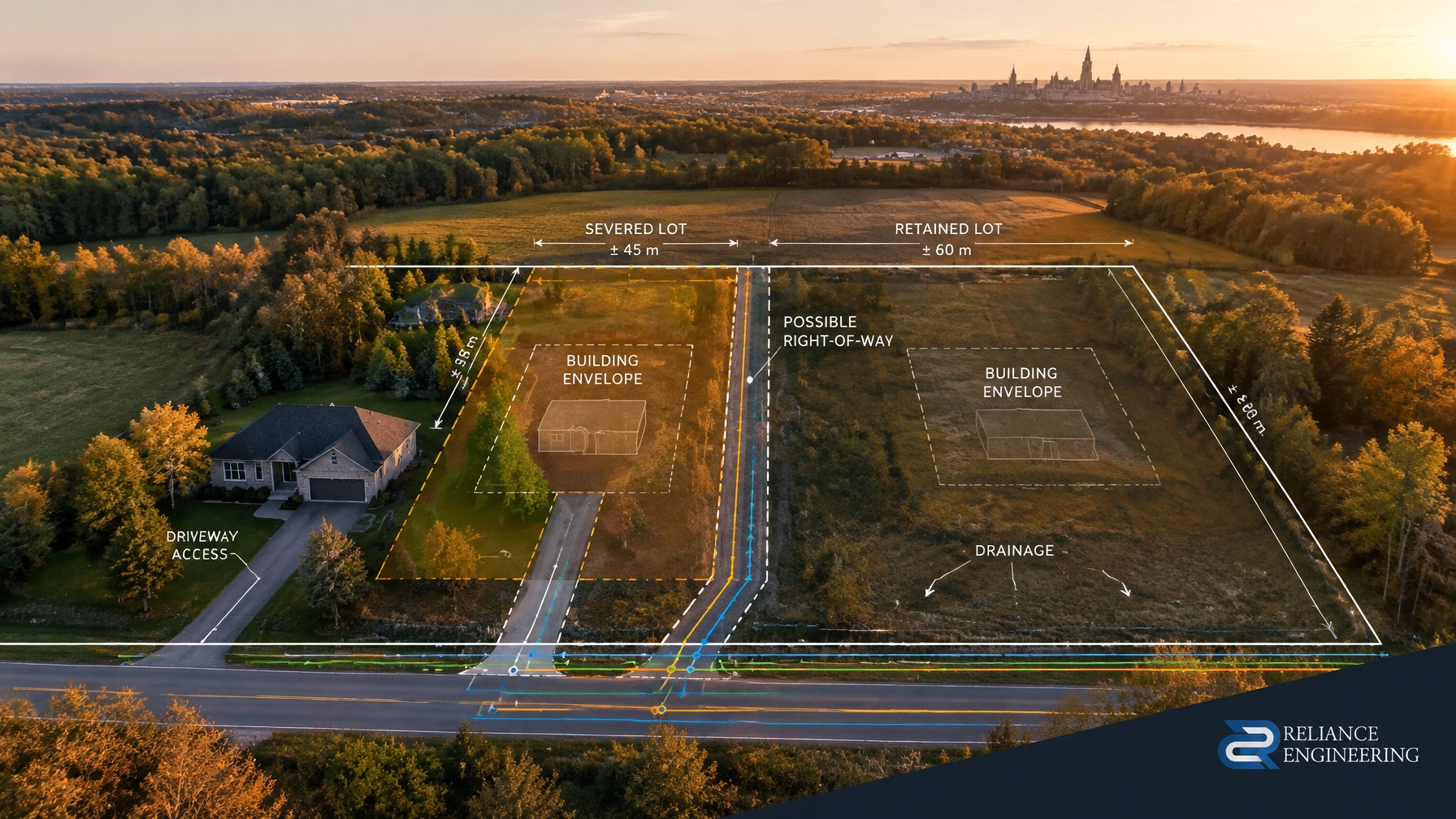
A Functional Servicing Report is a comprehensive technical document prepared by a licensed Professional Engineer. Its primary purpose is to evaluate the capacity of existing municipal infrastructure to support a proposed development. Whether you are planning a high-rise residential complex in a metropolitan hub or a commercial subdivision in a growing township, the FSR proves that the local water, sanitary, and stormwater systems can handle the increased demand.
The report provides a deep dive into the engineering feasibility of the site. It doesn't just suggest that servicing is possible; it uses rigorous data, modeling, and calculations to prove it. In Ontario, an FSR is a mandatory requirement for Site Plan Approval and Plan of Subdivision applications. Without a stamped and signed FSR, an application is essentially "dead on arrival" at most municipal planning departments.
The Three Pillars of a Robust FSR
To be effective, a Functional Servicing Report must address three core infrastructure components. Failure to provide detail in any of these areas can lead to lengthy "Requests for Information" (RFIs) from the city, which can delay a project by months.
1. Water Distribution and Fire Flow
The FSR must demonstrate that the existing water main network can provide adequate domestic water pressure and, more importantly, sufficient fire flow. Engineers must calculate the required fire flow based on the Fire Underwriters Survey (FUS) or the Ontario Building Code (OBC) standards and compare it against the available capacity determined through hydrant flow testing.
2. Sanitary Sewer Capacity
Increased density means increased wastewater. The FSR evaluates the downstream capacity of the sanitary sewer system. This involves calculating peak flow rates and ensuring that the pipes have the "freeboard" necessary to accommodate the new development without causing backups or overflows in the existing municipal network. For more technical insights, you can explore our approach to sanitary sewer design.
3. Stormwater Management (SWM)
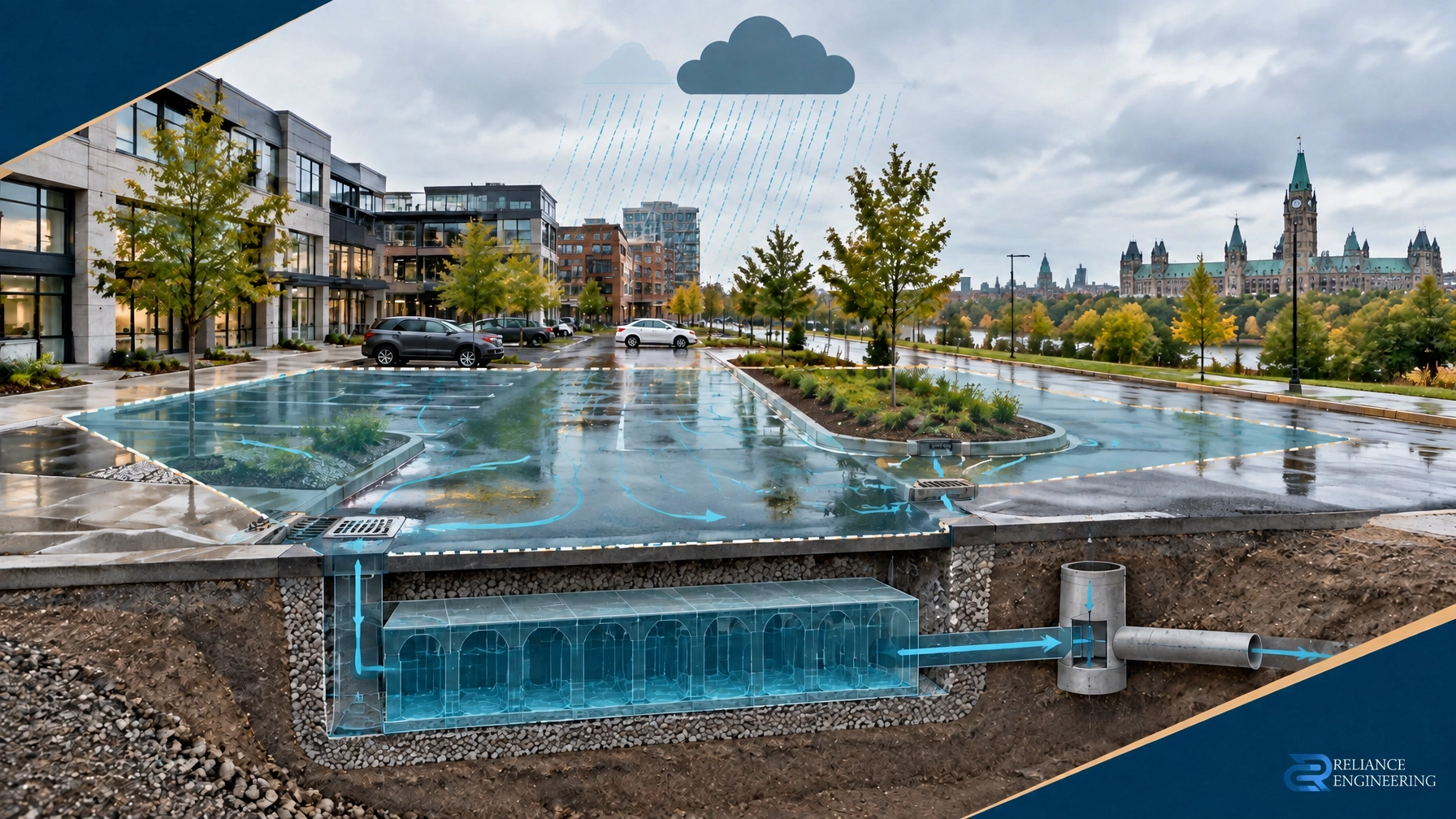
Stormwater management is perhaps the most scrutinized aspect of an FSR in Ontario today. With changing climate patterns and stricter environmental regulations, developers must prove that their project will not increase the risk of flooding downstream. This involves detailed stormwater management strategies, including quantity control (attenuation of peak flows) and quality control (removal of total suspended solids).
How a High-Quality FSR Speeds Up Approvals
The "secret" to getting your development moving lies in the quality of the submission. A common mistake is submitting a generic or "thin" report that leaves too many questions for the municipal reviewer. When a city engineer receives a comprehensive, well-structured FSR from a firm like Reliance Engineering, it builds immediate trust.
Reduced Revision Cycles
Every round of comments from a municipality can take weeks or even months to resolve. A high-quality FSR anticipates potential concerns: such as pipe capacity issues or grading constraints: and addresses them proactively with engineering solutions. By providing a "complete" package the first time, you significantly reduce the number of revision cycles required.
Facilitating the Site Servicing Plan
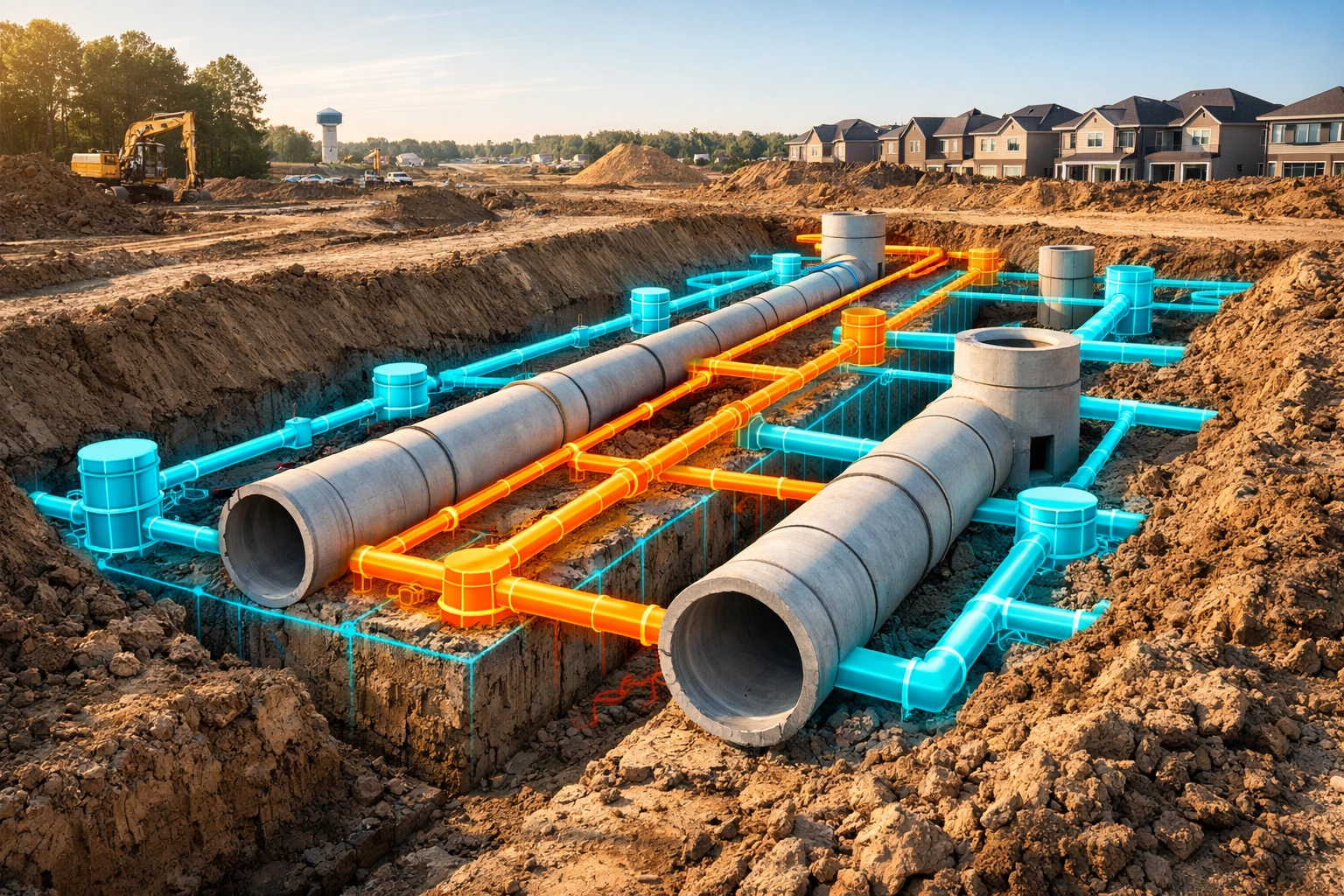
The FSR serves as the foundation for the site servicing plan. While the FSR provides the high-level strategy and calculations, the site servicing plan provides the physical layout of the pipes, valves, and connections. When these two documents are perfectly synchronized, it eliminates discrepancies that often cause delays during the detailed design and permitting phases.
Early Identification of "Deal-Breakers"
An FSR performed during the due diligence phase can identify "deal-breakers" before you commit significant capital. For example, if the report reveals that the local water main is undersized and requires a multi-million dollar upgrade, you can adjust your pro-forma or negotiate with the municipality early in the process.
The Intersection of FSR and Site Grading
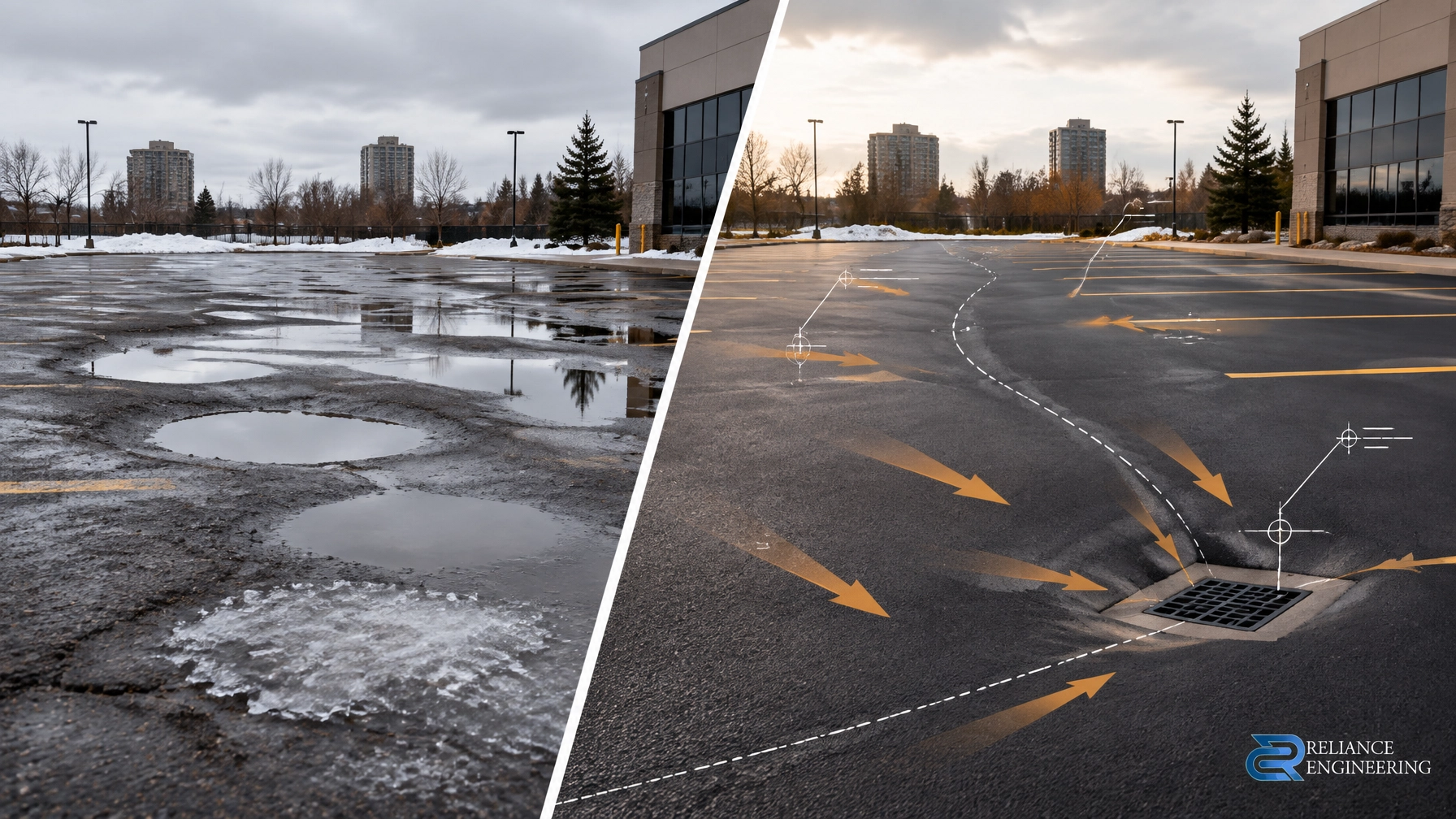
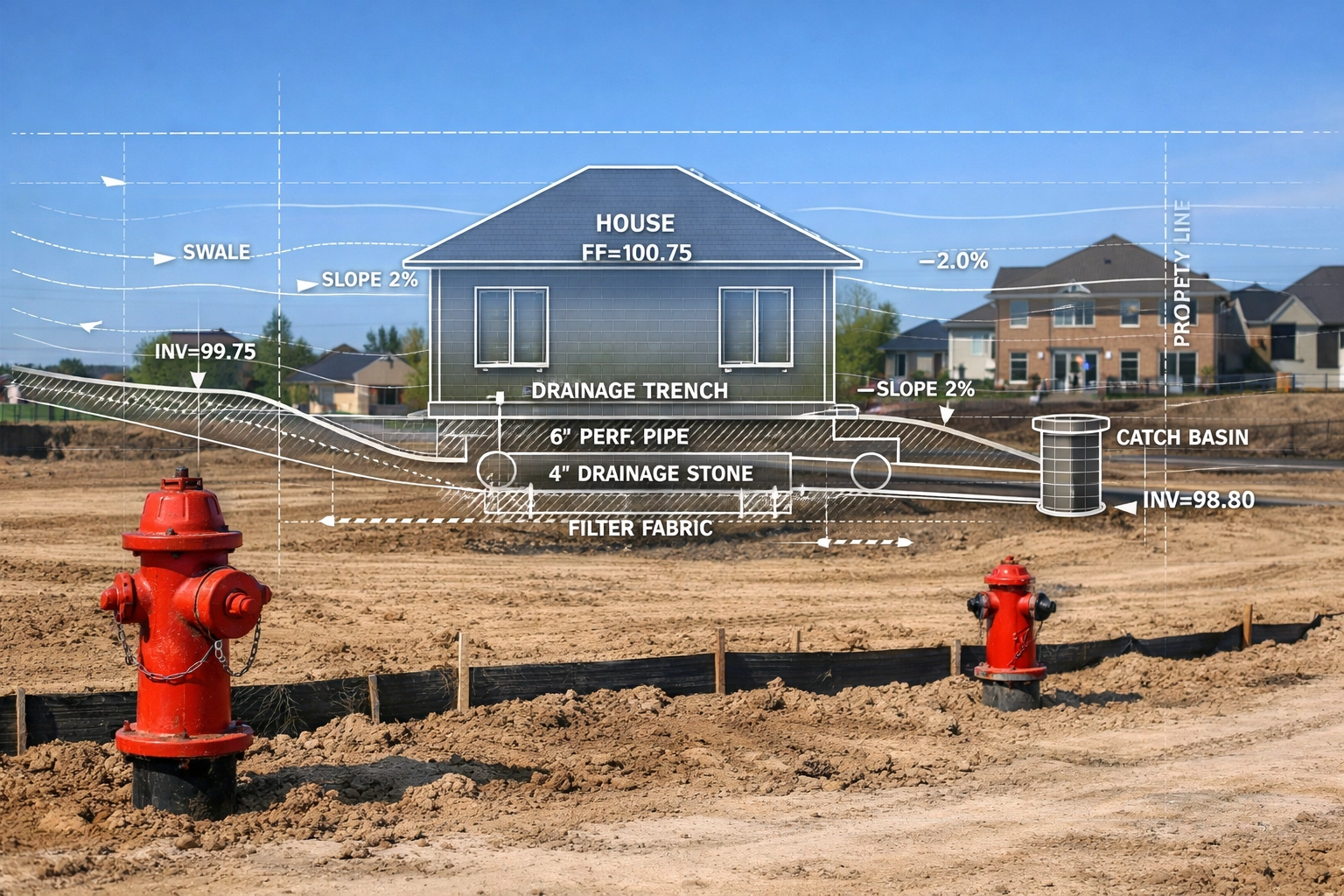
An FSR cannot exist in a vacuum. It must be closely integrated with the site grading plan. The topography of the land dictates how water flows and where sewers can be placed. A site that is poorly graded will struggle to meet the stormwater requirements outlined in the FSR. By viewing grading and servicing as a unified system, we ensure that the proposed infrastructure is not only compliant but also cost-effective to build.
Our experience on complex projects, such as the Redevelopment of Etobicoke General Hospital and the 35 Wabash Avenue Townhomes, has taught us that the most successful developments are those where the technical reporting and the physical design are developed in tandem.
Navigating the Ontario Landscape
Development standards in Ontario are not uniform. Each municipality: from the City of Toronto to the growing regions of Simcoe or Durham: has its own specific criteria for Functional Servicing Reports. These may include specific modeling software requirements, different design storm parameters, or unique environmental protection policies.
Reliance Engineering specializes in navigating these jurisdictional nuances. We understand what a reviewer in a specific municipality is looking for, which allows us to tailor our functional servicing report to meet those local expectations on the first submission.
Why Choose Reliance Engineering for Your Next Project?
At Reliance Engineering, we are more than just consultants; we are your partners in development. Our approach is rooted in providing practical, compliant, and cost-effective solutions. We know that in the world of civil engineering, precision is the primary driver of speed.

When you work with us, you benefit from:
- Professional Expertise: Every report is overseen by a licensed Professional Engineer (P.Eng.) with deep knowledge of Ontario’s regulatory environment.
- Integrated Design: We ensure your FSR, site servicing plan, and grading plans work together seamlessly.
- Efficiency: We prioritize clarity and technical accuracy to minimize municipal pushback and accelerate your project timeline.
The success of your development depends on the strength of its technical foundation. Don't let a subpar report hold back your vision. A robust Functional Servicing Report is the most effective tool in your arsenal to navigate the complexities of land development and secure the approvals you need to break ground.
Contact Reliance Engineering
Ready to get your development moving? Contact our team of experts today for a consultation on your next project.
- Principal: Naresh Ochani
- Website: www.relianceengineering.ca
- Services: View Our Full Range of Engineering Services
- Location: Serving clients across Ontario.
- Operational Hours: Monday – Friday: 9:00 AM – 5:00 PM
For inquiries, visit our Contact Us page or explore our Portfolio of Projects to see how we have helped other developers achieve success.