The Greater Toronto Area (GTA) is currently undergoing a radical transformation in how land development and building permits are processed. With the introduction of provincial mandates like Bill 23 and the City of Toronto’s internal initiatives to streamline the Committee of Adjustment (CoA) and Site Plan Approval (SPA) processes, the message to developers is clear: move faster.
However, there is a dangerous pitfall in this new "high-speed" environment. While the administrative timelines are shrinking, the technical requirements for approval are not. In fact, as urban density increases and climate change forces stricter stormwater management standards, the margin for error has never been smaller.
At Reliance Engineering, we have spent over 20 years navigating the complexities of Southern Ontario’s regulatory landscape. We understand that in the eyes of a municipal reviewer, red tape doesn’t care about your financing deadlines or your construction start date: it only cares about your data. To secure your building permit, your data must be unimpeachable.
The Illusion of Speed in Toronto’s Development Cycle
It is a common misconception that a faster hearing date at the Committee of Adjustment equates to a faster project start. Toronto is indeed moving faster on CoA timelines, but a hearing date is only a milestone, not the finish line.
If your site grading plan or your functional servicing report is missing critical data, or if your engineering drawings fail to account for site-specific constraints, the "speed" you gained in the application phase will be lost in the "Revision Loop."
The Revision Loop is where projects go to die. It is the back-and-forth between the developer’s consultant and the City’s engineering reviewers. Every time a reviewer finds a discrepancy in your building permit drawings, you are pushed back to the bottom of the pile. In 2026, where interest rates and material costs remain volatile, these delays are more than just an inconvenience: they are a financial liability.
Precision: The Foundation of Every Building Permit
Precision in civil engineering is not just about getting the math right; it’s about understanding the "why" behind the municipal requirements. When we prepare building permit drawings, we are translating a developer's vision into a language that municipal engineers can approve.
1. The Critical Role of the Site Grading Plan
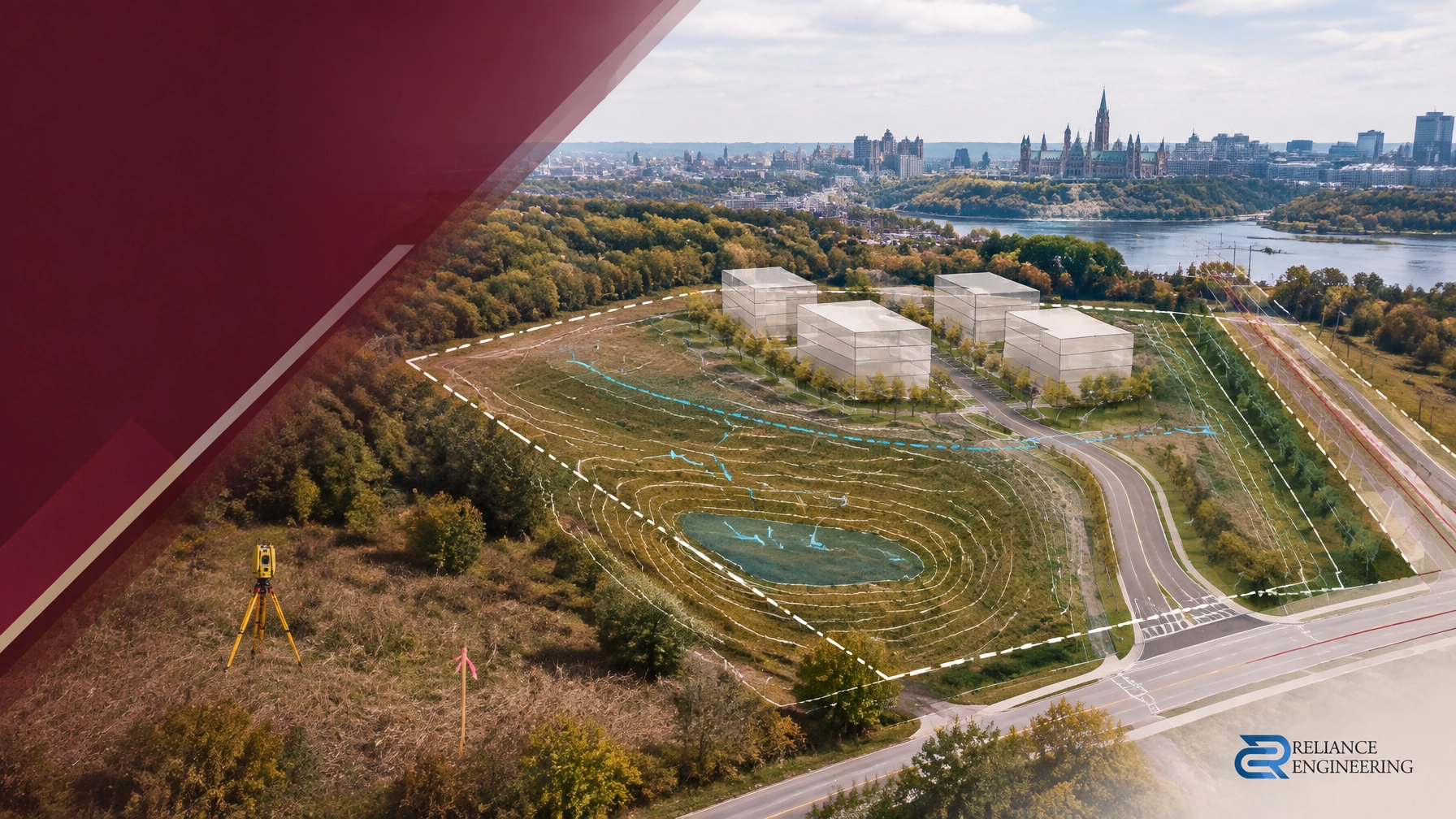
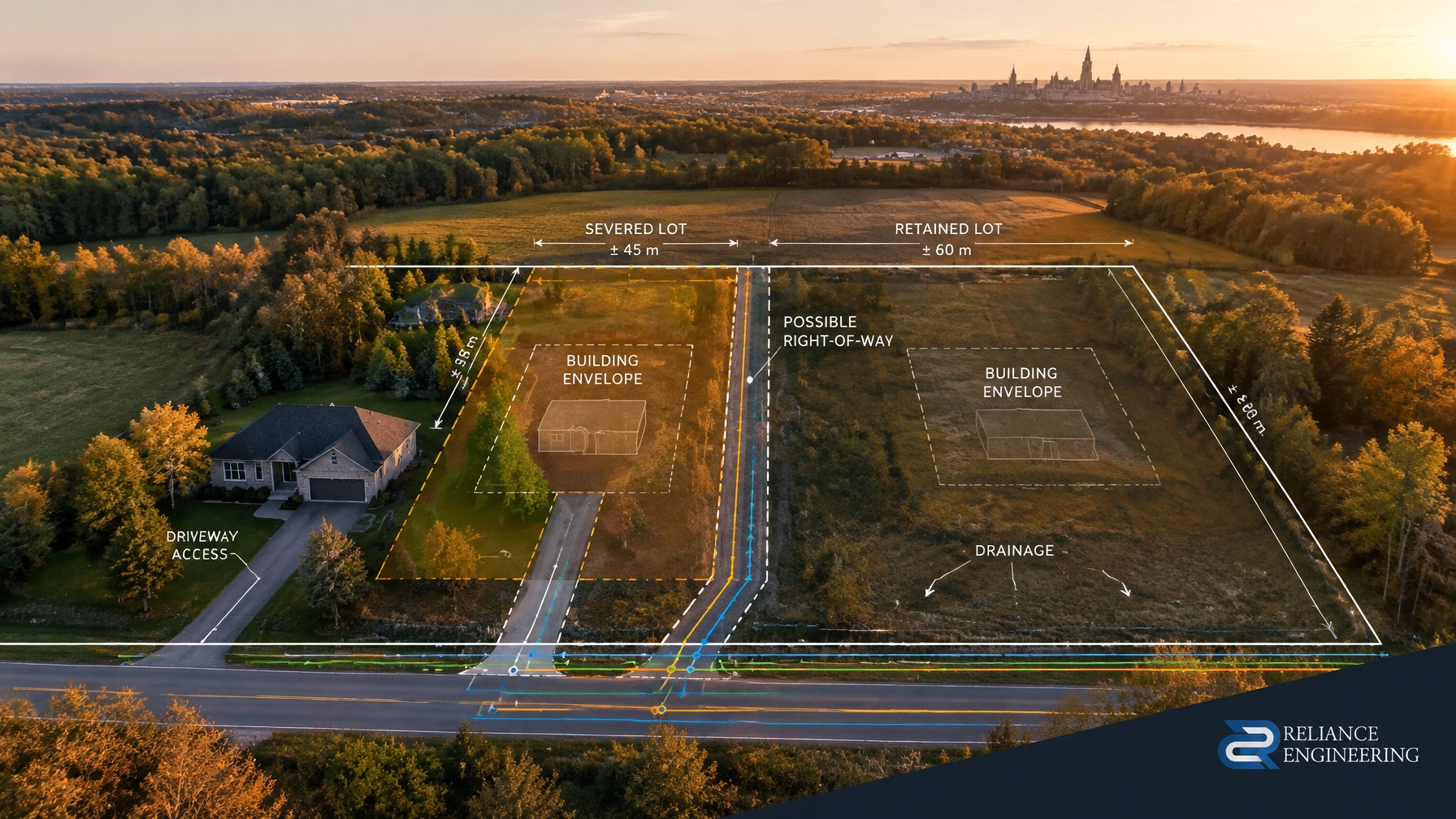
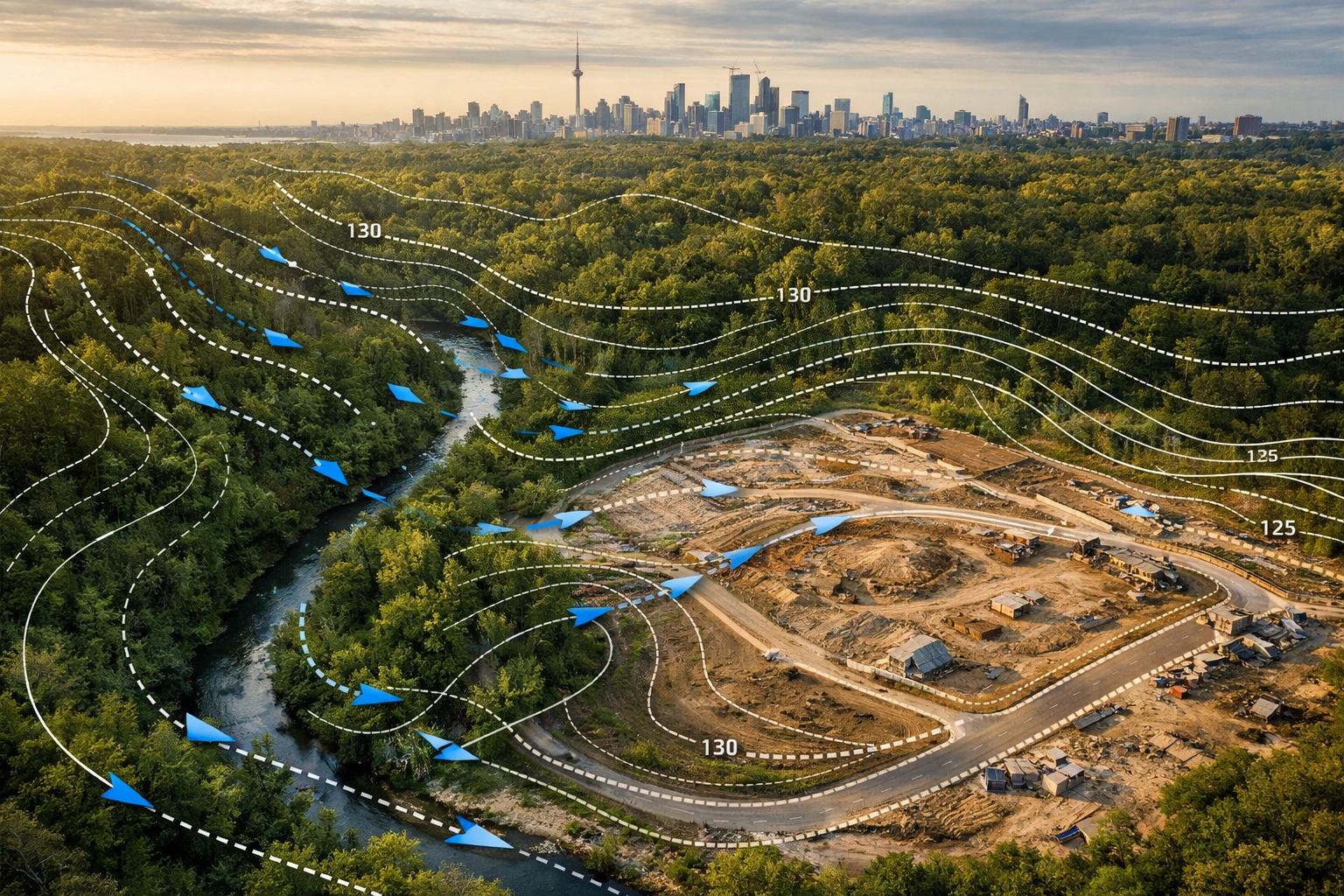
A site grading plan is one of the most scrutinized documents in any permit application. Its primary purpose is to ensure that the proposed development does not negatively impact neighboring properties or the municipal right-of-way.
In a dense urban environment like Toronto, managing runoff is a precision game. We must account for:
- Existing Topography: How the land currently drains.
- Proposed Elevations: Ensuring positive drainage away from structures.
- Property Line Matches: Ensuring we don’t "wall off" a neighbor or flood their backyard.
- Infill Constraints: Navigating the tight tolerances of narrow lots in neighborhoods like Cabbagetown or Etobicoke.
2. Functional Servicing and Infrastructure
Before a shovel hits the ground, the City needs to know if their existing infrastructure can handle your project. This is where a Functional Servicing Report (FSR) becomes essential. Whether it’s a mid-rise development like the 35 Wabash Avenue Townhomes or a large-scale institutional project like the Redevelopment of Etobicoke General Hospital, the data regarding sanitary sewer design and water distribution must be exact.

Why Data Trumps Deadlines
We often see clients come to us after a failed attempt with a lower-cost or less experienced firm. The common thread in these failed applications is a focus on the deadline over the data.
Municipal reviewers in the GTA are overworked. When they open a file and see incomplete storm system design or a grading plan that doesn't respect the existing tree canopy, they don't reach out to "help" you fix it. They issue a refusal or a long list of comments that can take weeks or months to resolve.
At Reliance Engineering, our philosophy is to deliver approval-ready drawings the first time. This means:
- Pre-consultation: We identify potential "red flags" before the application is even submitted.
- Integrated Design: Our site servicing plans are developed in tandem with the architectural and landscape designs to ensure there are no physical conflicts.
- Agency Alignment: We coordinate with the TRCA, Toronto Water, and other agencies early in the process.
20+ Years of GTA Expertise: The Reliance Advantage
Experience in the GTA is not just about knowing the rules; it’s about knowing the people and the local nuances. The requirements for a project in Newmarket, such as our work on 345-351 Davis Drive, differ significantly from a project in downtown Toronto like 24 Howard Park Avenue.
Over two decades, we have built a reputation for reliability. Our name, Reliance Engineering, is a reflection of our commitment to being the firm that developers, architects, and contractors can depend on when the stakes are high.
Understanding Local Conservation Authorities
Many projects in the GTA fall under the jurisdiction of conservation authorities. Navigating these requirements requires a high level of precision in stormwater management. We ensure that our designs meet the stringent water quality and quantity control measures required to protect our local watersheds.
The Cost of "Almost Correct"
In civil engineering, "almost correct" is the same as "wrong." A site grading plan that is off by a few centimeters can lead to basement flooding, litigation, or the City refusing to assume the services.
By prioritizing precision, we actually achieve greater speed. By spending the necessary time in the design phase to ensure every pipe diameter, every slope, and every invert elevation is correct, we bypass the Revision Loop. This is how we move our clients from the Committee of Adjustment to a building permit in record time.
Our Core Services for GTA Developers
To support your next project, Reliance Engineering offers a comprehensive suite of land development consulting services, including:
- Site Grading Plans: Ensuring compliance with municipal drainage requirements.
- Functional Servicing Reports: Assessing the capacity of existing infrastructure.
- Site Servicing Plans: Designing the lifelines of your building (water, sanitary, storm).
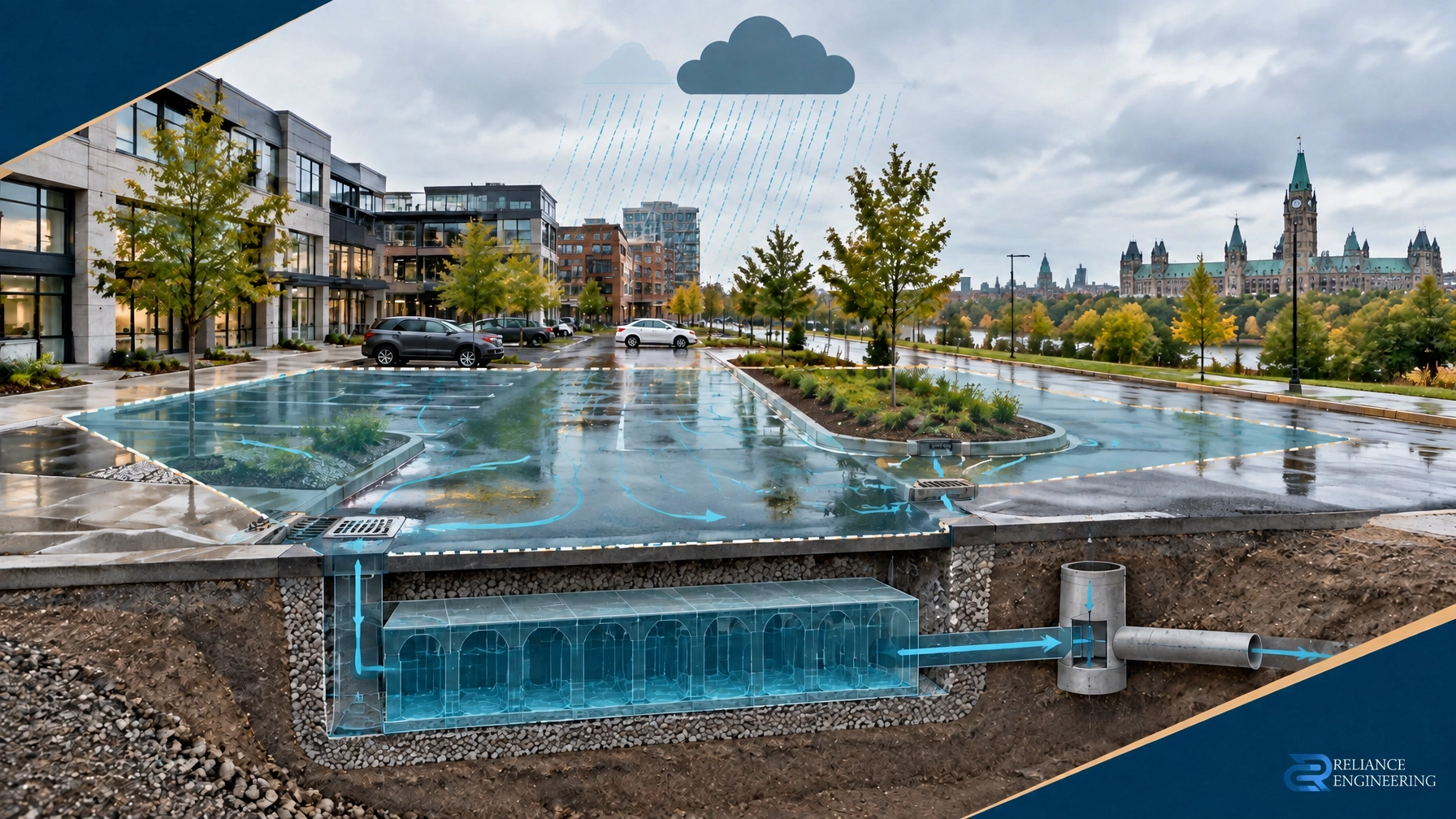
- Stormwater Management: Utilizing state-of-the-art storm system design to meet environmental standards.
- Sanitary Sewer Design: Providing robust solutions for waste management.
Conclusion: Balancing the Scales
As we look toward the remainder of 2026 and beyond, the pressure to build in the GTA will only intensify. Developers who succeed will be those who recognize that speed is a byproduct of precision.
Don't let your project get bogged down by avoidable red tape. Partner with a firm that has the data, the experience, and the reputation to get your drawings approved the first time.
Reliance Engineering
Founder and Principal: Naresh Ochani
Operational Hours:
Monday – Friday: 9:00 AM – 5:00 PM
Toronto, Ontario
Ready to move your project forward with precision?
Contact Us Today to discuss your site grading plan or building permit requirements. Let’s get your project out of the Committee of Adjustment and into the construction phase.

About Reliance Engineering
Reliance Engineering is a premier Civil Engineering and Land Development Consulting firm based in the GTA. With over 20 years of experience, we specialize in providing practical, compliant, and cost-effective engineering solutions for residential, commercial, and institutional projects.
Learn more About Us or view our Project Portfolio.