Ontario’s land development landscape changed overnight with the introduction of Bill 98. The "More Homes for Everyone Act" didn't just tweak the rules: it fundamentally restructured how municipalities review site plans. If you are still submitting applications the way you did two years ago, you are wasting time and money.
At Reliance Engineering, we’ve seen property developers across Ontario struggle with these new mandates. The process is now faster, but the margin for error is razor-thin. If your submission isn't perfect, the clock stops, and your project stalls.
Here are the seven most common mistakes we see in Ontario site plan applications under Bill 98: and exactly how to fix them to ensure your permits are secured quickly.
1. Including "Sustainable Design" Elements in Site Plan Control
Bill 98 removed "sustainable design" from the matters that municipalities can control through site plan review. Many developers are still cluttering their site plans with extensive green roof details, specialized building materials, or EV charging infrastructure that municipalities can no longer legally require at this stage.
The Fix: Focus strictly on health, safety, accessibility, and the protection of adjoining lands. Remove the fluff. By stripping your site plan down to the core functional and safety requirements, you reduce the surface area for municipal feedback and speed up the approval.
2. Weak Site Grading and Drainage Strategy
Municipalities have a narrowed scope, but their focus on "protection of adjoining lands" is sharper than ever. A site grading plan that doesn't clearly show how water is managed relative to neighboring properties is a guaranteed rejection.

The Fix: Ensure your grading design includes defined slopes, clear overland flow routes, and zero impact on adjacent lots. Use precision elevation data from a current survey: never rely on old site data. At Reliance Engineering, we specialize in lot grading plans that get approved in one submission by prioritizing these core safety metrics.
3. Ignoring the "Missing Middle" and Multi-Unit Conversions
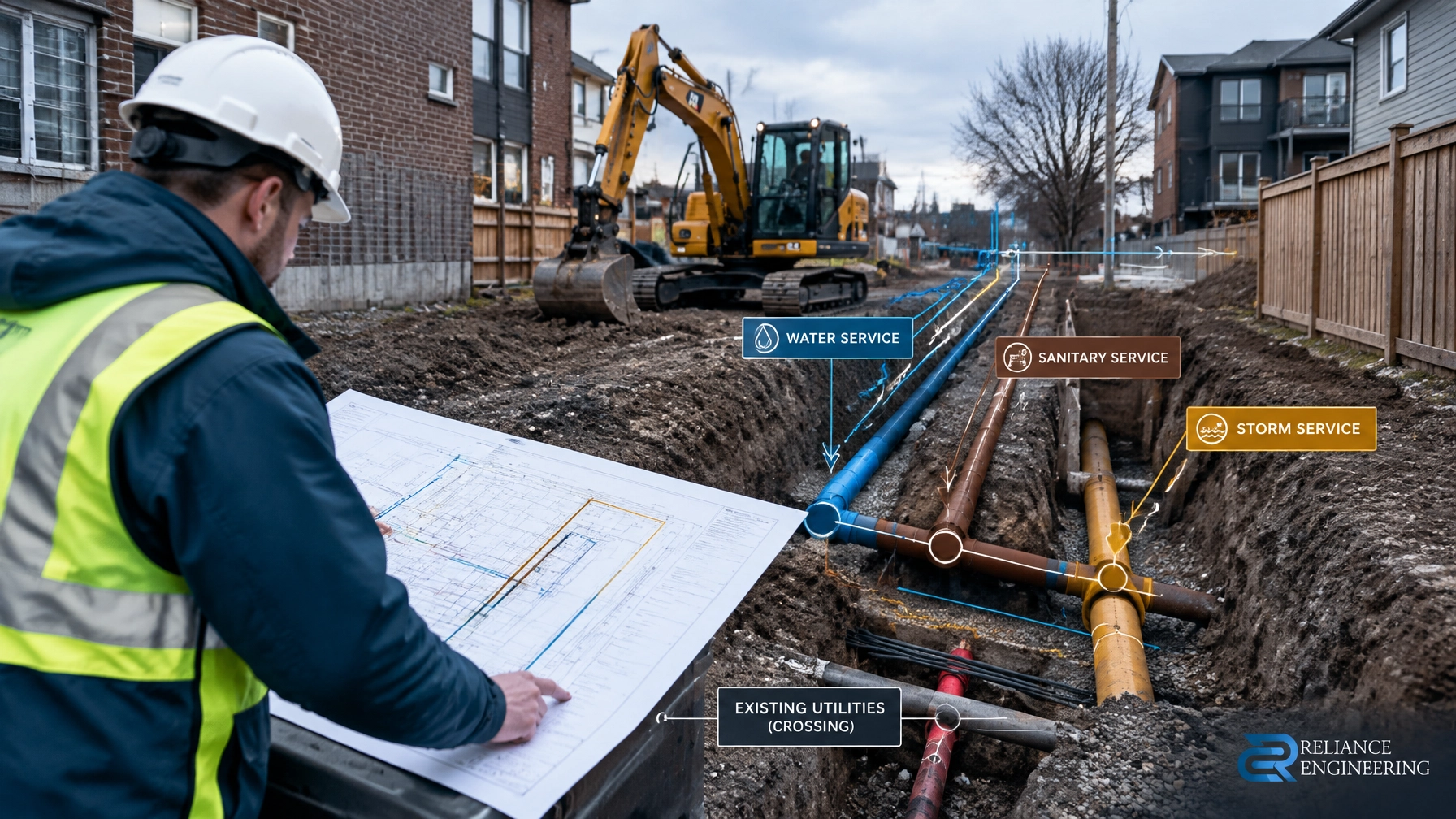
With the push for increased density, many developers are missing out on the "Missing Middle." Bill 98 and related provincial changes make it easier to convert single-family lots into multi-unit properties. However, many applications fail because the site servicing plans don't account for the increased load on water and sanitary systems.

The Fix: If you are building multi-unit housing, your civil package must include a functional servicing report that proves the existing infrastructure can handle the density. Don't wait for the city to ask: provide the capacity analysis upfront.
4. Inaccurate Stormwater Management (SWM) Reports
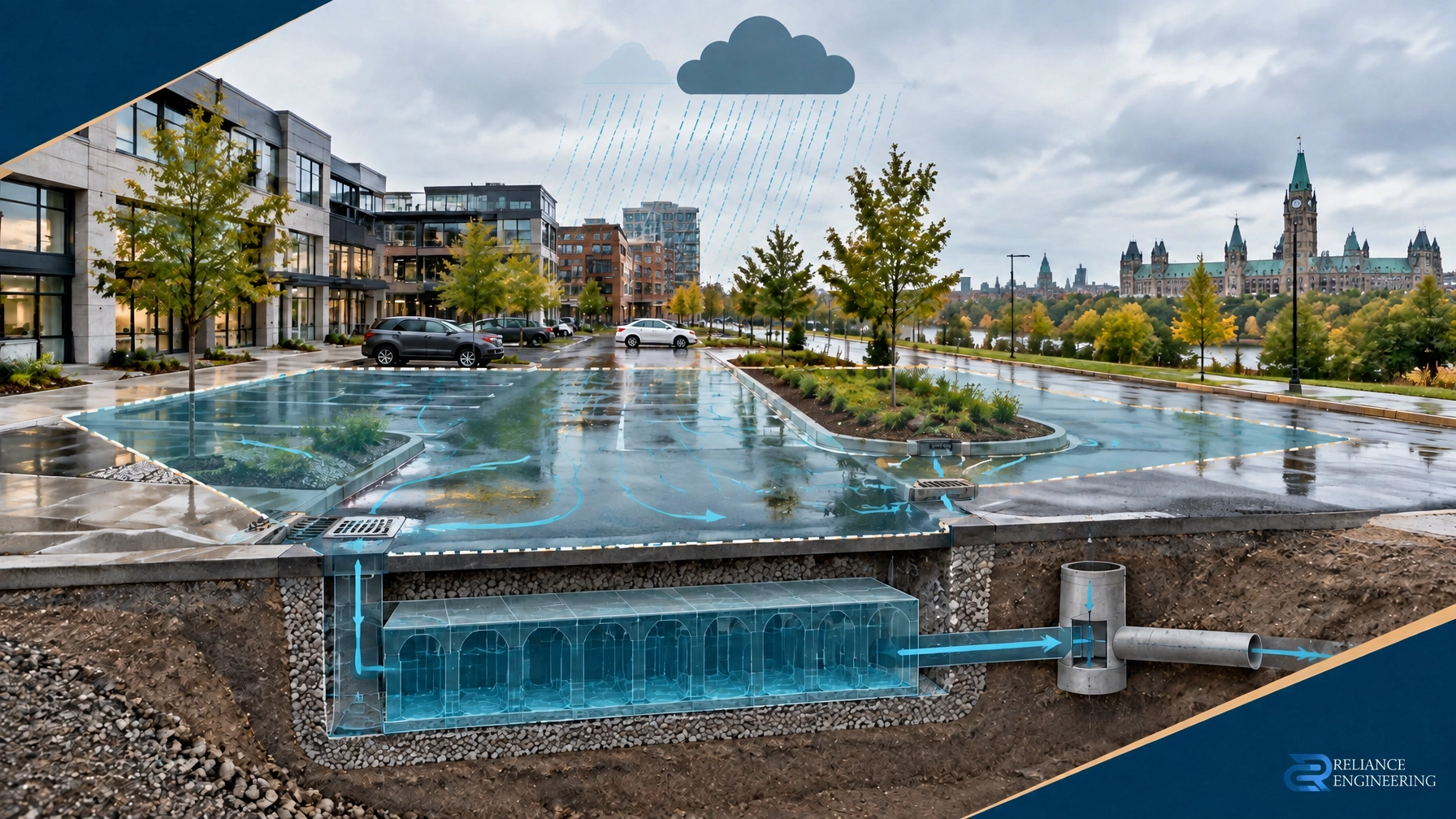
A common error is submitting an SWM report that uses outdated rainfall data or fails to implement Low Impact Development (LID) features where required. Under Bill 98, while "sustainable design" is limited, the technical requirement for water balance and quantity control remains a hard gatekeeper for approval.
The Fix: Ensure your stormwater management report is compliant with both provincial standards and specific municipal criteria. We use advanced modeling to ensure your site manages runoff efficiently, preventing basement flooding and protecting local ecosystems.
5. Poor Erosion and Sediment Control (ESC) Planning
Environmental protection during construction is non-negotiable. Many site plans treat ESC as an afterthought, leading to stop-work orders and fines. Bill 98 emphasizes the protection of adjoining lands, and that includes preventing your site’s silt from ending up on their property or in the municipal storm system.

The Fix: Draft a detailed erosion and sediment control plan that includes silt fencing, catch basin protection, and mud mats. It shows the municipality you are a professional operator who takes environmental accountability seriously.
6. Lack of Discipline Coordination (Civil vs. Architectural)
This is the number one cause of delays. The architect shows a door at one elevation, but the civil engineer’s site plan approval drawings show a grading slope that makes that door inaccessible. Or, a catch basin is placed exactly where a tree is shown on the landscape plan.
The Fix: Run a thorough coordination check before submission. Ensure the grading, servicing, and architectural plans match perfectly. At Reliance Engineering, we take full ownership of this coordination, working closely with your architects to ensure the technical drawings are seamless.
7. Treating the First Submission as a "Draft"
Under Bill 98, municipalities are moving toward capped resubmissions. If you treat your first submission as a conceptual draft to "get the ball rolling," you are burning one of your only chances for a quick approval.

The Fix: Submit "permit-ready" drawings from day one. Every building permit drawing should be final-quality. This proactive approach builds trust with municipal reviewers and dramatically reduces the total approval timeline.
Secure Your Ontario Site Plan Approval with Reliance Engineering
Navigating Bill 98 requires more than just engineering knowledge: it requires an understanding of the shifting regulatory environment across Ontario. With over 20 years of experience, Reliance Engineering provides the precision and responsiveness you need to keep your project on track.
We specialize in:
- Site Grading & Servicing Plans
- Stormwater Management (SWM) Reports
- Functional Servicing Reports (FSR)
- Erosion & Sediment Control (ESC) Plans
- Site Plan Approval & Building Permit Drawings
Contact Information:
- Principal: Naresh Ochani, P.Eng. M.Eng.
- Address: 6850 Millcreek Dr, Mississauga, ON L5N 2H4
- Phone: 647-385-6418
- Email: [email protected]
- Website: www.relianceengineering.ca
Office Hours:
- Saturday: 12:00 PM – 2:00 PM
- Sunday: Closed
- Monday – Friday: Professional Engineering Services available by appointment.
Stop guessing and start building. Call us today for a consultation on your next project.