
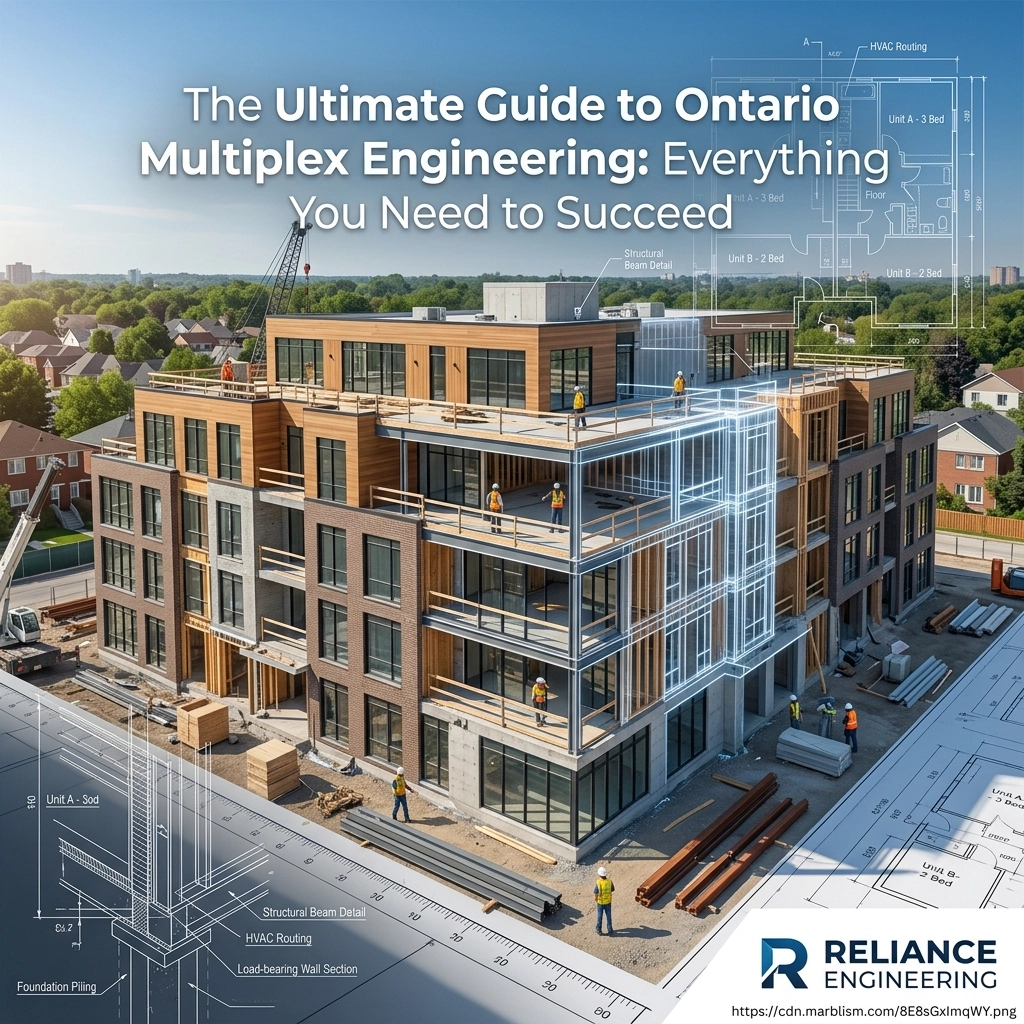
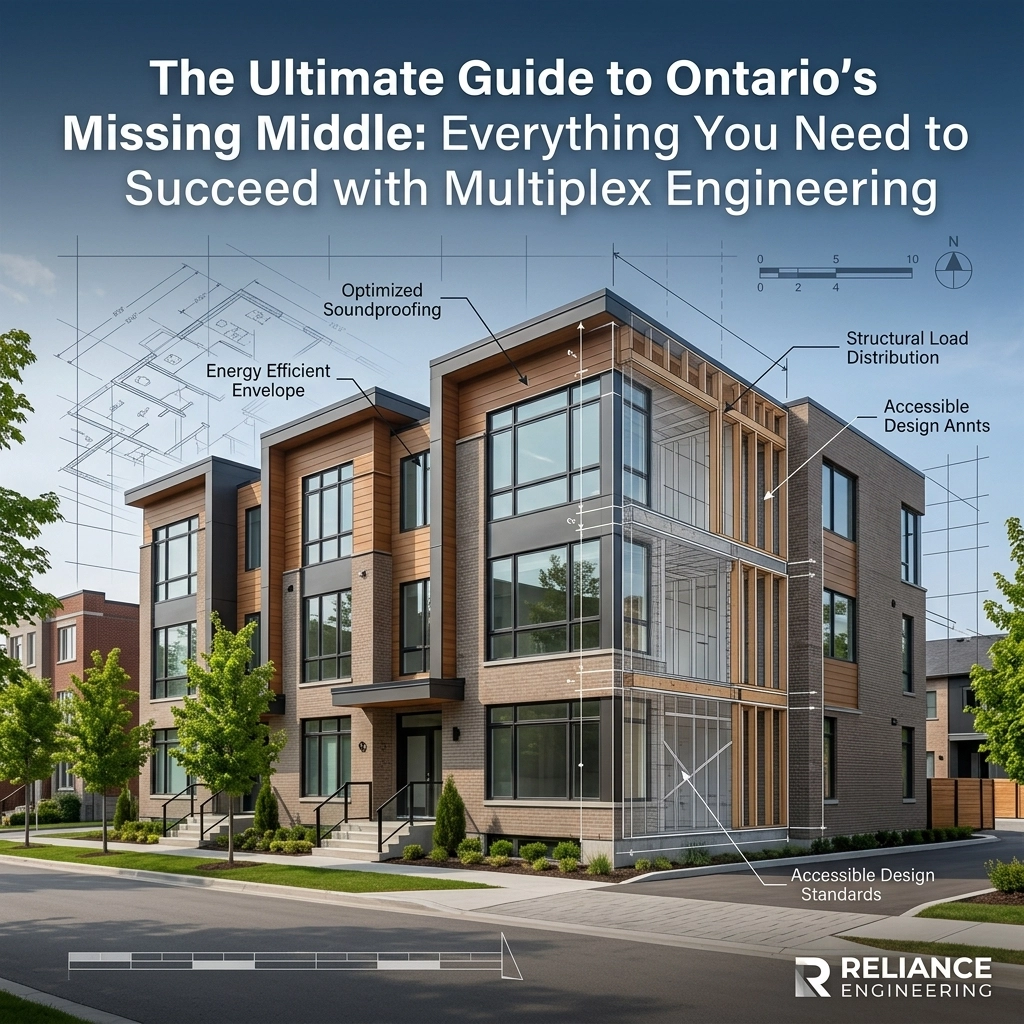
Ontario’s housing landscape is undergoing a massive transformation. With the provincial government’s push for increased density and the introduction of legislation like Bill 23, the "More Homes Built Faster Act," multiplexes have become the gold standard for residential development. Whether you are converting a single-family home into a four-plex or building a new multi-unit dwelling from the ground up, the engineering requirements are rigorous.
At Reliance Engineering, we bring over 20 years of expertise to the table. Navigating the Ontario Building Code (OBC) and municipal zoning bylaws isn't just about drawing lines; it’s about strategic civil engineering that ensures your project is feasible, compliant, and cost-effective. This guide breaks down the essential engineering components you need to secure your permits and get shovels in the ground.
1. The Foundation: Functional Servicing Reports (FSR)
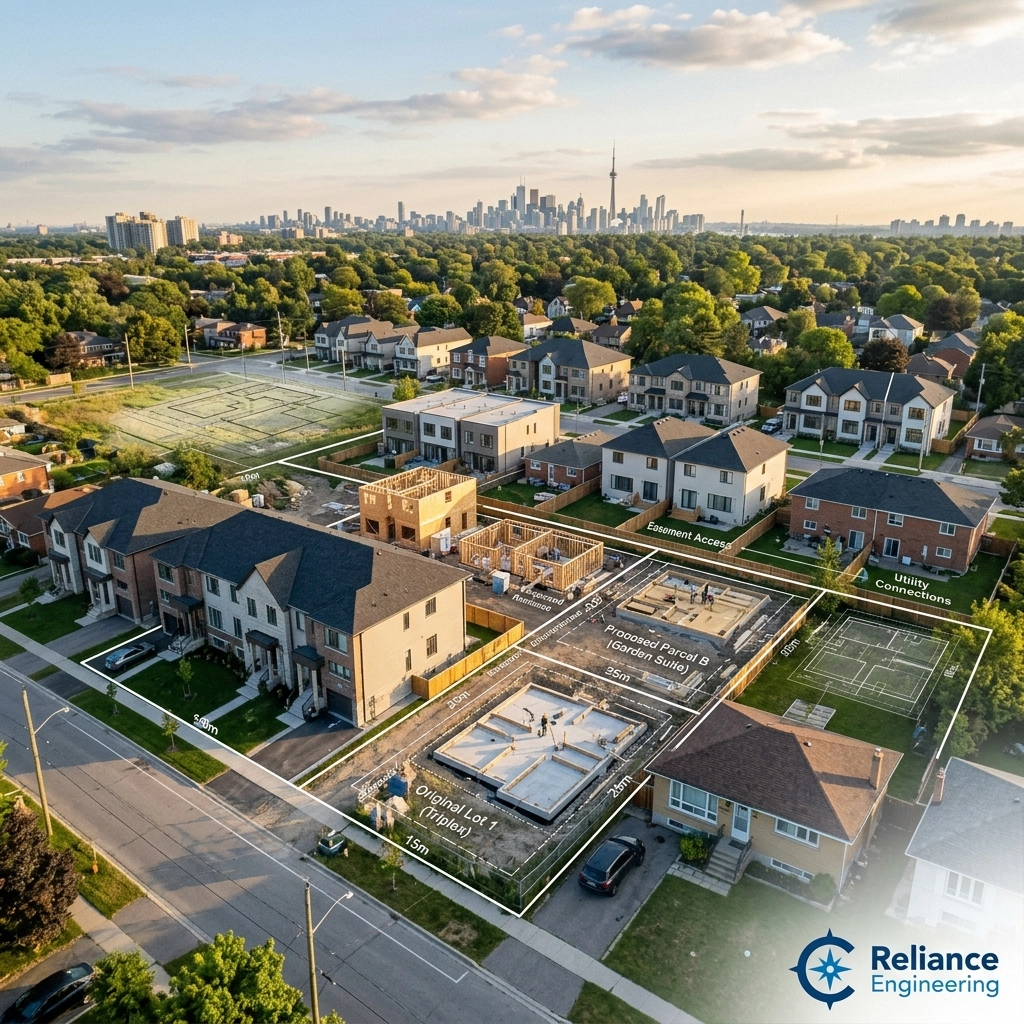
Before you even think about framing, you need to know if the existing municipal infrastructure can support your multiplex. A Functional Servicing Report (FSR) is often the first document requested by Ontario municipalities during the Site Plan Approval (SPA) or severance process.
An FSR evaluates the capacity of existing watermains, sanitary sewers, and storm systems. For a multiplex, the demand on these services increases significantly compared to a single-family home. We analyze fire flow requirements and sanitary peak flows to ensure the City’s infrastructure won't be overwhelmed. Without a solid FSR, your project can stall before it even starts.
2. Site Servicing: Upgrading for Density
One of the most common mistakes developers make is underestimating utility upgrades. A standard 3/4-inch or 1-inch water service line that feeds a single house is rarely sufficient for a four-unit multiplex.
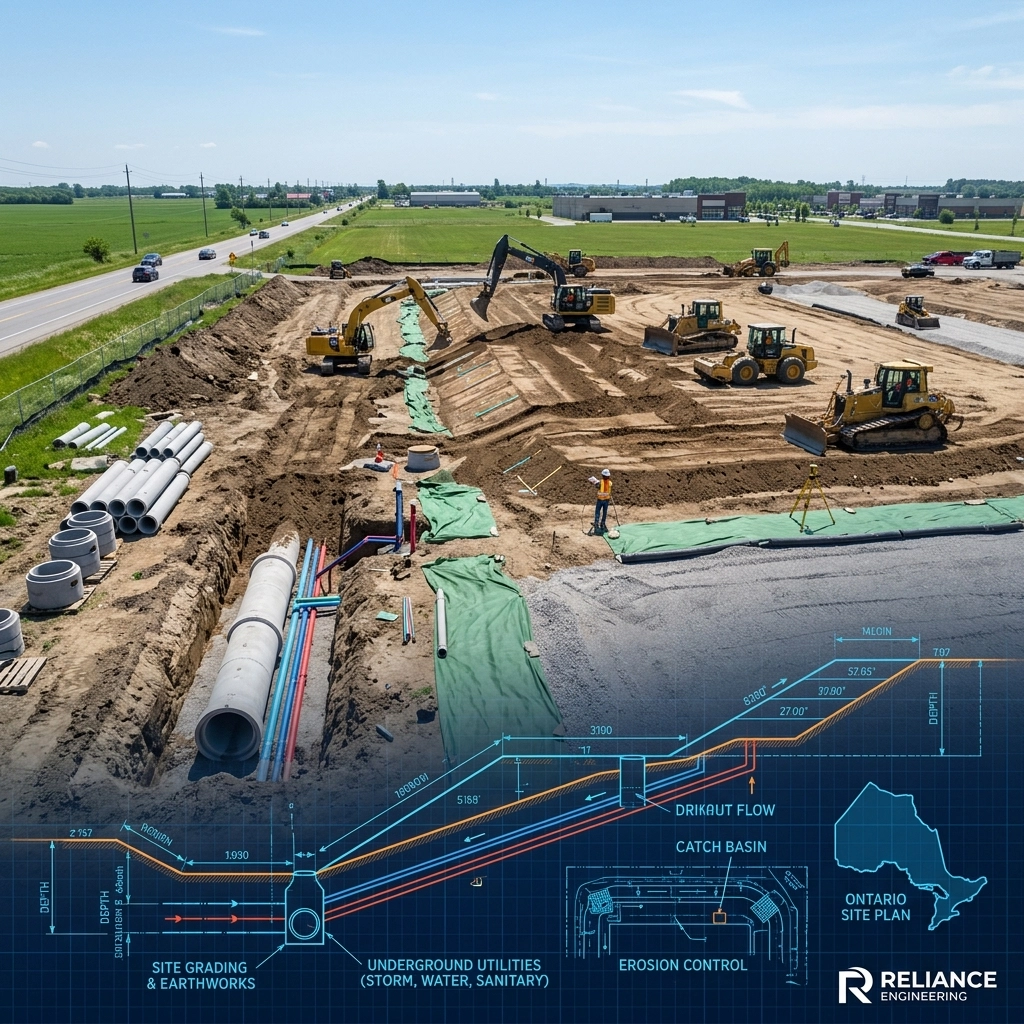
Our site servicing plans detail exactly how your building will connect to municipal services. This includes:
- Water Distribution: Ensuring adequate pressure for all units and fire protection.
- Sanitary Connections: Calculating the increased load and designing the appropriate pipe size and slope.
- Utility Coordination: Mapping out gas, hydro, and telecommunications to avoid conflicts during construction.
3. Site Grading and Drainage: Protecting the Investment
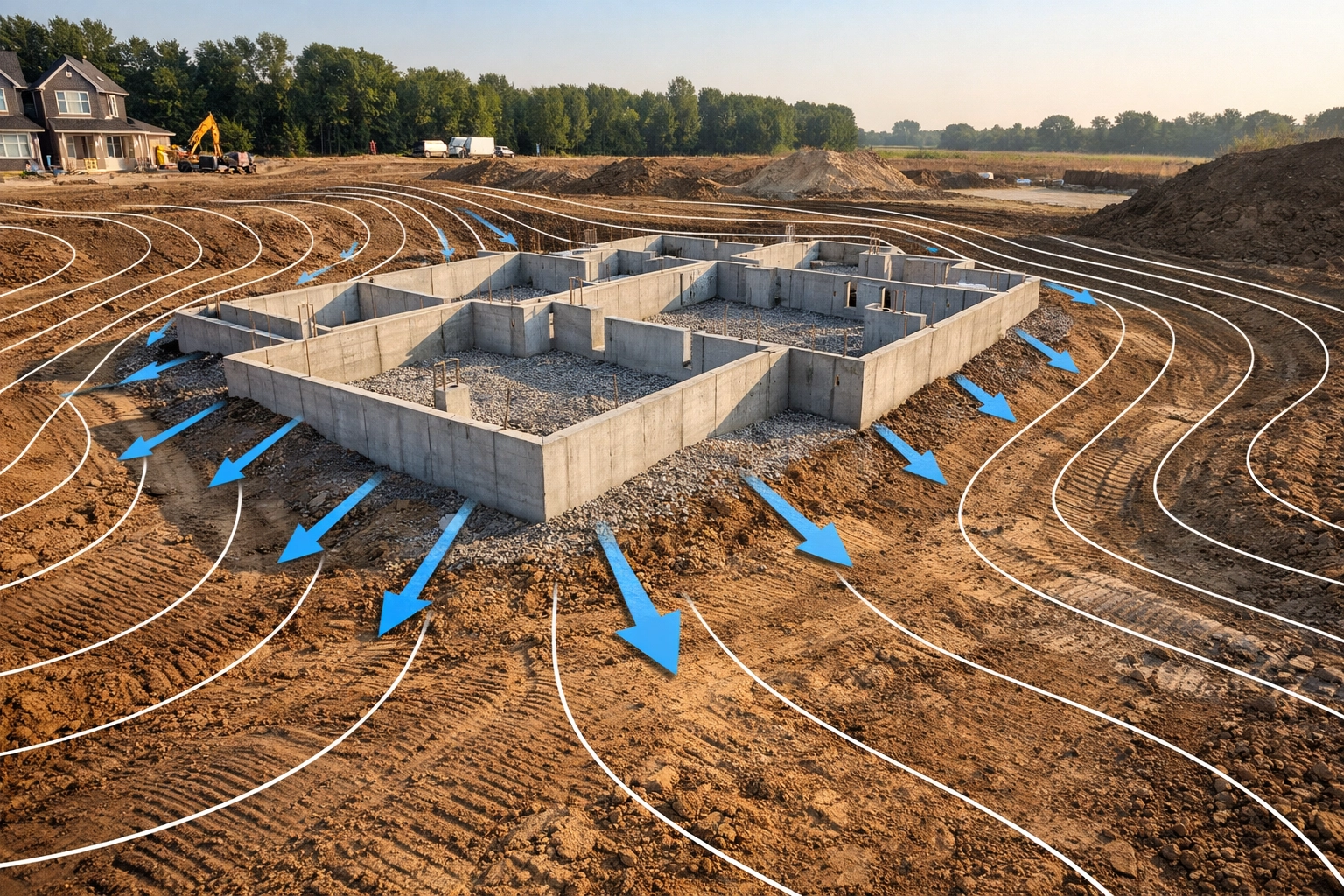
Precision in site grading is non-negotiable. In Ontario, municipal reviewers are increasingly strict about how water moves across a property. Poor grading leads to basement flooding, neighbor disputes, and permit rejections.
A Site Grading Plan must demonstrate that all surface runoff is directed away from the building envelope and toward a safe discharge point without negatively impacting adjacent lands. With the rise in multi-unit conversions, managing "side-yard" drainage in tight urban lots has become a specialized skill. If your plan is even a few centimeters off, the city will kick it back.
4. Stormwater Management (SWM) in 2026
The regulatory landscape for stormwater has shifted. As of 2026, many Ontario municipalities require a detailed Stormwater Management Report for even small-scale multiplex developments.
Increased "hard surfaces" (rooflines, parking pads, and walkways) mean more runoff. To comply with modern standards, we often implement Low Impact Development (LID) solutions, such as:
- Infiltration Trenches: Allowing water to soak back into the ground.
- Dry Wells: Managing roof runoff efficiently.
- Permeable Paving: Reducing the overall runoff coefficient of the site.
Effective SWM design prevents the municipal storm system from being overloaded and is a critical component of the 2024 PPS changes.
5. Navigating Site Plan Approval (SPA) and Zoning
The path to a multiplex building permit often runs through the Site Plan Approval process. This is where the municipality reviews the "big picture" of your development.
If your project requires a Zoning By-law Amendment or a Minor Variance (for things like reduced setbacks or parking), you need an engineering partner who can represent your interests at the Committee of Adjustment. We provide the technical backing to prove that your multiplex is a "good fit" for the community from an infrastructure perspective.

6. Erosion and Sediment Control (ESC)
Construction is messy, but in Ontario, it must be "clean" engineering-wise. Every multiplex project requires an Erosion and Sediment Control Plan. This ensures that silt and debris from your construction site don't end up in the municipal sewers or local waterways.
Common ESC measures include:
- Silt fencing along property boundaries.
- Catch basin filters (sediment bags).
- Mud mats at construction entrances.
Failing to implement these can result in heavy fines and immediate stop-work orders from municipal inspectors.
7. The Building Permit Stage: Coordination is Key
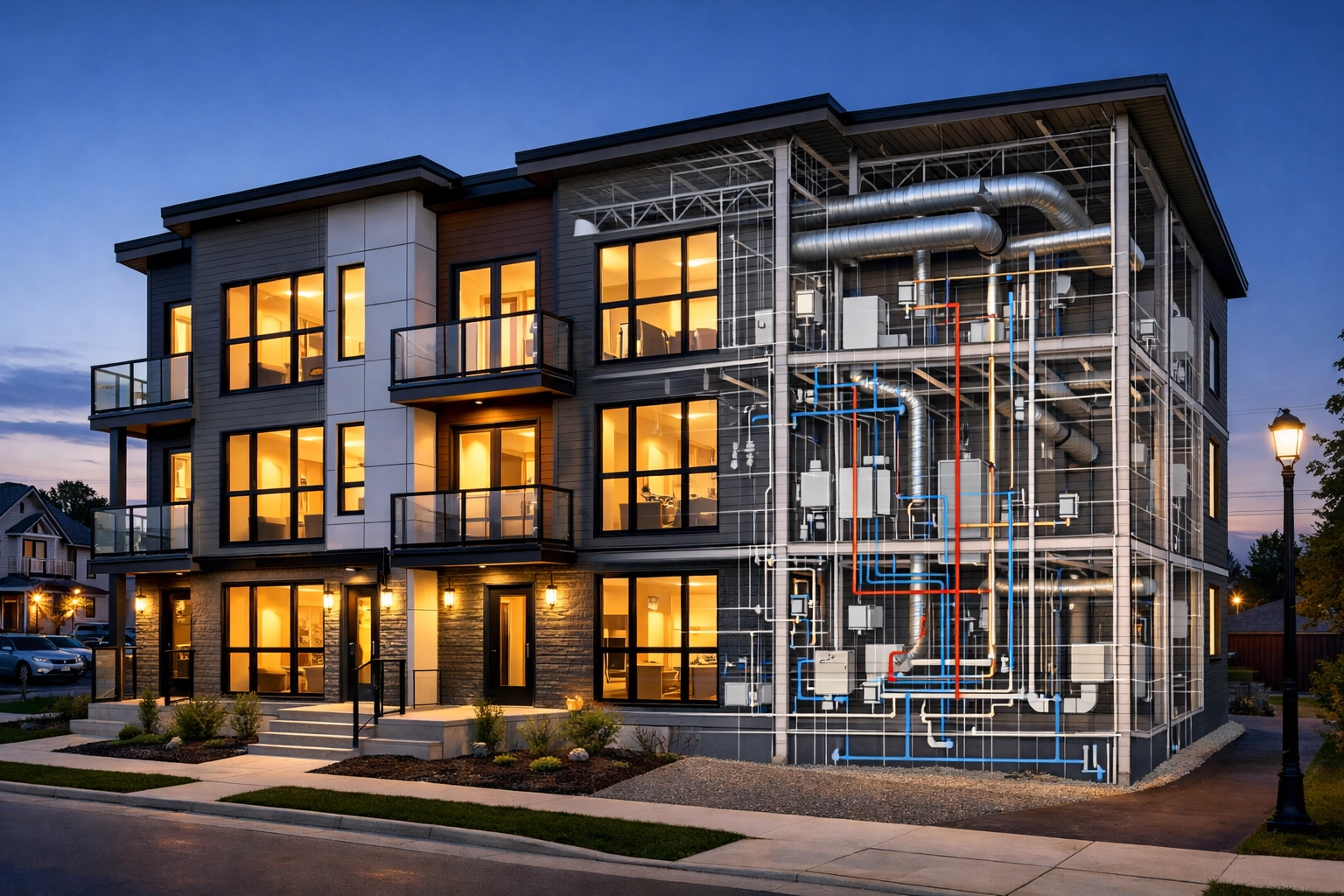
Once the civil engineering (the site) is approved, the focus shifts to the building itself. A multiplex building permit drawing package is significantly more complex than a standard residential permit. It requires coordination between:
- Structural Engineering: To handle the increased loads and fire separations.
- Mechanical Engineering: For HVAC systems that serve multiple independent units.
- Plumbing: To ensure individual metering and proper venting for all kitchens and bathrooms.
At Reliance Engineering, we specialize in this cross-disciplinary coordination, ensuring that the civil site plans match the architectural and mechanical realities of the building.
Why Experience Matters in Ontario Multiplexing
The difference between a project that gets approved in weeks and one that languishes for months is the quality of the initial submission. 10 reasons your lot grading plan might fail often boil down to a lack of local regulatory knowledge.
We understand the specific nuances of Ontario municipalities: from the clay soils of Peel Region to the intensive infiltration requirements in York Region and the aging infrastructure challenges in Toronto.
Contact Information
Ready to start your Ontario multiplex project? Don't let engineering hurdles slow you down. Contact the experts at Reliance Engineering today for a consultation.
- Principal: Naresh Ochani, P.Eng. M.Eng.
- Address: 6850 Millcreek Dr, Mississauga, ON L5N 2H4
- Phone: 647-385-6418
- Email: [email protected]
- Website: www.relianceengineering.ca
Office Hours:
- Saturday: 12:00 PM – 2:00 PM
- Sunday: Closed
- Monday – Friday: 9:00 AM – 5:00 PM
Key Takeaways for Ontario Developers
- Start with an FSR: Know your utility limits before you design.
- Plan for SWM: Stormwater management is no longer optional; it is a core requirement.
- Invest in Grading: A precise lot grading plan prevents costly basement flooding and rejections.
- Hire Professionals: Use an Ontario-licensed P.Eng. to ensure your drawings meet the Ontario Building Code and municipal standards.
Reliance Engineering: Your Partner in Land Development and Civil Engineering Across Ontario.



Leave A Comment