Site grading is the backbone of any successful land development project. Whether you are building a new custom home in Mississauga, adding an accessory dwelling unit in Etobicoke, or developing a commercial lot in Vaughan, you cannot escape the necessity of a professional Site Grading and Drainage Plan.
Poor grading leads to foundation damage, basement flooding, and costly disputes with neighbors. In Ontario, municipal building departments are strict: no compliant grading plan, no building permit. At Reliance Engineering, we specialize in turning complex municipal requirements into seamless, permit-ready designs.
Follow these five essential steps to master your site grading and drainage.
Step 1: Engage a Licensed Professional Engineer (P.Eng.)
The first and most critical step is hiring the right expertise. Across Ontario, most municipalities: including Toronto, Burlington, and Brampton: require that grading and drainage plans be prepared and certified by a Professional Engineer (P.Eng.) or an Ontario Land Surveyor (OLS).
At Reliance Engineering, we bring over 20 years of principal engineering experience to the table. A professional engineer doesn't just draw lines; we calculate storm runoff, analyze soil infiltration, and ensure your project meets the specific grading by-laws of your local municipality.
Trying to "DIY" your grading plan or hiring an unlicensed designer is a recipe for rejection. Our precision often secures approvals in just one submission, saving you months of delays and thousands in carry costs.

Step 2: Conduct a Comprehensive Topographic Survey
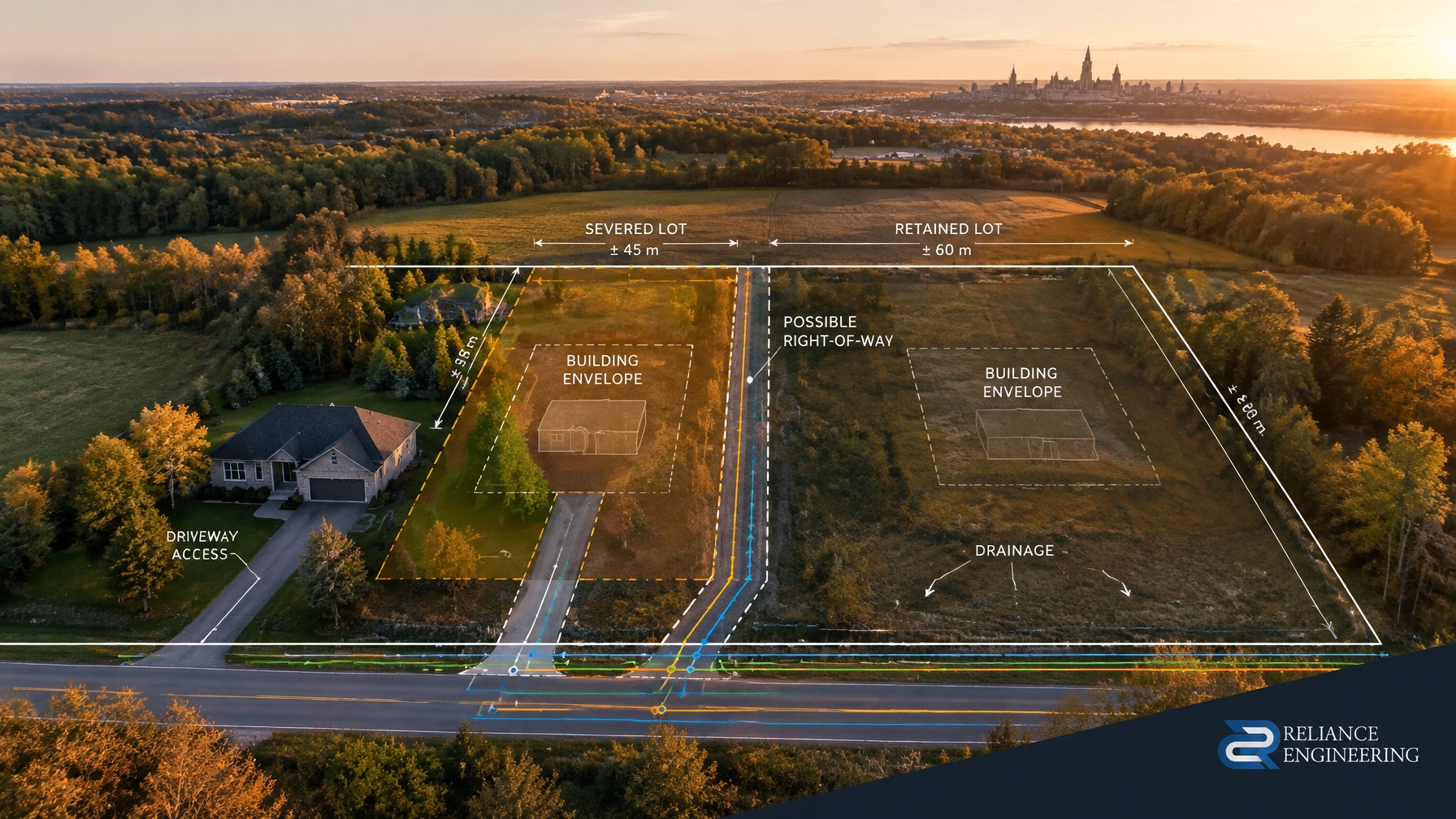
You cannot design for the future without knowing the present. A Site Grading Plan begins with a detailed topographic survey. This survey identifies:
- Existing Elevations: The current "highs" and "lows" of your property.
- Neighboring Context: The elevations of adjacent properties (usually within 5 meters) to ensure your drainage doesn't negatively impact them.
- Municipal Benchmarks: Geodetic reference points required for municipal compliance.
- Existing Infrastructure: Retaining walls, catchbasins, and utility structures.
Without an accurate survey, your grading design is guesswork. We use this data to create a Digital Terrain Model (DTM), allowing us to simulate how water will behave on your site during heavy rainfall.
Step 3: Design for Positive Drainage and Effective Swales
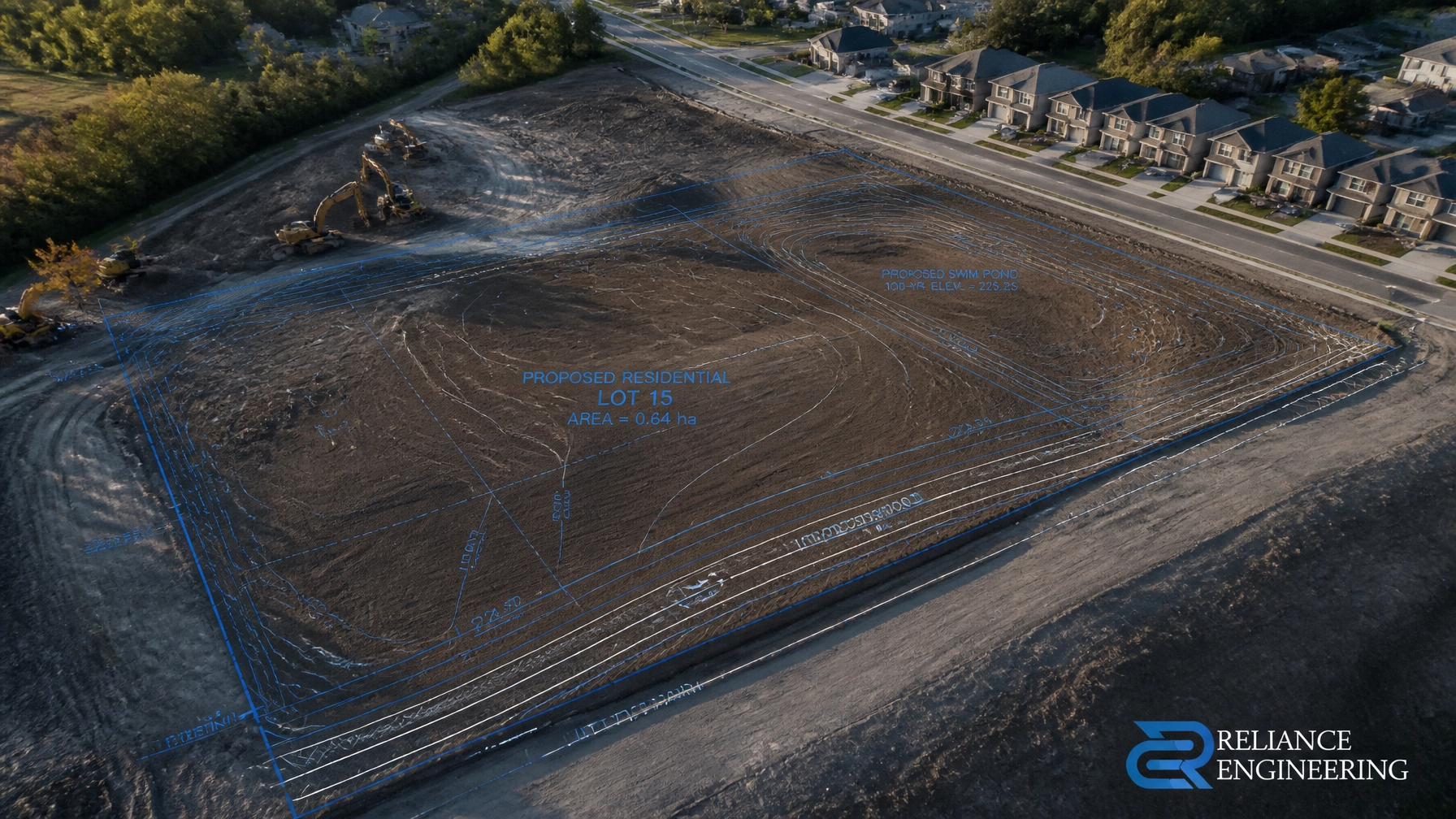
The golden rule of site grading is Positive Drainage. This means sloping the ground away from the building foundation to prevent water ingress and structural damage.
Key design elements include:
- Surface Slopes: Typically, a minimum 2% slope is required away from the house for the first 2 to 4 meters.
- Drainage Swales: These are shallow, grass-lined channels designed to direct runoff toward a safe outlet, such as the street or a rear-yard catchbasin.
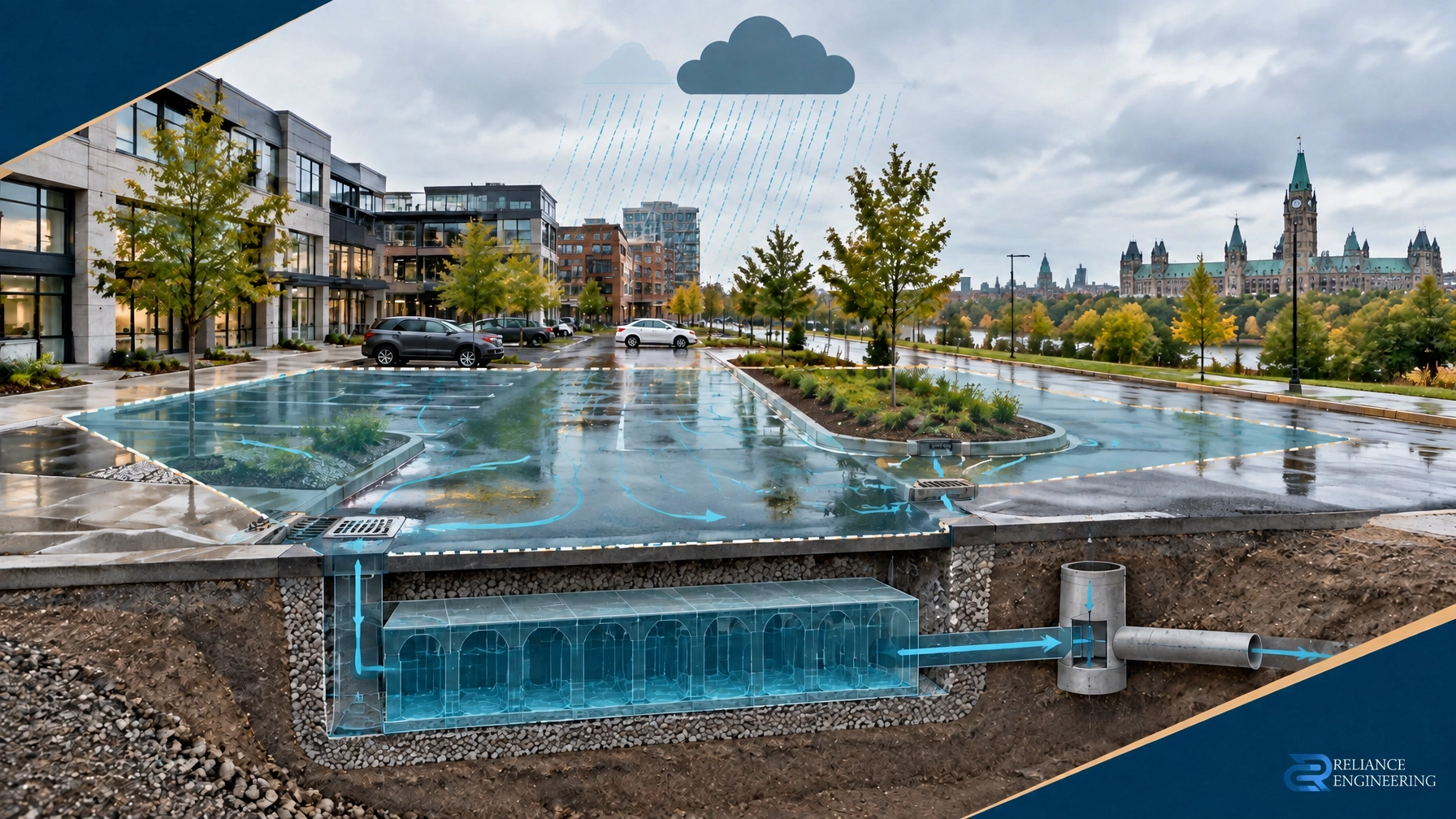
- Culverts and Area Drains: In cases where natural swales aren't enough, we integrate Storm System Design features like area drains or French drains.
Our designs prioritize gravity. By leveraging the natural contours of the land, we minimize the need for expensive mechanical pumps and ensure long-term reliability for the property owner.

Step 4: Implement Erosion and Sediment Control (ESC)
Grading isn't just about the final product; it's about the process. During construction, exposed soil is highly susceptible to erosion. Municipalities in Ontario require an Erosion and Sediment Control Plan to prevent silt and debris from clogging municipal storm sewers or polluting local waterways.
Standard ESC measures include:
- Silt Fencing: Heavy-duty fabric barriers installed along the perimeter of the site.
- Catchbasin Protection: Filters placed inside or over existing drains to trap sediment.
- Mud Mats: Gravel pads at site entrances to prevent vehicles from tracking mud onto public roads.
Compliance here is non-negotiable. Failure to maintain ESC measures can result in immediate "Stop Work" orders and heavy municipal fines.
Step 5: Secure Final Certification (As-Built Plans)
Your grading journey doesn't end when the excavators leave. Once construction is complete, the municipality will often require an As-Built Grading Plan.
A Professional Engineer must visit the site, verify that the final grades match the approved design, and issue a certification stamp. This is the final gatekeeper for the release of your grading deposits and the closing of your building permit.
At Reliance Engineering, we stay with you from the first draft to the final certification. We ensure that what was designed on paper is exactly what was built on the ground, protecting your investment and your liability.

Why Choose Reliance Engineering?
We take full ownership of your project. We understand that in land development, time is money. Our deep knowledge of Ontario's municipal requirements means we anticipate objections before they happen. Whether you need a Functional Servicing Report or a Stormwater Management solution, we deliver results with speed and precision.
Our Core Services:
- Site Grading & Servicing Plans
- Stormwater Management Reports
- Erosion & Sediment Control Plans
- Building Permit Drawings
- Site Plan Approval Documentation

Contact Information
Ready to secure your permit? Contact us today for a consultation.
Naresh Ochani, P.Eng. M.Eng.
Reliance Engineering
Address: 6850 Millcreek Dr, Mississauga, ON L5N 2H4
Phone: 647-385-6418
Email: [email protected]
Website: www.relianceengineering.ca
Office Hours:
- Saturday: 12:00 PM – 2:00 PM
- Sunday: Closed
Authorized by PEO (Certificate of Authorization: 100548882). Providing professional civil engineering services across Ontario.