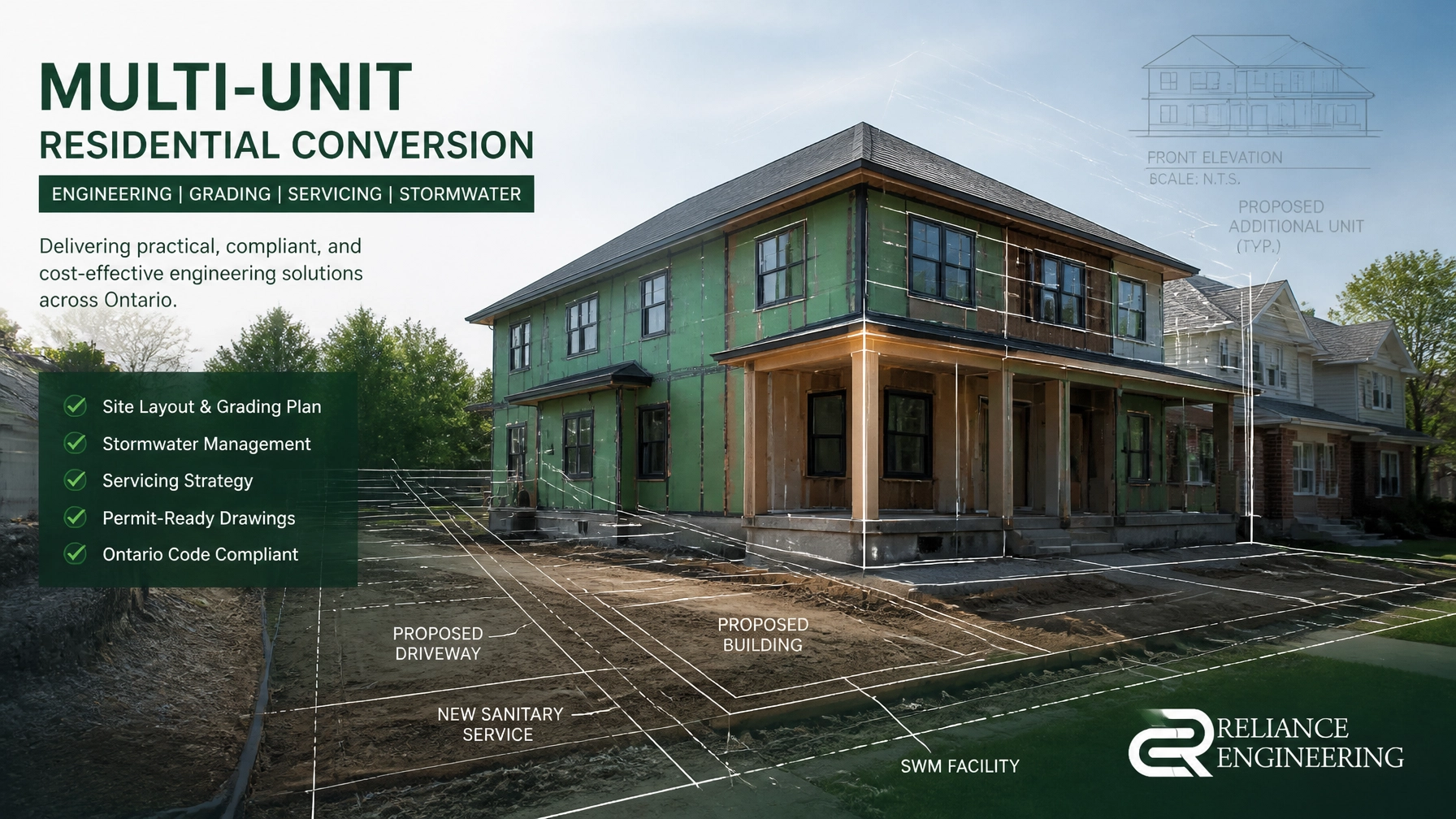
Ontario’s housing market is undergoing a seismic shift. With the push for "gentle density" and new "as-of-right" multiplex zoning, property owners across Ontario are looking at single-family lots as potential gold mines. Converting a house into a triplex or four-plex can skyrocket your ROI: if you do it right.
But here is the hard truth: Many developers and homeowners are walking straight into expensive regulatory traps. They see the zoning change and assume the path is clear. Then, they hit a wall of municipal requirements, servicing upgrades, and building code violations that drain their budget and stall their projects for months.
At Reliance Engineering, we specialize in navigating these complexities. We’ve seen where the projects fail and where the money is lost. If you want to protect your investment, you need to avoid these five massive pitfalls.
1. The "As-of-Right" Zoning Illusion
The biggest mistake you can make is assuming that "as-of-right" means "guaranteed approval." Just because the City of Toronto or other municipalities across Ontario allow multiplexes on your lot doesn't mean your specific design is compliant.
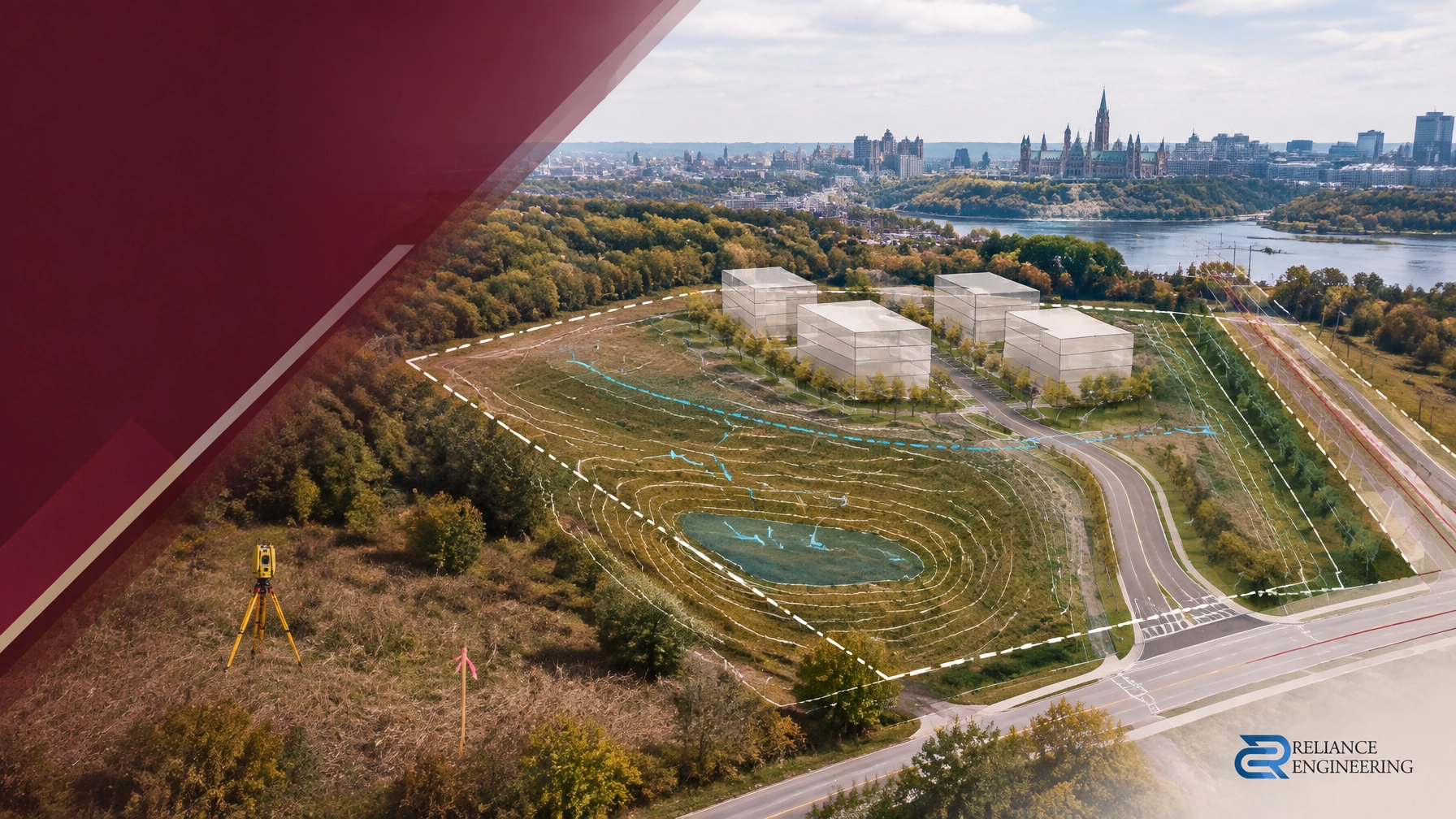
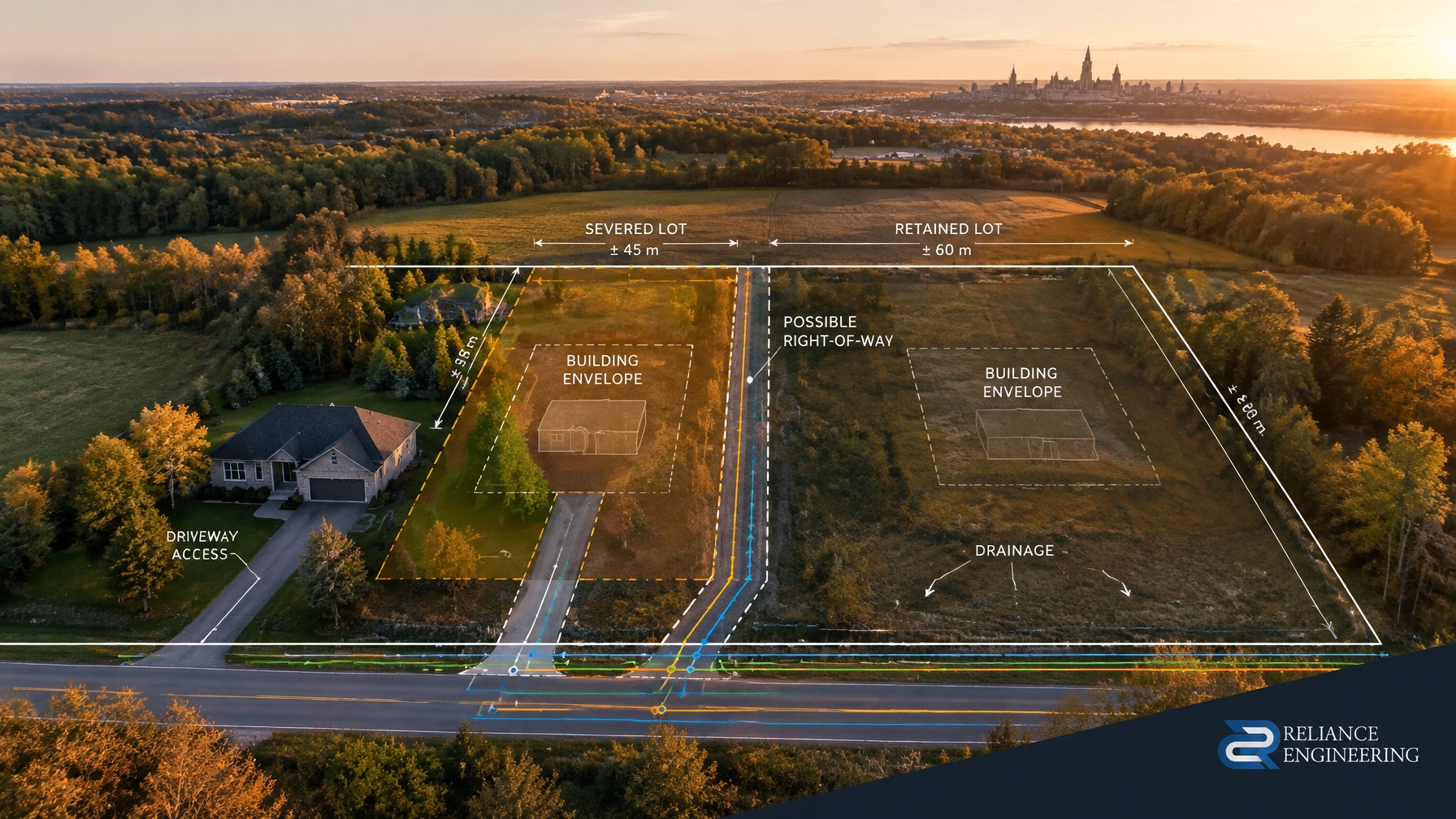
Zoning is only the first layer. You still have to deal with setbacks, height restrictions, and lot coverage. More importantly, you have to prove that your site can handle the density. Many owners skip the feasibility study for multi-unit conversions and find out too late that their plan requires a minor variance, adding $10,000+ in fees and six months of waiting at the Committee of Adjustment.
The Fix: Get a preliminary site analysis. Ensure your architectural footprint aligns with the Site Plan Approval requirements in Ontario before you start demolition.
2. Ignoring Servicing Capacity and Infrastructure

When you move from one family to four, your demand for water, sanitary, and storm services quadruples. This is where projects go to die. Many older neighborhoods in Ontario have aging infrastructure that simply cannot support a four-unit building without significant upgrades.
Municipalities often require a Functional Servicing Report (FSR) to prove that the existing water mains and sewers can handle your project. If the capacity isn't there, you might be on the hook for expensive external upgrades. Failing to account for this in your initial pro-forma is a recipe for financial disaster.
The Fix: Never skip the servicing analysis. Check your Quick Start Guide to Functional Servicing Reports to understand what the city expects before you submit your application.
3. Grading and Drainage Disasters
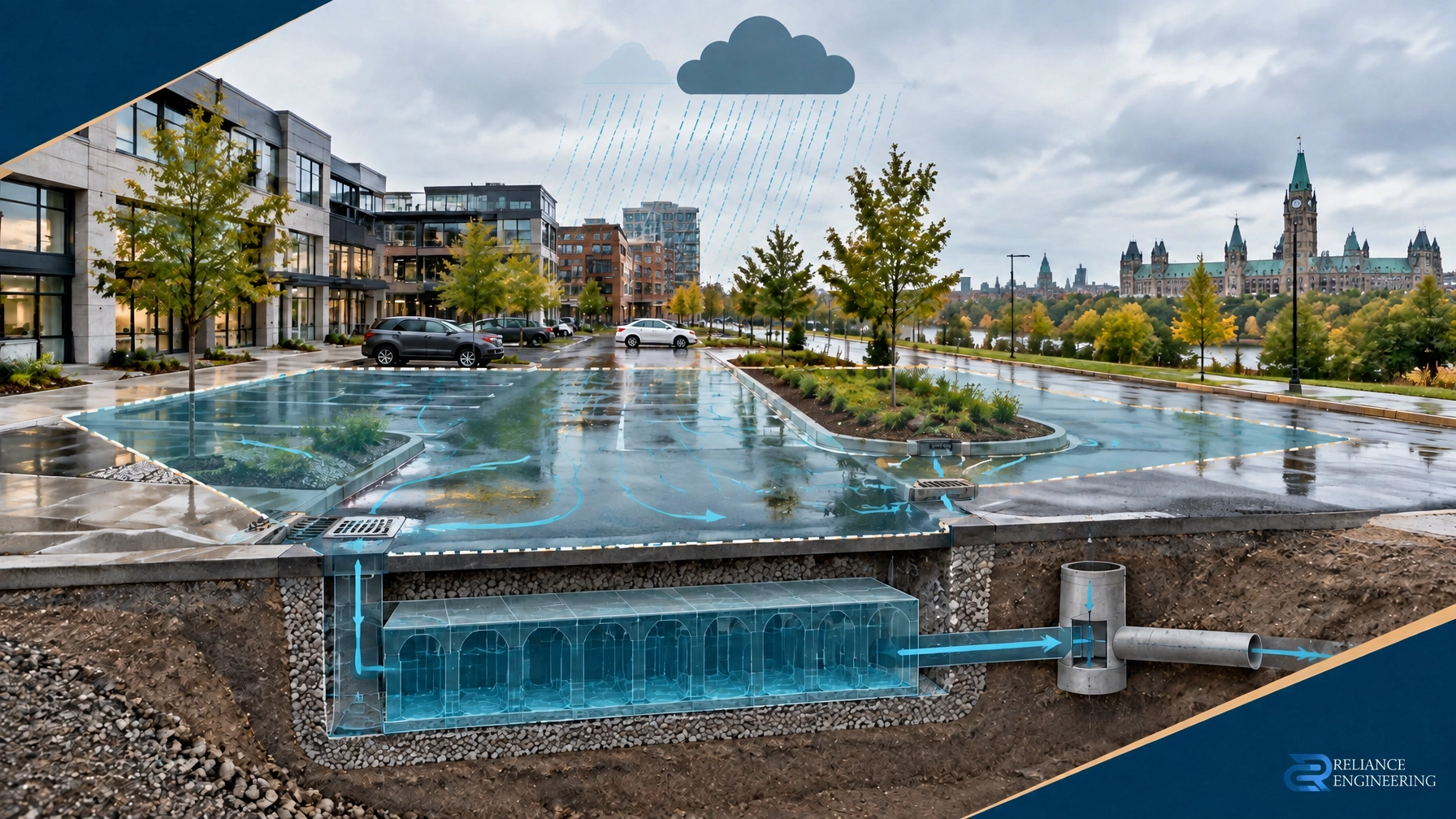
Increasing the density of a lot usually means increasing the "impermeable surface": more roof area, more walkways, and sometimes more parking. In Ontario, you cannot simply dump that extra rainwater onto your neighbor’s property.
A common pitfall is designing a beautiful building but forgetting how the water will move. If your site grading is off, you’ll face basement flooding, neighbor complaints, and a flat-out rejection from the building department. We see countless lot grading plans fail because they don't account for the unique topography of the site or the local municipal standards.
The Fix: Invest in a precision Site Grading Plan. A professional design ensures proper drainage and protects both your basement and your ROI from future liability.
4. The "Material Change of Use" Code Escalation

When you convert a single-family dwelling into a multiplex, the Ontario Building Code (OBC) treats it as a "Material Change of Use." This is a massive shift in regulatory oversight. You are no longer just renovating a house; you are building a small multi-residential complex.
This triggers strict requirements for:
- Fire Separation: You need specific fire-rated assemblies between units and in common hallways.
- Egress: Every unit must have a safe way out. Retrofitting a second exit into an existing structure can cost tens of thousands.
- Soundproofing: While not always a permit "stopper," poor soundproofing leads to high tenant turnover and destroys your long-term cash flow.
Many investors assume they can just throw up some drywall and call it a day. If you don't design for the OBC from the start, the building inspector will shut you down, and you’ll be forced to tear out finished work to fix the structural and safety issues.
5. Failing to Separate Utilities
If you want to maximize your ROI, you must separate the utilities. In Ontario, all-inclusive rent is a massive risk. With rising energy costs, having four families on one hydro meter is a guaranteed way to bleed cash.
The pitfall here is failing to plan for separate panels, water meters, and HVAC systems during the engineering phase. Retrofitting these after the walls are closed is prohibitively expensive. Furthermore, properly metered units increase the resale value of the building because the "Net Operating Income" (NOI) is higher when the tenants pay their own bills.
The Fix: Work with your engineer to integrate separate metering into your Building Permit drawings early in the process.
Why Professional Engineering is Your Best ROI Protection

At Reliance Engineering, we don't just draw lines on paper. We take full ownership of your project's success. With over 20 years of principal experience, we understand the local regulations across Ontario better than anyone. We know what the reviewers are looking for, and we aim to get your designs approved in a single submission.
Don't let your multi-unit conversion become a cautionary tale. Protect your ROI by getting the technical details right the first time.
Contact Us for Your Multi-Unit Project
Ready to start your conversion? Let’s get your permits approved and your project moving.
Naresh Ochani, P.Eng. M.Eng.
Principal Engineer
Reliance Engineering
- Phone: 647-385-6418
- Email: [email protected]
- Address: 6850 Millcreek Dr, Mississauga, ON L5N 2H4
- Hours:
- Saturday: 12:00 PM – 2:00 PM
- Sunday: Closed