Ontario is undergoing a housing transformation. With the push for "Missing Middle" housing and the introduction of Bill 23, property developers and investors are pivoting toward multiplex strategies. But here is the reality: building more units on a single lot isn't just an architectural challenge: it’s a civil engineering hurdle.
If you don't master precision grading, your multiplex project will stall before the first brick is laid. Drainage failures, municipal permit rejections, and foundation issues are the direct results of poor grading. At Reliance Engineering, we specialize in turning complex sites into buildable assets.
The Multiplex Revolution and the Grading Gap
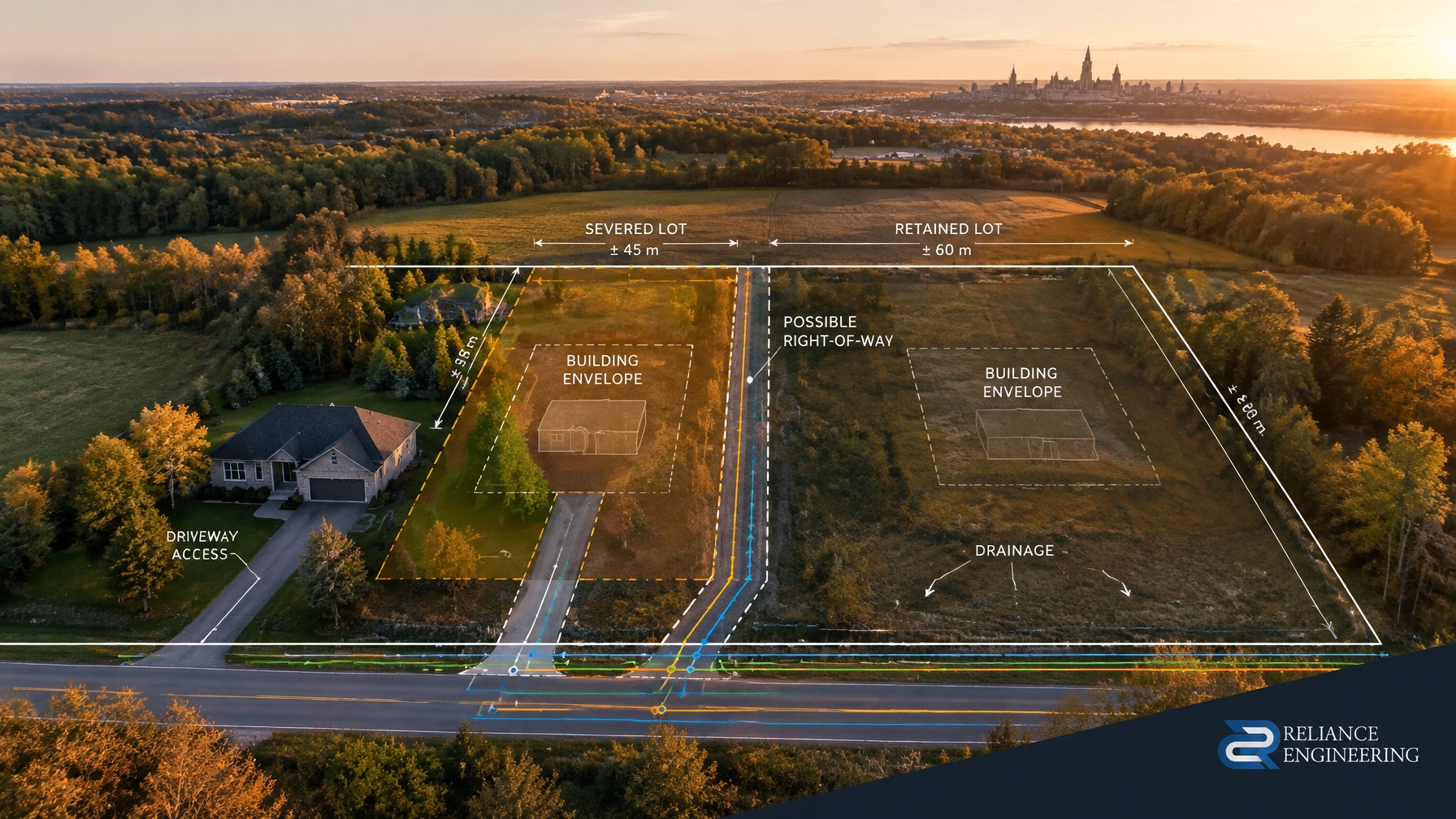
A multiplex: whether it’s a triplex, fourplex, or a garden suite: intensifies the use of a lot. You are adding more roof surface, more pavement, and more occupants to a space designed for a single-family home.
This intensification creates a "grading gap." Standard lot grading is no longer enough. You need precision. Every millimeter matters when you are squeezing drainage swales, parking pads, and accessible entrances into tight urban setbacks across Ontario.
What is Precision Grading?
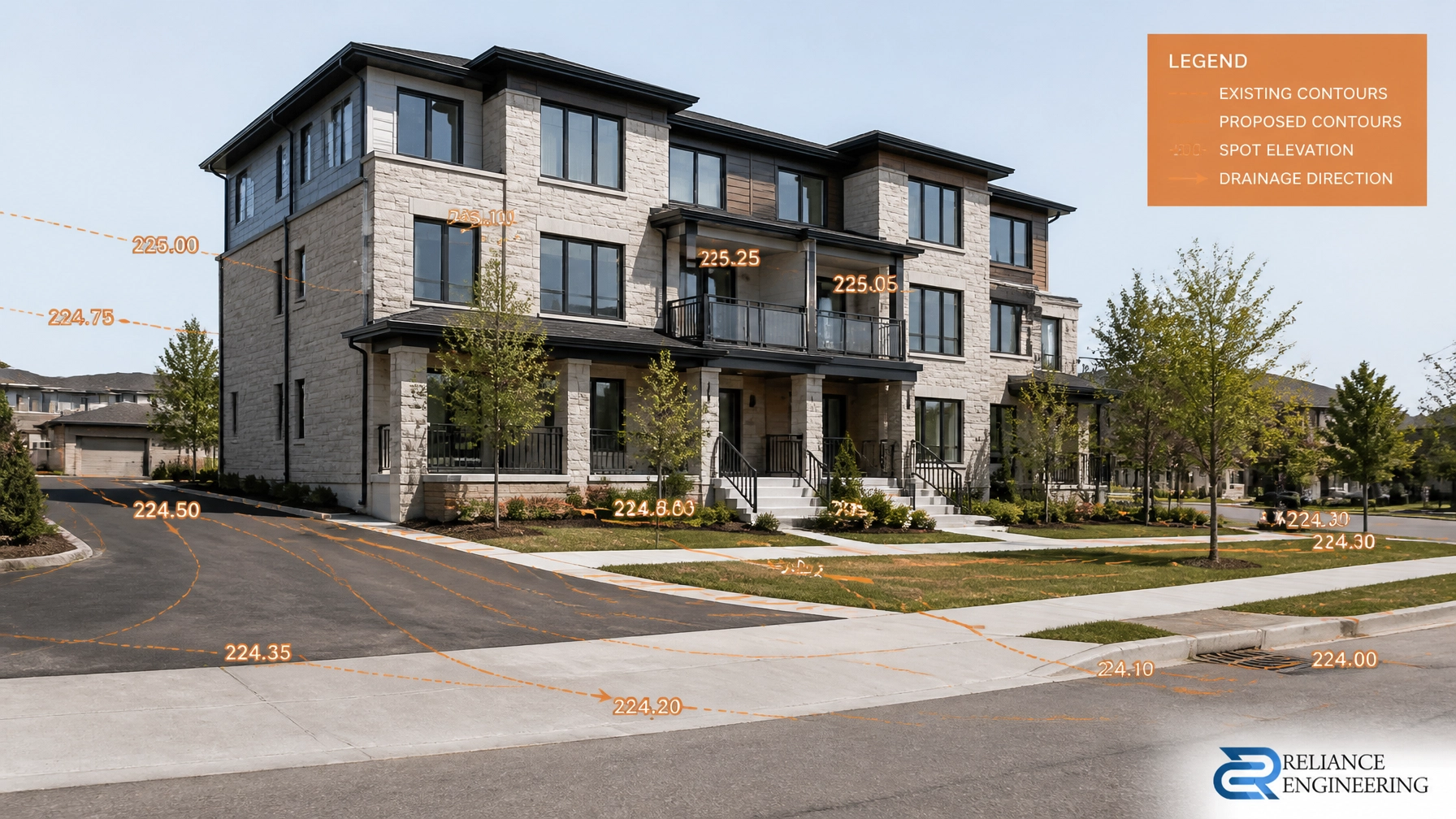
Precision grading is the surgical design of a site's topography. It ensures that every drop of water has a designated path that leads away from your building and doesn't negatively impact your neighbors.

For an Ontario multiplex, a Site Grading Plan must include:
- Finished Floor Elevations (FFE): Setting the exact height of the ground floor to ensure gravity-fed drainage and accessibility.
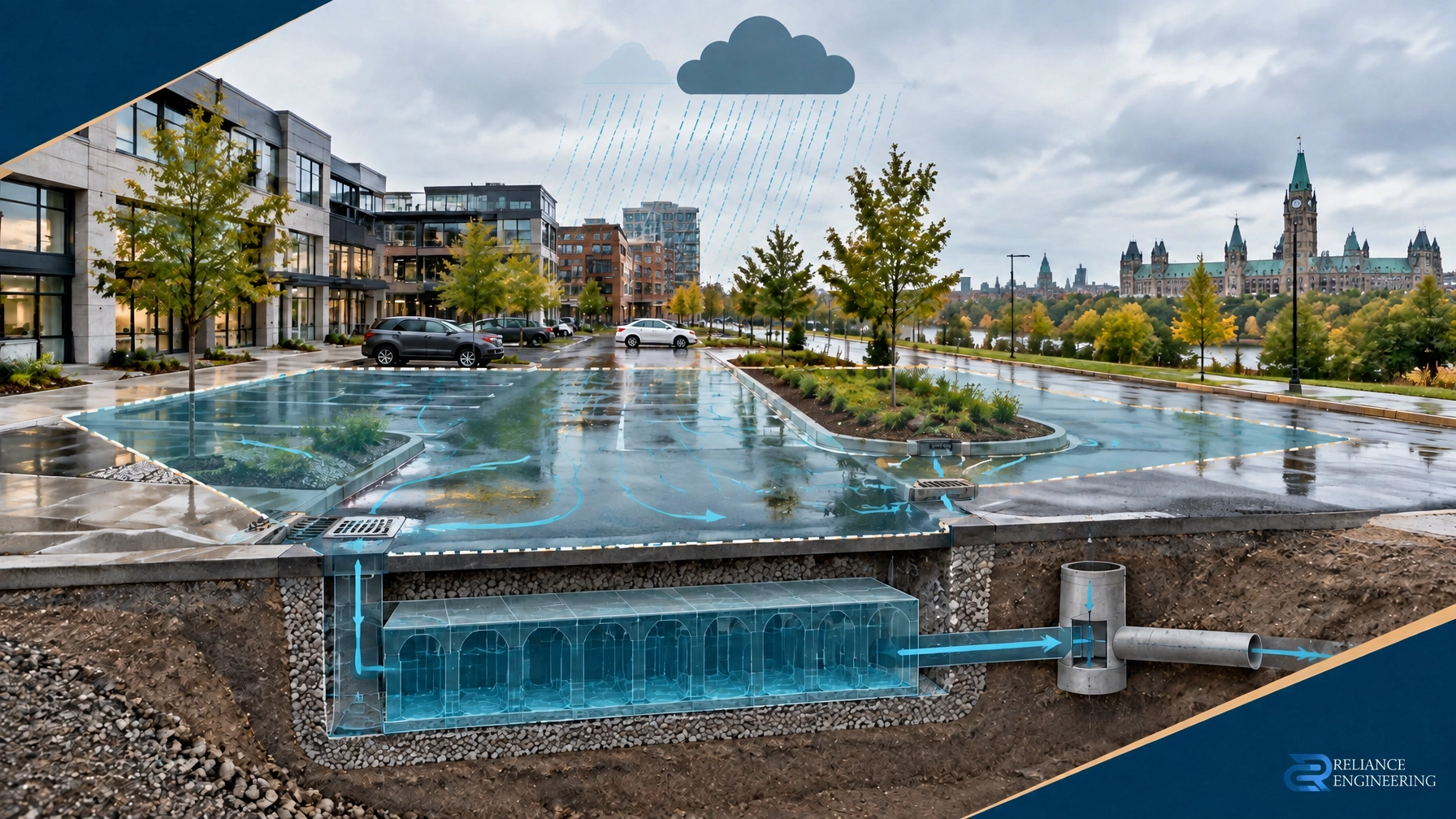
- Surface Drainage Vectors: Calculated slopes (usually between 2% and 5%) that direct runoff to municipal catchbasins or Stormwater Management systems.
- Swale Integration: Precise "valleys" in the landscape that move water through narrow side yards.
- Retaining Wall Design: Managing elevation changes between adjacent properties without causing erosion.
3 Pillars of Multiplex Grading Strategy
To maximize your ROI on a multi-unit conversion or new build, you must integrate civil engineering early.
1. Zero-Impact Drainage
Municipalities across Ontario are strict: your development cannot increase the rate of runoff onto neighboring properties. Precision grading uses sophisticated calculations to maintain or improve the existing drainage patterns of the neighborhood.
2. Infrastructure Alignment
A multiplex requires robust Site Servicing. Your grading plan must align with your Sanitary Sewer Design and water connections. If your grading is off, your pipes won't have the necessary "fall" to function properly.
3. Maximum Land Utilization
Precision means you don't waste space. By using calculated slopes and small retaining walls, we can often reclaim square footage for parking or outdoor amenity space that would otherwise be lost to "dead zones" in the landscape.

Navigating Ontario Regulations (Bill 23 & Beyond)
The legislative landscape in Ontario is shifting to encourage density, but municipal engineering standards remain high. Whether you are dealing with the City of Toronto, Mississauga, or smaller municipalities across the province, the Site Plan Approval process requires professional, stamped drawings.
Reliance Engineering understands the nuances of local requirements. We ensure your Functional Servicing Report and grading plans meet every provincial and local standard, often securing approvals in a single submission.
The Financial Impact: "Close Enough" vs. Precision
In civil engineering, "close enough" is an expensive mistake.
- Poor grading leads to standing water, which destroys foundations and triggers lawsuits from neighbors.
- Incorrect elevations lead to permit delays, costing thousands in carrying costs while you wait for redesigns.
- Inadequate drainage leads to ice build-up, a major liability for multi-unit rental properties.
Precision grading is an investment in your project's longevity and your own peace of mind.

Steps to Integrating Precision Grading
- Topographic Survey: Never start without a professional survey. This is the foundation of every calculation.
- Feasibility Review: Before finalizing architectural plans, have a civil engineer review the grades. This prevents you from designing a building that is "un-drainable."
- Integrated Design: Coordinate your architect, civil engineer, and landscape designer. This ensures the building looks good, functions well, and drains perfectly.
- Erosion Control: Implement a robust Erosion and Sediment Control Plan during construction to keep the site compliant and clean.
Why Reliance Engineering?
With over 20 years of principal experience, we don't just draw lines on a map. We solve problems. We take full ownership of your project, guiding you from the initial concept to the final Building Permit.
We are authorized by the PEO (Certificate of Authorization: 100548882) and are committed to responsive, professional service that gets your designs approved fast.

Ready to Start Your Multiplex Project?
Don't let grading be an afterthought. Secure your investment with precision engineering.
Contact Us Today:
- Principal: Naresh Ochani, P.Eng. M.Eng.
- Address: 6850 Millcreek Dr, Mississauga, ON L5N 2H4
- Phone: 647-385-6418
- Email: [email protected]
- Website: www.relianceengineering.ca
Office Hours:
- Saturday: 12:00 PM – 2:00 PM
- Sunday: Closed