In the competitive landscape of Ontario land development, timing is everything. For developers, architects, and builders, the path from a conceptual sketch to a shovel-ready site is paved with complex regulatory requirements. Among these, the Functional Servicing Report (FSR) stands as the most critical technical document required to secure municipal approvals.
At Reliance Engineering, we understand that an FSR is not just a checkbox for a planning application; it is the blueprint for a project’s viability. Without a robust FSR, projects face significant delays, costly redesigns, and potential rejection from municipal authorities.
What is a Functional Servicing Report (FSR)?
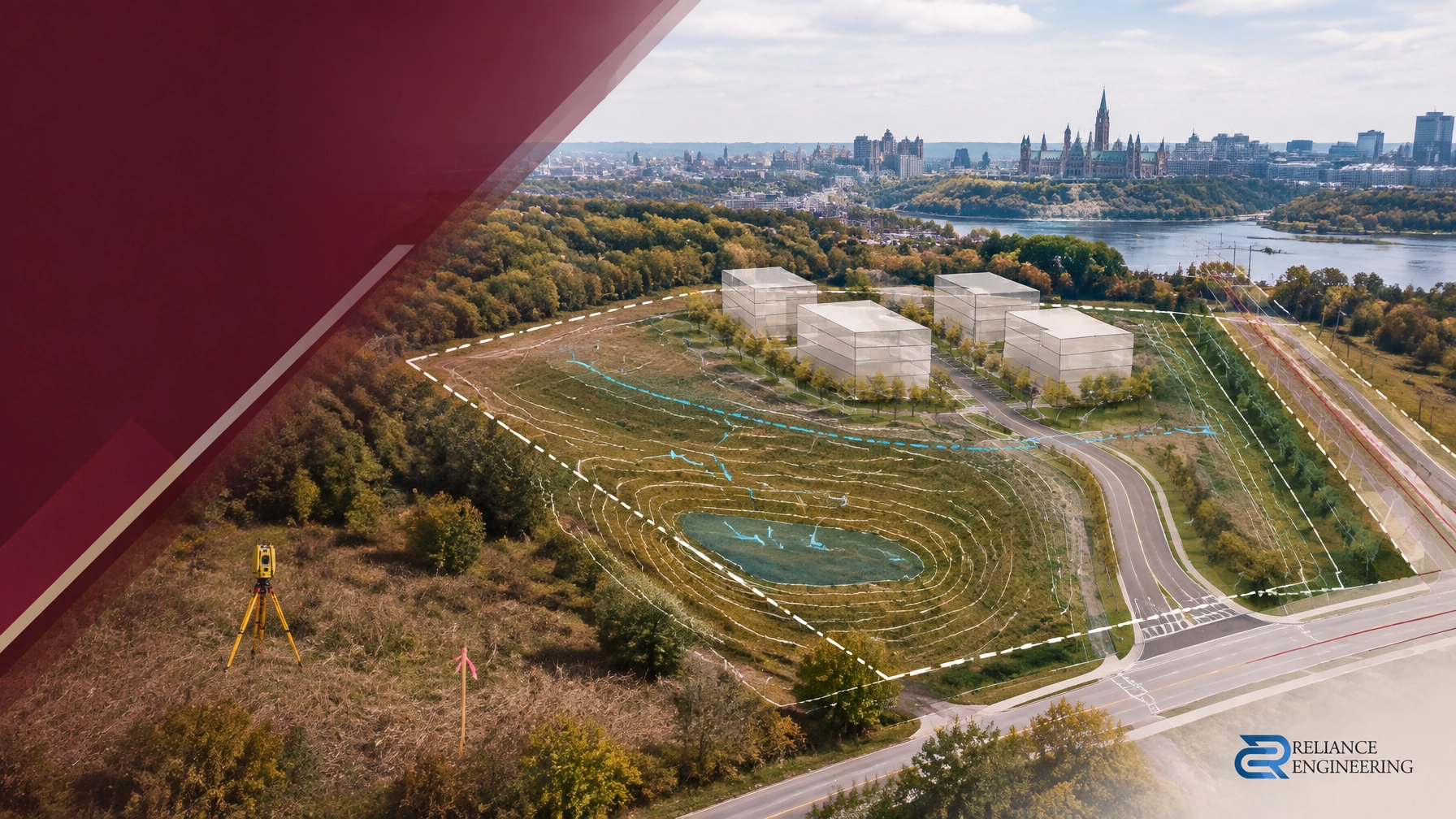
A Functional Servicing Report is a comprehensive engineering document that demonstrates how a proposed development will be serviced by essential infrastructure. It provides the technical justification that the site can be integrated into the existing municipal fabric without negatively impacting the surrounding environment or public utilities.
In Ontario, an FSR is typically required for Official Plan Amendments (OPA), Zoning By-law Amendments (ZBA), Draft Plans of Subdivision, and Site Plan Approvals (SPA). It bridges the gap between high-level planning and detailed construction design, ensuring that the "function" of the site: its water, waste, and drainage: is fully accounted for.

Why an FSR is Mandatory for Municipal Approvals
Municipalities across Ontario, from Mississauga to Toronto and beyond, will not grant approvals without proof that your project is technically feasible. The FSR serves as this proof. It addresses three primary concerns for municipal reviewers:
1. Capacity and Connectivity
Does the existing municipal infrastructure have the capacity to handle the additional load? An FSR includes detailed assessments of water distribution, sanitary sewage systems, and storm sewer networks. We provide clear calculations to prove that your development will not overwhelm the city’s pipes.
2. Environmental Compliance
With increasing provincial focus on environmental protection, stormwater management reports in Ontario have become more rigorous. An FSR must detail how the site will manage runoff, protect water quality, and prevent downstream erosion. Our reports utilize practical controls that meet the stringent "Enhanced" protection criteria (80% TSS removal) required by most Conservation Authorities.
3. Coordinated Design
A successful FSR ensures a coordinated design where grading, servicing, and landscaping work in harmony. If these elements are designed in isolation, conflicts arise during the Building Permit (BP) stage. By establishing clean layouts early, we eliminate these conflicts before they become expensive field changes.
Core Components of a Reliance Engineering FSR
Our approach to Functional Servicing Reports is rooted in precision and municipal experience. We focus on creating constructible routing and designs that reviewers can approve quickly.
Site Servicing Plans
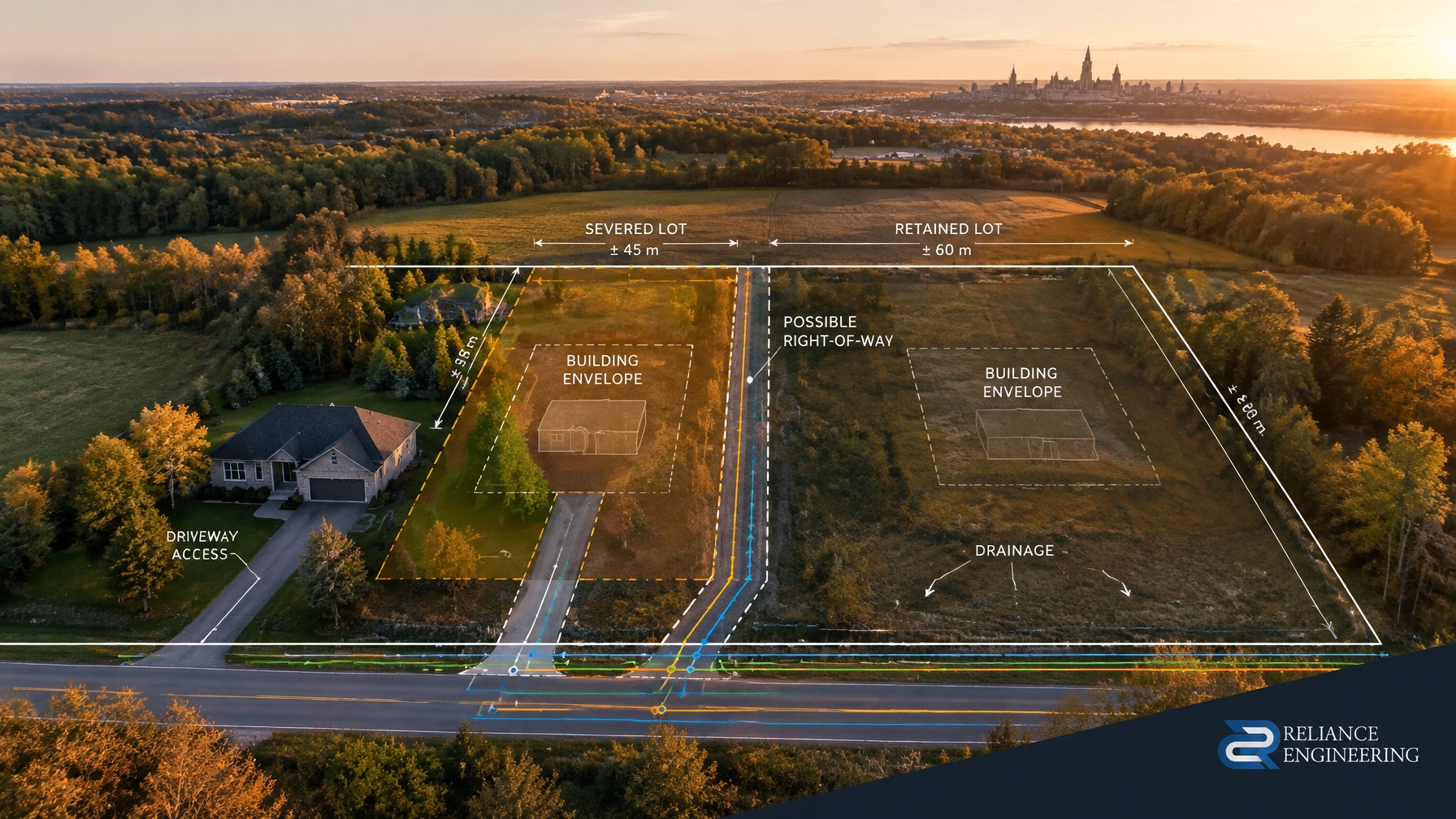
We design the layout of water mains, sanitary sewers, and storm sewers. Our site servicing plans focus on the most efficient routes to connect to municipal stubs, minimizing excavation costs and optimizing site space.
Stormwater Management (SWM)
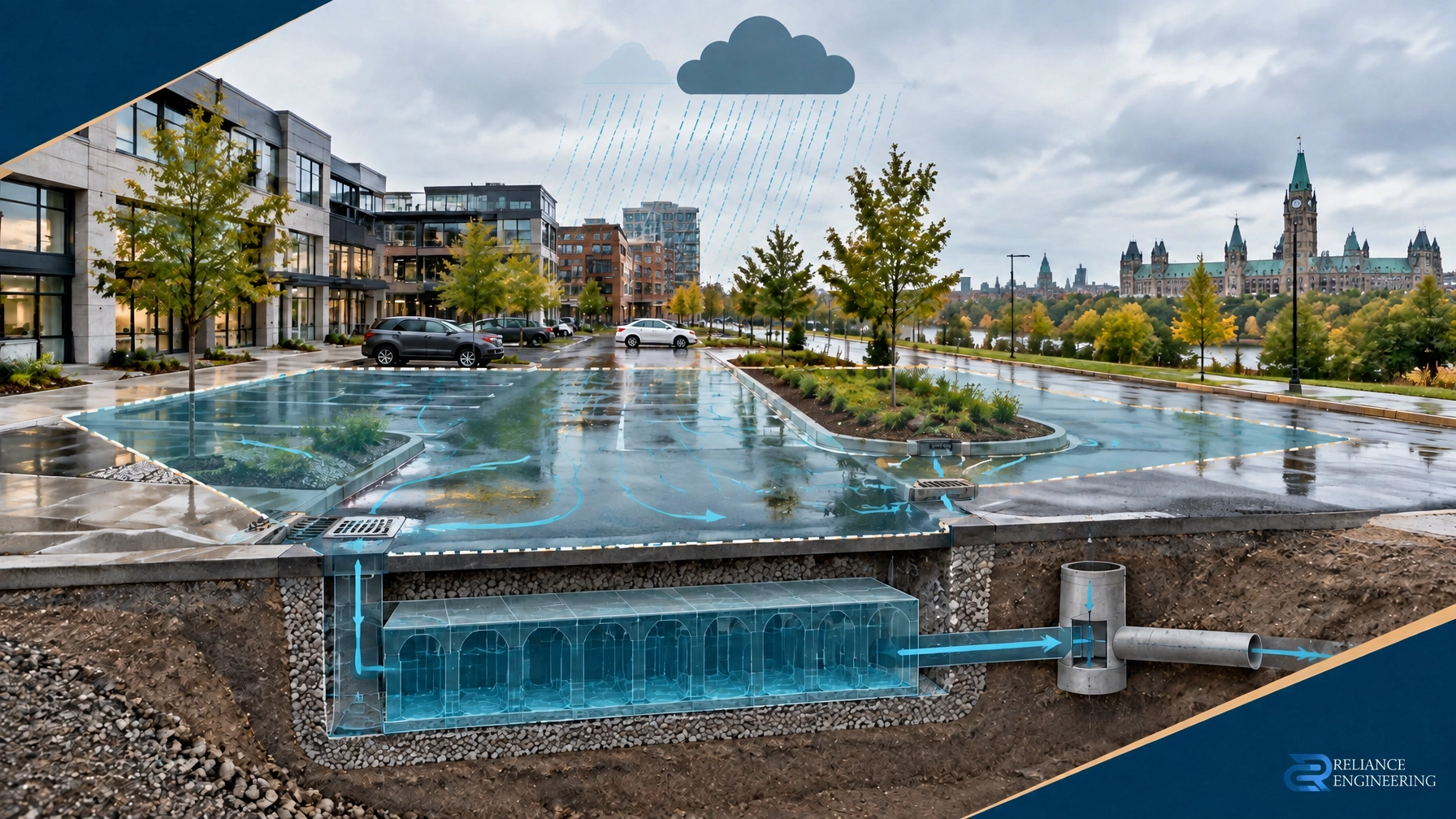
This is often the most technical portion of the report. We provide comprehensive stormwater management reports in Ontario that cover:
- Quantity Control: Ensuring post-development peak flows do not exceed pre-development levels.
- Quality Control: Implementing Low Impact Development (LID) features or oil-grit separators.
- Water Balance: Maintaining groundwater recharge rates through infiltration systems.
Functional Site Grading
A "buildable" site starts with grading. We establish preliminary site grades to ensure proper drainage while meeting accessibility (AODA) requirements and protecting existing trees or neighbouring properties.

The Risk of Skipping a Professional FSR
Developers often attempt to push through planning applications with "preliminary" notes rather than a full FSR. This is a mistake. In the current Ontario regulatory environment, "preliminary" is rarely enough. Incomplete reports lead to:
- Submission Cycles: Multiple rounds of comments from the municipality, each adding months to your timeline.
- Design Changes: Discovering a lack of sanitary capacity late in the process can force you to reduce the number of units or install expensive pumping stations.
- Permit Denial: Without a signed and sealed FSR from a licensed Professional Engineer, your Building Permit application will stall.
The Reliance Engineering Advantage: Expertise and Speed
At Reliance Engineering, we take full ownership of the approval process. Lead by Naresh Ochani, P.Eng. M.Eng., our team brings over 20 years of principal-level experience to every project. We don't just provide drawings; we provide solutions.
Our USP is simple: precision. We understand the local bylaws and conservation authority requirements across Ontario. This deep municipal experience allows us to deliver permit-ready drawings and reports that often get approved in the first or second submission. We prioritize clean layouts and constructible routing, ensuring that what we design can actually be built by your contractors without complications.

Secure Your Approvals with Confidence
If you are planning a development in Ontario, the time to commission your Functional Servicing Report is now. Don't let infrastructure technicalities stall your project. Partner with a firm that understands the intersection of engineering excellence and municipal requirements.
Contact Reliance Engineering today for professional guidance on your next project.
Contact Information
- Principal Engineer: Naresh Ochani, P.Eng. M.Eng.
- PEO Certificate of Authorization: 100548882
- Address: 6850 Millcreek Dr, Mississauga, ON L5N 2H4
- Phone: 647-385-6418
- Email: [email protected]
- Office Hours: Saturday 12:00 PM–2:00 PM; Sunday Closed.
Reliance Engineering | Professional Civil Engineering & Land Development Consulting across Ontario.