In the world of Ontario land development, zoning is the law of the land. It dictates exactly what you can build, where you can build it, and how that structure can be used. But what happens when your vision for a property doesn't align with the current municipal rules? You don't walk away from the deal: you apply for a Zoning By-law Amendment (ZBA).
Navigating the rezoning process in Ontario is notoriously complex. It requires a strategic blend of legal understanding, municipal diplomacy, and rigorous civil engineering. At Reliance Engineering, we’ve spent over 20 years helping developers and homeowners navigate this regulatory landscape. Whether you are looking at a house to 4-plex conversion or a multi-acre industrial site, this guide provides the roadmap you need to succeed.
What is a Zoning By-law?
Before you can change the rules, you have to understand them. A Zoning By-law is a legal document passed by a local municipality to control the development of land. It implements the broad policies of the Official Plan at a granular level.
In Ontario, a Zoning By-law typically regulates:
- Permitted Uses: Residential, commercial, industrial, or open space.
- Building Location: Setbacks from property lines and other structures.
- Massing and Density: Height limits, floor area ratios, and lot coverage.
- Parking and Loading: Minimum requirements for vehicle and bicycle parking.
If your proposed project violates any of these specific provisions, you must either obtain a Minor Variance or a full Zoning By-law Amendment.
Zoning Amendment vs. Minor Variance: Which Do You Need?
A common question we receive at Reliance Engineering is whether a project requires a "Minor Variance" or a "Zoning Amendment." The distinction is critical because the timelines and costs vary significantly.
Minor Variance
A Minor Variance is handled by the Committee of Adjustment. It is intended for small deviations from the by-law that maintain the general intent of the zoning. For example, if you need a 1.0-metre side-yard setback instead of the required 1.2 metres, a Minor Variance is usually the correct path.
Zoning By-law Amendment (ZBA)
A ZBA is required for major changes. If you want to change the land use from "Single Family Residential" to "High-Density Multi-Family," or if you are seeking a significant increase in height that fundamentally changes the character of the site, you need a ZBA. This process involves a full municipal council review and public consultation.
The Ontario Rezoning Process: Step-by-Step
Success in Ontario development depends on following the statutory process outlined in the Planning Act. Missing a step can lead to months of delays.
1. Pre-Consultation
Never submit an application "cold." Every municipality in Ontario offers (and often requires) a pre-consultation meeting. This is where you present your preliminary site plan to municipal staff. They will provide a "Formal Consultation Note" listing exactly which studies you need, such as a Functional Servicing Report or a Stormwater Management Report.
2. The Application Submission
Once you have gathered your technical studies, you submit the formal application along with the required fees. In 2026, application fees across Ontario have risen to reflect the administrative burden on municipalities, so ensure your package is "complete" on the first try to avoid being sent back to the start.
3. Public Notice and Meeting
The municipality is legally required to notify everyone within 120 metres of your property. A public meeting is held where residents can voice their support or concerns. This is often the most volatile stage of the process. Having a professional engineering firm like Reliance Engineering on your side ensures that technical concerns regarding traffic, drainage, and water distribution are addressed with facts, not emotion.

4. Council Decision
After the public meeting and staff review, municipal staff will issue a recommendation report to Council. Council then votes to approve, deny, or defer the amendment. If approved, there is a 20-day appeal period.
The Engineering Foundation of a Successful ZBA
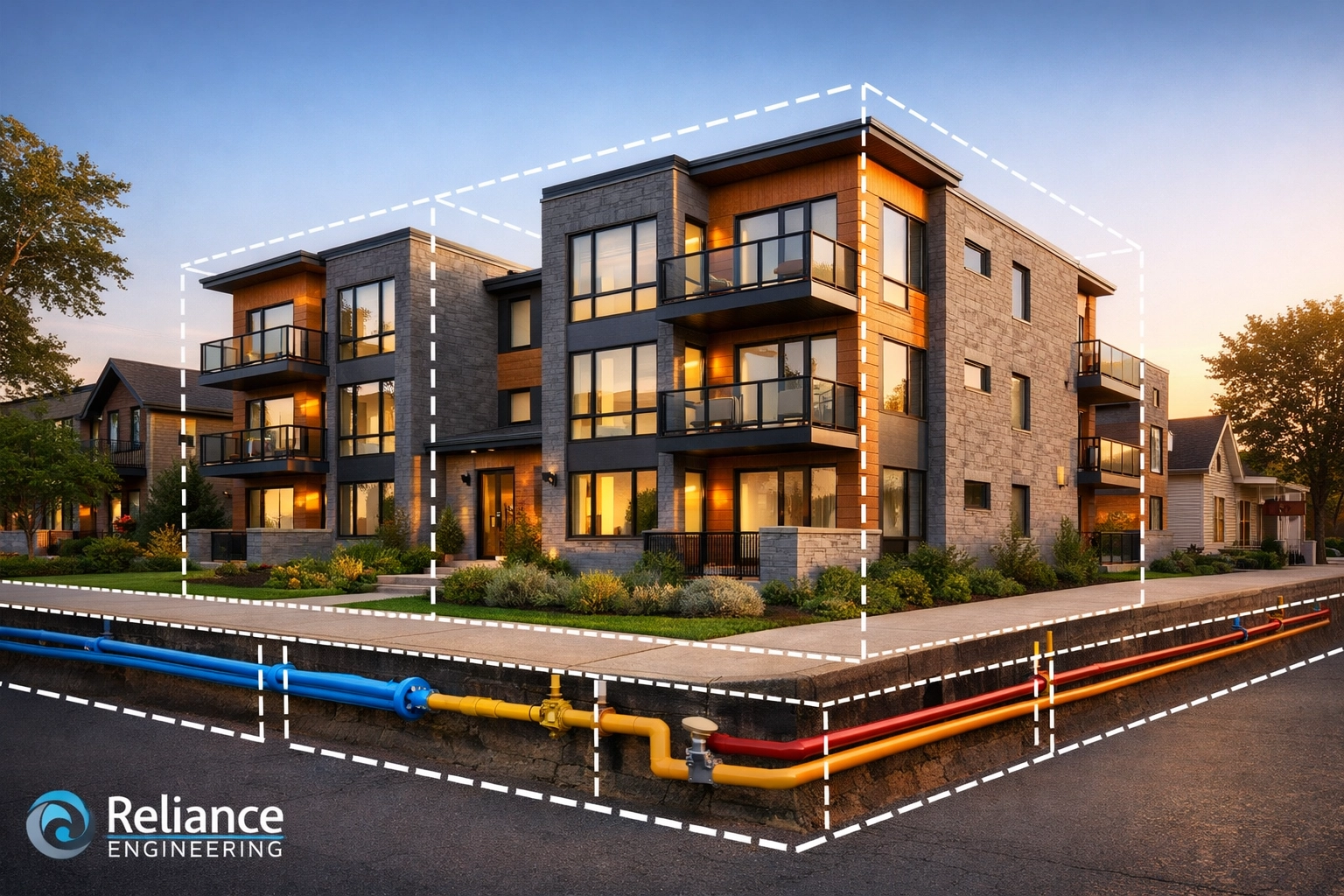
You cannot win a zoning amendment on aesthetics alone. To convince a municipality that your project is viable, you must prove that the existing infrastructure can support it. This is where civil engineering becomes the "make or break" factor.
Functional Servicing and Stormwater
Municipalities are concerned about capacity. Can the existing sanitary sewer design handle the new residents? Will the increased lot coverage cause flooding for the neighbors?
At Reliance Engineering, we specialize in creating the technical backbone of your application. We provide:
- Functional Servicing Reports (FSR): Demonstrating how the site will be serviced with water, sewer, and storm connections.
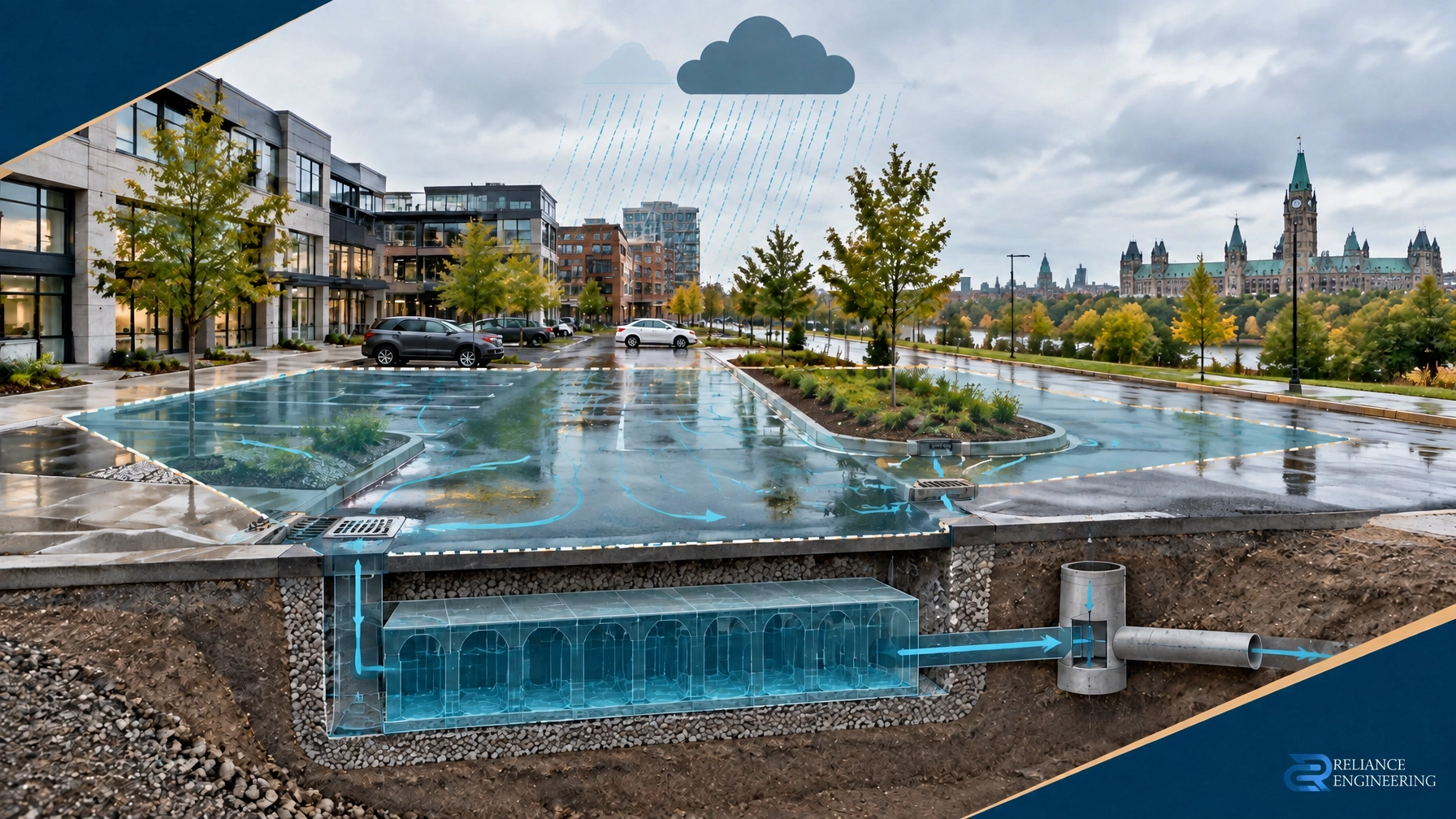
- Stormwater Management (SWM): Ensuring post-development runoff does not exceed pre-development levels.
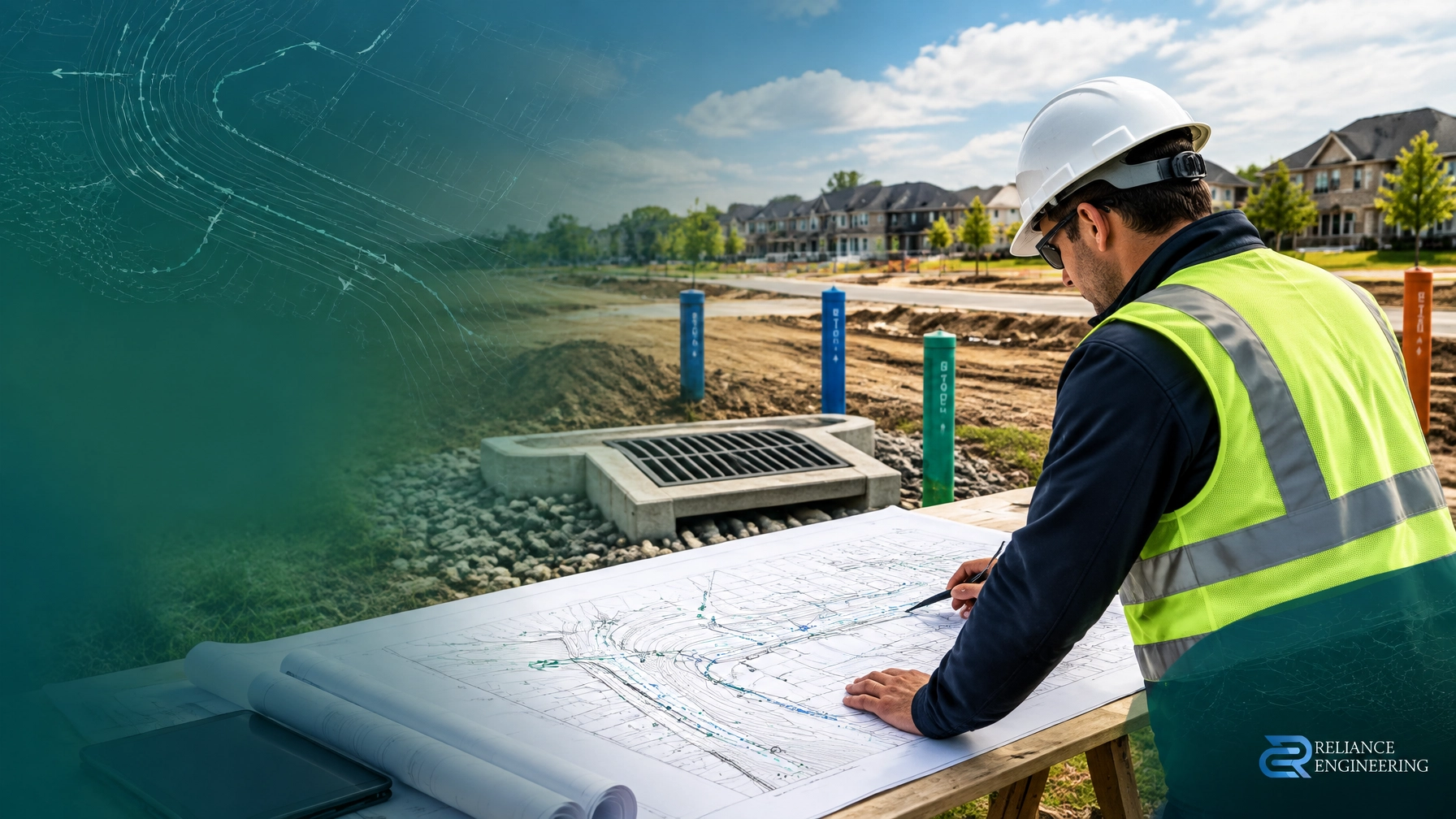
- Site Grading Plans: Proving the land can be shaped to provide safe access and proper drainage.
Without these reports, your Zoning Amendment application will not even be considered "complete" for processing.
Navigating Ontario’s 2026 Regulatory Landscape
As of March 2026, the Ontario planning environment is shifting. Two major trends are dominating the conversation:
1. Community Planning Permit Systems (CPPS)
Many Ontario municipalities are transitioning to the CPPS (formerly known as Development Permit Systems). This system combines zoning, site plan, and minor variance into one streamlined process. By the end of 2026, many counties are expected to have these frameworks fully operational to speed up housing delivery.
2. Inclusionary Zoning (IZ)
Major urban centers across Ontario are now enforcing Inclusionary Zoning. If your ZBA application is for a residential project of a certain size, you may be required to set aside a percentage of units as affordable housing. Understanding the financial impact of IZ is essential before you even begin the rezoning process.
Why Projects Fail (and How to Avoid It)
In our two decades of experience, we’ve seen ZBA applications fail for three main reasons:
- Incompatibility with the Official Plan: If the Official Plan says "Low Density" and you want a high-rise, you likely need an Official Plan Amendment (OPA) first.
- Inadequate Technical Evidence: Submitting "thin" reports that don't address storm system design or utility constraints will lead to a swift rejection.
- Poor Community Engagement: Ignoring the concerns of the neighborhood until the public meeting is a recipe for political disaster.
Expert Consulting for Your Ontario Project
Zoning amendments are a high-stakes game. The difference between an approved development and a stalled project often comes down to the quality of your consultant team. Reliance Engineering provides the technical precision and municipal expertise required to get your project across the finish line.
From 35 Wabash Avenue in Toronto to major redevelopments like Davis Drive in Newmarket, our track record speaks for itself. We don't just draw plans; we design solutions that get permitted.
Contact Information
Ready to start your Zoning By-law Amendment? Contact us today for a professional consultation.
- Principal: Naresh Ochani, P.Eng. M.Eng.
- Company: Reliance Engineering
- Address: 6850 Millcreek Dr, Mississauga, ON L5N 2H4
- Phone: 647-385-6418
- Email: [email protected]
- Website: www.relianceengineering.ca
Office Hours
- Saturday: 12:00 PM – 2:00 PM
- Sunday: Closed
- Monday – Friday: By Appointment

About Reliance Engineering:
We are a leading civil engineering and land development consulting firm serving clients across Ontario. With over 20 years of experience, we specialize in site grading, site servicing, stormwater management, and navigating the complex municipal approval processes for residential, commercial, and industrial projects.