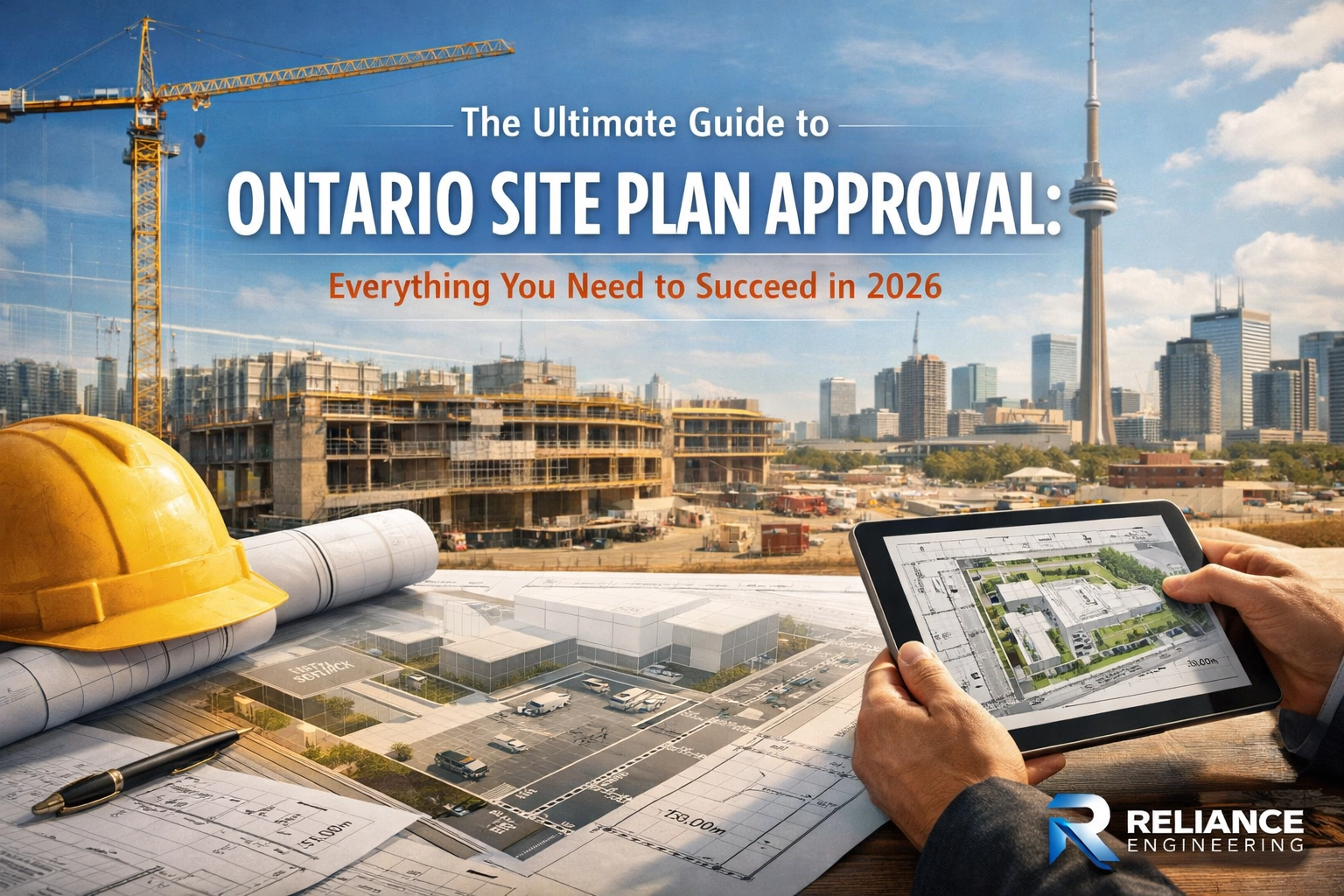
Navigating the land development landscape in Ontario requires more than just a vision; it requires a surgical understanding of the regulatory framework. Site Plan Approval (SPA) is the critical gateway between a conceptual design and a shovel in the ground. In 2026, with evolving provincial mandates and municipal pressures, the SPA process is faster but more demanding than ever.
At Reliance Engineering, we bring over 20 years of experience to the table, helping developers across Ontario secure approvals for residential, commercial, industrial, and institutional projects. This guide breaks down exactly what you need to master the SPA process this year.
What is Site Plan Approval?
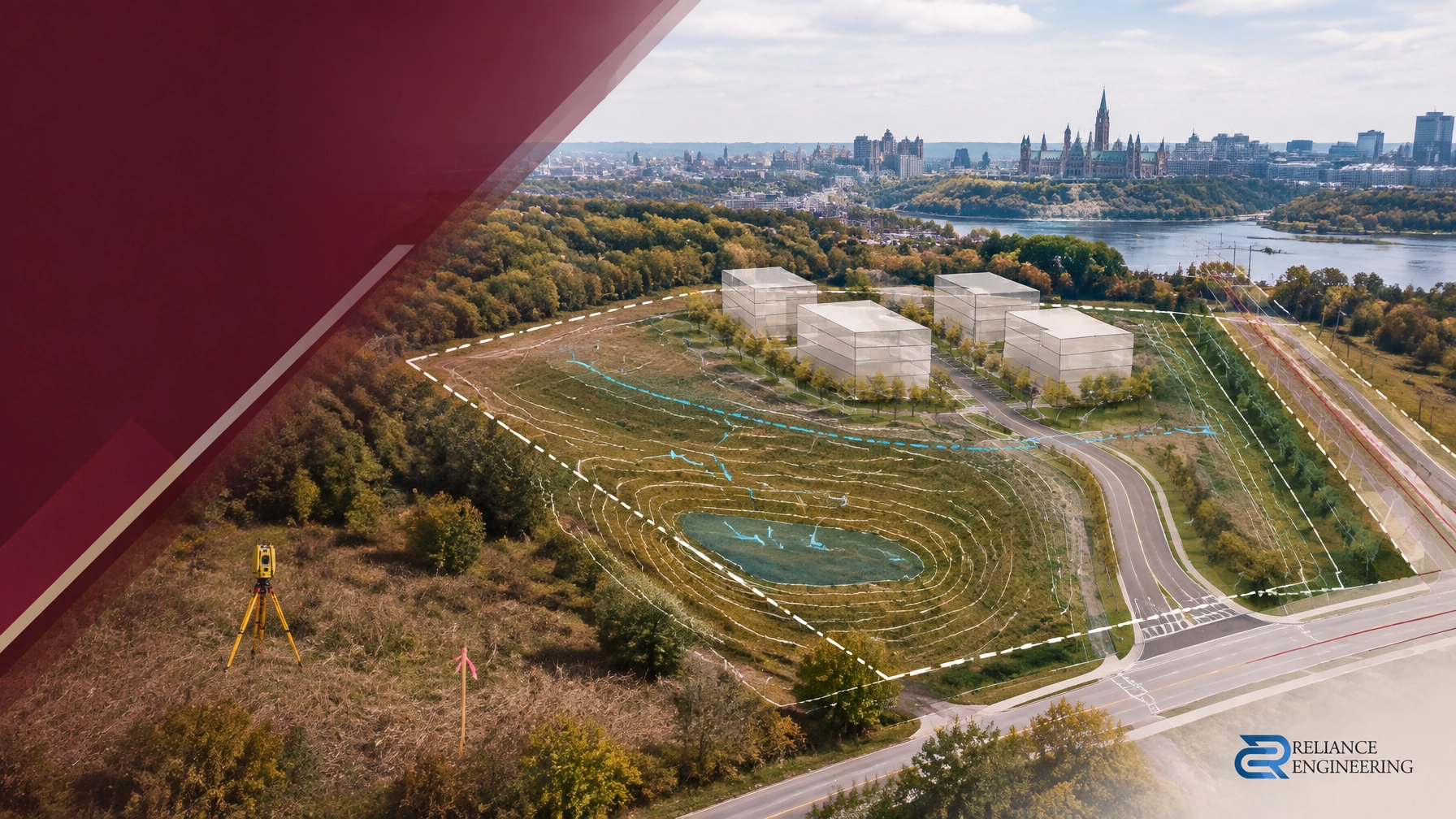
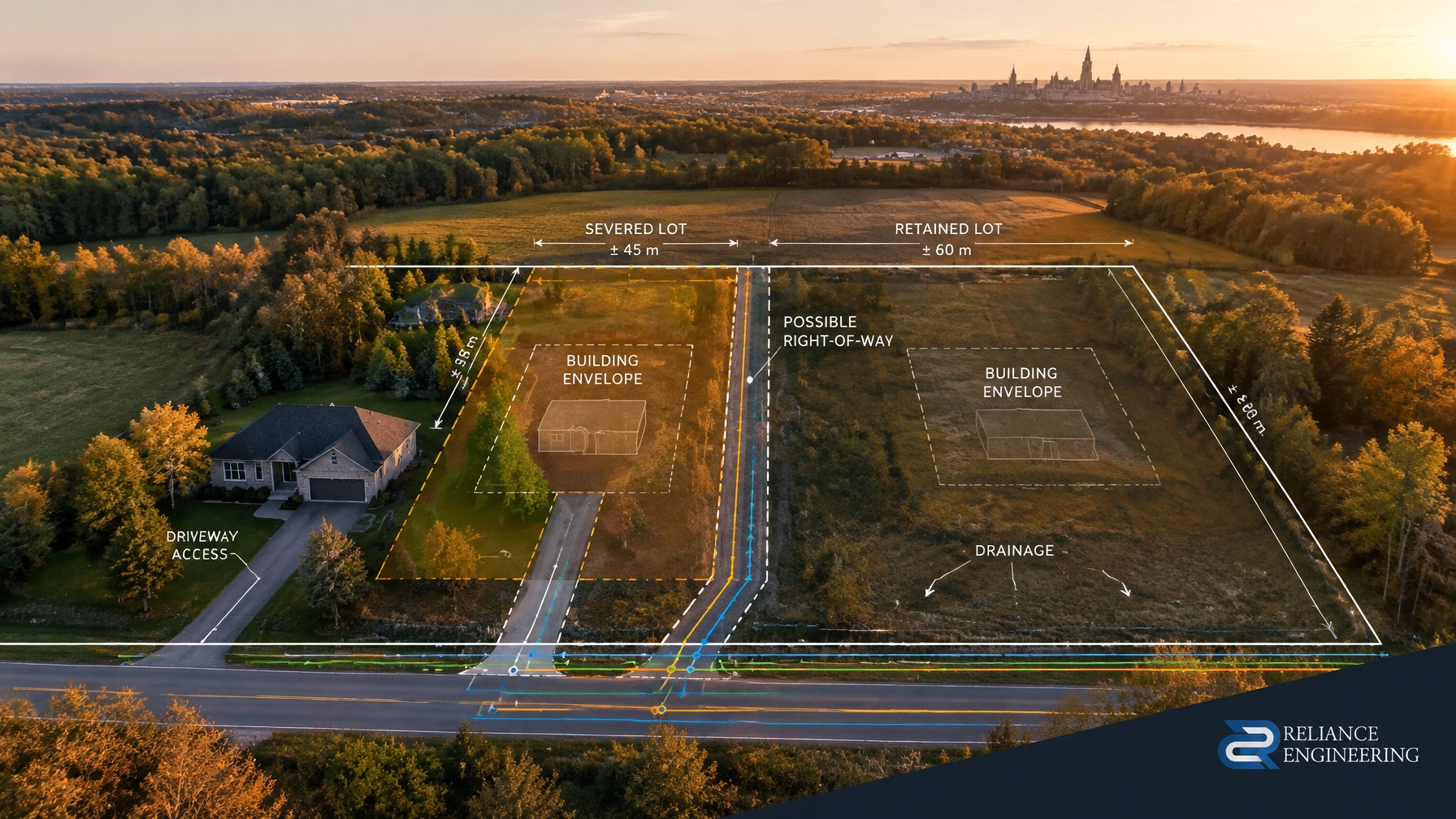
Site Plan Approval is a technical review process conducted by municipalities to ensure that a proposed development is functional, safe, and integrated into the surrounding environment. It is not just about the building; it is about how the building interacts with the land.
Municipalities use the SPA process to evaluate:
- Building footprint and orientation
- Access points and traffic flow
- Site Grading and drainage
- Site Servicing (water, sanitary, and storm)
- Landscaping and lighting
- Emergency vehicle access
If your project involves multi-residential, commercial, or industrial builds, SPA is mandatory. Even major additions to existing structures often trigger this requirement.
The 5-Stage Approval Process in 2026
The Ontario Planning Act has undergone significant changes in recent years, including mandates like Bill 109, which pushed municipalities to speed up their review timelines. Here is how the process looks today.
1. Mandatory Pre-Consultation
Never skip the pre-consultation. This is where you meet with municipal staff to define the "complete application" requirements. You will walk away with a checklist of every study, plan, and report needed. Getting this right saves months of back-and-forth later.
During this meeting, staff will outline expectations for:
- Functional Servicing Reports (FSR)
- Stormwater Management Reports (SWMR)
- Zoning compliance
- Urban design guidelines
2. Formal Submission
Once you have the checklist, you must submit a comprehensive package. In 2026, many municipalities have transitioned to fully digital portals. Your submission must include professional-grade drawings that meet exact technical standards.
A typical package includes:
- Site Plan and Statistics
- Site Grading Plan
- Site Servicing Plan
- Erosion and Sediment Control Plan
- Architectural Elevations
- Landscape and Lighting Plans
3. Technical Review and Feedback
Your application is circulated to various departments: Planning, Engineering, Transportation, Fire, and often external agencies like Conservation Authorities. They will provide "red-line" comments.
The goal here is technical compliance. For example, your Storm System Design must prove that post-development runoff does not exceed pre-development levels. If the city finds issues with your Sanitary Sewer Design, you must revise and resubmit.

4. Conditional Approval and the Site Plan Agreement
Once the technical details are resolved, the municipality issues a "Notice of Approval Conditions" (NOAC). This lists everything you must do before the final sign-off.
The most critical part of this stage is the Site Plan Agreement. This is a legal document registered on the property title. It binds the owner to build and maintain the site exactly as approved. You will also be required to post financial securities (Letters of Credit) to ensure that site works like landscaping and paving are completed.
5. Final Approval and Building Permit
With the agreement signed and securities in place, the municipality issues final approval. You are now cleared to apply for your Building Permits. Note that Site Plan Approval and Building Permits are separate processes, though they often run concurrently in the final stages.
Technical Essentials: Engineering the Success of Your Site
The engineering component of an SPA application is the most scrutinized. At Reliance Engineering, we specialize in providing the technical backbone for these submissions.
Site Grading and Drainage
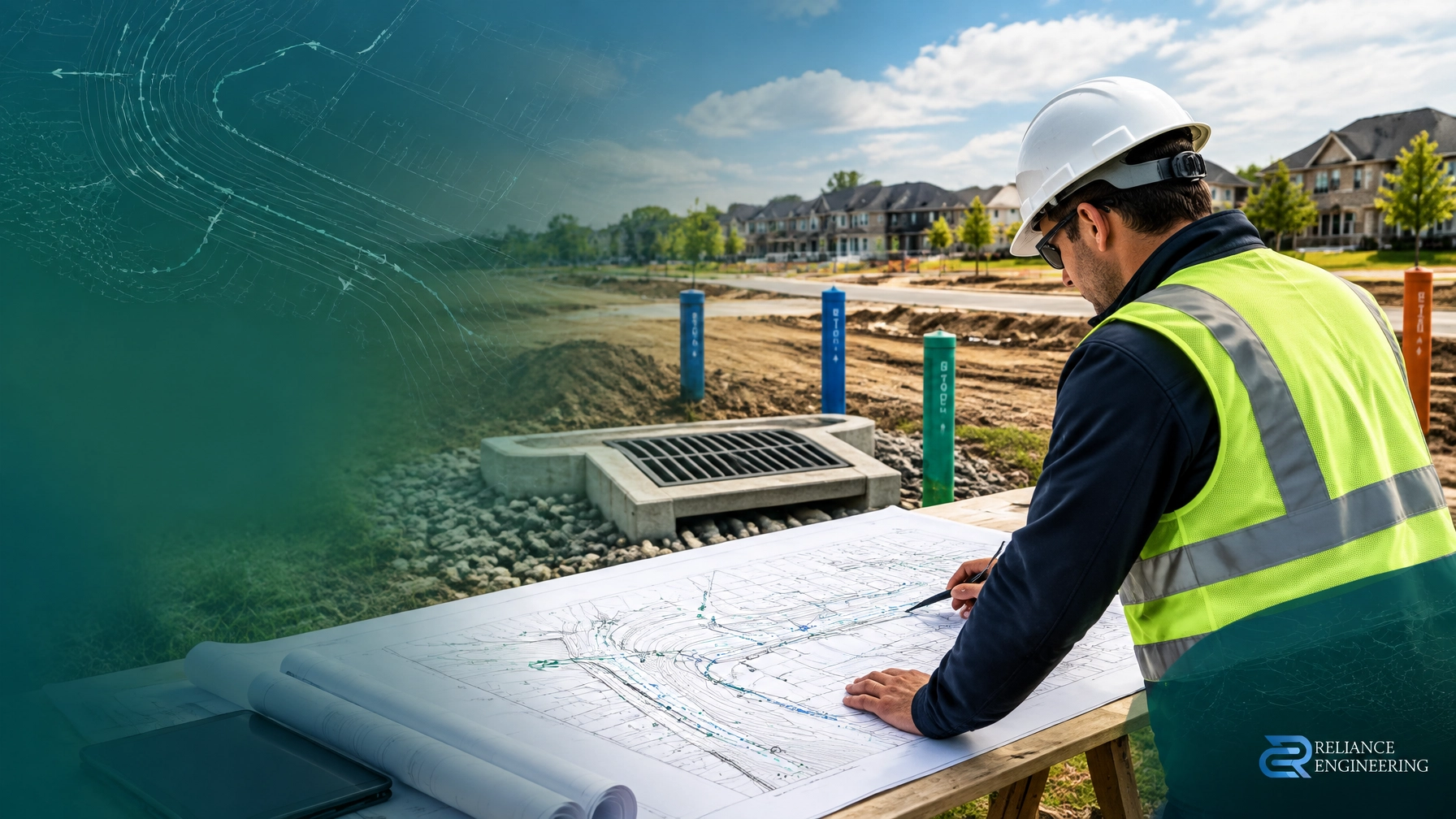
A Site Grading Plan is more than just moving dirt. It ensures that water flows away from buildings, prevents flooding on neighboring properties, and meets accessibility requirements (barrier-free paths). In Ontario, grading must be precise to account for seasonal freeze-thaw cycles.
Functional Servicing Reports (FSR)
The Functional Servicing Report is the heart of your engineering package. It proves to the municipality that the existing infrastructure (water mains, sewers) can handle the demand of your new development. This includes Water Distribution Design for domestic use and fire protection.
Stormwater Management (SWM)
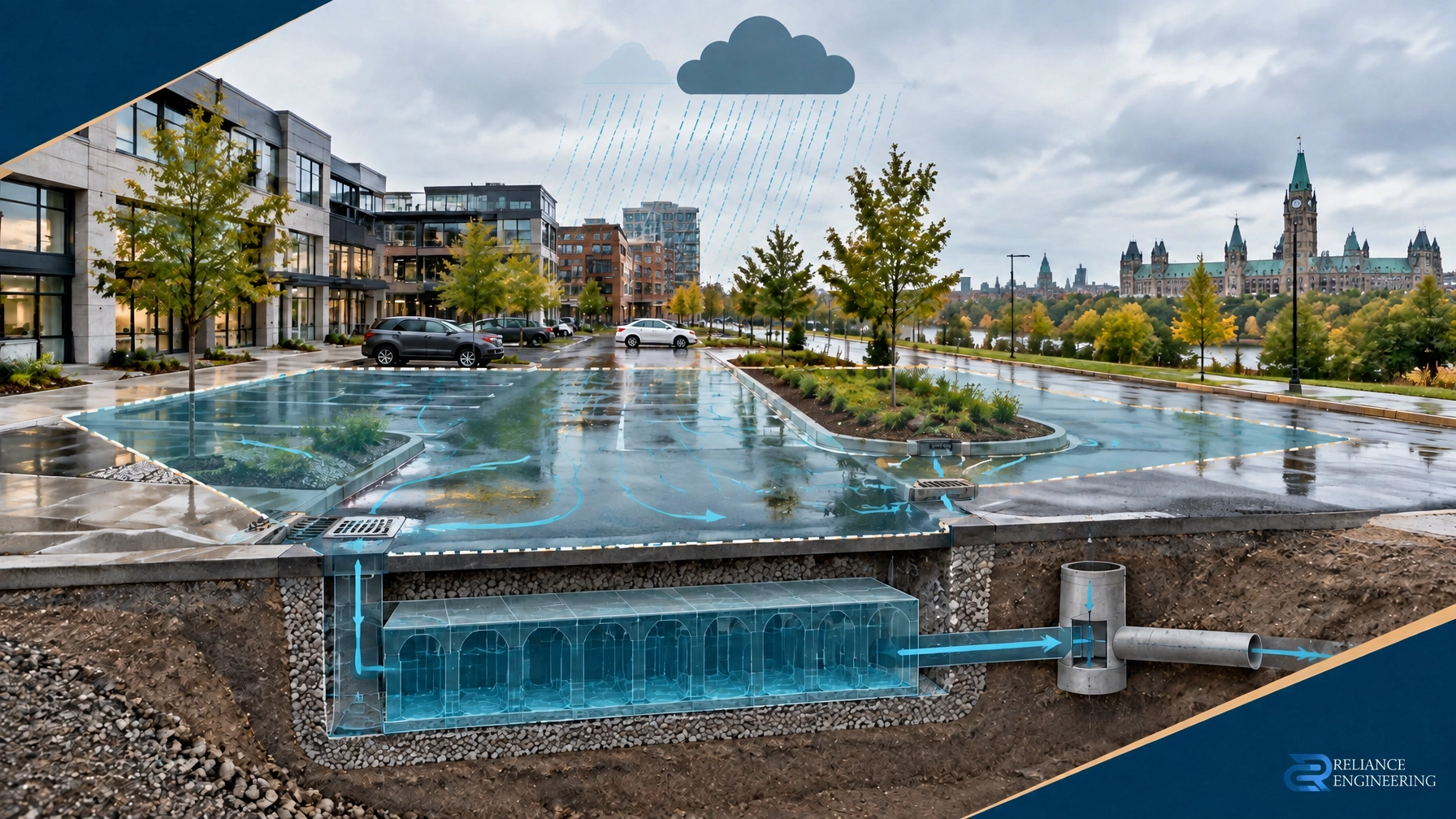
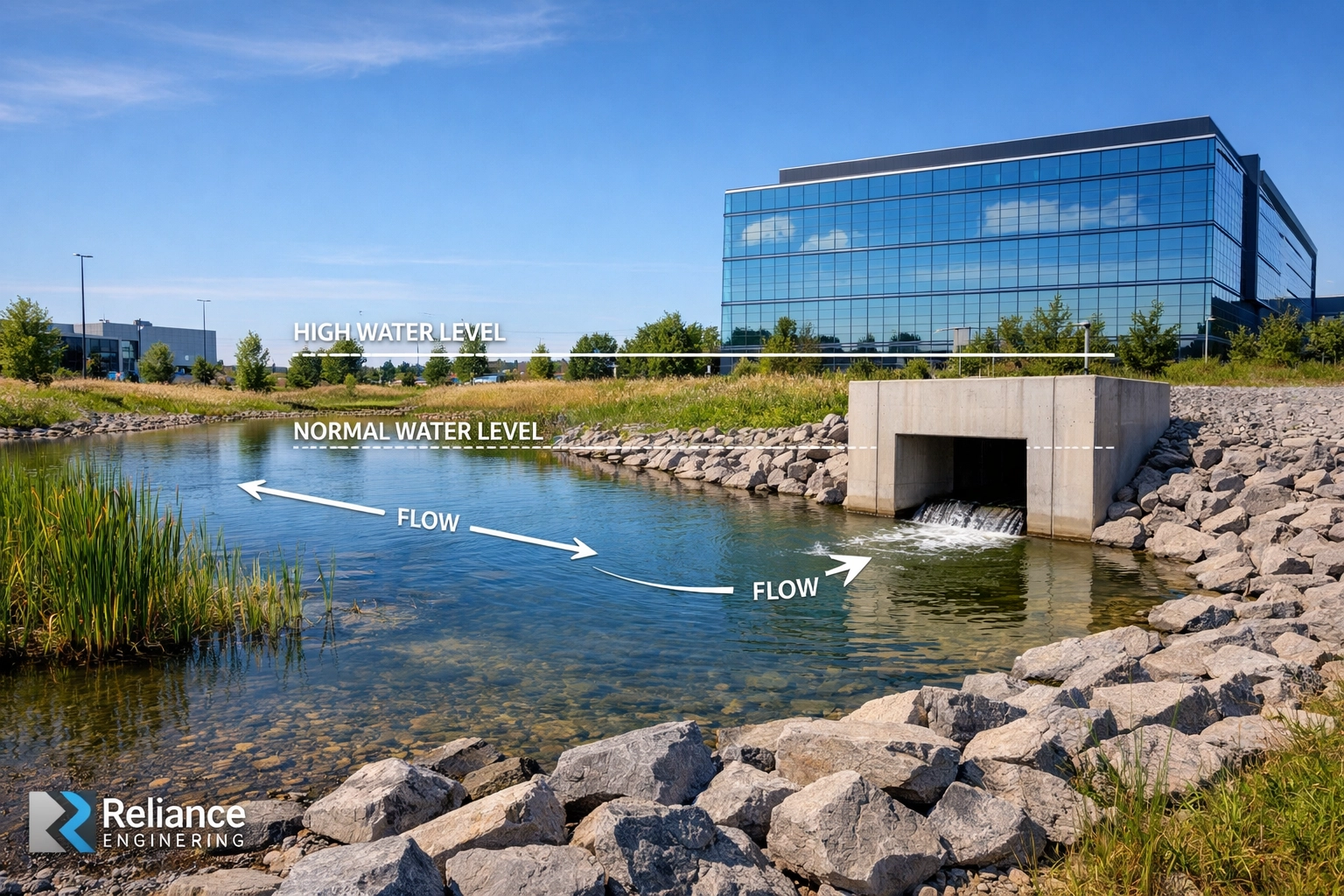
Ontario has some of the strictest Stormwater Management guidelines in North America. Whether you are using underground storage tanks, LID (Low Impact Development) features, or detention ponds, your SWMR must be ironclad.
2026 Timelines: What to Expect
In 2026, timelines are heavily influenced by the "Complete Application" rule. If your submission is perfect on day one, the municipality is incentivized to move quickly.
- Simple Commercial Additions: 4–6 months.
- Mid-Rise Residential: 8–14 months.
- Complex Mixed-Use (Major Cities): 12–24 months.
Delays usually occur because of incomplete submissions or conflicting feedback from different municipal departments. Having a lead consultant who can coordinate these responses is vital.
Common Pitfalls to Avoid
- Ignoring Zoning: SPA does not change zoning. If your building height or density violates the by-law, you need a Zoning By-law Amendment or Minor Variance before or alongside SPA.
- Poor Pre-Consultation: Treating the pre-con as a "meet and greet" instead of a technical scoping session leads to surprises later.
- Late Engagement of Engineers: Civil engineering shouldn't be an afterthought. Your Site Servicing often dictates where the building can actually go.
- Inadequate Erosion Control: Failure to provide a robust Erosion and Sediment Control plan can lead to immediate rejection by Conservation Authorities.
How Reliance Engineering Accelerates Your Approval
Success in Ontario land development is a game of precision. At Reliance Engineering, we don't just draft plans; we provide solutions that are permit-ready and cost-effective.
From 35 Wabash Avenue in Toronto to major redevelopments like the Etobicoke General Hospital, our portfolio demonstrates our ability to handle high-stakes projects across the province. Whether it's Davis Drive in Newmarket or Queen Street in St. Catharines, we know the local requirements.
We offer:
- Site Grading and Servicing Plans
- Comprehensive Stormwater Management Reports
- Construction Administration to ensure compliance during build-out.

Work With the Experts
Don’t let red tape stall your project. Leverage our 20+ years of expertise to navigate the Ontario regulatory landscape with confidence.
Reliance Engineering
Naresh Ochani, P.Eng. M.Eng.
Founder and Principal
Office Address:
6850 Millcreek Dr,
Mississauga, ON L5N 2H4
Contact Details:
Phone: 647-385-6418
Email: [email protected]
Website: www.relianceengineering.ca
Operational Hours:
- Monday – Friday: 9:00 AM – 5:00 PM
- Saturday: 12:00 PM – 2:00 PM
- Sunday: Closed
Ready to start your project? Contact us today for a consultation and get your site plan moving toward approval.