In the world of Ontario land development, time is your most expensive line item. Every month your project sits in the "Site Plan Approval" (SPA) queue is another month of carrying costs, interest, and missed market opportunities. While the Planning Act theoretically suggests a 30-day decision period, the reality on the ground across Ontario is often six to twelve months of bureaucratic back-and-forth.
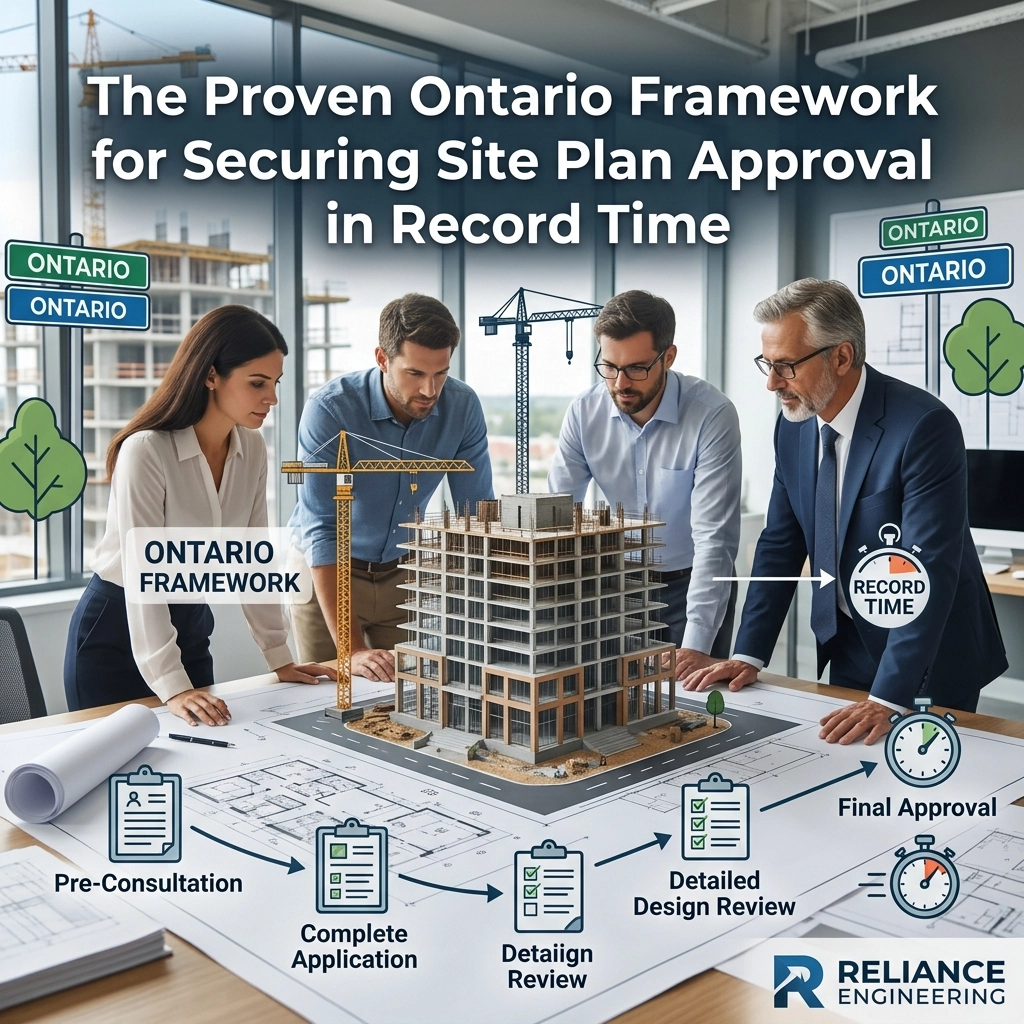
At Reliance Engineering, we don’t accept "standard" timelines. We use a high-velocity framework built on 20+ years of technical expertise to push applications through the system. If you want to secure your Site Plan Approval in record time, you need to stop reacting to municipal comments and start dictating the pace of the project.
The Reality of Site Plan Approval in Ontario
Site Plan Approval is a form of development control used by municipalities to ensure that a project is safe, functional, and aesthetically compatible with the surrounding area. It covers everything from site grading and drainage to landscaping and lighting.
With recent legislative shifts like Bill 23 (More Homes Built Faster Act), the framework for SPA in Ontario has changed. Some aesthetic elements have been removed from the scope of site plan control to speed up housing delivery, but the technical engineering requirements, the functional servicing and stormwater management, remain as rigorous as ever.
Phase 1: The Pre-Consultation Power Move
The biggest mistake developers make is treating the Pre-Consultation meeting as a "get to know you" session. It isn't. It is the most critical technical milestone in the entire framework.
A well-run pre-consultation can cut three months off your timeline. A poorly prepared one can add six.
Our Framework for Pre-Consultation:
- Draft Before the Meeting: Don't show up with a blank slate. Have a preliminary site grading plan and servicing concept ready.
- Identify the "Deal Breakers": Every municipality has its quirks. Whether it’s specific Low Impact Development (LID) requirements for stormwater or unique fire access widths, identify these early.
- Confirm the Checklist: Ensure you have a definitive list of every study required, FSR, SWMR, Noise, Traffic, etc. Missing one study can trigger a "Deemed Incomplete" notice, resetting your 30-day clock.

Phase 2: Technical Perfection in Submission
Municipal reviewers are overworked. If they open a submission and find errors in the Functional Servicing Report (FSR) or the grading plan, they will put it at the bottom of the pile.
To get to the front of the line, your submission must be "bulletproof." At Reliance Engineering, we focus on three core pillars:
1. The Functional Servicing Report (FSR)
The FSR is the heart of your engineering submission. It proves to the municipality that there is enough capacity in the existing water, sanitary sewer, and storm system to support your build. We use advanced modeling to ensure our water distribution designs meet both flow and pressure requirements for fire protection and domestic use.
2. Comprehensive Stormwater Management (SWM)
Ontario has some of the strictest SWM standards in North America. Whether you are building in Toronto, Mississauga, or a rural township, you must address:
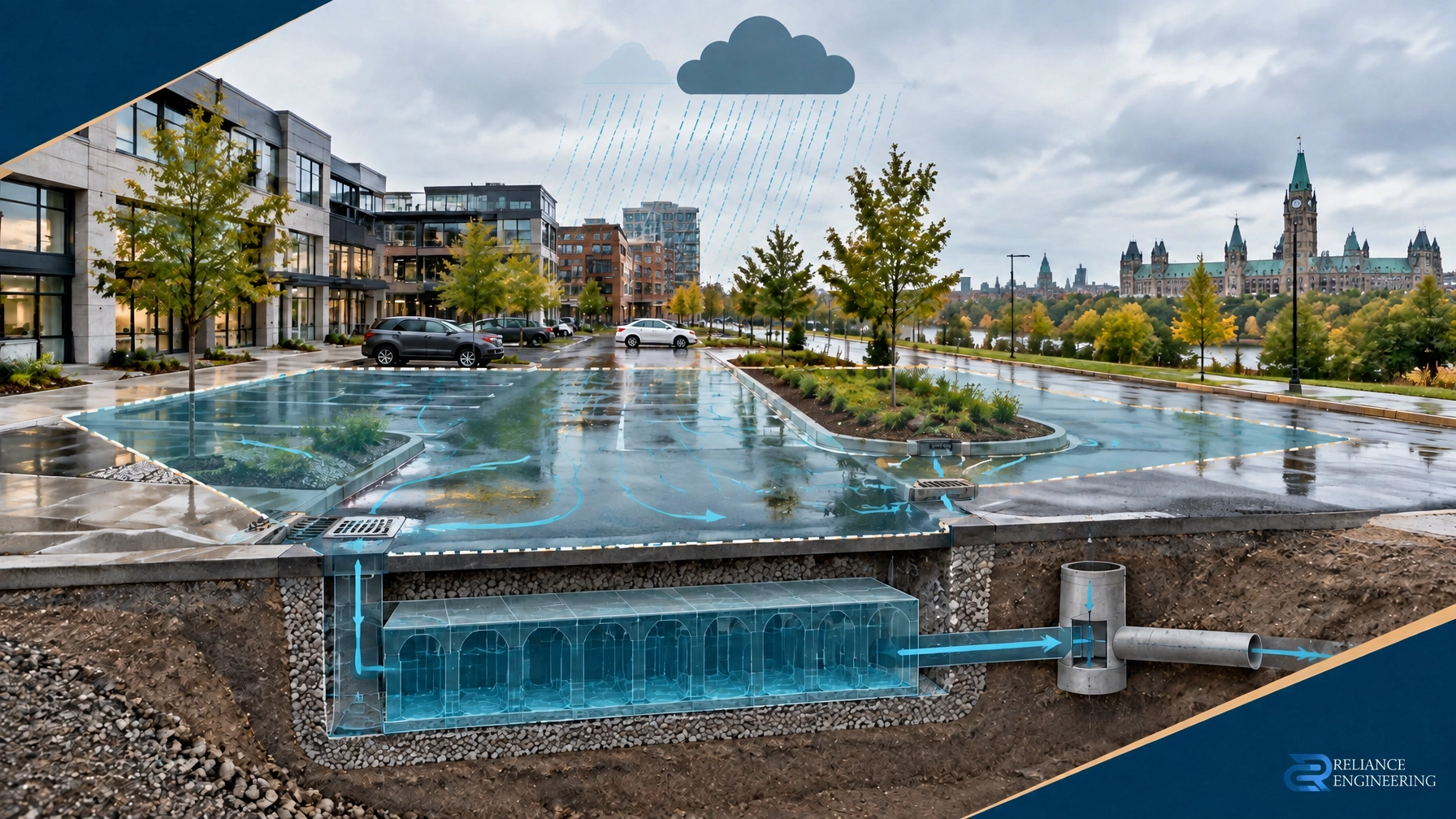
- Quantity Control: Ensuring post-development flows don't exceed pre-development levels.
- Quality Control: Removing suspended solids before they reach provincial watercourses.
- Water Balance: Recharging the groundwater table to maintain ecological health.
3. Integrated Site Grading and Servicing
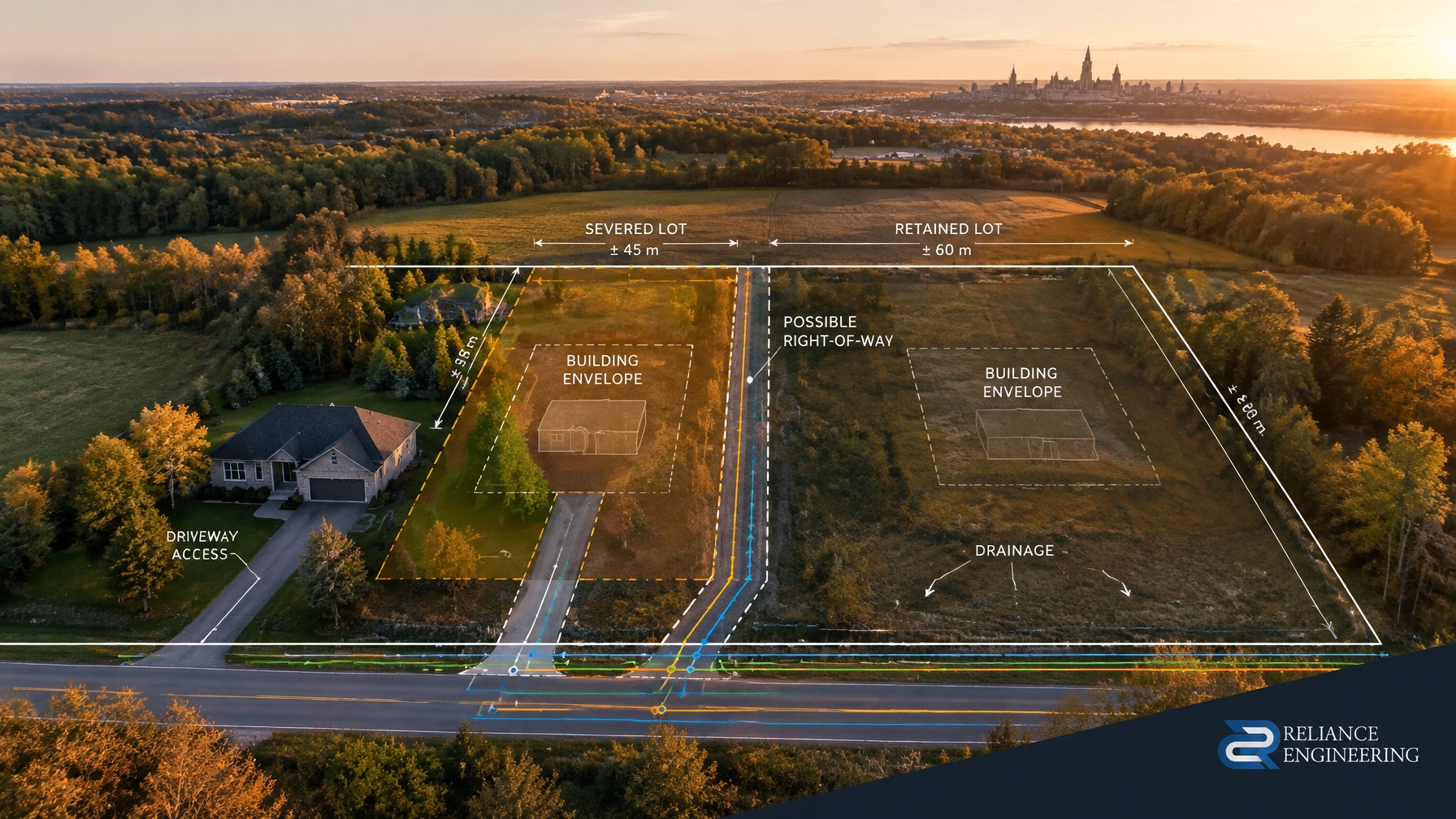
Your site servicing plan must work in harmony with your grading. We design systems that minimize the need for expensive retaining walls or deep excavations. High-energy engineering is about finding the most efficient path for a pipe while maintaining the required cover and slope.
Phase 3: Navigating the Legislative Landscape (Bill 23 and Beyond)
The Ontario regulatory landscape is shifting. Recent changes have aimed to streamline the process by:
- Restricting the ability of municipalities to regulate certain architectural details.
- Encouraging the use of digital application portals for faster tracking.
- Standardizing zoning frameworks to reduce the need for minor variances.
However, the "speed" promised by legislation only manifests if your consultant knows how to leverage it. We stay ahead of these changes, ensuring your project qualifies for every possible "fast-track" provision available under current Ontario law.
Phase 4: Proactive Agency Coordination
Site Plan Approval isn't just about the municipality. You often have to deal with:
- Conservation Authorities (TRCA, CVC, etc.): Essential for any project near a floodplain or wetland.
- Ministry of Transportation (MTO): If your project is near a 400-series highway.
- Regional Government: For connections to regional watermains or arterial roads.
The "Record Time" framework requires proactive outreach. We don't wait for the municipality to forward our plans to these agencies. We initiate contact early, resolving technical conflicts before they become "formal comments" that stall the process.

The "Secret Sauce": Quality Control and Peer Review
The fastest way to get an approval is to receive zero comments. While "zero comments" is rare, minimizing them is our specialty.
Before any site plan leaves our office, it undergoes a rigorous internal peer review. We look for the "gotchas" that municipal engineers catch:
- Inconsistent pipe slopes.
- Missing sediment and erosion control details.
- Grading that creates drainage issues for neighboring properties.
- Non-compliance with the Accessibility for Ontarians with Disabilities Act (AODA).
By solving these problems internally, we ensure the municipal reviewer has a clear, easy path to say "Yes."
Success Stories: Proven Results Across Ontario
Our framework has been applied to diverse projects across the province, including:
- High-Density Residential: Like our work on the 35 Wabash Avenue Townhomes in Toronto, where precise servicing was key.
- Institutional Redevelopment: Such as the Etobicoke General Hospital project, requiring complex coordination.
- Mixed-Use Developments: Including the Davis Drive project in Newmarket, which involved significant stormwater management challenges.

Final Thoughts: Don't Let Bureaucracy Kill Your ROI
Site Plan Approval shouldn't be a black hole for your project timeline. By following a structured framework: pre-consulting with intent, submitting high-quality engineering, and staying ahead of legislative changes: you can slash months off your approval process.
Reliance Engineering provides the high-energy, professional consulting needed to navigate these waters. We don't just draft plans; we solve the engineering puzzles that stand between you and your building permit.
Ready to Fast-Track Your Project?
If you have a site in Ontario and need a team that understands the intersection of speed and technical excellence, contact us today. Let’s get your project out of the planning department and into the construction phase.
Contact Information:
- Principal: Naresh Ochani, P.Eng. M.Eng.
- Company: Reliance Engineering
- Address: 6850 Millcreek Dr, Mississauga, ON L5N 2H4
- Phone: 647-385-6418
- Email: [email protected]
- Website: www.relianceengineering.ca
Office Hours:
- Monday – Friday: 9:00 AM – 5:00 PM
- Saturday: 12:00 PM – 2:00 PM
- Sunday: Closed
Our Services Include:
- Functional Servicing Reports (FSR)
- Stormwater Management Reports (SWMR)
- Site Grading & Servicing Plans
- Erosion and Sediment Control
- Construction Administration
- Zoning & Official Plan Amendments
Reliance Engineering: Engineering Certainty in an Uncertain Regulatory World.