![[HERO] 7 Mistakes You’re Making with Your GTA Site Plan Approval (and How to Fix Them Instantly)](https://cdn.marblism.com/uXpfLk3WEo.webp)
In the high-stakes world of land development across Ontario, time is the ultimate currency. Every day your project sits in the "under review" pile at City Hall is a day you are losing money on carrying costs, financing, and missed market opportunities. In the Greater Toronto Area (GTA), the Site Plan Approval (SPA) process is notoriously rigorous. It is the gatekeeper between your vision and your building permit.
At Reliance Engineering, we see developers: from seasoned pros to first-time investors: hit the same avoidable walls. These aren't just minor typos; they are fundamental engineering and planning errors that trigger automatic rejections.
If you want to stop the cycle of endless resubmissions, you need to identify where your current strategy is failing. Here are the 7 most common mistakes we see in GTA site plan submissions and exactly how to fix them today.
1. Skipping the Pre-Application Consultation (PAC)
The most expensive mistake you can make happens before you even draw a single line. Many developers view the Pre-Application Consultation (PAC) as an optional "suggestion" or a waste of time. They believe that since they know the zoning bylaws, they can jump straight into the formal submission.
The Reality: In most Ontario municipalities, the PAC is where the "real" rules are revealed. This is where the city planners, transit authorities, and conservation authorities tell you exactly what studies they need. If you submit without this meeting, you are essentially guessing what the city wants.
The Fix: Never submit a formal application without a PAC. During this meeting, request a formal "Planning Application Checklist." This document is your roadmap. At Reliance Engineering, we use this checklist as our primary quality control tool. We don’t just meet the requirements; we anticipate the follow-up questions.

2. The "Close Enough" Survey Trap
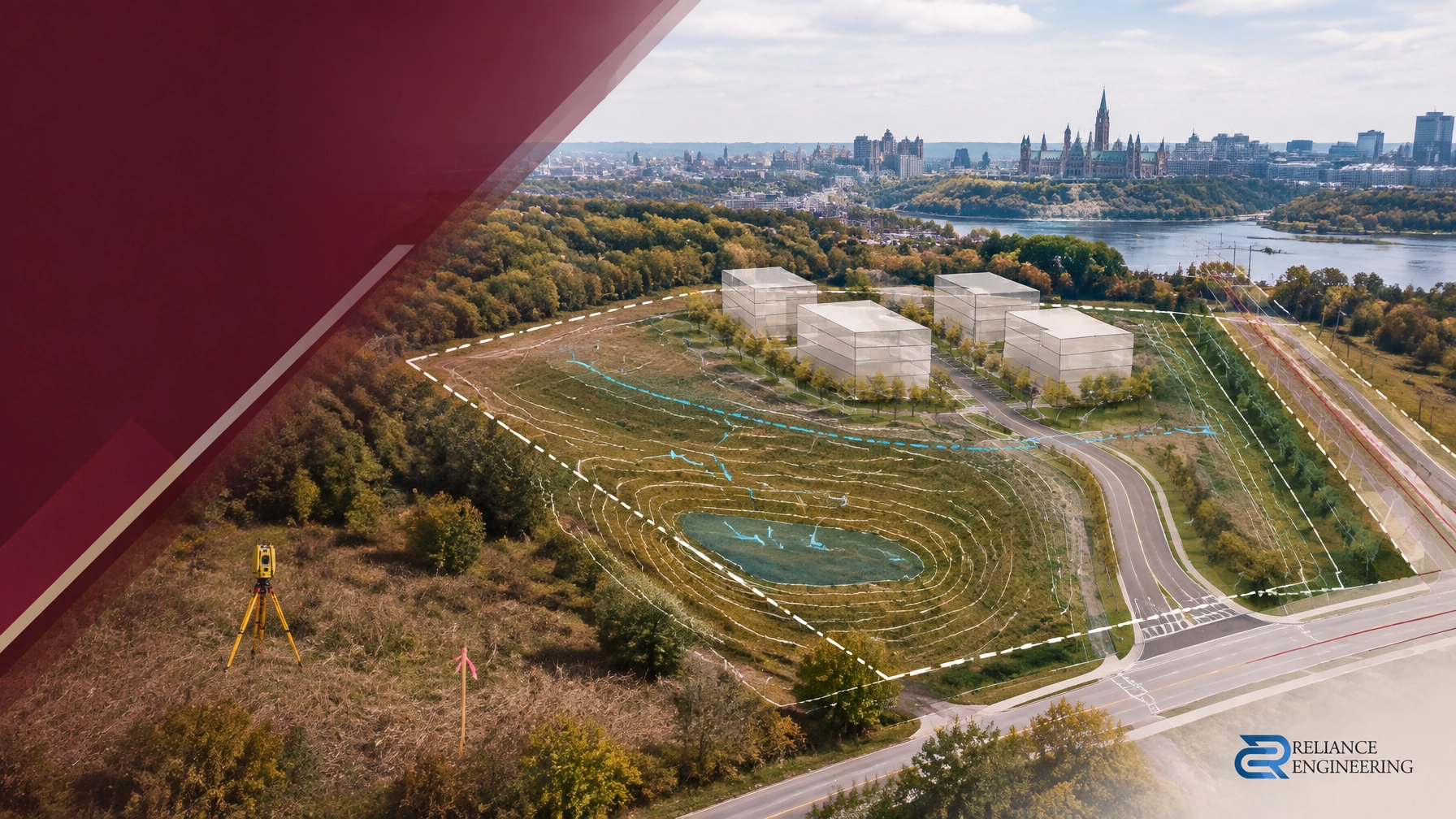
We often see site plans based on outdated surveys or, worse, satellite imagery. Developers try to save a few thousand dollars by using a survey from 1995. They assume the property lines haven't moved and the topography is "mostly the same."
The Reality: Modern site plan approval requires surgical precision. If your site grading plan is based on inaccurate elevations, your entire drainage strategy is a house of cards. A 10-centimeter error in a property line can mean your building is encroaching on a setback, which can lead to a total project halt or a costly Committee of Adjustment hearing.
The Fix: Commission a fresh Legal Boundary Survey and Topographic Survey from a licensed Ontario Land Surveyor (OLS). Ensure the digital CAD file is shared directly with your civil engineer. We use this data to build a digital twin of your site, ensuring every setback and pipe invert is accurate to the millimeter.
3. Ignoring the 2.0% Grading Rule
In many GTA municipalities, grading isn't just about moving dirt; it’s about legal compliance. A common mistake is submitting plans with slopes that are too shallow (e.g., 1.5% or 1.9%) in areas where the municipality strictly requires a minimum of 2.0% for surface drainage.
The Reality: Municipal reviewers are looking for reasons to hit "reject" to clear their desks. An incorrect slope is the easiest red flag to spot. If your plan doesn't explicitly show how water moves away from the building and toward an approved outlet without impacting neighbors, it will fail.
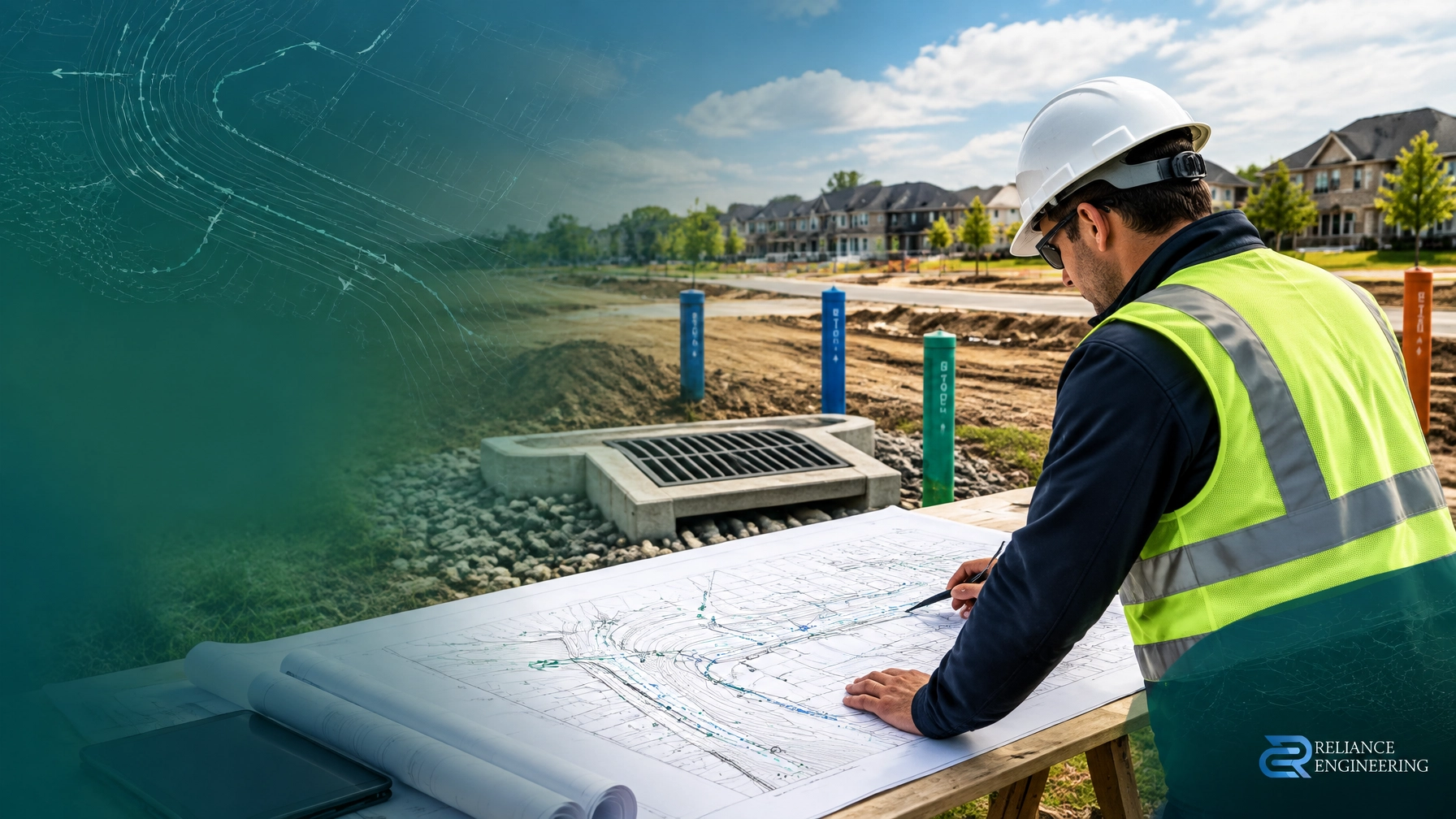
The Fix: Ensure your engineer is obsessed with the details. We design our site grading plans with clear flow arrows and precise spot elevations. We emphasize basement protection and ensure that all swales and catch basins meet current 2026 standards for climate resilience.
4. Inadequate Fire Flow and Servicing Design
A site plan is more than just a building footprint; it is a complex web of underground infrastructure. We often see submissions that fail to account for "Fire Flow": the amount of water pressure available to fight a fire at that specific location.
The Reality: If you design a multi-unit building but the municipal water main on the street doesn't have the pressure to support your sprinklers and hydrants, your site plan is dead on arrival. Similarly, failing to show clear sanitary sewer design connections or assuming capacity exists where it doesn't will lead to massive redesign costs.
The Fix: Conduct a Fire Flow Test early in the process. Your site servicing plan must be integrated with a Functional Servicing Report (FSR). We specialize in functional servicing reports that prove to the city that your project won't overwhelm existing infrastructure.

5. Missing or Vague Zoning Setbacks
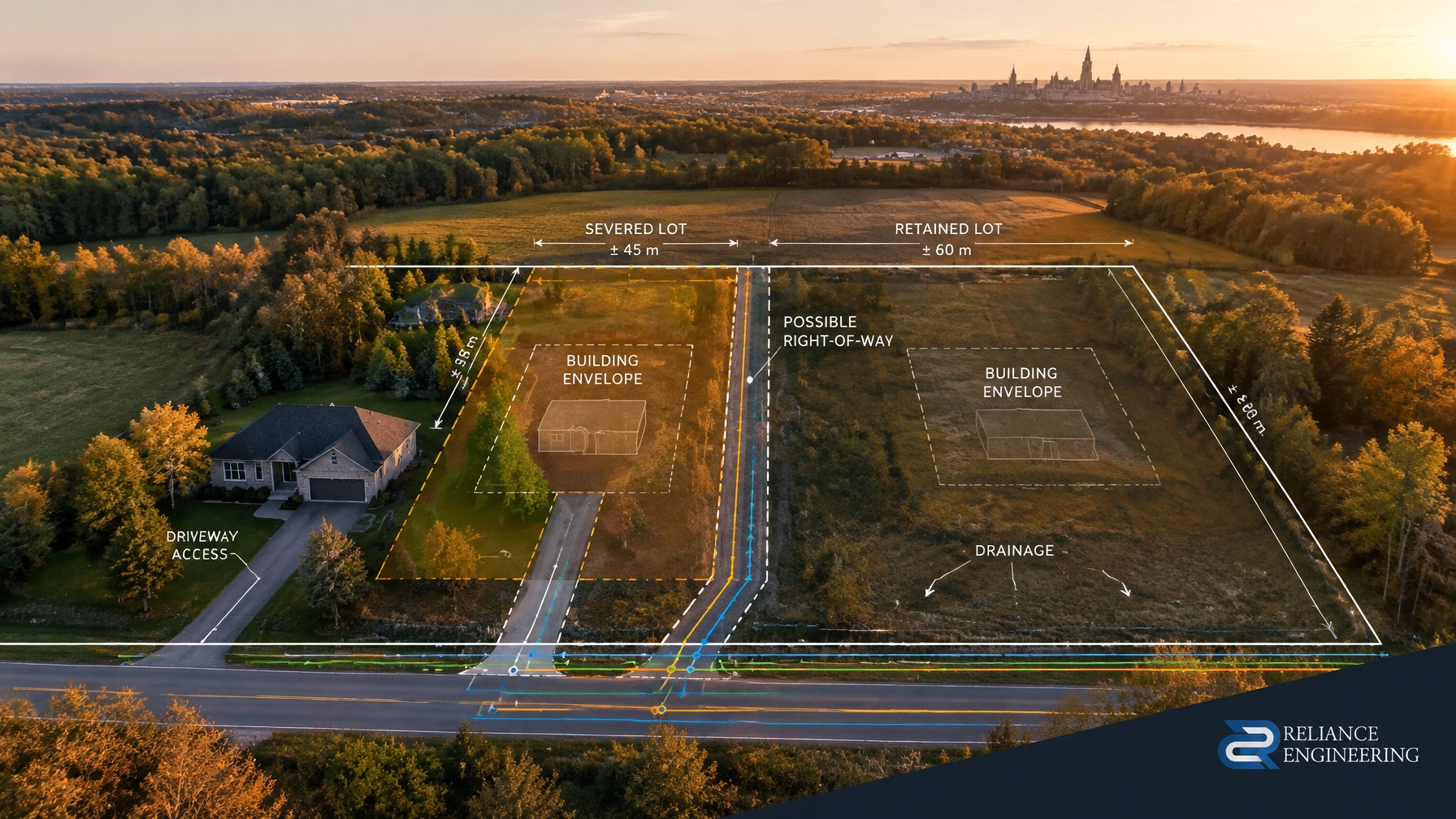
Zoning bylaws in Ontario are incredibly specific regarding "setbacks": the distance between your building and the property line. A common mistake is failing to clearly label these on the site plan or forgetting to account for "projections" like balconies, stairs, or HVAC units that might encroach into those setbacks.
The Reality: If a reviewer has to pull out a ruler to check your distances because you didn't label them, they are already frustrated. If they find an encroachment, you’ve just added 6 months to your timeline for a minor variance.
The Fix: Create a "Zoning Matrix" directly on the front page of your site plan. This table should list the "Required" vs. "Proposed" dimensions for every single metric: height, setbacks, density, and parking. This transparency builds trust with the reviewer and speeds up the process.
6. Underestimating Stormwater Management (SWM)
With the increase in extreme weather events, Ontario municipalities have become incredibly strict about stormwater management. A frequent error is assuming you can just dump all your rainwater into the city's storm sewer.
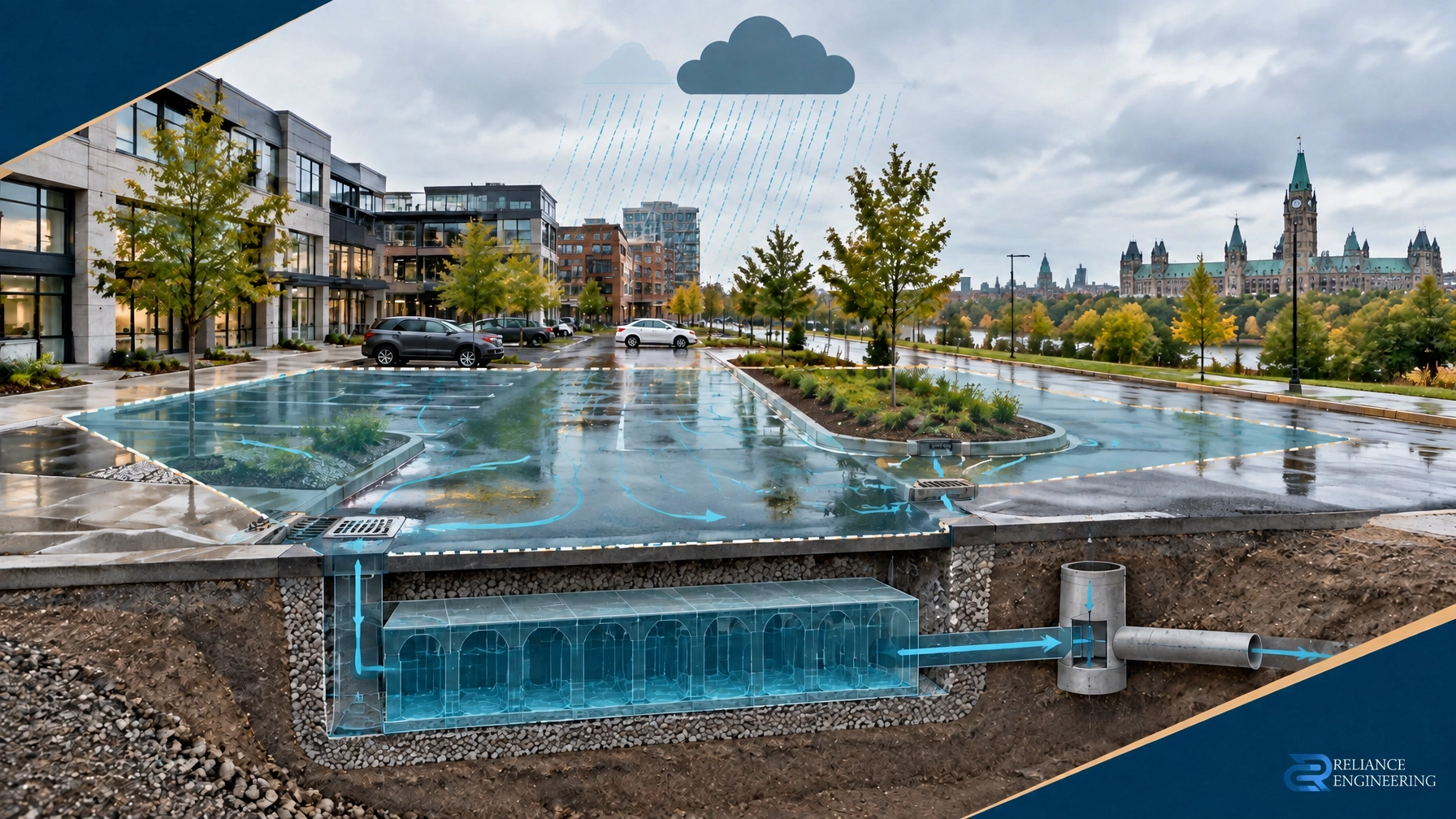
The Reality: Most new developments are required to "balance" their runoff, meaning the water leaving your site after development cannot exceed the amount that left the site before development. This often requires underground storage tanks, LID (Low Impact Development) features, or infiltration galleries.
The Fix: Treat your storm system design as a priority, not an afterthought. Incorporate SWM early so you don't have to sacrifice parking spaces later to make room for a massive underground tank. We provide stormwater management solutions that maximize your buildable area while keeping the city engineers happy.

7. Poor Communication and "The Silent Treatment"
The final mistake isn't technical: it's procedural. Many developers submit their plans and then "wait and see." They don't follow up, they don't clarify comments, and they allow their files to sit at the bottom of a reviewer’s pile.
The Reality: Site Plan Approval is a negotiation. If a reviewer sends back 40 comments, and you only address 38 of them in your resubmission, you will get another rejection. This back-and-forth can kill a project's ROI.
The Fix: Be proactive. When comments come in, schedule a call with the reviewer to ensure you understand their concerns before you start the redesign. At Reliance Engineering, we act as your advocate. We don't just send plans; we navigate the bureaucracy to push your project across the finish line.
Why Reliance Engineering?
At Reliance Engineering, we don't just provide drawings; we provide approvals. We specialize in turning complex land development challenges into permit-ready solutions across Ontario. Whether you are working on 35 Wabash Avenue or a multi-unit conversion, our team brings technical mastery and a "get it done" attitude to every project.
Our Services Include:
- Site Grading Plans
- Site Servicing Plans
- Stormwater Management Reports
- Functional Servicing Reports
- Sanitary Sewer & Storm System Design
Contact Information
Ready to fast-track your Ontario site plan approval? Let’s get to work.
Naresh Ochani, P.Eng. M.Eng.
Founder and Principal
Reliance Engineering
Address: 6850 Millcreek Dr, Mississauga, ON L5N 2H4
Phone: 647-385-6418
Email: [email protected]
Website: www.relianceengineering.ca
Office Hours:
- Saturday: 12:00 PM – 2:00 PM
- Sunday: Closed
- Monday – Friday: 9:00 AM – 5:00 PM
Stop guessing and start building. Contact us today for a consultation on your next land development project.