Ontario is in the middle of a housing revolution. With the push for "Missing Middle" housing, the province has opened the doors for investors to turn single-family lots into 4-plexes and 5-plexes. On paper, the ROI looks incredible. You take one lot, increase the density, and quadruple the cash flow.
But here is the reality: many investors are watching their profits evaporate before they even break ground. Why? Because they treat engineering: specifically site servicing and grading: as a "check-the-box" activity rather than the foundation of their project.
At Reliance Engineering, we see the same mistakes across Ontario. From Mississauga to Ottawa, these errors lead to permit delays, massive construction cost overruns, and projects that simply aren't viable.
Here are the 7 biggest mistakes you’re making with multiplex servicing and how to avoid them to protect your ROI.
1. Underestimating Sanitary Sewer Capacity
You found a great lot and want to build a 5-plex. You assume the existing 4-inch sanitary lateral is enough because it worked for the house that was there before.
This is a rookie mistake.
Adding four or five units significantly increases the peak flow into the municipal system. If the existing pipe can’t handle the load, or if the municipal main is at capacity, the city will deny your permit. By the time you realize you need a larger connection, you might have to dig up the entire street: at your expense.
A proper sanitary sewer design must be completed early. We calculate the exact needs of your new density to ensure the infrastructure supports your vision without surprise $50,000 bills from the city for "emergency" upgrades.
2. Treating Stormwater Management (SWM) as an Afterthought
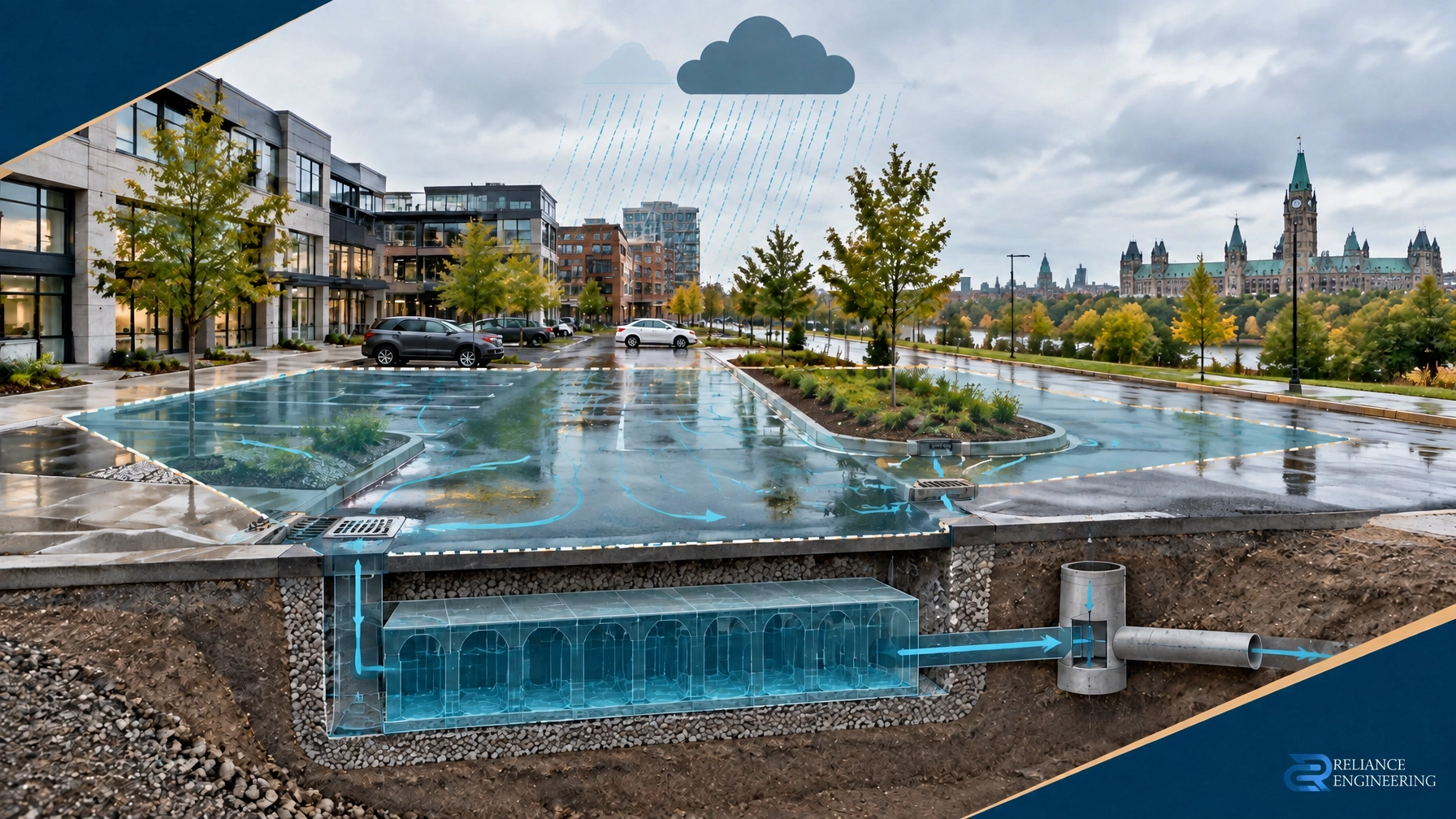
Most investors think "water just flows downhill." In a low-density residential neighborhood, that logic doesn't fly with the building department. When you add a 4-plex, you are likely increasing the "impermeable surface" (roofs, paved parking, walkways). This means more runoff.
If your storm system design isn't professional, you’ll face issues with "post-development flow." Municipalities in Ontario require that the water leaving your site after construction is no more than what left the site before construction.
If you don't account for on-site detention (like French drains, underground storage, or dry wells), you’ll be forced to redesign your entire parking layout mid-construction. That kills your timeline and your ROI.

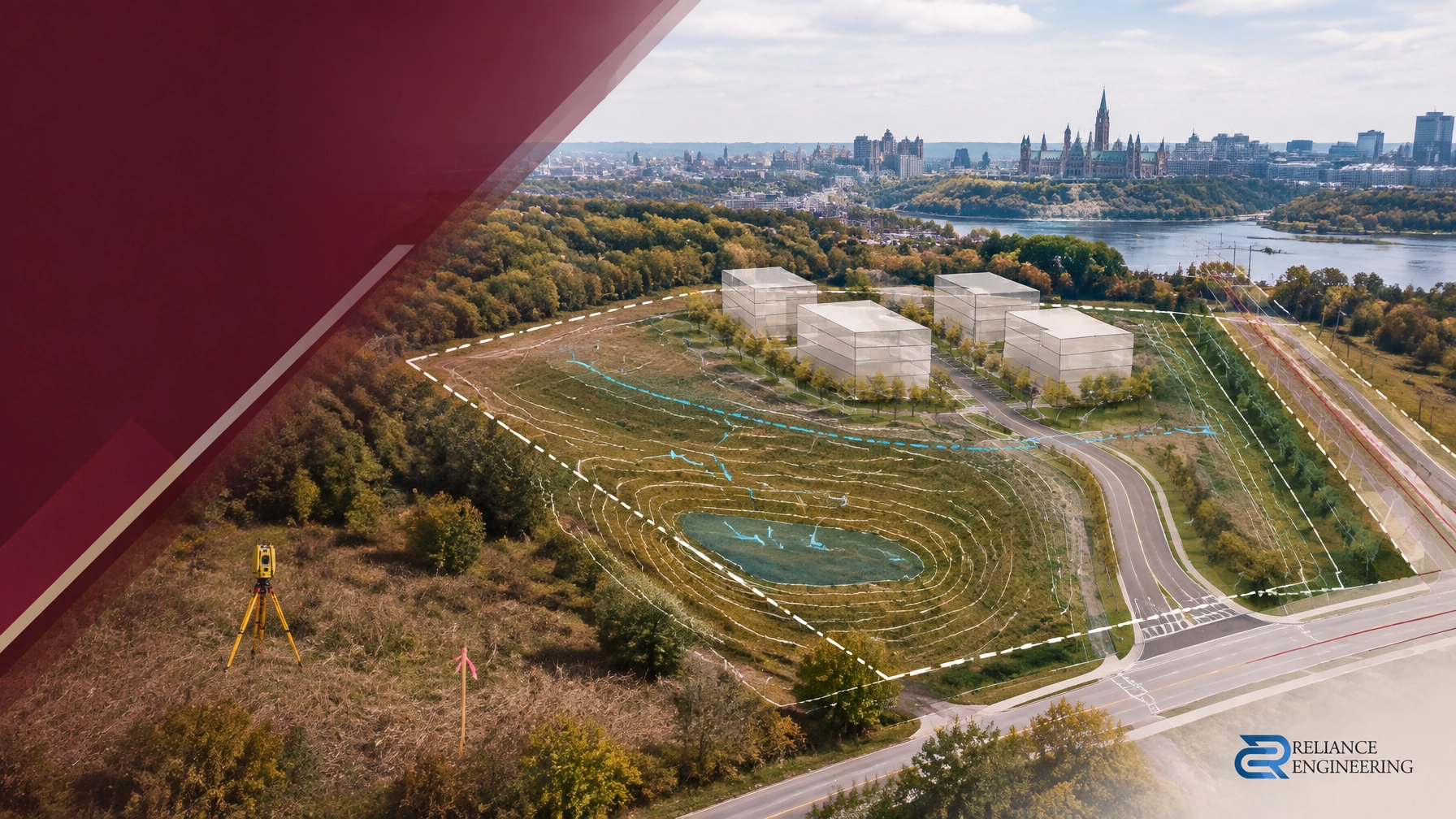
3. Ignoring the Power of a Precise Site Grading Plan
Grading is the most underrated aspect of land development. A site grading plan dictates how your building sits on the land.
We see investors buy plans that look great for a flat lot, but their land has a three-foot slope. Without a professional grading plan, you end up with:
- Foundation heights that don't match the street.
- Retaining walls that cost $30,000 and weren't in the budget.
- Drainage issues that flood your neighbor’s basement (and lead to lawsuits).
A precise plan ensures you aren't moving more dirt than necessary. Moving earth is expensive. Proper engineering keeps that money in your pocket.
4. Skipping the Functional Servicing Report (FSR)
In many Ontario municipalities, you cannot get a severance or a major building permit for a multiplex without a Functional Servicing Report.
The FSR is the "master plan" for your utilities. It proves to the city that there is enough water pressure for fire protection, enough capacity in the sewers, and a plan for stormwater.
Investors often try to skip this or hire a "cheap" designer who doesn't understand the technical requirements. When the city returns your application with 50 comments and a "Denied" stamp, your project sits in limbo for months. In real estate, time is interest. Every month of delay is thousands of dollars in carrying costs.
5. Failing to Plan for Utility Separation
If you are building a 4-plex to hold long-term, you want each tenant to pay their own utilities. This requires separate water lines, gas lines, and electrical meters.
The mistake? Not coordinating this with the site servicing plan early on.
Trying to retroactively separate utilities once the foundation is poured is a nightmare. It requires "coring" through concrete, rerouting pipes, and often paying the utility companies double for "non-standard" connections.
If you want a high-performance asset, you need a servicing plan that accounts for individual unit metering from day one.
6. Miscalculating Water Distribution Needs
A single-family home usually has a 3/4-inch or 1-inch water service. A 5-plex with multiple kitchens and bathrooms needs significantly more.
Furthermore, many Ontario municipalities require specific fire flow calculations. If you are building close to property lines, you might need internal sprinklers. Does your existing water line provide enough pressure to run those sprinklers?
If you haven't performed a water distribution design analysis, you might find out too late that the city's water pressure is insufficient. Now you’re looking at installing a booster pump or a massive storage tank inside your building: losing valuable square footage that could have been a bedroom.
7. The "DIY" Mentality with Severances
Trying to manage a severance application without an engineer is like trying to perform surgery on yourself. It might look simple, but the complications are hidden.
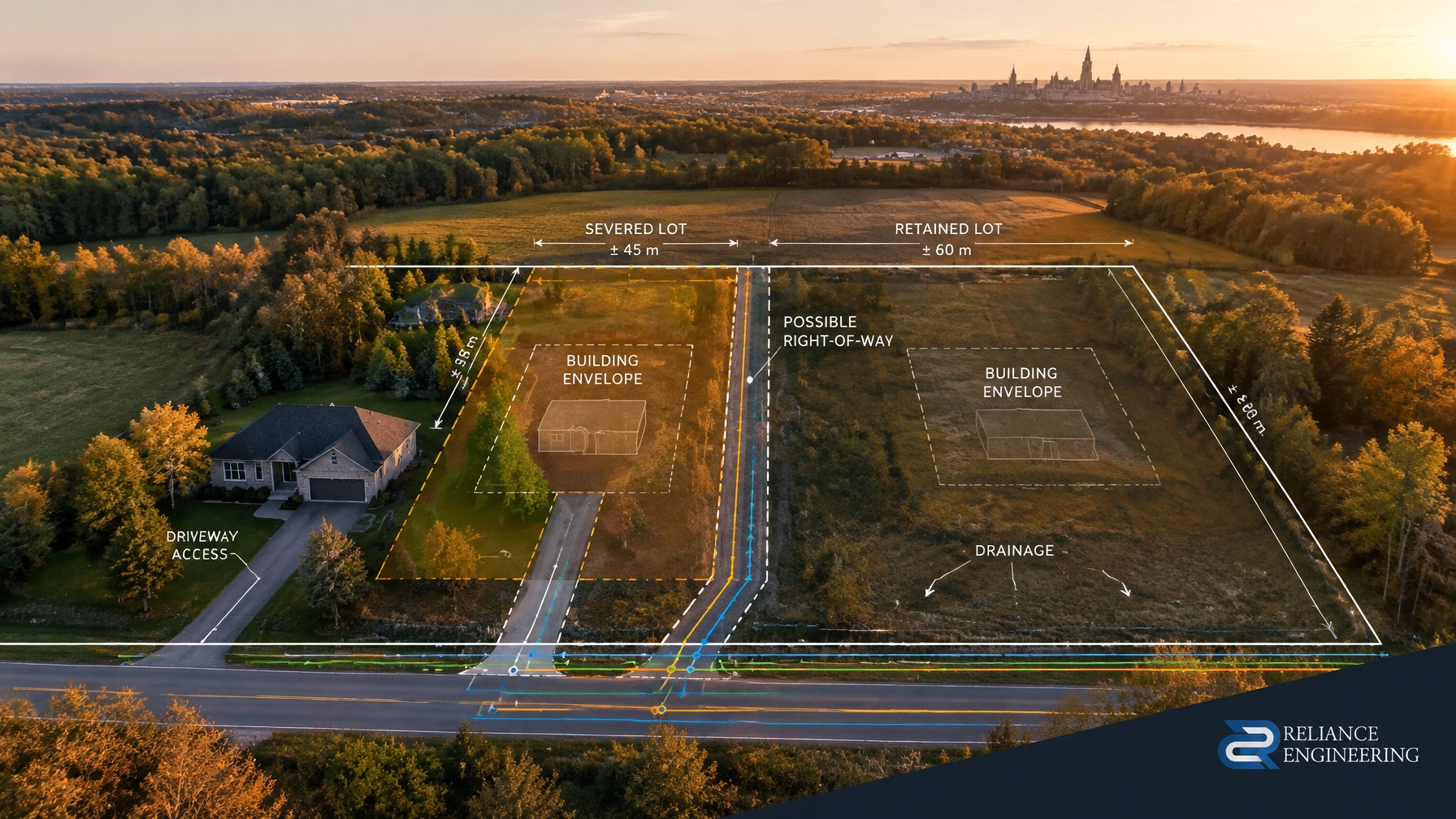
When you sever a lot for a multiplex, the city will demand "easements" for utilities and drainage. If you don't have an engineer at the table to negotiate these, you might end up giving away a portion of your land that makes the second lot unbuildable.
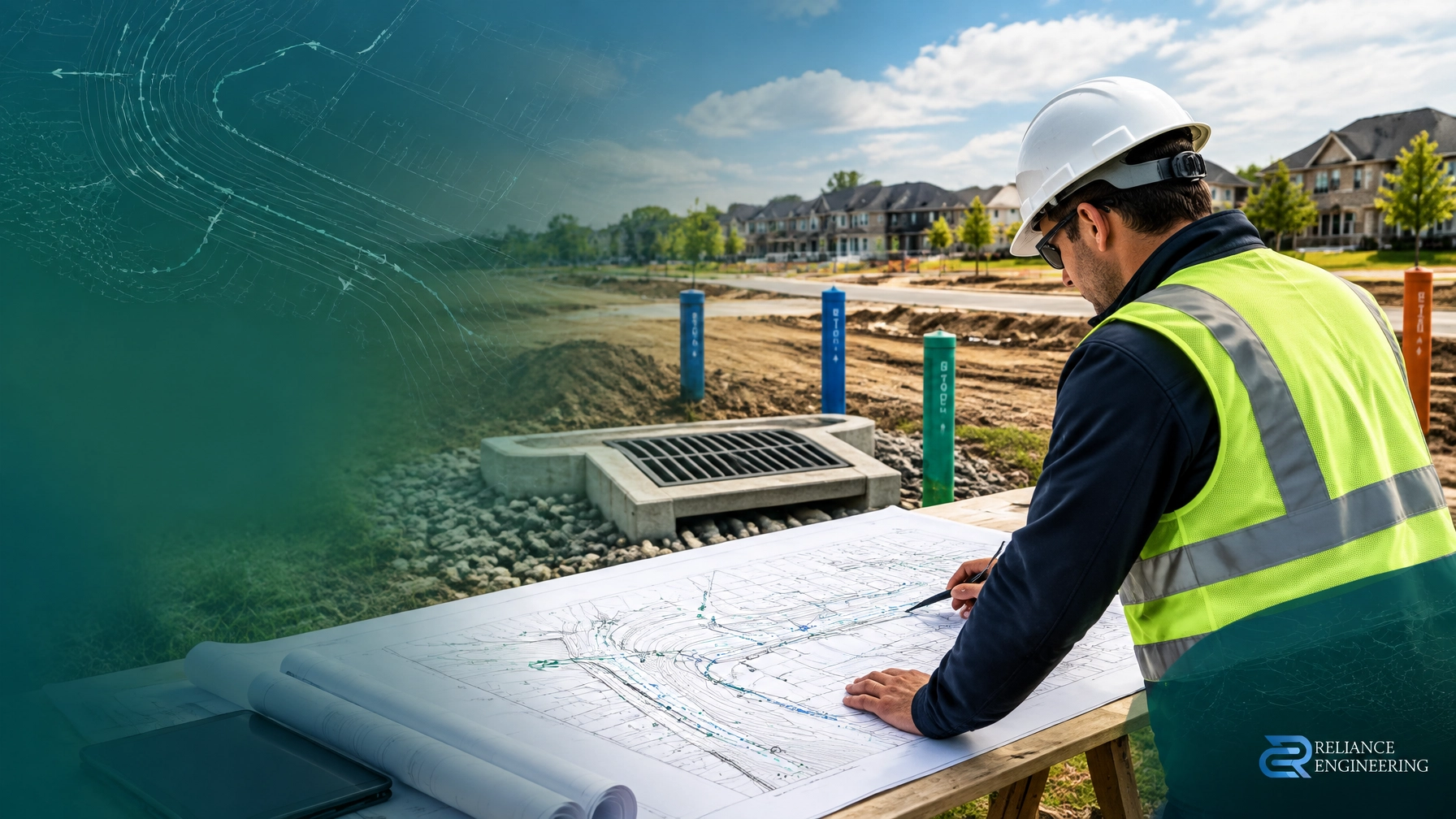
We provide the technical backing to show the city that your project works, ensuring your grading plans and servicing layouts meet all provincial and local standards.

Why Engineering is Your Best ROI Tool
Smart investors don't see engineering as an expense; they see it as risk mitigation. By investing in high-quality civil engineering upfront, you:
- Shorten Permit Times: Clean, professional drawings get approved faster.
- Reduce Change Orders: When the contractor knows exactly where the pipes go, they don't charge you for "surprises."
- Maximize Density: We help you fit the maximum number of units on the site while meeting all regulatory requirements.
Whether you are working on a project like the 35 Wabash Avenue Townhomes or a small 4-plex conversion, the principles remain the same. Precision matters.
Get Your Project Moving with Reliance Engineering
Don't let engineering mistakes kill your ROI. At Reliance Engineering, we specialize in helping real estate investors navigate the complexities of land development across Ontario. From initial feasibility to construction administration, we are your partners in building the "Missing Middle."
Contact us today to discuss your multiplex project.
Reliance Engineering
Founder: Naresh Ochani, P.Eng. M.Eng.
Address: 6850 Millcreek Dr, Mississauga, ON L5N 2H4
Phone: 647-385-6418
Email: [email protected]
Website: www.relianceengineering.ca
Office Hours:
- Monday – Friday: 9:00 AM – 5:00 PM
- Saturday: 12:00 PM – 2:00 PM
- Sunday: Closed
Our Core Services:
- Functional Servicing Reports
- Site Grading & Servicing Plans
- Stormwater Management
- Sanitary & Water Design
- Land Development Consulting
Ready to start? Check out our services or view our past projects to see how we deliver results across Ontario.