Category: Ontario Grading & Drainage
Publication date: October 5, 2026
Reading time: 8 minutes
Service area: Ontario-wide
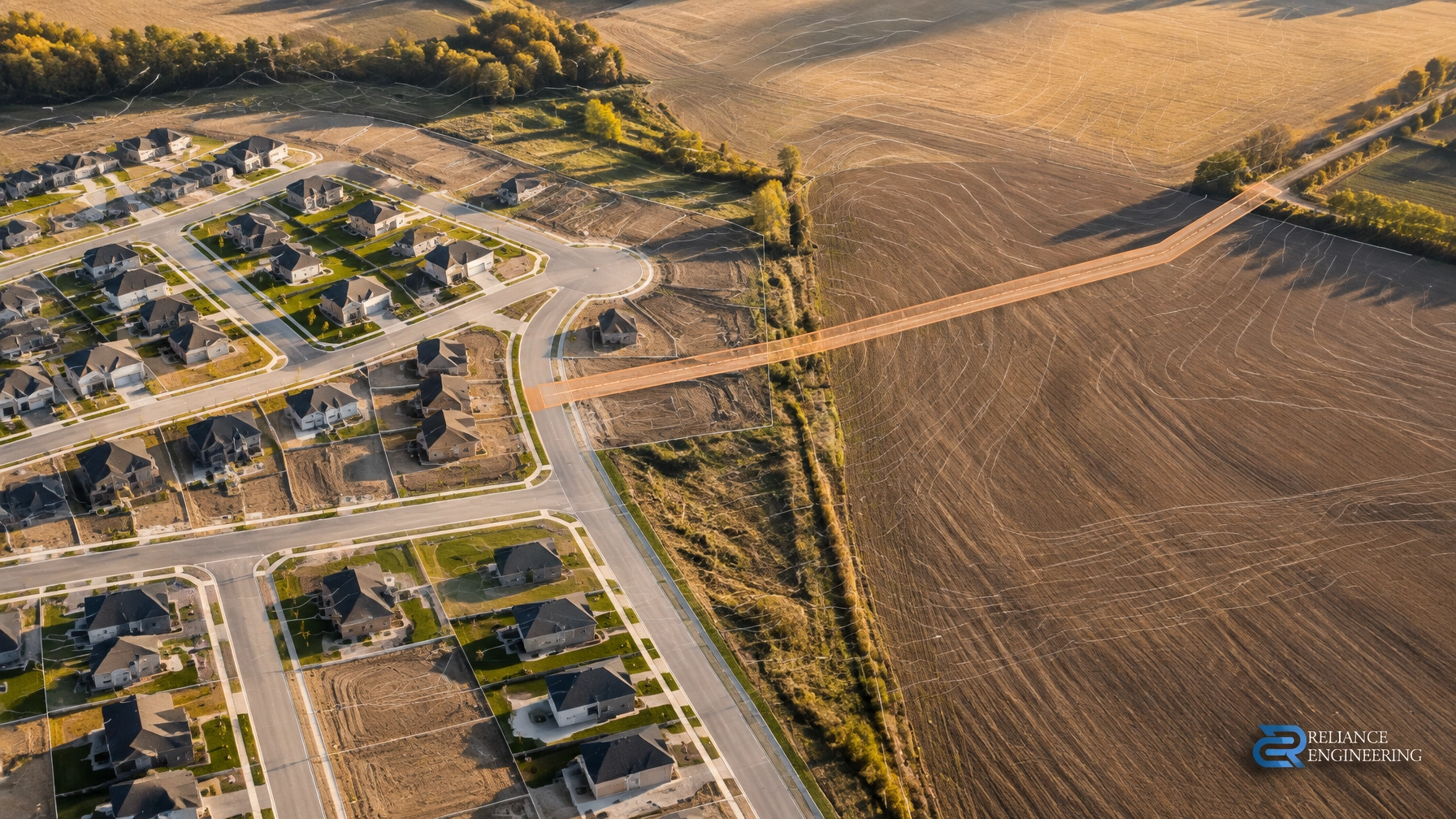
Construction runoff controls must work in the field, not only on paper. During site grading, parking lot reconstruction, and site alteration works, exposed soil can quickly become sediment-laden runoff. Without a coordinated plan, sediment may leave the property, enter municipal storm systems, block catchbasins, cover public roads, or affect neighbouring properties.
An effective Erosion and Sediment Control Plan is coordinated with the grading design, construction sequence, storm servicing, and site access. It shows contractors where controls are installed, how they are maintained, and when they can be removed.
Reliance Engineering prepares practical designs, clear drawings, and permit-ready drawings for projects across Ontario.
ESC Controls Must Follow the Construction Sequence
Erosion and sediment control is not a single installation completed at the start of construction. Controls must change as the site changes.
A typical sequence includes:
- Establishing construction limits and protecting existing drainage features.
- Installing perimeter controls before stripping or excavation.
- Stabilizing construction access points.
- Completing rough grading while directing runoff to safe temporary routes.
- Coordinating servicing trenches with temporary drainage controls.
- Protecting catchbasins and municipal storm connections.
- Stabilizing exposed soil and removing temporary controls after construction.
The correct sequence depends on the site, municipal requirements, soil conditions, and the scale of the work. Sites near watercourses, wetlands, valley systems, or other regulated features may also require review by the applicable Conservation Authority.
Ontario municipalities commonly review ESC measures as part of site plan, subdivision, site alteration, zoning, grading, and drainage approvals. Requirements vary, so the plan should be prepared around the applicable municipal engineering standards, site alteration by-law, and Conservation Authority criteria.
Construction Limits and Perimeter Controls Come First
Before earthworks begin, the limits of disturbance should be clearly identified. Construction limit fencing prevents unnecessary grading, equipment movement, and soil disturbance outside the approved work area.
The ESC plan should identify:
- Construction limit fencing
- Limits of grading and excavation
- Existing trees, natural features, and drainage routes to be protected
- Locations of stockpiles and material storage
- Construction access points
- Temporary drainage routes
- Areas requiring enhanced stabilization
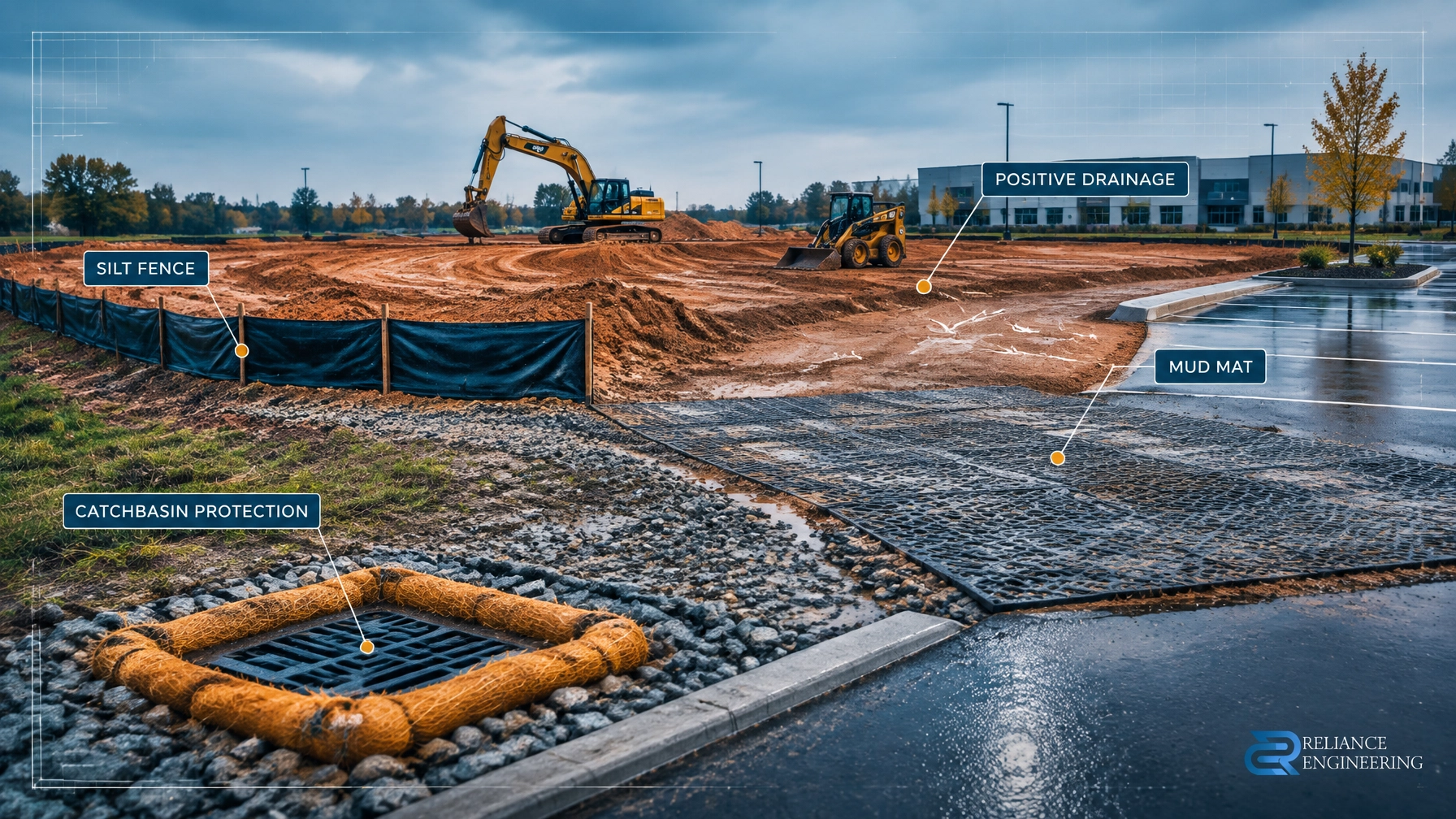
Silt fence is typically placed along the downslope edge of disturbed areas. It should follow the actual drainage pattern rather than being installed as a disconnected line around the property. The bottom of the fence must be properly keyed or secured, and the fence should be supported so it can withstand runoff and site activity.
A silt fence is not a substitute for good grading. If runoff bypasses the fence, concentrates around its ends, or flows through a damaged section, sediment can still reach the road or municipal storm system.
Positive Drainage Anchors the ESC Design
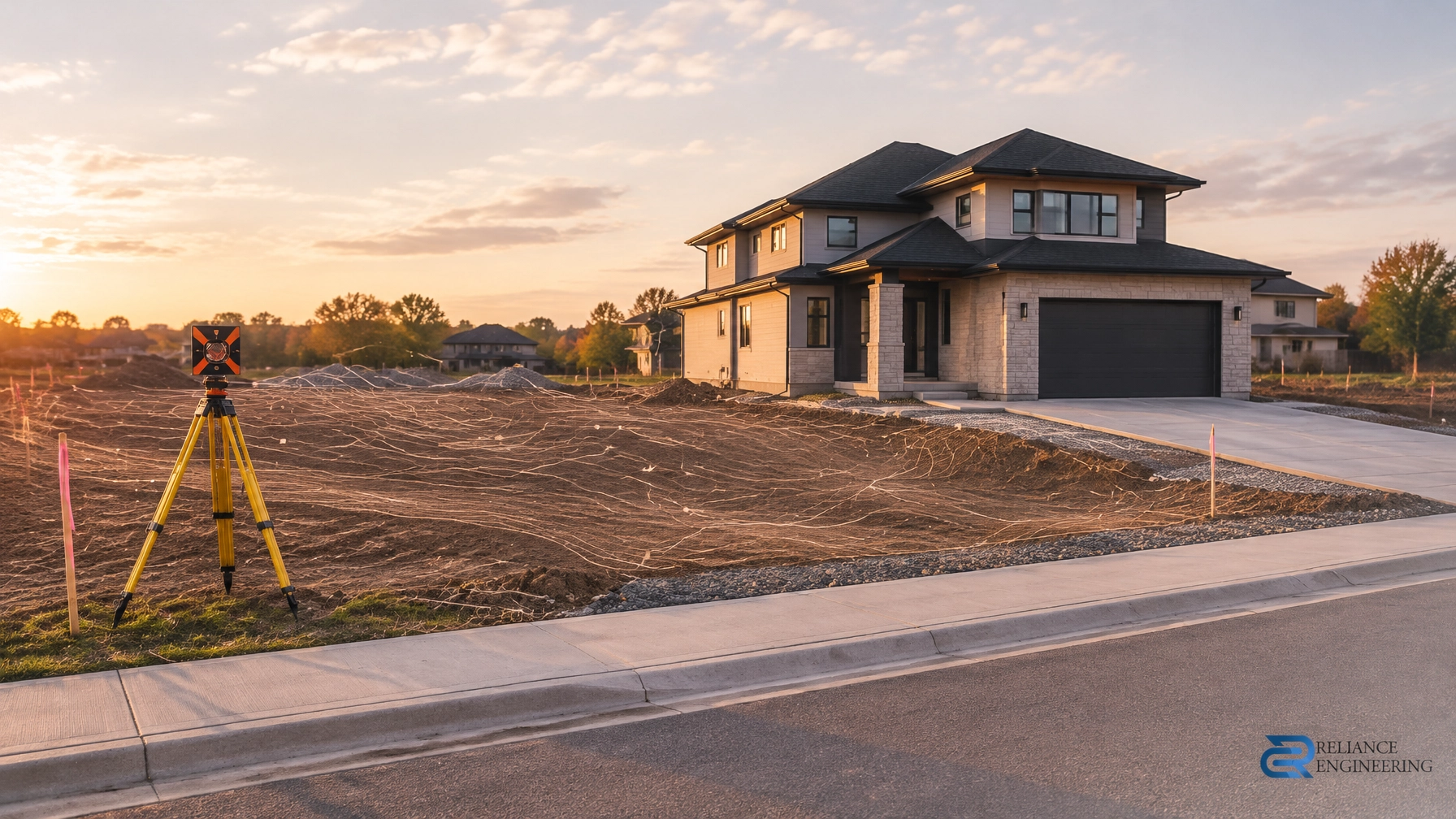
Temporary controls are more effective when they are tied to a clear drainage strategy. The grading plan should identify where water will go during each construction stage.
This includes:
- Temporary swales and berms
- Positive drainage away from buildings and exposed slopes
- Overland flow routes
- Low points requiring sediment control
- Road and driveway tie-ins
- Existing and proposed catchbasin locations
- Municipal storm sewer connections
- Areas where runoff enters or leaves the site
The same drainage-focused approach used for permanent site grading plans should guide temporary ESC measures. Buildable grading should prevent water from ponding behind controls or flowing through active work areas.
For parking lot reconstruction, temporary grades may be required before the final asphalt surface is placed. This is particularly important where asphalt regrading is being used to correct ponding, improve accessibility, or connect an existing commercial property to a municipal road.

Construction Access Controls Mud and Sediment
A stabilized construction entrance is one of the most visible and important controls on a commercial site. Trucks and equipment can track loose soil from the work area onto the public road, where traffic and rainfall spread the material into catchbasins and storm inlets.
A practical construction access detail should address:
- Entrance location
- Mud mat or stabilized aggregate depth and limits
- Connection to the internal site route
- Vehicle turning and loading areas
- Requirement for street sweeping
- Inspection after rainfall
- Repair or replacement when the entrance becomes ineffective
The access point should be located where it does not interfere with the final driveway grades or the intended overland flow route. If the construction entrance is placed at a low point, sediment and runoff may collect at the road connection.
For commercial property grading fixes, the temporary access route should be reviewed together with the permanent driveway, parking lot drainage, and road tie-in. This avoids installing controls that later need to be removed or relocated during final construction.
Catchbasin Protection Must Be Coordinated with Drainage
Catchbasin protection prevents sediment from entering the municipal storm system. It is commonly required at existing catchbasins within or adjacent to the work area, as well as at new structures that become active during construction.
Protection may include:
- Filter barriers
- Inlet protection devices
- Sediment bags or approved inserts
- Temporary covers where appropriate
- Protection around manholes and storm connections
- Sediment removal from the surrounding area
Catchbasin protection must not create uncontrolled bypass flow or cause flooding on the site. It should be checked after rainfall and maintained as sediment accumulates.
The ESC plan should distinguish between temporary protection during grading and the permanent stormwater system. Once the site servicing plan is installed, the storm system may become part of the site drainage strategy, but it still requires protection until the upstream areas are stabilized.

Sediment Traps, Check Dams, and Stockpile Protection Control Concentrated Runoff
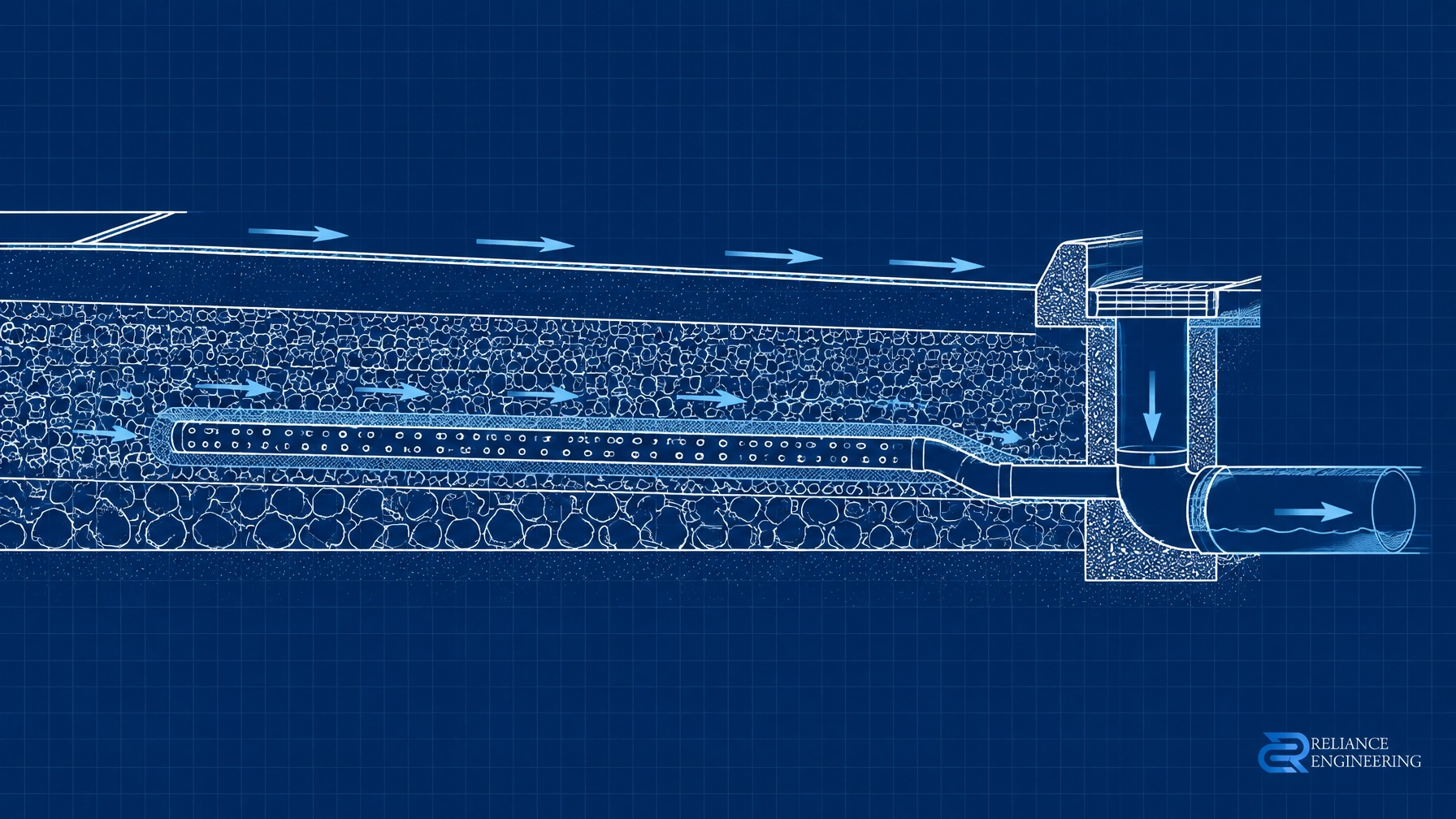
Where runoff concentrates, perimeter silt fence alone may not be sufficient. The plan may require sediment traps, check dams, rock flow checks, temporary swales, or other measures suited to the drainage area.
These controls help:
- Slow runoff velocities
- Reduce channel erosion
- Capture transported sediment
- Protect temporary swales
- Prevent concentrated discharge at property boundaries
Check dams should be located and spaced to suit the grade and flow path. They should not block access, create unsafe ponding, or redirect water toward buildings or neighbouring properties.
Stockpiles also require specific protection. Exposed soil piles should be located away from catchbasins, roads, property lines, and drainage routes where possible. Depending on the duration and location, protection may include:
- Perimeter silt fence
- Covering or tarping
- Temporary seeding or mulch
- Stabilized slopes
- Diversion berms
- Controlled loading and removal areas
A stockpile placed directly in an overland flow route can redirect runoff into active construction areas. Its location should therefore be coordinated with the grading plan and construction staging.
Dewatering Requires Clear Discharge Notes
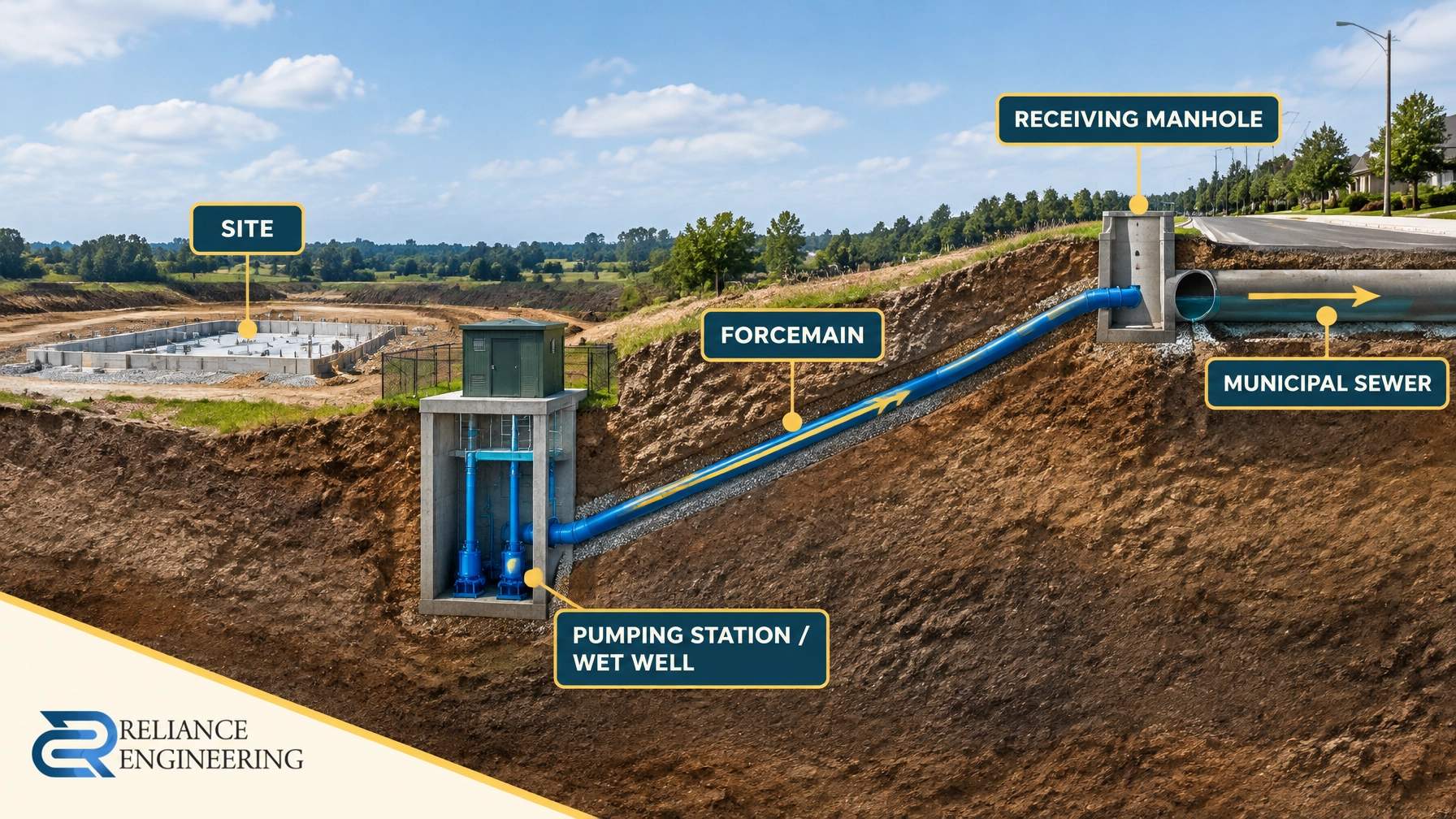
Excavation for storm, sanitary, and water servicing can collect groundwater or rainfall. Discharging this water without treatment may release sediment to a road, ditch, catchbasin, or watercourse.
ESC drawings should identify dewatering requirements where applicable, including:
- Pump discharge location
- Filtration or sediment treatment
- Temporary discharge protection
- Inspection requirements
- Prohibition against uncontrolled discharge
- Required approvals or agency coordination
Dewatering should not undermine adjacent slopes, expose utility trenches, or create a new drainage problem. The discharge route must be compatible with the temporary grading and municipal drainage system.
Projects requiring broader drainage analysis may also need stormwater management reports in Ontario or a functional servicing report, depending on the municipal application and scope of work.

Inspection and Maintenance Keep Controls Functional
Even a well-designed ESC system can fail if it is not inspected and maintained. Construction traffic, freezing conditions, rainfall, snowmelt, and ongoing grading can damage or bypass temporary controls.
Inspection and maintenance notes should address:
- Who is responsible for inspections
- Inspection frequency
- Inspection after significant rainfall
- Repair of damaged silt fence
- Replacement of blocked inlet protection
- Removal of accumulated sediment
- Maintenance of mud mats and access routes
- Stabilization of newly exposed soil
- Documentation of deficiencies and corrective actions
For projects subject to applicable provincial stormwater requirements, Ontario guidance includes inspections at least once every two weeks and as soon as practicable after significant storm events. Municipal or Conservation Authority conditions may require additional inspections.
The contractor should keep inspection records and correct deficiencies promptly. A control that is shown on a drawing but is buried, damaged, overloaded, or disconnected from the drainage route is not providing effective protection.
Final Stabilization Allows ESC Removal
Temporary ESC measures should remain in place until disturbed areas are stabilized and the permanent drainage system is functioning as intended.
Final stabilization may include:
- Topsoil placement
- Sod or permanent seeding
- Erosion control blankets
- Permanent swales
- Completed asphalt and concrete surfaces
- Finished parking lot drainage
- Permanent catchbasins and storm connections
- Restoration of disturbed boulevards and adjacent areas
Controls should be removed carefully so their removal does not release trapped sediment. Sediment and damaged materials should be disposed of appropriately, and disturbed areas should be restored.
This final stage is important for projects involving commercial parking lot drainage in Ontario. The completed surface must direct water toward approved drainage points, maintain positive drainage, and avoid new ponding at entrances, pedestrian routes, property lines, and road tie-ins.
Permit-Ready ESC Drawings Support Municipal Approvals
A useful ESC plan should be simple enough for a contractor to follow and detailed enough for a municipal reviewer or Conservation Authority to assess.
Reliance Engineering’s coordinated design approach can include:
- Silt fence layout
- Mud mat and construction access details
- Catchbasin protection
- Sediment traps and check dams
- Stockpile protection
- Dewatering notes
- Construction limit fencing
- ESC notes and standard details
- Maintenance and inspection notes
- Phased grading and drainage routes
- Engineer-stamped permit-ready drawings
Poor ESC can lead to sediment discharge, blocked catchbasins, muddy roads, by-law issues, inspection failures, construction delays, and complaints from neighbouring properties. Clear drawings and practical controls reduce these risks while supporting municipal approvals.
Request an Ontario ESC Plan Consultation
If your project includes site grading, parking lot reconstruction, asphalt regrading, site alteration, servicing work, or commercial property grading fixes, request a review before construction begins.
Reliance Engineering provides practical designs, buildable grading, approval support, and coordinated civil engineering services across Ontario.
Contact Reliance Engineering:
- Address: 6850 Millcreek Dr, Mississauga, ON L5N 2H4
- Phone: 647-385-6418
- Email: [email protected]
- Principal: Naresh Ochani, P.Eng. M.Eng.
- PEO Certificate of Authorization: 100548882
- Office hours: Monday to Friday 9:00 AM–5:00 PM; Saturday 12:00 PM–2:00 PM; Sunday Closed
Request a consultation or quote for your erosion and sediment control, grading, drainage, or site servicing requirements.