Article: Commercial parking lot drainage and winter operations
Author: Naresh Ochani, P.Eng. M.Eng.
Company: Reliance Engineering Canada Limited
PEO Certificate of Authorization: 100548882
A parking lot’s drainage design still has to work after plowing moves snow into piles. If those piles cover catchbasins or block overland flow routes, meltwater may pond on the pavement, travel across pedestrian areas or freeze into hazardous ice. Snow storage should be planned with the grading design, not improvised by a plow contractor once winter arrives.
For commercial parking lot drainage in Ontario, a coordinated plan connects snow storage locations with positive drainage, accessible inlets and safe overflow routes. The details depend on the site and municipality, but the goal is consistent: practical designs that manage runoff through winter and spring thaw.
What winter does to a parking lot drainage design
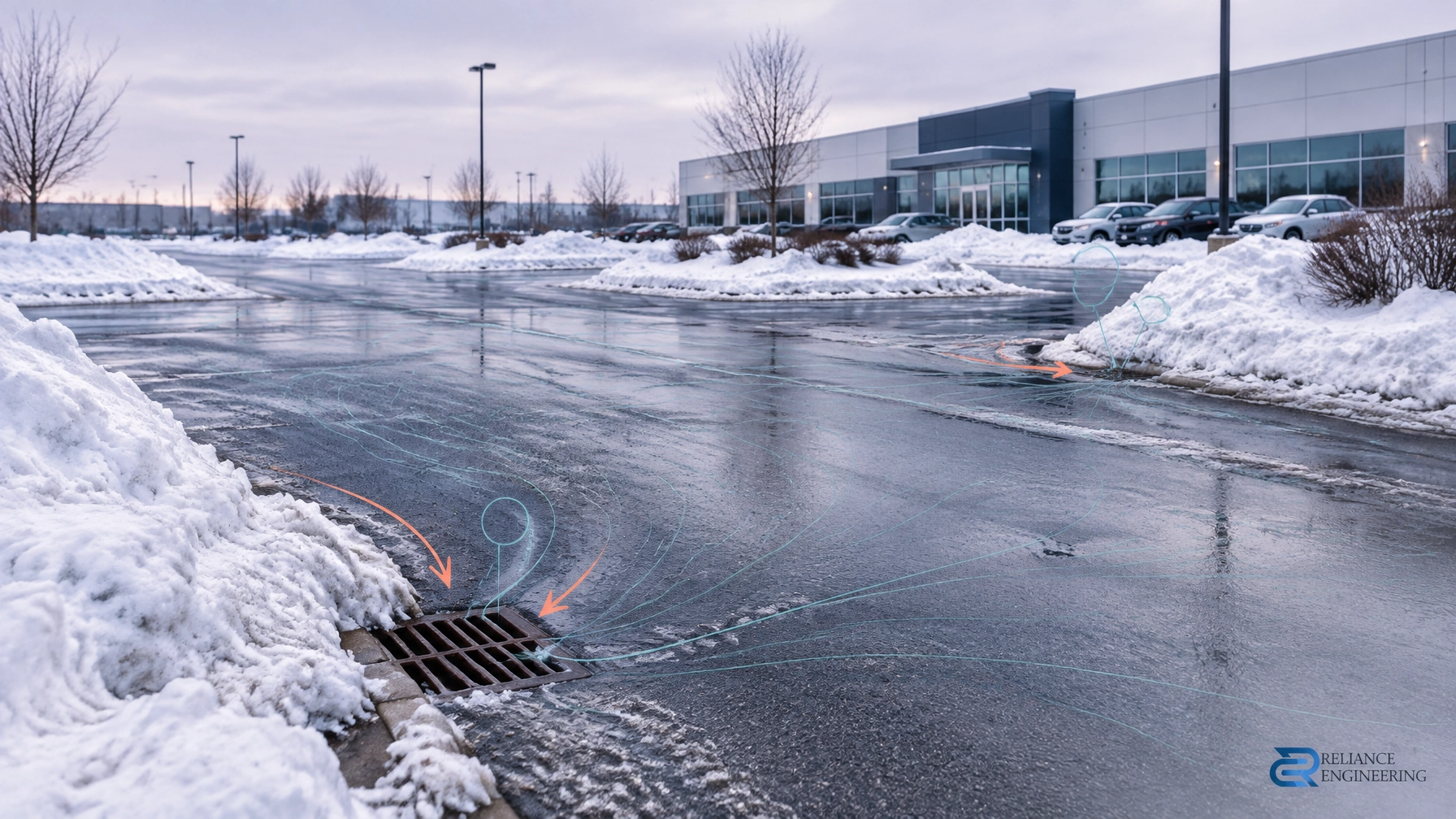
Plowed snow changes the surface drainage pattern. A pile can cover a catchbasin grate, block a shallow swale or obstruct an overland flow route. Even when the inlet itself remains visible, snow and ice around it may prevent water from reaching it.
Meltwater then follows whatever path remains. It may collect at a low point, cross a driving aisle or reach a walkway before it finds an inlet. During freeze-thaw cycles, water that ponds or spreads across pavement can refreeze as a slick surface. This creates a drainage concern as well as a maintenance and pedestrian-safety issue.
The Lake Simcoe Region Conservation Authority’s parking-lot guidance discusses the importance of grading and managing snowmelt near collection and treatment features. The site-specific solution must still be checked against applicable municipal criteria.

Where meltwater is designed to go, and where it can go instead
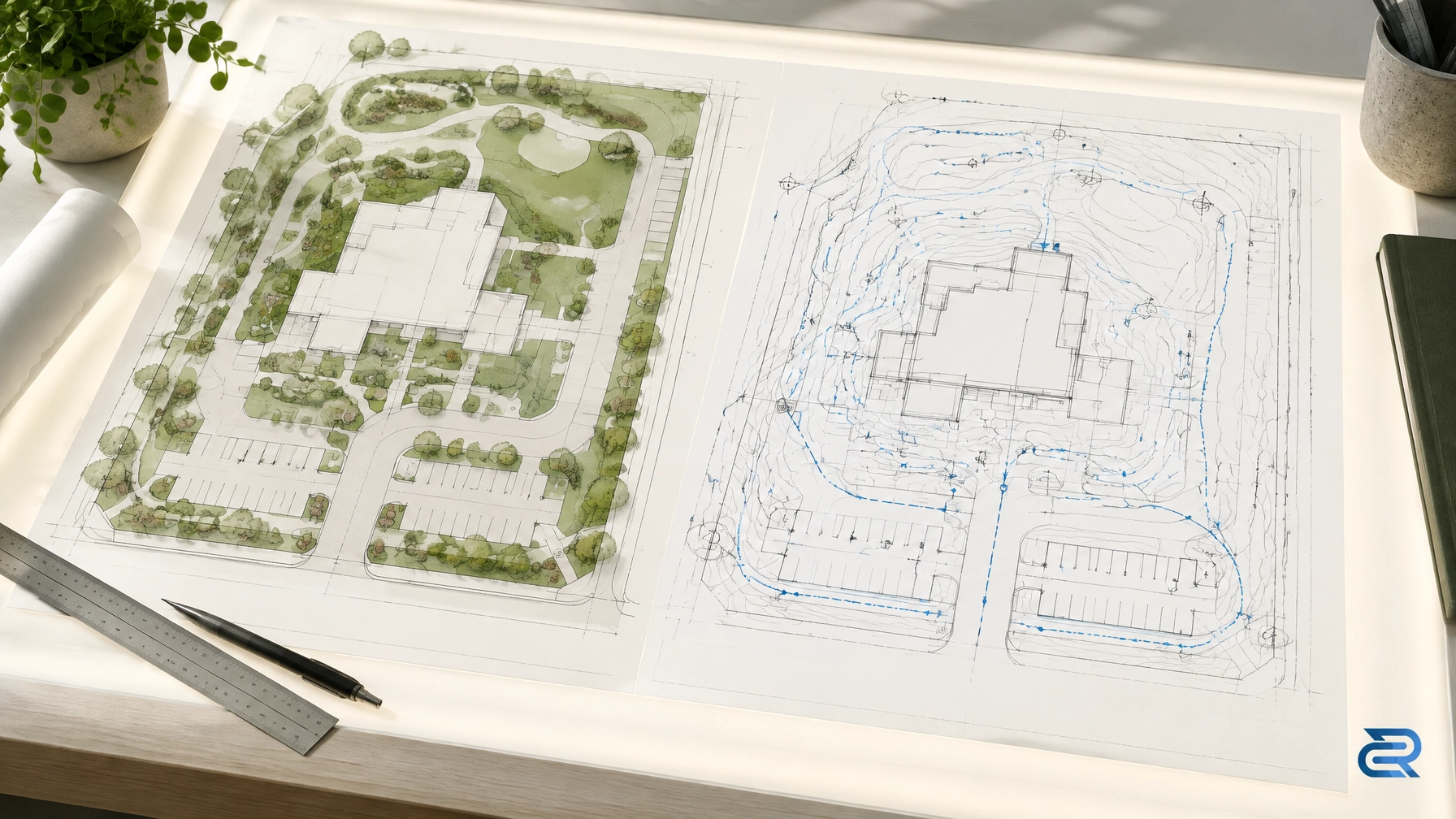
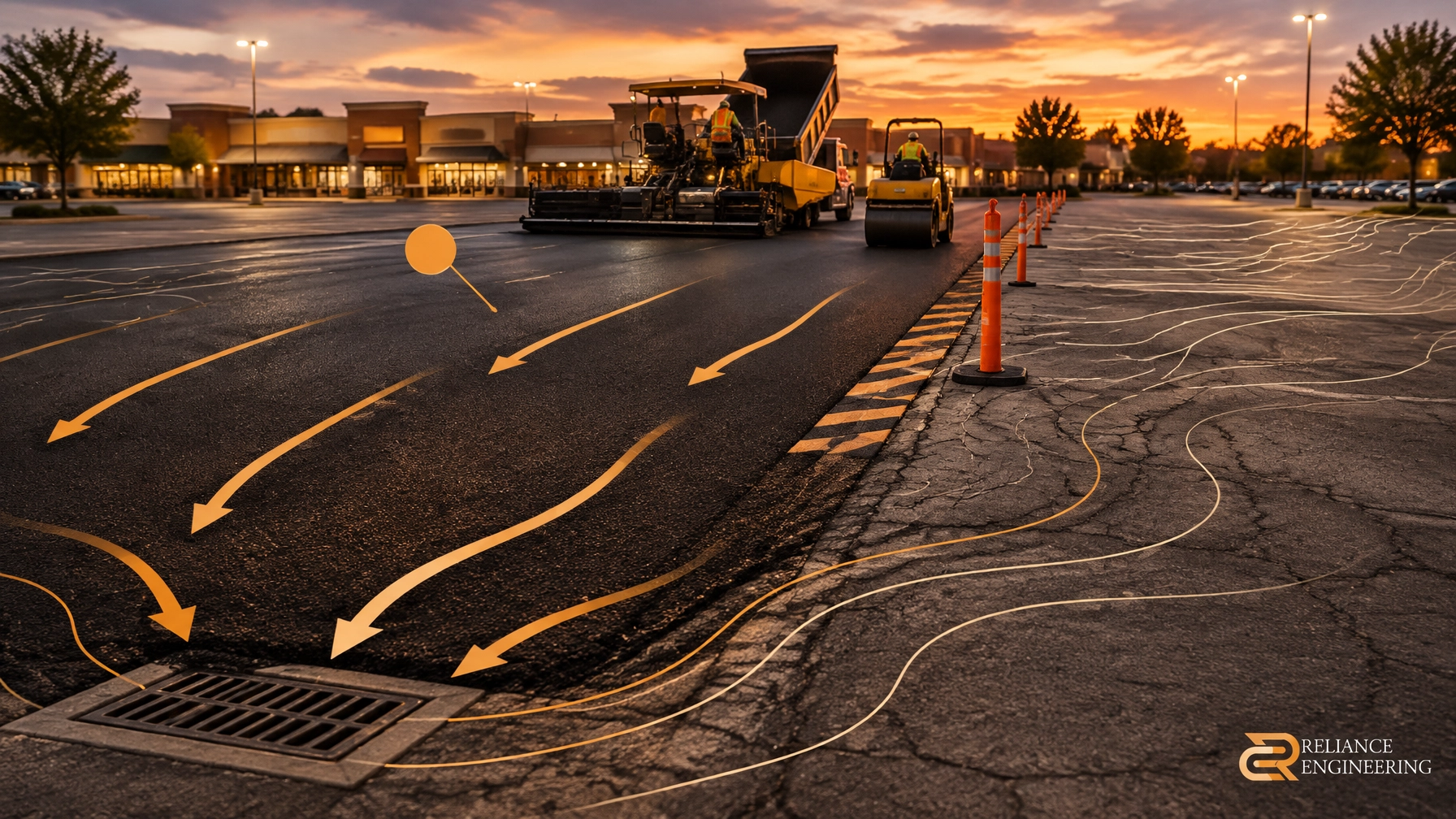
A grading plan shows how pavement, curbs, swales and catchbasins work together to direct runoff. When the surface is clear, slopes guide water to collection points and defined overland flow routes provide a path for larger flows or when the inlet system cannot accept all the runoff.
In winter, snow piles can bury parts of that system. If the designed path is blocked, meltwater may move toward a building entrance, across a parking aisle, into a neighbouring property or toward an unintended low point. A catchbasin covered by a pile cannot be relied on as the sole way to drain the area.
A drainage-focused approach considers both the intended route and what happens if a grate is temporarily blocked or iced over. The plan should identify the site’s collection points and keep overland flow routes functional. The site grading plans service at Reliance Engineering includes proposed elevations, drainage routes, catchbasins and overland flow considerations.
Design snow storage into the grading plan
Snow-storage areas should be identified on the grading plan and coordinated with the property’s winter operations. Their location should reflect where snow can be piled safely, how meltwater will drain and whether the pile will interfere with access, circulation or drainage features.
A designated area may be near a downgradient collection point, provided the pile does not cover the catchbasin or block the route to it. The right location is site-specific: an apparently convenient low point may be unsuitable if it is also an inlet, swale or emergency flow route. Likewise, a pile on higher ground may send meltwater across a busy aisle if there is no controlled drainage path.
A good plan should account for:
- Meltwater routing: Direct runoff toward an accessible catchbasin or other approved collection and treatment feature.
- Clear drainage paths: Keep swales, overland flow routes and emergency drainage paths free of snow storage.
- Storm infrastructure: Do not place piles over catchbasins, area drains or other features that need to collect runoff.
- Site operations: Preserve parking, accessible routes, loading areas, fire access and safe vehicle circulation.
- Property edges: Avoid directing meltwater onto neighbouring lands or across boundaries without an approved drainage arrangement.
Municipal guidance can be specific about where snow storage may go. For example, the Town of Milton’s site-plan engineering standards address drainage and snow-storage coordination. Requirements vary by municipality, so confirm the applicable standards and review comments before finalizing a design.

Catchbasin clogging and spring cleanup
Snow piles collect more than snow. Sand, grit, leaves and other debris can be carried toward inlets as the pile melts. Salt and sediment residue may also accumulate near catchbasins, increasing the importance of inspection and timely cleanup.
Keep inlets accessible through winter and check them during thaw periods. If inlet protection was installed for construction, its removal or maintenance should follow the applicable site and municipal requirements; it should not be left in place if it obstructs drainage. After snowmelt, inspect grates and nearby pavement, remove accumulated debris and confirm that water can reach the inlet.
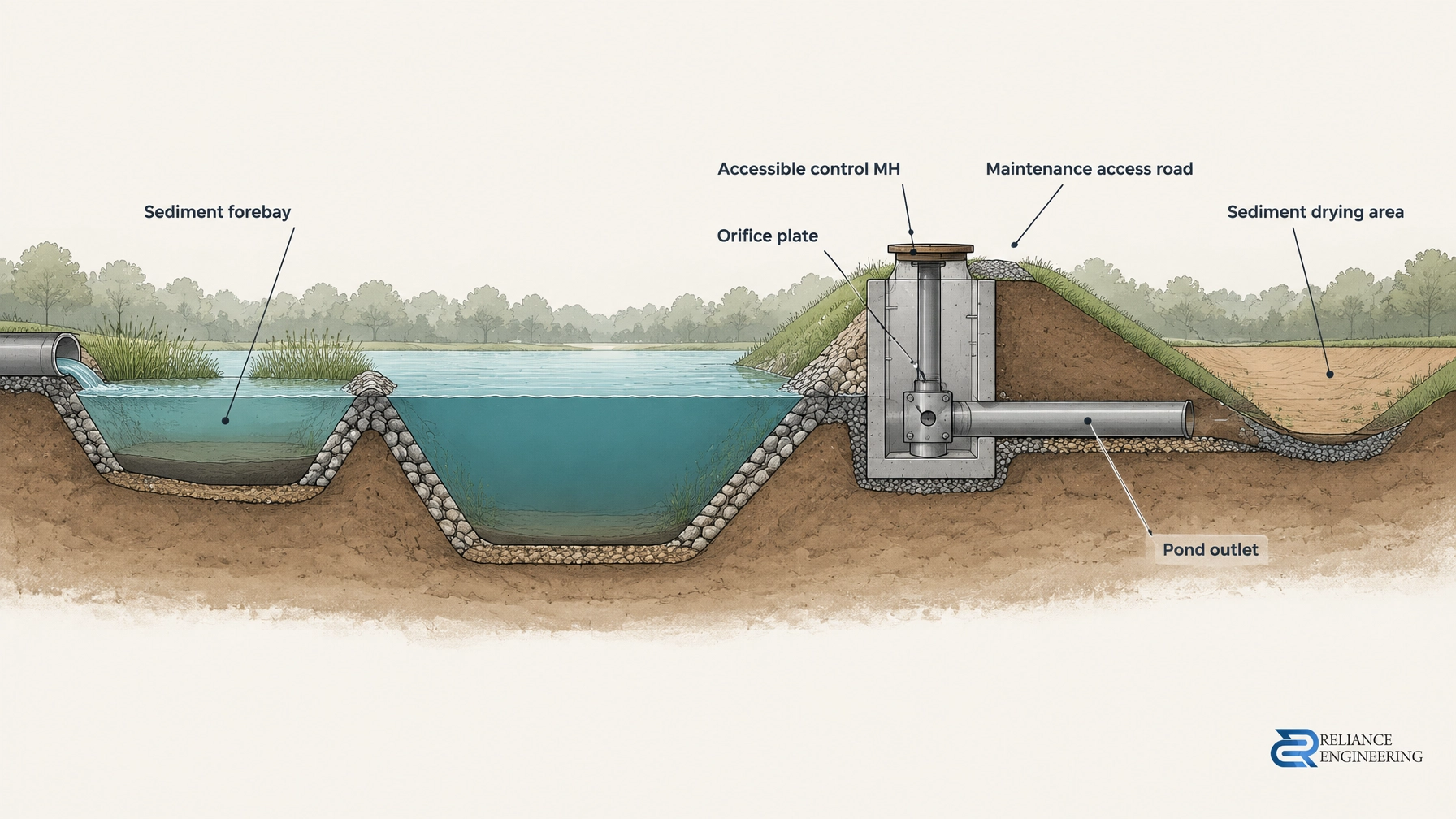
For sites with stormwater treatment features, snow-storage locations should be coordinated with the treatment approach. A Stormwater Management Report can address runoff management and site-specific treatment requirements as part of a coordinated design.
Ponding, freeze-thaw and asphalt regrading
Repeated ponding can keep pavement wet for longer and expose existing depressions or drainage deficiencies. When water freezes and thaws, the cycle can contribute to pavement deterioration, particularly where surface defects already allow water to collect.
Where the issue is a local low spot, asphalt regrading may form part of the fix. But paving alone is not a drainage strategy. The proposed surface must connect properly to surrounding elevations, curbs, catchbasins and any required overland flow route. Before resurfacing, assess why water is ponding and whether the change will create a new problem at an entrance, walkway or property line.
Commercial property grading fixes should be based on site conditions and coordinated with servicing and stormwater requirements. Clear drawings can show proposed elevations and drainage direction, while buildable grading helps ensure the design can be constructed and maintained.
Municipal site plan and property-line considerations
Snow storage affects more than the paved area where a pile sits. It can alter drainage toward buildings, public sidewalks, roadways and adjacent properties. Overland flow routes need to remain functional year-round, including when surface inlets are blocked or runoff increases during a rapid thaw.
Where a project is subject to site plan approval, snow-storage locations and drainage should be coordinated with the civil submission. Site Plan Approval drawings can bring grading, storm drainage and other civil requirements together for municipal review. Municipal standards vary across Ontario; confirm the requirements for the project location rather than assuming one municipality’s criteria apply elsewhere.

Pre-winter drainage checklist
Before the first major snowfall, property owners and site managers can review:
- Snow-storage locations: Are the planned areas identified and large enough for the site’s snow-clearing operations?
- Catchbasins: Are grates visible, accessible and clear of debris before winter?
- Overland flow routes: Can water still follow the designed route if an inlet is obstructed?
- Pavement and walkways: Are there depressions, recurring ponding areas or locations where runoff crosses pedestrian routes?
- Contractor instructions: Has the plow contractor been told where snow may be stored and which areas must stay clear?
- Spring maintenance: Is there a plan to inspect inlets and remove sand, grit and other residue after thaw?
Plan drainage before the snow piles
Snow storage is part of a parking lot’s drainage operation. Planning it on the grading plan helps keep catchbasins accessible, overland flow routes open and meltwater away from buildings and neighbouring properties. When drainage concerns are already present, a review before winter can help identify whether maintenance, asphalt regrading or a broader grading change is appropriate.
Reliance Engineering provides grading plan reviews, winter drainage assessments and permit-ready drawings for commercial properties across Ontario. Contact us to discuss a drainage concern or coordinate snow storage with your site’s positive drainage design.
Consultation and professional credentials
Naresh Ochani, P.Eng. M.Eng.
Reliance Engineering Canada Limited
PEO Certificate of Authorization: 100548882
6850 Millcreek Dr, Mississauga, ON L5N 2H4
Phone: 647-385-6418
Email: [email protected]
Office hours: Monday–Friday 9:00 AM–5:00 PM; Saturday 12:00 PM–2:00 PM; Sunday Closed
Professional credentials
Naresh Ochani, P.Eng. M.Eng.
Reliance Engineering Canada Limited
PEO Certificate of Authorization: 100548882
6850 Millcreek Dr, Mississauga, ON L5N 2H4
647-385-6418 | [email protected]
Office hours: Monday–Friday 9:00 AM–5:00 PM; Saturday 12:00 PM–2:00 PM; Sunday Closed