Article type: Drainage troubleshooting guide
Service area: Ontario
Focus: Commercial parking lot drainage, storm sewer tailwater, and practical ponding solutions
A parking lot can be graded so runoff flows toward a catchbasin and still pond during a storm. The reason may be downstream: the municipal storm sewer is surcharged, the catchbasin lead is backwatered, or the outlet cannot accept the site flow under the design conditions.
That matters before tendering asphalt regrading or a larger catchbasin. If the outlet is the constraint, changing pavement slopes alone may simply move the ponding, or leave it where it is.
Start with the receiving sewer
Positive drainage on a grading plan describes surface slopes. It does not prove that water can pass through the catchbasin, lead, and receiving storm sewer during a design storm.
The downstream hydraulic grade line (HGL) helps show whether the sewer system has enough capacity to receive flow. When tailwater in the municipal sewer raises the HGL, the site connection can become backwatered. Water then drains more slowly, or the inlet may stop accepting flow at the rate expected. The pavement low point can become a storage area even when its slopes direct runoff toward the inlet.
The HGL is not a substitute for checking the site’s actual elevations and hydraulic connections. The key question is whether the receiving system’s water level and the site drainage design allow water to move through the whole system under the required conditions.
Ontario municipal grading and drainage requirements vary by municipality and Conservation Authority. Confirm the applicable design criteria for the property rather than assuming one standard applies province-wide. Municipal references such as the Windsor-Essex Region Stormwater Manual and Pickering’s Stormwater Management Design Guidelines illustrate the importance of system hydraulics and local review requirements.
A catchbasin grate is not the whole system
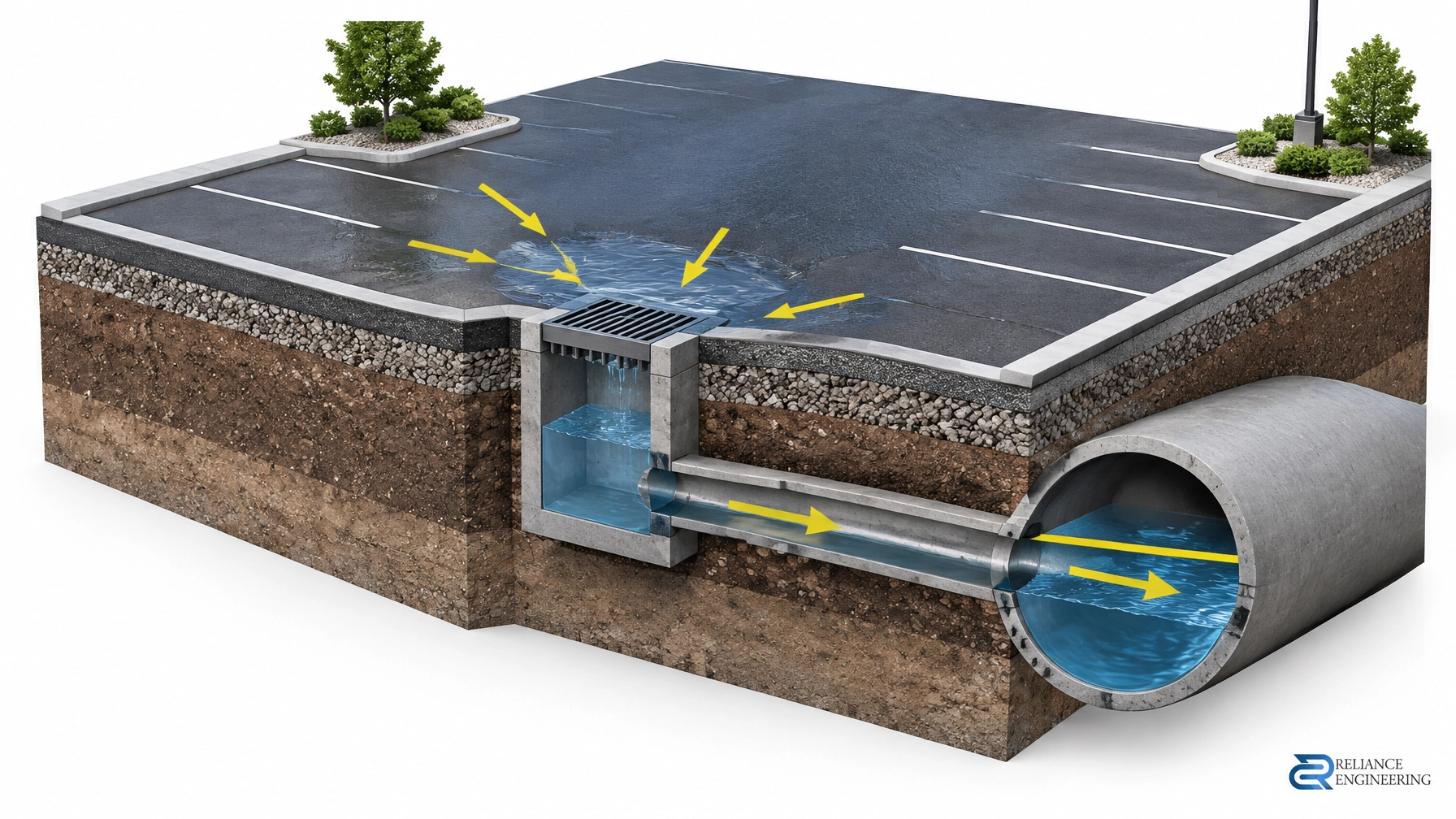
Inlet capacity and pipe capacity are different checks. A grate may accept water under one condition but perform differently when submerged, partly obstructed, or connected to a full lead.
The grate’s inlet behaviour depends on factors such as its opening, flow approach, and ponding depth. As water rises, the opening can act differently, behaving more like a weir or orifice depending on the conditions. If the catchbasin lead is full or restricted by downstream backwater, the grate may not be able to pass incoming water at the rate anticipated. Some flow can bypass the inlet and continue across the lot.
Checking only the grate, or assuming a larger grate fixes the problem, misses the lead and receiving sewer. The inlet, lead, downstream sewer, and surface ponding need to be considered together.

Tailwater can control the low point
Tailwater is the water level at the receiving end of a drainage system. For a site connected to a municipal storm sewer, the receiving sewer’s HGL during the design storm can affect how much water the catchbasin lead can discharge.
If the downstream HGL is high relative to the catchbasin connection and the site low point, it can reduce the available discharge capacity and create backwater. The lot may then hold water while the system waits for downstream levels to fall.
That is why a drainage review should use a suitable tailwater boundary condition in the storm drainage model, not assume the outlet is freely discharging. A stormwater management report can document the design assumptions, calculations, storage and outlet-control strategy where required.

Surcharge may call for storage, not steeper asphalt
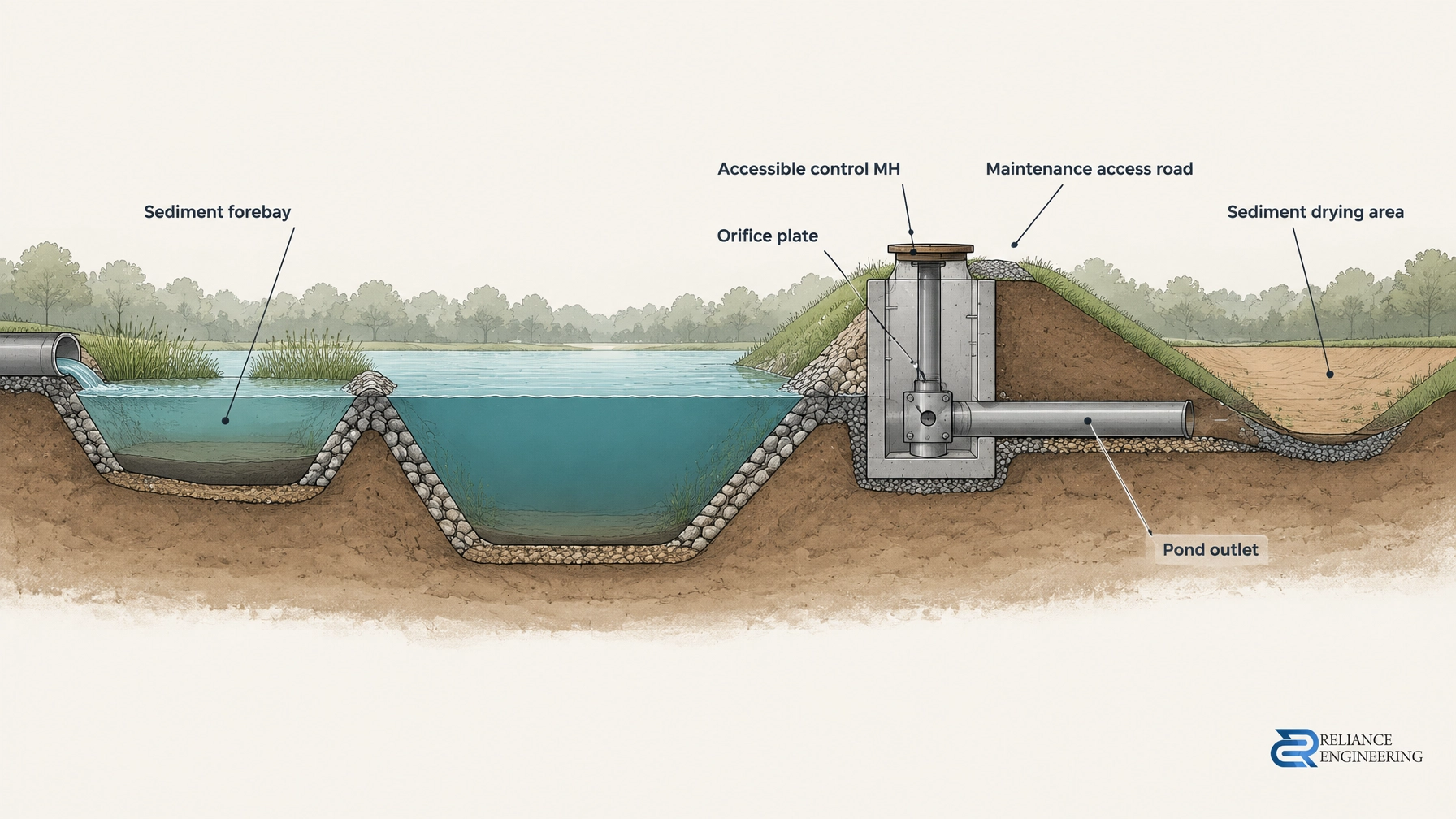
When the municipal sewer is constrained during the design event, a solution may involve controlled on-site storage or flow control, rather than simply making the pavement steeper. An orifice or weir in a maintenance hole can regulate the site discharge where the design and municipal criteria support that approach.
Flow control does not remove the need to manage surface water. It can intentionally hold water on site for a period, so the storage volume, ponding elevations, overflow route, and drawdown behaviour must be assessed and shown. The design must also account for the receiving sewer’s tailwater; a control device and a surcharged outlet affect one another.
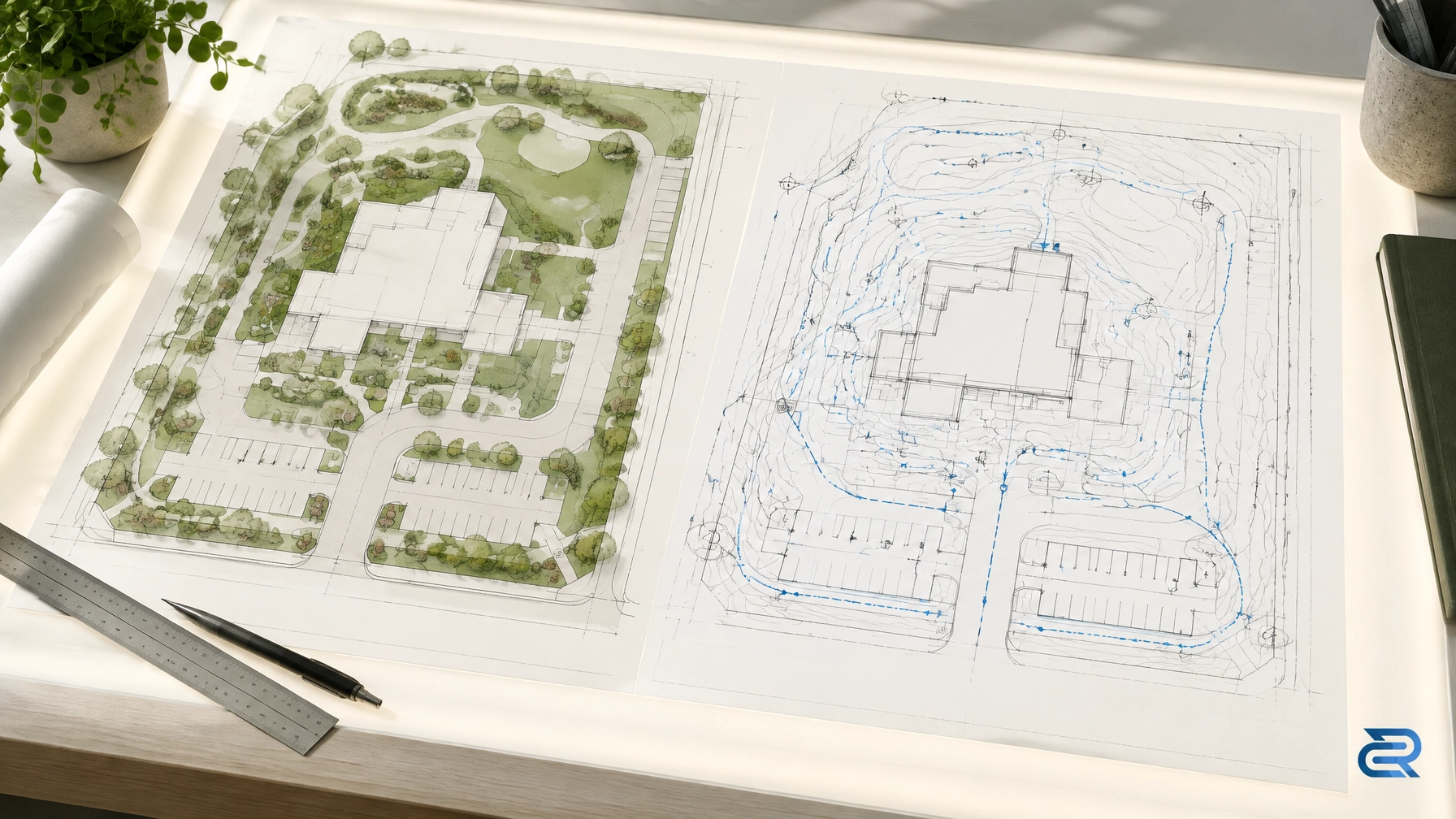
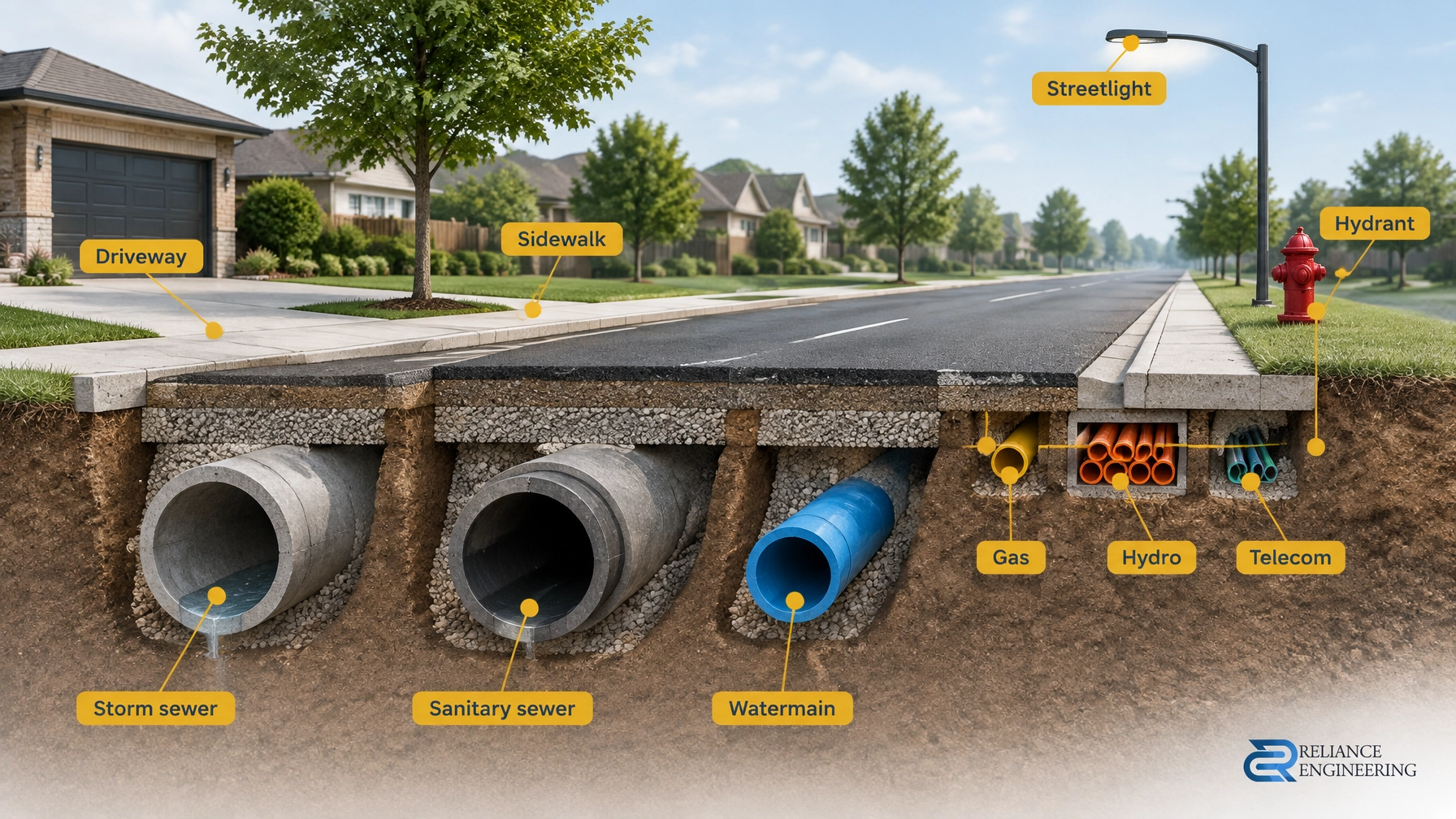
There is no single fix for every site. Depending on verified conditions, practical options may include regrading, relocating or adding inlets, upsizing catchbasin leads, or providing storage and controlled release. A coordinated site servicing plan can show the storm connection, pipe sizes, slopes, and inverts alongside the grading design.
A practical diagnostic sequence
Before deciding on asphalt regrading, work through the drainage system in order:
- Survey the as-built pavement and identify actual low points.
- Confirm the existing surface slopes and where runoff travels.
- Check catchbasin lead sizes and invert elevations against available drawings and site conditions.
- Ask the municipality for relevant information about the receiving sewer’s design capacity and HGL.
- Model site drainage using the appropriate design storm and downstream tailwater.
- Compare model results with the observed ponding and overland flow route.
- Select a remedy only after identifying the controlling constraint.
If the model shows the outlet is limiting, regrading alone may not solve the issue. Regrading without checking the outlet is guessing.
Show the drainage logic on the drawings
Permit-ready grading and servicing drawings should make the drainage design understandable to municipal reviewers and contractors. Depending on the project and applicable criteria, show inlet rim or grate elevations, catchbasin lead sizes and inverts, pavement low-point elevations, drainage areas, and overland flow routes.
Where flow control or storage is proposed, include the relevant control details and design information. The supporting analysis should state the design storm, tailwater assumptions, and model outputs needed to explain how the site manages runoff. A site grading plan should communicate buildable grading, not just slope arrows, and coordinate with servicing and stormwater controls. A functional servicing report may also be needed to address the site’s infrastructure connections and capacity.
Municipal reviewers across Ontario may ask how a site drains, where the water goes, and whether the outlet can receive it. Raise those questions before submission, and confirm local municipal and Conservation Authority requirements early.
Before the repaving tender closes
Use this checklist to confirm the drainage scope:
- Surveyed as-built pavement elevations and low points
- Verified surface slopes and drainage areas
- Catchbasin lead sizes and invert elevations checked
- Receiving sewer capacity and design HGL information requested
- Storm model reviewed with an appropriate tailwater condition
- Proposed storage, flow control, and overland route documented
A shallow pond that freezes can become sheet ice and create a slip hazard. Standing water against asphalt edges can also contribute to deterioration of the pavement base. Addressing the cause before repaving helps avoid repeating the same drainage problem.
Get the outlet checked before you regrade
Reliance Engineering reviews existing commercial lot drainage and prepares coordinated regrading and servicing drawings that support municipal review. We provide practical designs, clear drawings, and approval support across Ontario.
Contact us for a consultation by phone at 647-385-6418 or email [email protected].
Professional credentials: Naresh Ochani, P.Eng. M.Eng.
PEO Certificate of Authorization: 100548882
Address: 6850 Millcreek Dr, Mississauga, ON L5N 2H4
Office hours: Saturday 12:00 PM–2:00 PM; Sunday Closed