

In the Ontario development world, time isn’t just money: it’s everything. Every week your project sits in the "under review" pile at City Hall is a week of mounting interest, carrying costs, and missed market opportunities.
At Reliance Engineering, we’ve seen it all over the last 20+ years. We’ve seen developers lose hundreds of thousands of dollars because of a single missing detail on a Site Servicing Plan. We’ve seen projects stalled for months because of a grading oversight that could have been fixed in minutes during the design phase.
Getting your Site Plan Approval (SPA) in one submission isn't a matter of luck. It’s a matter of technical precision and knowing exactly what the municipal reviewers are looking for before they even open your file.
If you want to stop the "back-and-forth" and get your shovel in the ground faster, stop making these seven common mistakes.
1. Submitting Incomplete Permit Packages
The fastest way to get your application tossed to the bottom of the pile is to submit an incomplete package. Many builders think they can "submit now and fix later" to secure a spot in the queue.
This is a mistake.
Municipalities across Ontario have become stricter. If your package is missing a specific Stormwater Management (SWM) report or a detailed lighting plan, they won't just ask for it: they might reject the entire submission. This forces you to start the clock over from day one.
The Fix: Your submission must be "Permit-Ready." This means having your architectural, civil, and landscape drawings fully coordinated. At Reliance Engineering, we specialize in creating Building Permit packages that are comprehensive from the first click.
2. Ignoring Zoning Bylaws and Local Codes
You can have the most beautiful architectural design in Ontario, but if it violates a setback requirement or exceeds the permitted lot coverage, it’s dead on arrival.
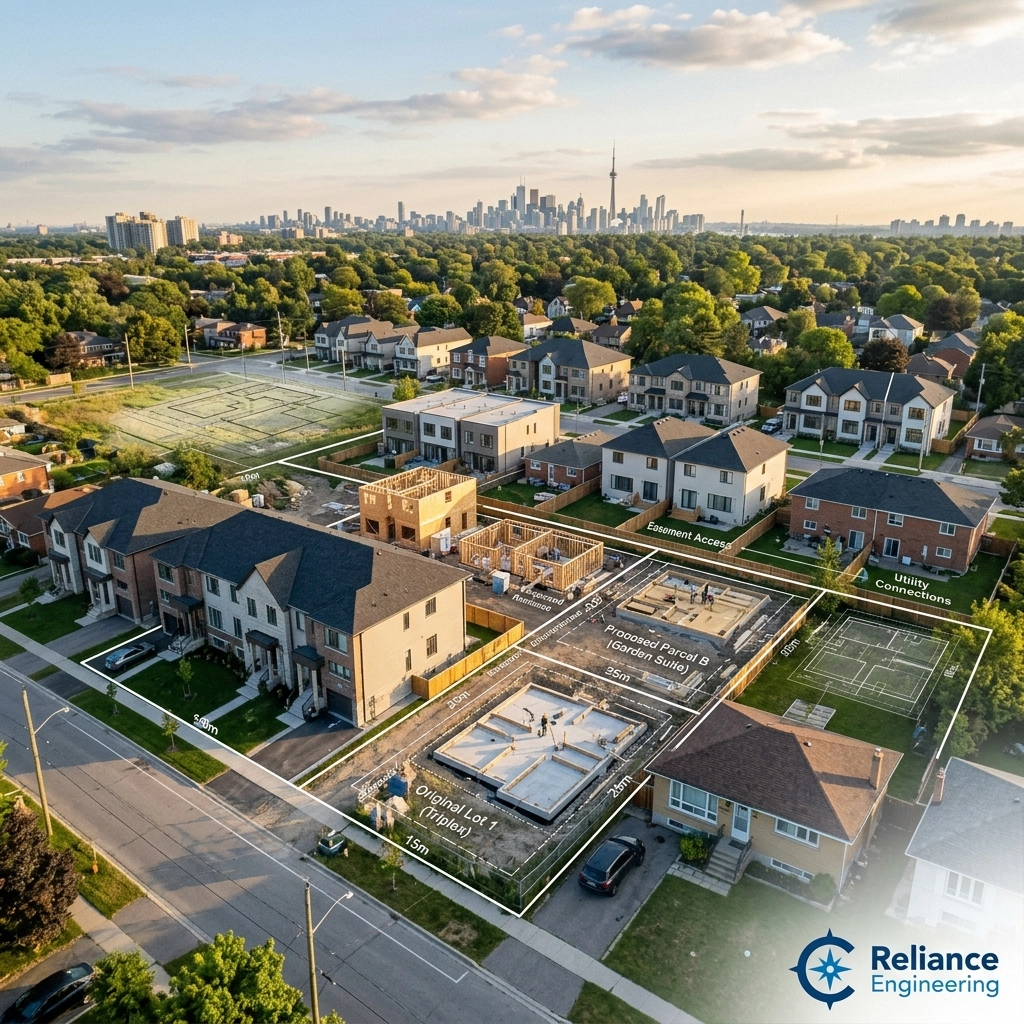
Zoning laws are not suggestions. With recent changes like the 2024 Provincial Planning Statement (PPS) and various Bill 23 updates, the rules for multi-unit conversions and garden suites have shifted. Assuming you know the rules based on a project you did two years ago is a recipe for disaster.
The Fix: Conduct a thorough zoning analysis before a single line is drawn. If you are looking at multi-unit conversions, read our guide on how to get your site plan approval for multi-unit conversions.
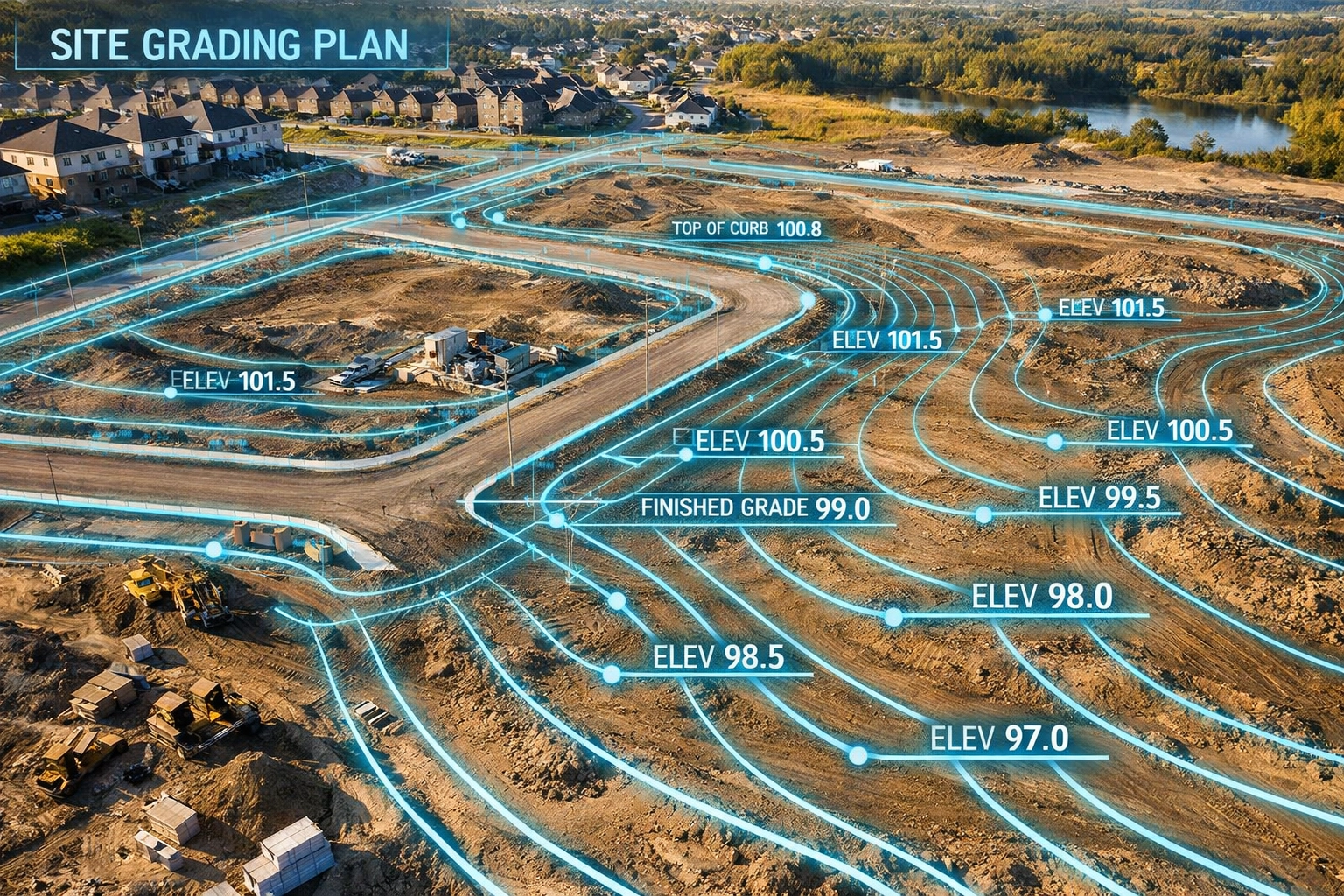
3. Treating Site Grading Plans as an Afterthought
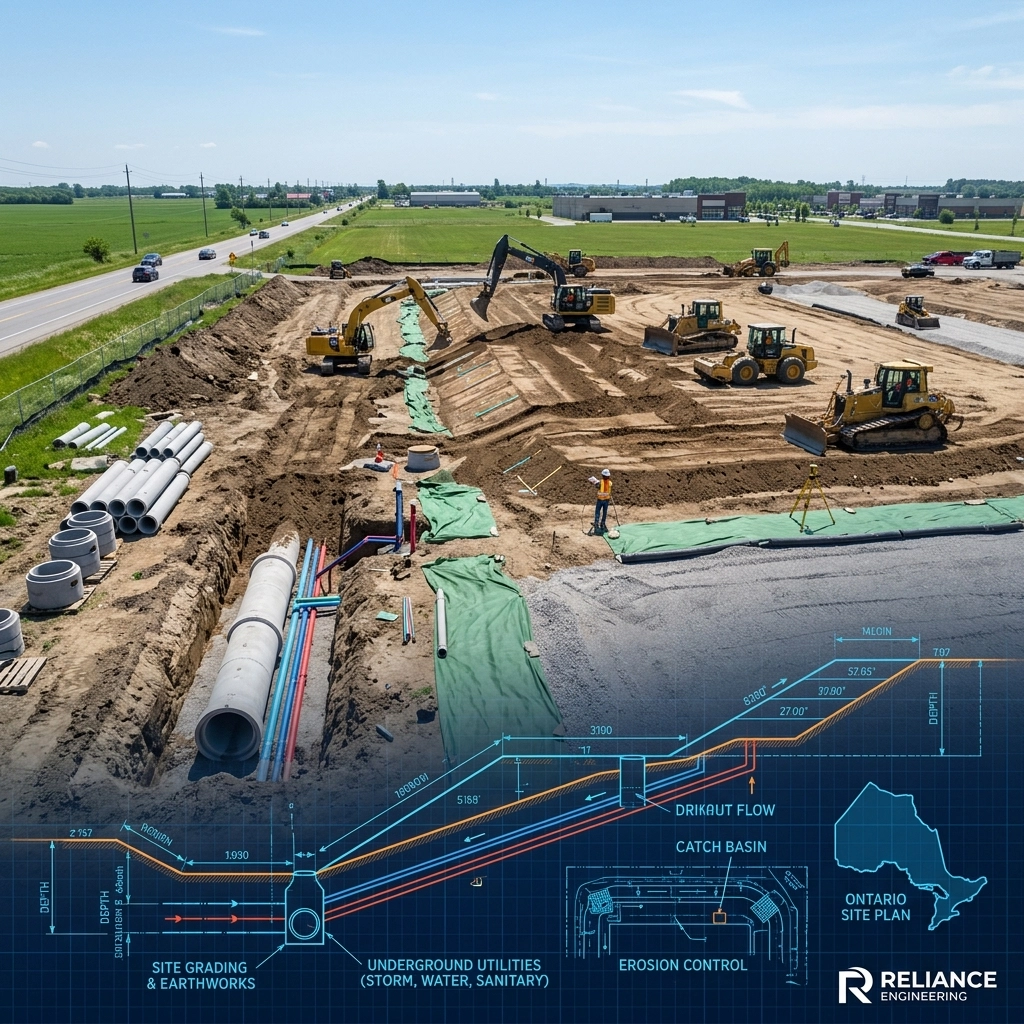
A Site Grading Plan is more than just moving dirt. It is the foundation of your site’s legal and functional integrity. We often see plans that fail to account for how water flows to neighboring properties, leading to immediate rejections or, worse, post-construction lawsuits.
If your grading plan isn't precise, you risk basement flooding or failing to meet the municipality’s requirements for "match-to-existing" elevations at the property line.
The Fix: Precision matters. A professional Site Grading Plan should be engineered to handle 100-year storm events while ensuring the site remains accessible and buildable. Check out our deep dive on why site grading precision is the key to one-submission approvals.
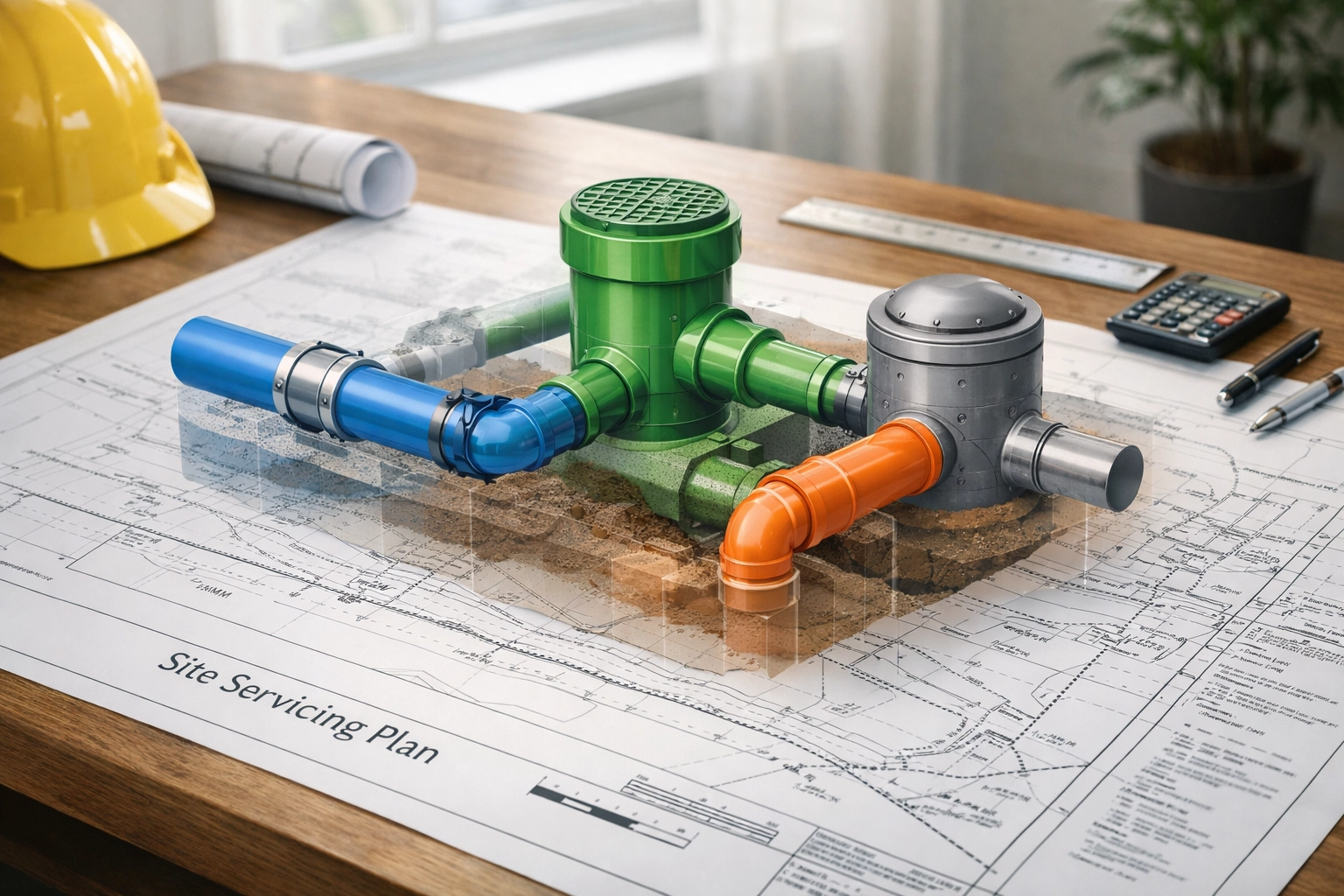
4. Underestimating Stormwater Management (SWM) Requirements
In 2026, Ontario’s focus on Low Impact Development (LID) and climate resiliency is at an all-time high. Many developers submit a basic SWM report only to have it kicked back because it doesn't address quantity control, quality control, or water balance requirements properly.
Reviewers in cities like Toronto, Mississauga, and Brampton are looking for specific detention volumes and release rates. If your engineer isn't using the latest rainfall data, your pipes will be undersized, and your approval will be denied.
The Fix: Ensure your SWM report is detailed and forward-looking. Whether you need detention tanks or LID features, the strategy must be clear. See our comparison of detention tanks vs. LID strategies to see which fits your project budget.
5. Poor Coordination of Site Servicing Plans
A Site Servicing Plan shows how your building connects to the world: water, sanitary, and storm sewers. A common mistake is failing to verify the capacity of the existing municipal infrastructure.
If you design a high-density multi-unit building but the city sewer can’t handle the flow, you have a massive problem. This often leads to the requirement of a Functional Servicing Report (FSR), which can add weeks to your timeline if not handled early.
The Fix: Get your FSR done first. It identifies constraints before you spend money on detailed design. Avoid common submission delays with a proper quick-start guide to FSRs.
6. Failing to Address Conservation Authority Concerns (TRCA/CVC)
If your property is near a ravine, watercourse, or shoreline, you aren't just dealing with the city: you’re dealing with the Conservation Authority. Ignoring the TRCA (Toronto and Region Conservation Authority) or CVC (Credit Valley Conservation) is the fastest way to add 6 to 12 months to your project.
New regulations, such as Ontario Regulation 41/24, have changed the landscape for what is allowed near protected zones.
The Fix: Engage with the Conservation Authority early. Understand the "top-of-bank" and setback requirements before finalizing your building footprint. Read the 10 things you need to know about the new TRCA regulations to stay ahead.
7. Working with Inexperienced Consultants
The "cheapest" engineer is often the most expensive choice you will ever make. If your consultant doesn't have a deep relationship with Ontario municipal reviewers or doesn't understand the nuances of the local engineering standards, you will pay for it in "Re-submission Fees" and "Delay Costs."
You need a partner who knows the unwritten rules of each municipality: from the specific CAD standards required by the City of Toronto to the unique grading requirements in Durham and Peel Region.
The Fix: Partner with a firm that has a track record of one-submission approvals. At Reliance Engineering, we bring 20+ years of experience to every project, ensuring your plans are not just compliant, but optimized for cost-effective construction.
How to Get Approved in One Submission: The Reliance Checklist
To help you navigate the process, we’ve developed a streamlined approach that prioritizes speed without sacrificing quality.
- Preliminary Site Assessment: Don't guess. We review the zoning and servicing capacity before you commit to a design.
- Integrated Design: We coordinate the Site Grading Plan, Site Servicing Plan, and SWM report simultaneously to ensure there are no technical conflicts.
- Proactive Communication: We don't wait for comments. We engage with municipal staff early to clarify requirements for complex sites.
- Erosion and Sediment Control: Don't forget the environmental protection plan. A missing ESC plan can stop a project before it starts. Learn the truth about ESC plans for Ontario builders.

Why Choose Reliance Engineering?
We are a boutique firm that understands the urgency of land development. We don't just provide drawings; we provide solutions that get you to the finish line faster.
- Speed: Draft plans in days, not weeks.
- Expertise: 20+ years of Ontario-wide experience.
- Results: High success rate of one-submission approvals.
Whether you are building a garden suite or a massive industrial site, we have the expertise to get your permit in hand.
Contact Us Today
Ready to get your project moving? Don't let mistakes hold you back. Contact Naresh Ochani and the team at Reliance Engineering for a professional consultation.
Naresh Ochani, P.Eng. M.Eng.
Founder and Principal
Reliance Engineering
6850 Millcreek Dr,
Mississauga, ON L5N 2H4
Phone: 647-385-6418
Email: [email protected]
Website: www.relianceengineering.ca
Office Hours:
Monday – Friday: 9:00 AM – 5:00 PM
Saturday: 12:00 PM – 2:00 PM
Sunday: Closed
Get your Site Plan Approval right the first time. Reach out today.



Leave A Comment