If you are developing land in Ontario, the Functional Servicing Report (FSR) is your roadmap to municipal approval. Without it, your project remains a concept; with it, you have a technically sound plan that proves your development can integrate seamlessly with existing infrastructure.
At Reliance Engineering, we have spent over 20 years navigating the complexities of Ontario’s regulatory landscape. We know that a well-prepared FSR is the difference between a project that stalls and one that breaks ground on schedule. This guide breaks down everything you need to know about FSRs to ensure your next application is successful.
What is a Functional Servicing Report (FSR)?
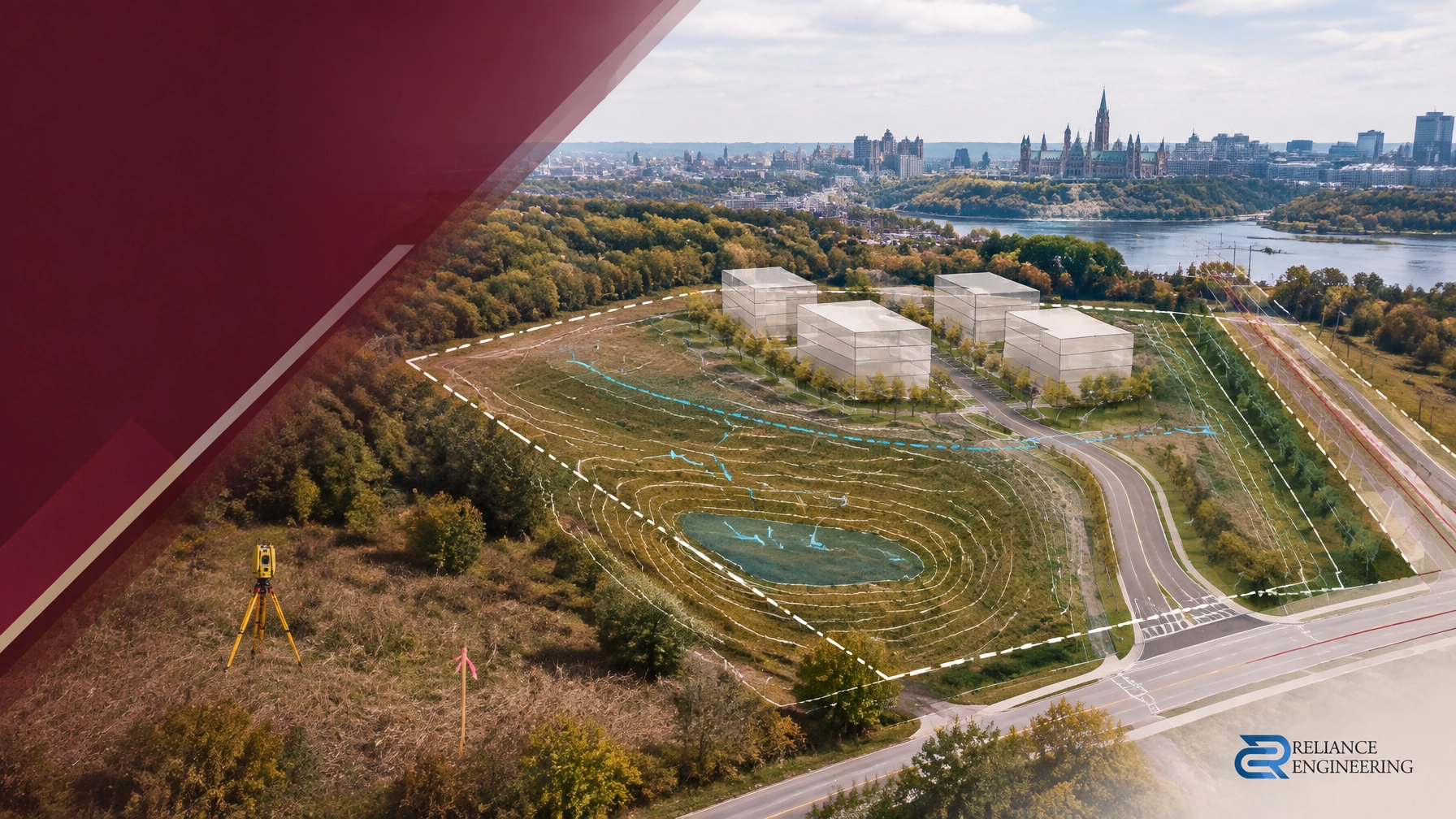
A Functional Servicing Report is a comprehensive technical document that evaluates how a proposed development will be serviced by municipal infrastructure. It isn't just a set of drawings; it is a rigorous analysis of capacity.
The FSR examines three primary pillars of civil engineering:
- Water Distribution: Can the existing water mains provide enough flow for domestic use and fire protection?
- Sanitary Sewage: Is there enough capacity in the sewer system to handle the increased load from your site?
- Stormwater Management: How will rain and snowmelt be managed to prevent flooding and protect downstream environments?
Unlike detailed site servicing plans, an FSR is typically a planning-level document used during the Site Plan Approval (SPA), Zoning By-law Amendment (ZBA), or Official Plan Amendment (OPA) stages.
Why is an FSR Critical for Your Ontario Project?
Municipalities across Ontario: from Toronto to Ottawa and everywhere in between: require an FSR to confirm that their current systems can handle your project's demands. If the existing pipes are too small or the treatment plants are at capacity, the municipality needs to know before they grant you permission to build.
If an FSR reveals that capacity is lacking, it may trigger the need for external upgrades. Identifying these requirements early is vital for budgeting and project timelines. Proactive engineering ensures you aren't hit with million-dollar infrastructure bills halfway through the development process.
Key Components of a Comprehensive FSR
A high-quality Functional Servicing Report must be prepared by a licensed Professional Engineer (P.Eng.). At Reliance Engineering, we ensure every report includes these critical elements:
1. Water Distribution Analysis
We evaluate the existing water pressure and flow rates. This often involves coordinating hydrant flow tests to get real-world data. We then calculate the "Average Daily Demand," "Peak Hourly Demand," and "Fire Flow" requirements based on the Ontario Building Code and municipal standards.
Learn more about our water distribution design services.
2. Sanitary Sewer Evaluation
We calculate the peak sanitary flow generated by the new development. We compare this to the capacity of the receiving sewer. If the sewer is near capacity, hydraulic modeling may be required to prove that your project won't cause backups for your neighbors.
See our expertise in sanitary sewer design.
3. Stormwater Management (SWM)
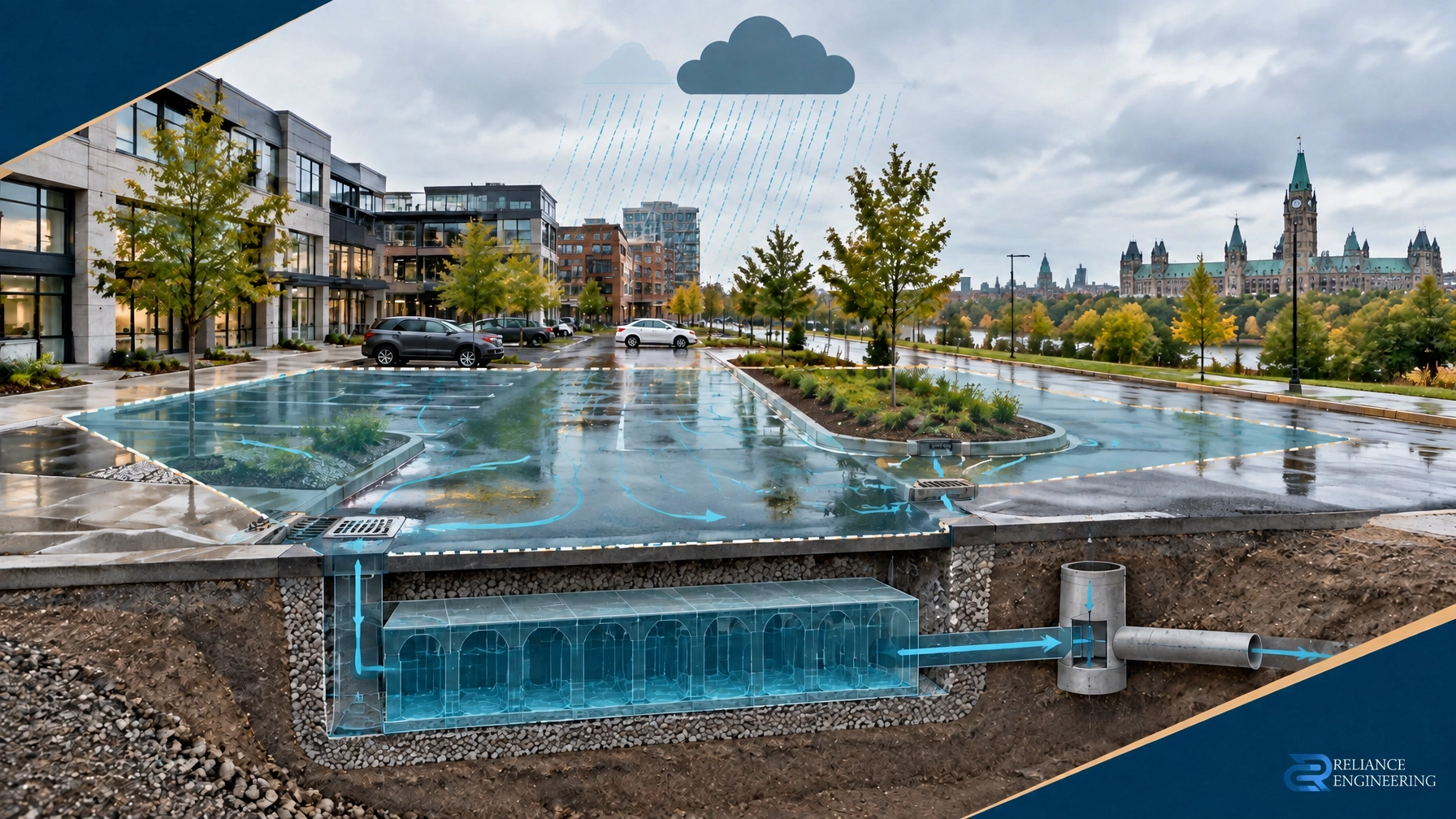
Stormwater is often the most complex part of the FSR. We must prove that the "post-development" runoff flow does not exceed the "pre-development" levels. This involves designing storage solutions like underground tanks, rooftop ponding, or dry ponds.
Explore our stormwater management and storm system design solutions.
4. Site Grading and Drainage
While an FSR focuses on services, it must be supported by a preliminary site grading plan. We ensure the land is shaped to direct water away from buildings and toward the appropriate management systems.

The Regulatory Framework in Ontario
Navigating municipal approvals requires a deep understanding of several layers of regulation:
- The Planning Act: Mandates that developments demonstrate adequate servicing.
- Provincial Policy Statement: Focuses on sustainable infrastructure.
- Conservation Authority (CA) Requirements: If your site is near a creek or floodplain (governed by authorities like the TRCA or CVC), the SWM portion of your FSR will face extra scrutiny.
- Municipal Engineering Standards: Every city has its own "Greenbook" or design criteria that must be followed strictly.
Common Challenges and How We Solve Them
Through our work on projects like the 35 Wabash Avenue Townhomes in Toronto and the 85 Bronte Road development in Oakville, we have encountered: and overcome: every possible hurdle.
1. Inaccurate Utility Data
Many developers rely on old "as-built" drawings that are no longer accurate. We recommend site-specific locates and flow testing to ensure our hydraulic models are based on reality, not guesswork.
2. Changing Municipal Standards
Ontario municipalities are constantly updating their SWM criteria, especially regarding "Low Impact Development" (LID) and climate change resilience. We stay ahead of these trends to ensure your report isn't rejected for using outdated standards.
3. Conflicting Utility Information
In dense urban areas like Toronto, the underground is crowded. An FSR must account for hydro, gas, and telecommunications to ensure the proposed civil services actually fit in the ground.

The Reliance Engineering Advantage
Why choose Reliance Engineering for your Ontario FSR?
- 20+ Years of Expertise: We have seen how the province has evolved and we know what reviewers are looking for.
- P.Eng. Certified: Every report is stamped and sealed by a licensed Professional Engineer, ensuring technical integrity and legal compliance.
- Full-Service Consulting: We don't just write the report; we handle construction administration and site plan approvals.
- Fast Turnaround: We understand that time is money. We deliver permit-ready plans and reports designed to clear the municipal hurdle as quickly as possible.
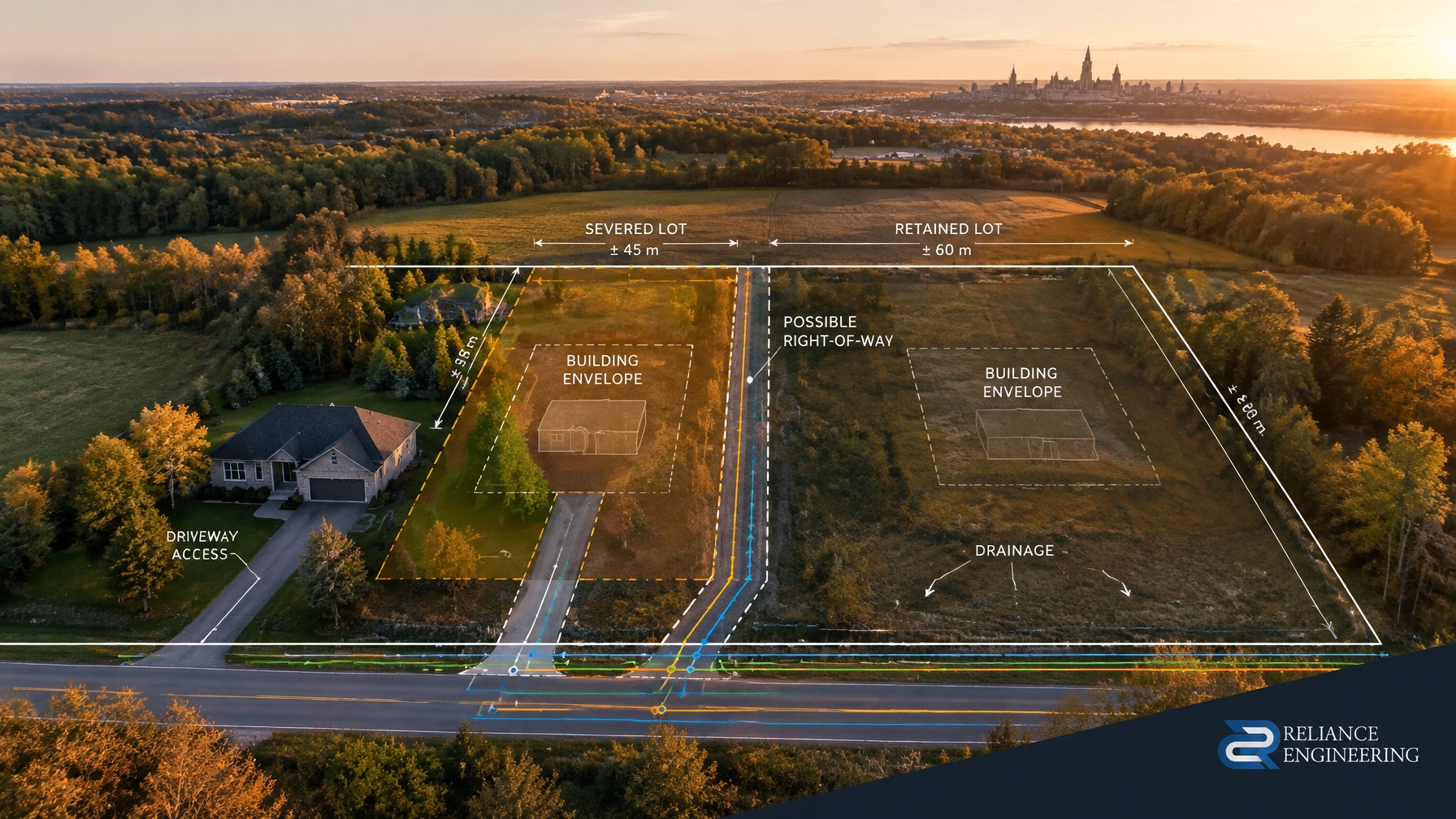
We have successfully managed complex projects across the province, including the redevelopment of Etobicoke General Hospital and the 345-351 Davis Drive project in Newmarket. Whether it is a small residential severance or a large-scale ICI (Industrial, Commercial, Institutional) development, our approach remains the same: practical, compliant, and cost-effective.
Success Strategies for Your Next Application
To ensure your FSR sails through the approval process:
- Engage Early: Don't wait until the last minute. Servicing issues can fundamentally change your site layout.
- Consult the Municipality: We perform pre-consultation meetings to align our design with municipal expectations before we even start the calculations.
- Integrate Your Team: Ensure your architect, landscape architect, and civil engineer are communicating. A change in the building footprint affects the grading, which in turn affects the stormwater management.

Conclusion
A Functional Servicing Report is the technical foundation of any successful land development project in Ontario. It proves to the authorities: and your investors: that the project is viable, safe, and sustainable.
Don't leave your municipal approvals to chance. Partner with a firm that brings decades of experience to the table. Let Reliance Engineering handle the complexities of Site Grading, Site Servicing, and Stormwater Management so you can focus on building the future of Ontario.
Contact Information
Naresh Ochani, P.Eng. M.Eng.
Founder and Principal
Reliance Engineering
6850 Millcreek Dr, Mississauga, ON L5N 2H4
Phone: 647-385-6418
Email: [email protected]
Website: www.relianceengineering.ca
Office Hours
- Saturday: 12:00 PM – 2:00 PM
- Sunday: Closed
- Monday – Friday: 9:00 AM – 5:00 PM
Ready to start your project? Contact us today for a consultation on your Functional Servicing Report or any other land development needs across Ontario.