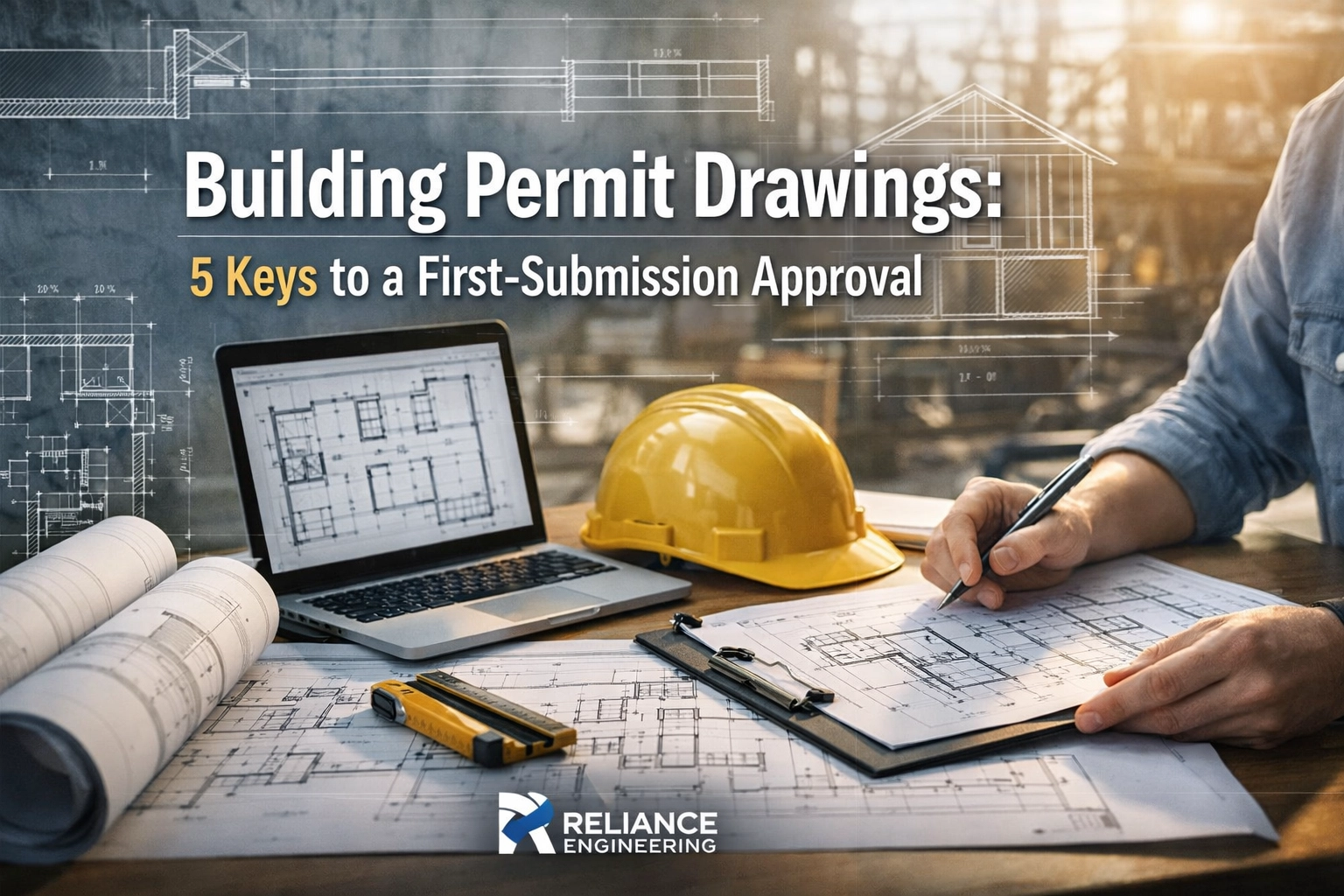
Waiting for a building permit is the ultimate project killer. In Ontario, a rejection doesn't just mean a "no": it means weeks of delays, extra fees, and missed construction windows.
At Reliance Engineering, led by Naresh Ochani, P.Eng. M.Eng., we have over 20 years of experience navigating the complexities of the Ontario Building Code (OBC) and municipal requirements. We don't just draw; we engineer for approval.
If you want your building permit drawings approved on the first submission, you need more than just lines on paper. You need precision.
Here are the 5 keys to getting it right the first time.
1. Local Municipal Intelligence
Ontario is not a "one size fits all" province. What flies in Mississauga might get flagged in Toronto or Brampton. Every municipality has its own specific set of checklists, bylaws, and submission standards.
Why It Matters:
- Zoning Bylaws: Before you even look at a floor plan, you must comply with local setbacks, height restrictions, and lot coverage.
- Specific Checklists: Most municipalities provide a "Required Documents" list. Ignore one item, and your application is deemed "Incomplete" before a reviewer even looks at the technical details.
- Conservation Authorities: If your site is near a protected area (like the TRCA or CVC), you need their stamp before the city will even talk to you.
The Pro Tip: Never assume. Call the building department during the design phase. Clarifying a specific requirement now saves three weeks of back-and-forth later.

2. Technical Precision and Scaling
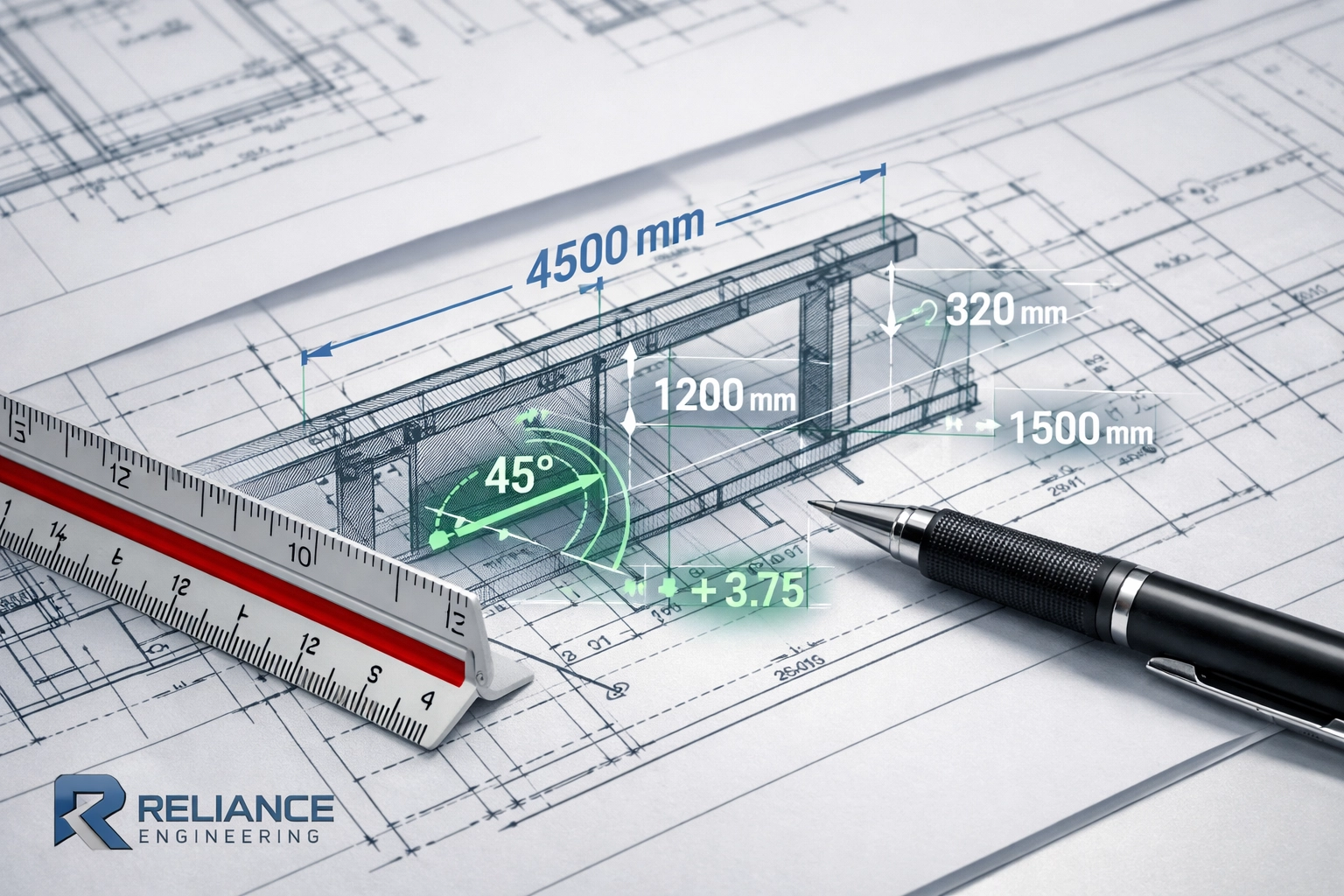
This is where most DIY or amateur drawings fail. A building permit drawing is a legal document. It requires absolute accuracy.
The Standard for Approval:
- Legible Scaling: Drawings must be to a standard metric or imperial scale (e.g., 1:100 or 1/4" = 1'-0").
- Full Dimensioning: Every wall, window, and structural element must be dimensioned. If the reviewer has to pull out a ruler to guess a distance, you’ve already lost.
- Structural Integrity: For many projects, you need engineered structural drawings. This includes foundation details, floor joist layouts, and roof truss specifications.
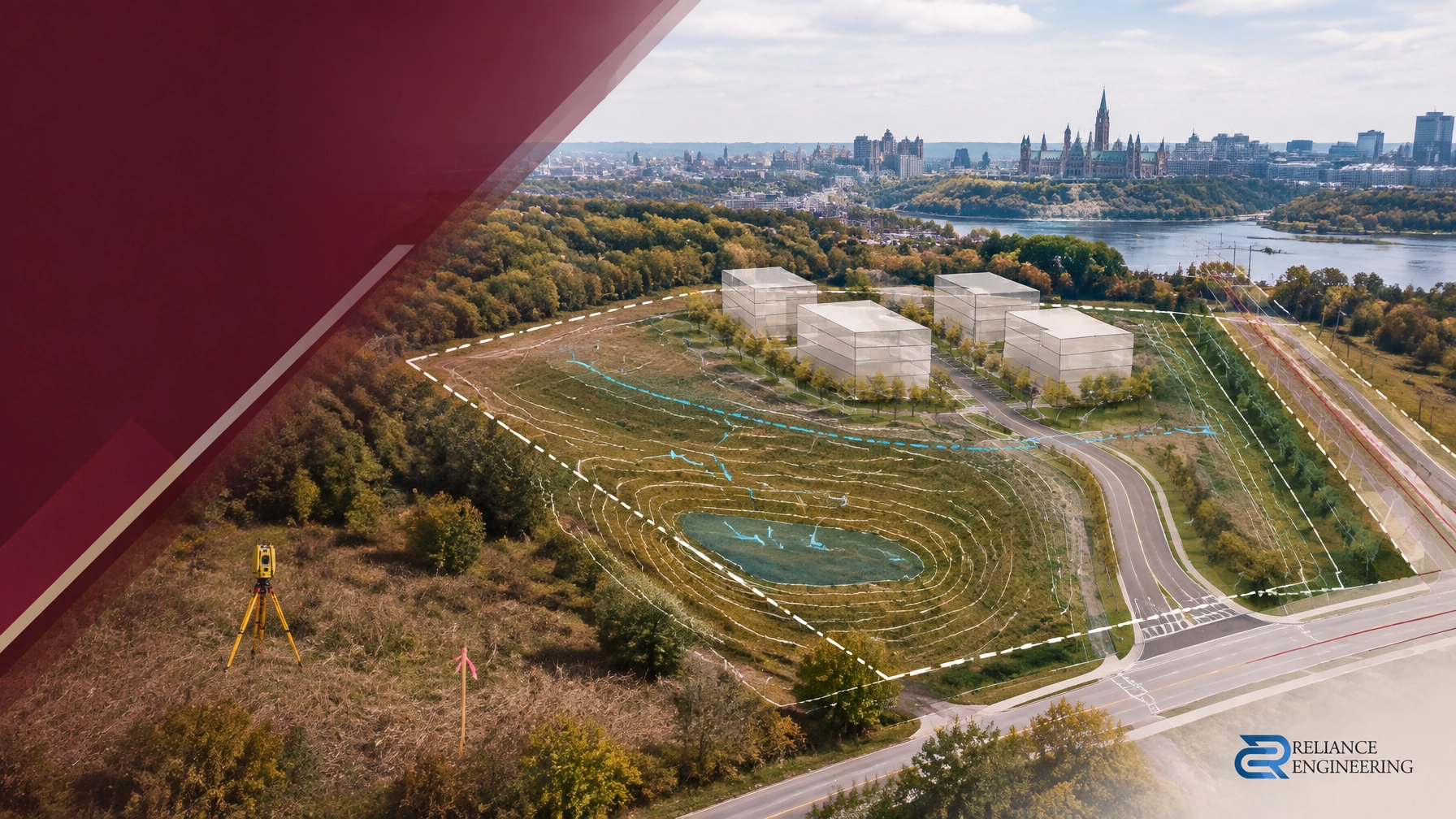
If you are working on a more complex development, ensure your site grading plan precision is locked in. Grading errors are one of the top reasons for permit delays in Ontario.
3. Cross-Disciplinary Consistency
A common mistake is having architectural drawings that don’t match the civil or structural plans.
The Consistency Checklist:
- Site Plan vs. Floor Plan: Does the footprint on your site plan match the exterior dimensions of your floor plan?
- Mechanical vs. Structural: Are your HVAC ducts running through a structural beam?
- Civil vs. Architectural: Does the finished floor elevation on your functional servicing report align with the architectural elevations?
When documents contradict each other, the reviewer loses confidence in the entire package. At Reliance Engineering, we coordinate these layers to ensure a unified submission.

4. The Right Professional Credentials
In Ontario, your drawings must be prepared by a qualified person. This usually means a designer with a BCIN (Building Code Identification Number) or a Licensed Professional Engineer (P.Eng.).
Why the P.Eng. Matters:
For many commercial, industrial, or complex residential projects, a P.Eng. is a mandatory requirement. A Professional Engineer’s stamp is a guarantee of safety and code compliance.
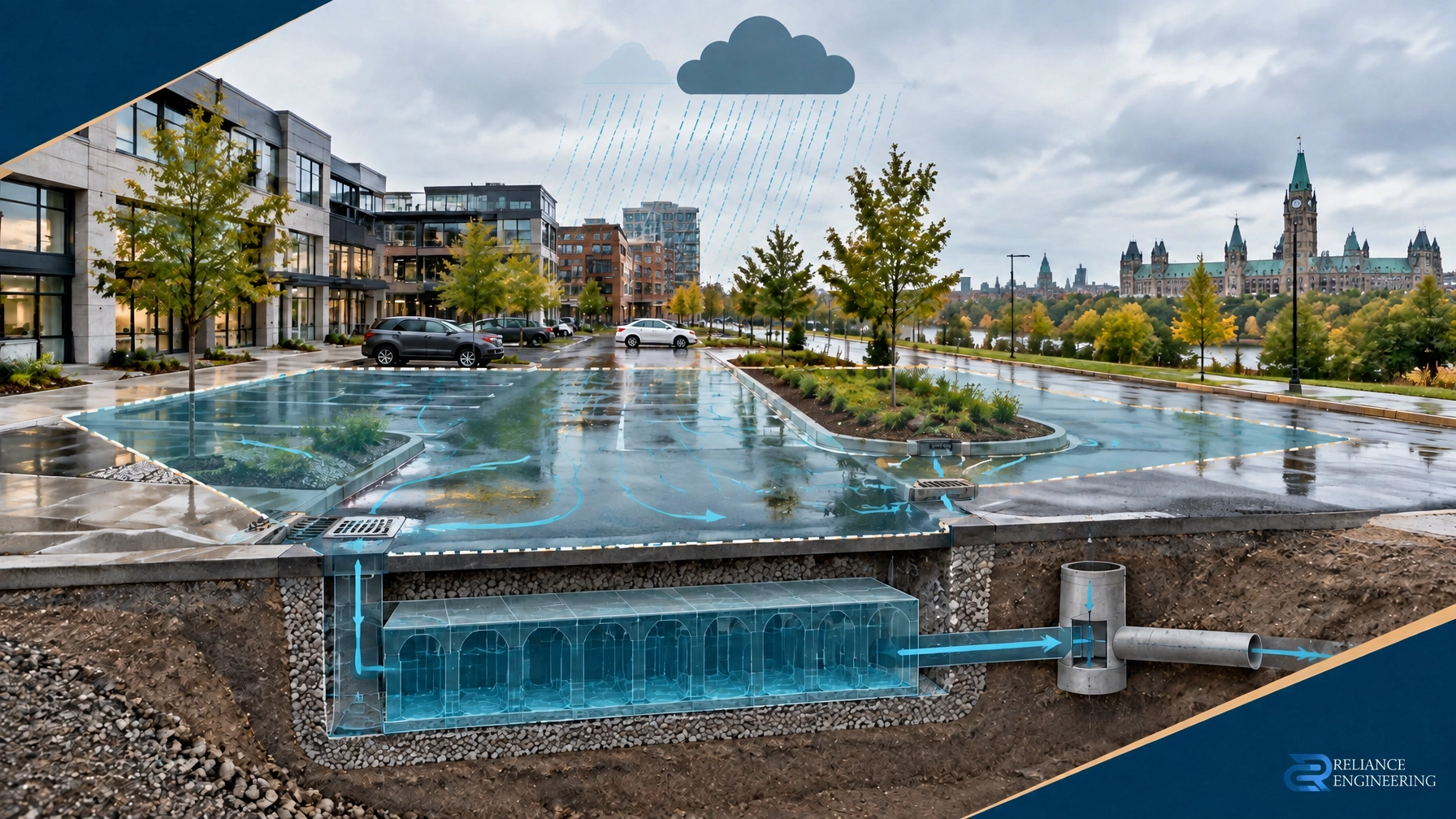
With 20+ years of principal experience, Naresh Ochani ensures that every drawing leaving our office meets the highest standards of the Ontario Building Code. If your project involves complex water management, you may also need to look into whether a detailed stormwater management report is required for your specific permit.
5. Professional Organization and Digital Submission
The way you present your application matters. A messy submission is a red flag to a municipal reviewer.
The "First Look" Strategy:
- Logical Grouping: Organize your PDF sets logically. Site plans first, followed by floor plans, elevations, sections, and then structural/mechanical details.
- Naming Conventions: Use clear file names (e.g.,
A101_Floor_Plans_V1.pdf). - Complete Forms: Ensure all Schedule 1 forms and owner authorization forms are signed, dated, and included in the main package.
- Digital Standards: Most Ontario municipalities now use portals like "eService" or "ePermits." Ensure your files meet their specific DPI (resolution) and file size limits.
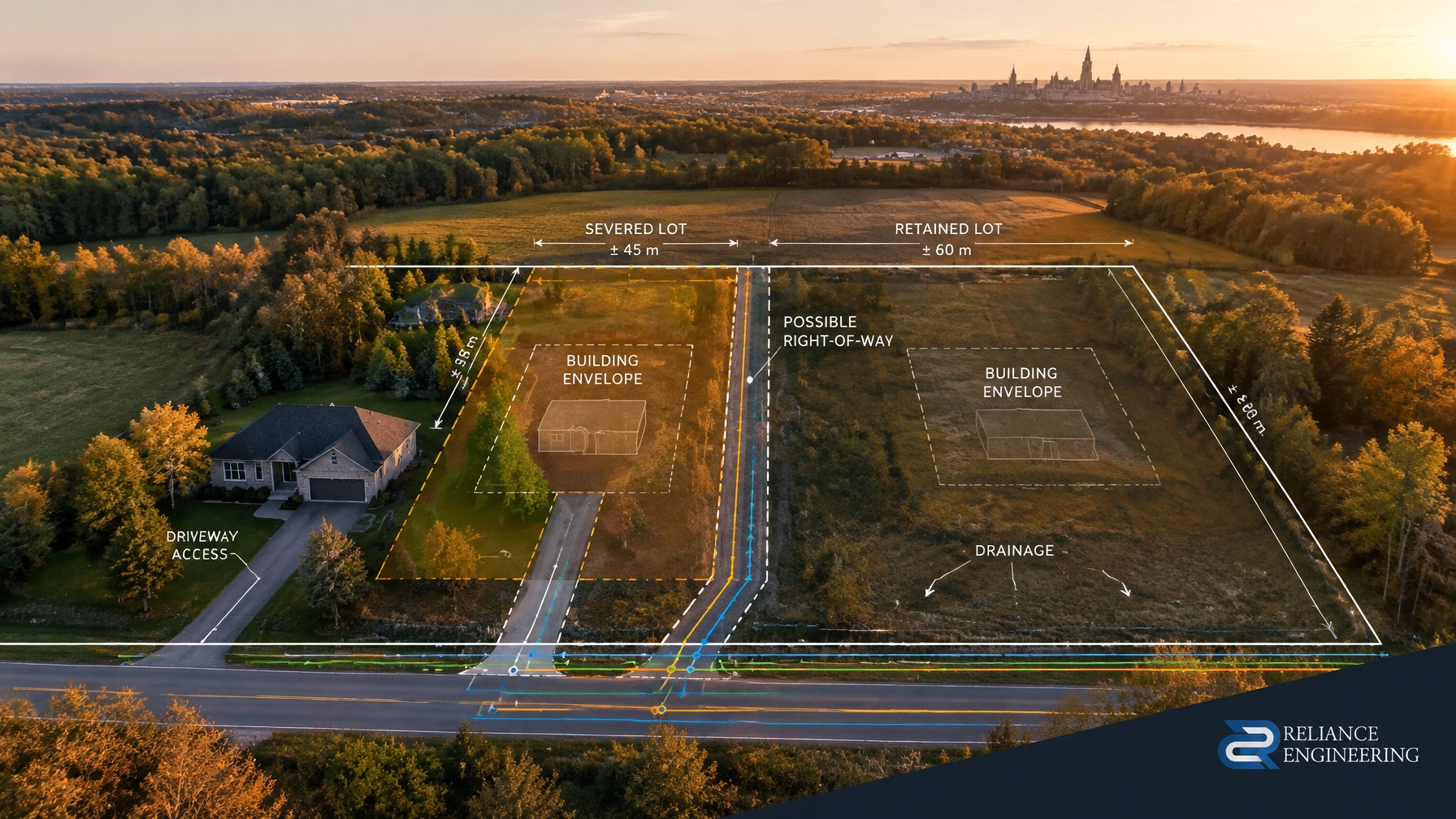
If you are dealing with a multi-unit conversion, the standards are even tighter. Check out our guide on Ontario's new zoning for multi-unit conversions to see how to align your drawings with the latest provincial changes.
Why Projects Get Rejected (and How We Prevent It)
Most rejections stem from "The Silo Effect": the architect doesn't talk to the civil engineer, and the owner doesn't check the local bylaws. We break those silos down.
At Reliance Engineering, we specialize in:
- Land Development Consulting
- Site Grading and Servicing Plans
- Stormwater Management
- Building Permit Drawings for Commercial and Residential Projects
We know what Ontario reviewers are looking for because we’ve been dealing with them for two decades. We provide draft plans in days, not weeks, and we ensure they are permit-ready the moment they hit the city’s desk.

Ready to Submit?
Don't gamble with your construction timeline. If you need building permit drawings that are accurate, compliant, and engineered for speed, contact us today.
Reliance Engineering
Principal: Naresh Ochani, P.Eng. M.Eng.
Address: 6850 Millcreek Dr, Mississauga, ON L5N 2H4
Phone: 647-385-6418
Email: [email protected]
Office Hours:
- Monday – Friday: 9:00 AM – 5:00 PM
- Saturday: 12:00 PM – 2:00 PM
- Sunday: Closed
Whether you are working on a garden suite approval in the GTA or a major commercial development, we have the expertise to get your permit through.
Quick Checklist for Your First Submission:
- Zoning Compliance: Confirmed with the latest municipal bylaws.
- OBC Compliance: All drawings meet 2024/2025 Ontario Building Code standards.
- Professional Stamp: P.Eng. or BCIN credentials clearly visible.
- Site Integration: Grading and servicing plans match the architectural footprint.
- Complete Package: All municipal forms and schedules are filled and signed.
Stop waiting. Start building. Reach out to Reliance Engineering for a consultation on your next project across Ontario.