For developers across Ontario, the transition from a conceptual design to a physical construction site is governed by one critical, often complex process: Site Plan Approval (SPA). Whether you are developing a mid-rise residential complex in Toronto, a commercial plaza in St. Catharines, or an industrial facility in Newmarket, navigating the municipal regulatory landscape requires more than just a vision: it requires technical precision and strategic planning.
At Reliance Engineering, we have spent over 20 years helping clients bridge the gap between architectural intent and municipal compliance. Site Plan Approval is the mechanism municipalities use to influence the design and layout of a development, ensuring it meets safety, functional, and aesthetic standards.
This guide outlines the five essential steps to securing Site Plan Approval in Ontario and provides the technical insights necessary to get your project permit-ready.
Step 1: Pre-Consultation : Setting the Foundation
The most common mistake developers make is rushing into the design phase without consulting the municipality first. In Ontario, a mandatory pre-consultation meeting with municipal planning staff is the prerequisite for a successful application.
During this meeting, the city or town identifies the specific requirements for your site. This includes confirming whether your project aligns with the existing Zoning By-law or if a Zoning By-law Amendment (ZBA) or Official Plan Amendment (OPA) is required.
From a civil engineering perspective, this is where we identify the "big ticket" items:
- Servicing Capacity: Is there enough municipal water and sanitary sewer capacity to support your development?
- Stormwater Constraints: What are the allowable release rates for the site?
- Required Studies: Will you need a comprehensive Functional Servicing Report (FSR) or a specific Hydrogeological study?
Identifying these constraints early prevents costly redesigns and ensures your consultant team is working toward a compliant goal from day one.

Step 2: Preparing Comprehensive, Compliant Engineering Plans
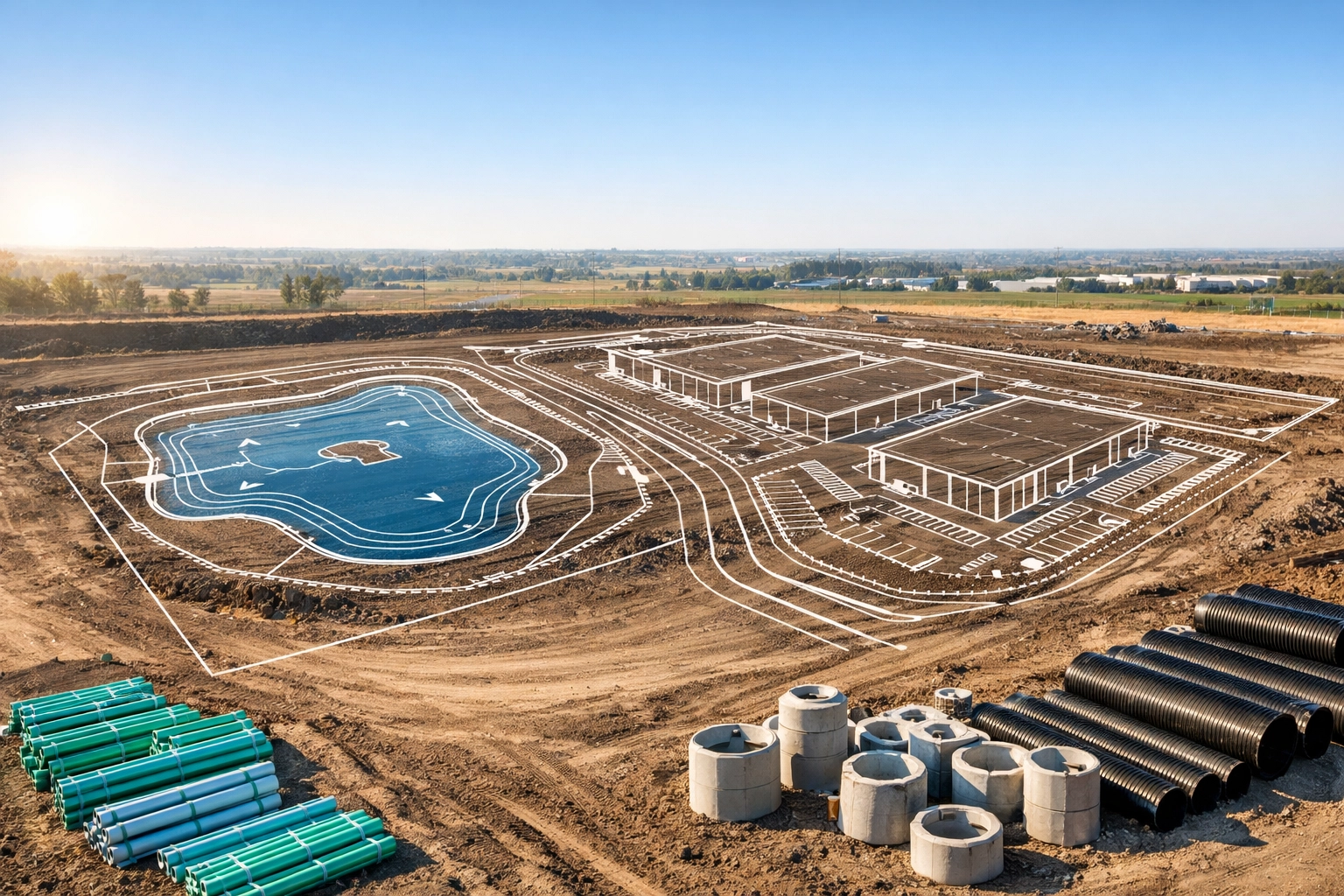
Once the requirements are established, the technical heavy lifting begins. A Site Plan Approval application is only as strong as its supporting documentation. For Ontario developers, this package must be integrated, ensuring that the architectural footprint works in harmony with the underground infrastructure and surface grading.
At Reliance Engineering, we specialize in the core components required for a complete submission:
Site Grading and Erosion Control
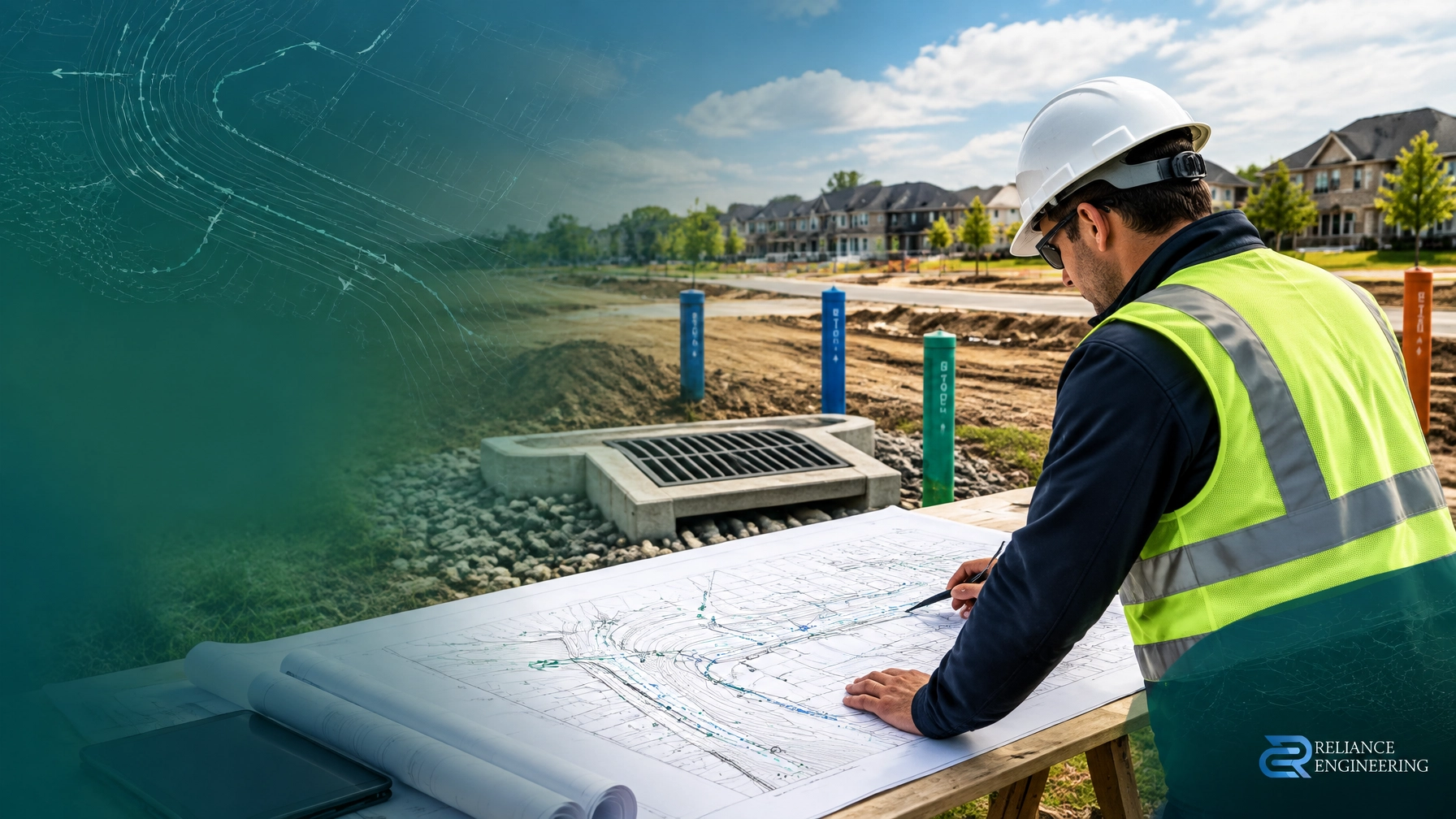
A Site Grading Plan is more than just moving dirt; it is a legal document that ensures your development does not negatively impact neighboring properties or the municipal right-of-way. We focus on balancing the site to minimize the cost of exporting fill while ensuring proper drainage away from building foundations. Coupled with an Erosion and Sediment Control (ESC) plan, this ensures that during construction, the site remains compliant with provincial environmental standards.
Site Servicing and Infrastructure Design
Your Site Servicing Plan outlines how the building will connect to the municipality’s water, sanitary, and storm networks. This involves complex calculations for sanitary sewer design and ensuring that fire protection requirements (fire hydrants and water mains) meet the Ontario Building Code.
Stormwater Management (SWM)
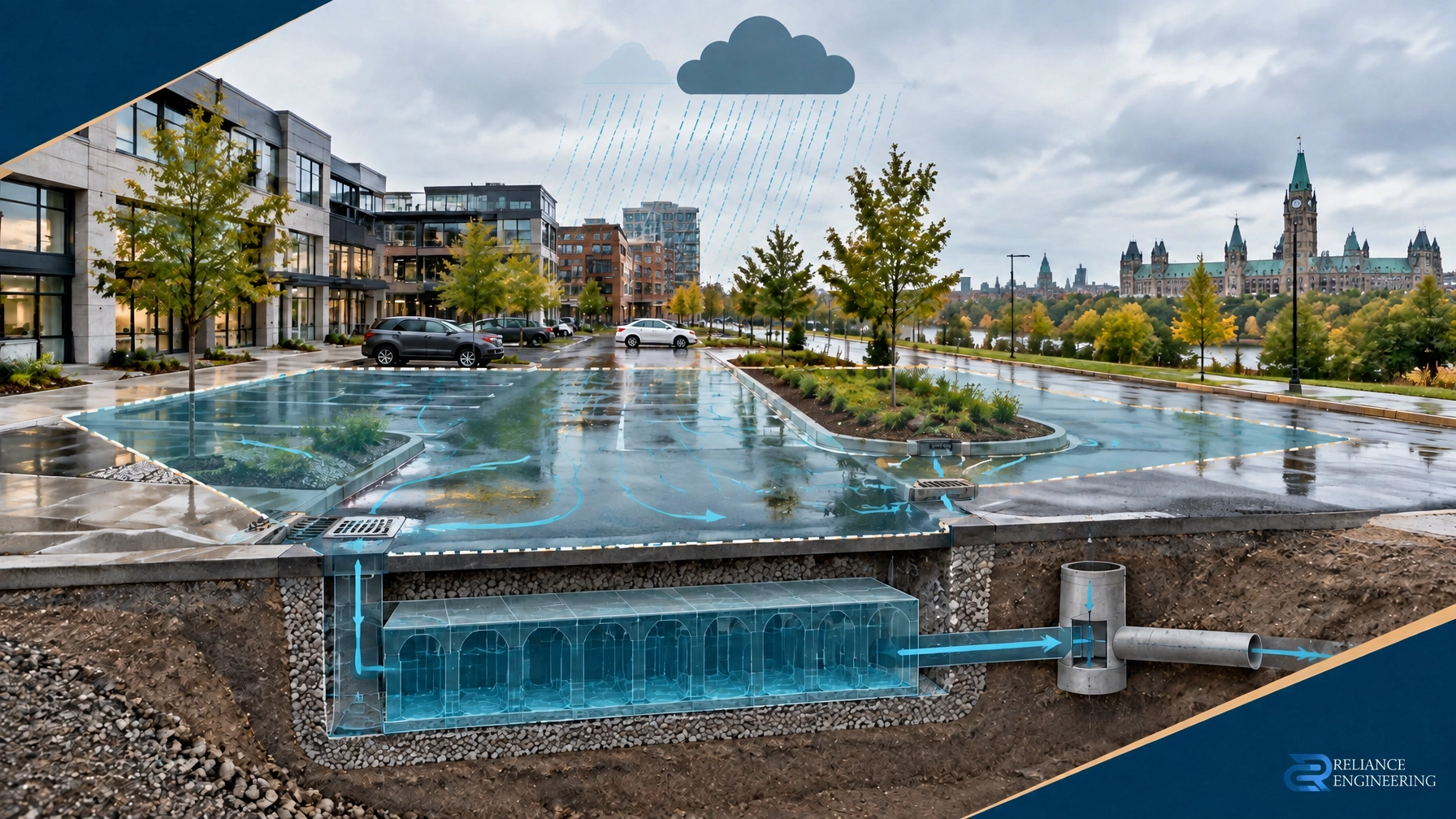
Ontario has some of the most stringent stormwater regulations in North America. We provide detailed Stormwater Management Reports (SWMR) that address quantity control, quality control (Total Suspended Solids removal), and water balance. Whether your site requires underground storage tanks, LID (Low Impact Development) features, or storm system design, these reports are critical for securing approval from both the municipality and local Conservation Authorities.
Step 3: Navigating the Multi-Department Technical Review
After submission, your application enters the "Technical Review" phase. In Ontario, this is rarely a linear process. Your application is circulated to various departments, including:
- Planning and Urban Design
- Transportation Services (Access and Traffic)
- Civil Engineering (Grading and Servicing)
- Fire Prevention
- Environmental/Parks (Tree preservation and landscaping)
Expect comments. The goal of this phase is coordination. For example, the Transportation department might request a wider driveway for fire truck access, which might then impact your Site Grading Plan.
Under Bill 109 (More Homes Built Faster Act, 2022), Ontario municipalities are under increased pressure to provide faster decisions. However, the quality of your initial submission remains the primary factor in how many rounds of "re-submission" are required. Our 20+ years of experience allows us to anticipate municipal comments before they are even written, significantly compressing this timeline.
Step 4: Conditional Approval and the Site Plan Agreement
Once the technical departments are satisfied with the plans, the municipality will issue "Notice of Decision" or "Conditional Approval." This is a major milestone, but it is not the green light to start digging.
To move forward, the developer must enter into a Site Plan Agreement. This is a legal contract between the developer and the municipality that is registered on the title of the property. It outlines your obligations, including:
- Financial Securities: You will likely need to provide Letters of Credit (LCs) to the municipality to guarantee that the site works (grading, landscaping, servicing) will be completed according to the approved plans.
- Development Charges: Payment of municipal fees.
- Maintenance Obligations: Ensuring the site is kept in good order post-construction.
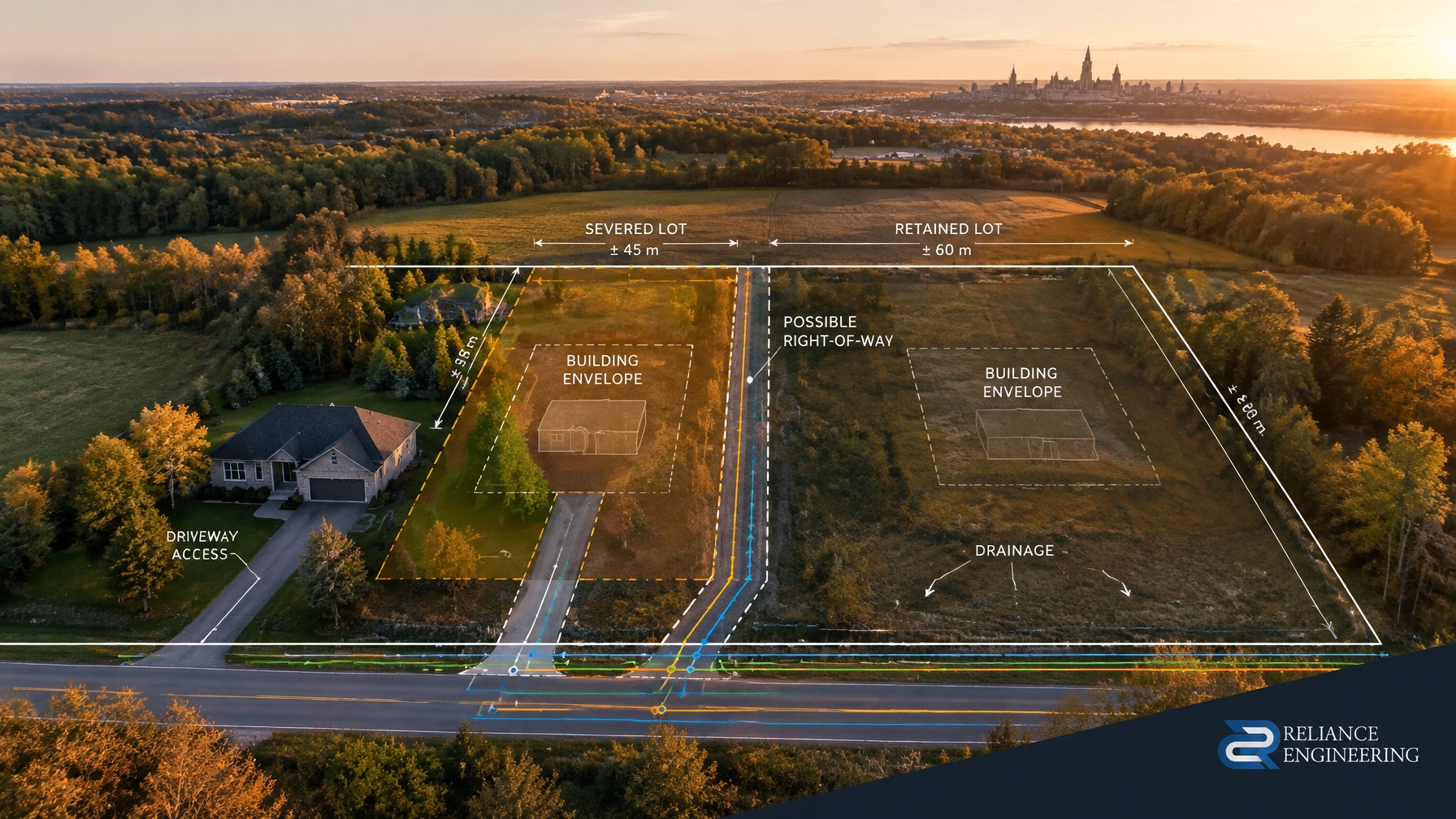
At this stage, finalize any Severance applications or minor variances if they were part of the conditional requirements.
Step 5: Final Clearance and Obtaining Building Permits
The final step is the "clearing of conditions." This involves getting the final versions of your Site Grading, Servicing, and Stormwater plans stamped "Approved" by the Director of Engineering or Planning.
With the Site Plan Agreement signed and the financial securities in place, the municipality will issue the final Site Plan Approval. You can then apply for your Building Permits (Residential or ICI).
Because the Site Plan Approval process has already vetted the exterior and infrastructure of the building, the Building Permit phase focuses primarily on structural, mechanical, and electrical compliance with the Ontario Building Code. Having a consistent engineering partner throughout both phases ensures that the "as-built" reality matches the approved site plan, avoiding delays during the final municipal inspection and the eventual release of your financial securities.
Why Experience Matters in the Ontario Landscape
The regulatory environment in Ontario is constantly evolving. From the implementation of Bill 109 to changing Conservation Authority mandates, the "rules of the game" change frequently.
At Reliance Engineering, we don't just draft plans; we provide land development consulting that looks at the big picture. We have successfully navigated projects across the province, from the high-density requirements of 35 Wabash Avenue in Toronto to complex redevelopments like the Etobicoke General Hospital.
Our approach is built on three pillars:
- Technical Excellence: Our Functional Servicing Reports and grading designs are rigorous and permit-ready.
- Regulatory Insight: We understand the nuances of local municipalities, from Oakville to St. Catharines.
- Speed and Reliability: We understand that for developers, time is money. We aim to provide draft plans in days, not weeks.
Contact Reliance Engineering Today
Navigating Site Plan Approval shouldn't be a barrier to your project's success. Partner with a firm that has 20+ years of expertise in Ontario’s civil engineering landscape.
Reliance Engineering
Professional Civil Engineering & Land Development Consulting
- Address: 7030 Woodbine Ave, Suite 500, Markham, ON L3R 6G2
- Phone: Contact Us
- Service Area: Across Ontario
- Business Hours: Monday – Friday: 9:00 AM – 5:00 PM
Ready to get shovels in the ground? Visit our services page to learn how we can streamline your next development project, or contact us today for a consultation on your Site Plan Approval application.