For property owners and developers in Ontario, unlocking the value of a piece of land often involves dividing it into smaller parcels. This process, formally known as land severance, is a critical step in residential and commercial development. However, navigating the bureaucratic landscape of municipal approvals and provincial legislation is rarely straightforward. In Ontario, the legal mechanism used to obtain a land severance is known as a "Consent Application."
At Reliance Engineering, we have spent over 20 years helping clients across Ontario navigate these complexities. From the initial conceptual layout to the final submission of permit-ready site plans, our focus is on ensuring that your application is not only compliant with municipal standards but also optimized for long-term viability.
What is Land Severance?
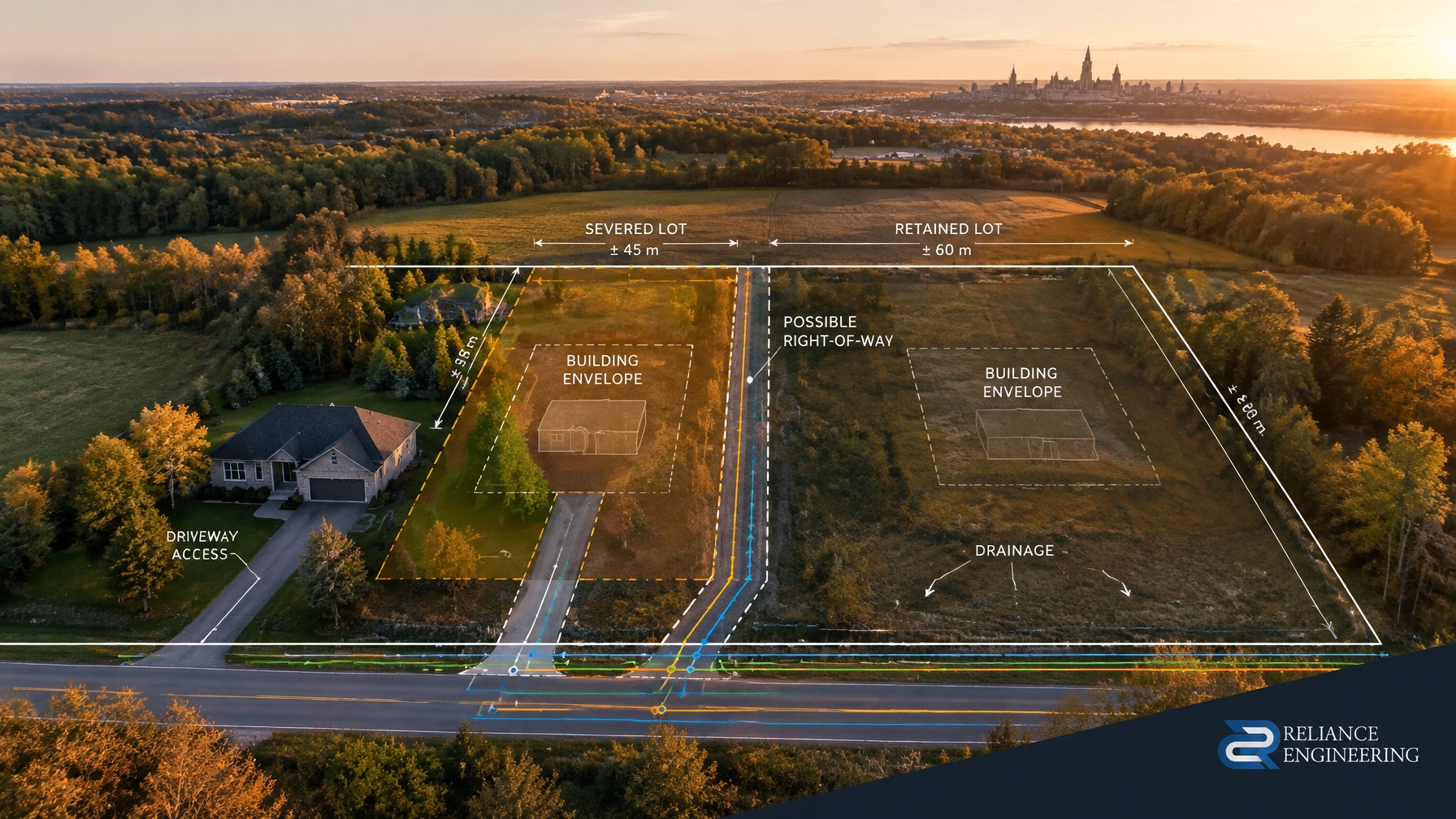
Land severance is the authorized separation of a piece of land to create a new lot or parcel of land. This is commonly referred to as a "consent" because the applicant must receive official consent from the local land division committee or the Committee of Adjustment.
While the term "severance" is occasionally used in employment law, in the context of land development and civil engineering, it refers strictly to the division of real estate. Under the Ontario Planning Act, you must receive consent before you can sell, mortgage, or enter into any agreement for a portion of your land that lasts 21 years or more.
Whether you are looking to create a single new residential lot or a multi-unit development, the severance process is the gateway to your project’s success.
The Regulatory Framework: The Ontario Planning Act
The severance process is governed primarily by the Ontario Planning Act. This legislation ensures that land development happens in a controlled, orderly fashion that respects the environment, municipal infrastructure, and the long-term goals of the community.
Each municipality in Ontario: whether you are in Toronto, Ottawa, or a rural township: has its own Official Plan and Zoning Bylaws. A successful consent application must demonstrate that the proposed severance aligns with these local policies. If the proposed lot does not meet the minimum size, frontage, or setback requirements, you may also need to apply for a Minor Variance or a Zoning By-law Amendment.
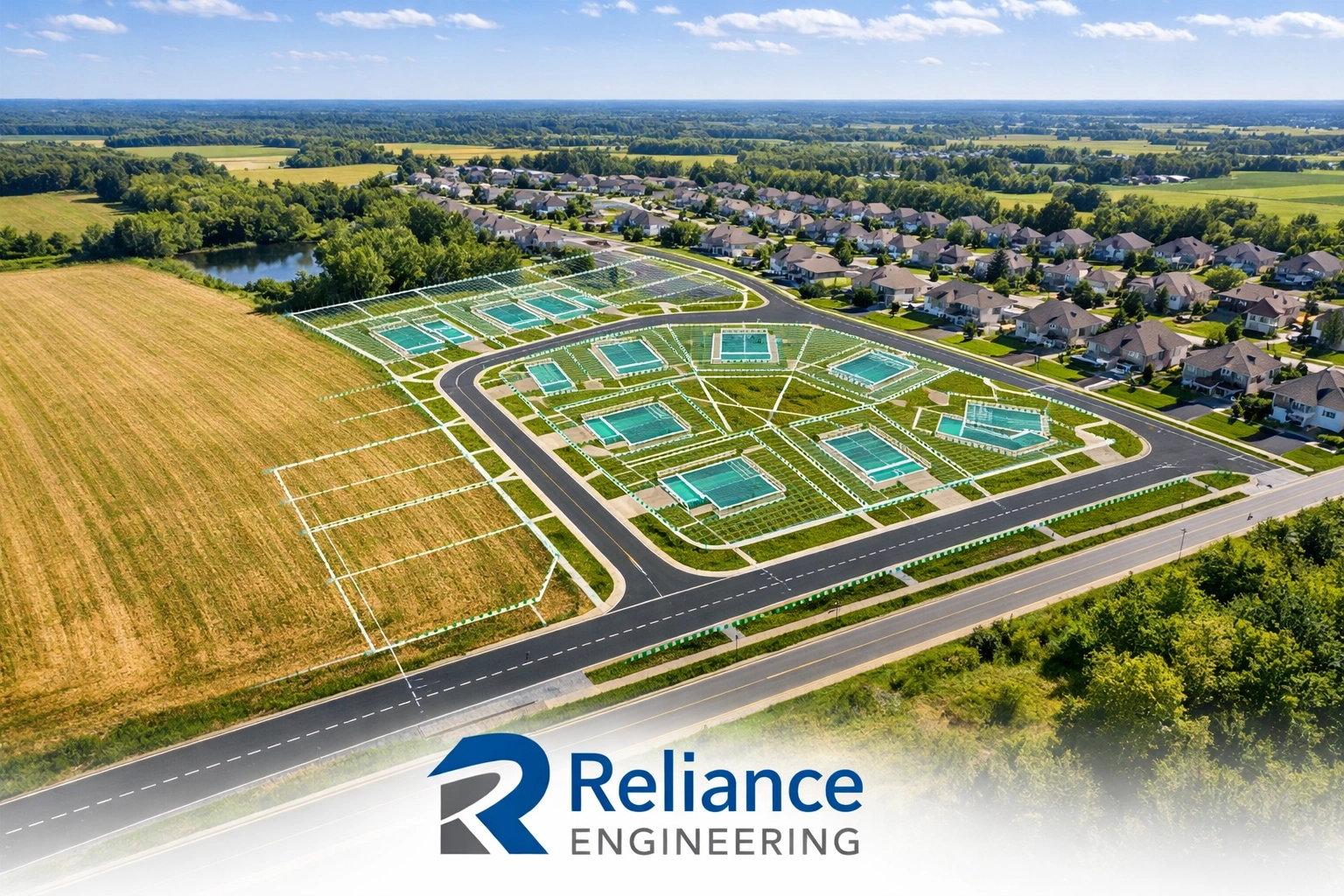
Key Steps in the Consent Application Process
Navigating the severance process requires a disciplined approach. At Reliance Engineering, we recommend following these core steps to minimize delays and maximize the likelihood of approval.
1. Pre-Consultation with the Municipality
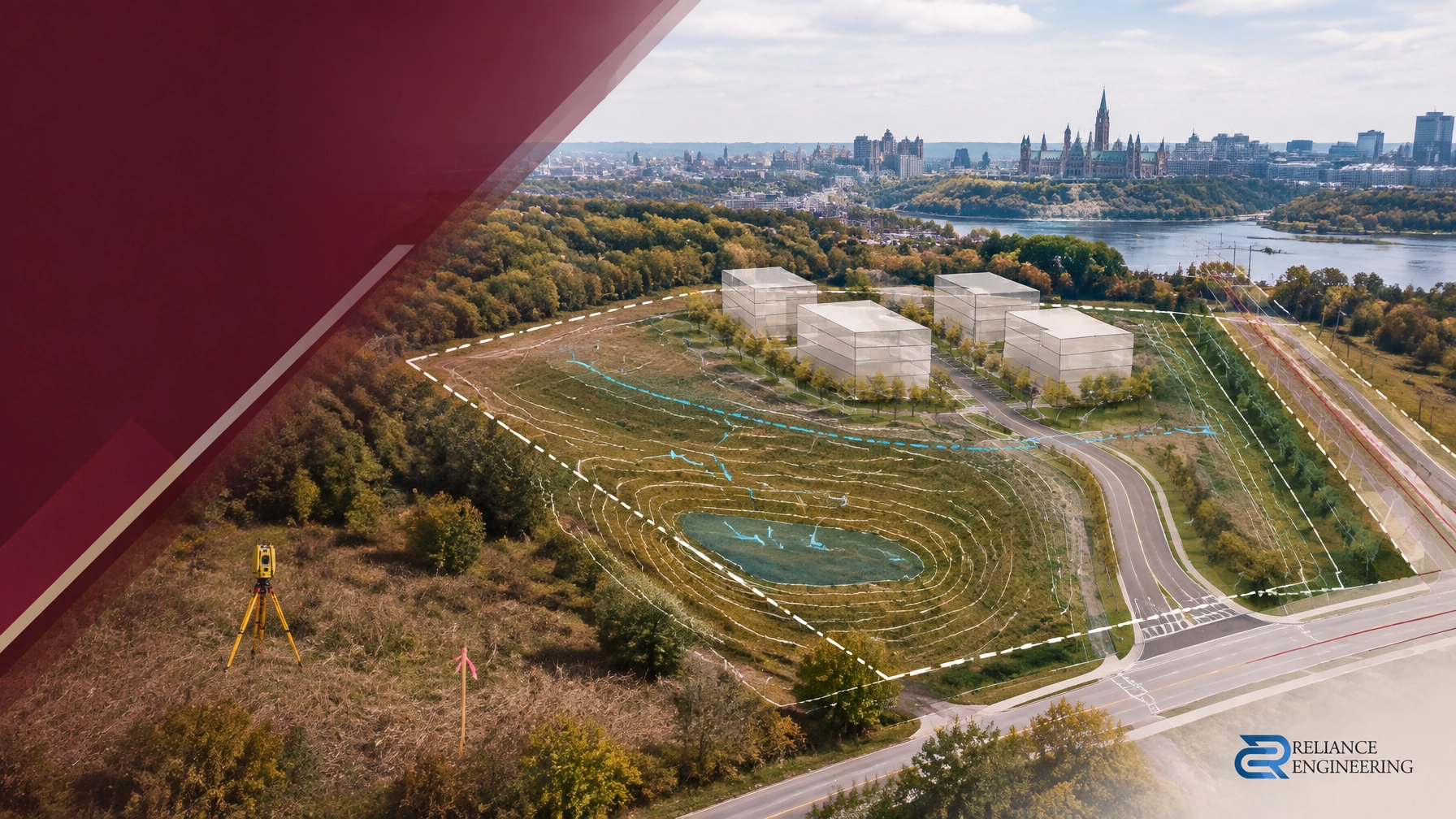
Before filing any paperwork, it is essential to meet with municipal planning staff. This "pre-consultation" phase allows you to present your idea and receive feedback on potential roadblocks. The municipality will outline exactly what studies and plans will be required for your specific site. This often includes a request for professional engineering documents such as a Site Grading Plan or a Functional Servicing Report.
2. Preparing the Application Package
A consent application is more than just a form. It is a comprehensive package that includes:
- **A Survey: ** A detailed sketch showing the boundaries of the existing and proposed lots.
- **The Application Form: ** Detailing the current use of the land and the intended use of the new parcel.
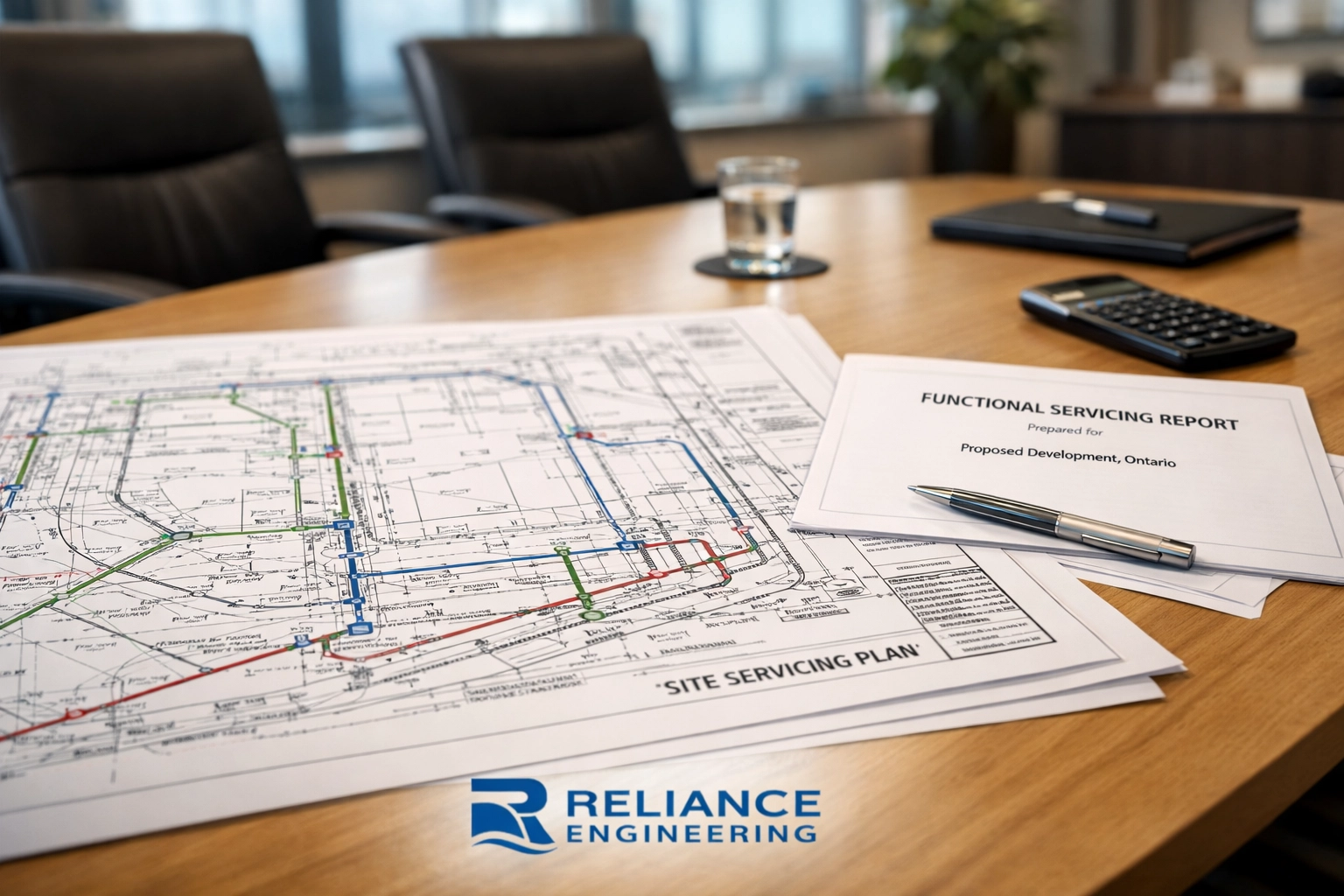
- **Engineering Plans: ** Municipalities require proof that the new lot can be properly serviced and drained without impacting neighboring properties. This is where Reliance Engineering’s expertise in Site Servicing Plans becomes invaluable.
3. Submission and Public Notice
Once submitted, the municipality will provide public notice of your application. This usually involves mailing notices to neighbors within a certain radius and posting a sign on the property. This transparency allows the community to voice concerns regarding how the severance might affect local traffic, drainage, or the character of the neighborhood.
4. The Committee of Adjustment Hearing
Most severance applications are decided by a Committee of Adjustment: a quasi-judicial body appointed by the municipal council. During the hearing, you (or your representative) will present the merits of the application. The committee considers the municipal staff report, public comments, and technical evidence before making a decision.
Technical Requirements for a Successful Application
The "Planning" side of severance deals with the "Why" and "Where," but the "Engineering" side deals with the "How." A Committee of Adjustment will rarely grant a severance if they are not convinced the land can physically support a new structure.
Stormwater Management and Drainage
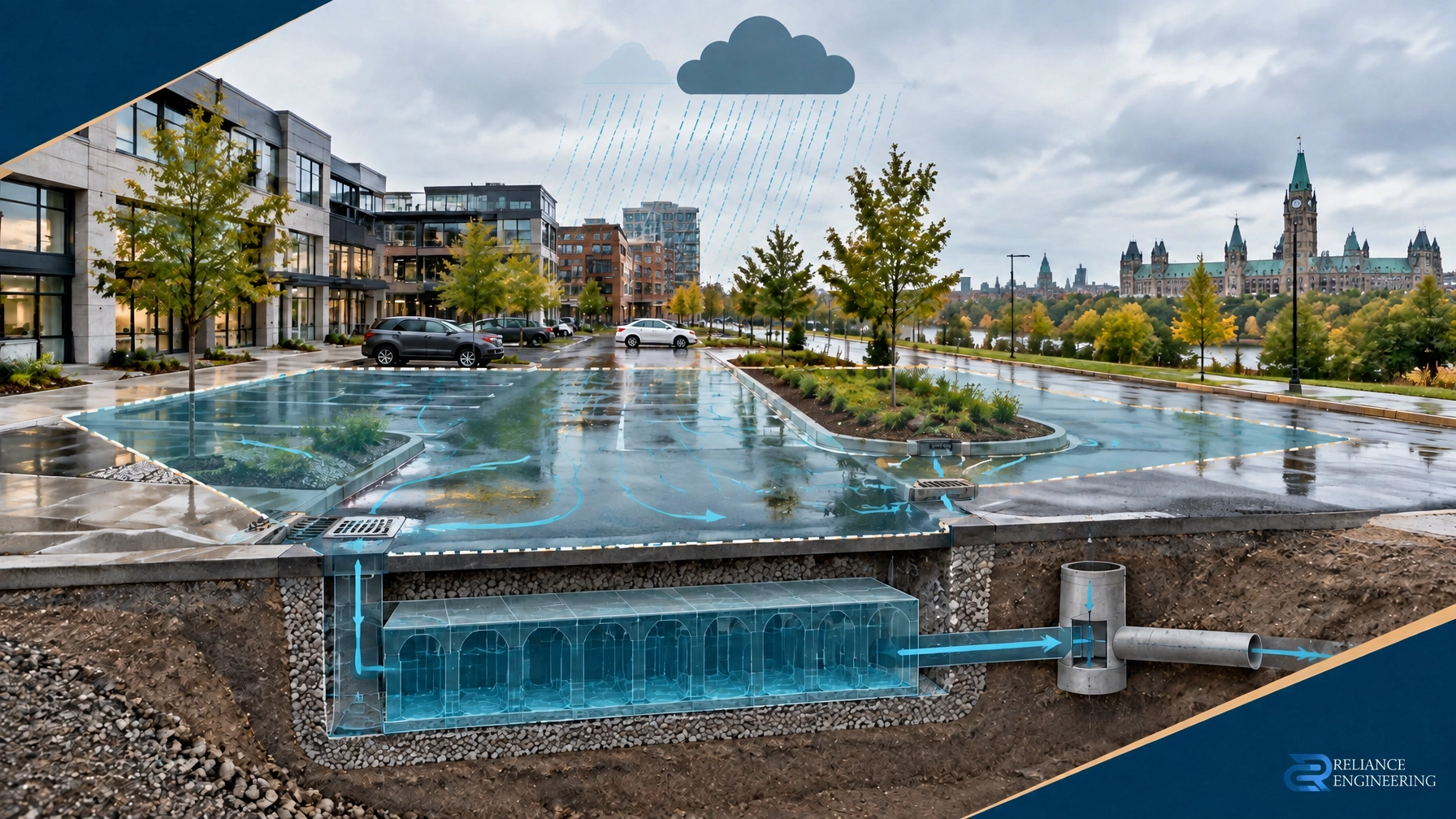
In many parts of Ontario, drainage is a high-priority concern for municipalities. You must prove that dividing the lot will not cause flooding on adjacent properties. Our team at Reliance Engineering specializes in Stormwater Management and Storm System Design, providing the technical calculations necessary to satisfy municipal engineers.
Water and Sewer Services
Each new lot needs access to clean water and a method for wastewater disposal. In urban areas, this means connecting to the municipal grid, which often requires a Sanitary Sewer Design. In rural areas, this might involve proving that the lot is large enough to support a private well and septic system.
Functional Servicing Reports (FSR)
An FSR is a critical document that outlines how the proposed development will be serviced by water, sanitary sewers, and storm drainage. It also addresses how the site will be graded to ensure safe and efficient runoff. Providing a high-quality FSR can significantly speed up the approval process.

Common Pitfalls to Avoid
Even well-intentioned severance applications can face rejection. Understanding common pitfalls can help you prepare a stronger case.
- **Incompatibility with the Official Plan: ** If the municipality has designated your area for "Agricultural" use and you want to create a high-density residential lot, your application will likely fail unless you first obtain an Official Plan Amendment.
- **Inadequate Drainage Planning: ** "Water knows no boundaries." If your proposed grading plan suggests that rainwater will be diverted onto a neighbor's lawn, the municipality will object.
- **Failure to Address Agency Comments: ** Your application will be reviewed by several bodies, including the local Conservation Authority, the Ministry of Transportation (if near a highway), and the school board. Ignoring their feedback during the pre-consultation phase is a recipe for a denial at the committee level.
The Role of Professional Consulting
While it is possible for a property owner to submit an application themselves, the technical requirements across Ontario have become increasingly complex. The cost of a denied application: both in terms of municipal fees and lost time: far outweighs the cost of professional engineering and planning advice.
At Reliance Engineering, we provide a "one-stop-shop" for the technical aspects of your land development projects. With over two decades of experience, we understand the specific nuances of municipal requirements across Ontario. We don't just provide drawings; we provide solutions that are permit-ready and cost-effective.
Our services include:
- Expert Land Development Consulting.
- Detailed Site Grading and Servicing Plans.
- Functional Servicing Reports (FSR).
- Stormwater Management Plans.
Finalizing the Severance: Conditions of Approval
If the Committee of Adjustment approves your application, it usually comes with a list of "Conditions." These must be met within a specific timeframe (usually one year) before the severance is officially finalized.
Common conditions include:
- Paying "cash-in-lieu" of parkland dedication to the municipality.
- Ensuring all outstanding property taxes are paid.
- Entering into a development agreement with the municipality.
- Providing a final reference plan (survey) for the new lot.
- Obtaining a Site Plan Approval if the development is larger than a single-family home.
Once these conditions are satisfied, the municipality issues a Certificate of Official, which allows you to register the new lot at the Land Registry Office.
Contact Reliance Engineering Today
Are you considering severing a property in Ontario? Don't leave your investment to chance. Navigating the municipal landscape requires a partner who understands the intersection of engineering, planning, and policy.
With 20+ years of experience and a reputation for delivering practical, compliant designs, Reliance Engineering is ready to help you move your project from concept to construction.
Reliance Engineering
- Founder: Naresh Ochani
- Focus: Civil Engineering & Land Development Consulting
- Service Area: Across Ontario
- Contact us: https://www.relianceengineering.ca/contact-us
- Learn more about our team: https://www.relianceengineering.ca/about
Operational Hours:
Monday – Friday: 9:00 AM – 5:00 PM ET
Whether you need a simple lot grading plan or a complex servicing strategy for a multi-unit townhome project, our team provides the expertise needed to navigate Ontario's severance process with confidence. Reach out today to discuss your vision.