In the current Greater Toronto Area (GTA) development landscape, speed is the most sought-after commodity. With the province and the City of Toronto pushing for accelerated housing delivery and streamlined application processes, the pressure on developers, architects, and engineers to submit quickly has never been higher. However, a dangerous misconception has taken root: the idea that speed is a substitute for precision.
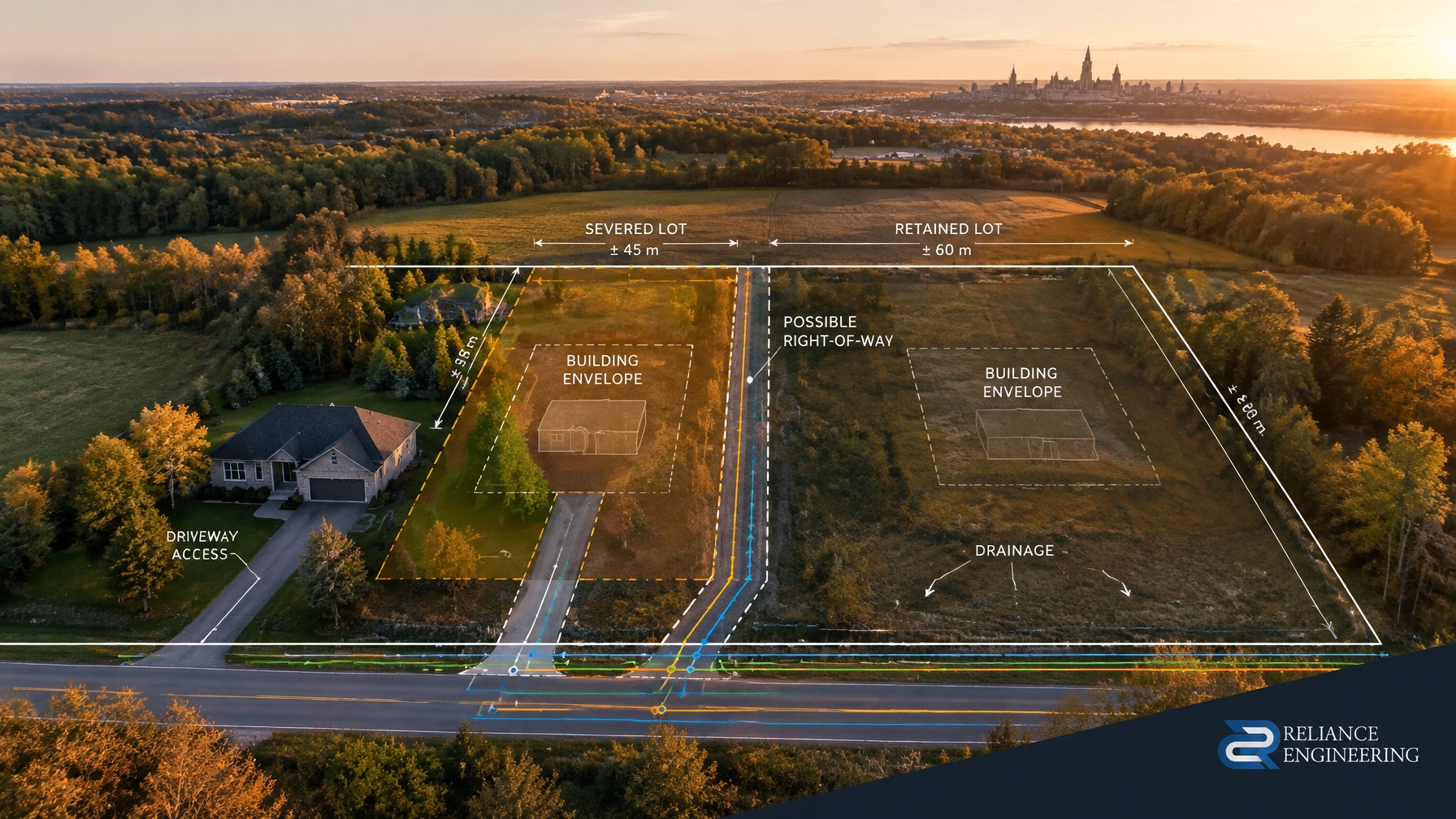
At the Committee of Adjustment (CoA), where minor variances and severances are decided, this misconception often leads to costly delays. While the city may be moving faster on its administrative timelines, the "red tape" remains as rigorous as ever. Regulatory bodies do not care about your project deadlines or your financing windows; they only care about your data. Incomplete or imprecise building permit drawings and site plans are the primary reasons for application deferrals and rejections.
At Reliance Engineering, we have navigated the complexities of the site plan approval process in Ontario for over 20 years. We have seen firsthand that "approval-ready" isn't just a marketing term: it is a technical standard that requires obsessive attention to detail.

The Speed Trap: Why Moving Too Fast Can Set You Back Months
The push for faster approvals in Toronto has led to a surge in applications. The Committee of Adjustment is working through a heavy volume of cases, and their patience for technical errors is at an all-time low. When an application is submitted with vague measurements, improper scales, or missing infrastructure data, it doesn't just get a "fix-it" note; it gets pushed to the back of the line.
A common scenario involves a developer rushing to meet a CoA hearing date without a fully vetted site grading plan or a robust functional servicing report. If the Committee or a commenting agency, such as Toronto Water or the TRCA, identifies a technical conflict that wasn't addressed in the drawings, the application is often deferred. In the GTA, a single deferral can mean a delay of three to six months, effectively erasing any time gained by rushing the initial submission.
The Anatomy of Precision: Technical Standards for Success
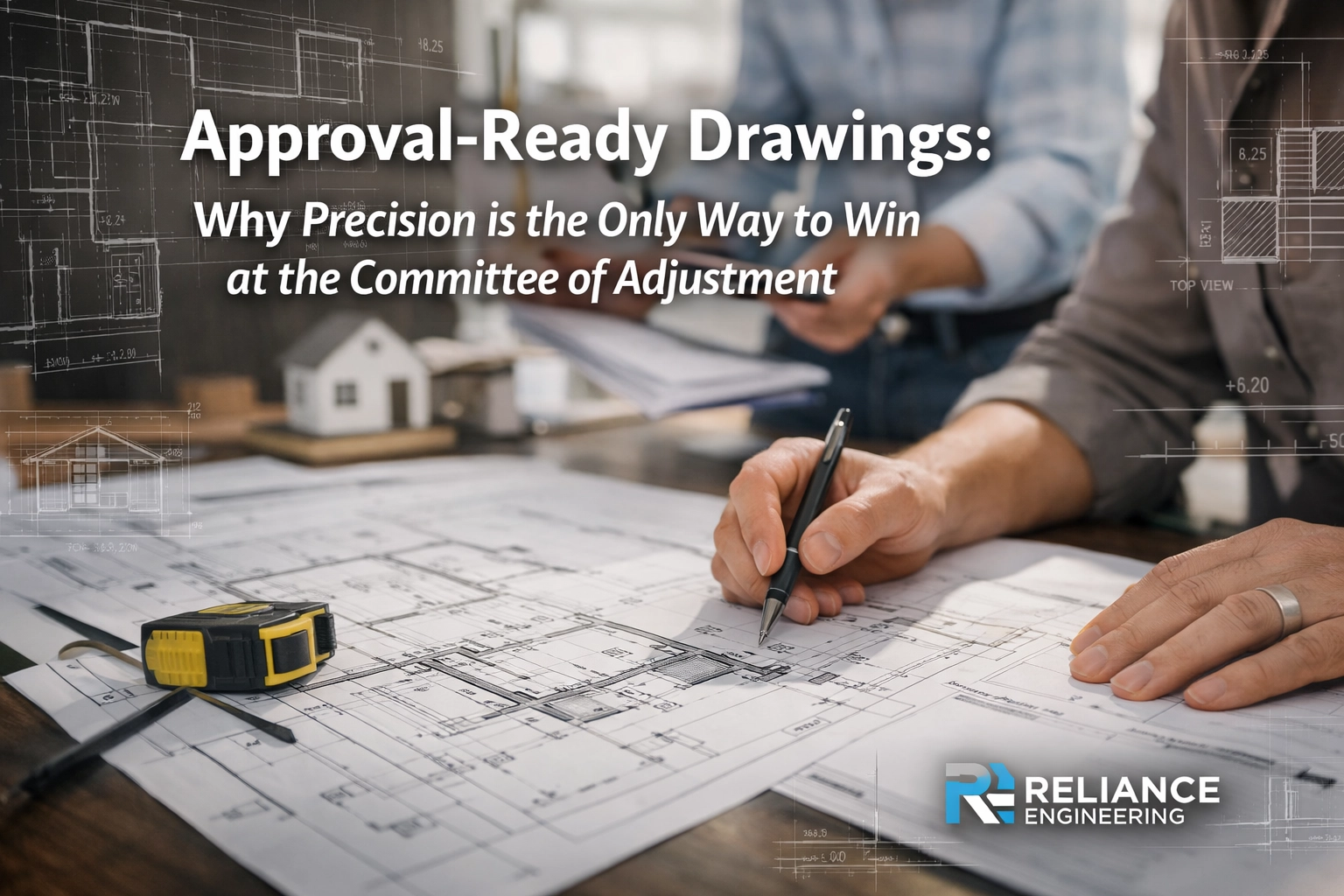
Winning at the Committee of Adjustment requires more than just a good argument for a variance; it requires a technical package that leaves no room for doubt. The City of Toronto and surrounding municipalities have strict standards that must be met for a drawing to even be considered for review.
1. Measurement and Scale Standards
Precision begins with the basic layout. Toronto requires all drawings to be in metric measurements. Standard scales: typically 1:100, 1:200, or 1:500: are mandatory. If a drawing is submitted at an off-scale or in imperial units without clear metric equivalents, it risks immediate rejection. These scales allow reviewers to accurately calculate setbacks, lot coverage, and density, ensuring the proposed variances are truly "minor."
2. Digital Compliance and Formatting
In 2026, digital submission is the standard, but it comes with its own set of "red tape." PDF files must be under 10 MB, flattened (no layers), and created in Adobe Acrobat version 7 or later. Small details, such as font size (minimum 3/32" for computer-generated text) and the inclusion of a north arrow with appropriate cross-references, are non-negotiable.

3. Engineering Data Integration
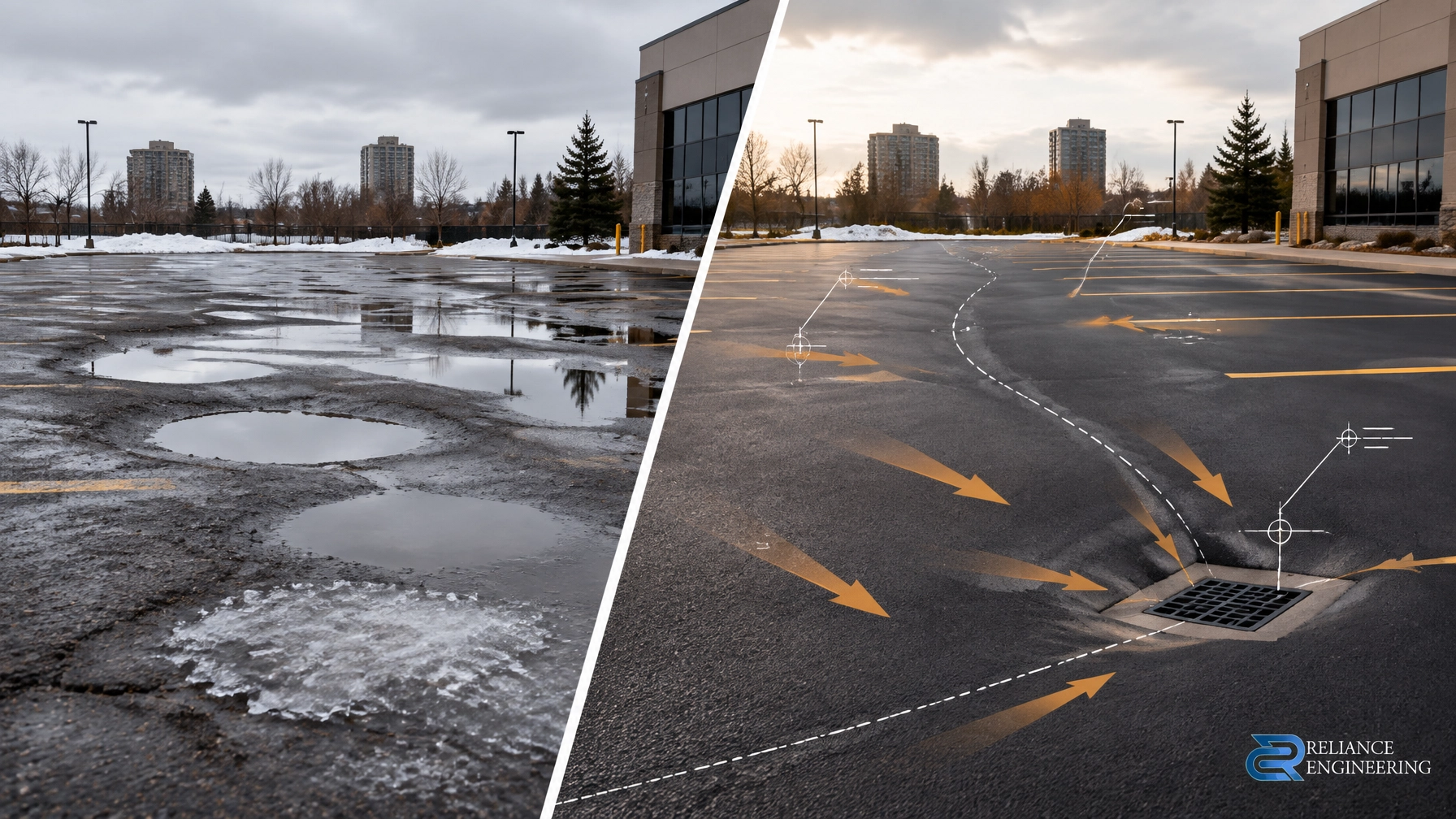
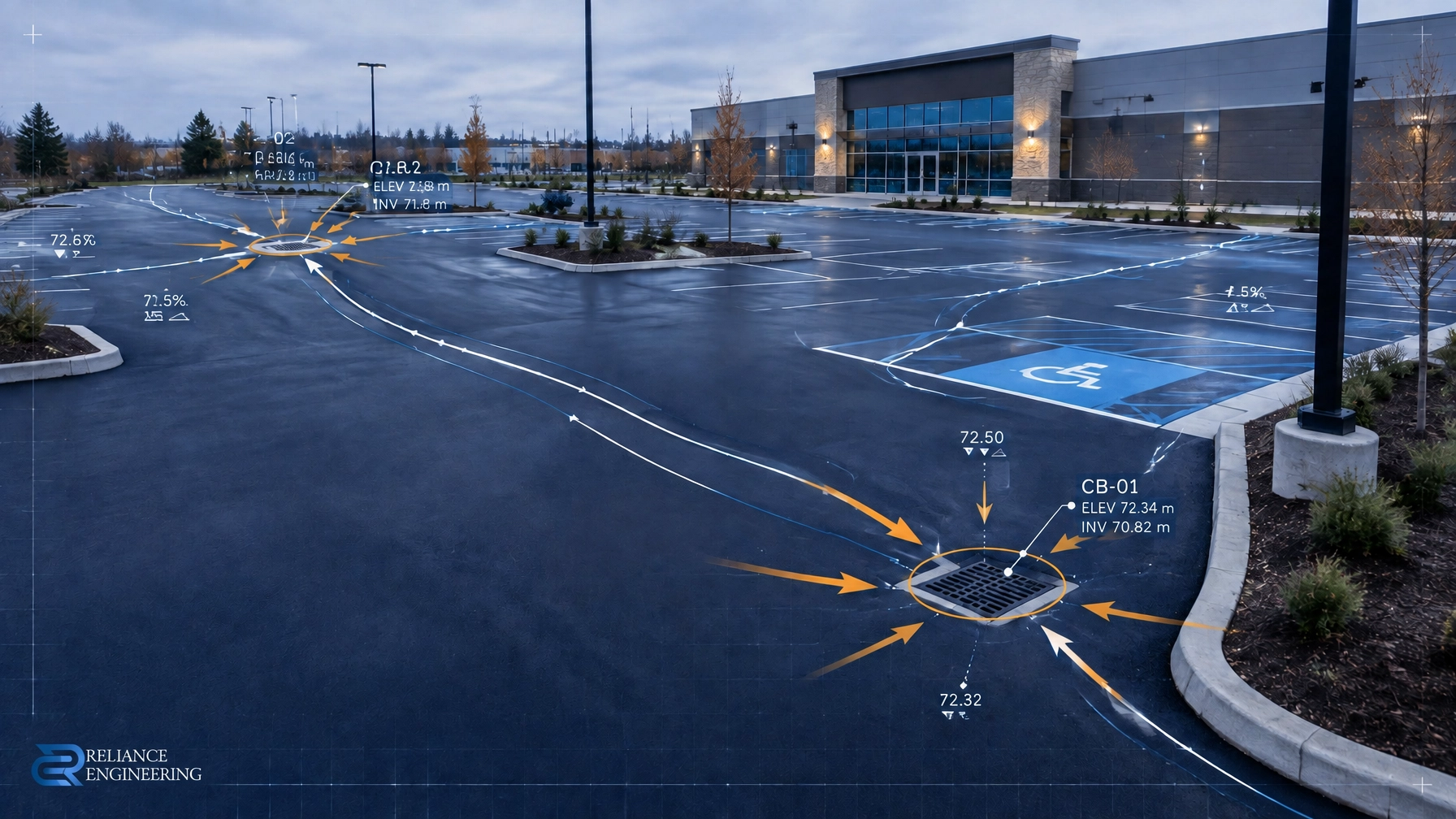
This is where many applications fail. A site plan is not just an architectural sketch; it must be supported by civil engineering reality. Does the site servicing plan account for existing municipal connections? Is the stormwater management strategy feasible within the proposed lot coverage? Precision means ensuring that the variance you are asking for at the CoA doesn't make it impossible to get your sanitary sewer design approved later.
The Cost of Imprecision: Beyond the Hearing
The impact of imprecise drawings extends far beyond the Committee of Adjustment hearing. Even if a variance is granted based on low-quality drawings, the problems will resurface during the site plan approval process in Ontario or when applying for building permit drawings.
When Reliance Engineering takes on a project, such as the Redevelopment of Etobicoke General Hospital or the 35 Wabash Avenue Townhomes, we prioritize a "First Time Right" approach. We understand that an error in a storm system design detected during the building permit stage can require a return to the CoA for a modified variance: a nightmare scenario for any developer's budget.
Avoiding the Conservation Authority Conflict
In the GTA, many properties fall under the jurisdiction of the TRCA or other conservation authorities. These agencies have zero tolerance for data gaps regarding floodplains, erosion zones, or top-of-bank measurements. Precision in your initial engineering drawings ensures that these stakeholders sign off early, rather than filing objections that can stall a project for a year or more.

Navigating the Site Plan Approval Process in Ontario
The site plan approval process in Ontario is a multi-layered journey. It involves coordinating with various municipal departments, including Planning, Engineering, Transportation, and Urban Forestry. Each of these departments looks at your building permit drawings through a different lens.
- Planning focuses on zoning compliance and community impact.
- Engineering focuses on functional servicing reports and site grading.
- Transportation looks at access and parking.
Precision acts as the common language between these departments. When your data is accurate and consistent across all drawing sets, you reduce the "back-and-forth" that typically bogs down the approval timeline. Our team at Reliance Engineering specializes in this coordination, ensuring that the engineering data supports the architectural vision without compromising municipal standards.
The Reliance Engineering Advantage: 20+ Years of GTA Expertise
Reliance Engineering was founded on the principle that civil engineering should be a facilitator of development, not a hurdle. Under the leadership of Naresh Ochani, our Principal and Founder, we have built a reputation for delivering approval-ready drawings that stand up to the most rigorous municipal scrutiny.
Our experience spans a wide range of projects, from high-density residential developments like 24 Howard Park Avenue to complex commercial redevelopments at 345-351 Davis Drive in Newmarket. This 20-year track record gives us a unique advantage: we know what the reviewers are looking for before they even open the file.

Why Precision Matters to Your Bottom Line:
- Reduced Carrying Costs: Faster approvals mean construction starts sooner, reducing interest payments on land loans.
- Minimized Revision Fees: Getting it right the first time eliminates the need for multiple rounds of expensive redesigns.
- Predictability: Precise data allows for more accurate construction bidding, reducing the risk of "surprises" once the shovels hit the ground.
Conclusion: Don't Trade Precision for the Illusion of Speed
As Toronto continues to grow and the regulatory environment evolves, the "Speed vs. Precision" debate will only intensify. However, for the experienced developer, the choice is clear. Speed is the byproduct of precision. By investing in high-quality, data-driven engineering from the outset, you bypass the red tape that trips up the competition.
At Reliance Engineering, we don't just provide drawings; we provide a path to approval. Whether you are navigating a complex Committee of Adjustment hearing or entering the final stages of the site plan approval process in Ontario, our team is here to ensure your technical data is your greatest asset.
Consult with the GTA Experts
Ready to move your project forward with precision? Contact Reliance Engineering today to discuss your next development.
Reliance Engineering
Founder & Principal: Naresh Ochani
Address: 7030 Woodbine Ave, Suite 500, Markham, ON L3R 6G2
Phone: (647) 464-4444
Email: [email protected]
Website: www.relianceengineering.ca
Operational Hours:
Monday – Friday: 9:00 AM – 5:00 PM
Saturday – Sunday: Closed
Professional Credentials:
Licensed Professional Engineers (P.Eng.) in the Province of Ontario. Over two decades of specialized experience in Civil Engineering and Land Development Consulting.
Specializing in: Functional Servicing Reports, Site Grading Plans, Stormwater Management, and Site Servicing Plans.