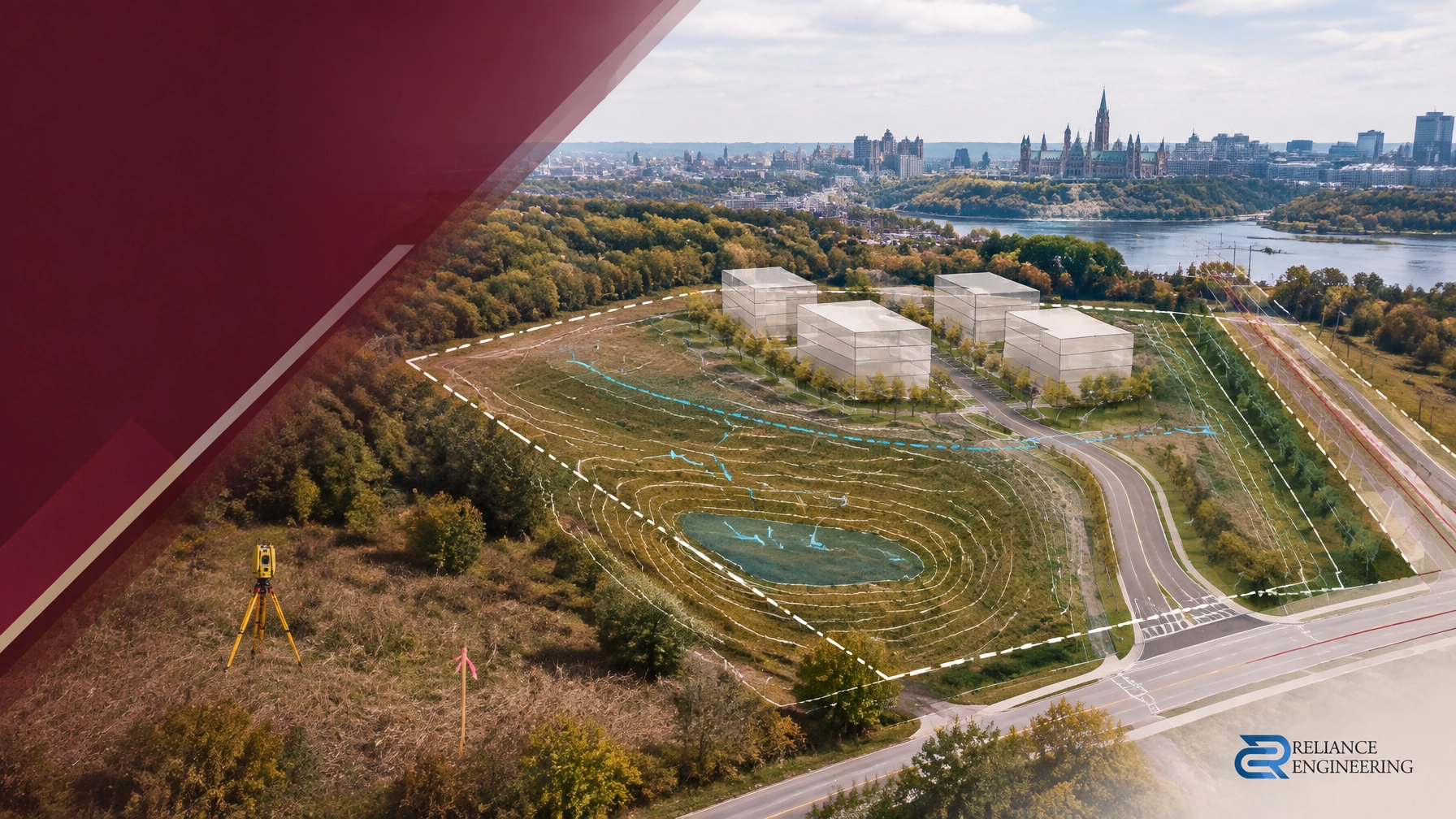
If you are planning a development project in the Greater Toronto Area (GTA) this year, the rules of the game have changed. It doesn’t matter if you are building a custom dream home, a multi-unit townhouse complex, or a commercial warehouse, your path to a building permit now runs directly through a Stormwater Management Plan (SWMP).
In 2026, we are seeing a major shift in how municipalities like Toronto, Mississauga, Oakville, and Vaughan review applications. The "rainwater talk" is no longer just a technical footnote; it is the cornerstone of your project’s approval. At Reliance Engineering, we have spent over 20 years navigating these waters. We’ve seen the regulations evolve, and we know that a proactive approach is the only way to avoid costly delays.
The 2026 Reality: Why "Business as Usual" No Longer Works
For decades, many homeowners and developers viewed stormwater management as an afterthought. You would design the building, and then "figure out the pipes" later. In 2026, that strategy is a recipe for a permit rejection.
New regulatory updates, including the expanded scope of the EPA’s Multi-Sector General Permits and local GTA conservation authority mandates, have made drainage requirements more stringent than ever. Municipalities are no longer just looking at where the water goes; they are looking at how fast it gets there, how clean it is, and how much of it you can keep on your own property.
This means your Building Permit Drawings must integrate stormwater solutions from day one. If your drawings don’t account for the city’s new "Water Balance" or "Quality Control" standards, your application will be sent back for revisions, costing you months in potential construction time.
What is a Stormwater Management Plan? (In Plain English)
To the layperson, "Stormwater Management" sounds like complex jargon. In reality, it’s about being a good neighbor.
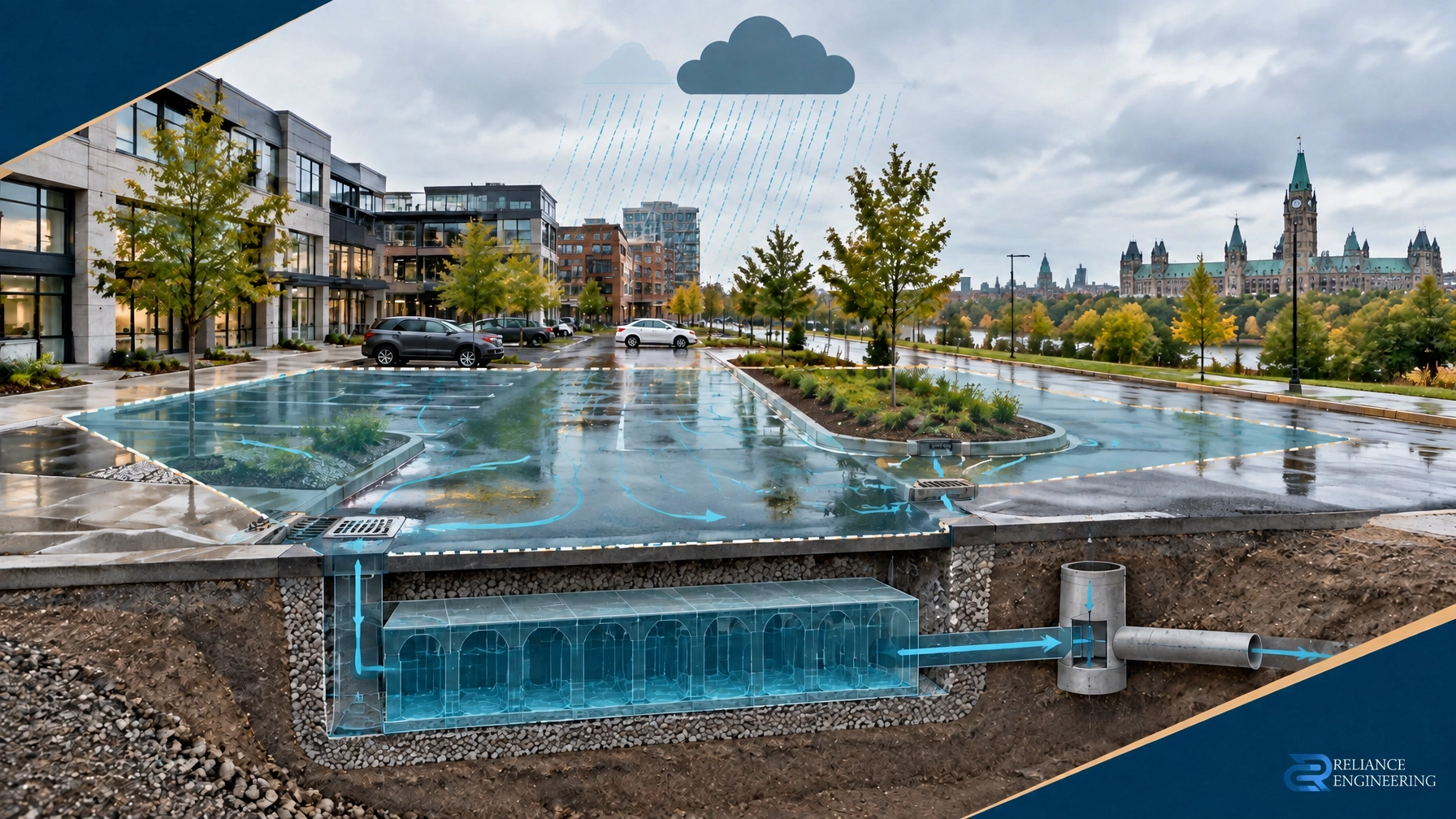
When you build a house, a driveway, or a parking lot, you replace natural grass (which absorbs rain) with hard surfaces (which don't). When it rains, that water has to go somewhere. If it all rushes into the city’s sewers at once, it causes floods, erodes riverbanks, and carries pollutants into Lake Ontario.
A Stormwater Management Plan is a roadmap that shows the city exactly how your property will handle rain. It typically focuses on three things:
- Quantity Control: Slowing down the water so you don't overwhelm the city pipes.
- Quality Control: Filtering out oil, grit, and debris before the water leaves your site.
- Water Balance: Recharging the groundwater by letting some rain soak back into the earth, just like it did before you built.

Why the City is Getting Stricter in the GTA
You might wonder why a simple home addition now requires a professional Stormwater Management report. The answer lies in the changing climate and our aging urban infrastructure.
The GTA is experiencing more frequent "100-year storms", heavy rainfall events that the current sewer systems weren't designed to handle. To protect the city, municipalities have shifted the responsibility onto property owners. In 2026, the thresholds for when a report is required have lowered. Even smaller residential infill projects are now being scrutinized for their impact on the local watershed.
Projects like the 35 Wabash Avenue Townhomes or the 85 Bronte Road development in Oakville highlight how sophisticated drainage design is essential for modern urban living. Without these plans, the city simply won't issue the permit.
The Reliance Engineering Advantage: The "One-Submission Approval" Goal
At Reliance Engineering, we understand that time is money. For a developer or a homeowner, a three-month delay at the permit office can mean tens of thousands of dollars in carrying costs and lost labor.
This is why our principal, Naresh Ochani, has instilled a culture of "getting it right the first time." With 20+ years of experience in Ontario civil engineering, we have developed a deep rapport with municipal reviewers across the GTA.
Our Goal: One-Submission Approval.
How do we do it?
- Anticipating Friction: We know what the reviewers in Toronto want versus what the reviewers in St. Catharines want. We address their specific concerns before they even ask.
- Integrated Design: We don't just write a report. We coordinate your Site Grading Plan and Site Servicing Plan so they work in perfect harmony.
- Cost-Effective Solutions: We don't over-engineer. We find the most practical way to meet city standards without blowing your construction budget on unnecessary underground tanks.

How Stormwater Management Changes Your Drawings
When you look at your building permit drawings in 2026, you will see features that weren't common ten years ago. These are the physical manifestations of your SWMP:
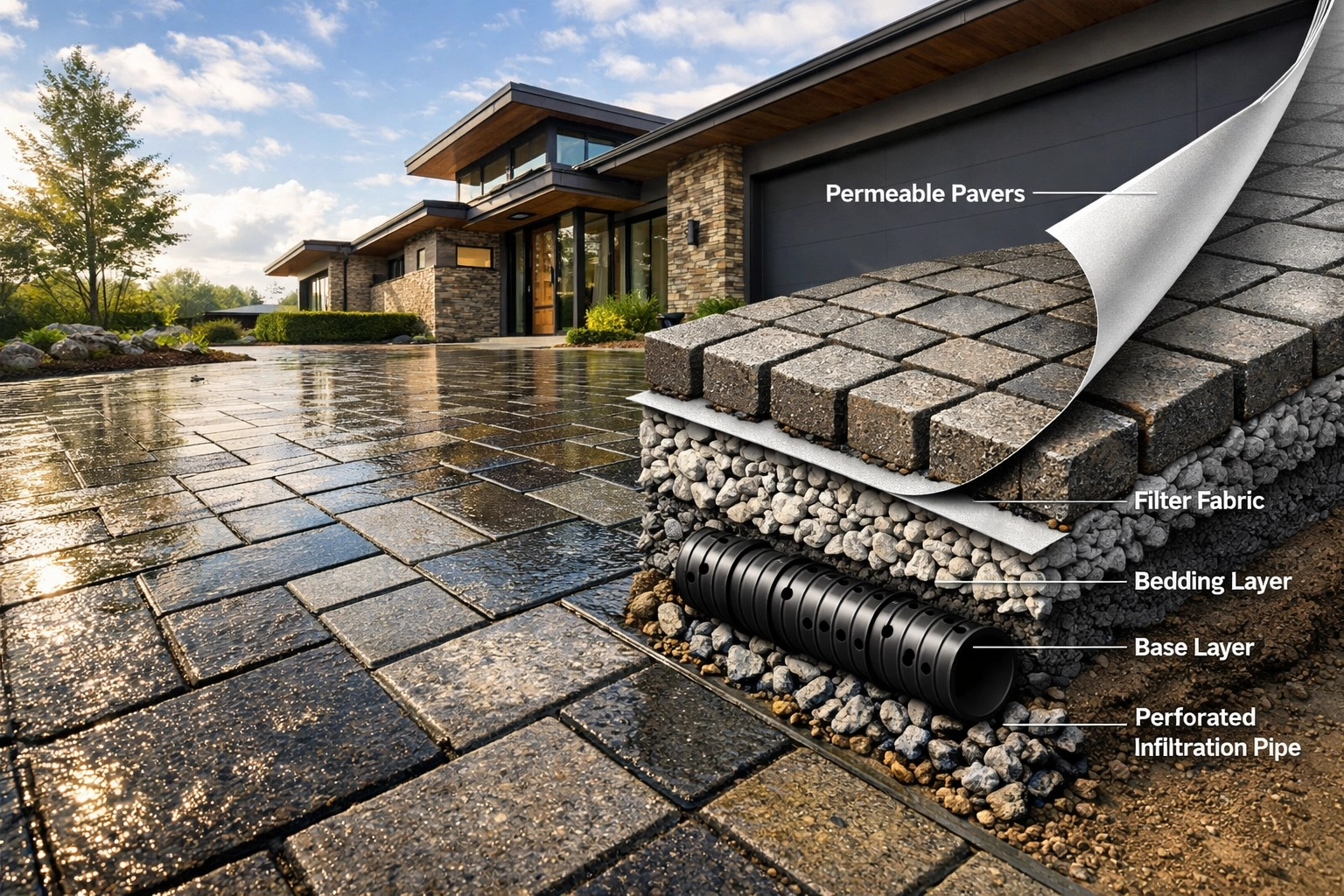
- Permeable Pavers: Driveways that look like stone but allow water to seep through.
- Infiltration Galleries: Underground "soak-away" pits that hold rainwater and let it naturally filter into the soil.
- Orifice Pipes: Small plates inside your catch basins that physically limit how much water can exit your property per second.
- Rain Gardens: Beautifully landscaped areas designed specifically to catch and clean runoff.
These aren't just "extras", they are legal requirements. If these features aren't reflected accurately in your Storm System Design, your permit will be stuck in limbo.
Case Study: Avoiding the Permit Trap
Imagine a homeowner in North York looking to build a large rear addition. They hire a designer who creates beautiful architectural plans but ignores the drainage. The application goes to the city. Six weeks later, the city responds: "Please provide a Functional Servicing Report and a Stormwater Management Plan addressing the 2-year through 100-year storm events."
The homeowner is now scrambling. They have to hire a civil engineer, wait for a site survey, and redesign the backyard to accommodate a dry well. This adds 2–3 months to the timeline.
If they had started with a Functional Servicing Report from Reliance Engineering, those requirements would have been built into the very first drawing set. The permit would have sailed through, and construction would be underway.
Why Experience Matters in 2026
With the 2026 regulatory updates, many "entry-level" engineering firms are struggling to keep up with the complex modeling software (like OTTHYMO or SWMHYMO) required by the GTA conservation authorities.
Reliance Engineering isn't learning on your dime. We have two decades of data and successful projects: from the Redevelopment of Etobicoke General Hospital to residential builds like 24 Howard Park Avenue. We know the nuances of Sanitary Sewer Design and how it interacts with storm systems.
Secure Your Permit with Confidence
The building landscape in 2026 is complex, but it doesn't have to be stressful. By involving a specialized civil engineering team early in your design phase, you turn a potential roadblock into a smooth path.
Whether you are working on a commercial site at 345-351 Davis Drive in Newmarket or a boutique development in St. Catharines, Reliance Engineering provides the expertise you need to get your shovels in the ground faster.
Don't let your project get washed away by municipal red tape.
Contact Us Today
Ready to get your building permit drawings moving? Let’s discuss your project and how we can achieve that one-submission approval together.
Reliance Engineering
- Address: 130 Bridgeland Ave, Unit 200, Toronto, ON M6A 1Z4
- Phone: (416) 843-1577
- Email: [email protected]
- Website: www.relianceengineering.ca
- Business Hours: Monday – Friday: 9:00 AM – 5:00 PM
Contact our experts or learn more about our 20-year history of serving the GTA.