In the Greater Toronto Area (GTA), a lot grading plan is often the thin line between a project moving forward and a bureaucratic nightmare. Whether you are a homeowner planning an ambitious addition in Etobicoke or a developer breaking ground on a multi-unit project in Mississauga, the grading plan is the technical foundation of your permit.
Yet, many builders and homeowners find themselves stuck in a cycle of "revisions and resubmissions." They submit a plan, wait weeks, receive a list of "red-line" corrections from the municipality, and start the expensive process all over again.
At Reliance Engineering, we’ve spent over 20 years refining the art of the one-submission approval. We know exactly what city reviewers in Toronto, Vaughan, and Brampton are looking for: and more importantly, what they hate to see.
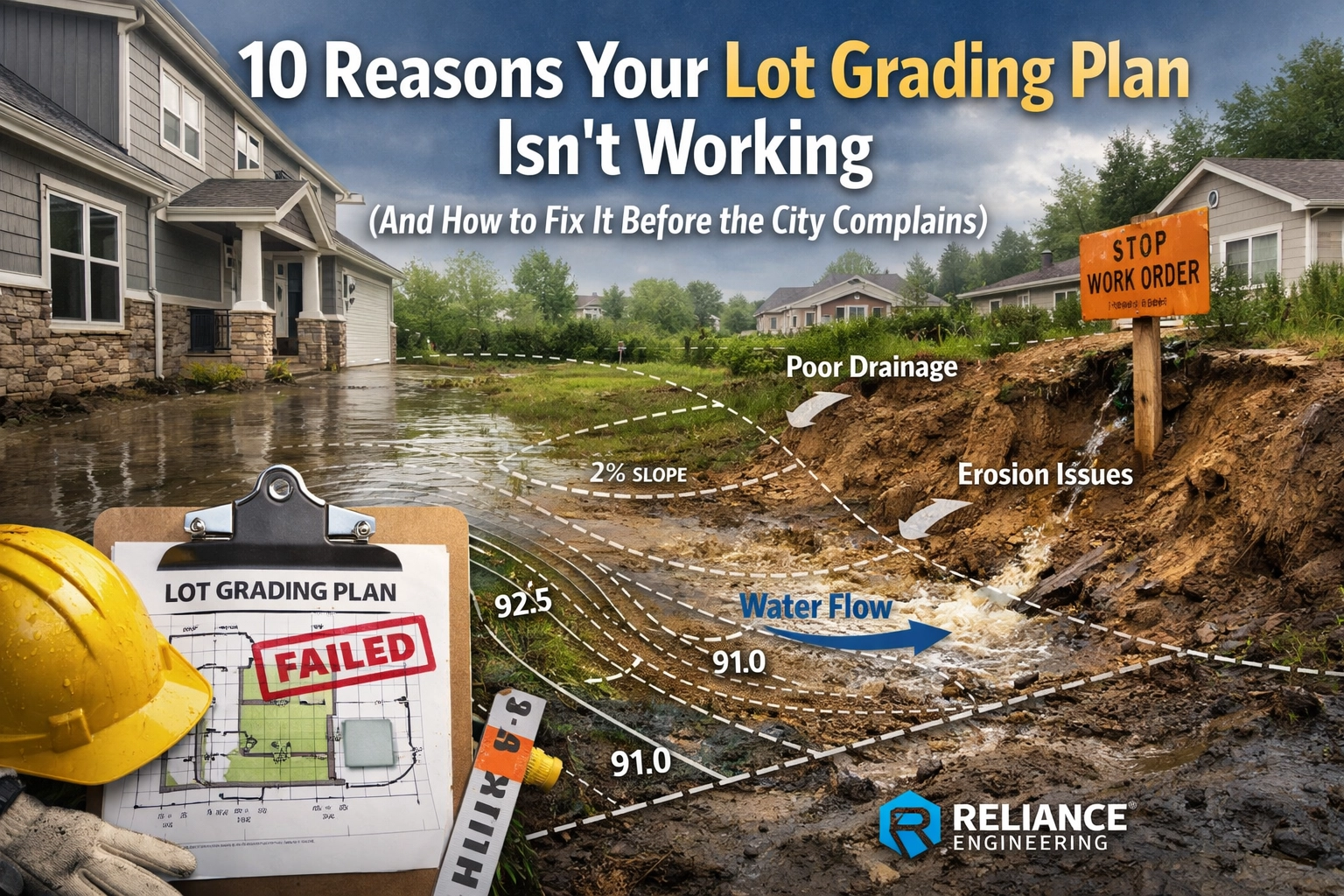
If your lot grading plan is currently stalled or failing, here are the 10 most common reasons why, and exactly how to fix them.
1. The "Neighbor Effect": Improper Drainage Direction
The golden rule of civil engineering in Ontario is simple: you cannot dump your water onto your neighbor’s property. Many plans fail because they fail to account for how new slopes will affect adjacent lots. If your grading plan shows a swale that ends abruptly at a property line, the city will reject it instantly to avoid future liability and neighbor disputes.
The Fix: Ensure your plan demonstrates a clear path for water to reach the municipal right-of-way or a designated catch basin without impacting neighboring foundations.
2. Using an Outdated Topographical Survey
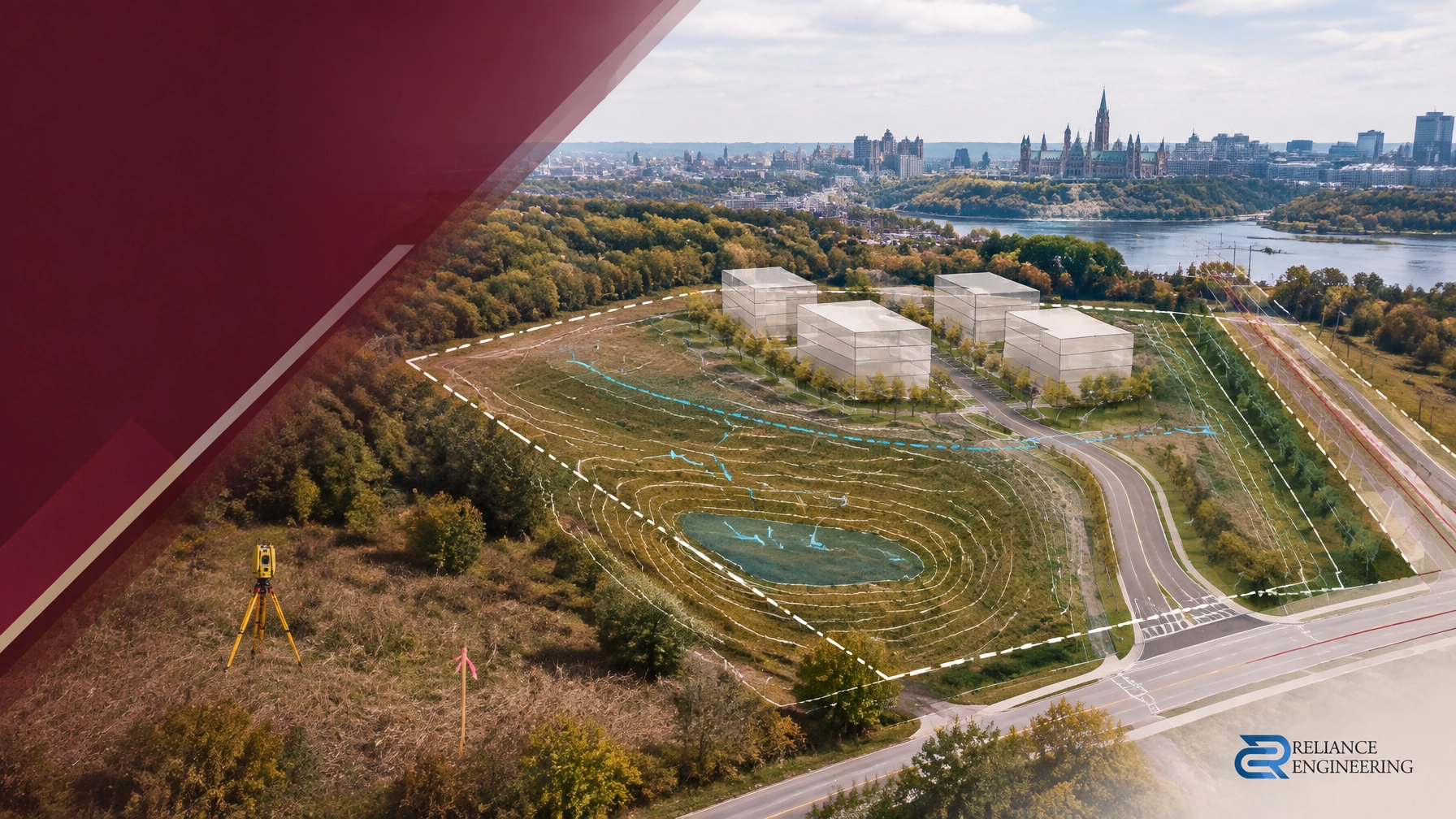
A grading plan is only as good as the data it’s built on. We often see clients trying to use a land survey from ten years ago. In that time, the neighbor might have built a shed, the city might have repaved the road, or the land may have naturally settled. If the "existing" elevations on your plan don't match reality, the "proposed" elevations will never work.
The Fix: Invest in a fresh topographical survey. At Reliance Engineering, we always cross-reference current site conditions to ensure our building permit drawings are grounded in reality.

Visual Suggestion: A professional engineer reviewing a detailed topographical map with a Reliance Engineering logo in the corner.
3. Ignoring the 2% Minimum Slope Rule
Most GTA municipalities, including Toronto and Markham, require a minimum 2% slope away from a building’s foundation. This ensures that during a heavy rainstorm, water doesn't pool against your basement walls. Many "DIY" or budget plans show slopes that are too flat (1% or less), which leads to standing water and eventual structural damage.
The Fix: Verify that all areas within 2 to 4 meters of the foundation maintain a strict 2% minimum grade. Our team at Reliance Engineering uses advanced modeling to ensure these slopes are maintained even in tight urban infill lots.
4. Failure to Integrate with Stormwater Management (SWM)
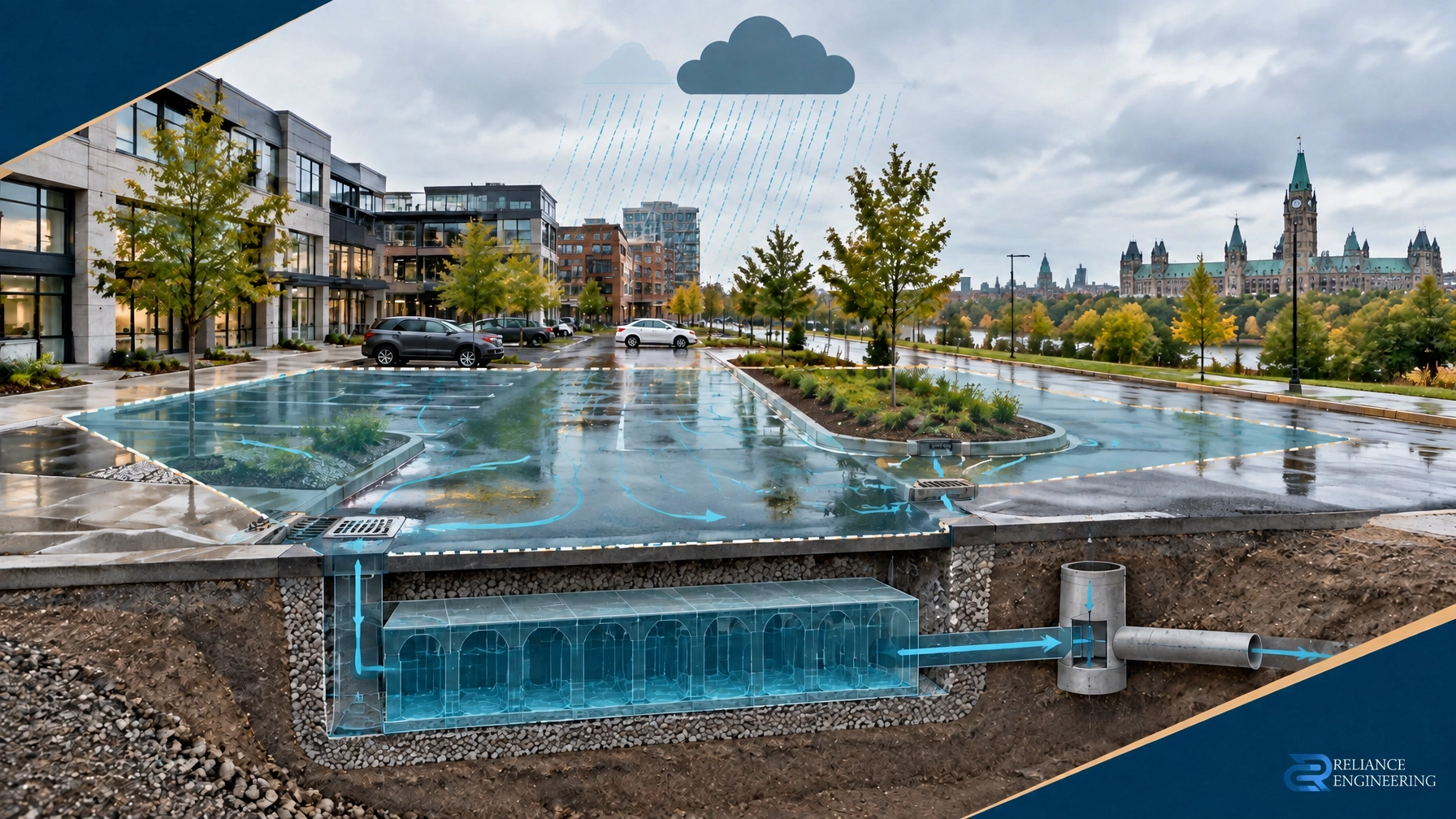
In 2026, the City of Toronto and surrounding regions are more focused than ever on Stormwater Management reports. A grading plan cannot exist in a vacuum; it must work in tandem with your SWM strategy. If your plan doesn't account for LID (Low Impact Development) features like rain gardens or infiltration trenches, it will likely be flagged.
The Fix: Ensure your civil engineer is looking at the big picture. Your lot grading and your Functional Servicing Report must tell the same story.
5. Inaccessible Slopes and Walkways
For multi-unit developments or garden suites, accessibility is a major hurdle. If your grading plan creates a walkway with a slope steeper than 5%, it may be classified as a ramp, triggering a whole new set of building code requirements (like handrails and landings).
The Fix: Carefully calculate the rise and run of every walkway. If the natural grade is too steep, you may need to incorporate small retaining walls or stepped landings to maintain compliance.
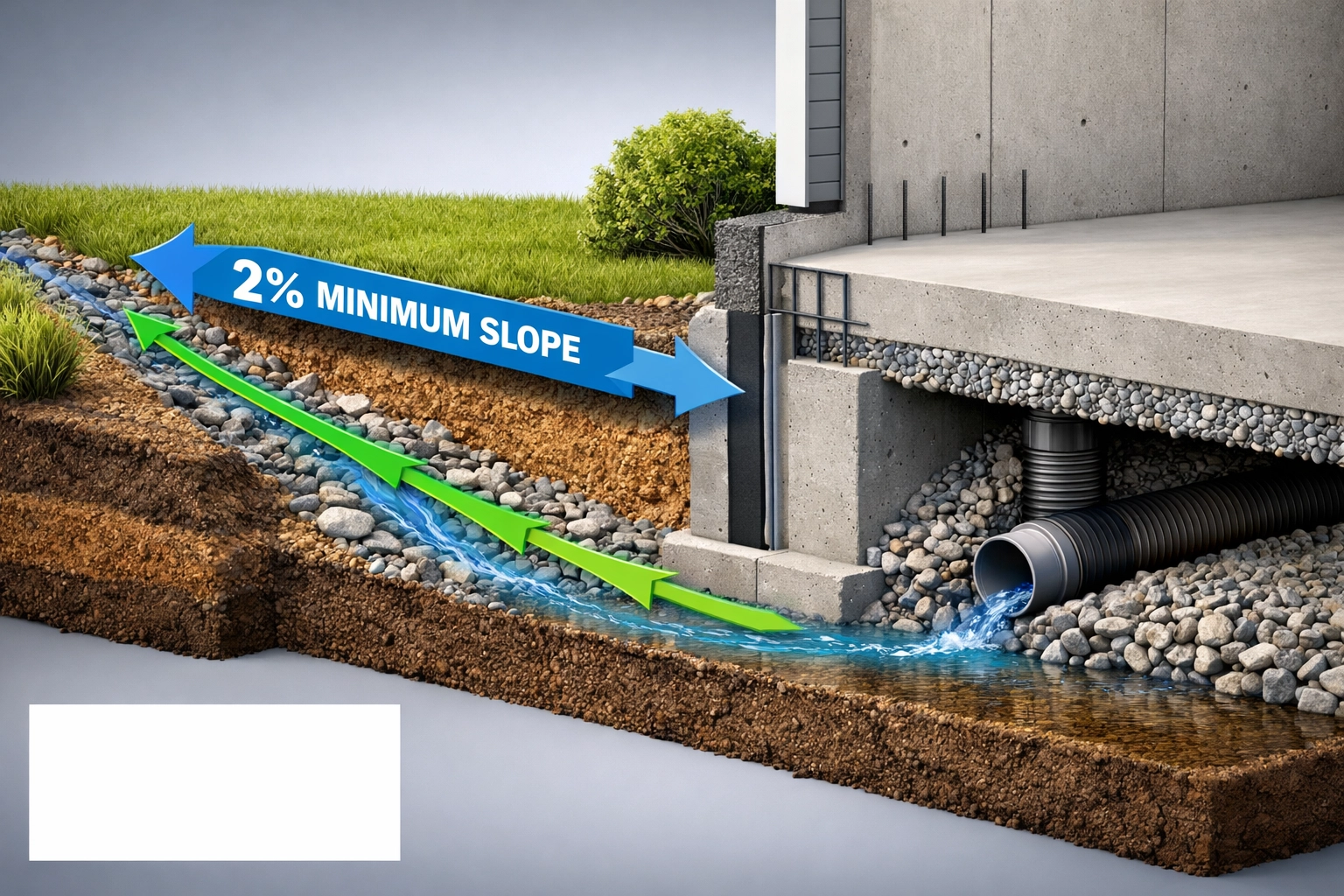
Visual Suggestion: A 3D cross-section of a lot grading plan showing proper slope away from a foundation, featuring the Reliance Engineering logo.
6. Retaining Wall Triggers
Many builders try to solve grading issues by throwing in a retaining wall at the last minute. However, in many GTA jurisdictions, a retaining wall over 0.6m or 1.0m requires its own structural permit and an engineered design. If your grading plan relies on a wall that hasn't been properly detailed, the city will halt your application.
The Fix: Limit retaining wall heights where possible, or ensure they are fully engineered and included in the initial submission package to avoid "scope creep" during the permit phase.
7. Encroaching on Tree Protection Zones (TPZ)
Toronto is incredibly protective of its tree canopy. If your grading plan requires significant soil "cut" or "fill" near a city-owned tree or a protected private tree, you are going to have a problem. Changing the grade within a Tree Protection Zone can suffocate the roots, leading to a denial of your permit.
The Fix: Overlay your grading plan with an Arborist Report. If you must grade near a tree, you may need to use "air-spading" techniques or specific retaining structures that protect the root system.
8. The "Bowl" Effect in Infill Housing
Infill projects are notorious for "The Bowl Effect." This happens when a new home is built higher than the existing neighbors (to accommodate high basement ceilings), creating a low point between the houses where water collects.
The Fix: Use side-yard swales and "high-point" ridges to split the drainage. This prevents your new build from becoming a swimming pool for the neighborhood.
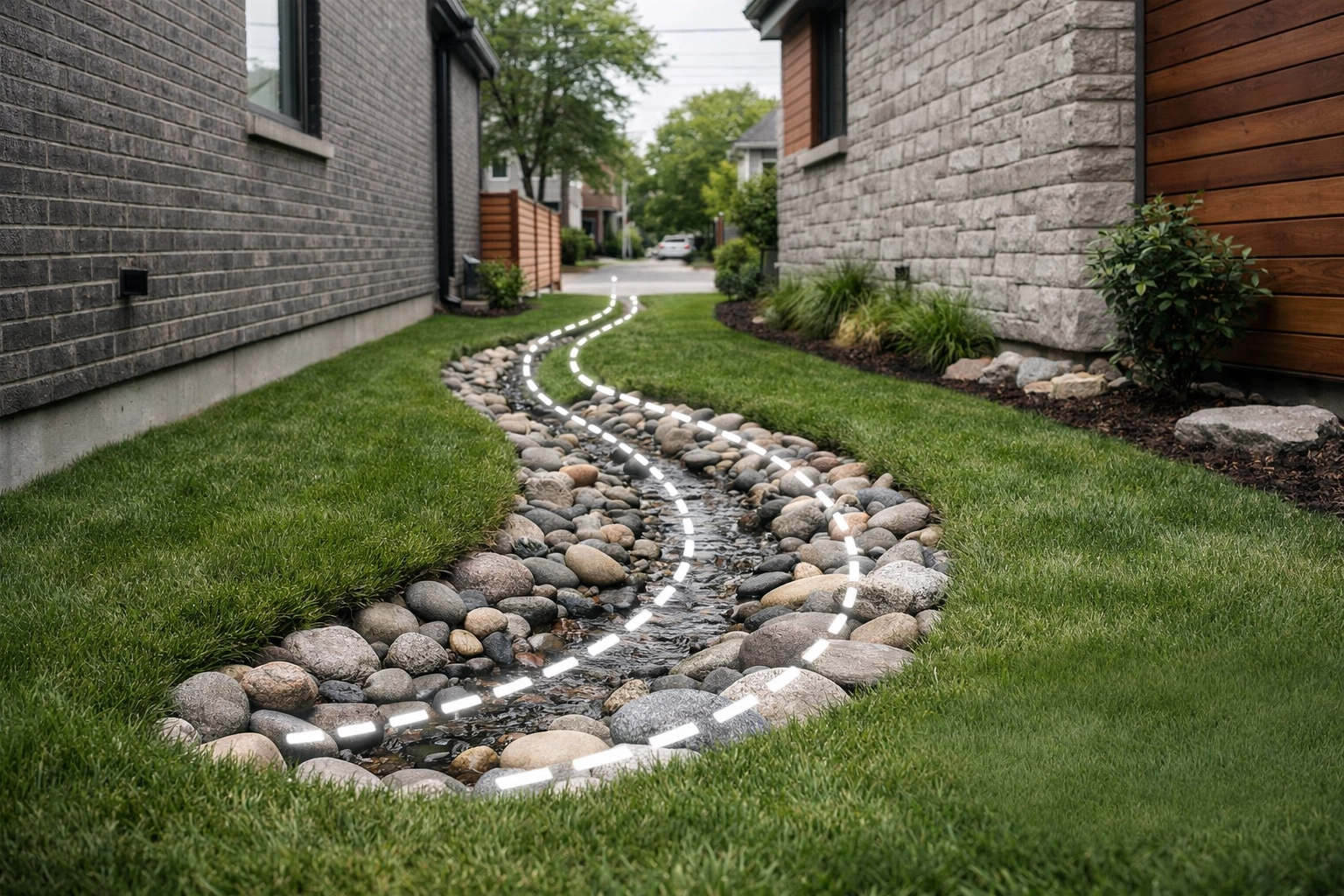
Visual Suggestion: A technical diagram of a side-yard swale directing water toward the street, with professional branding for Reliance Engineering.
9. Lack of Detail on Erosion and Sediment Control (ESC)
The city doesn't just care about what the lot looks like when it's finished; they care about it during construction. If your grading plan lacks a robust ESC strategy: showing where silt fences and mud mats will be placed: you’ll get a "Request for Information" (RFI) that delays your start date.
The Fix: Include a dedicated ESC page in your grading package. It’s a small addition that signals to the city reviewer that you are a professional who respects municipal infrastructure.
10. The "Cheap Consultant" Trap
Perhaps the most common reason a grading plan fails is that it was created by someone who doesn't specialize in GTA municipal standards. A "cheap" plan often ends up being the most expensive because of the months of delays and the cost of repeated engineering fees.
The Fix: Work with an established firm. At Reliance Engineering, led by Founder and Principal Naresh Ochani, we’ve seen every possible curveball the city can throw. Our 20+ years of experience allows us to anticipate objections before they are even raised.
Why Reliance Engineering is the GTA’s Choice for One-Submission Approvals
Navigating the complexities of lot grading in the GTA requires more than just technical skill; it requires a deep understanding of municipal politics and local bylaws.
At Reliance Engineering, we don't just "draw lines" on a map. We provide a comprehensive consulting service that ensures your project: whether it's a garden suite or a commercial development: is approved the first time.
Our Commitment to You:
- Professionalism: Every plan is stamped by a licensed Professional Engineer (P.Eng).
- Speed: We understand that time is money in the construction world.
- Accuracy: We utilize the latest software to ensure every elevation is precise.

Visual Suggestion: A "Passed/Approved" stamp on a set of blueprints with the Reliance Engineering logo visible on the document.
Stop Fighting the City: Start Building
If you’re tired of your lot grading plans getting stuck in "limbo," it’s time to bring in the experts. Don't wait for the city to send you a list of complaints. Fix your plan before it’s even submitted.
Reliance Engineering
- Location: 130 Bridgeland Ave, Suite 211, Toronto, ON M6A 1Z4
- Hours: Monday – Friday, 9:00 AM – 5:00 PM
- Specialties: Civil Engineering, Land Development, Functional Servicing Reports, and Site Grading.
Ready to get your project approved?
Contact Us Today to book a consultation with our principal, Naresh Ochani. Let’s get your shovels in the ground.
For more insights into the Ontario development process, check out our Ultimate Guide to Site Plan Approval or explore our Projects Page to see how we’ve helped builders across the GTA.