Published: September 20, 2026
Focus: Ottawa Grading & Drainage
Service: Erosion and Sediment Control Plans
Service area: Ottawa and across Ontario
Fall construction in Ottawa requires more than standard erosion control notes. Freshly graded soil, incomplete servicing, heavy equipment, rain, freeze-thaw cycles, and limited vegetation growth can quickly turn a controlled site into a source of muddy runoff.
A properly coordinated Erosion and Sediment Control (ESC) Plan keeps sediment on site, protects municipal infrastructure, and helps satisfy City of Ottawa conditions before winter.
Why Fall Construction Creates Difficult Runoff Conditions
Fall is often the most difficult season for construction runoff control.
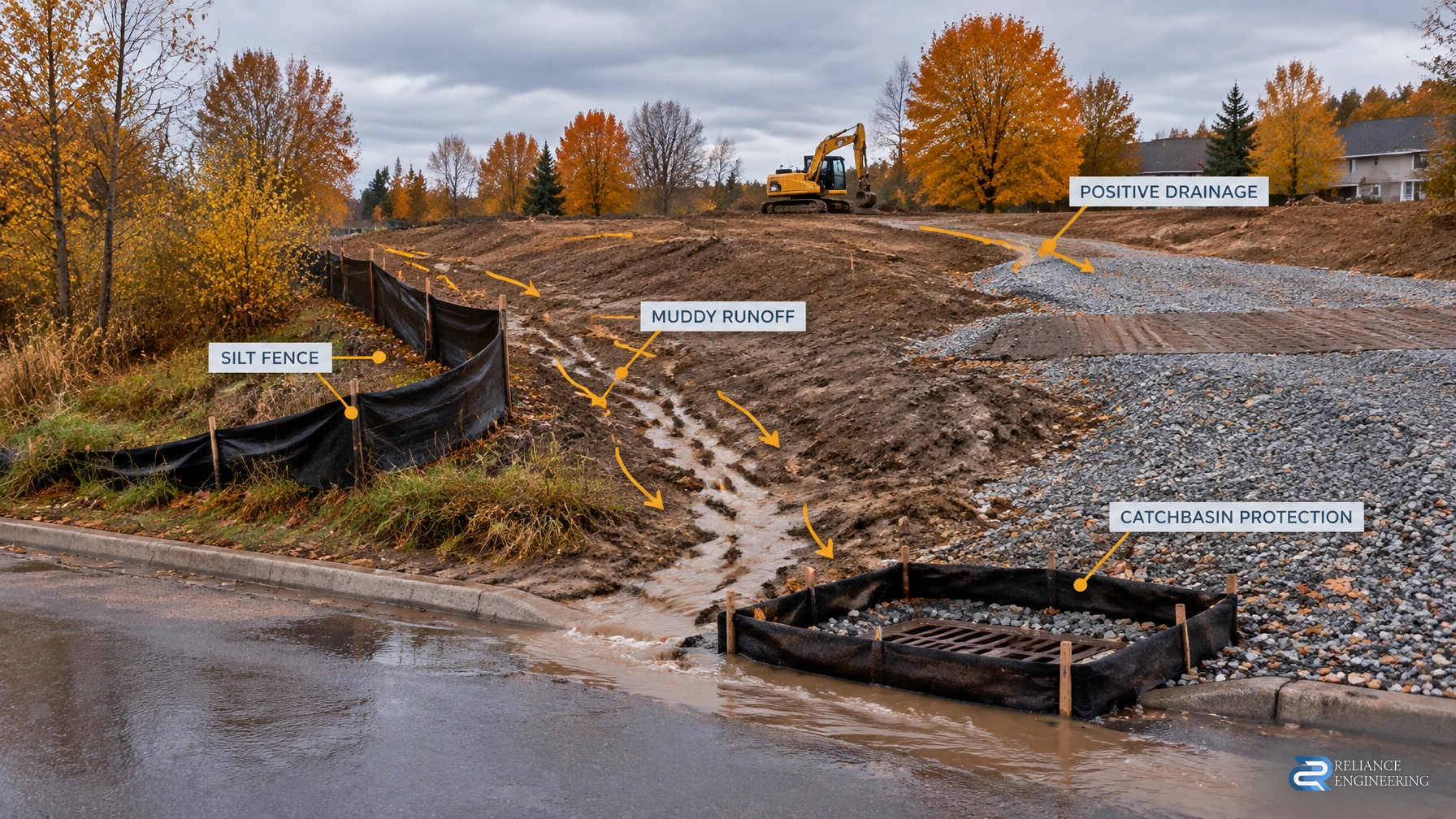
Freshly stripped or graded soil is exposed just as rainfall becomes more frequent. Construction traffic breaks down soil structure and creates ruts that concentrate runoff. Servicing trenches can remain open while grading changes the natural drainage pattern. At the same time, cooler temperatures reduce the opportunity for grass or other vegetation to establish before freeze-up.
Ottawa’s freeze-thaw cycles add another risk. Soil may freeze overnight, thaw during the day, and release sediment during rainfall or snowmelt. Rain falling on frozen or compacted ground can move quickly across the site before infiltration occurs.
The result can include:
- Muddy runoff leaving the property
- Sediment entering roadside ditches
- Blocked or overloaded catchbasins
- Mud tracked onto public roads
- Sediment discharge to municipal storm sewers
- Drainage impacts to adjacent properties
- Inspection failures and corrective work
- Delays to grading, servicing, and building permit activities
This is why ESC measures must be designed before site alteration begins and maintained until the site is stable.

Ottawa’s Site Alteration Requirements Apply Before Work Starts
The City of Ottawa’s current Site Alteration By-law No. 2024-448 requires sediment and erosion control measures where necessary to prevent impacts to watercourses, surface water features, adjacent properties, natural heritage features, and City infrastructure.
The by-law requires these measures to be:
- Installed before site alteration begins.
- Maintained in good working order.
- Kept in place until the site has stabilized.
- Removed only in a manner that minimizes further disturbance.
The by-law is performance-based. It does not provide one universal fall deadline such as “stabilize within 14 days.” However, project-specific approval conditions, site plan requirements, conservation authority requirements, and municipal inspection comments may establish additional expectations.
Before fall grading or servicing begins, the project team should confirm:
- Whether the work is subject to a Planning Act approval or building permit condition
- Whether the site is near a ditch, watercourse, wetland, or natural heritage feature
- Whether the property is within an area regulated by the Rideau Valley, Mississippi Valley, or South Nation Conservation Authority
- Where runoff will discharge during construction
- How the site will be stabilized before winter shutdown
- Who will inspect and maintain the ESC measures
The City’s site alteration information should be reviewed with the project-specific conditions before construction starts.
A Grading Plan Must Direct Water Before ESC Controls Can Work
An ESC plan cannot compensate for unclear or uncontrolled grading. The site must first have a practical drainage strategy.
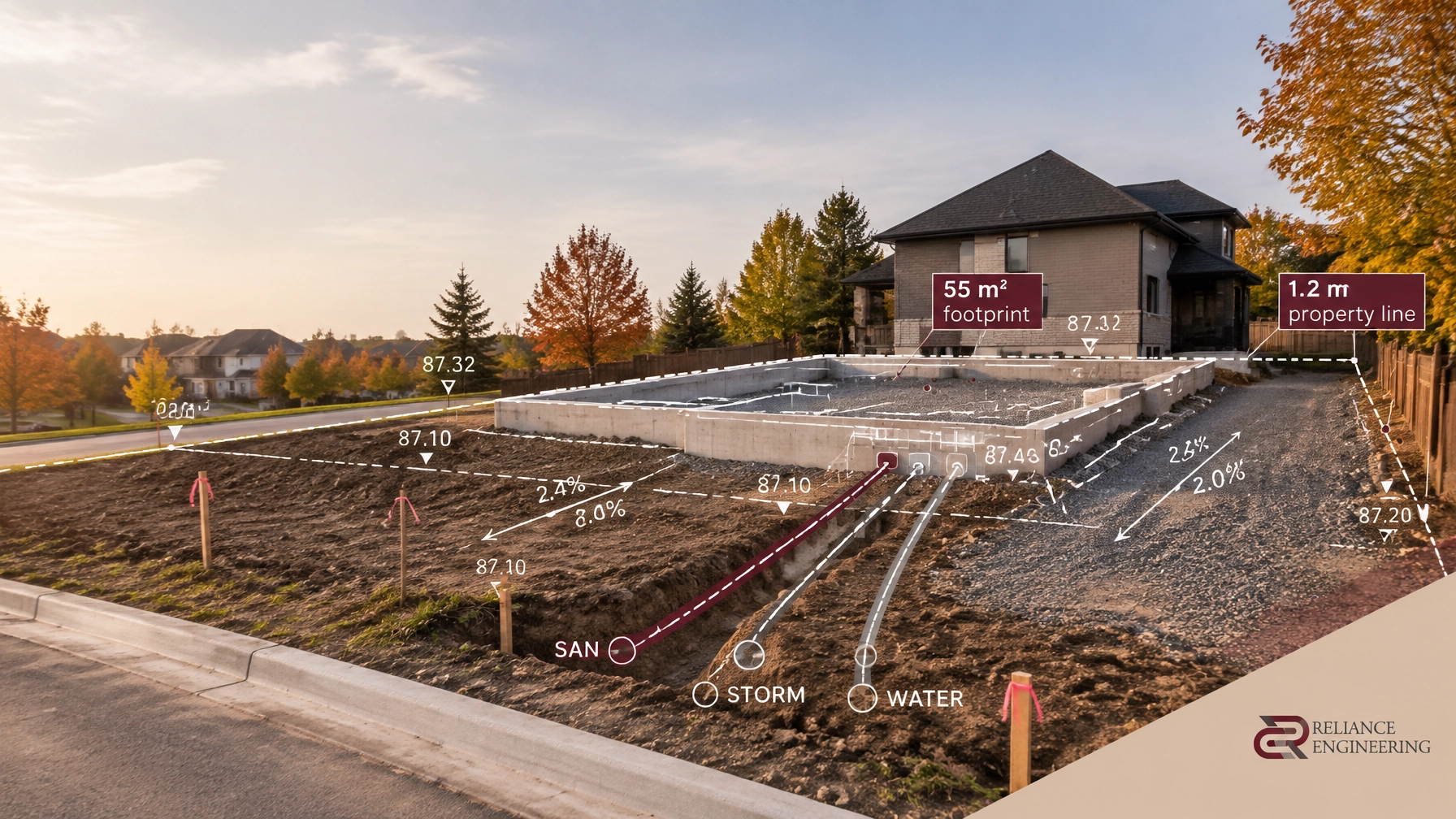
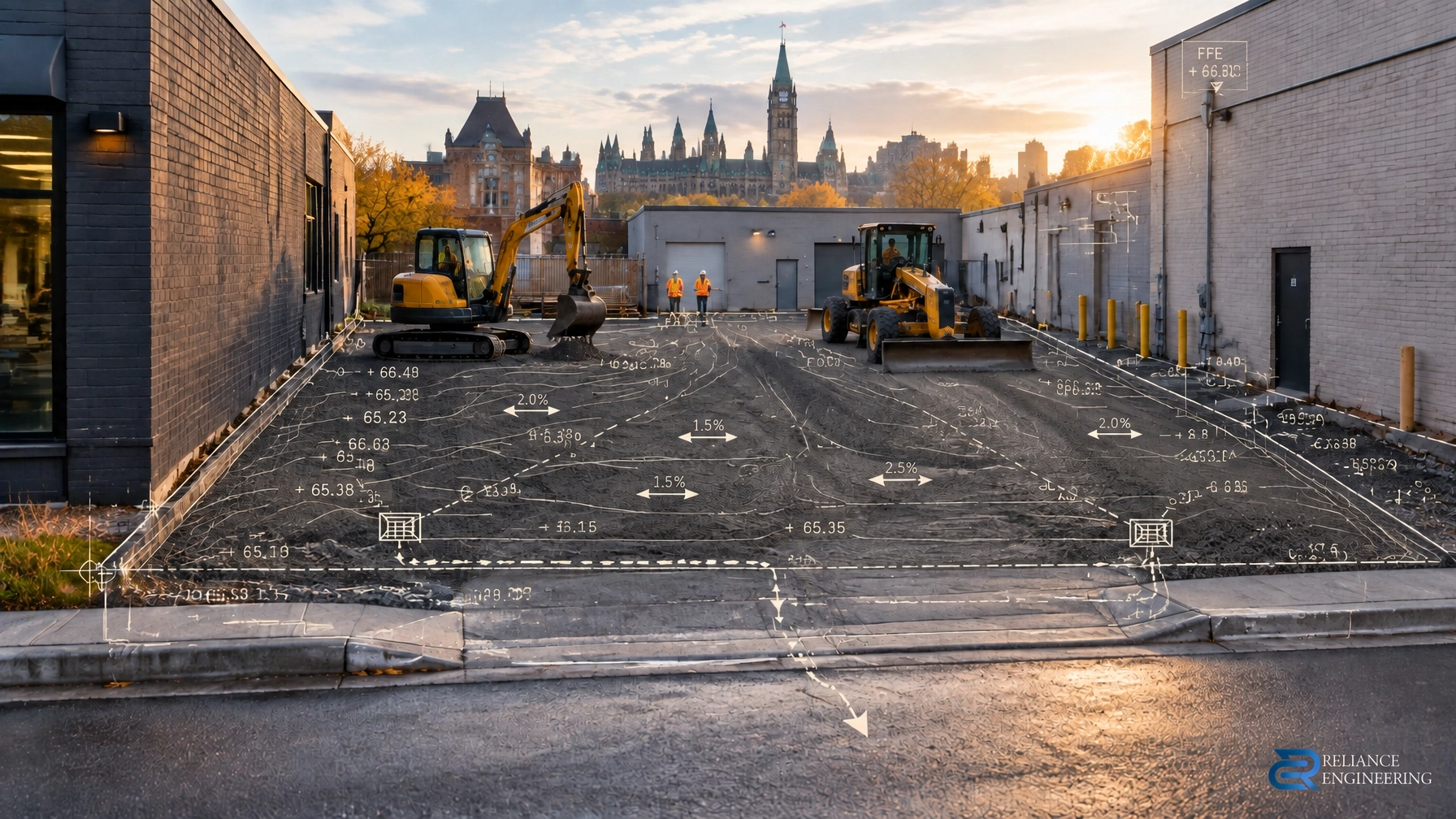
A coordinated Site Grading Plan should identify:
- Existing and proposed elevations
- Lot grading and building entrance elevations
- Road and driveway tie-ins
- Swales and positive drainage
- Overland flow routes
- Ditches and culvert connections
- Catchbasin and area drain locations
- Drainage paths around buildings and retaining walls
- Protection of adjacent properties
During fall construction, temporary grading may be different from final grading. The ESC plan should therefore show how temporary slopes, stockpiles, trenches, and access routes will direct water safely until permanent works are completed.
The objective is straightforward: keep clean water away from disturbed soil, slow down sediment-laden water, and direct controlled flows to an approved outlet.
Controls Required on Many Ottawa Construction Sites
The correct controls depend on site size, soil conditions, slope, drainage patterns, construction staging, and the receiving system. Common measures include the following.
Silt Fence and Perimeter Protection
Silt fence is typically installed along the downslope edge of disturbed areas and near sensitive boundaries. It should be located where it can intercept sheet flow without becoming a substitute for proper drainage.
The ESC drawing should show:
- Fence alignment
- Tie-ins at corners and low points
- Turn-up ends where required
- Construction limits
- Maintenance and replacement notes
Silt fence must remain anchored and functional through rain, snow, frost, and spring melt.
Mud Mats and Construction Entrances
A stabilized construction entrance helps prevent soil from being tracked onto Ottawa roads. A mud mat, suitable granular material, or other approved access treatment should be located at the primary construction entrance.
The entrance should be inspected frequently, particularly after wet weather. Street sweeping may be required where mud or sediment reaches the roadway. Washing sediment into a catchbasin is not an acceptable cleanup method.
Catchbasin Inserts and Inlet Protection
Existing and temporary catchbasins are vulnerable during grading and servicing work. Catchbasin inserts, filter fabric, inlet barriers, or other approved protection can reduce sediment entry into municipal storm systems.
Inlet protection must not create a flooding hazard. It should be inspected after rainfall and cleaned or replaced when sediment reduces its effectiveness.
Sediment Traps and Temporary Sedimentation Basins
Where a large disturbed area drains toward one location, a sediment trap or temporary sedimentation basin can provide a controlled location for suspended soil to settle before discharge.
The ESC plan should identify:
- Contributing drainage area
- Inlet and outlet locations
- Storage or settling area
- Emergency overflow route
- Access for sediment removal
- Maintenance requirements
- Final removal or conversion plan
These measures are particularly useful where discharge is directed toward a ditch, municipal storm sewer, or other sensitive outlet.
Dewatering Controls
Excavations for storm, sanitary, and water servicing can collect sediment-laden water. Dewatering should not discharge directly to a ditch, catchbasin, storm sewer, or watercourse without appropriate treatment and authorization.
A coordinated plan may include:
- Temporary settling tanks or sediment bags
- Sedimentation areas
- Pump discharge protection
- Flow dissipation
- Turbidity control
- Inspection before discharge
- Approved discharge locations
The receiving system matters. Discharge to a municipal storm sewer is different from discharge to a roadside ditch or natural watercourse. The project team should confirm municipal and conservation authority requirements before pumping begins.
Fall ESC Planning Must Include Winter Shutdown
A winter shutdown plan is not simply a note to “stabilize the site.” It should identify the work that must be completed before the site is left inactive.
Before freeze-up, review the following items:
- Exposed soil areas
- Steep or long slopes
- Open servicing trenches
- Stockpiles and spoil areas
- Temporary drainage paths
- Road and driveway tie-ins
- Catchbasin and inlet protection
- Silt fence anchoring
- Sediment trap capacity
- Construction entrance condition
- Access for winter inspection
- Spring snowmelt flow routes
Where vegetation cannot establish before winter, non-vegetative stabilization may be necessary. Depending on the design, this may include erosion control blankets, heavy mulch, gravel cover, temporary paving, compacted granular surfaces, or other suitable treatments.
Controls should be secured against snow loading, ice, and freeze-thaw movement. Measures must remain in place through winter and into spring until the site has achieved permanent stabilization.

Inspection and Maintenance Are Part of the Plan
An ESC drawing is only effective if the controls are installed correctly and maintained.
The owner, contractor, or designated site representative should inspect controls:
- Before construction begins
- After significant rainfall
- After major grading or servicing changes
- During freeze-thaw events
- Before and after snow accumulation
- During spring snowmelt
- Before removing temporary controls
Maintenance may include repairing silt fence, removing accumulated sediment, replacing catchbasin inserts, restoring mud mats, cleaning streets, repairing washouts, and adjusting temporary flow routes.
The plan should also identify who is responsible for inspections and how corrective work will be documented. Clear responsibilities reduce the risk of leaving a failed control in place until the next municipal inspection.
Coordinate ESC With Grading, Servicing, and Stormwater Design
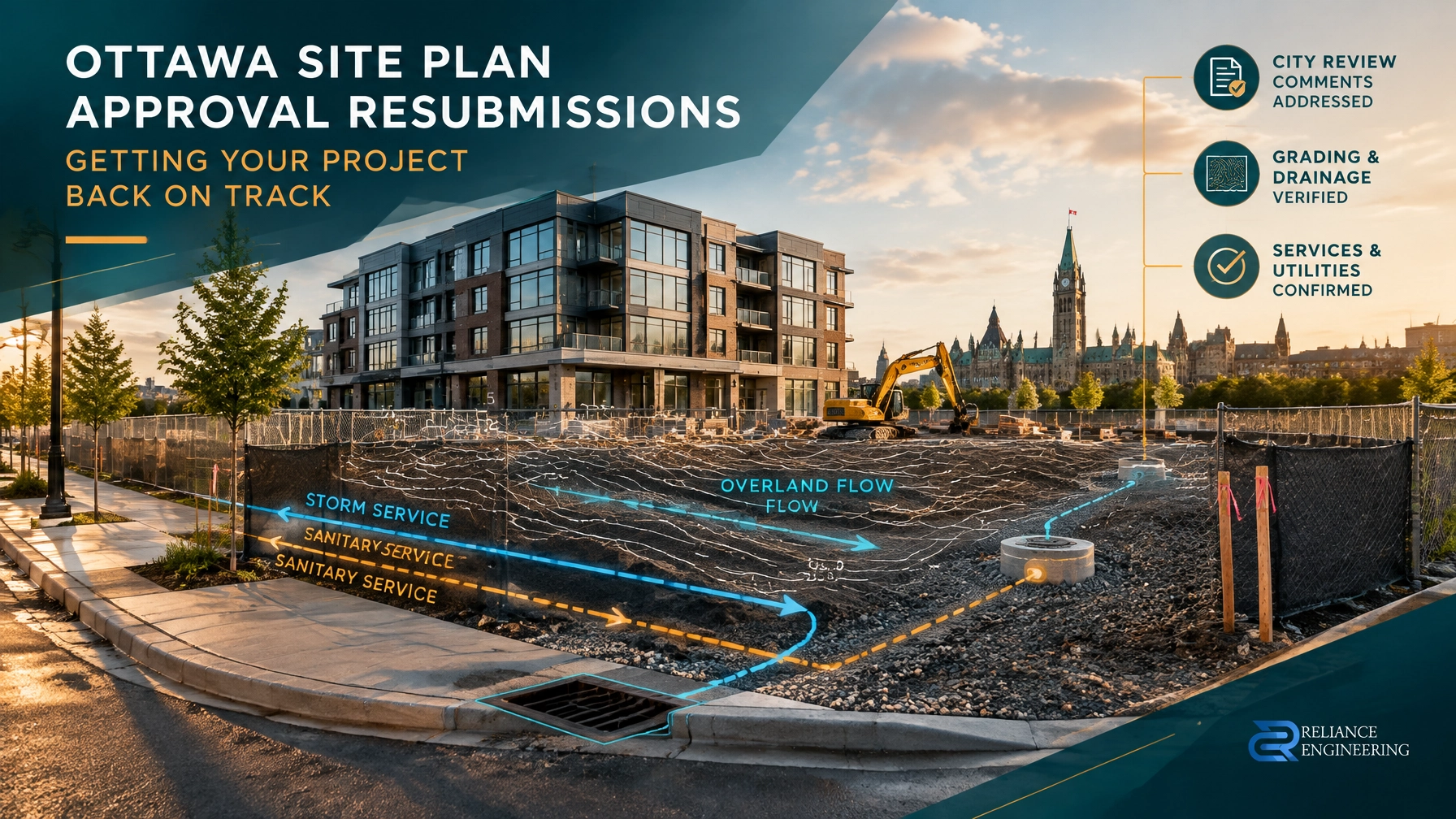
For larger Ottawa projects, ESC should be coordinated with the full civil design package. The Site Servicing Plans should show storm connections, sanitary and water servicing, utility conflicts, and temporary construction considerations.
Where required, the ESC approach should also align with:
- Stormwater Management Reports
- Functional Servicing Reports
- Site Plan Approval drawings
- Building Permit drawings
- Conservation authority submissions
- Municipal grading and drainage conditions
This coordinated design approach helps ensure that temporary construction controls do not conflict with permanent infrastructure or approved overland flow routes.
Prepare Before the Weather Changes
A late-season ESC review is valuable even when construction is already underway. Reliance Engineering can review an existing drawing, update controls for fall conditions, or prepare a permit-ready ESC package for a new Ottawa project.
Our approach combines practical designs, clear drawings, buildable grading, a drainage-focused approach, and approval support. We show where controls belong, how they relate to positive drainage, and what must remain in place before winter shutdown.
Contact Reliance Engineering for a consultation or ESC drawing review before fall site alteration begins.
Professional Credentials and Contact
Naresh Ochani, P.Eng. M.Eng.
Principal, Reliance Engineering Canada Limited
PEO Certificate of Authorization: 100548882
Authorized by the Professional Engineers Ontario to offer professional engineering services.
Address: 6850 Millcreek Dr, Mississauga, ON L5N 2H4
Phone: 647-385-6418
Email: [email protected]
Website: www.relianceengineering.ca
Office hours: Saturday 12:00 PM–2:00 PM; Sunday Closed.